Chapter 42
Assessment and Management of
Patients with Endocrine Disorders
1
Endocrine System
Effects almost every cell, organ, and function of the
body
The endocrine system is closely linked with the
nervous system and the immune system
Negative feedback mechanism
Hormones
Chemical messengers of the body
Act on specific target cells
2
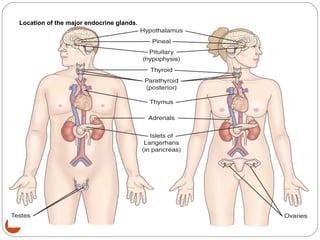
Location of the major endocrine glands.
3
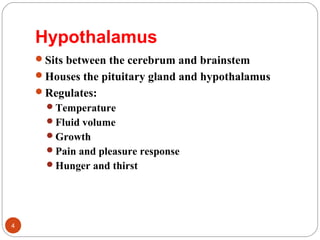
Hypothalamus
Sits between the cerebrum and brainstem
Houses the pituitary gland and hypothalamus
Regulates:
Temperature
Fluid volume
Growth
Pain and pleasure response
Hunger and thirst
4
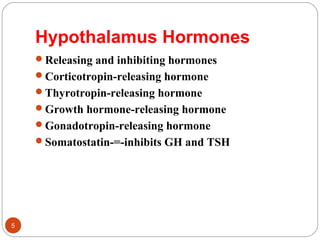
Hypothalamus Hormones
Releasing and inhibiting hormones
Corticotropin-releasing hormone
Thyrotropin-releasing hormone
Growth hormone-releasing hormone
Gonadotropin-releasing hormone
Somatostatin-=-inhibits GH and TSH
5
Pituitary Gland
Sits beneath the hypothalamus
Termed the “master gland”
Divided into:
Anterior Pituitary Gland
Posterior Pituitary Gland
6
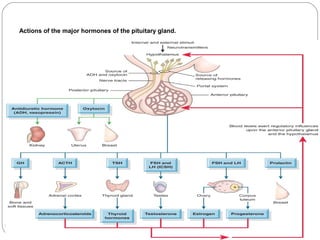
Actions of the major hormones of the pituitary gland.
7
Adrenal Glands
Pyramid-shaped organs that sit on top of the
kidneys
Each has two parts:
Outer Cortex
Inner Medulla
8
Adrenal Cortex
Mineralocorticoid—aldosterone. Affects sodium
absorption, loss of potassium by kidney
Glucocorticoids—cortisol. Affects metabolism,
regulates blood sugar levels, affects growth, anti-
inflammatory action, decreases effects of stress
Adrenal androgens—dehydroepiandrosterone and
androstenedione. Converted to testosterone in the
periphery.
9
Adrenal Medulla
Secretion of two hormones
Epinephrine
Norepinephrine
Serve as neurotransmitters for sympathetic system
Involved with the stress response
10
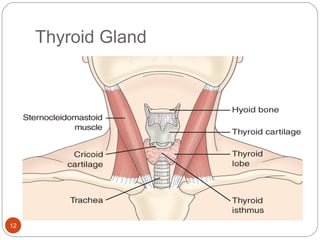
Thyroid Gland
Butterfly shaped
Sits on either side of the trachea
Has two lobes connected with an isthmus
Functions in the presence of iodine
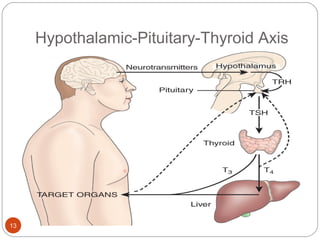
Stimulates the secretion of three hormones
Involved with metabolic rate management and
serum calcium levels
11
Thyroid Gland
12
Hypothalamic-Pituitary-Thyroid Axis
13
Thyroid
Follicular cells—excretion of triiodothyronine (T3)
and thyroxine (T4)—Increase BMR, increase bone
and protien turnover, increase response to
catecholamines, need for infant G&D
Thyroid C cells—calcitonin. Lowers blood calcium
and phosphate levels
BMR: Basal Metabolic Rate
14
Parathyroid Glands
Embedded within the posterior lobes of the thyroid
gland
Secretion of one hormone
Maintenance of serum calcium levels
Parathyroid hormone—regulates serum
calcium
15
Pancreas
Located behind the stomach between the spleen
and duodenum
Has two major functions
Digestive enzymes
Releases two hormones: insulin and glucagon
16
Kidney
1, 25 dihydroxyvitamin D—stimulates calcium
absorption from the intestine
Renin—activates the Renin-Angiotensin System
(RAS)
Erythropoietin—Increases red blood cell
production
17
Ovaries
Estrogen
Progesterone—important in menstrual cycle,
maintains pregnancy,
18
Testes
Androgens, testosterone—secondary sexual
characteristics, sperm production
19
Thymus
Releases thymosin and thymopoietin
Affects maturation of T lymphocetes
20
Pineal
Melatonin
Affects sleep, fertility and aging
21
Past Medical History
Hormone replacement therapy
Surgeries, chemotherapy, radiation
Family history: diabetes mellitus, diabetes insipidus,
goiter, obesity, Addison’s disease, infertility
Sexual history: changes, characteristics, menstruation,
menopause
22
Physical Assessment
General appearance
Vital signs, height, weight
Integumentary
Skin color, temperature, texture, moisture
Bruising, lesions, wound healing
Hair and nail texture, hair growth
23
Physical Assessment
Face
Shape, symmetry
Eyes, visual acuity
Neck
24
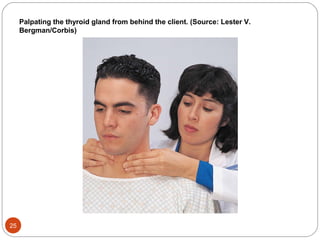
Palpating the thyroid gland from behind the client. (Source: Lester V.
Bergman/Corbis)
25
Physical Assessment
Extremities
Hand and feet size
Trunk
Muscle strength, deep tendon reflexes
Sensation to hot and cold, vibration
Extremity edema
Thorax
Lung and heart sounds
26
Older Adults and Endocrine
Function
Relationship unclear
Aging causes fibrosis of thyroid gland
Reduces metabolic rate
Contributes to weight gain
Cortisol level unchanged in aging
27
Abnormal Findings
Ask the client:
Energy level
Fatigue
Maintenance of ADL
Sensitivity to heat or cold
Weight level
Bowel habits
Level of appetite
Urination, thirst, salt craving
28
Abnormal Findings (continued)
Ask the client:
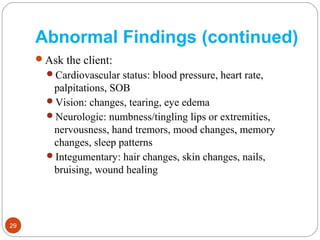
Cardiovascular status: blood pressure, heart rate,
palpitations, SOB
Vision: changes, tearing, eye edema
Neurologic: numbness/tingling lips or extremities,
nervousness, hand tremors, mood changes, memory
changes, sleep patterns
Integumentary: hair changes, skin changes, nails,
bruising, wound healing
29
Most Common Endocrine
Disorders
Thyroid abnormalities
Diabetes mellitus
30
Diagnostic Tests
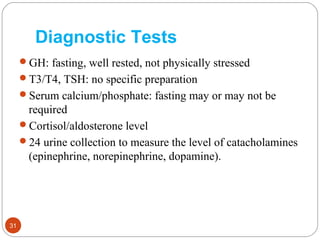
GH: fasting, well rested, not physically stressed
T3/T4, TSH: no specific preparation
Serum calcium/phosphate: fasting may or may not be
required
Cortisol/aldosterone level
24 urine collection to measure the level of catacholamines
(epinephrine, norepinephrine, dopamine).
31
Thyroid Disorders
Cretinism
Hypothyroidism
Hyperthyroidism
Thyroiditis
Goiter
Thyroid cancer
32
HYPOTHYRODISM
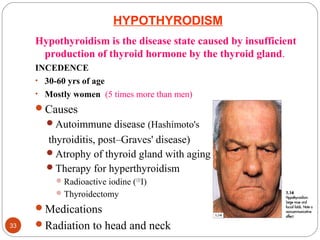
Hypothyroidism is the disease state caused by insufficient
production of thyroid hormone by the thyroid gland.
INCEDENCE
• 30-60 yrs of age
• Mostly women (5 times more than men)
Causes
Autoimmune disease (Hashimoto's
thyroiditis, post–Graves' disease)
Atrophy of thyroid gland with aging
Therapy for hyperthyroidism
Radioactive iodine (131
I)
Thyroidectomy
Medications
Radiation to head and neck33
Clinical Manifestations:
1. Fatigue.
2. Constipation.
3. Apathy
4. Weight gain.
5. Memory and mental
impairment and decreased
concentration.
6. masklike face.
7. Menstrual irregularities
and loss of libido.
8. Coarseness or loss of hair.
9. Dry skin and cold intolerance.
10. Menstrual disturbances
11. Numbness and tingling of
fingers.
12. Tongue, hands, and feet
may enlarge
13. Slurred speach
14. Hyperlipidemia.
15. Reflex delay.
16. Bradycardia.
17. Hypothermia.
18. Cardiac and respiratory
complications .34
LABORATORY ASSESSMENT
 T3
 T4
 TSH
35
TREATMENT
LIFELONG THYROID HORMONE REPLACEMENT
levothyroxine sodium (Synthroid, T4, Eltroxin)
IMPORTANT: start at low does, to avoid hypertension,
heart failure and MI
Teach about S&S of hyperthyroidism with replacement
therapy
36
MYXEDEMA DEVELOPS
Rare serious complication of untreated hypothyroidism
Decreased metabolism causes the heart muscle to become
flabby
Leads to decreased cardiac output
Leads to decreased perfusion to brain and other vital organs
Leads to tissue and organ failure
LIFE THREATENING EMERGENCY WITH HIGH
MORTALITY RATE
Edema changes client’s appearance
Nonpitting edema appears everywhere especially around the
eyes, hands, feet, between shoulder blades
Tongue thickens, edema forms in larynx, voice husky
37
PROBLEMS SEEN WITH MYXEDEMA
COMA
Coma
Respiratory failure
Hypotension
Hyponatremia
Hypothermia
hypoglycemia
38
TREATMENT OF MYEXEDEMA COMA
Patent airway
Replace fluids with IV.
Give levothyroxine sodium IV
Give glucose IV
Give corticosteroids
Check temp, BP hourly
Monitor changes LOC hourly
Aspiration precautions, keep warm
39
Hyperthyroidism
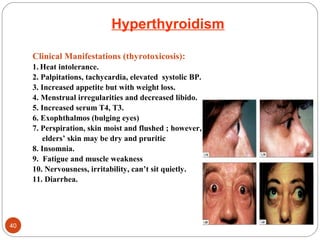
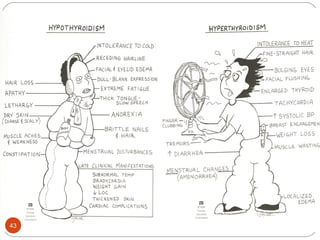
Clinical Manifestations (thyrotoxicosis):
1. Heat intolerance.
2. Palpitations, tachycardia, elevated systolic BP.
3. Increased appetite but with weight loss.
4. Menstrual irregularities and decreased libido.
5. Increased serum T4, T3.
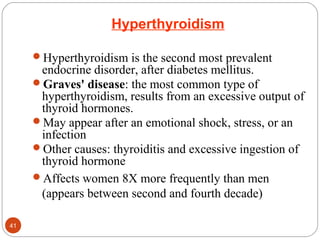
6. Exophthalmos (bulging eyes)
7. Perspiration, skin moist and flushed ; however,
elders’ skin may be dry and pruritic
8. Insomnia.
9. Fatigue and muscle weakness
10. Nervousness, irritability, can’t sit quietly.
11. Diarrhea.
40
Hyperthyroidism
Hyperthyroidism is the second most prevalent
endocrine disorder, after diabetes mellitus.
Graves' disease: the most common type of
hyperthyroidism, results from an excessive output of
thyroid hormones.
May appear after an emotional shock, stress, or an
infection
Other causes: thyroiditis and excessive ingestion of
thyroid hormone
Affects women 8X more frequently than men
(appears between second and fourth decade)
41
Medical Management of
Hyperthyroidism
Radioactive 131
I therapy
Medications
Propylthiouracil and methimazole
Sodium or potassium iodine solutions
Dexamethasone
Beta-blockers
Surgery; subtotal thyroidectomy
Relapse of disorder is common
Disease or treatment may result in hypothyroidism
42
43
Thyroiditis
Inflammation of the thyroid gland.
Can be acute, subacute, or chronic (Hashimoto's
Disease)
Each type of thyroiditis is characterized by
inflammation, fibrosis, or lymphocytic infiltration of
the thyroid gland.
Characterized by autoimmune damage to the thyroid.
May cause thyrotoxicosis, hypothyroidism, or both
44
Thyroid Tumors
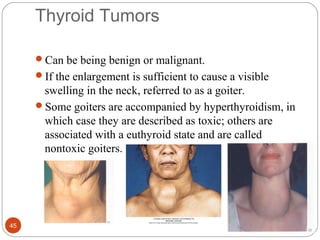
Can be being benign or malignant.
If the enlargement is sufficient to cause a visible
swelling in the neck, referred to as a goiter.
Some goiters are accompanied by hyperthyroidism, in
which case they are described as toxic; others are
associated with a euthyroid state and are called
nontoxic goiters.
45
Thyroid Cancer
Much less prevalent than other forms of cancer;
however, it accounts for 90% of endocrine
malignancies.
Diagnosis: thyroid hormone, biobsy
Management
The treatment of choice surgical removal. Total or near-
total thyroidectomy is performed if possible. Modified
neck dissection or more extensive radical neck dissection
is performed if there is lymph node involvement.
After surgery, radioactive iodine.
Thyroid hormone supplement to replace the hormone.
46
Thyroidectomy
Treatment of choice for thyroid cancer
Preoperative goals include the reduction of stress and anxiety
to avoid precipitation of thyroid storm (euothyroid)
Iodine prep (Lugols or K iodide solution) to decrease size
and vascularity of gland to minimize risk of hemorrhage,
reduces risk of thyroid storm during surgery
Preoperative teaching includes dietary guidance to meet
patient metabolic needs and avoidance of caffeinated
beverages and other stimulants, explanation of tests and
procedures, and demonstration of support of head to be used
postoperatively
47
Postoperative Care
Monitor dressing for potential bleeding and hematoma
formation; check posterior dressing
Monitor respirations; potential airway impairment
Assess pain and provide pain relief measures
Semi-Fowler’s position, support head
Assess voice but discourage talking
Potential hypocalcaemia related to injury or removal of
parathyroid glands; monitor for hypocalcaemia
48
POST-OP THYROIDECTOMY NURSING
CARE
1. VS, I&O, IV
2. Semifowlers
3. Support head
4. Avoid tension on sutures
5. Pain meds, analgesic lozengers
6. Humidified oxygen, suction
7. First fluids: cold/ice, tolerated best, then soft diet
8. Limited talking , hoarseness common
9. Assess for voice changes: injury to the recurrent
laryngeal nerve
49
POSTOP THYROIDECTOMY NURSING
CARE
 CHECK FOR
HEMORRHAGE 1st 24 hrs:
 Look behind neck and sides of
neck
 Check for c/o pressure or
fullness at incision site
 Check drain
 REPORT TO MD
 CHECK FOR
RESPIRATORY DISTRESS
 Laryngeal stridor (harsh hi
pitched resp sounds)
 Result of edema of glottis,
hematoma,or tetany
 Tracheostomy set/airway/ O2,
suction
 CALL MD for extreme
hoarseness
50
Complication of operation:
Hemorrhage
Laryngeal nerve damage.
Hypoparathyrodism
Hypothyroidism
Septesis
Postoperative infection
51
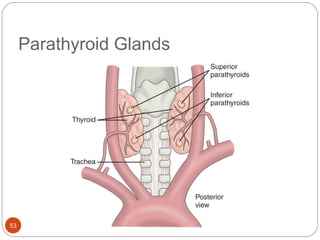
Parathyroid
Four glands on the posterior thyroid gland
Parathormone regulates calcium and phosphorus
balance
Increased parathormone elevates blood calcium by
increasing calcium absorption from the kidney, intestine,
and bone.
Parathormone lowers phosphorus level.
52
Parathyroid Glands
53
Hyperparathyroidism
Primary hyperparathyroidism is 2–4 X more frequent in women.
Manifestations include elevated serum calcium, bone
decalcification, renal calculi, apathy, fatigue, muscle weakness,
nausea, vomiting, constipation, hypertension, cardiac
dysrhythmias, psychological manifestations
Treatment
Parathyroidectomy
Hydration therapy
Encourage mobility reduce calcium excretion
Diet: encourage fluid, avoid excess or restricted calcium
54
Question
Is the following statement True or False?
The patient in acute hypercalcemic crisis requires close
monitoring for life-threatening complications and
prompt treatment to reduce serum calcium levels.
55
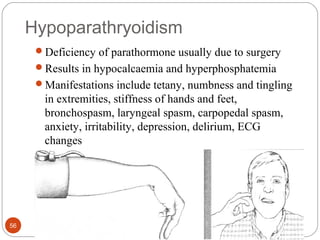
Hypoparathryoidism
Deficiency of parathormone usually due to surgery
Results in hypocalcaemia and hyperphosphatemia
Manifestations include tetany, numbness and tingling
in extremities, stiffness of hands and feet,
bronchospasm, laryngeal spasm, carpopedal spasm,
anxiety, irritability, depression, delirium, ECG
changes
Trousseau’s sign and Chvostek’s sign
56
Management of Hypoparathyroidism
Increase serum calcium level to 9—10 mg/dL
Calcium gluconate IV
May also use sedatives such as pentobarbital to
decrease neuromuscular irritability
Parathormone may be administered; potential allergic
reactions
Environment free of noise, drafts, bright lights, sudden
movement
Diet high in calcium and low in phosphorus
Vitamin D
Aluminum hydroxide is administered after meals to
bind with phosphate and promote its excretion through
the gastrointestinal tract.
57
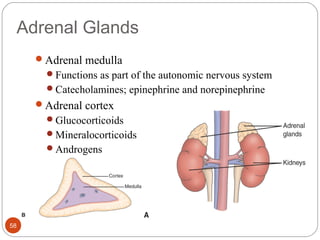
Adrenal Glands
Adrenal medulla
Functions as part of the autonomic nervous system
Catecholamines; epinephrine and norepinephrine
Adrenal cortex
Glucocorticoids
Mineralocorticoids
Androgens
58
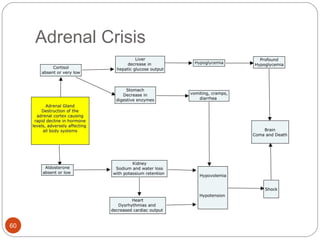
Adrenal Insufficiency
Adrenal cortex function is inadequate to
meet the needs for cortical hormones
Primary: Addison’s Disease
Secondary
May be the result of adrenal suppression by
exogenous steroid use
59
Adrenal Crisis
60
Manifestations
61
Muscle weakness, anorexia, GI symptoms, fatigue, dark
pigmentation of skin and mucosa, hypotension, low blood
glucose, low serum sodium, high serum potassium, mental
changes, apathy, emotional lability, confusion
Addisonian crisis: circulatory collapse
Diagnostic tests; adrenocortical hormone levels, ACTH
levels, ACTH stimulation test
Adrenal Crisis
Medical Management
Immediate
Reverse shock
Restore blood circulation
Antibiotics if infection
Identify cause
Supplement
glucocorticoids during
stressful procedures or
significant illness
Nursing Management
Assess fluid balance
Monitor VS closely
Good skin assessment
Limit activity
Provide quiet, non-
stressful environment
62
Nursing Process: The Care of the Patient
with Adrenocortical Insufficiency
Assessment
Level of stress; note any illness or stressors that may
precipitate problems
Fluid and electrolyte status
VS and postural blood pressures
Note signs and symptoms related to adrenocortical
insufficiency such as weight changes, muscle weakness, and
fatigue
Medications
Monitor for signs and symptoms of Addisonian crisis
63
Nursing Process: The Care of the Patient
with Adrenocortical Insufficiency
Diagnoses
Risk for fluid volume deficit
Activity intolerance and fatigue
Knowledge deficit
64
Interventions
Risk for fluid deficit; monitor for signs and symptoms of
fluid volume deficit, encourage fluids and foods, select foods
high in sodium, administer hormone replacement as
prescribed
Activity intolerance; avoid stress and activity until stable,
perform all activities for patient when in crisis, maintain a
quiet nonstressful environment, measures to reduce anxiety
Teaching
(See Chart 42-10)
65
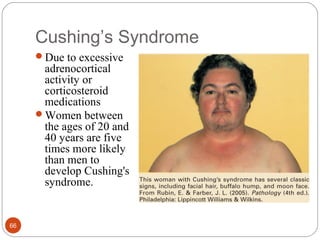
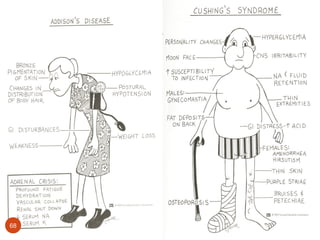
Cushing’s Syndrome
Due to excessive
adrenocortical
activity or
corticosteroid
medications
Women between
the ages of 20 and
40 years are five
times more likely
than men to
develop Cushing's
syndrome.
66
Cushing’s Syndrome/Manifestations
Hyperglycemia which may develop into diabetes,
weight gain, central type obesity with “buffalo
hump,” heavy trunk and thin extremities, fragile
thin skin, ecchymosis, striae, weakness, lassitude,
sleep disturbances, osteoporosis, muscle wasting,
hypertension, “moon-face”, acne, increased
susceptibility to infection, slow healing,
virilization in women, loss of libido, mood
changes, increased serum sodium, decreased serum
potassium
Diagnosis: Dexamethasone suppression test, ↑
Na+ ↑ glucose, ↓ K+, metabolic alkalosis
67
Cushing’s Syndrome
68
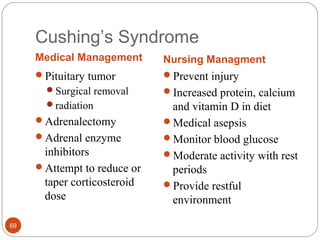
Cushing’s Syndrome
Medical Management
Pituitary tumor
Surgical removal
radiation
Adrenalectomy
Adrenal enzyme
inhibitors
Attempt to reduce or
taper corticosteroid
dose
Nursing Managment
Prevent injury
Increased protein, calcium
and vitamin D in diet
Medical asepsis
Monitor blood glucose
Moderate activity with rest
periods
Provide restful
environment
69
Nursing Process: The Care of the Patient
with Cushing’s Syndrome
Assessment
Activity level and ability to carry out self-care
Skin assessment
Changes in physical appearance and patient responses
to these changes
Mental function
Emotional status
Medications
70
Nursing Process: The Care of the
Patient with Cushing’s Syndrome—
Diagnoses
Risk for injury
Risk for infection
Self-care deficit
Impaired skin integrity
Disturbed body image
Disturbed thought processes
71
Collaborative Problems/Potential
Complications
Addisonian crisis
Adverse effects of adrenocortical activity
72
Nursing Process: The Care of the Patient
with Cushing’s Syndrome
Planning: Goals may include
1. Decreased risk of injury,
2. Decreased risk of infection,
3. Increased ability to carry out self-care activities,
4. Improved skin integrity,
5. Improved body image,
6. Improved mental function, and
7. Absence of complications
73
Interventions
Decrease risk of injury; establish a protective environment;
assist as needed; encourage diet high in protein, calcium, and
vitamin D.
Decrease risk of infection; avoid exposure to infections,
assess patient carefully as corticosteroids mask signs of
infection.
Plan and space rest and activity.
Meticulous skin care and frequent, careful skin assessment.
Explanation to the patient and family about causes of
emotional instability.
Patient teaching.
74
Diabetes Insipidus
A disorder of the posterior lobe of the pituitary gland
that is characterized by a deficiency of ADH
(vasopressin). Excessive thirst (polydipsia) and large
volumes of dilute urine.
It may occur secondary to head trauma, brain tumor, or
surgical ablation or irradiation of the pituitary gland,
infections of the central nervous system or with tumors
Another cause of diabetes insipidus is failure of the
renal tubules to respond to ADH
75
Medical Management
The objectives of therapy are
1. to replace ADH (which is usually a long-term
therapeutic program),
2. to ensure adequate fluid replacement, and
3. to identify and correct the underlying
intracranial pathology.
76

Chapter 42-endocrine-and-thyroid-disorder-i

  • 1.
    Chapter 42 Assessment andManagement of Patients with Endocrine Disorders 1
  • 2.
    Endocrine System Effects almostevery cell, organ, and function of the body The endocrine system is closely linked with the nervous system and the immune system Negative feedback mechanism Hormones Chemical messengers of the body Act on specific target cells 2
  • 3.
    Location of themajor endocrine glands. 3
  • 4.
    Hypothalamus Sits between thecerebrum and brainstem Houses the pituitary gland and hypothalamus Regulates: Temperature Fluid volume Growth Pain and pleasure response Hunger and thirst 4
  • 5.
    Hypothalamus Hormones Releasing andinhibiting hormones Corticotropin-releasing hormone Thyrotropin-releasing hormone Growth hormone-releasing hormone Gonadotropin-releasing hormone Somatostatin-=-inhibits GH and TSH 5
  • 6.
    Pituitary Gland Sits beneaththe hypothalamus Termed the “master gland” Divided into: Anterior Pituitary Gland Posterior Pituitary Gland 6
  • 7.
    Actions of themajor hormones of the pituitary gland. 7
  • 8.
    Adrenal Glands Pyramid-shaped organsthat sit on top of the kidneys Each has two parts: Outer Cortex Inner Medulla 8
  • 9.
    Adrenal Cortex Mineralocorticoid—aldosterone. Affectssodium absorption, loss of potassium by kidney Glucocorticoids—cortisol. Affects metabolism, regulates blood sugar levels, affects growth, anti- inflammatory action, decreases effects of stress Adrenal androgens—dehydroepiandrosterone and androstenedione. Converted to testosterone in the periphery. 9
  • 10.
    Adrenal Medulla Secretion oftwo hormones Epinephrine Norepinephrine Serve as neurotransmitters for sympathetic system Involved with the stress response 10
  • 11.
    Thyroid Gland Butterfly shaped Sitson either side of the trachea Has two lobes connected with an isthmus Functions in the presence of iodine Stimulates the secretion of three hormones Involved with metabolic rate management and serum calcium levels 11
  • 12.
  • 13.
  • 14.
    Thyroid Follicular cells—excretion oftriiodothyronine (T3) and thyroxine (T4)—Increase BMR, increase bone and protien turnover, increase response to catecholamines, need for infant G&D Thyroid C cells—calcitonin. Lowers blood calcium and phosphate levels BMR: Basal Metabolic Rate 14
  • 15.
    Parathyroid Glands Embedded withinthe posterior lobes of the thyroid gland Secretion of one hormone Maintenance of serum calcium levels Parathyroid hormone—regulates serum calcium 15
  • 16.
    Pancreas Located behind thestomach between the spleen and duodenum Has two major functions Digestive enzymes Releases two hormones: insulin and glucagon 16
  • 17.
    Kidney 1, 25 dihydroxyvitaminD—stimulates calcium absorption from the intestine Renin—activates the Renin-Angiotensin System (RAS) Erythropoietin—Increases red blood cell production 17
  • 18.
  • 19.
  • 20.
    Thymus Releases thymosin andthymopoietin Affects maturation of T lymphocetes 20
  • 21.
  • 22.
    Past Medical History Hormonereplacement therapy Surgeries, chemotherapy, radiation Family history: diabetes mellitus, diabetes insipidus, goiter, obesity, Addison’s disease, infertility Sexual history: changes, characteristics, menstruation, menopause 22
  • 23.
    Physical Assessment General appearance Vitalsigns, height, weight Integumentary Skin color, temperature, texture, moisture Bruising, lesions, wound healing Hair and nail texture, hair growth 23
  • 24.
  • 25.
    Palpating the thyroidgland from behind the client. (Source: Lester V. Bergman/Corbis) 25
  • 26.
    Physical Assessment Extremities Hand andfeet size Trunk Muscle strength, deep tendon reflexes Sensation to hot and cold, vibration Extremity edema Thorax Lung and heart sounds 26
  • 27.
    Older Adults andEndocrine Function Relationship unclear Aging causes fibrosis of thyroid gland Reduces metabolic rate Contributes to weight gain Cortisol level unchanged in aging 27
  • 28.
    Abnormal Findings Ask theclient: Energy level Fatigue Maintenance of ADL Sensitivity to heat or cold Weight level Bowel habits Level of appetite Urination, thirst, salt craving 28
  • 29.
    Abnormal Findings (continued) Askthe client: Cardiovascular status: blood pressure, heart rate, palpitations, SOB Vision: changes, tearing, eye edema Neurologic: numbness/tingling lips or extremities, nervousness, hand tremors, mood changes, memory changes, sleep patterns Integumentary: hair changes, skin changes, nails, bruising, wound healing 29
  • 30.
    Most Common Endocrine Disorders Thyroidabnormalities Diabetes mellitus 30
  • 31.
    Diagnostic Tests GH: fasting,well rested, not physically stressed T3/T4, TSH: no specific preparation Serum calcium/phosphate: fasting may or may not be required Cortisol/aldosterone level 24 urine collection to measure the level of catacholamines (epinephrine, norepinephrine, dopamine). 31
  • 32.
  • 33.
    HYPOTHYRODISM Hypothyroidism is thedisease state caused by insufficient production of thyroid hormone by the thyroid gland. INCEDENCE • 30-60 yrs of age • Mostly women (5 times more than men) Causes Autoimmune disease (Hashimoto's thyroiditis, post–Graves' disease) Atrophy of thyroid gland with aging Therapy for hyperthyroidism Radioactive iodine (131 I) Thyroidectomy Medications Radiation to head and neck33
  • 34.
    Clinical Manifestations: 1. Fatigue. 2.Constipation. 3. Apathy 4. Weight gain. 5. Memory and mental impairment and decreased concentration. 6. masklike face. 7. Menstrual irregularities and loss of libido. 8. Coarseness or loss of hair. 9. Dry skin and cold intolerance. 10. Menstrual disturbances 11. Numbness and tingling of fingers. 12. Tongue, hands, and feet may enlarge 13. Slurred speach 14. Hyperlipidemia. 15. Reflex delay. 16. Bradycardia. 17. Hypothermia. 18. Cardiac and respiratory complications .34
  • 35.
  • 36.
    TREATMENT LIFELONG THYROID HORMONEREPLACEMENT levothyroxine sodium (Synthroid, T4, Eltroxin) IMPORTANT: start at low does, to avoid hypertension, heart failure and MI Teach about S&S of hyperthyroidism with replacement therapy 36
  • 37.
    MYXEDEMA DEVELOPS Rare seriouscomplication of untreated hypothyroidism Decreased metabolism causes the heart muscle to become flabby Leads to decreased cardiac output Leads to decreased perfusion to brain and other vital organs Leads to tissue and organ failure LIFE THREATENING EMERGENCY WITH HIGH MORTALITY RATE Edema changes client’s appearance Nonpitting edema appears everywhere especially around the eyes, hands, feet, between shoulder blades Tongue thickens, edema forms in larynx, voice husky 37
  • 38.
    PROBLEMS SEEN WITHMYXEDEMA COMA Coma Respiratory failure Hypotension Hyponatremia Hypothermia hypoglycemia 38
  • 39.
    TREATMENT OF MYEXEDEMACOMA Patent airway Replace fluids with IV. Give levothyroxine sodium IV Give glucose IV Give corticosteroids Check temp, BP hourly Monitor changes LOC hourly Aspiration precautions, keep warm 39
  • 40.
    Hyperthyroidism Clinical Manifestations (thyrotoxicosis): 1.Heat intolerance. 2. Palpitations, tachycardia, elevated systolic BP. 3. Increased appetite but with weight loss. 4. Menstrual irregularities and decreased libido. 5. Increased serum T4, T3. 6. Exophthalmos (bulging eyes) 7. Perspiration, skin moist and flushed ; however, elders’ skin may be dry and pruritic 8. Insomnia. 9. Fatigue and muscle weakness 10. Nervousness, irritability, can’t sit quietly. 11. Diarrhea. 40
  • 41.
    Hyperthyroidism Hyperthyroidism is thesecond most prevalent endocrine disorder, after diabetes mellitus. Graves' disease: the most common type of hyperthyroidism, results from an excessive output of thyroid hormones. May appear after an emotional shock, stress, or an infection Other causes: thyroiditis and excessive ingestion of thyroid hormone Affects women 8X more frequently than men (appears between second and fourth decade) 41
  • 42.
    Medical Management of Hyperthyroidism Radioactive131 I therapy Medications Propylthiouracil and methimazole Sodium or potassium iodine solutions Dexamethasone Beta-blockers Surgery; subtotal thyroidectomy Relapse of disorder is common Disease or treatment may result in hypothyroidism 42
  • 43.
  • 44.
    Thyroiditis Inflammation of thethyroid gland. Can be acute, subacute, or chronic (Hashimoto's Disease) Each type of thyroiditis is characterized by inflammation, fibrosis, or lymphocytic infiltration of the thyroid gland. Characterized by autoimmune damage to the thyroid. May cause thyrotoxicosis, hypothyroidism, or both 44
  • 45.
    Thyroid Tumors Can bebeing benign or malignant. If the enlargement is sufficient to cause a visible swelling in the neck, referred to as a goiter. Some goiters are accompanied by hyperthyroidism, in which case they are described as toxic; others are associated with a euthyroid state and are called nontoxic goiters. 45
  • 46.
    Thyroid Cancer Much lessprevalent than other forms of cancer; however, it accounts for 90% of endocrine malignancies. Diagnosis: thyroid hormone, biobsy Management The treatment of choice surgical removal. Total or near- total thyroidectomy is performed if possible. Modified neck dissection or more extensive radical neck dissection is performed if there is lymph node involvement. After surgery, radioactive iodine. Thyroid hormone supplement to replace the hormone. 46
  • 47.
    Thyroidectomy Treatment of choicefor thyroid cancer Preoperative goals include the reduction of stress and anxiety to avoid precipitation of thyroid storm (euothyroid) Iodine prep (Lugols or K iodide solution) to decrease size and vascularity of gland to minimize risk of hemorrhage, reduces risk of thyroid storm during surgery Preoperative teaching includes dietary guidance to meet patient metabolic needs and avoidance of caffeinated beverages and other stimulants, explanation of tests and procedures, and demonstration of support of head to be used postoperatively 47
  • 48.
    Postoperative Care Monitor dressingfor potential bleeding and hematoma formation; check posterior dressing Monitor respirations; potential airway impairment Assess pain and provide pain relief measures Semi-Fowler’s position, support head Assess voice but discourage talking Potential hypocalcaemia related to injury or removal of parathyroid glands; monitor for hypocalcaemia 48
  • 49.
    POST-OP THYROIDECTOMY NURSING CARE 1.VS, I&O, IV 2. Semifowlers 3. Support head 4. Avoid tension on sutures 5. Pain meds, analgesic lozengers 6. Humidified oxygen, suction 7. First fluids: cold/ice, tolerated best, then soft diet 8. Limited talking , hoarseness common 9. Assess for voice changes: injury to the recurrent laryngeal nerve 49
  • 50.
    POSTOP THYROIDECTOMY NURSING CARE CHECK FOR HEMORRHAGE 1st 24 hrs:  Look behind neck and sides of neck  Check for c/o pressure or fullness at incision site  Check drain  REPORT TO MD  CHECK FOR RESPIRATORY DISTRESS  Laryngeal stridor (harsh hi pitched resp sounds)  Result of edema of glottis, hematoma,or tetany  Tracheostomy set/airway/ O2, suction  CALL MD for extreme hoarseness 50
  • 51.
    Complication of operation: Hemorrhage Laryngealnerve damage. Hypoparathyrodism Hypothyroidism Septesis Postoperative infection 51
  • 52.
    Parathyroid Four glands onthe posterior thyroid gland Parathormone regulates calcium and phosphorus balance Increased parathormone elevates blood calcium by increasing calcium absorption from the kidney, intestine, and bone. Parathormone lowers phosphorus level. 52
  • 53.
  • 54.
    Hyperparathyroidism Primary hyperparathyroidism is2–4 X more frequent in women. Manifestations include elevated serum calcium, bone decalcification, renal calculi, apathy, fatigue, muscle weakness, nausea, vomiting, constipation, hypertension, cardiac dysrhythmias, psychological manifestations Treatment Parathyroidectomy Hydration therapy Encourage mobility reduce calcium excretion Diet: encourage fluid, avoid excess or restricted calcium 54
  • 55.
    Question Is the followingstatement True or False? The patient in acute hypercalcemic crisis requires close monitoring for life-threatening complications and prompt treatment to reduce serum calcium levels. 55
  • 56.
    Hypoparathryoidism Deficiency of parathormoneusually due to surgery Results in hypocalcaemia and hyperphosphatemia Manifestations include tetany, numbness and tingling in extremities, stiffness of hands and feet, bronchospasm, laryngeal spasm, carpopedal spasm, anxiety, irritability, depression, delirium, ECG changes Trousseau’s sign and Chvostek’s sign 56
  • 57.
    Management of Hypoparathyroidism Increaseserum calcium level to 9—10 mg/dL Calcium gluconate IV May also use sedatives such as pentobarbital to decrease neuromuscular irritability Parathormone may be administered; potential allergic reactions Environment free of noise, drafts, bright lights, sudden movement Diet high in calcium and low in phosphorus Vitamin D Aluminum hydroxide is administered after meals to bind with phosphate and promote its excretion through the gastrointestinal tract. 57
  • 58.
    Adrenal Glands Adrenal medulla Functionsas part of the autonomic nervous system Catecholamines; epinephrine and norepinephrine Adrenal cortex Glucocorticoids Mineralocorticoids Androgens 58
  • 59.
    Adrenal Insufficiency Adrenal cortexfunction is inadequate to meet the needs for cortical hormones Primary: Addison’s Disease Secondary May be the result of adrenal suppression by exogenous steroid use 59
  • 60.
  • 61.
    Manifestations 61 Muscle weakness, anorexia,GI symptoms, fatigue, dark pigmentation of skin and mucosa, hypotension, low blood glucose, low serum sodium, high serum potassium, mental changes, apathy, emotional lability, confusion Addisonian crisis: circulatory collapse Diagnostic tests; adrenocortical hormone levels, ACTH levels, ACTH stimulation test
  • 62.
    Adrenal Crisis Medical Management Immediate Reverseshock Restore blood circulation Antibiotics if infection Identify cause Supplement glucocorticoids during stressful procedures or significant illness Nursing Management Assess fluid balance Monitor VS closely Good skin assessment Limit activity Provide quiet, non- stressful environment 62
  • 63.
    Nursing Process: TheCare of the Patient with Adrenocortical Insufficiency Assessment Level of stress; note any illness or stressors that may precipitate problems Fluid and electrolyte status VS and postural blood pressures Note signs and symptoms related to adrenocortical insufficiency such as weight changes, muscle weakness, and fatigue Medications Monitor for signs and symptoms of Addisonian crisis 63
  • 64.
    Nursing Process: TheCare of the Patient with Adrenocortical Insufficiency Diagnoses Risk for fluid volume deficit Activity intolerance and fatigue Knowledge deficit 64
  • 65.
    Interventions Risk for fluiddeficit; monitor for signs and symptoms of fluid volume deficit, encourage fluids and foods, select foods high in sodium, administer hormone replacement as prescribed Activity intolerance; avoid stress and activity until stable, perform all activities for patient when in crisis, maintain a quiet nonstressful environment, measures to reduce anxiety Teaching (See Chart 42-10) 65
  • 66.
    Cushing’s Syndrome Due toexcessive adrenocortical activity or corticosteroid medications Women between the ages of 20 and 40 years are five times more likely than men to develop Cushing's syndrome. 66
  • 67.
    Cushing’s Syndrome/Manifestations Hyperglycemia whichmay develop into diabetes, weight gain, central type obesity with “buffalo hump,” heavy trunk and thin extremities, fragile thin skin, ecchymosis, striae, weakness, lassitude, sleep disturbances, osteoporosis, muscle wasting, hypertension, “moon-face”, acne, increased susceptibility to infection, slow healing, virilization in women, loss of libido, mood changes, increased serum sodium, decreased serum potassium Diagnosis: Dexamethasone suppression test, ↑ Na+ ↑ glucose, ↓ K+, metabolic alkalosis 67
  • 68.
  • 69.
    Cushing’s Syndrome Medical Management Pituitarytumor Surgical removal radiation Adrenalectomy Adrenal enzyme inhibitors Attempt to reduce or taper corticosteroid dose Nursing Managment Prevent injury Increased protein, calcium and vitamin D in diet Medical asepsis Monitor blood glucose Moderate activity with rest periods Provide restful environment 69
  • 70.
    Nursing Process: TheCare of the Patient with Cushing’s Syndrome Assessment Activity level and ability to carry out self-care Skin assessment Changes in physical appearance and patient responses to these changes Mental function Emotional status Medications 70
  • 71.
    Nursing Process: TheCare of the Patient with Cushing’s Syndrome— Diagnoses Risk for injury Risk for infection Self-care deficit Impaired skin integrity Disturbed body image Disturbed thought processes 71
  • 72.
  • 73.
    Nursing Process: TheCare of the Patient with Cushing’s Syndrome Planning: Goals may include 1. Decreased risk of injury, 2. Decreased risk of infection, 3. Increased ability to carry out self-care activities, 4. Improved skin integrity, 5. Improved body image, 6. Improved mental function, and 7. Absence of complications 73
  • 74.
    Interventions Decrease risk ofinjury; establish a protective environment; assist as needed; encourage diet high in protein, calcium, and vitamin D. Decrease risk of infection; avoid exposure to infections, assess patient carefully as corticosteroids mask signs of infection. Plan and space rest and activity. Meticulous skin care and frequent, careful skin assessment. Explanation to the patient and family about causes of emotional instability. Patient teaching. 74
  • 75.
    Diabetes Insipidus A disorderof the posterior lobe of the pituitary gland that is characterized by a deficiency of ADH (vasopressin). Excessive thirst (polydipsia) and large volumes of dilute urine. It may occur secondary to head trauma, brain tumor, or surgical ablation or irradiation of the pituitary gland, infections of the central nervous system or with tumors Another cause of diabetes insipidus is failure of the renal tubules to respond to ADH 75
  • 76.
    Medical Management The objectivesof therapy are 1. to replace ADH (which is usually a long-term therapeutic program), 2. to ensure adequate fluid replacement, and 3. to identify and correct the underlying intracranial pathology. 76

Editor's Notes

  • #2 17/11/2009
  • #51 Check every 30-60 min for extreme hoarseness (S&S) of respiratory distress
  • #68 Excessive protein catabolism occurs, producing muscle wasting and osteoporosis. Kyphosis, backache, and compression fractures of the vertebrae may result. Retention of sodium and water occurs as a result of increased mineralocorticoid activity, producing hypertension and heart failure. Virilization is characterized by the appearance of masculine traits and the recession of feminine traits. There is an excessive growth of hair on the face (hirsutism), the breasts atrophy, menses cease, the clitoris enlarges, and the voice deepens. Dexamethasone (1 mg) is administered orally at 11 PM, and a plasma cortisol level is obtained at 8 AM the next morning. Suppression of cortisol to less than 5 mg/dL indicates that the hypothalamic–pituitary–adrenal axis is functioning properly.