This document provides an overview of basic principles of animal form and function. It discusses how:
- Animal form and function are correlated at different levels of organization from cells to organ systems. An animal's size and shape affect how it interacts with its environment.
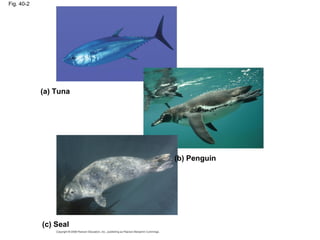
- Physical constraints like size, shape, and environment determine an animal's abilities and influence evolutionary convergence.
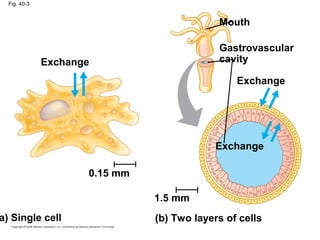
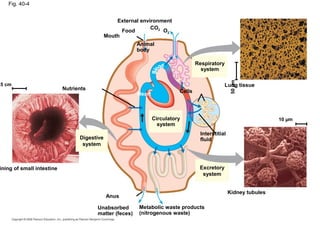
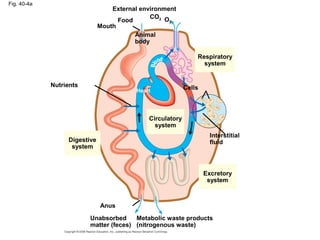
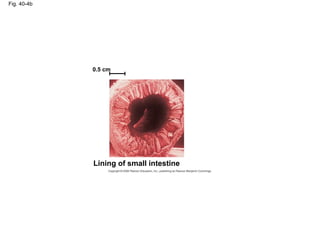
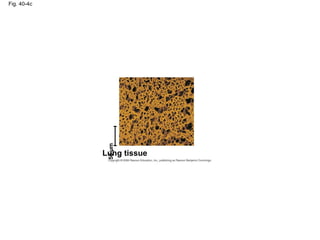
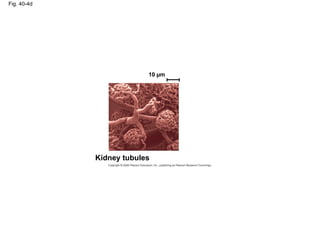
- Exchange of energy and materials with the environment depends on surface area and internal structures for diffusion. More complex body plans facilitate exchange through features like folded surfaces.
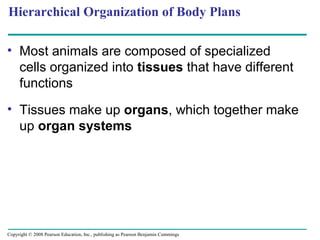
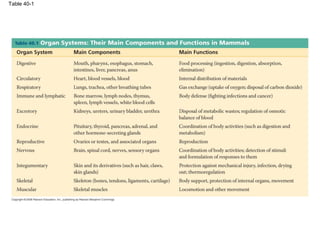
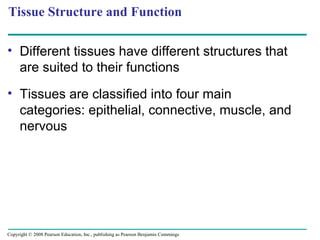
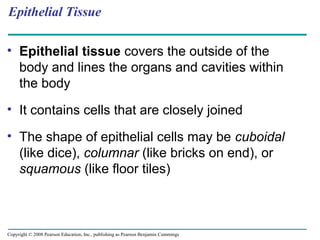
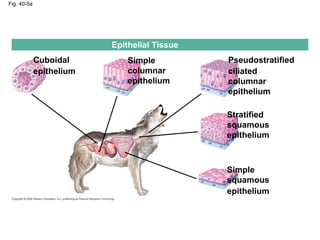
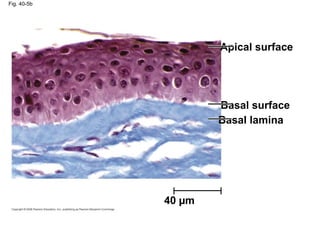
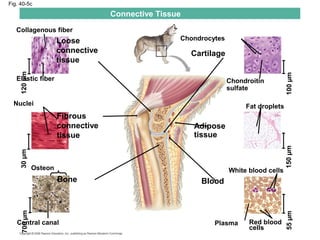
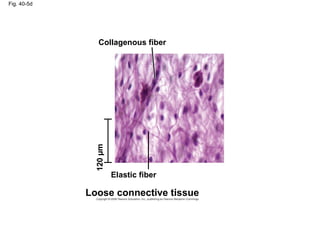
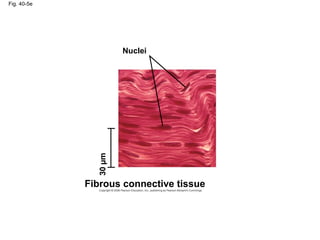
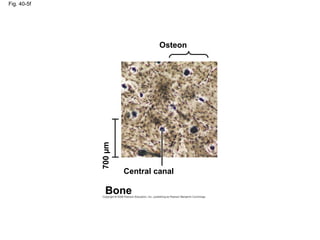
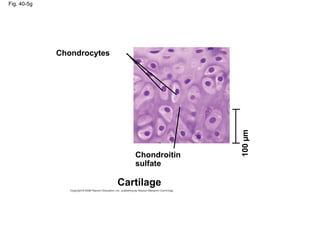
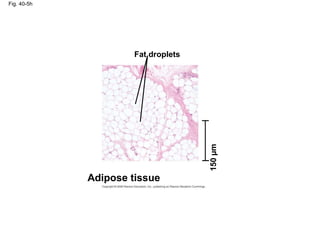
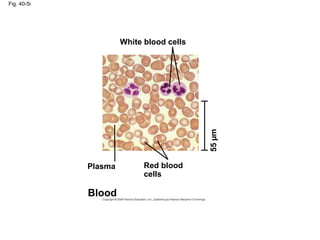
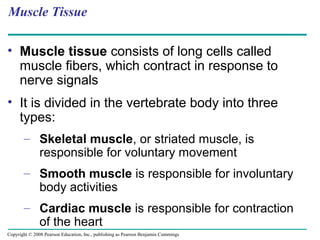
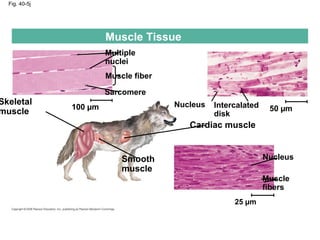
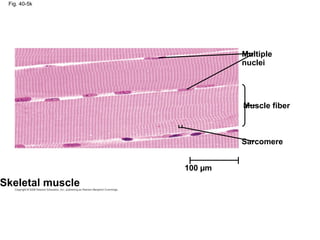
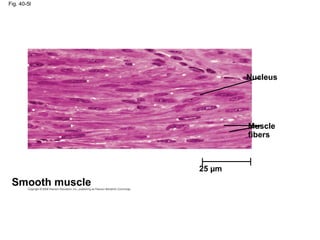
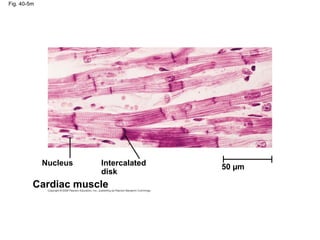
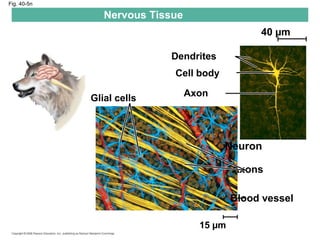
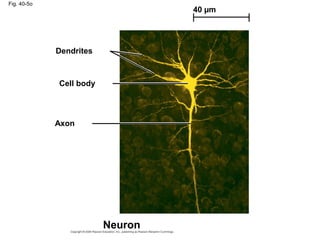
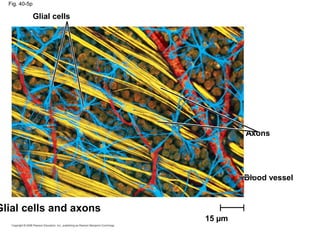
- Tissues are composed of specialized cells that combine into organs and organ systems through hierarchical organization. The four main tissue types each have distinct structures suited to their functions.
- Coordination and control within