Chapter 4   Fitness training
Learning outcomes: be able to define the different components of fitness and apply these to different sports •  know the different methods of training and apply these to particular sports by identifying specific training benefits/adaptations •  know what the principles of training are and be able to apply these to training programmes suitable for different people with different needs •  know why and when to carry out fitness tests and how to make these reliable and valid •  know the names and protocols of fitness tests for all the components of fitness
Body composition Body composition is used to describe the percentages of fat, bone and muscle that make up the human body Somatotyping is a way of classifying different body compositional make-ups
Body types Ectomorphic body type: long arms, long legs, short upper body and narrow shoulders Mesomorphic body type: large bones, solid torso, wide shoulders and narrow waist Endomorphic body type: large bone structure and wide waist
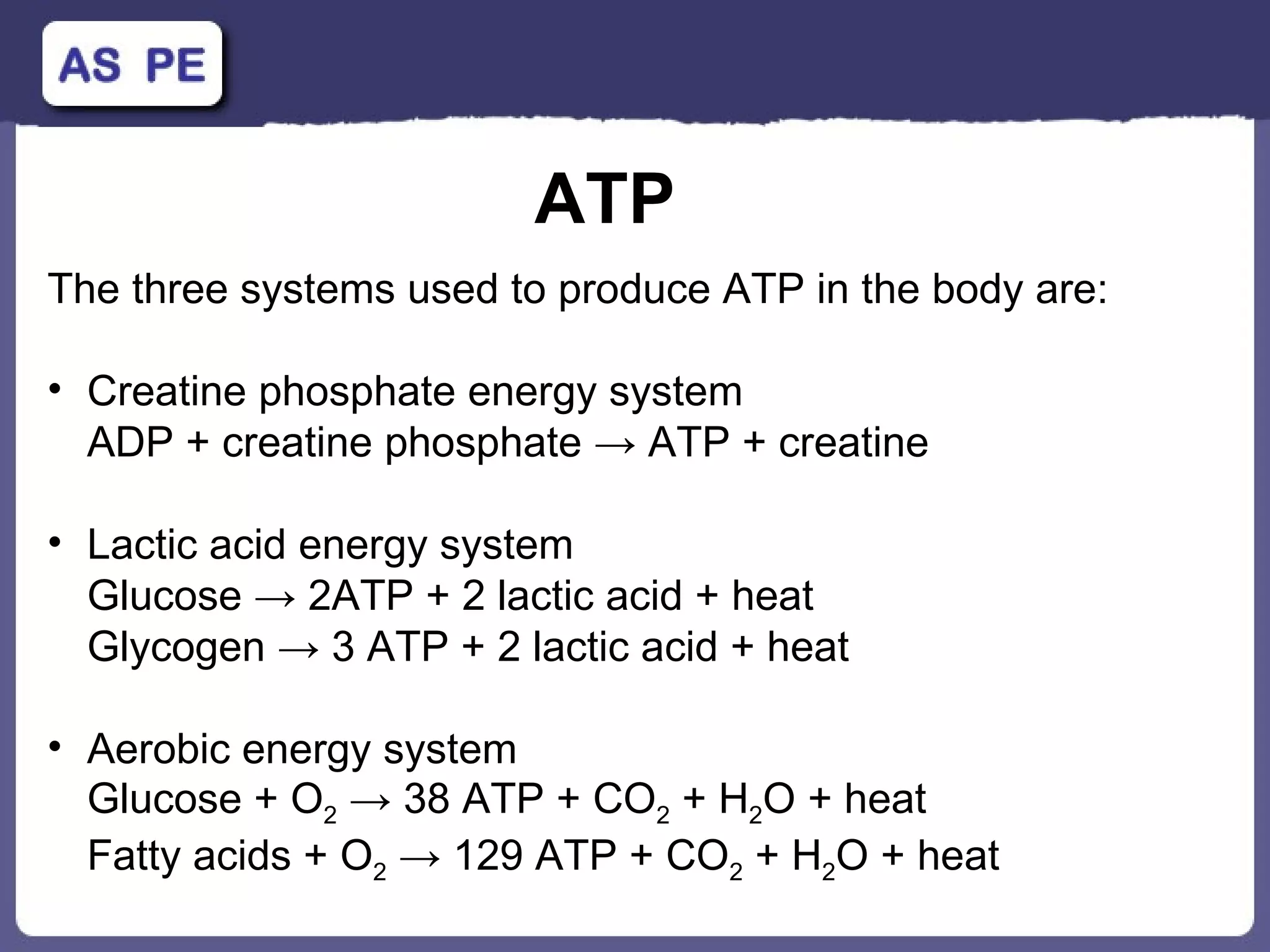
ATP The three systems used to produce ATP in the body are: Creatine phosphate energy system ADP + creatine phosphate  ->  ATP + creatine Lactic acid energy system  Glucose  -> 2ATP + 2 lactic acid + heat Glycogen -> 3 ATP + 2 lactic acid + heat Aerobic energy system Glucose + O 2   -> 38 ATP + CO 2  + H 2 O + heat Fatty acids + O 2  -> 129 ATP + CO 2  + H 2 O + heat

Chapter 4 presentation slides edex

  • 1.
    Chapter 4 Fitness training
  • 2.
    Learning outcomes: beable to define the different components of fitness and apply these to different sports • know the different methods of training and apply these to particular sports by identifying specific training benefits/adaptations • know what the principles of training are and be able to apply these to training programmes suitable for different people with different needs • know why and when to carry out fitness tests and how to make these reliable and valid • know the names and protocols of fitness tests for all the components of fitness
  • 3.
    Body composition Bodycomposition is used to describe the percentages of fat, bone and muscle that make up the human body Somatotyping is a way of classifying different body compositional make-ups
  • 4.
    Body types Ectomorphicbody type: long arms, long legs, short upper body and narrow shoulders Mesomorphic body type: large bones, solid torso, wide shoulders and narrow waist Endomorphic body type: large bone structure and wide waist
  • 5.
    ATP The threesystems used to produce ATP in the body are: Creatine phosphate energy system ADP + creatine phosphate -> ATP + creatine Lactic acid energy system Glucose -> 2ATP + 2 lactic acid + heat Glycogen -> 3 ATP + 2 lactic acid + heat Aerobic energy system Glucose + O 2 -> 38 ATP + CO 2 + H 2 O + heat Fatty acids + O 2 -> 129 ATP + CO 2 + H 2 O + heat