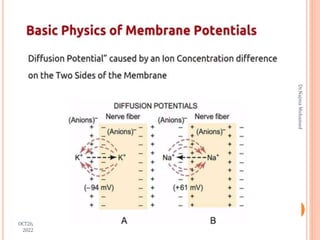
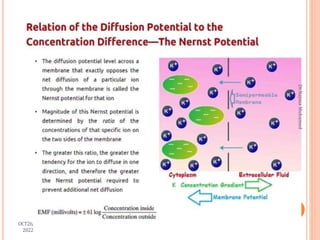
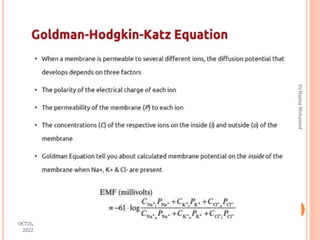
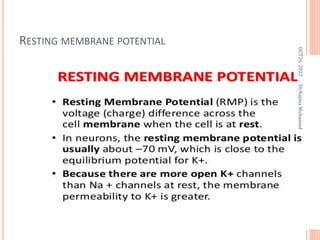
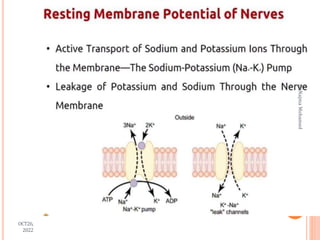
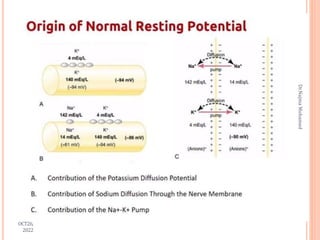
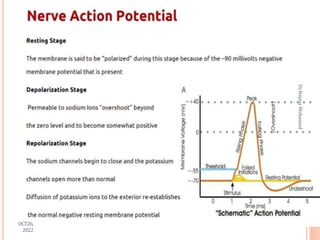
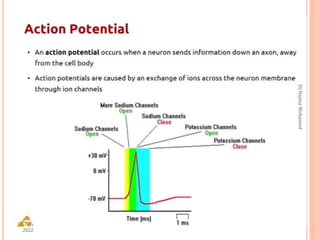
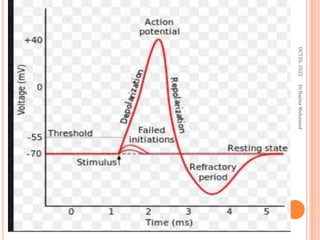
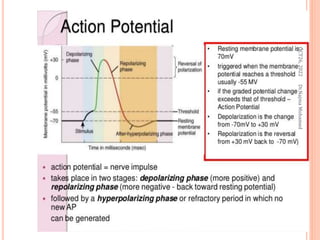
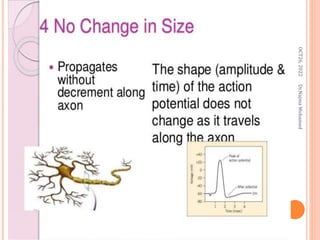
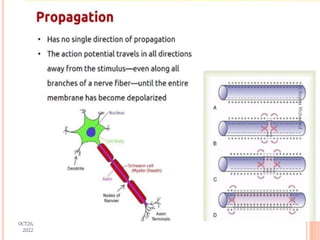
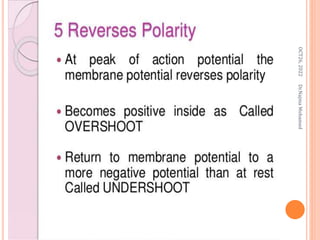
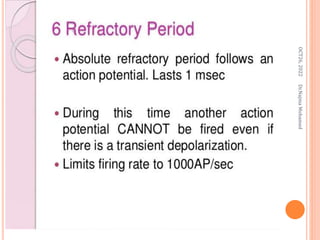
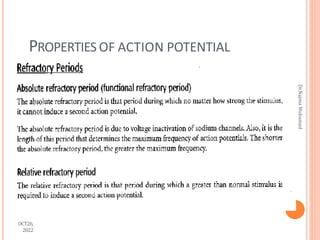
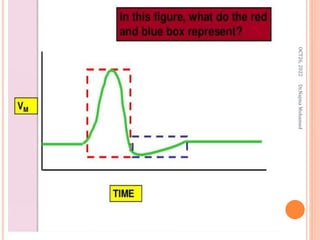
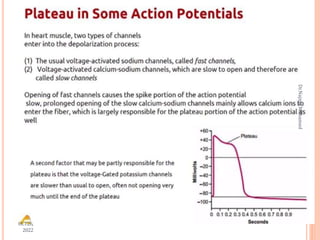
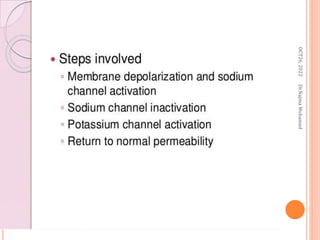
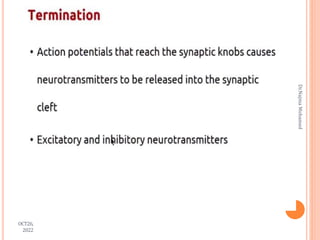
The document discusses membrane potentials in nerve and muscle cells. It explains that cells maintain a resting membrane potential due to different ion concentrations inside and outside the cell. When a cell is stimulated, an action potential is generated where the membrane potential rapidly changes. During an action potential, the membrane potential becomes more positive, reaching a threshold for activation and then repolarizes back to the resting potential. Action potentials allow signals to be transmitted rapidly along nerve and muscle cells.