Chapter 4
                                 The Planning and
                                Development Process
                         World of Resorts: From Development to Management
                                            Third Edition
                                        (424TXT or 424CIN)


© 2010, Educational Institute
Competencies for
   The Planning and Development Process
     1. Describe the role that developers often play in the
        creation of new resorts and what they expect in return
        for their efforts.
     2. Identify the participants in the planning and
        development process and how their efforts are
        organized and coordinated.
     3. Describe the five phases of resort planning and
        development and the steps taken in each phase.
     4. Delineate the content, uses, and limitations of the
        resort master plan.
© 2010, Educational Institute                                    2
Physical Plant Team Members
                           •    Developer
                           •    Land planner
                           •    Architect
                           •    Engineers
                           •    Interior designer
                           •    Landscape architect
                           •    General contractor and
                                subcontractors
                           •    Suppliers and manufacturers
                           •    Project managers
                           •    Technological consultants
                           •
© 2010, Educational Institute   Recreational facilities consultants   3
Ancillary Team Members
                •     Developer
                •     Feasibility consultant
                •     Market and financial analysts
                •     Social engineer
                •     Lawyers
                •     Management consultants or the resort operator
                •     Government advisors


© 2010, Educational Institute                                         4
Purposes of the Resort Master Plan
          • Is a planning tool to provide guidance for
            decisions
          • Describes the general development concept of the
            overall resort estate
          • Used to coordinate the preparation of more
            detailed plans
          • Lays out areas earmarked for future development


© 2010, Educational Institute   (continued)                    5
Purposes of the Resort Master Plan
                                (continued)


          • Analyzes the impact of new development on resort
            land over time
          • Includes timetables and goals for future growth
          • Establishes strategic planning policies
          • Provides reasonable certainty for investors based
            on forecast and pro forma data with detailed
            analysis


© 2010, Educational Institute                                   6
The Five Phases of Resort
                          Planning and Development

                    1. Conceptualization, planning, and initiation
                    2. Feasibility analysis
                    3. Commitment
                    4. Design, layout, and construction
                    5. Management and operation


© 2010, Educational Institute                                        7
Concerns in Resort Design and
                         Configuration
     •     Design, image, and marketing
     •     Lodging structures
     •     Recreational facilities
     •     Design of the general transportation system
     •     Freestanding restaurants, snack bars, retail, and rental shops
     •     Provision for future expansion
     •     Employee housing and related needs
     •     Support facilities and systems
     •     Resort hotel
     •     Deliveries, waste removal, security, and maintenance
     •     Food and beverage production
© 2010, Educational Institute                                               8
Main Elements in a Feasibility Study
         • A general overview of the area where the project will be
           developed, including the area’s economic climate, its
           political stability, travel trends in the area, community
           support, and weather patterns
         • A market analysis that looks at potential types and
           numbers of visitors/guests and where they will come
           from, market needs, seasonal patterns, and other data.
         • The physical characteristics of the site with particular
           reference to its advantages and disadvantages, possible
           alternative sites for the resort proposal, and the physical
           characteristics of the lodging facility projects.

© 2010, Educational Institute      (continued)                           9
Main Elements in a Feasibility Study
                                  (continued)


          • Financial information such as estimates of capital
            requirements, debt-equity leverage, cash flow
            statements, balance sheets, and income statement
            projections—also known as the pro forma statement.
          • Additional information such as import duties and
            restrictions on importation of materials needed for
            construction or operation.
          • Consensus and dissenting opinions of experts who
            have been consulted on the project’s feasibility.

© 2010, Educational Institute                                     10
Elements of the Commitment Phase
          • Land assembly/site acquisition
          • Agreements from public entities for development
            and funding assistance
          • Selection of and agreements with a hotel operator
            for franchise rights, affiliation, and/or
            management assistance, if applicable
          • Obtaining development rights for the site
          • Development of the general land-use plan
          • Selection of a project architect and engineer

© 2010, Educational Institute   (continued)                     11
Elements of the Commitment Phase
                                (continued)

          • Selection of a project developer
          • Refined project development costs, schedules, and
            drawings
          • Agreement among financing, developing, and
            operating entities
          • Obtaining necessary environmental documents
            and other governmental approvals and permits
          • Determination of ownership structure and securing
            finance
© 2010, Educational Institute                                   12
Four Conditions Covered in an EIS
                 1. Designation, purpose, and need of a project
                 2. Statement of how the environment will be
                    affected
                 3. Listing of possible alternatives and
                    mitigating circumstances
                 4. An analysis of each alternative


© 2010, Educational Institute                                     13
Requirements for an EIS
          • All probable environmental effects of the
            proposed action
          • Avoidable adverse impacts
          • Suggested measures for abating or eliminating
            probable adverse impacts
          • Discussion of the cumulative effects of the project
            in relation to other projects


© 2010, Educational Institute            (continued)              14
Requirements for an EIS
                                         (continued)

          • Alternatives to the proposed action and their
            probable environmental effects
          • Assessment of the trade-offs between short-term
            effects and long-term gains through investment in
            maintenance and enhancement
          • Commitment, irreversible and irretrievable, of
            required natural resources if the proposed action is
            implemented

© 2010, Educational Institute                                      15
Characteristics of an
      Intense/High-Activity Type of Resort

              • Activities and facilities located close together
              • Atmosphere of constant action and excitement
              • More hotel units, smaller rooms
              • Compact use of space
              • Greater attention to acoustical treatment
              • Small restaurants with higher turnovers

© 2010, Educational Institute                                      16
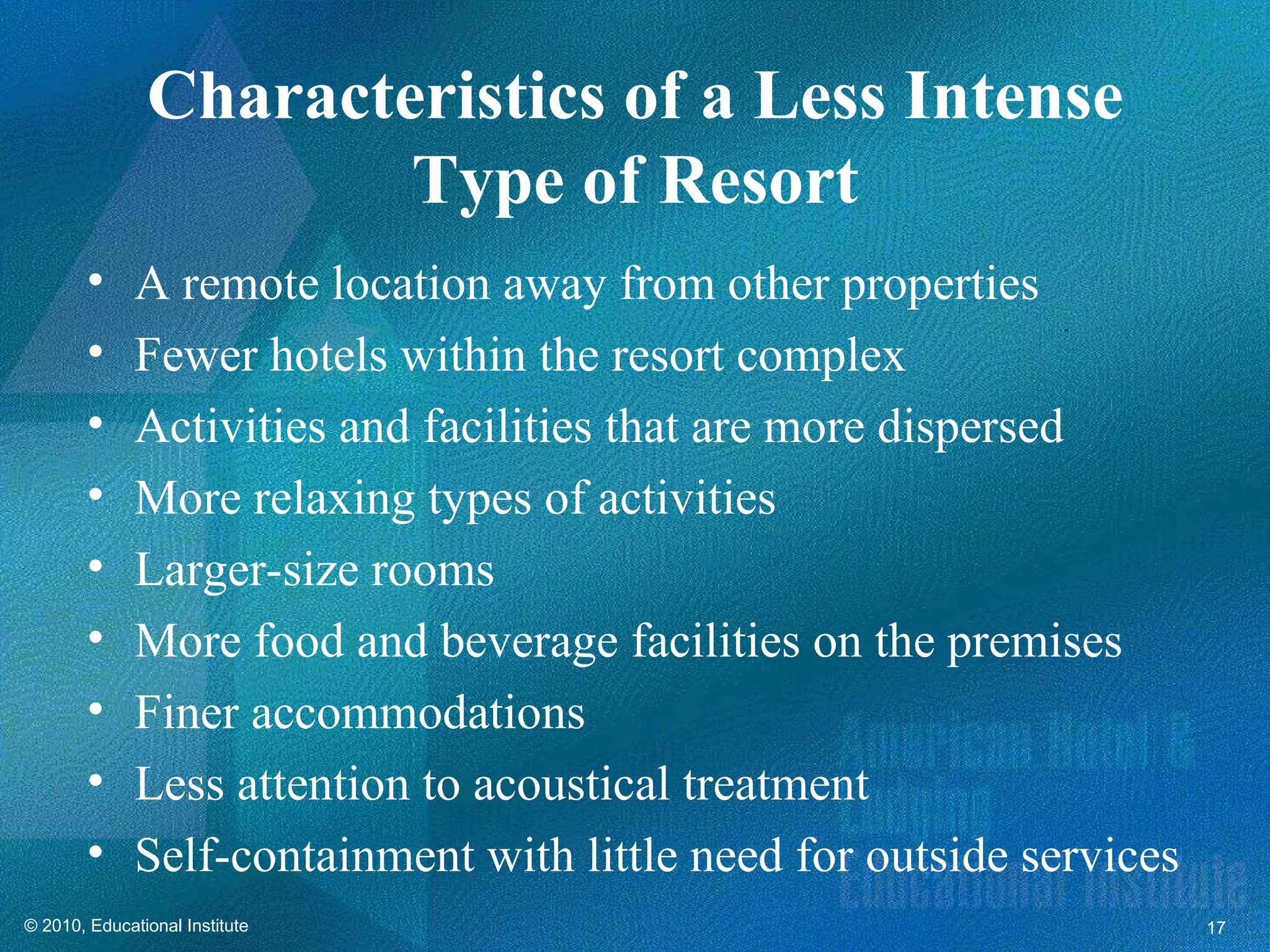
Characteristics of a Less Intense
                       Type of Resort
        •     A remote location away from other properties
        •     Fewer hotels within the resort complex
        •     Activities and facilities that are more dispersed
        •     More relaxing types of activities
        •     Larger-size rooms
        •     More food and beverage facilities on the premises
        •     Finer accommodations
        •     Less attention to acoustical treatment
        •     Self-containment with little need for outside services
© 2010, Educational Institute                                          17
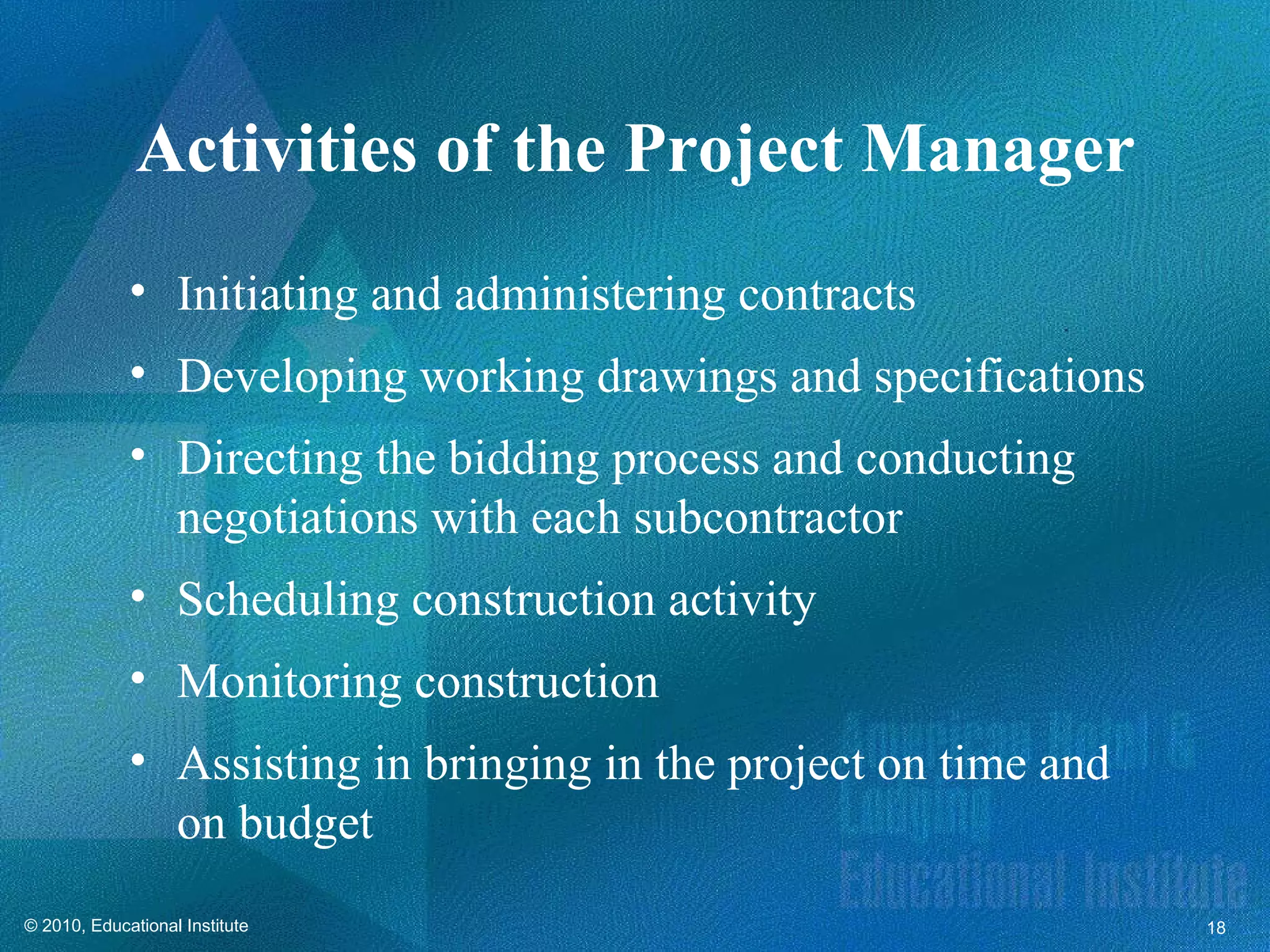
Activities of the Project Manager
             • Initiating and administering contracts
             • Developing working drawings and specifications
             • Directing the bidding process and conducting
               negotiations with each subcontractor
             • Scheduling construction activity
             • Monitoring construction
             • Assisting in bringing in the project on time and
               on budget
© 2010, Educational Institute                                     18
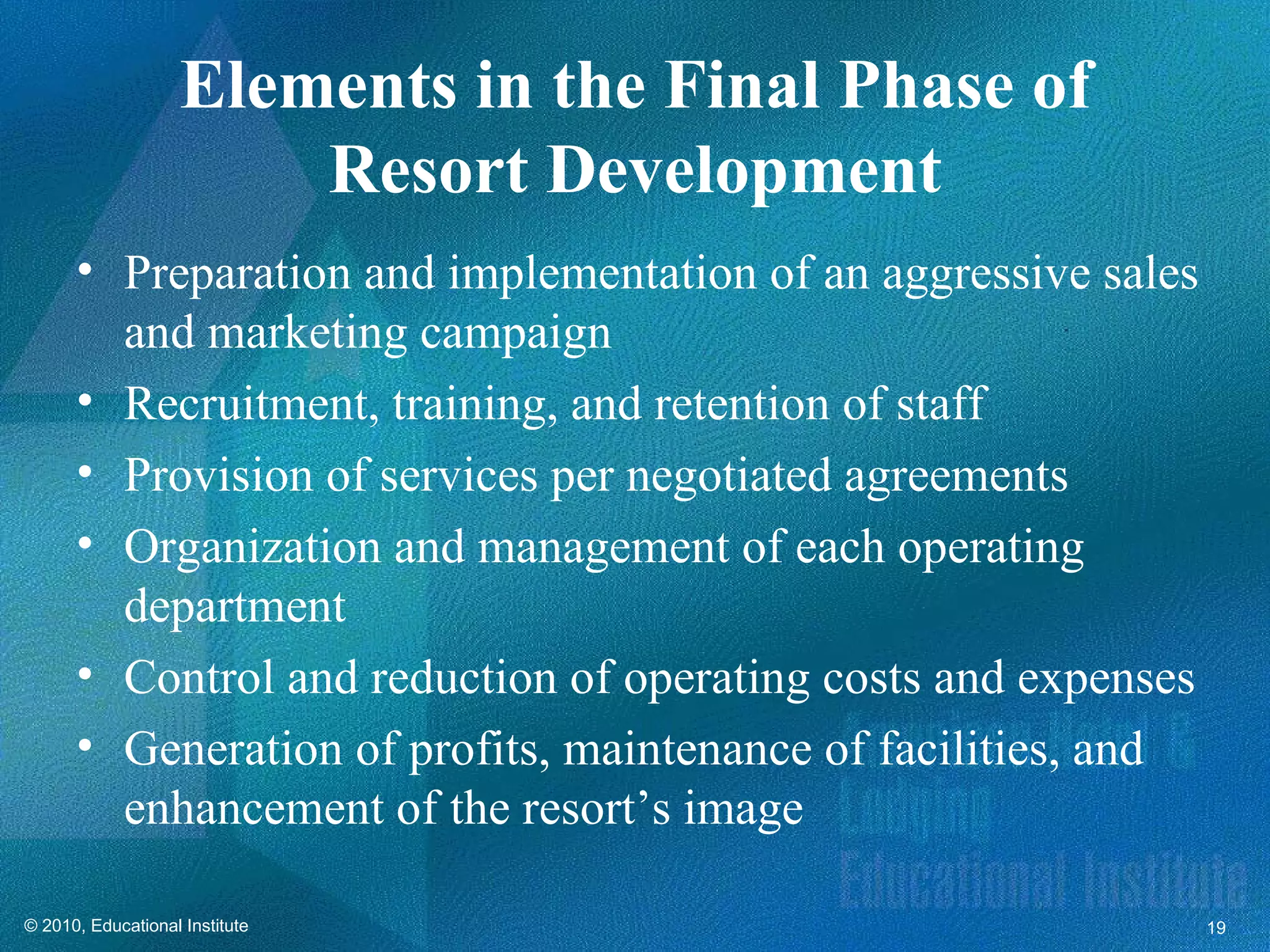
Elements in the Final Phase of
                        Resort Development
      • Preparation and implementation of an aggressive sales
        and marketing campaign
      • Recruitment, training, and retention of staff
      • Provision of services per negotiated agreements
      • Organization and management of each operating
        department
      • Control and reduction of operating costs and expenses
      • Generation of profits, maintenance of facilities, and
        enhancement of the resort’s image

© 2010, Educational Institute                                   19
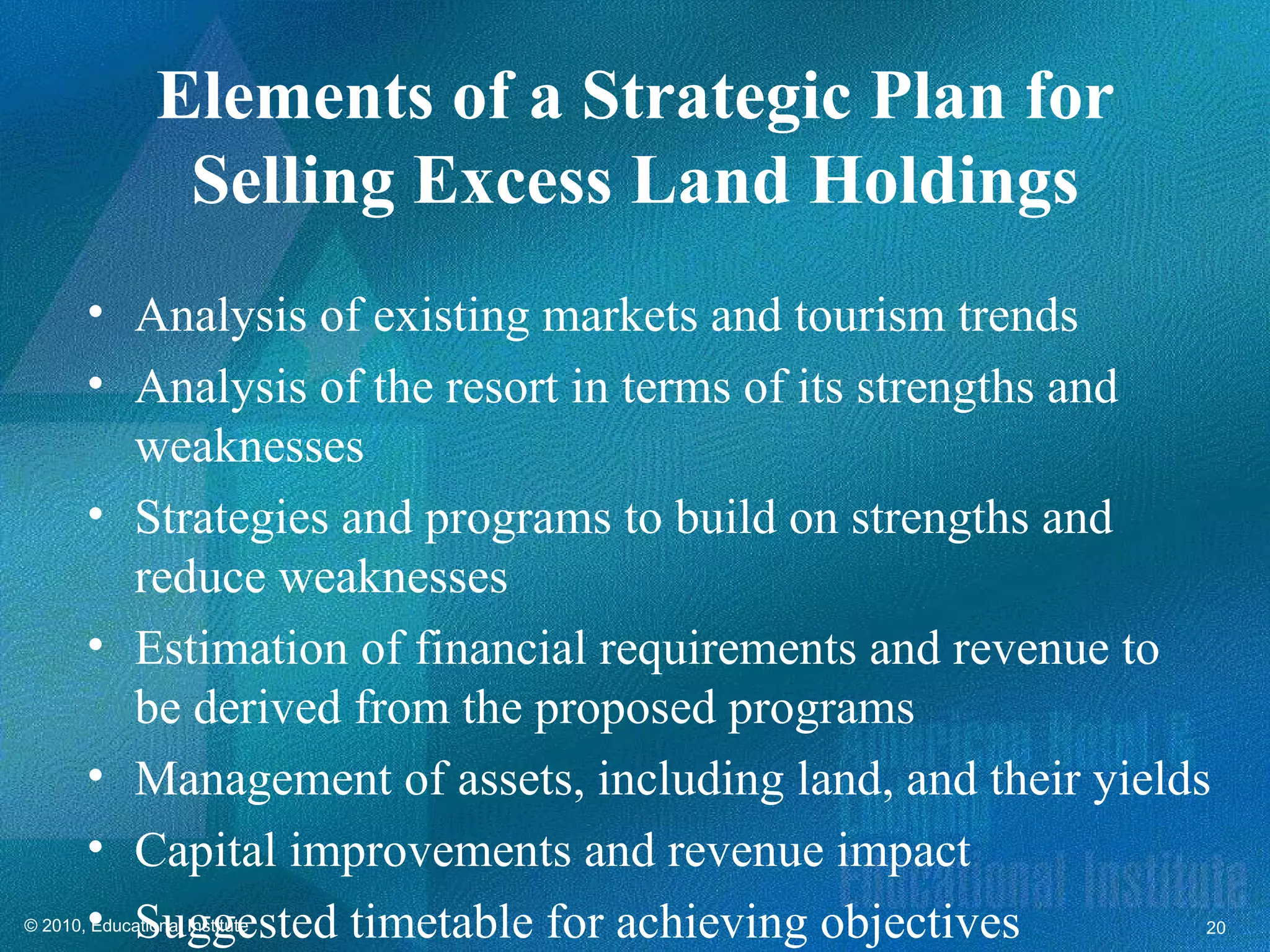
Elements of a Strategic Plan for
                  Selling Excess Land Holdings
        • Analysis of existing markets and tourism trends
        • Analysis of the resort in terms of its strengths and
          weaknesses
        • Strategies and programs to build on strengths and
          reduce weaknesses
        • Estimation of financial requirements and revenue to
          be derived from the proposed programs
        • Management of assets, including land, and their yields
        • Capital improvements and revenue impact
        • Suggested timetable for achieving objectives
© 2010, Educational Institute                                  20

Chapter 4

  • 1.
    Chapter 4 The Planning and Development Process World of Resorts: From Development to Management Third Edition (424TXT or 424CIN) © 2010, Educational Institute
  • 2.
    Competencies for The Planning and Development Process 1. Describe the role that developers often play in the creation of new resorts and what they expect in return for their efforts. 2. Identify the participants in the planning and development process and how their efforts are organized and coordinated. 3. Describe the five phases of resort planning and development and the steps taken in each phase. 4. Delineate the content, uses, and limitations of the resort master plan. © 2010, Educational Institute 2
  • 3.
    Physical Plant TeamMembers • Developer • Land planner • Architect • Engineers • Interior designer • Landscape architect • General contractor and subcontractors • Suppliers and manufacturers • Project managers • Technological consultants • © 2010, Educational Institute Recreational facilities consultants 3
  • 4.
    Ancillary Team Members • Developer • Feasibility consultant • Market and financial analysts • Social engineer • Lawyers • Management consultants or the resort operator • Government advisors © 2010, Educational Institute 4
  • 5.
    Purposes of theResort Master Plan • Is a planning tool to provide guidance for decisions • Describes the general development concept of the overall resort estate • Used to coordinate the preparation of more detailed plans • Lays out areas earmarked for future development © 2010, Educational Institute (continued) 5
  • 6.
    Purposes of theResort Master Plan (continued) • Analyzes the impact of new development on resort land over time • Includes timetables and goals for future growth • Establishes strategic planning policies • Provides reasonable certainty for investors based on forecast and pro forma data with detailed analysis © 2010, Educational Institute 6
  • 7.
    The Five Phasesof Resort Planning and Development 1. Conceptualization, planning, and initiation 2. Feasibility analysis 3. Commitment 4. Design, layout, and construction 5. Management and operation © 2010, Educational Institute 7
  • 8.
    Concerns in ResortDesign and Configuration • Design, image, and marketing • Lodging structures • Recreational facilities • Design of the general transportation system • Freestanding restaurants, snack bars, retail, and rental shops • Provision for future expansion • Employee housing and related needs • Support facilities and systems • Resort hotel • Deliveries, waste removal, security, and maintenance • Food and beverage production © 2010, Educational Institute 8
  • 9.
    Main Elements ina Feasibility Study • A general overview of the area where the project will be developed, including the area’s economic climate, its political stability, travel trends in the area, community support, and weather patterns • A market analysis that looks at potential types and numbers of visitors/guests and where they will come from, market needs, seasonal patterns, and other data. • The physical characteristics of the site with particular reference to its advantages and disadvantages, possible alternative sites for the resort proposal, and the physical characteristics of the lodging facility projects. © 2010, Educational Institute (continued) 9
  • 10.
    Main Elements ina Feasibility Study (continued) • Financial information such as estimates of capital requirements, debt-equity leverage, cash flow statements, balance sheets, and income statement projections—also known as the pro forma statement. • Additional information such as import duties and restrictions on importation of materials needed for construction or operation. • Consensus and dissenting opinions of experts who have been consulted on the project’s feasibility. © 2010, Educational Institute 10
  • 11.
    Elements of theCommitment Phase • Land assembly/site acquisition • Agreements from public entities for development and funding assistance • Selection of and agreements with a hotel operator for franchise rights, affiliation, and/or management assistance, if applicable • Obtaining development rights for the site • Development of the general land-use plan • Selection of a project architect and engineer © 2010, Educational Institute (continued) 11
  • 12.
    Elements of theCommitment Phase (continued) • Selection of a project developer • Refined project development costs, schedules, and drawings • Agreement among financing, developing, and operating entities • Obtaining necessary environmental documents and other governmental approvals and permits • Determination of ownership structure and securing finance © 2010, Educational Institute 12
  • 13.
    Four Conditions Coveredin an EIS 1. Designation, purpose, and need of a project 2. Statement of how the environment will be affected 3. Listing of possible alternatives and mitigating circumstances 4. An analysis of each alternative © 2010, Educational Institute 13
  • 14.
    Requirements for anEIS • All probable environmental effects of the proposed action • Avoidable adverse impacts • Suggested measures for abating or eliminating probable adverse impacts • Discussion of the cumulative effects of the project in relation to other projects © 2010, Educational Institute (continued) 14
  • 15.
    Requirements for anEIS (continued) • Alternatives to the proposed action and their probable environmental effects • Assessment of the trade-offs between short-term effects and long-term gains through investment in maintenance and enhancement • Commitment, irreversible and irretrievable, of required natural resources if the proposed action is implemented © 2010, Educational Institute 15
  • 16.
    Characteristics of an Intense/High-Activity Type of Resort • Activities and facilities located close together • Atmosphere of constant action and excitement • More hotel units, smaller rooms • Compact use of space • Greater attention to acoustical treatment • Small restaurants with higher turnovers © 2010, Educational Institute 16
  • 17.
    Characteristics of aLess Intense Type of Resort • A remote location away from other properties • Fewer hotels within the resort complex • Activities and facilities that are more dispersed • More relaxing types of activities • Larger-size rooms • More food and beverage facilities on the premises • Finer accommodations • Less attention to acoustical treatment • Self-containment with little need for outside services © 2010, Educational Institute 17
  • 18.
    Activities of theProject Manager • Initiating and administering contracts • Developing working drawings and specifications • Directing the bidding process and conducting negotiations with each subcontractor • Scheduling construction activity • Monitoring construction • Assisting in bringing in the project on time and on budget © 2010, Educational Institute 18
  • 19.
    Elements in theFinal Phase of Resort Development • Preparation and implementation of an aggressive sales and marketing campaign • Recruitment, training, and retention of staff • Provision of services per negotiated agreements • Organization and management of each operating department • Control and reduction of operating costs and expenses • Generation of profits, maintenance of facilities, and enhancement of the resort’s image © 2010, Educational Institute 19
  • 20.
    Elements of aStrategic Plan for Selling Excess Land Holdings • Analysis of existing markets and tourism trends • Analysis of the resort in terms of its strengths and weaknesses • Strategies and programs to build on strengths and reduce weaknesses • Estimation of financial requirements and revenue to be derived from the proposed programs • Management of assets, including land, and their yields • Capital improvements and revenue impact • Suggested timetable for achieving objectives © 2010, Educational Institute 20