Chapter 38
Origins of the Cold War
How did the United States and
the Soviet Union become Cold
War adversaries?
Introduction
 During WWII the U.S. and the Soviet
Union had been Allies
 As one conflict came to an end another
was about to begin
 It wouldn’t be long until the United States
and the Soviet Union would engage in a
grim struggle for world power known as
the Cold War.
Forming an Uneasy Peace 1
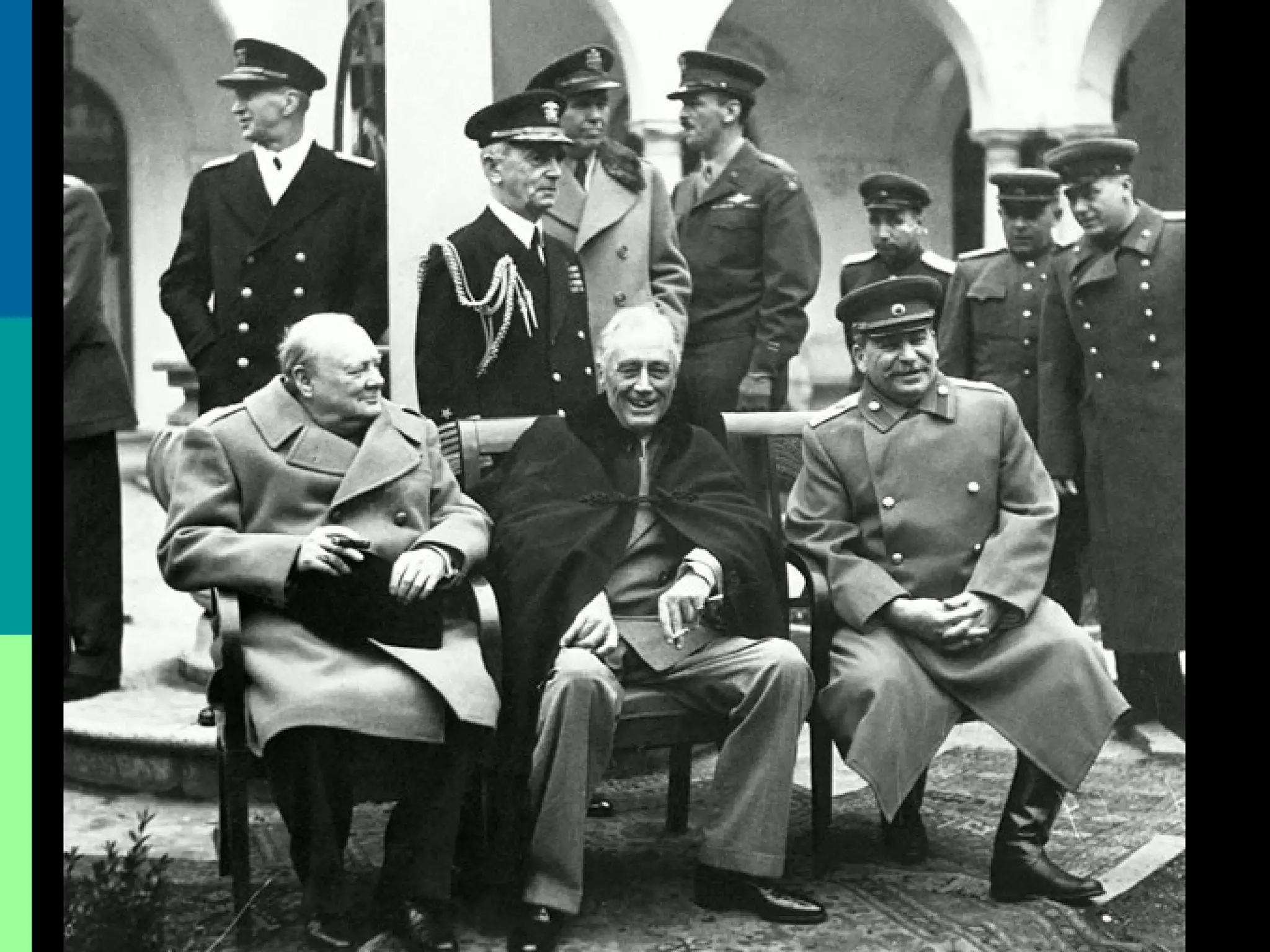
 In February 1945, Franklin Roosevelt, Joseph
Stalin, and Winston Churchill met in the Soviet
city of Yalta for the Yalta Conference.
 Discussed postwar plans for Europe
 Decided to divide Germany into 4 occupation
zones. Each controlled by a different Allied
country
 Supported self-government and free elections
in Eastern Europe
Forming an Uneasy Peace 2
 http://www.youtube.com/watch?v=ybnzMnFEWJY
 At the Potsdam Conference, the Allies finalized
their postwar plans for Germany, including the
division of Berlin into occupation zones.
 Truman and Stalin held very different visions of
postwar Europe.
 Truman wanted to allow Eastern European
nations to determine their own form of
government.
 Stalin wanted to create a buffer zone of friendly
communist states to protect the USSR.
Forming an Uneasy Peace 3
 They viewed Europe’s future differently in part
because of their very different experiences in
World War II. The USSR had suffered
enormous casualties.
 The United States suffered far less from the
war.
 The Soviet Union hoped for aid from the U.S.
to rebuild after the war, but Truman stopped
all lend-lease shipments to the Soviet Union.
Forming an Uneasy Peace 4
 The U.S. and Soviet union also had sharp
differences in ideology, or the set of beliefs
that form the basis of a political and economic
system.
 The United States hoped to see capitalist
democracy spread throughout Europe.
 The USSR hoped European countries would
accept its system, which was communism.
Adjusting to a Postwar World 1
 The United States and the Soviet Union
now stood alone as leading powers in the
world.
 Most nations chose or were forced to align
with one superpower or the other. The
world was dividing into two power blocs.
 George Kennan, a U.S. diplomat, viewed
the policy of containment—the restriction
of Soviet expansion—as a political
strategy, not a military one.
Adjusting to a Postwar World 2
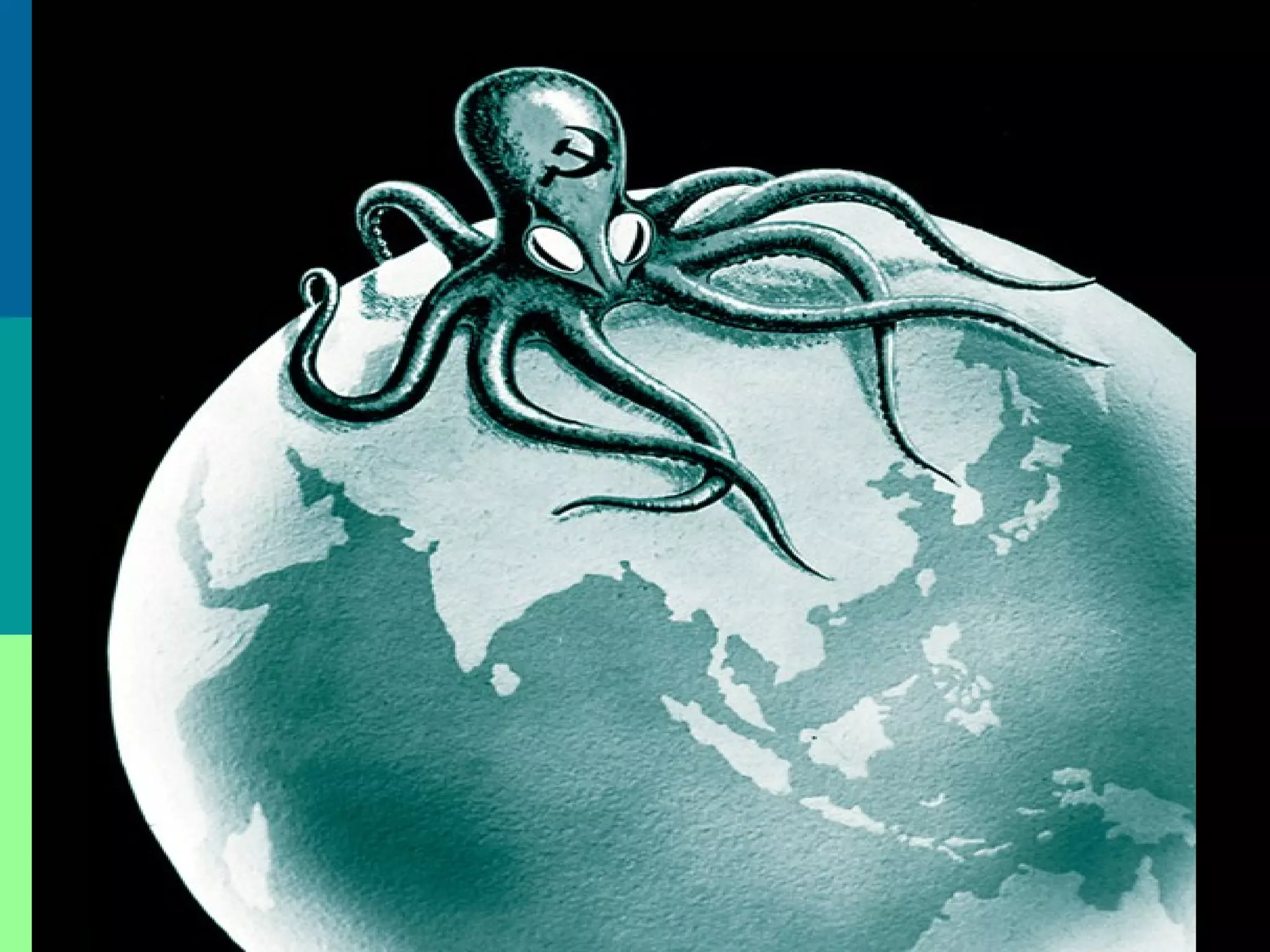
 U.S. leaders feared that the USSR planned
to spread communism beyond Eastern
Europe to other parts of the world.
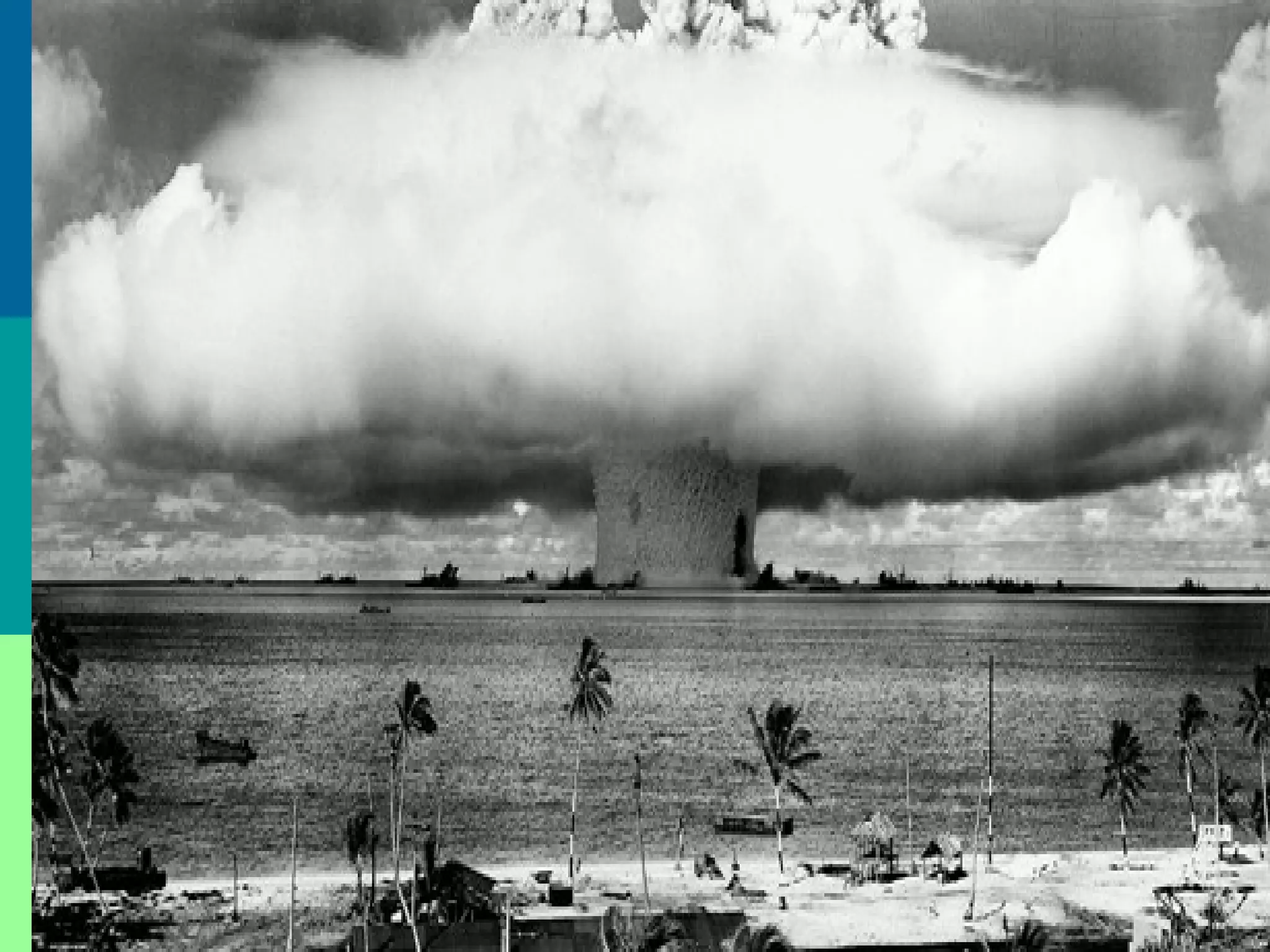
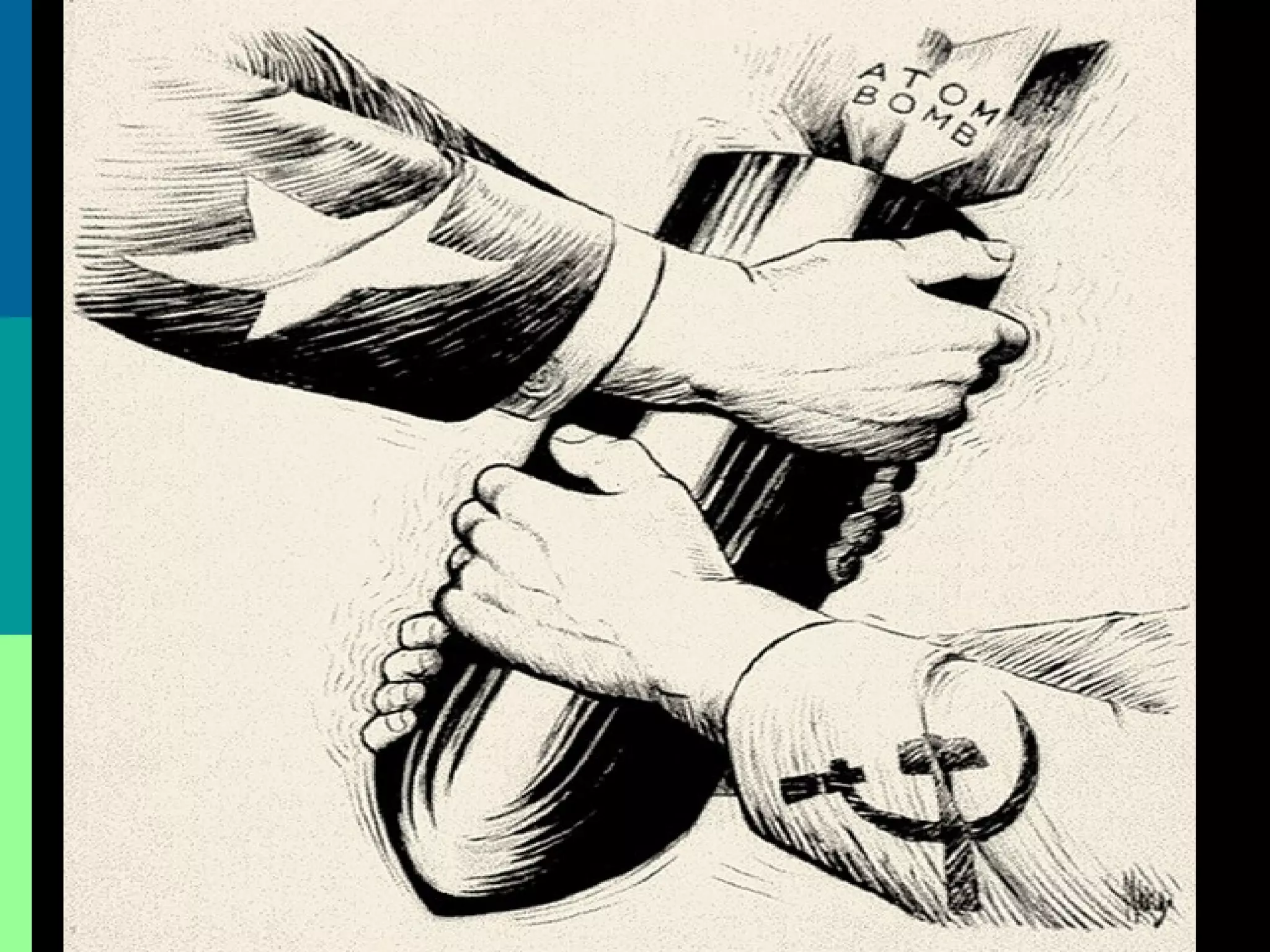
 The threat of a nuclear attack compelled
both countries to show restraint in their
use of force, but it also fueled the race to
develop nuclear weapons.
 http://www.youtube.com/watch?v=Yc_T3nSlg7M
 http://www.youtube.com/watch?v=-l6Q8Q1smwg
Adjusting to a Postwar World 3
 The Baruch Plan, would allow the United
States to retain its small nuclear stockpile.
it would deny the Soviet Union and other
nations the right to build bombs.
 Because neither the U.S. or Soviet Union
would budge, this early effort at nuclear
arms control came to an end.
Confronting the Communist Threat 1
 The term Iron Curtain came to symbolize
the growing barrier between East and
West Europe.
 http://www.youtube.com/watch?
v=S2PUIQpAEAQ&feature=related
 By the time Churchill gave his speech,
Stalin was already setting up Soviet-
controlled governments in Poland and
other countries of Eastern Europe.
Confronting the Communist
Threat 2
 After the war, both Greece and Turkey
faced potential communist takeovers.
 The Truman Doctrine committed the
United States to a foreign policy based on
Kennan’s strategy of containment.
Rebuilding European Economies 1
 On both sides of the Iron Curtain, Europe
was in terrible shape after the war.
 The challenge of rebuilding war-torn
Europe was enormous.
 U.S. leaders feared that conditions in
Europe would give rise to political and
social unrest.
Rebuilding European Economies 2
 Truman reasoned that rebuilding shattered
economies and supporting freely elected
governments would be the best way to stop
communism from spreading.
 This recovery plan became known as
the Marshall Plan. It offered all European
nations, including the Soviet Union,
generous funding to rebuild their economies
as long as the money was spent on goods
made in the United States.
Rebuilding European Economies 3
 This aid would play a crucial role in
stimulating economic growth and
prosperity in Western Europe.
 Although the United States painted the
Marshall Plan as a generous effort to aid
European recovery, Soviet leaders
questioned its motives. They believed that
its real purpose was to create a U.S.
sphere of influence in Western Europe.
Rebuilding European Economies 4
 To compete with its rival, in 1949 the
Soviet Union created the Molotov Plan,
named after Foreign Minister Vyacheslav
Molotov. This plan was designed to aid
economic recovery in Eastern Europe.
 By 1949, the wartime alliance of the
United States and the Soviet Union had
turned into a relationship of mutual
distrust and suspicion.
Rebuilding European Economies 5
 Although the hostility between the two
superpowers and their allies often heated
up, it never led to armed conflict between
the United States and the Soviet Union. It
was for that reason that this postwar
struggle became known as the Cold War.
Summary
 In the postwar period, clear differences
between the United States and the Soviet
Union soon emerged.
 Communist ideology and the creation of
Soviet-backed states in Eastern Europe
alarmed the U.S. government.
 The United States responded with efforts to
support European democracy and limit Soviet
expansion.
 As the rivalry intensified, Europe divided into
communist-controlled Eastern Europe and
mostly democratic Western Europe.
Any Questions???

Chapter 38

  • 1.
    Chapter 38 Origins ofthe Cold War How did the United States and the Soviet Union become Cold War adversaries?
  • 2.
    Introduction  During WWIIthe U.S. and the Soviet Union had been Allies  As one conflict came to an end another was about to begin  It wouldn’t be long until the United States and the Soviet Union would engage in a grim struggle for world power known as the Cold War.
  • 4.
    Forming an UneasyPeace 1  In February 1945, Franklin Roosevelt, Joseph Stalin, and Winston Churchill met in the Soviet city of Yalta for the Yalta Conference.  Discussed postwar plans for Europe  Decided to divide Germany into 4 occupation zones. Each controlled by a different Allied country  Supported self-government and free elections in Eastern Europe
  • 5.
    Forming an UneasyPeace 2  http://www.youtube.com/watch?v=ybnzMnFEWJY  At the Potsdam Conference, the Allies finalized their postwar plans for Germany, including the division of Berlin into occupation zones.  Truman and Stalin held very different visions of postwar Europe.  Truman wanted to allow Eastern European nations to determine their own form of government.  Stalin wanted to create a buffer zone of friendly communist states to protect the USSR.
  • 6.
    Forming an UneasyPeace 3  They viewed Europe’s future differently in part because of their very different experiences in World War II. The USSR had suffered enormous casualties.  The United States suffered far less from the war.  The Soviet Union hoped for aid from the U.S. to rebuild after the war, but Truman stopped all lend-lease shipments to the Soviet Union.
  • 7.
    Forming an UneasyPeace 4  The U.S. and Soviet union also had sharp differences in ideology, or the set of beliefs that form the basis of a political and economic system.  The United States hoped to see capitalist democracy spread throughout Europe.  The USSR hoped European countries would accept its system, which was communism.
  • 9.
    Adjusting to aPostwar World 1  The United States and the Soviet Union now stood alone as leading powers in the world.  Most nations chose or were forced to align with one superpower or the other. The world was dividing into two power blocs.  George Kennan, a U.S. diplomat, viewed the policy of containment—the restriction of Soviet expansion—as a political strategy, not a military one.
  • 10.
    Adjusting to aPostwar World 2  U.S. leaders feared that the USSR planned to spread communism beyond Eastern Europe to other parts of the world.  The threat of a nuclear attack compelled both countries to show restraint in their use of force, but it also fueled the race to develop nuclear weapons.  http://www.youtube.com/watch?v=Yc_T3nSlg7M  http://www.youtube.com/watch?v=-l6Q8Q1smwg
  • 11.
    Adjusting to aPostwar World 3  The Baruch Plan, would allow the United States to retain its small nuclear stockpile. it would deny the Soviet Union and other nations the right to build bombs.  Because neither the U.S. or Soviet Union would budge, this early effort at nuclear arms control came to an end.
  • 13.
    Confronting the CommunistThreat 1  The term Iron Curtain came to symbolize the growing barrier between East and West Europe.  http://www.youtube.com/watch? v=S2PUIQpAEAQ&feature=related  By the time Churchill gave his speech, Stalin was already setting up Soviet- controlled governments in Poland and other countries of Eastern Europe.
  • 14.
    Confronting the Communist Threat2  After the war, both Greece and Turkey faced potential communist takeovers.  The Truman Doctrine committed the United States to a foreign policy based on Kennan’s strategy of containment.
  • 16.
    Rebuilding European Economies1  On both sides of the Iron Curtain, Europe was in terrible shape after the war.  The challenge of rebuilding war-torn Europe was enormous.  U.S. leaders feared that conditions in Europe would give rise to political and social unrest.
  • 17.
    Rebuilding European Economies2  Truman reasoned that rebuilding shattered economies and supporting freely elected governments would be the best way to stop communism from spreading.  This recovery plan became known as the Marshall Plan. It offered all European nations, including the Soviet Union, generous funding to rebuild their economies as long as the money was spent on goods made in the United States.
  • 18.
    Rebuilding European Economies3  This aid would play a crucial role in stimulating economic growth and prosperity in Western Europe.  Although the United States painted the Marshall Plan as a generous effort to aid European recovery, Soviet leaders questioned its motives. They believed that its real purpose was to create a U.S. sphere of influence in Western Europe.
  • 19.
    Rebuilding European Economies4  To compete with its rival, in 1949 the Soviet Union created the Molotov Plan, named after Foreign Minister Vyacheslav Molotov. This plan was designed to aid economic recovery in Eastern Europe.  By 1949, the wartime alliance of the United States and the Soviet Union had turned into a relationship of mutual distrust and suspicion.
  • 20.
    Rebuilding European Economies5  Although the hostility between the two superpowers and their allies often heated up, it never led to armed conflict between the United States and the Soviet Union. It was for that reason that this postwar struggle became known as the Cold War.
  • 21.
    Summary  In thepostwar period, clear differences between the United States and the Soviet Union soon emerged.  Communist ideology and the creation of Soviet-backed states in Eastern Europe alarmed the U.S. government.  The United States responded with efforts to support European democracy and limit Soviet expansion.  As the rivalry intensified, Europe divided into communist-controlled Eastern Europe and mostly democratic Western Europe.
  • 22.