CHAPTER-2
CLASSIFICATION OF BACTERIA
1
Learning Objectives
At the end of this chapter, the student should be able to:
 Describe Taxonomy of bacteria
 Discuss Phenotypic(morphological) characteristics
 Discuss Genotypic characteristics
 Describe bacterial Nomenclature
2
Outline
• Taxonomy
• Phenotypic(morphological) characteristics
• Genotypic characteristics
• Nomenclature
3
Introduction
Bacteriology
 The major sub-division of medical microbiology which study about
medically important bacteria.
Bacterial Cell
General property
 Typical prokaryotic cell
 Contain both DNA and RNA
 Most grow in artificial media
 Replication is by binary fission
 Contain rigid cell wall
 Sensitive to antimicrobial agent
4
2.1 Taxonomic Classification of Organisms
Taxonomy
 Science of systemic classification, identification and nomenclature of
organisms
 Provides universal names for organisms
 provides a reference for identifying organisms
 Provide information about evolution of organisms
 For classification purposes, organisms are usually organized into subspecies,
species, genera, families, and higher orders. 5
Cont…
Classification
 Is the orderly arrangement of bacteria into groups( taxa).
 Taxon:-a group or category of related organisms.
 Based on similarity or relationship.
 Different groups of scientists may classify the same organisms
differently.
The general criteria for classification (grouping) of microorganism are:
• Genotypic /evolutionary relationship)
• Phenotypic
6
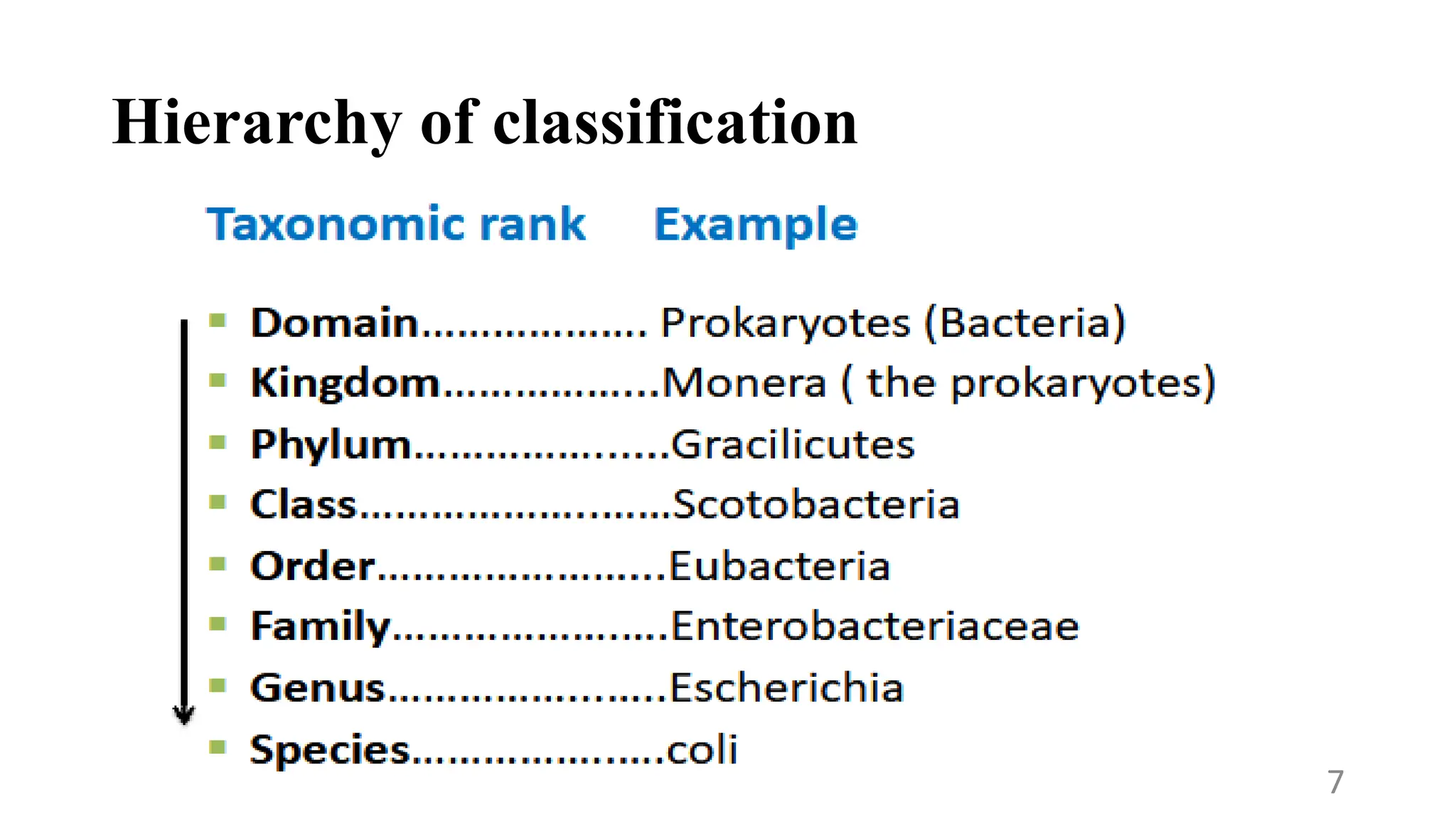
Hierarchy of classification
7
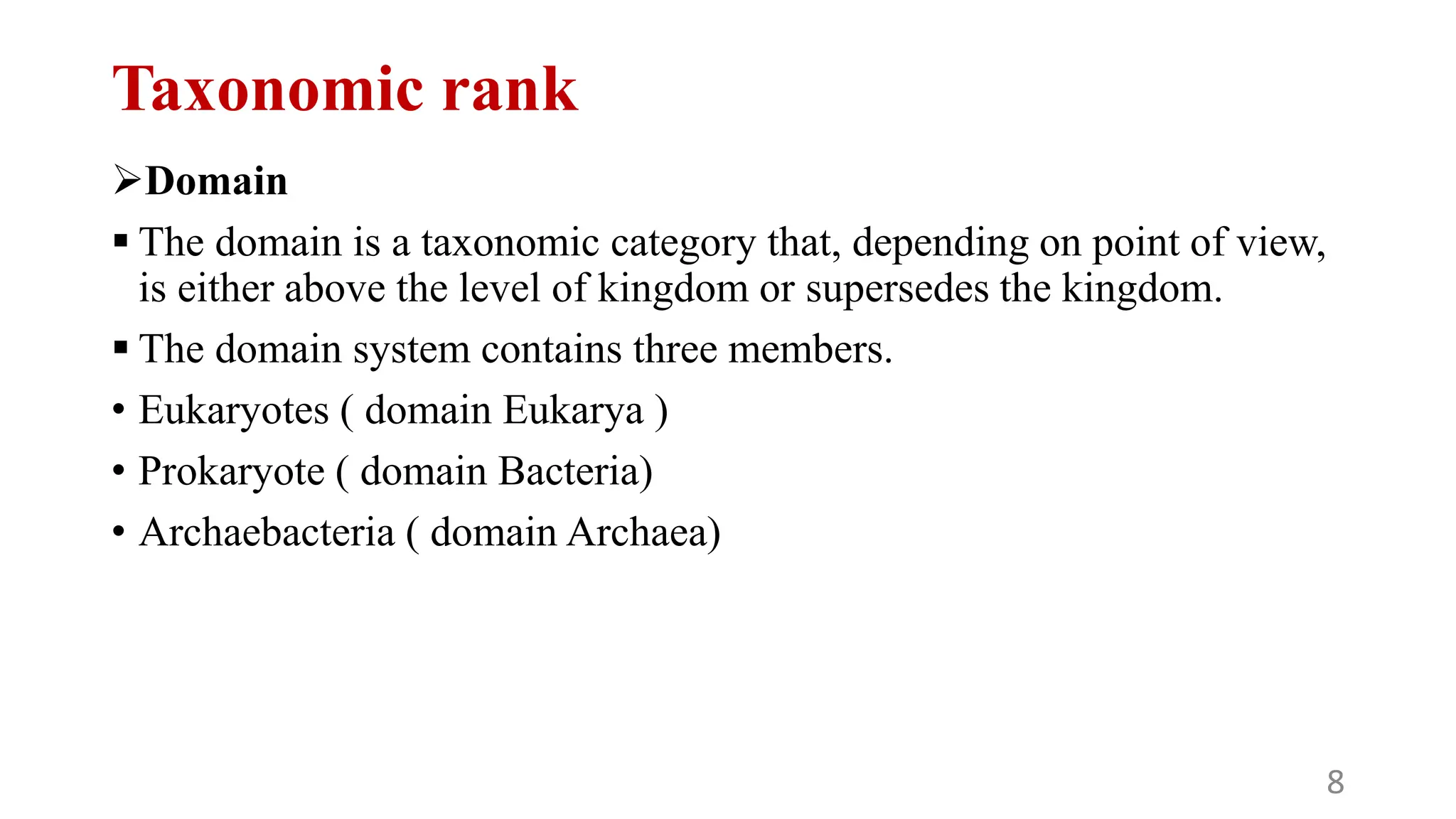
Taxonomic rank
Domain
 The domain is a taxonomic category that, depending on point of view,
is either above the level of kingdom or supersedes the kingdom.
 The domain system contains three members.
• Eukaryotes ( domain Eukarya )
• Prokaryote ( domain Bacteria)
• Archaebacteria ( domain Archaea)
8
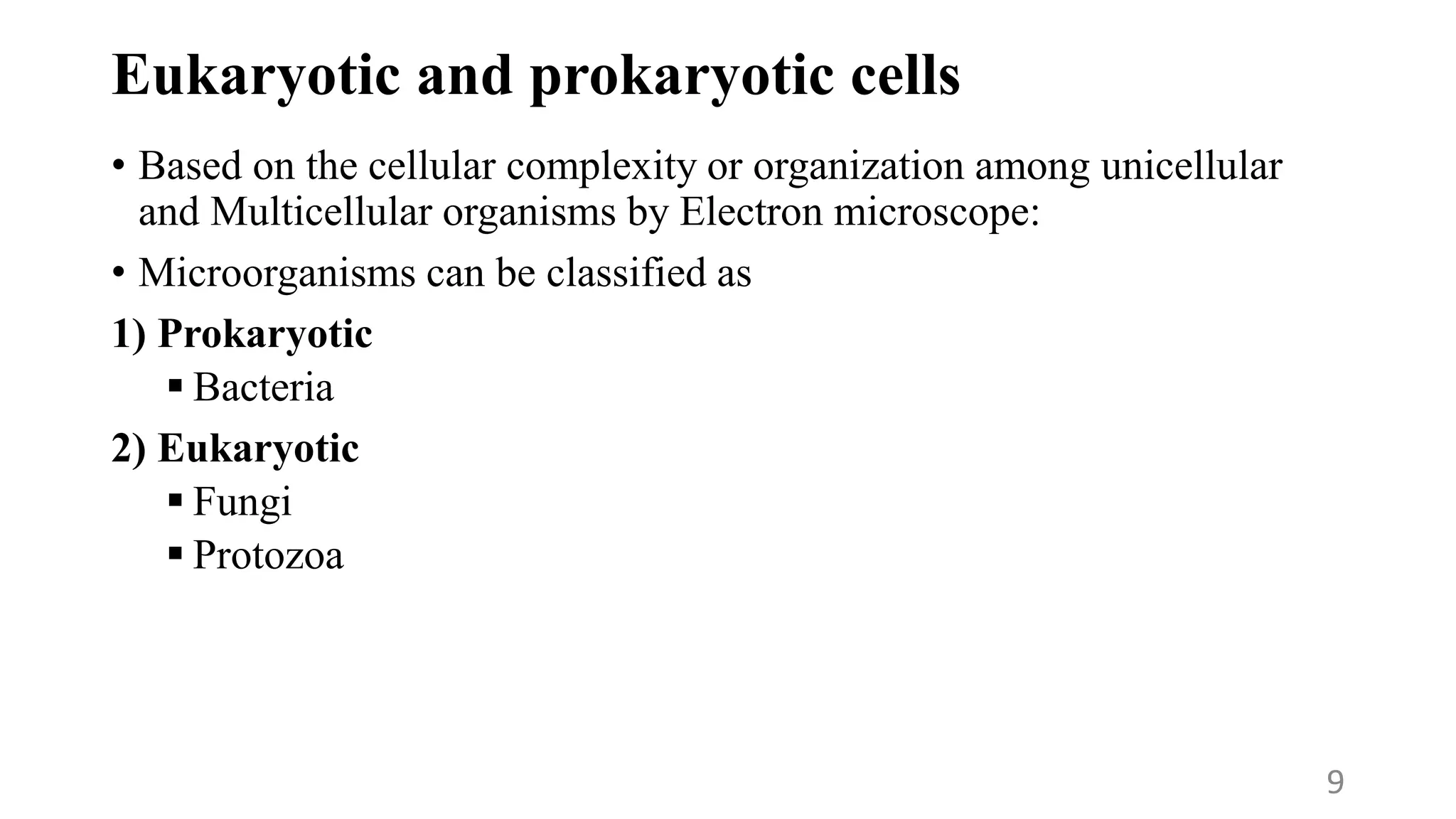
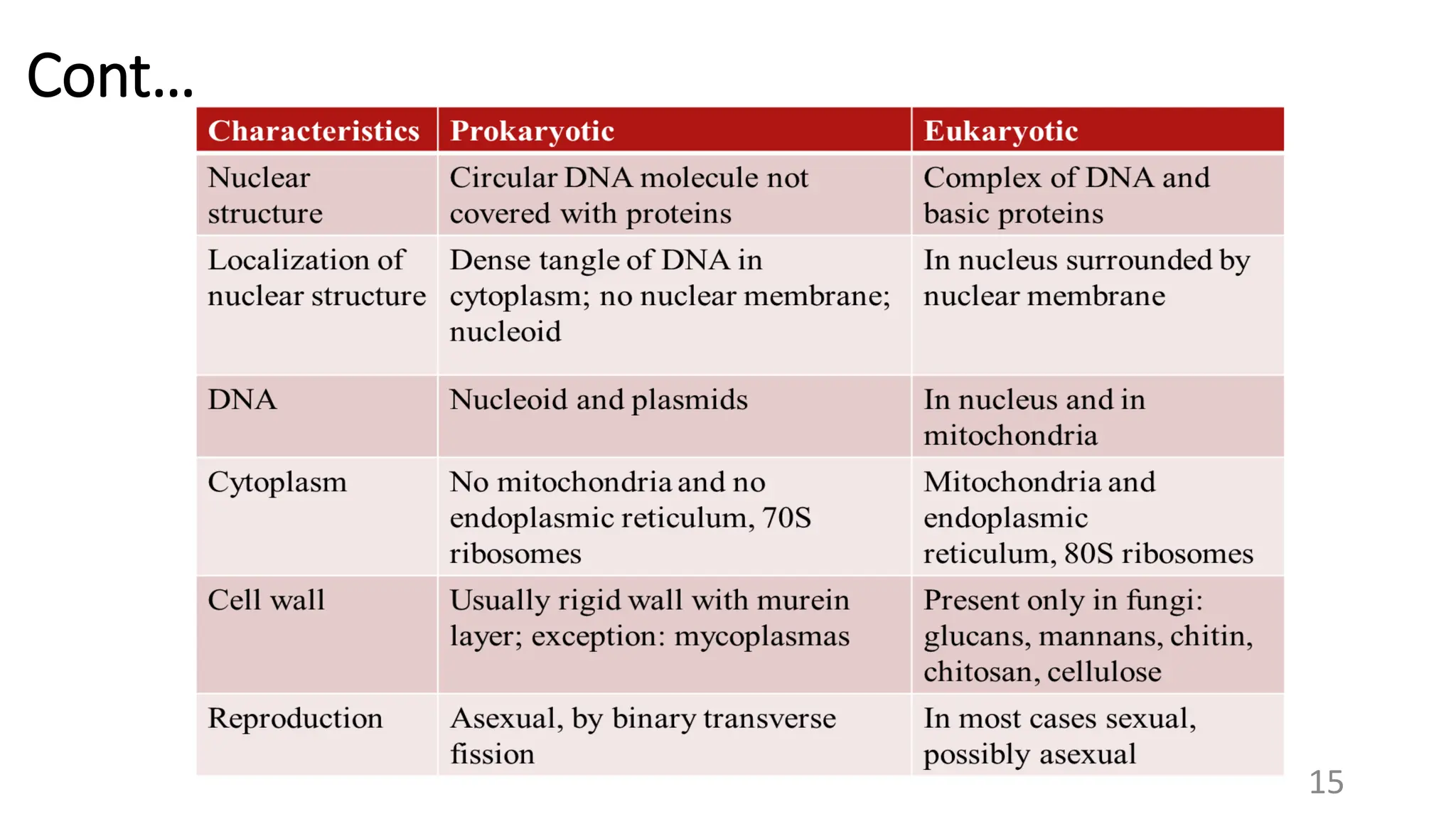
Eukaryotic and prokaryotic cells
• Based on the cellular complexity or organization among unicellular
and Multicellular organisms by Electron microscope:
• Microorganisms can be classified as
1) Prokaryotic
 Bacteria
2) Eukaryotic
 Fungi
 Protozoa
9
Cont…
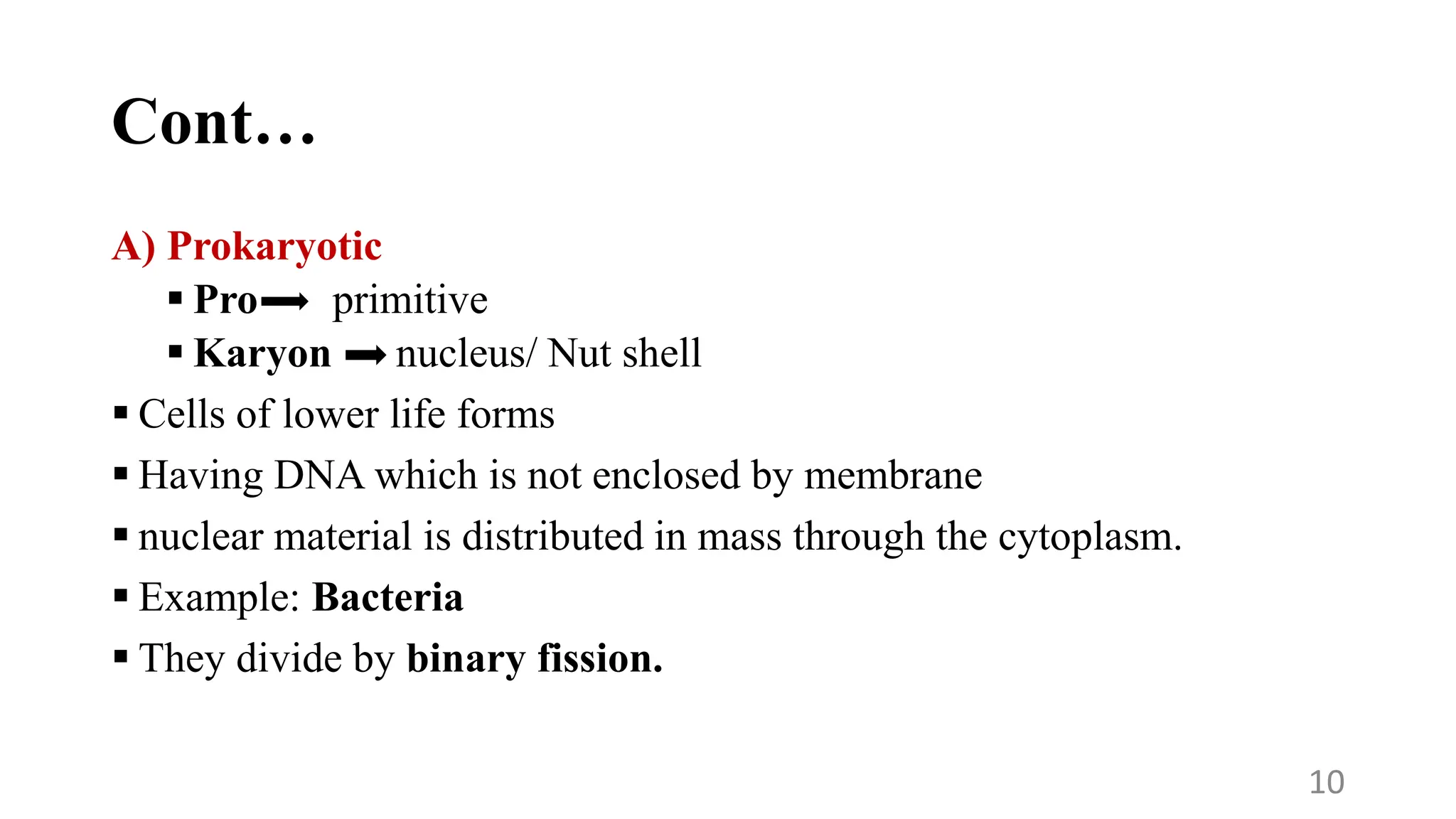
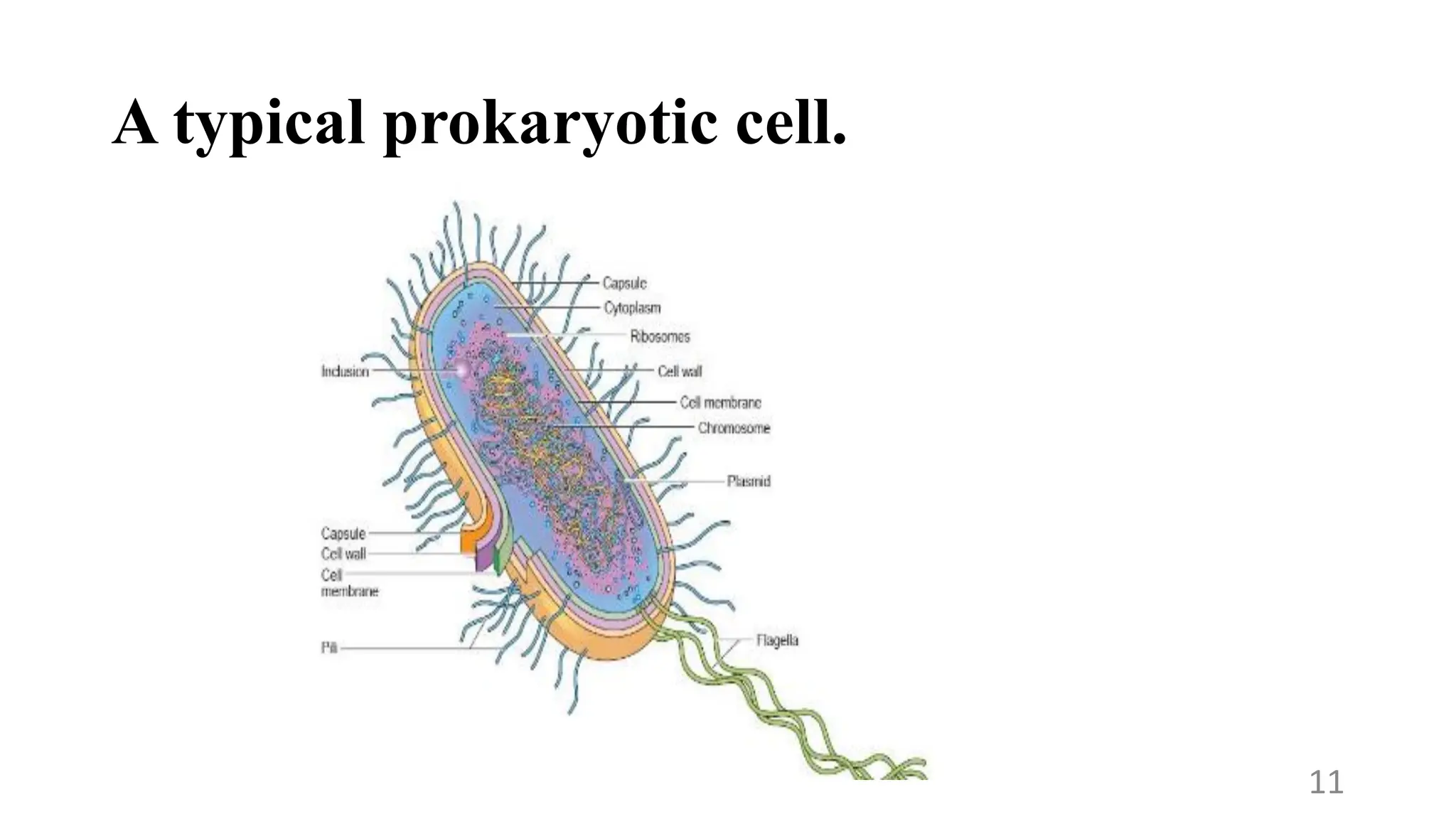
A) Prokaryotic
 Pro primitive
 Karyon nucleus/ Nut shell
 Cells of lower life forms
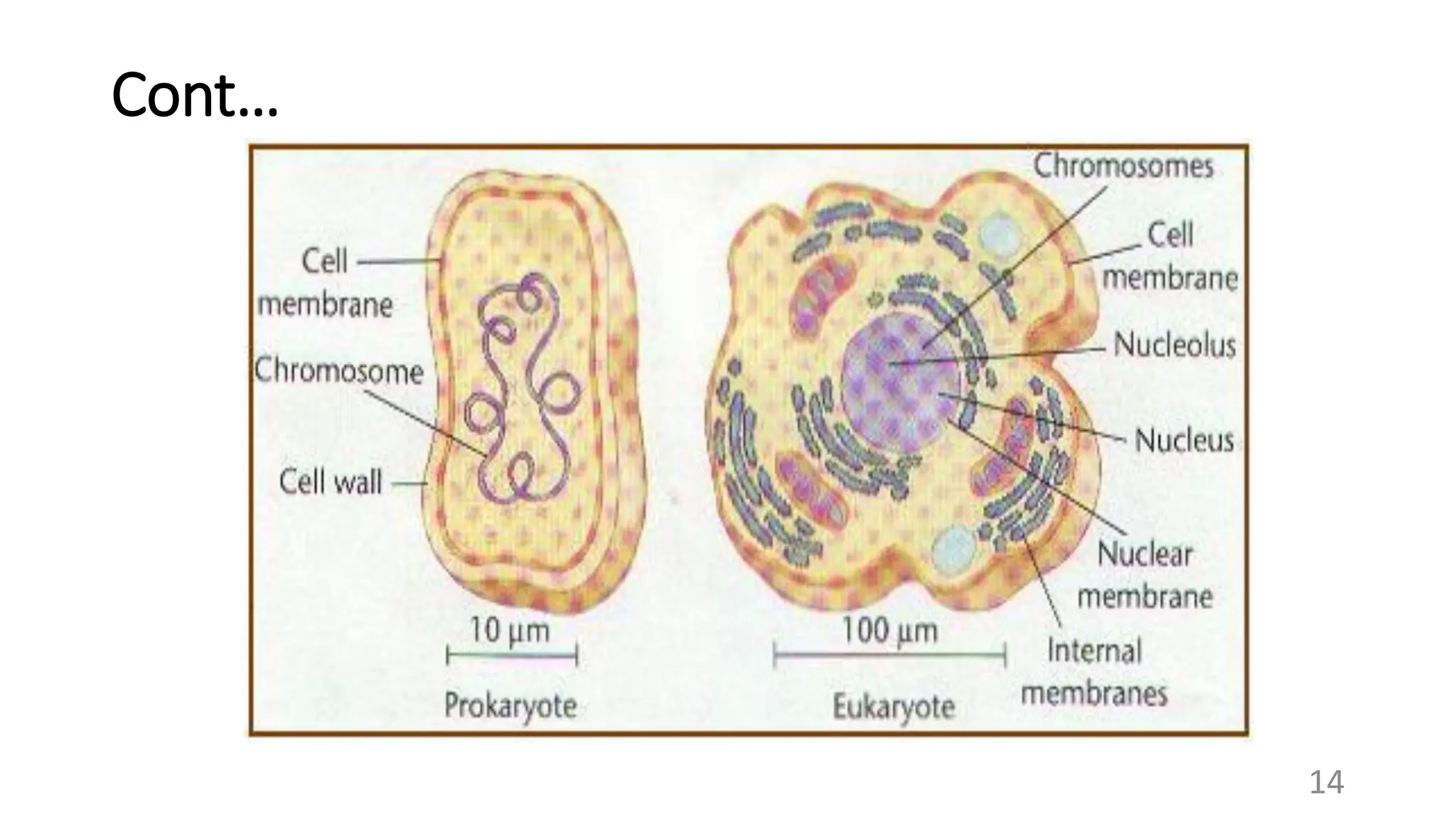
 Having DNA which is not enclosed by membrane
 nuclear material is distributed in mass through the cytoplasm.
 Example: Bacteria
 They divide by binary fission.
10
A typical prokaryotic cell.
11
Cont…
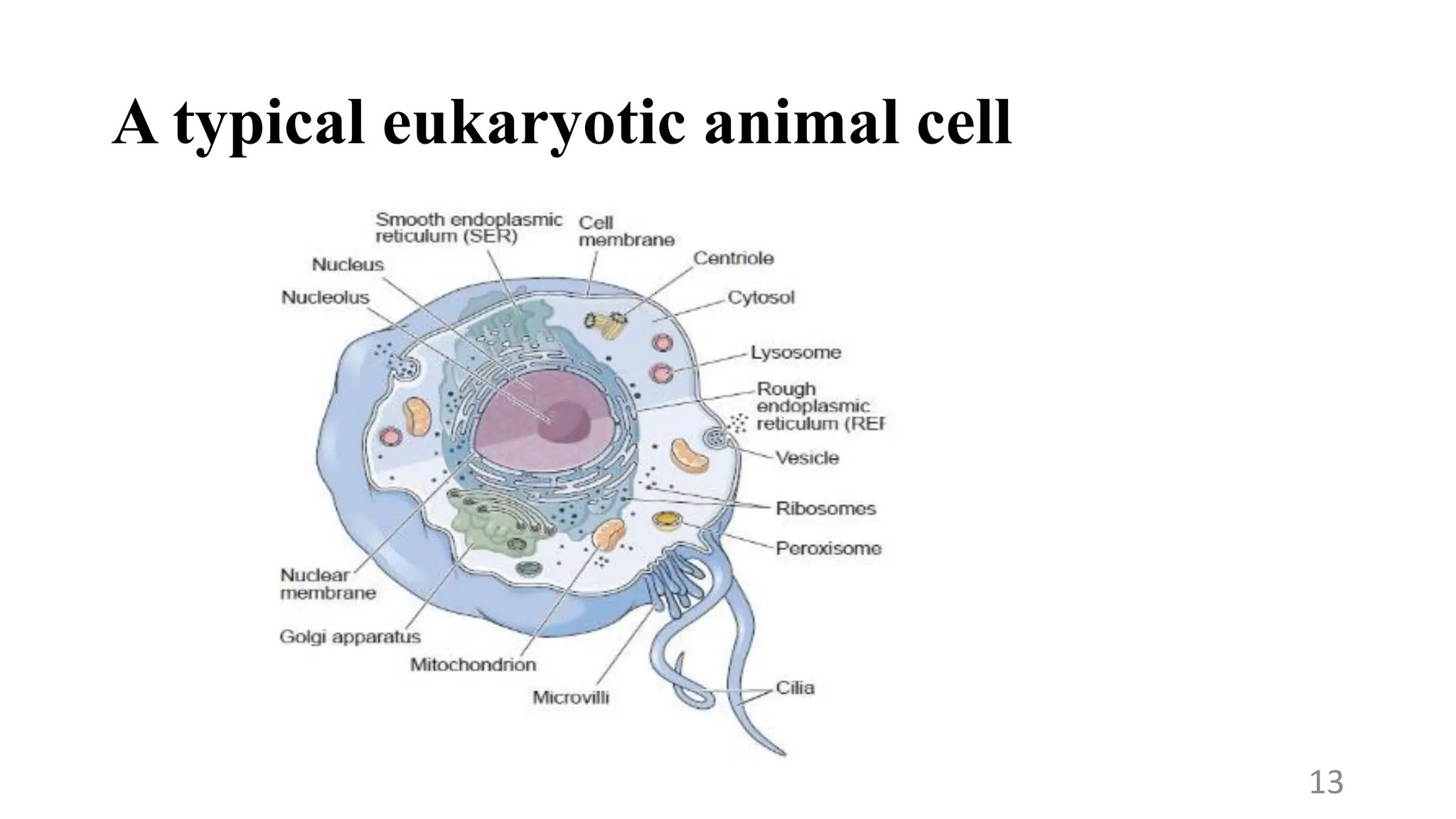
B)Eukaryotic cells
 EU True/ real
 Karyon nucleus/ Nut shell
 More advanced, larger, contain membrane bounded organelles.
• Fungi
• Protozoa
• Cells of plants and animals
 They divide /multiply/ by a process called mitosis
12
A typical eukaryotic animal cell
13
Cont…
14
Cont…
15
Cont…
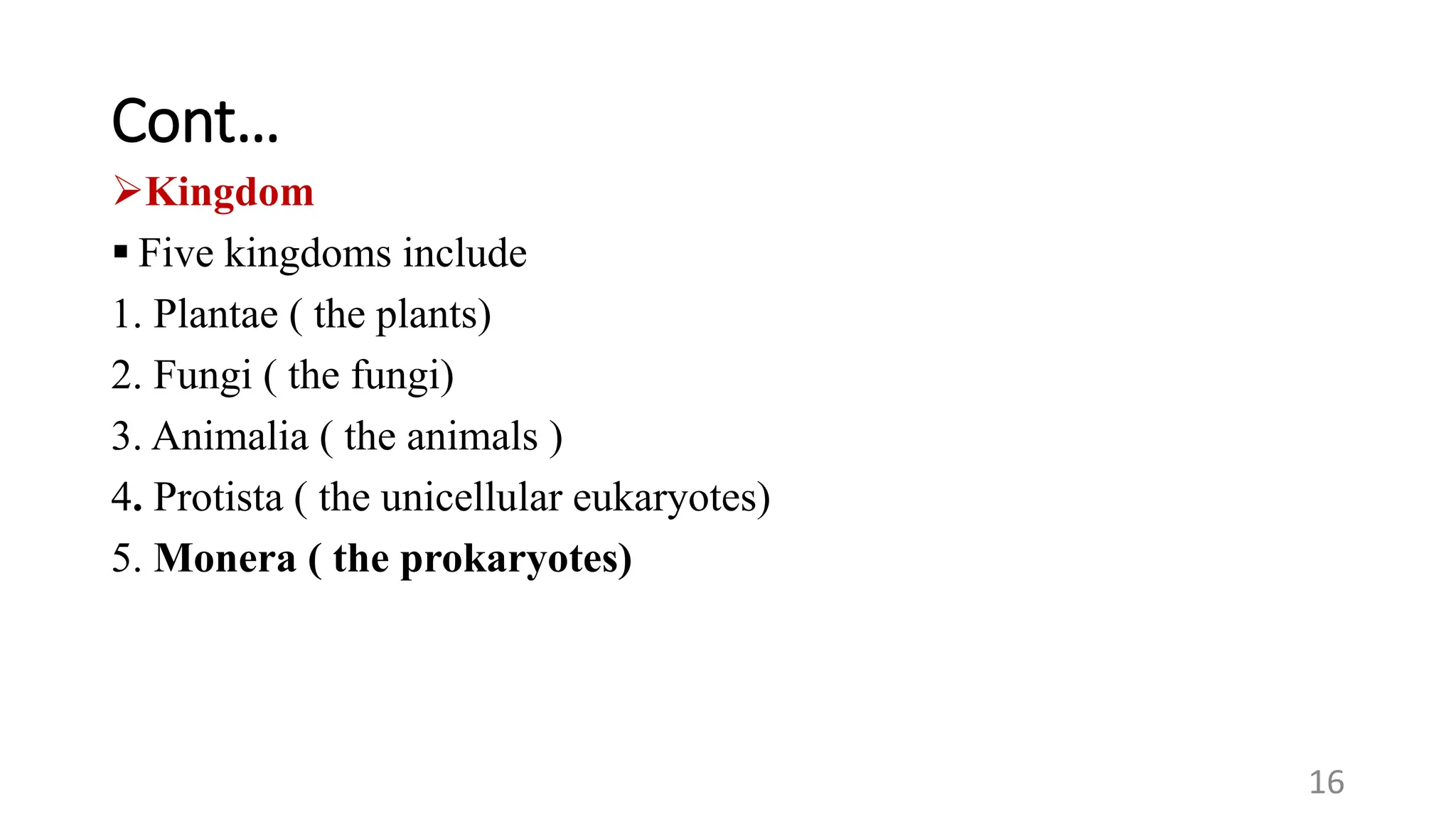
Kingdom
 Five kingdoms include
1. Plantae ( the plants)
2. Fungi ( the fungi)
3. Animalia ( the animals )
4. Protista ( the unicellular eukaryotes)
5. Monera ( the prokaryotes)
16
Cont…
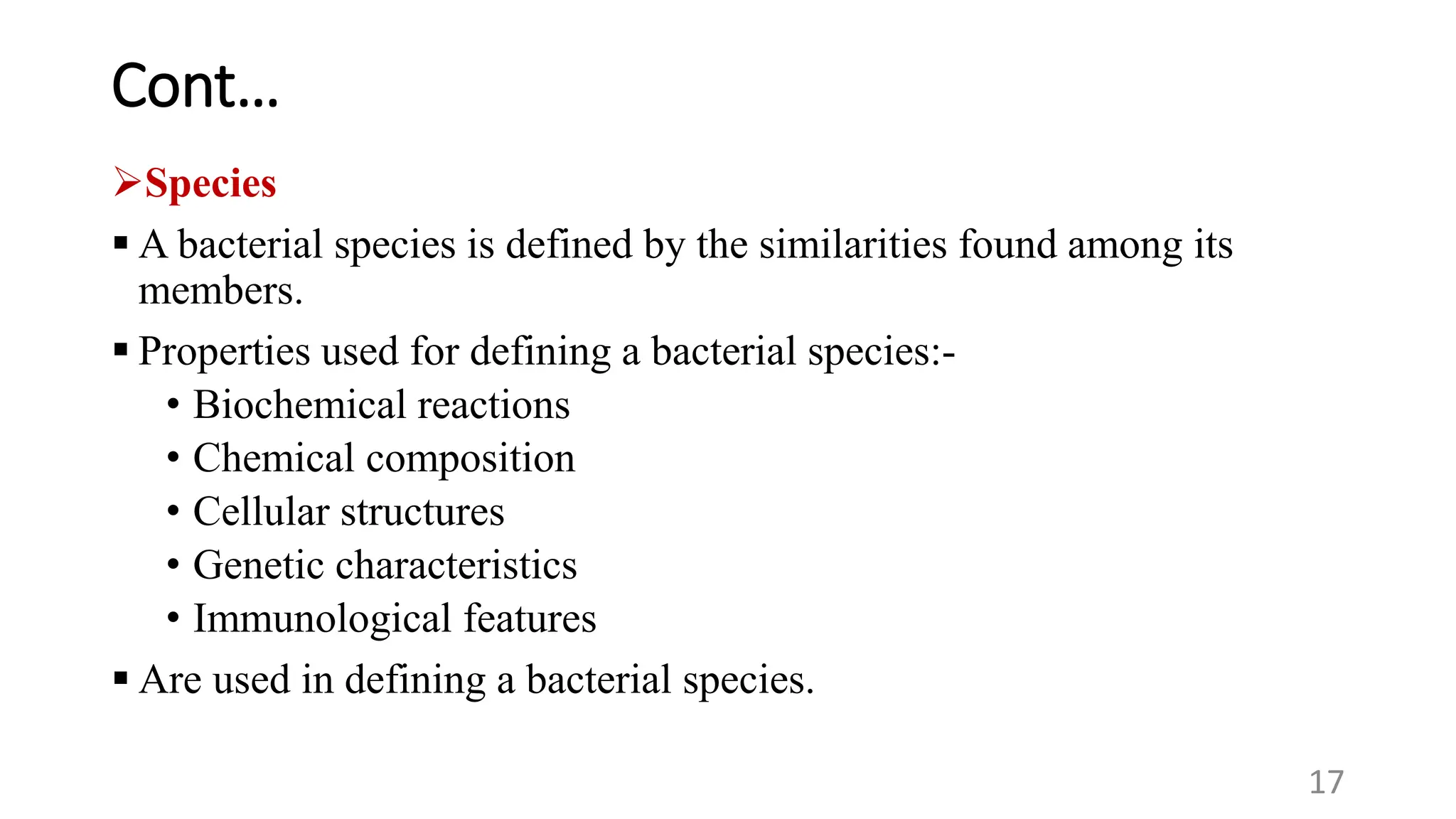
Species
 A bacterial species is defined by the similarities found among its
members.
 Properties used for defining a bacterial species:-
• Biochemical reactions
• Chemical composition
• Cellular structures
• Genetic characteristics
• Immunological features
 Are used in defining a bacterial species.
17
Cont…
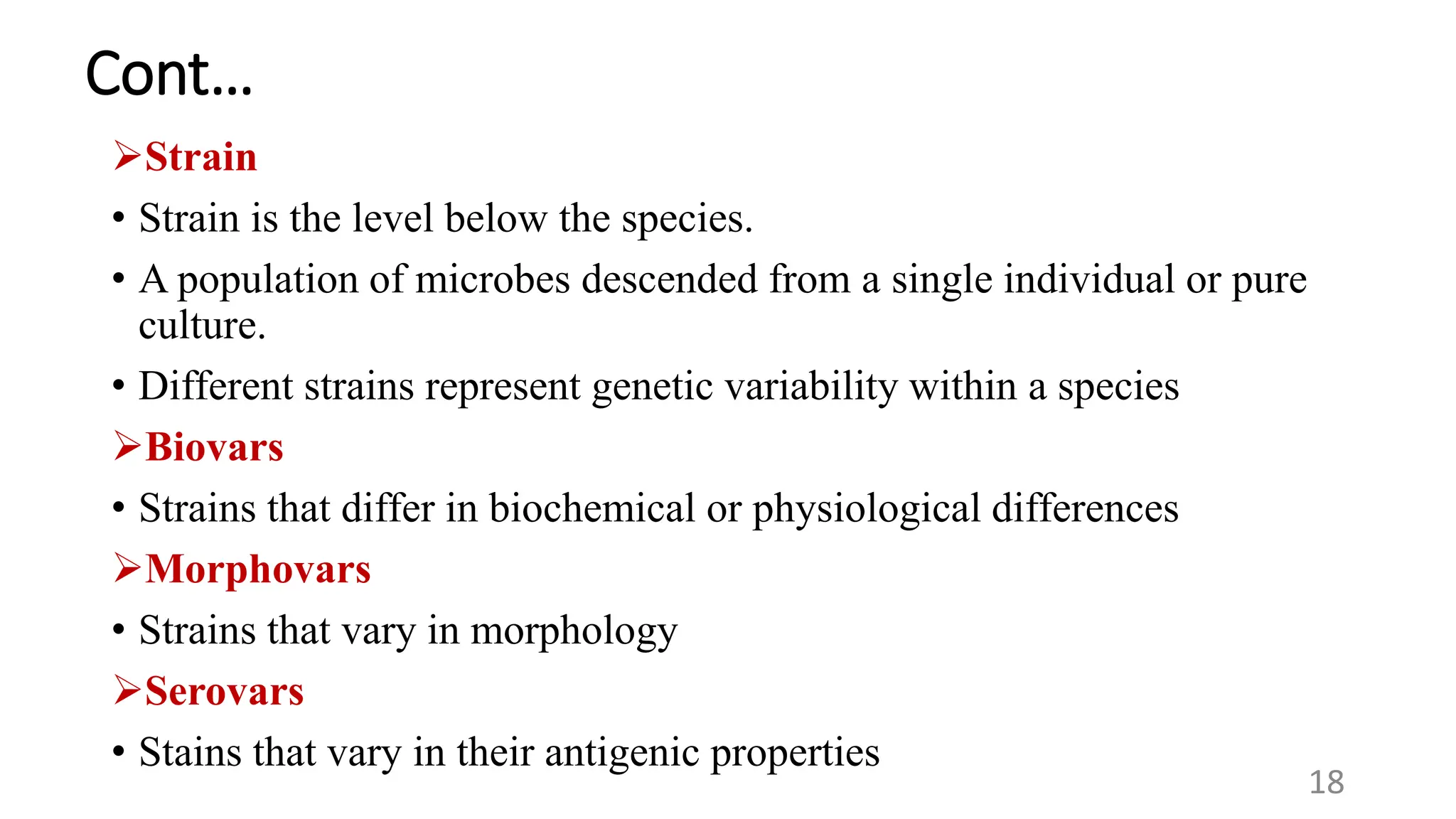
Strain
• Strain is the level below the species.
• A population of microbes descended from a single individual or pure
culture.
• Different strains represent genetic variability within a species
Biovars
• Strains that differ in biochemical or physiological differences
Morphovars
18
• Strains that vary in morphology
Serovars
• Stains that vary in their antigenic properties
2.2 Phenotypic classification
 Phenotypic characteristics are useful in classification and
Identification of bacteria
Classification of bacteria based on
 Morphologic Characteristics
• Microscopic (appearance, Staining reaction )
• Macroscopic (Cultural characteristics)
 Growth requirement
 Biochemical tests and etc
19
Cont…
A) Morphology
It is appearance of bacteria when visualized under light microscope,
which includes
 Size
 Shape
 Arrangement
Size: -
 Bacteria have different size.
 Most bacteria range from 0.2 - 5 μm in length and 0.2 - 1.5 μm in
diameter.
20
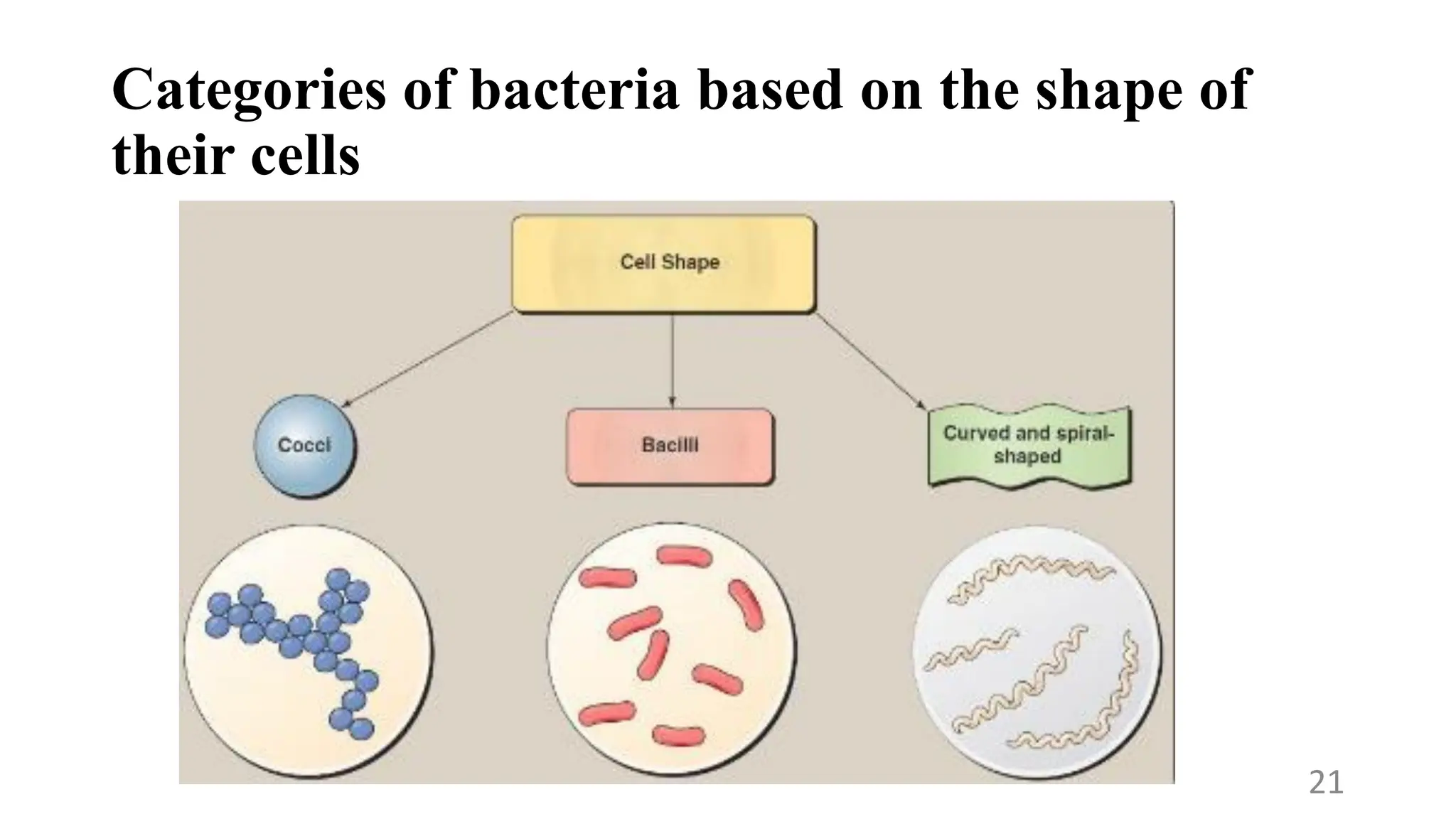
Categories of bacteria based on the shape of
their cells
21
Morphology...........
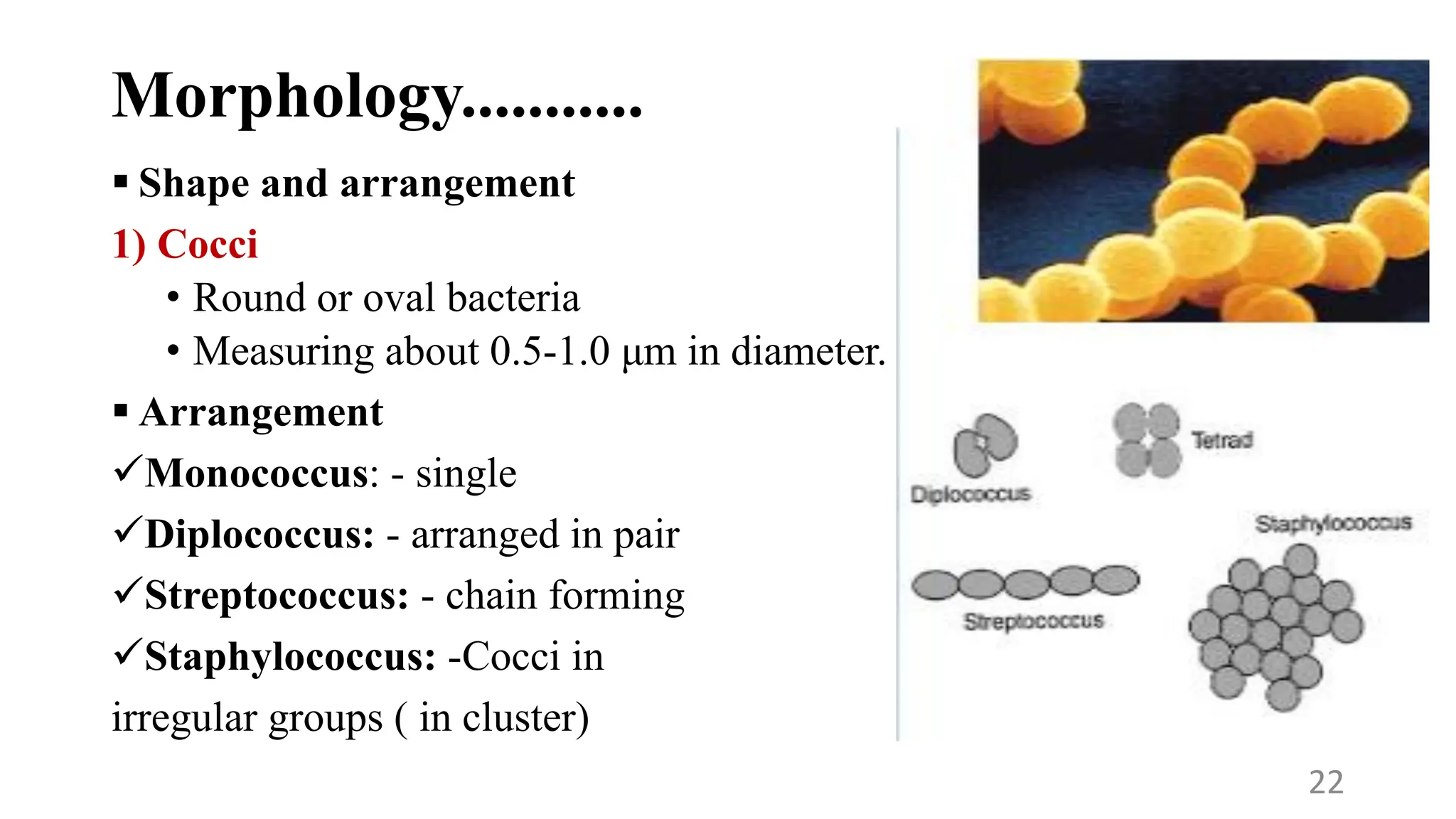
 Shape and arrangement
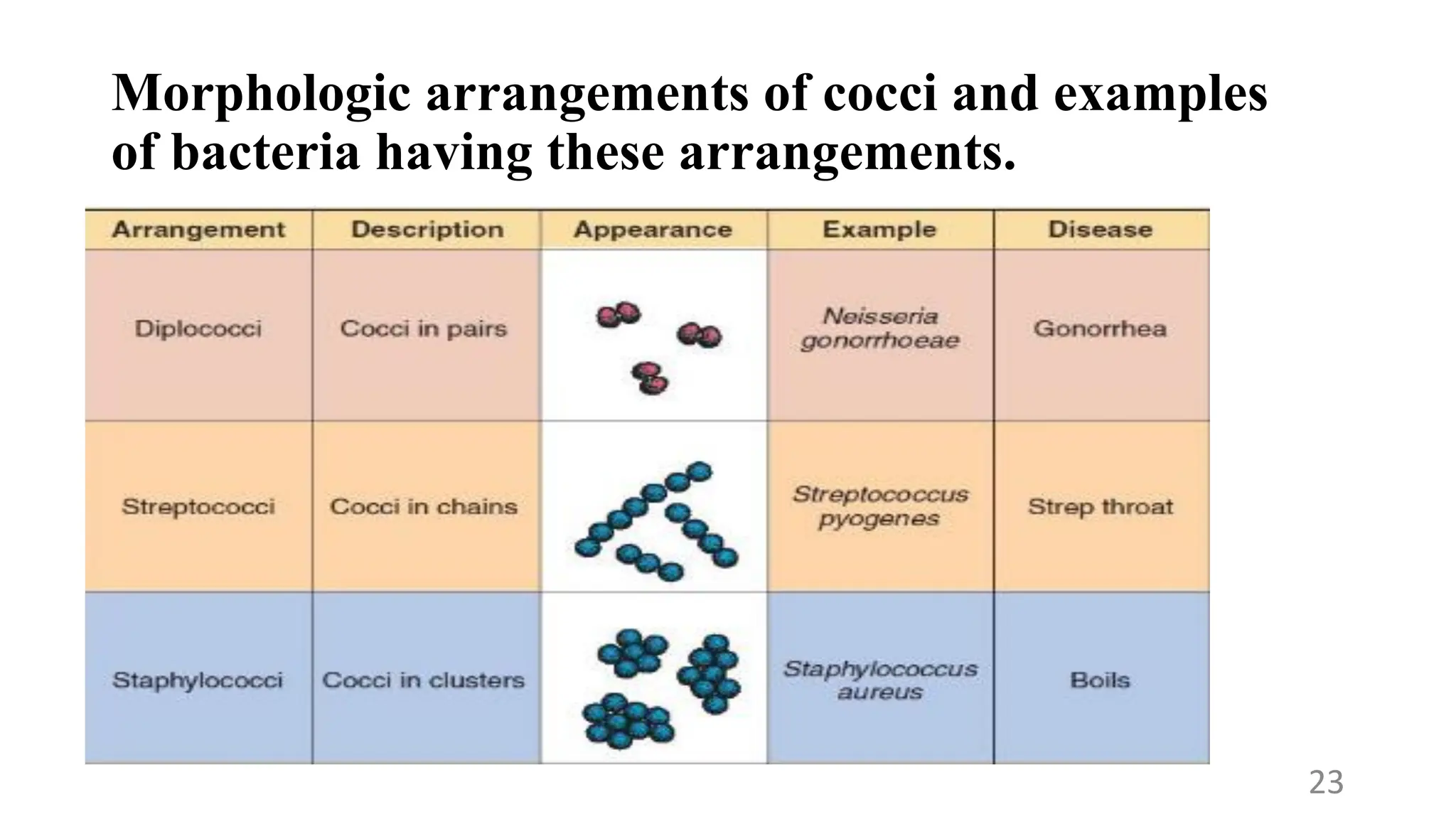
1) Cocci
• Round or oval bacteria
• Measuring about 0.5-1.0 μm in diameter.
 Arrangement
Monococcus: - single
Diplococcus: - arranged in pair
Streptococcus: - chain forming
Staphylococcus: -Cocci in
irregular groups ( in cluster)
22
Morphologic arrangements of cocci and examples
of bacteria having these arrangements.
23
Morphology.....
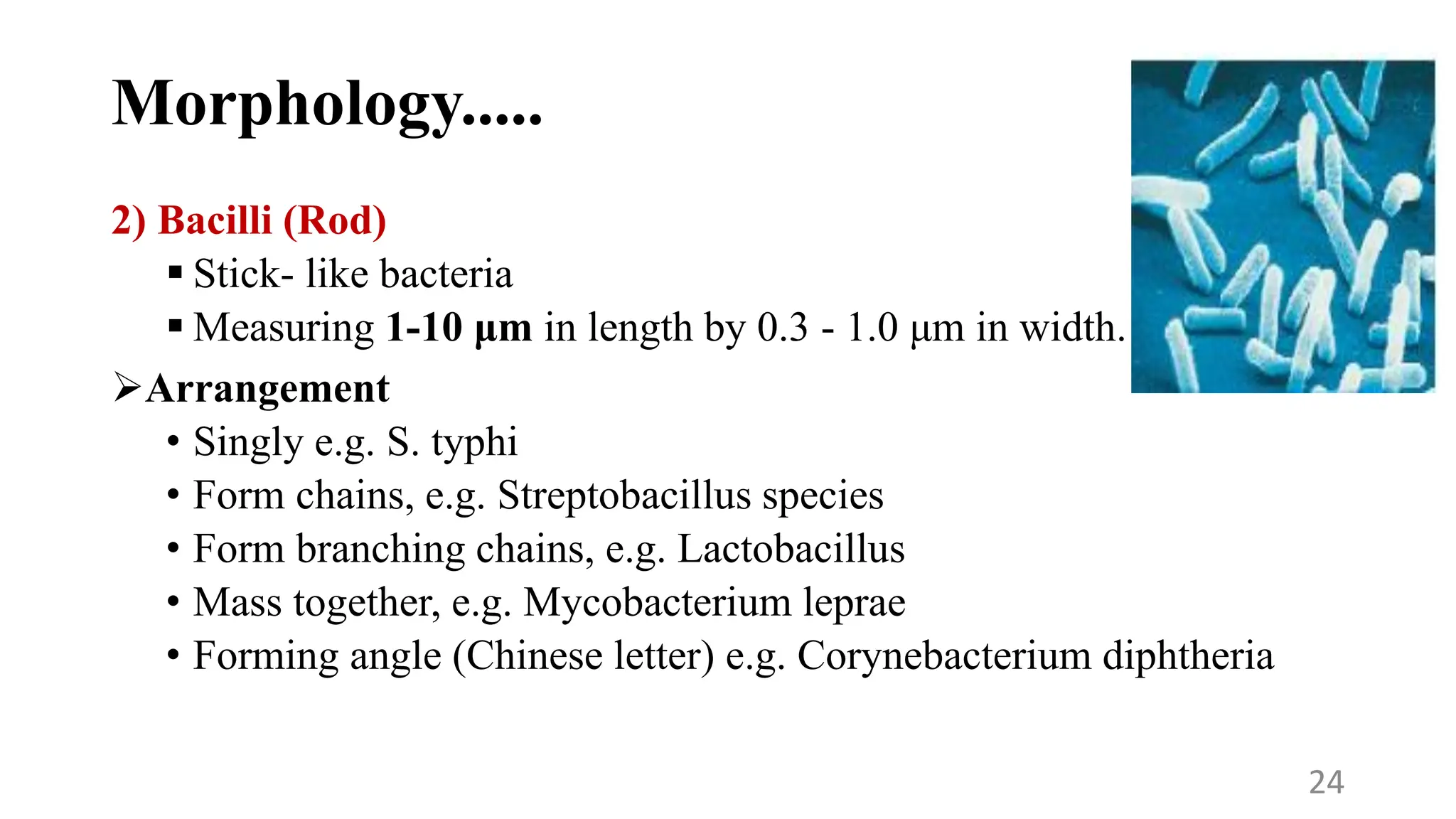
2) Bacilli (Rod)
 Stick- like bacteria
 Measuring 1-10 μm in length by 0.3 - 1.0 μm in width.
Arrangement
• Singly e.g. S. typhi
• Form chains, e.g. Streptobacillus species
• Form branching chains, e.g. Lactobacillus
• Mass together, e.g. Mycobacterium leprae
• Forming angle (Chinese letter) e.g. Corynebacterium diphtheria
24
Morphology.....
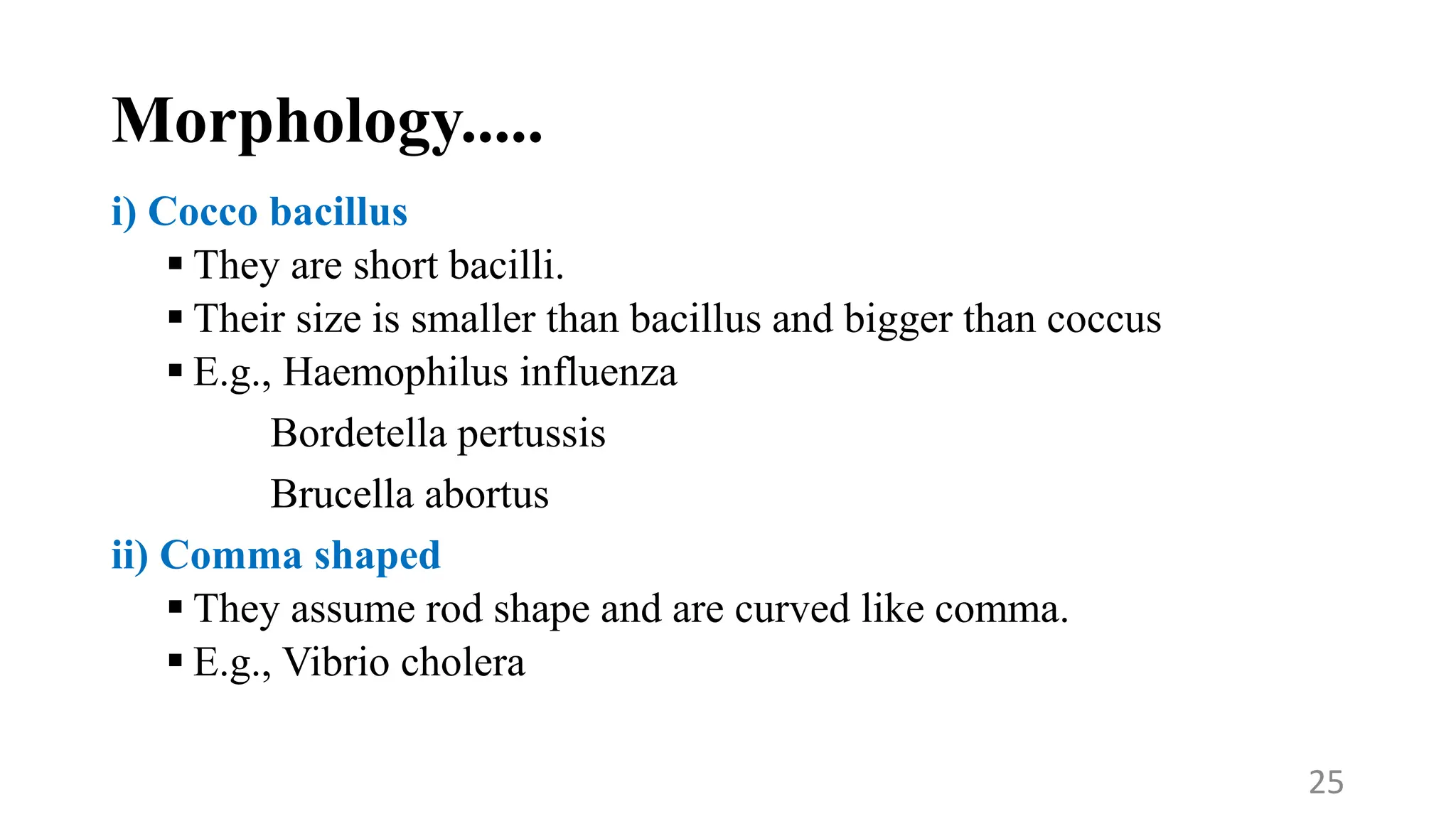
i) Cocco bacillus
 They are short bacilli.
 Their size is smaller than bacillus and bigger than coccus
 E.g., Haemophilus influenza
Bordetella pertussis
Brucella abortus
ii) Comma shaped
 They assume rod shape and are curved like comma.
 E.g., Vibrio cholera
25
Morphology.......
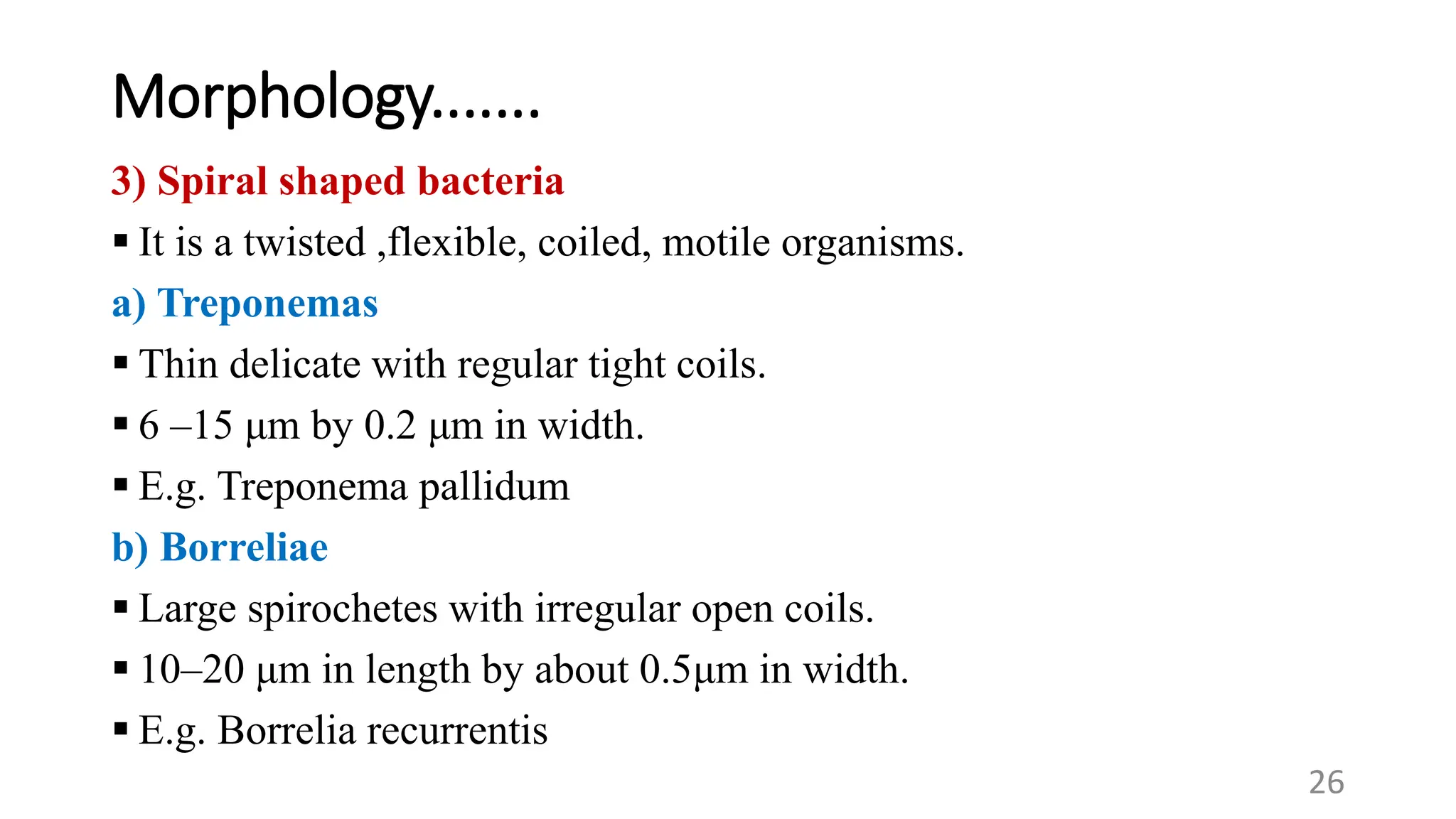
3) Spiral shaped bacteria
 It is a twisted ,flexible, coiled, motile organisms.
a) Treponemas
 Thin delicate with regular tight coils.
 6 –15 μm by 0.2 μm in width.
 E.g. Treponema pallidum
b) Borreliae
 Large spirochetes with irregular open coils.
 10–20 μm in length by about 0.5μm in width.
 E.g. Borrelia recurrentis
26
Morphology.......
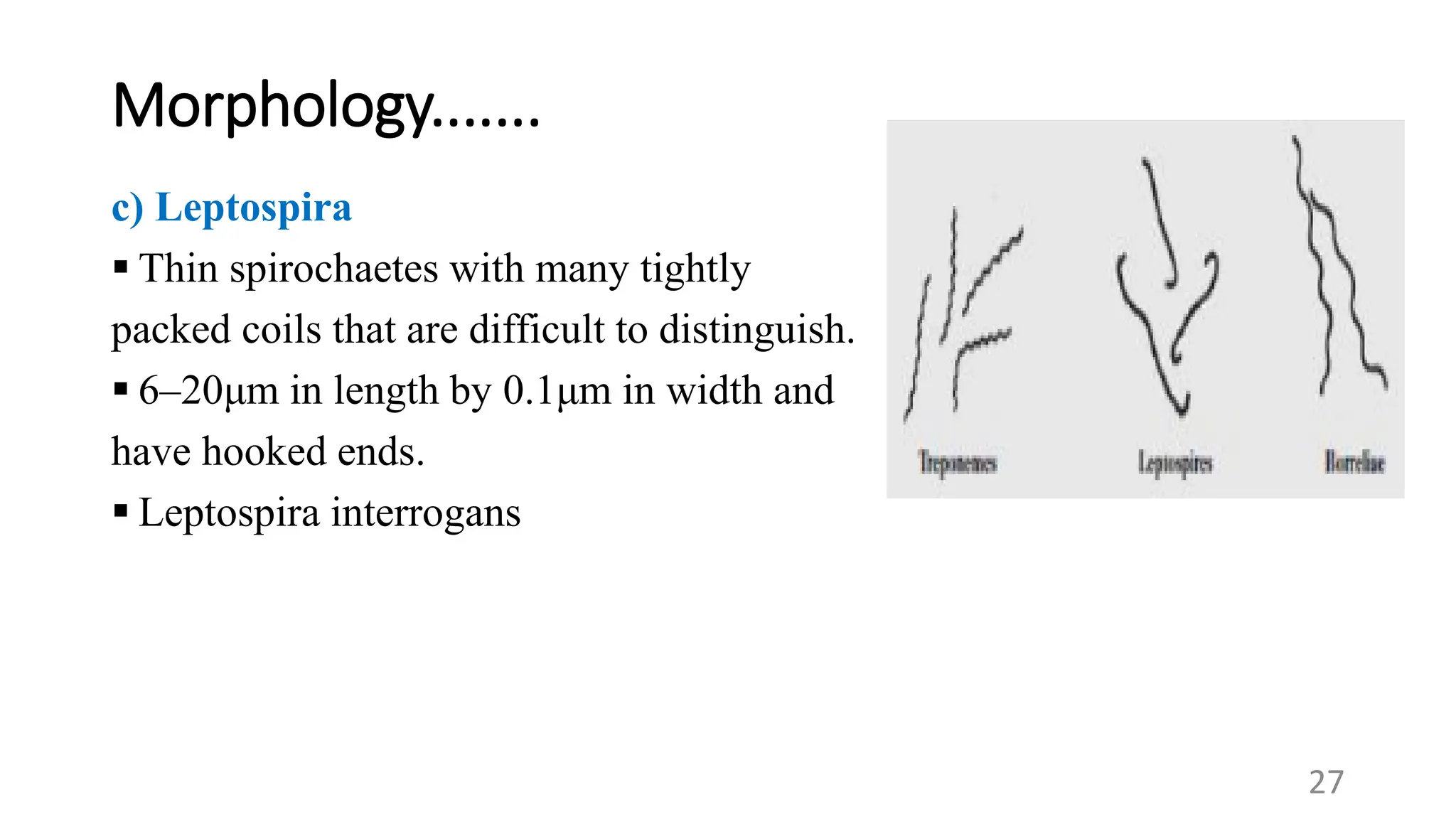
c) Leptospira
 Thin spirochaetes with many tightly
packed coils that are difficult to distinguish.
 6–20μm in length by 0.1μm in width and
have hooked ends.
 Leptospira interrogans
27
Classification.....
B)Staining
 Is the process of coloring of colorless object using stains (dyes).
Type of staining methods
1. Simple staining method
 Identify shape and arrangement of bacteria
2. Differential staining method
 Gram staining
• Gram positive and Gram negative bacteria
 Ziehl-Neelsen (acid fast staining technique)
28
• Acid Fast Bacilli (AFB)
3. Special staining method
Examples
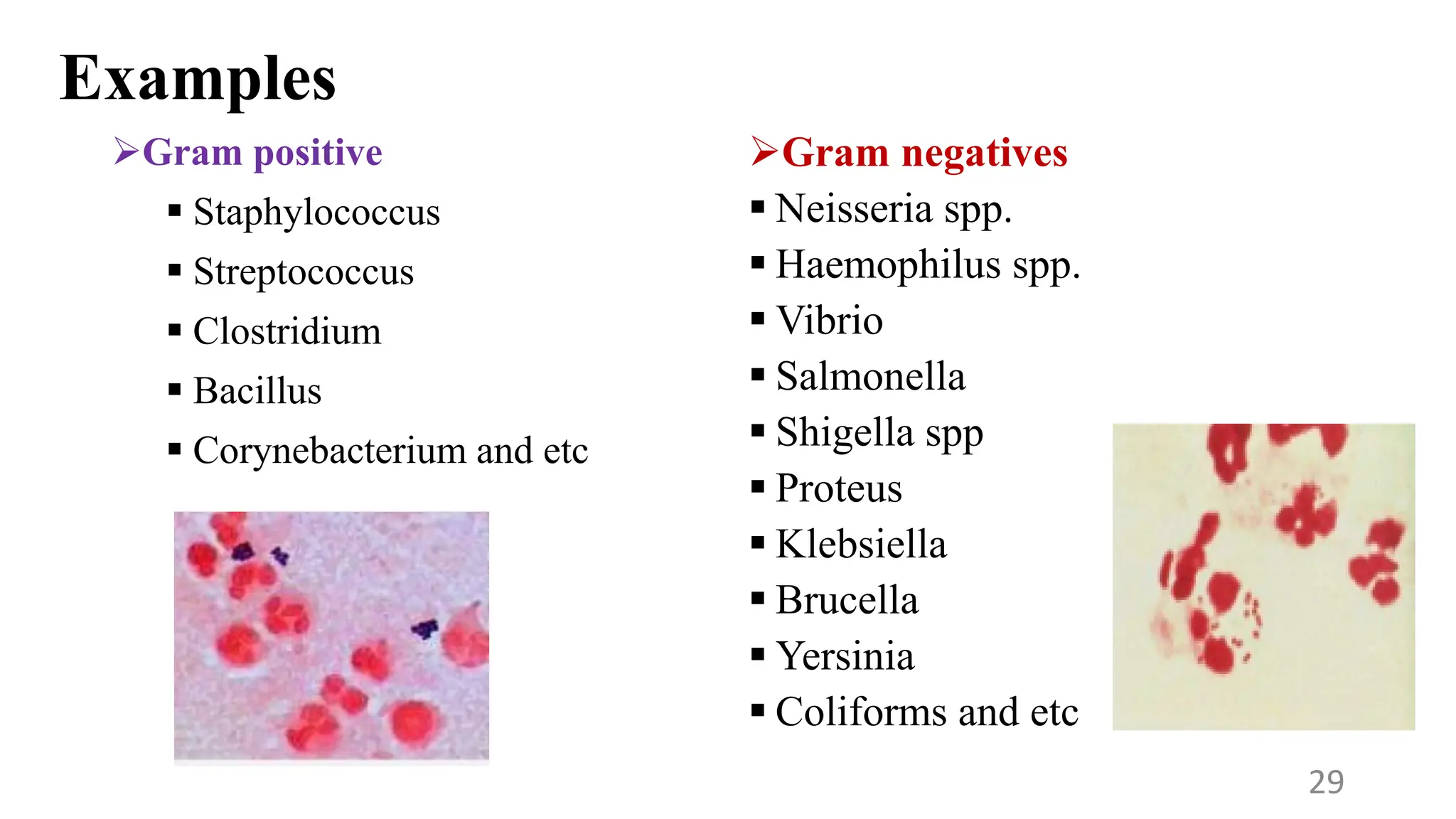
Gram positive
 Staphylococcus
 Streptococcus
 Clostridium
 Bacillus
 Corynebacterium and etc
Gram negatives
 Neisseria spp.
 Haemophilus spp.
 Vibrio
 Salmonella
 Shigella spp
 Proteus
 Klebsiella
 Brucella
 Yersinia
 Coliforms and etc
29
Examples
Acid fast bacilli (AFB)
 Mycobacterium tuberculosis
 Mycobacterium leprae
 Mycobacterium bovis (Cattle )
 Mycobacterium africanum
 Mycobacterium ulcerance
30
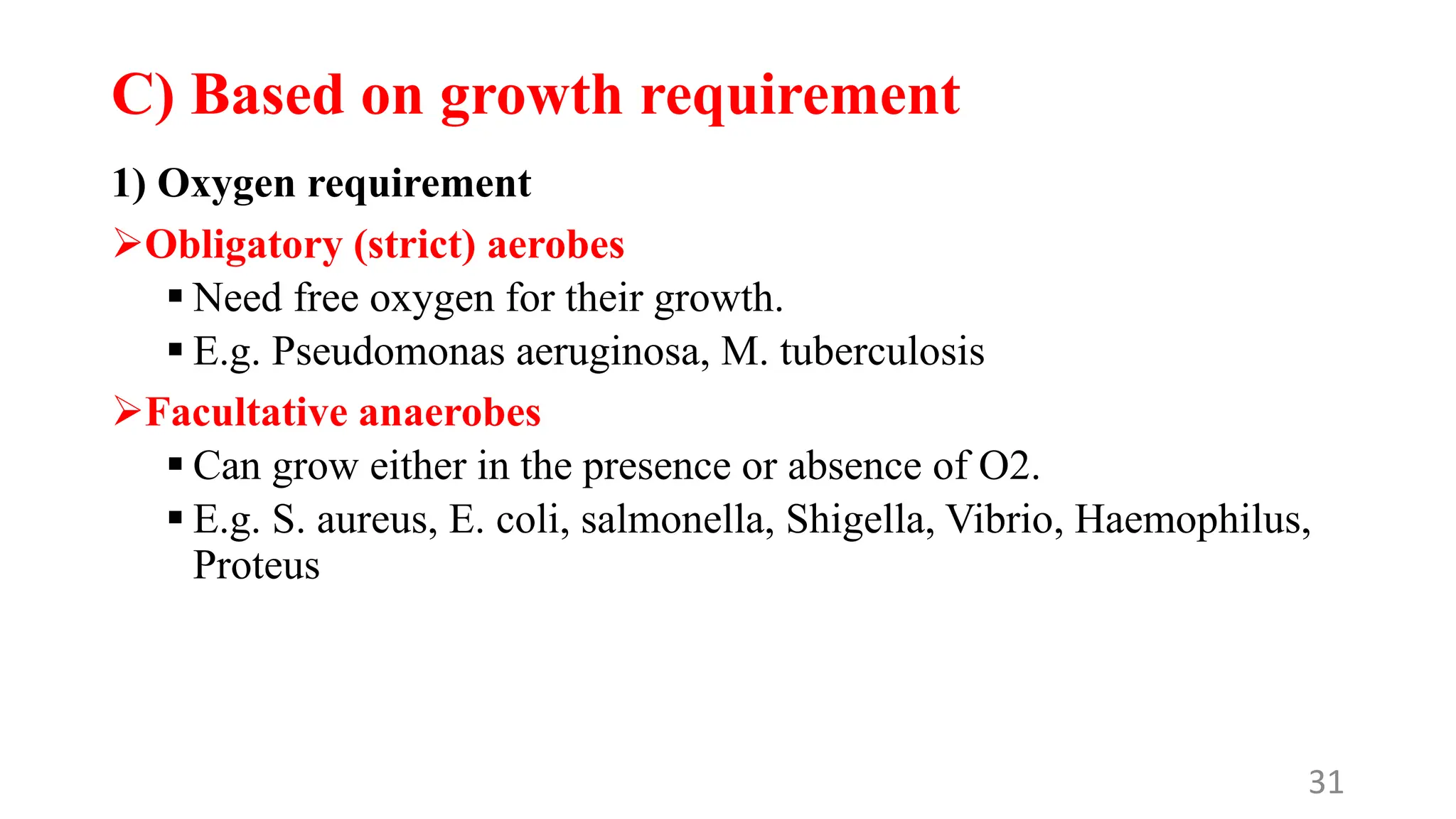
C) Based on growth requirement
1) Oxygen requirement
Obligatory (strict) aerobes
 Need free oxygen for their growth.
 E.g. Pseudomonas aeruginosa, M. tuberculosis
Facultative anaerobes
 Can grow either in the presence or absence of O2.
 E.g. S. aureus, E. coli, salmonella, Shigella, Vibrio, Haemophilus,
Proteus
31
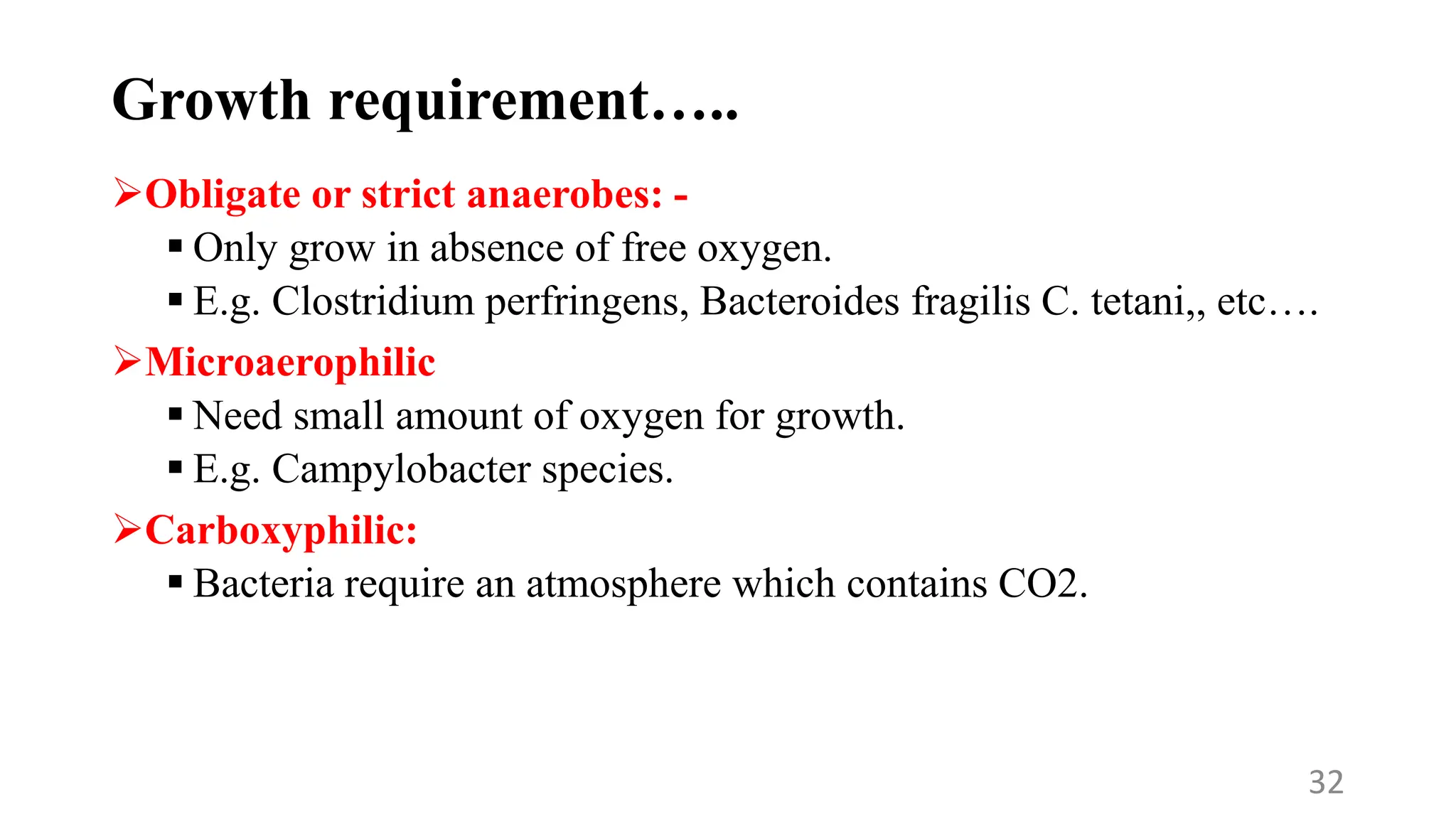
Growth requirement…..
Obligate or strict anaerobes: -
 Only grow in absence of free oxygen.
 E.g. Clostridium perfringens, Bacteroides fragilis C. tetani,, etc….
Microaerophilic
 Need small amount of oxygen for growth.
 E.g. Campylobacter species.
Carboxyphilic:
 Bacteria require an atmosphere which contains CO2.
32
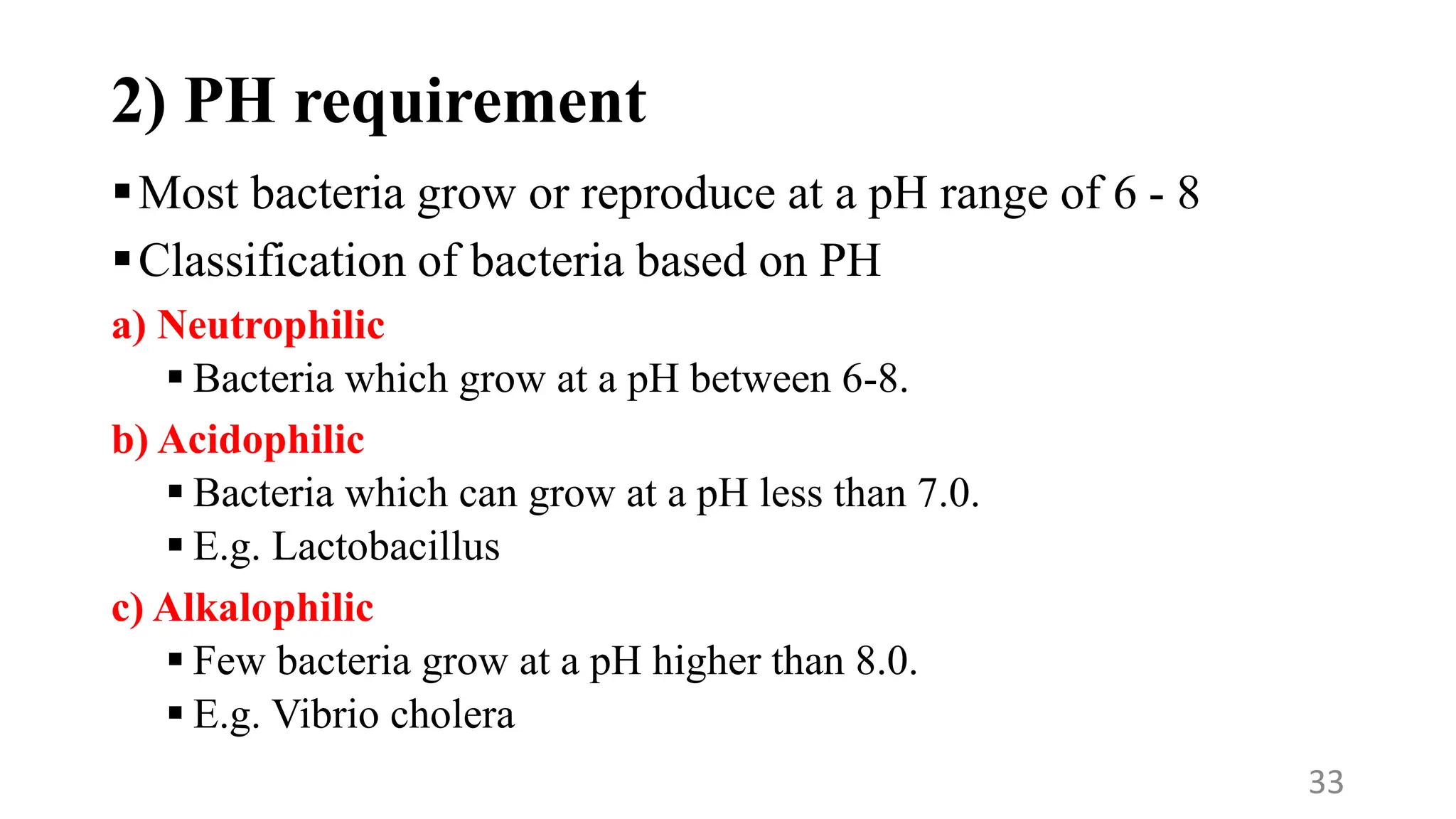
2) PH requirement
Most bacteria grow or reproduce at a pH range of 6 - 8
Classification of bacteria based on PH
a) Neutrophilic
 Bacteria which grow at a pH between 6-8.
b) Acidophilic
 Bacteria which can grow at a pH less than 7.0.
 E.g. Lactobacillus
c) Alkalophilic
 Few bacteria grow at a pH higher than 8.0.
 E.g. Vibrio cholera
33
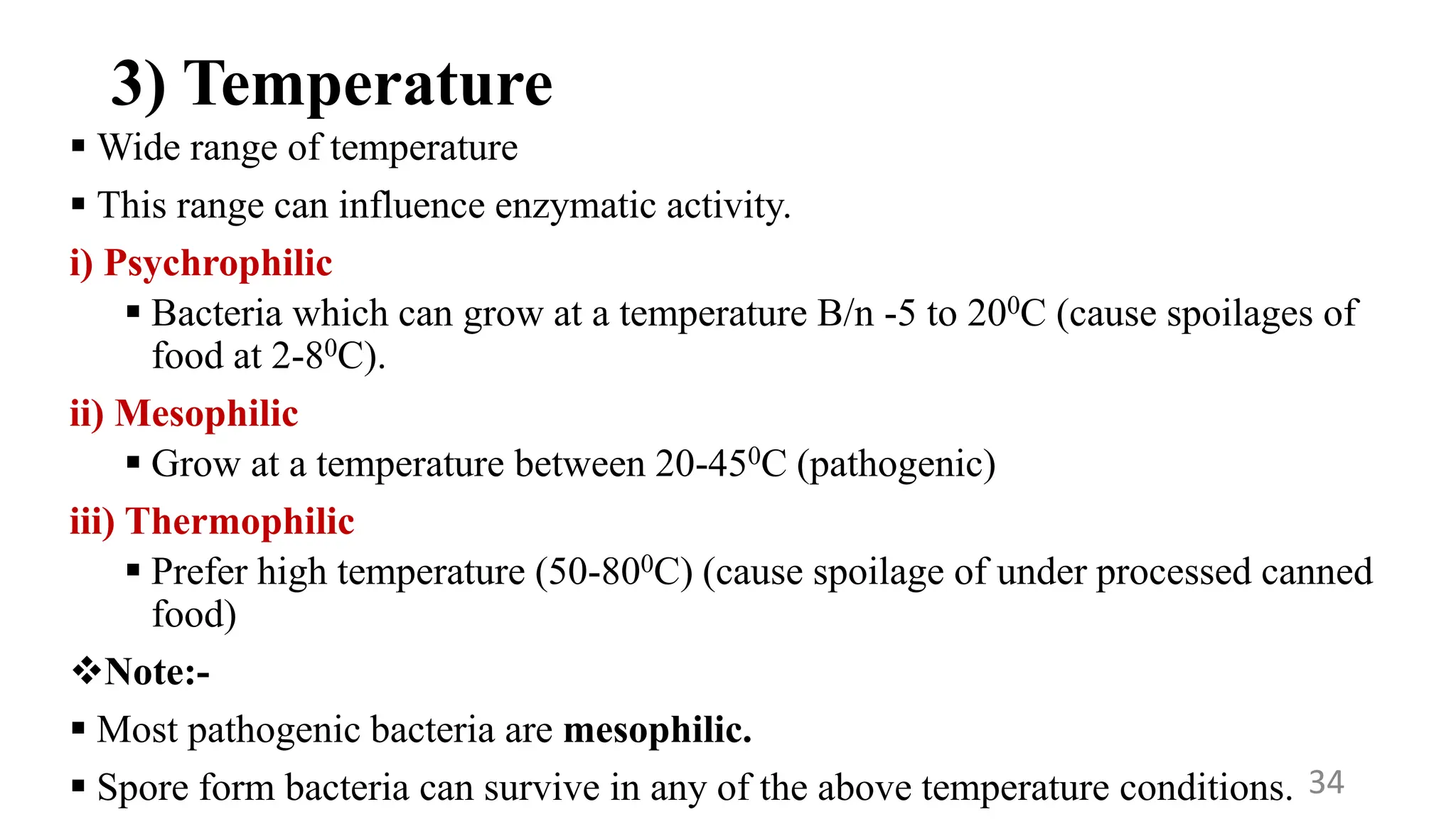
3) Temperature
 Wide range of temperature
 This range can influence enzymatic activity.
i) Psychrophilic
 Bacteria which can grow at a temperature B/n -5 to 200C (cause spoilages of
food at 2-80C).
ii) Mesophilic
 Grow at a temperature between 20-450C (pathogenic)
iii) Thermophilic
 Prefer high temperature (50-800C) (cause spoilage of under processed canned
food)
Note:-
 Most pathogenic bacteria are mesophilic.
 Spore form bacteria can survive in any of the above temperature conditions. 34
4) Moisture
 Most bacteria need optimum amount of moisture.
 Some bacteria needs high amount of moisture. Example
T. palladium
N. gonorrhea
35
5) Nutritional requirement
 Bacteria need nutrition for synthesis of protoplasm and energy.
Simple: - All bacteria need source of
1) Carbon 3)Energy
2) Nitrogen 4) Water and 5) mineral salts
Complex
36
 Some bacteria need growth factors (vitamins).
 Fastidious bacteria.
 E.g. Neisseria gonorrhea, Haemophilus influenza etc..
Halophilic
 Those bacteria which live (grow) on high salt concentration.
 E.g. Staphylococcus aureus
D)Biochemical reaction
 Biochemical reaction can be used for classifying bacteria in to different groups.
i) Enzymes
 Coagulase positive. Eg S. aureus
 Catalase positive. Eg Staphylococci species
 Urease. Eg Proteus species
ii) Metabolic end product
 Gas producer
 Acid, or H2S from carbohydrates.
iii) Carbohydrate utilization
 Lactose fermenter
 Glucose fermenter
 Sucrose fermenter 37
2.3 Genotypic Classification
Phylogenetic Approach :-
The ideal means of identifying and classifying bacteria would be to
compare each gene sequence in a given strain with the gene sequences
for every known species.
 This method can be used to measure the number of DNA sequences
that any two organisms have in common and to estimate the
percentage of divergence within DNA sequences that are related but
not identical
38
Phylogenetic Approach….
 Five factors can be used to determine DNA relatedness:
1) genome size
2) guanine-plus-cytosine (G+C) content
3) DNA relatedness under conditions optimal for DNA reassociation
4) Thermal stability of related DNA sequences, and
5) DNA relatedness under conditions supraoptimal for DNA
reassociation.
39
Phylogenetic Approach…..
1. Genome size
 Genome size determinations sometimes can distinguish between groups.
2. Guanine plus cytosine (G+C) content
 The G+C content in bacterial DNA ranges from about 25-75%
 This percentage is specific, but not exclusive, for a species
 Two strains with a similar G+C content may or may not belong to the same
species.
 If the G+C contents are very different, however, the strains cannot be members
of the same species.
40
Phylogenetic Approach…..
3. DNA relatedness under conditions optimal for DNA re-
association
 DNA relatedness is determined by allowing single-stranded DNA from
one strain to re-associate with single-stranded DNA from a second
strain and to form a double-stranded DNA molecule
 Many studies indicate that a bacterial species is composed of strains
that are 70 to 100 percent related.
 The term "related" does not mean "identical" or "homologous.”
41
Phylogenetic Approach…..
4. Thermal stability of related DNA sequences
 Each 1% of unpaired nucleotide bases in a double-stranded DNA
sequence causes a 1% decrease in the thermal stability
 A comparison between the thermal stability of a control double-
stranded molecule (in which both strands of DNA are from the same
organism) and that of a heteroduplex (DNA strands from two different
organisms) allows assessment of divergence between related
nucleotide sequences.
42
Phylogenetic Approach…..
5. DNA Relatedness under Supra-optimal Conditions for DNA
Reassociation
 When the incubation temperature used for DNA re-association is
raised from 25-30° C below the denaturation temperature to only 10-
15° C below the denaturation temperature, only very closely related
DNA sequences can re-associate.
 Strains from the same species are 60% or more related at these supra-
optimal incubation temperatures.
43
Cont…
 DNA relatedness provides one species definition that can be applied
equally to all organisms.
 It cannot be affected by phenotypic variation, mutations, or the
presence or absence of metabolic or other plasmids.
 It measures overall relatedness, and these factors affect only a very
small percentage of the total DNA.
44
Numerical Approach to taxonomy
 In numerical taxonomy (also called computer or phenetic taxonomy)
 Many (50 to 200) biochemical, morphological, cultural characteristics,
susceptibilities to antibiotics and inorganic compounds, are used to determine
the degree of similarity between organisms
 In numerical studies, investigators often calculate the coefficient of similarity
or percentage of similarity between strains.
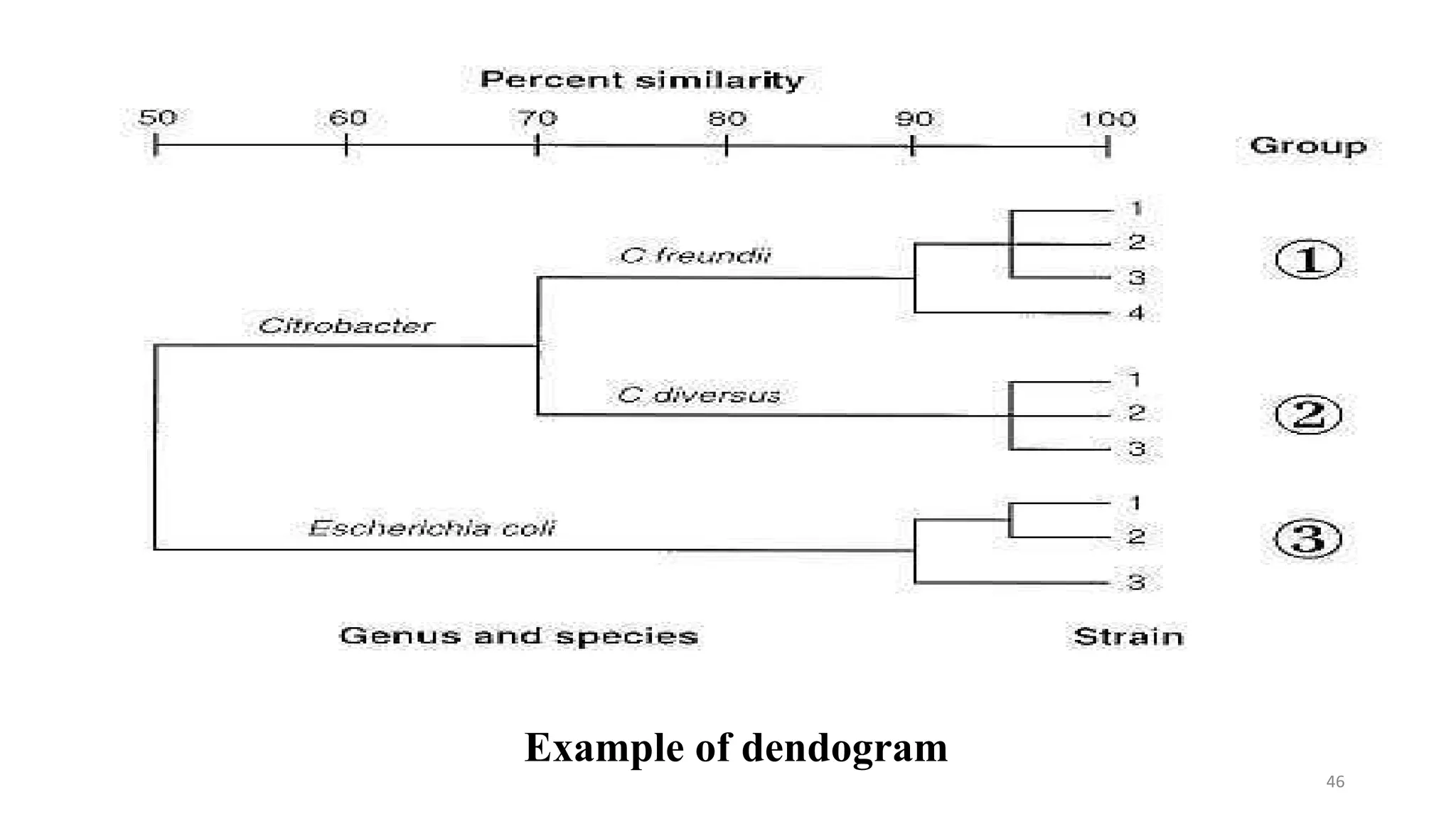
 A dendrogram or a similarity matrix is constructed that joins individual
strains into groups and places one group with other groups on the basis of their
percentage of similarity.
45
Example of dendogram
46
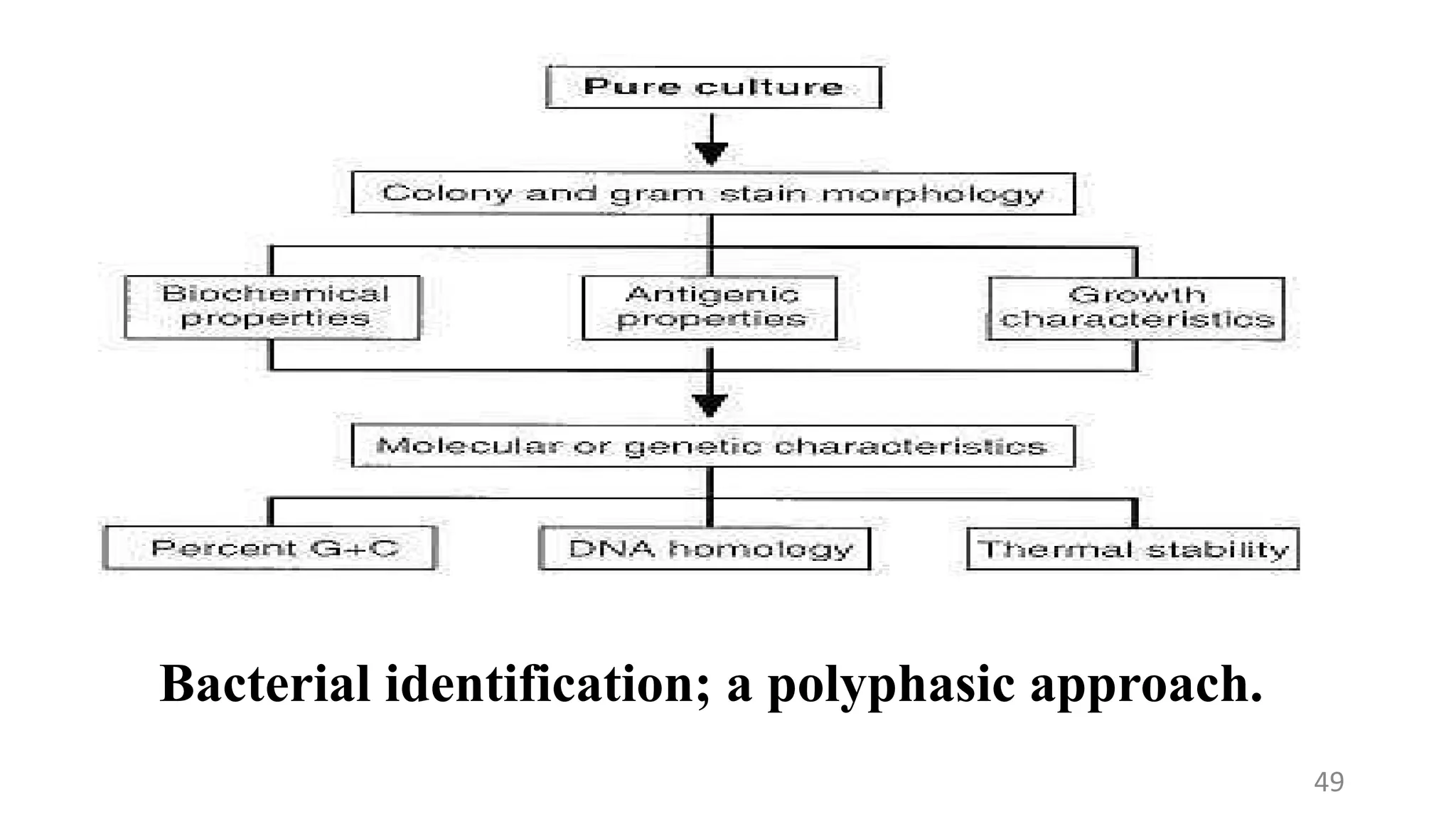
Polyphasic approach to taxonomy
 In practice, the approach to bacterial taxonomy should be polyphasic.
 The first step is phenotypic grouping of strains by morphological,
biochemical and any other characteristics of interest.
 The phenotypic groups are then tested for DNA relatedness to
determine whether the observed phenotypic homogeneity (or
heterogeneity) is reflected by phylogenetic homogeneity or
heterogeneity.
47
Cont…
 The third and most important step is reexamination of the biochemical
characteristics of the DNA relatedness groups.
 This allows determination of the biochemical borders of each group
and determination of reactions of diagnostic value for the group
48
Bacterial identification; a polyphasic approach.
49
2.4 Nomenclature(Naming)
 Is the means by which the characteristics of a species are defined and
communicated.
 There are two kinds of naming of microorganisms
i) Scientific or International naming
• The same throughout the world
• It is binomial nomenclature system employs the name of the two
level taxa (genes and species).
• Example Bacillus subtlis, Escherchia coli, Salmonella typhi etc.
ii) Causal or common naming
• This type of naming is varies from country to country
• Example typhoid bacilli and gonococcus
50
I) Scientific name (systematic name)
 Also called binomial system of nomenclature
 Genus name + species name
 Genus name comes before species name
 Carolus Linnaeus (1735) established the system of scientific
nomenclature.
 Each organism has two names: the genus and species, and this
scientific name is common universally.
 Exception:- example
 Clostridium perfringens in the USA
 Clostridium welchii in England
51
 Species are named according to principles and rules of nomenclature
set forth in the Bacteriological Code
Genus name always capitalized while species is not and both should
be underlined or italicized
• E.g. Staphylococcus aureus or Staphylococcus aureus
Genus name may be abbreviated.
Species name is never abbreviated
A genus name may be used alone to indicate a genus group.
A species name is never used alone
• The first and the second name together referred as species
• Shigella dysenteriae or
• S. dysenteriae or
• Shigella dysenteriae
52
Nomenclature.....
ii) Common or descriptive names
Names for organisms that may be in common usage, but are not
taxonomic names.
Example:-
 Tubercle bacillus…(Mycobacterium tuberculosis)
 Meningococcus …(Neisseria meningitidis)
 Group A Streptococcus….(Streptococcus pyogenes)
53
Nomenclature.....
 Sometimes, bacteria and other microorganisms are named
for the person who discovered the organism.
• Bordetella (Jules Bordet)
• Escherichia (Theodore Escherich)
• Neisseria (Albert Ludwig Neisser)
• Salmonella (Daniel Elmer Salmon)
Bacterial characteristics ( shape, motility…)
For Place
For Pathological change
54
References
 Levinson W., Jawetz E., Medical Microbiology and Immunology. 6th
ed. McGraw- Hill international edition. 2000.
 Brooks G.F., Butel J.S., Morse S.A Jawetz Medical Microbiology 21st
ed. (1998).
 Murray, Medical microbiology
 Robert Boyd. Basic Medical Microbiology. 5th ed. (1995)
 Monica Cheesbrough. District Laboratory Practice in Tropical
Countries. Volume-2 (2000)
55

THE END OF CHAPTER-2
THANK YOU!!!
56

Chapter-2 Classification of bacteria.pdf

  • 1.
  • 2.
    Learning Objectives At theend of this chapter, the student should be able to:  Describe Taxonomy of bacteria  Discuss Phenotypic(morphological) characteristics  Discuss Genotypic characteristics  Describe bacterial Nomenclature 2
  • 3.
    Outline • Taxonomy • Phenotypic(morphological)characteristics • Genotypic characteristics • Nomenclature 3
  • 4.
    Introduction Bacteriology  The majorsub-division of medical microbiology which study about medically important bacteria. Bacterial Cell General property  Typical prokaryotic cell  Contain both DNA and RNA  Most grow in artificial media  Replication is by binary fission  Contain rigid cell wall  Sensitive to antimicrobial agent 4
  • 5.
    2.1 Taxonomic Classificationof Organisms Taxonomy  Science of systemic classification, identification and nomenclature of organisms  Provides universal names for organisms  provides a reference for identifying organisms  Provide information about evolution of organisms  For classification purposes, organisms are usually organized into subspecies, species, genera, families, and higher orders. 5
  • 6.
    Cont… Classification  Is theorderly arrangement of bacteria into groups( taxa).  Taxon:-a group or category of related organisms.  Based on similarity or relationship.  Different groups of scientists may classify the same organisms differently. The general criteria for classification (grouping) of microorganism are: • Genotypic /evolutionary relationship) • Phenotypic 6
  • 7.
  • 8.
    Taxonomic rank Domain  Thedomain is a taxonomic category that, depending on point of view, is either above the level of kingdom or supersedes the kingdom.  The domain system contains three members. • Eukaryotes ( domain Eukarya ) • Prokaryote ( domain Bacteria) • Archaebacteria ( domain Archaea) 8
  • 9.
    Eukaryotic and prokaryoticcells • Based on the cellular complexity or organization among unicellular and Multicellular organisms by Electron microscope: • Microorganisms can be classified as 1) Prokaryotic  Bacteria 2) Eukaryotic  Fungi  Protozoa 9
  • 10.
    Cont… A) Prokaryotic  Proprimitive  Karyon nucleus/ Nut shell  Cells of lower life forms  Having DNA which is not enclosed by membrane  nuclear material is distributed in mass through the cytoplasm.  Example: Bacteria  They divide by binary fission. 10
  • 11.
  • 12.
    Cont… B)Eukaryotic cells  EUTrue/ real  Karyon nucleus/ Nut shell  More advanced, larger, contain membrane bounded organelles. • Fungi • Protozoa • Cells of plants and animals  They divide /multiply/ by a process called mitosis 12
  • 13.
    A typical eukaryoticanimal cell 13
  • 14.
  • 15.
  • 16.
    Cont… Kingdom  Five kingdomsinclude 1. Plantae ( the plants) 2. Fungi ( the fungi) 3. Animalia ( the animals ) 4. Protista ( the unicellular eukaryotes) 5. Monera ( the prokaryotes) 16
  • 17.
    Cont… Species  A bacterialspecies is defined by the similarities found among its members.  Properties used for defining a bacterial species:- • Biochemical reactions • Chemical composition • Cellular structures • Genetic characteristics • Immunological features  Are used in defining a bacterial species. 17
  • 18.
    Cont… Strain • Strain isthe level below the species. • A population of microbes descended from a single individual or pure culture. • Different strains represent genetic variability within a species Biovars • Strains that differ in biochemical or physiological differences Morphovars 18 • Strains that vary in morphology Serovars • Stains that vary in their antigenic properties
  • 19.
    2.2 Phenotypic classification Phenotypic characteristics are useful in classification and Identification of bacteria Classification of bacteria based on  Morphologic Characteristics • Microscopic (appearance, Staining reaction ) • Macroscopic (Cultural characteristics)  Growth requirement  Biochemical tests and etc 19
  • 20.
    Cont… A) Morphology It isappearance of bacteria when visualized under light microscope, which includes  Size  Shape  Arrangement Size: -  Bacteria have different size.  Most bacteria range from 0.2 - 5 μm in length and 0.2 - 1.5 μm in diameter. 20
  • 21.
    Categories of bacteriabased on the shape of their cells 21
  • 22.
    Morphology...........  Shape andarrangement 1) Cocci • Round or oval bacteria • Measuring about 0.5-1.0 μm in diameter.  Arrangement Monococcus: - single Diplococcus: - arranged in pair Streptococcus: - chain forming Staphylococcus: -Cocci in irregular groups ( in cluster) 22
  • 23.
    Morphologic arrangements ofcocci and examples of bacteria having these arrangements. 23
  • 24.
    Morphology..... 2) Bacilli (Rod) Stick- like bacteria  Measuring 1-10 μm in length by 0.3 - 1.0 μm in width. Arrangement • Singly e.g. S. typhi • Form chains, e.g. Streptobacillus species • Form branching chains, e.g. Lactobacillus • Mass together, e.g. Mycobacterium leprae • Forming angle (Chinese letter) e.g. Corynebacterium diphtheria 24
  • 25.
    Morphology..... i) Cocco bacillus They are short bacilli.  Their size is smaller than bacillus and bigger than coccus  E.g., Haemophilus influenza Bordetella pertussis Brucella abortus ii) Comma shaped  They assume rod shape and are curved like comma.  E.g., Vibrio cholera 25
  • 26.
    Morphology....... 3) Spiral shapedbacteria  It is a twisted ,flexible, coiled, motile organisms. a) Treponemas  Thin delicate with regular tight coils.  6 –15 μm by 0.2 μm in width.  E.g. Treponema pallidum b) Borreliae  Large spirochetes with irregular open coils.  10–20 μm in length by about 0.5μm in width.  E.g. Borrelia recurrentis 26
  • 27.
    Morphology....... c) Leptospira  Thinspirochaetes with many tightly packed coils that are difficult to distinguish.  6–20μm in length by 0.1μm in width and have hooked ends.  Leptospira interrogans 27
  • 28.
    Classification..... B)Staining  Is theprocess of coloring of colorless object using stains (dyes). Type of staining methods 1. Simple staining method  Identify shape and arrangement of bacteria 2. Differential staining method  Gram staining • Gram positive and Gram negative bacteria  Ziehl-Neelsen (acid fast staining technique) 28 • Acid Fast Bacilli (AFB) 3. Special staining method
  • 29.
    Examples Gram positive  Staphylococcus Streptococcus  Clostridium  Bacillus  Corynebacterium and etc Gram negatives  Neisseria spp.  Haemophilus spp.  Vibrio  Salmonella  Shigella spp  Proteus  Klebsiella  Brucella  Yersinia  Coliforms and etc 29
  • 30.
    Examples Acid fast bacilli(AFB)  Mycobacterium tuberculosis  Mycobacterium leprae  Mycobacterium bovis (Cattle )  Mycobacterium africanum  Mycobacterium ulcerance 30
  • 31.
    C) Based ongrowth requirement 1) Oxygen requirement Obligatory (strict) aerobes  Need free oxygen for their growth.  E.g. Pseudomonas aeruginosa, M. tuberculosis Facultative anaerobes  Can grow either in the presence or absence of O2.  E.g. S. aureus, E. coli, salmonella, Shigella, Vibrio, Haemophilus, Proteus 31
  • 32.
    Growth requirement….. Obligate orstrict anaerobes: -  Only grow in absence of free oxygen.  E.g. Clostridium perfringens, Bacteroides fragilis C. tetani,, etc…. Microaerophilic  Need small amount of oxygen for growth.  E.g. Campylobacter species. Carboxyphilic:  Bacteria require an atmosphere which contains CO2. 32
  • 33.
    2) PH requirement Mostbacteria grow or reproduce at a pH range of 6 - 8 Classification of bacteria based on PH a) Neutrophilic  Bacteria which grow at a pH between 6-8. b) Acidophilic  Bacteria which can grow at a pH less than 7.0.  E.g. Lactobacillus c) Alkalophilic  Few bacteria grow at a pH higher than 8.0.  E.g. Vibrio cholera 33
  • 34.
    3) Temperature  Widerange of temperature  This range can influence enzymatic activity. i) Psychrophilic  Bacteria which can grow at a temperature B/n -5 to 200C (cause spoilages of food at 2-80C). ii) Mesophilic  Grow at a temperature between 20-450C (pathogenic) iii) Thermophilic  Prefer high temperature (50-800C) (cause spoilage of under processed canned food) Note:-  Most pathogenic bacteria are mesophilic.  Spore form bacteria can survive in any of the above temperature conditions. 34
  • 35.
    4) Moisture  Mostbacteria need optimum amount of moisture.  Some bacteria needs high amount of moisture. Example T. palladium N. gonorrhea 35
  • 36.
    5) Nutritional requirement Bacteria need nutrition for synthesis of protoplasm and energy. Simple: - All bacteria need source of 1) Carbon 3)Energy 2) Nitrogen 4) Water and 5) mineral salts Complex 36  Some bacteria need growth factors (vitamins).  Fastidious bacteria.  E.g. Neisseria gonorrhea, Haemophilus influenza etc.. Halophilic  Those bacteria which live (grow) on high salt concentration.  E.g. Staphylococcus aureus
  • 37.
    D)Biochemical reaction  Biochemicalreaction can be used for classifying bacteria in to different groups. i) Enzymes  Coagulase positive. Eg S. aureus  Catalase positive. Eg Staphylococci species  Urease. Eg Proteus species ii) Metabolic end product  Gas producer  Acid, or H2S from carbohydrates. iii) Carbohydrate utilization  Lactose fermenter  Glucose fermenter  Sucrose fermenter 37
  • 38.
    2.3 Genotypic Classification PhylogeneticApproach :- The ideal means of identifying and classifying bacteria would be to compare each gene sequence in a given strain with the gene sequences for every known species.  This method can be used to measure the number of DNA sequences that any two organisms have in common and to estimate the percentage of divergence within DNA sequences that are related but not identical 38
  • 39.
    Phylogenetic Approach….  Fivefactors can be used to determine DNA relatedness: 1) genome size 2) guanine-plus-cytosine (G+C) content 3) DNA relatedness under conditions optimal for DNA reassociation 4) Thermal stability of related DNA sequences, and 5) DNA relatedness under conditions supraoptimal for DNA reassociation. 39
  • 40.
    Phylogenetic Approach….. 1. Genomesize  Genome size determinations sometimes can distinguish between groups. 2. Guanine plus cytosine (G+C) content  The G+C content in bacterial DNA ranges from about 25-75%  This percentage is specific, but not exclusive, for a species  Two strains with a similar G+C content may or may not belong to the same species.  If the G+C contents are very different, however, the strains cannot be members of the same species. 40
  • 41.
    Phylogenetic Approach….. 3. DNArelatedness under conditions optimal for DNA re- association  DNA relatedness is determined by allowing single-stranded DNA from one strain to re-associate with single-stranded DNA from a second strain and to form a double-stranded DNA molecule  Many studies indicate that a bacterial species is composed of strains that are 70 to 100 percent related.  The term "related" does not mean "identical" or "homologous.” 41
  • 42.
    Phylogenetic Approach….. 4. Thermalstability of related DNA sequences  Each 1% of unpaired nucleotide bases in a double-stranded DNA sequence causes a 1% decrease in the thermal stability  A comparison between the thermal stability of a control double- stranded molecule (in which both strands of DNA are from the same organism) and that of a heteroduplex (DNA strands from two different organisms) allows assessment of divergence between related nucleotide sequences. 42
  • 43.
    Phylogenetic Approach….. 5. DNARelatedness under Supra-optimal Conditions for DNA Reassociation  When the incubation temperature used for DNA re-association is raised from 25-30° C below the denaturation temperature to only 10- 15° C below the denaturation temperature, only very closely related DNA sequences can re-associate.  Strains from the same species are 60% or more related at these supra- optimal incubation temperatures. 43
  • 44.
    Cont…  DNA relatednessprovides one species definition that can be applied equally to all organisms.  It cannot be affected by phenotypic variation, mutations, or the presence or absence of metabolic or other plasmids.  It measures overall relatedness, and these factors affect only a very small percentage of the total DNA. 44
  • 45.
    Numerical Approach totaxonomy  In numerical taxonomy (also called computer or phenetic taxonomy)  Many (50 to 200) biochemical, morphological, cultural characteristics, susceptibilities to antibiotics and inorganic compounds, are used to determine the degree of similarity between organisms  In numerical studies, investigators often calculate the coefficient of similarity or percentage of similarity between strains.  A dendrogram or a similarity matrix is constructed that joins individual strains into groups and places one group with other groups on the basis of their percentage of similarity. 45
  • 46.
  • 47.
    Polyphasic approach totaxonomy  In practice, the approach to bacterial taxonomy should be polyphasic.  The first step is phenotypic grouping of strains by morphological, biochemical and any other characteristics of interest.  The phenotypic groups are then tested for DNA relatedness to determine whether the observed phenotypic homogeneity (or heterogeneity) is reflected by phylogenetic homogeneity or heterogeneity. 47
  • 48.
    Cont…  The thirdand most important step is reexamination of the biochemical characteristics of the DNA relatedness groups.  This allows determination of the biochemical borders of each group and determination of reactions of diagnostic value for the group 48
  • 49.
    Bacterial identification; apolyphasic approach. 49
  • 50.
    2.4 Nomenclature(Naming)  Isthe means by which the characteristics of a species are defined and communicated.  There are two kinds of naming of microorganisms i) Scientific or International naming • The same throughout the world • It is binomial nomenclature system employs the name of the two level taxa (genes and species). • Example Bacillus subtlis, Escherchia coli, Salmonella typhi etc. ii) Causal or common naming • This type of naming is varies from country to country • Example typhoid bacilli and gonococcus 50
  • 51.
    I) Scientific name(systematic name)  Also called binomial system of nomenclature  Genus name + species name  Genus name comes before species name  Carolus Linnaeus (1735) established the system of scientific nomenclature.  Each organism has two names: the genus and species, and this scientific name is common universally.  Exception:- example  Clostridium perfringens in the USA  Clostridium welchii in England 51
  • 52.
     Species arenamed according to principles and rules of nomenclature set forth in the Bacteriological Code Genus name always capitalized while species is not and both should be underlined or italicized • E.g. Staphylococcus aureus or Staphylococcus aureus Genus name may be abbreviated. Species name is never abbreviated A genus name may be used alone to indicate a genus group. A species name is never used alone • The first and the second name together referred as species • Shigella dysenteriae or • S. dysenteriae or • Shigella dysenteriae 52
  • 53.
    Nomenclature..... ii) Common ordescriptive names Names for organisms that may be in common usage, but are not taxonomic names. Example:-  Tubercle bacillus…(Mycobacterium tuberculosis)  Meningococcus …(Neisseria meningitidis)  Group A Streptococcus….(Streptococcus pyogenes) 53
  • 54.
    Nomenclature.....  Sometimes, bacteriaand other microorganisms are named for the person who discovered the organism. • Bordetella (Jules Bordet) • Escherichia (Theodore Escherich) • Neisseria (Albert Ludwig Neisser) • Salmonella (Daniel Elmer Salmon) Bacterial characteristics ( shape, motility…) For Place For Pathological change 54
  • 55.
    References  Levinson W.,Jawetz E., Medical Microbiology and Immunology. 6th ed. McGraw- Hill international edition. 2000.  Brooks G.F., Butel J.S., Morse S.A Jawetz Medical Microbiology 21st ed. (1998).  Murray, Medical microbiology  Robert Boyd. Basic Medical Microbiology. 5th ed. (1995)  Monica Cheesbrough. District Laboratory Practice in Tropical Countries. Volume-2 (2000) 55
  • 56.
    THE END OFCHAPTER-2 THANK YOU!!! 56