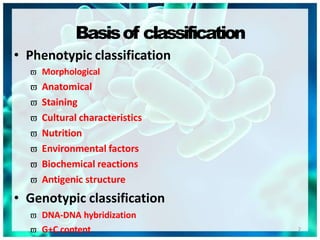
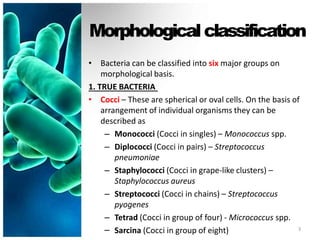
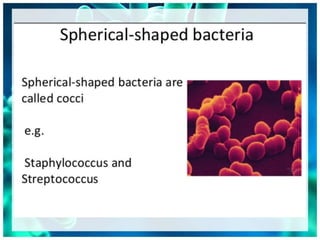
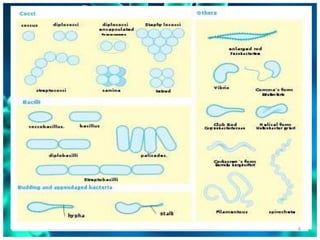
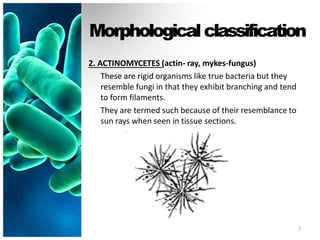
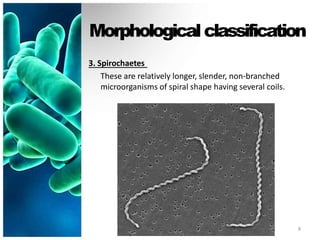
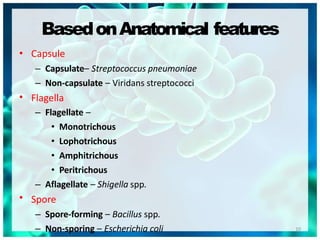
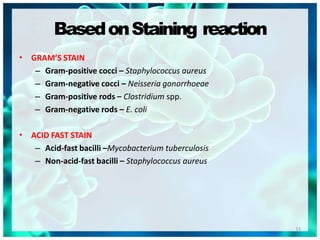
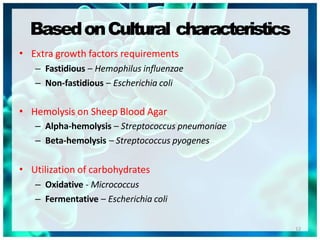
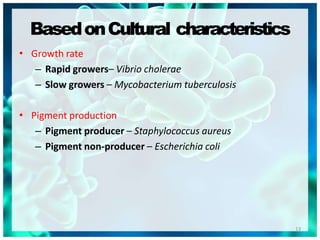
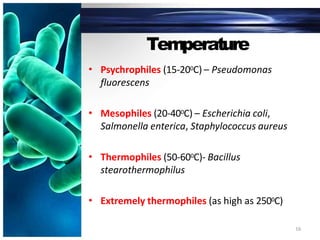
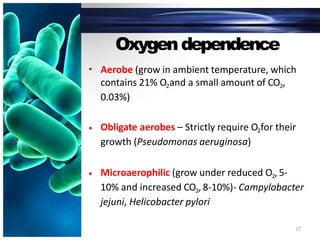
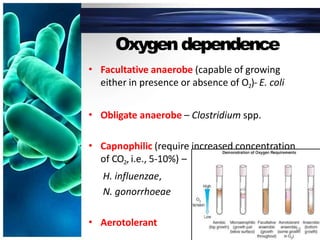
This document discusses various methods for classifying bacteria, including morphological, anatomical, staining, cultural, nutritional, and environmental characteristics. Morphologically, bacteria are classified as cocci, bacilli, actinomycetes, spirochaetes, mycoplasmas, or rickettsiae/chlamydiae based on their shape and arrangement. Anatomical features used in classification include presence of capsules, flagella, and ability to form spores. Staining characteristics such as Gram-stain and acid-fast reactions also provide means of classification. Cultural characteristics like growth requirements, hemolysis, carbohydrate utilization, growth rate, and pigment production further differentiate bacterial types. Environmental tolerances