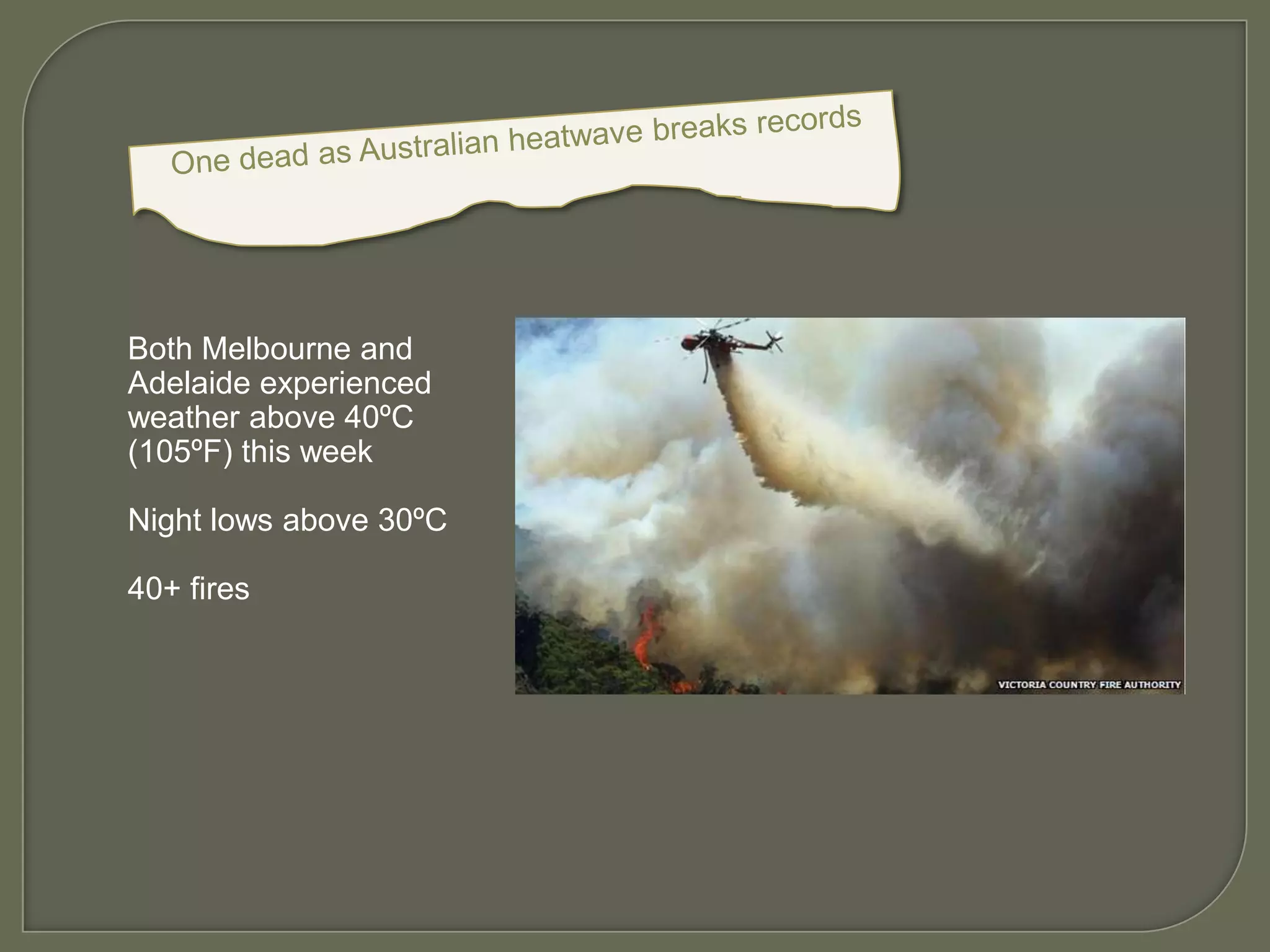
Both Melbourne and
Adelaide experienced
weather above 40ºC
(105ºF) this week

Night lows above 30ºC
40+ fires
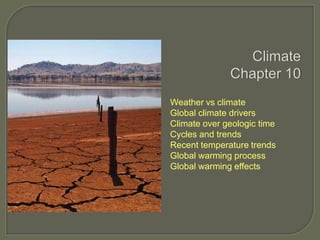
Weather vs climate
Global climate drivers
Climate over geologic time
Cycles and trends
Recent temperature trends
Global warming process
Global warming effects
Evidence of Climates Past
• Study geologic (rock and sediment )record
• Recent changes in soil and vegetation
distribution
• Oxygen isotopes (18O/16O) in shell material
Global input changes over geologic time
• Disruption to global circulation patterns
• Atmosphere chemistry
• Volcanoes
Distance and angle
from sun is directly
linked to climate & ice
ages, warm spells
Regular orbital cycles have major influence on sun’s warming
Atmospheric influence on keeping the warmth [greenhouse effect]

Trend: temp
increase since
10,000 BP

cycle: 5 peaks
over ~400,000
years

Global temps and climate are a combination of cycles and trends
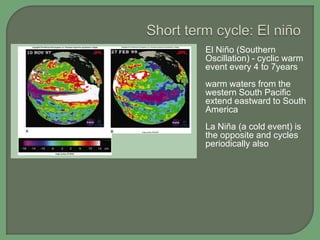
El Niño (Southern
Oscillation) - cyclic warm
event every 4 to 7years
warm waters from the
western South Pacific
extend eastward to South
America
La Niña (a cold event) is
the opposite and cycles
periodically also
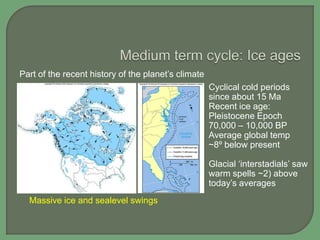
Part of the recent history of the planet’s climate
Cyclical cold periods
since about 15 Ma
Recent ice age:
Pleistocene Epoch
70,000 – 10,000 BP
Average global temp
~8º below present

Glacial ‘interstadials’ saw
warm spells ~2) above
today’s averages
Massive ice and sealevel swings
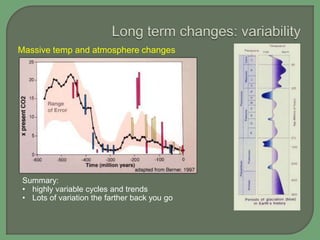
Massive temp and atmosphere changes

Summary:
• highly variable cycles and trends
• Lots of variation the farther back you go
This is by far the biggest, most expensive,
possibly most deadly of all the world’s
environmental issues to date
Affects 1-4 billion people in a direct health
or economic way, that is at our heart

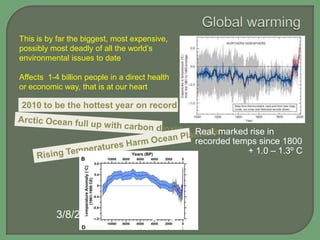
2010 to be the hottest year on record: NASA

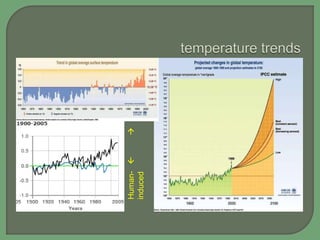
Real, marked rise in
recorded temps since 1800
+ 1.0 – 1.3º C

3/8/2013 sciencemag.org
Atmospheric process
trapping sun’s heat - stuff in
the atmosphere acts as an
insulating blanket
A natural part of the
system, enhanced with
added power
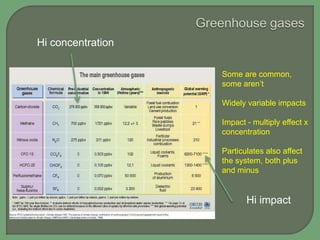
Greenhouse gases:
chemicals [or particles]
contributing to the warming
effect
Hi concentration
Some are common,
some aren’t
Widely variable impacts
Impact - multiply effect x
concentration
Particulates also affect
the system, both plus
and minus

Hi impact
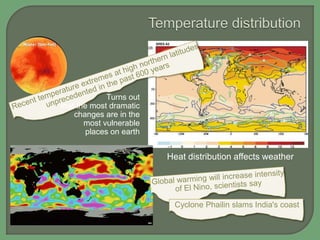
Turns out
that the most dramatic
changes are in the
most vulnerable
places on earth

Heat distribution affects weather

Cyclone Phailin slams India's coast
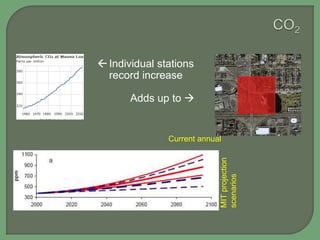
 Individual stations
record increase
Adds up to 

MIT projection
scenarios

Current annual
Human- 
induced


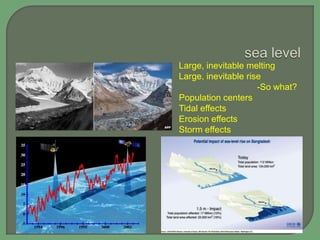
Large, inevitable melting
Large, inevitable rise
-So what?
Population centers
Tidal effects
Erosion effects
Storm effects
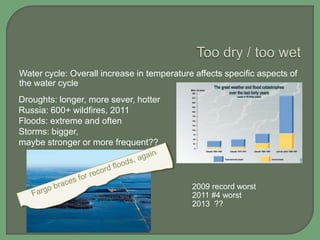
Water cycle: Overall increase in temperature affects specific aspects of
the water cycle
Droughts: longer, more sever, hotter
Russia: 600+ wildfires, 2011
Floods: extreme and often
Storms: bigger,
maybe stronger or more frequent??

2009 record worst
2011 #4 worst
2013 ??
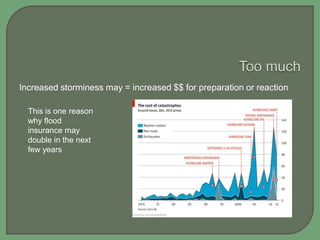
Increased storminess may = increased $$ for preparation or reaction
This is one reason
why flood
insurance may
double in the next
few years
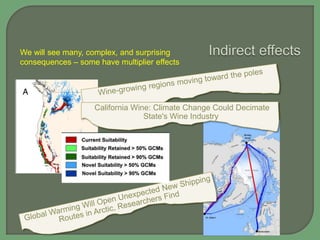
We will see many, complex, and surprising
consequences – some have multiplier effects

California Wine: Climate Change Could Decimate
State's Wine Industry
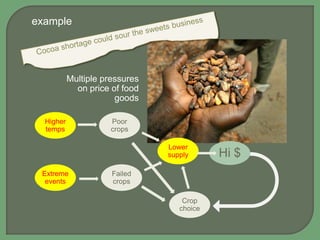
example

Multiple pressures
on price of food
goods
Higher
temps

text

Poor
crops
Lower
supply

Extreme
events

Failed
crops
Crop
choice

Hi $
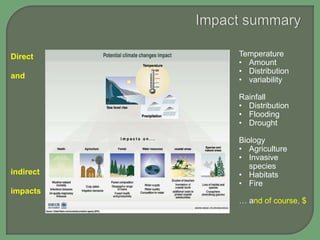
Direct
and

Temperature
• Amount
• Distribution
• variability
Rainfall
• Distribution
• Flooding
• Drought

indirect

Biology
• Agriculture
• Invasive
species
• Habitats
• Fire

impacts
… and of course, $
Environmental campaigners have argued
that to avoid dangerous climate change
[>2ºC] then up to ¾ of the coal, oil and gas
reserves must be left in the ground
SO maybe, if these stashed resources are
mostly worthless, this will have a major
impact on the share values of the fossil fuel
corporations that own them
Chapter 10

Chapter 10

  • 1.
    Both Melbourne and Adelaideexperienced weather above 40ºC (105ºF) this week Night lows above 30ºC 40+ fires
  • 2.
    Weather vs climate Globalclimate drivers Climate over geologic time Cycles and trends Recent temperature trends Global warming process Global warming effects
  • 3.
    Evidence of ClimatesPast • Study geologic (rock and sediment )record • Recent changes in soil and vegetation distribution • Oxygen isotopes (18O/16O) in shell material Global input changes over geologic time • Disruption to global circulation patterns • Atmosphere chemistry • Volcanoes
  • 4.
    Distance and angle fromsun is directly linked to climate & ice ages, warm spells Regular orbital cycles have major influence on sun’s warming Atmospheric influence on keeping the warmth [greenhouse effect] Trend: temp increase since 10,000 BP cycle: 5 peaks over ~400,000 years Global temps and climate are a combination of cycles and trends
  • 5.
    El Niño (Southern Oscillation)- cyclic warm event every 4 to 7years warm waters from the western South Pacific extend eastward to South America La Niña (a cold event) is the opposite and cycles periodically also
  • 6.
    Part of therecent history of the planet’s climate Cyclical cold periods since about 15 Ma Recent ice age: Pleistocene Epoch 70,000 – 10,000 BP Average global temp ~8º below present Glacial ‘interstadials’ saw warm spells ~2) above today’s averages Massive ice and sealevel swings
  • 7.
    Massive temp andatmosphere changes Summary: • highly variable cycles and trends • Lots of variation the farther back you go
  • 8.
    This is byfar the biggest, most expensive, possibly most deadly of all the world’s environmental issues to date Affects 1-4 billion people in a direct health or economic way, that is at our heart 2010 to be the hottest year on record: NASA Real, marked rise in recorded temps since 1800 + 1.0 – 1.3º C 3/8/2013 sciencemag.org
  • 9.
    Atmospheric process trapping sun’sheat - stuff in the atmosphere acts as an insulating blanket A natural part of the system, enhanced with added power Greenhouse gases: chemicals [or particles] contributing to the warming effect
  • 10.
    Hi concentration Some arecommon, some aren’t Widely variable impacts Impact - multiply effect x concentration Particulates also affect the system, both plus and minus Hi impact
  • 11.
    Turns out that themost dramatic changes are in the most vulnerable places on earth Heat distribution affects weather Cyclone Phailin slams India's coast
  • 12.
     Individual stations recordincrease Adds up to  MIT projection scenarios Current annual
  • 13.
  • 14.
    Large, inevitable melting Large,inevitable rise -So what? Population centers Tidal effects Erosion effects Storm effects
  • 16.
    Water cycle: Overallincrease in temperature affects specific aspects of the water cycle Droughts: longer, more sever, hotter Russia: 600+ wildfires, 2011 Floods: extreme and often Storms: bigger, maybe stronger or more frequent?? 2009 record worst 2011 #4 worst 2013 ??
  • 17.
    Increased storminess may= increased $$ for preparation or reaction This is one reason why flood insurance may double in the next few years
  • 18.
    We will seemany, complex, and surprising consequences – some have multiplier effects California Wine: Climate Change Could Decimate State's Wine Industry
  • 19.
    example Multiple pressures on priceof food goods Higher temps text Poor crops Lower supply Extreme events Failed crops Crop choice Hi $
  • 20.
    Direct and Temperature • Amount • Distribution •variability Rainfall • Distribution • Flooding • Drought indirect Biology • Agriculture • Invasive species • Habitats • Fire impacts … and of course, $
  • 21.
    Environmental campaigners haveargued that to avoid dangerous climate change [>2ºC] then up to ¾ of the coal, oil and gas reserves must be left in the ground SO maybe, if these stashed resources are mostly worthless, this will have a major impact on the share values of the fossil fuel corporations that own them