Chapter 1
ICT Learning Principles
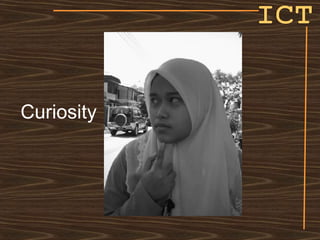
ICT Curiosity
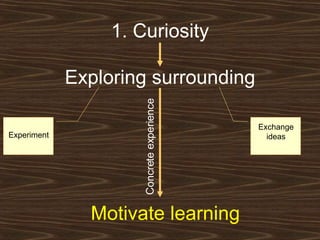
1. Curiosity Exploring surrounding Motivate learning Experiment Exchange ideas Concrete experience
ICT Active learner
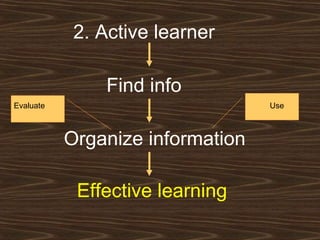
2. Active learner Find info Organize information Effective learning Evaluate  Use
ICT Learning development
3. Learning development Knowledge – Learn - Revise More  interesting  way
ICT Provide various level of  foundation for starting point
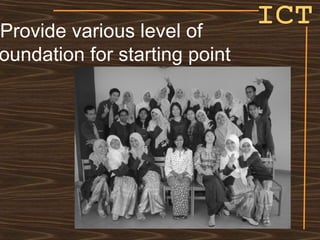
4. Provide various level of foundation for starting point Accommodate all learner Learner choose Keep record- electronic portfolio
ICT ‘ Wider’ classroom
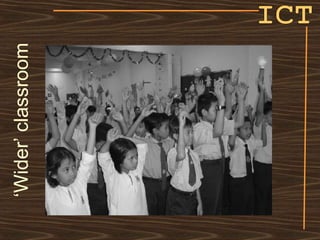
5. ‘Wider’ classroom Extend learning- extend classroom Fast and push learning-  motivate
ICT Scaffolding
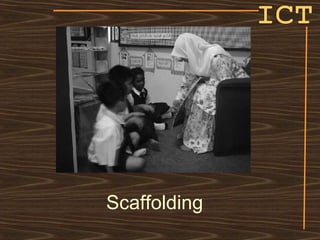
6. Scaffolding Well structured- monitored  freedom with guidance Shape and reflect the learning process
ICT Practice language skills
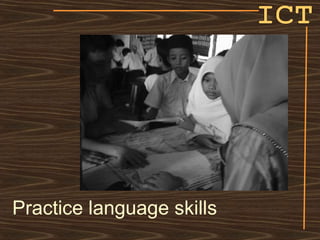
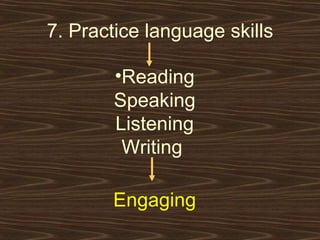
7. Practice language skills Reading Speaking Listening Writing  Engaging
ICT Aesthetic dimension
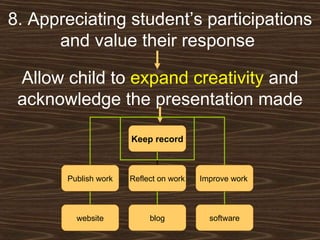
8. Appreciating student’s participations and value their response   Allow child to  expand creativity  and acknowledge the presentation made Keep record Publish work Reflect on work Improve work   website blog software
ICT 9. Social and emotional dimensions
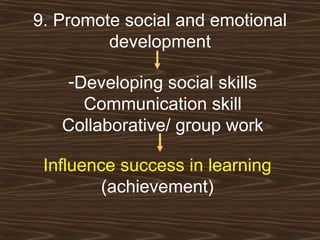
9. Promote social and emotional development Developing social skills Communication skill Collaborative/ group work Influence success in learning (achievement)
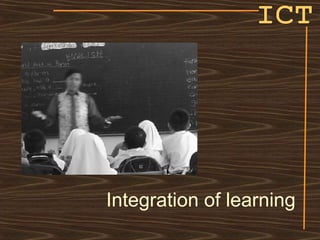
ICT Integration of learning
10. Integrating various subject and skills in learning process Provide authentic/ contextual/ meaningful knowledge  Experience outside the classroom-  learn the interconnectedness of knowledge
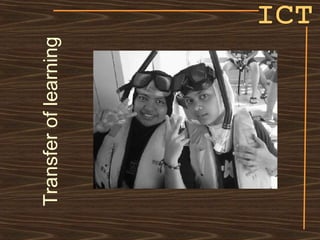
ICT Transfer of learning
11. Ability to apply the required knowledge Shows the learning process is successful The knowledge would be  memorable (use the theory learn in application)
ICT Higher-order thinking and problem-solving
12.   Higher-order thinking and problem-solving Array choices of resources provide experiences & challenges for more meaningful learning Eg: deriving information from internet Involve Asking  Defining problems Examining evidence Analysing assumptions & bases Considering alternative interpretations Tolerating ambiguity etc Provide  opportunity to practice  the higher-order thinking & problem-solving
ICT Collaborative learning
13.  Collaborative learning Develop  social skills  through sharing knowledge - using communication technology - promote whole class participation - learners contribution (boost confident) eg: project work
ICT Individual differences
14. Considering the learner individual differences Learning style - background (culture) Provide different level of difficulty and variety of activities
[email_address]

Chapter 1