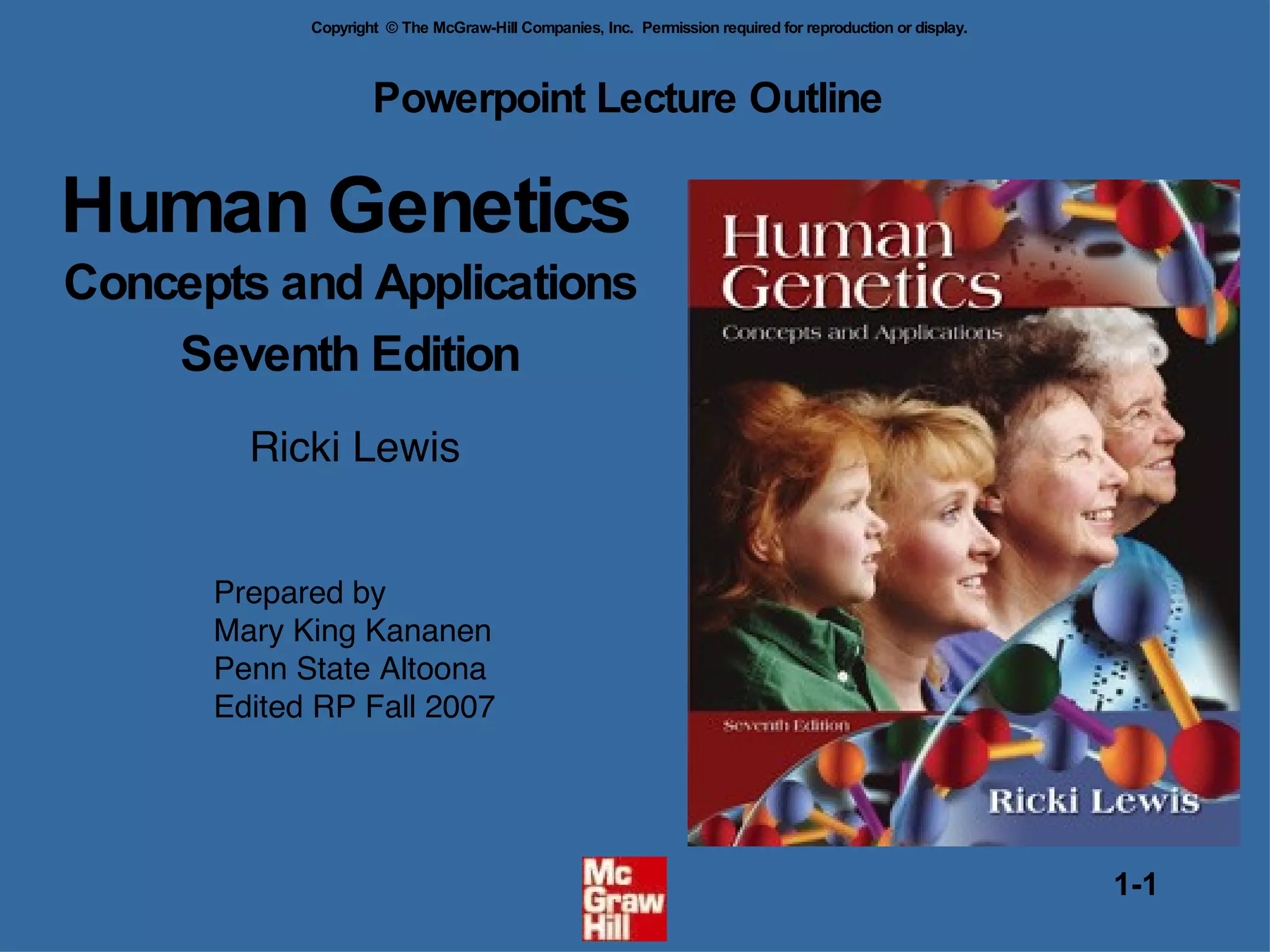
Human Genetics  Concepts and Applications Seventh Edition Powerpoint Lecture Outline  Ricki Lewis Prepared by Mary King Kananen Penn State Altoona Edited RP Fall 2007
Overview of Genetics  Chapter 1
Genetics   Is a life science It is the study of inherited variation and traits Genes  are the units of heredity  Genes are composed of  Deoxyribonucleic Acid  ( DNA) Traits are produced by an interaction between the genes and the environment
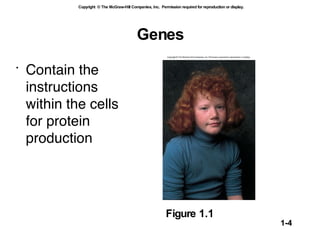
Genes Contain the instructions within the cells for protein production Figure 1.1
The   Genome Is the complete set of genetic information for an organism It includes: All of the genes present in an organism and  Other DNA sequences that do not encode genes Human genome was sequenced in 2000
Genetic Testing Uses new technology Detects health-related genetic variants May be used   To prevent, delay, control, or treat symptoms Gain information on risk of genetic diseases and for pre-pregnancy testing Personalize medical treatment
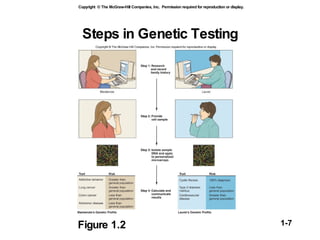
Steps in Genetic Testing Figure 1.2
Genetic Counseling Genetic counselor recommends tests and explains the findings from the laboratory testing Confidentiality is important Laws prevent employers and insurers from discriminating against anyone based on genetic information
Examples of Genetic Tests Cystic fibrosis Certain cancers  Inherited forms of Alzheimer's Type 2 diabetes Others
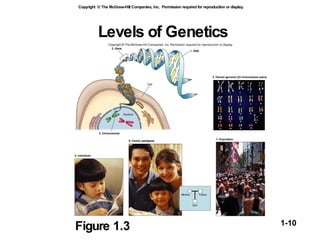
Levels of Genetics Figure 1.3
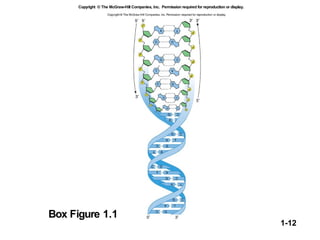
Deoxyribonucleic Acid  (DNA) A double stranded polymer consisting of  a chain of  nucleotides  Deoxyribonucleotide components: Phosphate Sugar : Deoxyribose Base : Guanine  G Adenine  A Thymine  T Cytosine  C The sequence of the bases code for the amino acid sequence in a protein
Box Figure 1.1
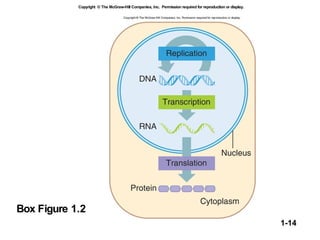
Ribonucleic Acid (RNA) Single stranded polymer of ribonucleotides  Ribonucleotides components: Phosphate Sugar : Ribose Base : Guanine  G Adenine  A Uracil U Cytosine  C Several types  Uses information on DNA to construct proteins
Box Figure 1.2
Genome Only 1.5% of the DNA in the human genome encodes protein Rest includes highly repeated sequences with unknown functions Includes about 24,000 protein encoding genes Cataloged in database  Online Mendelian Inheritance in Man (OMIM)
Genes Alleles  are variants of genes They form by  mutation  Mutations in sperm or egg cells are passed on to the next generation May be positive, negative, or neutral Examples
Variations Polymorphisms  are variations in the DNA sequence that occur in at least 1% of the population  Single nucleotide polymorphisms (SNPs)  are single base sites that differ among individuals and are important as markers
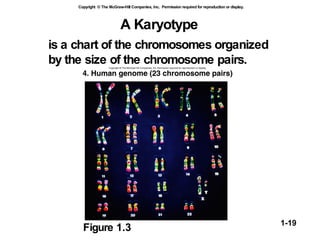
Chromosomes Composed of DNA and protein Found in the nucleus of the cell Human cells have 46 chromosomes 22 pairs of autosomes The sex chromosomes X and Y Females have two X chromosomes Males have one X and a Y
A Karyotype   is a chart of the chromosomes organized  by the size of the chromosome pairs. Figure 1.3
Cells All cells with a nucleus in the body contain the same genetic information Differentiation  causes cells to differ in appearance and function. This is controlled by variation in gene expression. Stem cells  are less specialized
Levels of Organization Cells Tissues Organs Organ systems Organism
Individual The  genotype  of an individual is the alleles they carry The  phenotype  is the visible trait  Dominant alleles  are expressed if the individual carries one or two copies of the allele Recessive alleles  are only expressed if the individual carries two copies of the allele
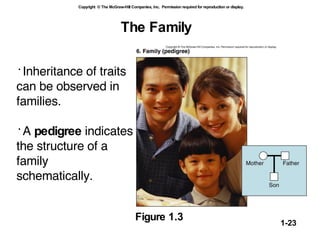
The Family Inheritance of traits can be observed in families. A  pedigree  indicates the structure of a family  schematically.   Figure 1.3
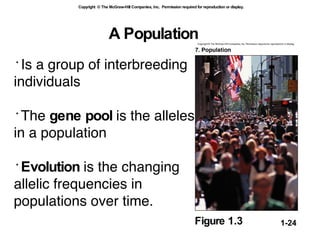
A Population Is a group of interbreeding individuals  The  gene pool  is the alleles in a population Evolution  is the changing allelic frequencies in populations over time.   Figure 1.3
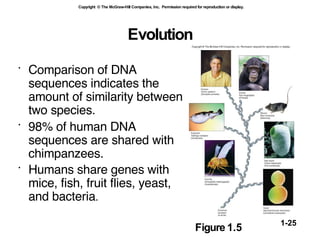
Evolution Comparison of DNA sequences indicates the amount of similarity between two species. 98% of human DNA sequences are shared with chimpanzees. Humans share genes with mice, fish, fruit flies, yeast, and bacteria . Figure   1.5
Two random people share approximately 99.9% of their genome Concept of “race” as defined by skin color is a social,  not  a biological, concept Studies indicates humans arose in Africa and migrated across the globe with relatively little change. Variation in the Human Population
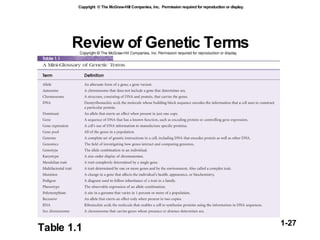
Review of Genetic Terms Table 1.1
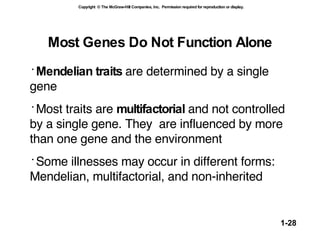
Most Genes Do Not Function Alone Mendelian traits  are determined by a single gene Most traits are  multifactorial  and not controlled by a single gene. They  are influenced by more than one gene and the environment Some illnesses may occur in different forms: Mendelian, multifactorial, and non-inherited
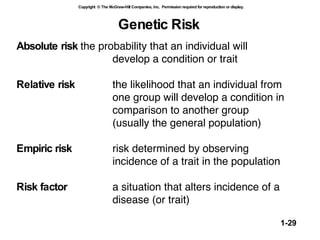
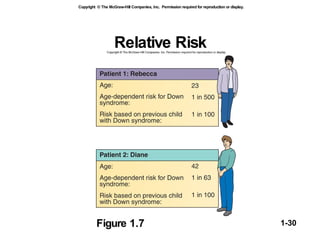
Genetic Risk Absolute risk the probability that an individual will  develop a condition or trait Relative risk the likelihood that an individual from  one group will develop a condition in  comparison to another group  (usually the general population)  Empiric risk risk determined by observing incidence of a trait in the population  Risk factor a situation that alters incidence of a  disease (or trait)
Relative Risk Figure 1.7
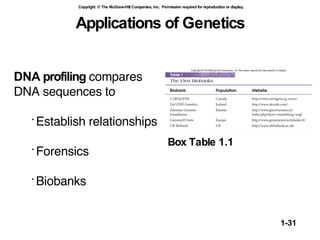
DNA profiling  compares DNA sequences to  Establish relationships Forensics Biobanks Applications of Genetics Box Table 1.1
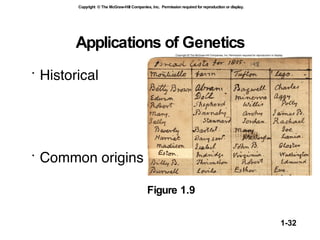
Applications of Genetics Historical Common origins Figure 1.9
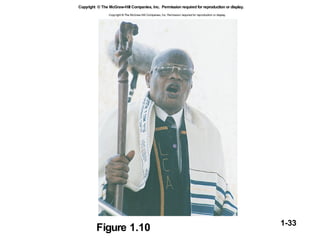
Figure 1.10
Applications of Genetics Health care Prediction of disease Development of treatments Family planning
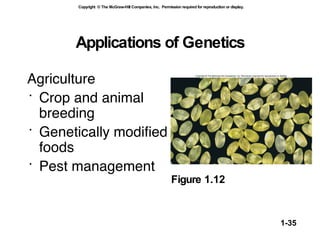
Applications of Genetics Agriculture   Crop and animal breeding Genetically modified foods Pest management Figure 1.12
Applications of Genetics Ecology

Chapt01 Lecture

  • 1.
    Human Genetics Concepts and Applications Seventh Edition Powerpoint Lecture Outline Ricki Lewis Prepared by Mary King Kananen Penn State Altoona Edited RP Fall 2007
  • 2.
  • 3.
    Genetics Is a life science It is the study of inherited variation and traits Genes are the units of heredity Genes are composed of Deoxyribonucleic Acid ( DNA) Traits are produced by an interaction between the genes and the environment
  • 4.
    Genes Contain theinstructions within the cells for protein production Figure 1.1
  • 5.
    The Genome Is the complete set of genetic information for an organism It includes: All of the genes present in an organism and Other DNA sequences that do not encode genes Human genome was sequenced in 2000
  • 6.
    Genetic Testing Usesnew technology Detects health-related genetic variants May be used To prevent, delay, control, or treat symptoms Gain information on risk of genetic diseases and for pre-pregnancy testing Personalize medical treatment
  • 7.
    Steps in GeneticTesting Figure 1.2
  • 8.
    Genetic Counseling Geneticcounselor recommends tests and explains the findings from the laboratory testing Confidentiality is important Laws prevent employers and insurers from discriminating against anyone based on genetic information
  • 9.
    Examples of GeneticTests Cystic fibrosis Certain cancers Inherited forms of Alzheimer's Type 2 diabetes Others
  • 10.
  • 11.
    Deoxyribonucleic Acid (DNA) A double stranded polymer consisting of a chain of nucleotides Deoxyribonucleotide components: Phosphate Sugar : Deoxyribose Base : Guanine G Adenine A Thymine T Cytosine C The sequence of the bases code for the amino acid sequence in a protein
  • 12.
  • 13.
    Ribonucleic Acid (RNA)Single stranded polymer of ribonucleotides Ribonucleotides components: Phosphate Sugar : Ribose Base : Guanine G Adenine A Uracil U Cytosine C Several types Uses information on DNA to construct proteins
  • 14.
  • 15.
    Genome Only 1.5%of the DNA in the human genome encodes protein Rest includes highly repeated sequences with unknown functions Includes about 24,000 protein encoding genes Cataloged in database Online Mendelian Inheritance in Man (OMIM)
  • 16.
    Genes Alleles are variants of genes They form by mutation Mutations in sperm or egg cells are passed on to the next generation May be positive, negative, or neutral Examples
  • 17.
    Variations Polymorphisms are variations in the DNA sequence that occur in at least 1% of the population Single nucleotide polymorphisms (SNPs) are single base sites that differ among individuals and are important as markers
  • 18.
    Chromosomes Composed ofDNA and protein Found in the nucleus of the cell Human cells have 46 chromosomes 22 pairs of autosomes The sex chromosomes X and Y Females have two X chromosomes Males have one X and a Y
  • 19.
    A Karyotype is a chart of the chromosomes organized by the size of the chromosome pairs. Figure 1.3
  • 20.
    Cells All cellswith a nucleus in the body contain the same genetic information Differentiation causes cells to differ in appearance and function. This is controlled by variation in gene expression. Stem cells are less specialized
  • 21.
    Levels of OrganizationCells Tissues Organs Organ systems Organism
  • 22.
    Individual The genotype of an individual is the alleles they carry The phenotype is the visible trait Dominant alleles are expressed if the individual carries one or two copies of the allele Recessive alleles are only expressed if the individual carries two copies of the allele
  • 23.
    The Family Inheritanceof traits can be observed in families. A pedigree indicates the structure of a family schematically. Figure 1.3
  • 24.
    A Population Isa group of interbreeding individuals The gene pool is the alleles in a population Evolution is the changing allelic frequencies in populations over time. Figure 1.3
  • 25.
    Evolution Comparison ofDNA sequences indicates the amount of similarity between two species. 98% of human DNA sequences are shared with chimpanzees. Humans share genes with mice, fish, fruit flies, yeast, and bacteria . Figure 1.5
  • 26.
    Two random peopleshare approximately 99.9% of their genome Concept of “race” as defined by skin color is a social, not a biological, concept Studies indicates humans arose in Africa and migrated across the globe with relatively little change. Variation in the Human Population
  • 27.
    Review of GeneticTerms Table 1.1
  • 28.
    Most Genes DoNot Function Alone Mendelian traits are determined by a single gene Most traits are multifactorial and not controlled by a single gene. They are influenced by more than one gene and the environment Some illnesses may occur in different forms: Mendelian, multifactorial, and non-inherited
  • 29.
    Genetic Risk Absoluterisk the probability that an individual will develop a condition or trait Relative risk the likelihood that an individual from one group will develop a condition in comparison to another group (usually the general population) Empiric risk risk determined by observing incidence of a trait in the population Risk factor a situation that alters incidence of a disease (or trait)
  • 30.
  • 31.
    DNA profiling compares DNA sequences to Establish relationships Forensics Biobanks Applications of Genetics Box Table 1.1
  • 32.
    Applications of GeneticsHistorical Common origins Figure 1.9
  • 33.
  • 34.
    Applications of GeneticsHealth care Prediction of disease Development of treatments Family planning
  • 35.
    Applications of GeneticsAgriculture Crop and animal breeding Genetically modified foods Pest management Figure 1.12
  • 36.