Products, Services &
Brands
Chapter 5
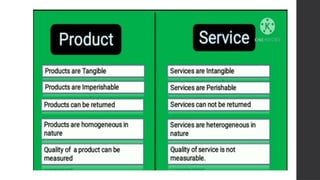
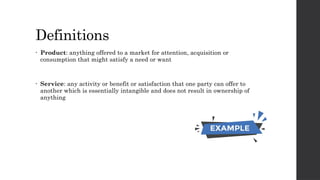
Definitions
• Product: anything offered to a market for attention, acquisition or
consumption that might satisfy a need or want
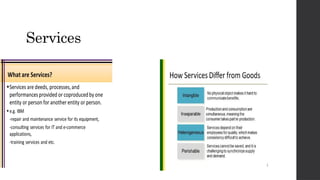
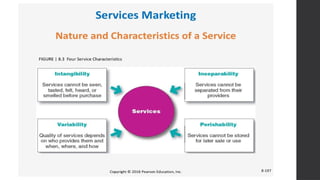
• Service: any activity or benefit or satisfaction that one party can offer to
another which is essentially intangible and does not result in ownership of
anything
Experiences
• Many companies are moving to a new level in creating value for their
customers
• To differentiate their offers, they are creating and managing customer
experiences with their brands or companies
• Today companies are trying to recast their traditional goods and services to
create experiences in the form of events, festivals, award ceremonies
• Engage audiences, amplify your brand, and create memorable connections
that drive success.
• The main goal of them is to foster a deep connection with the audience,
offering your target audience an experience that goes far beyond 'traditional'
advertisements
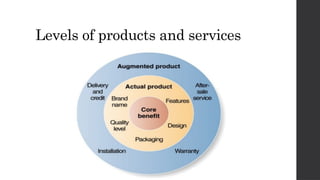
Levels of products and services
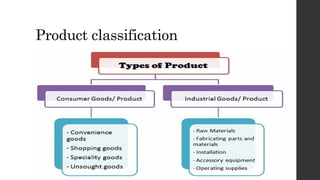
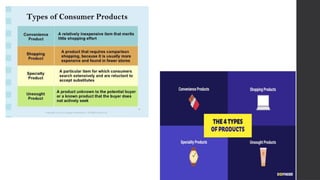
Product classification
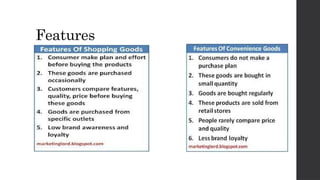
Features
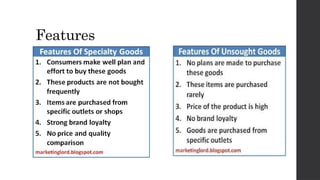
Features
Services
Product life cycle
Product life cycle(what & why)
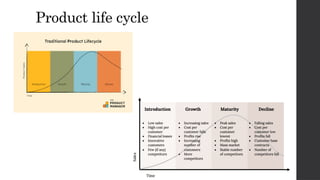
• The product life cycle is used to divide the life of a product from beginning to
end. The four stages of the product life cycle are introduction, growth,
maturity, and decline.
• A product life cycle is helpful for marketers because it helps you figure out
what marketing strategies to use in specific situations.
• For example, you can use a product life cycle as a forecasting and planning
tool.
• You can even use a product lifecycle tool to estimate your profits and
revenue
• The entire purpose of a product life cycle is to add a bit of transparency to
an unknown situation, helping you maximize the value of each product you
release.
Product life cycle(what & why)
• Each stage requires different marketing strategies to maximize the
product's market potential and address customer needs.
• The product life cycle helps marketers forecast, plan, and estimate revenue.
• The model has drawbacks, including the difficulty in predicting the duration
of each stage and the need for regular re-evaluation.
• A successful product execution leads to market growth. This reduces costs
and increases profits until the product reaches the decline stage.
• By thoroughly understanding product life cycles, we can avoid/delay the
decline stage and stretch the market maturity stage for products,
thereby increasing profitability.
Product life cycle(what & why)
• The maturity phase can be extended by improving the features of the
current product or introducing a successor. Software products and services
(SaaS) are a good example of the first strategy.
• At every stage, it is important to keep an eye out for customer feedback to
maintain the relevancy and profitability of the product throughout the
different stages.
Introduction
• The introduction phase of the product life cycle is when you launch your
product. Your marketing team will be focused on building product
awareness and reaching your target market.
• Depending on the complexity of your product, the competition, how new and
innovative it is, you may spend more time than you expected at this stage
• To improve the introduction stage of the product life cycle: Focus on
extensive marketing campaigns, engage your customers and adjust
campaigns:
• Free trials/samples
• Moneyback guarantee
• Discounts for early buyers
Growth
• We enter this stage after successfully introducing the product to the target
market. Growth phase where a product experiences an increase in market
acceptance and sales. During this stage, the product gains momentum and
popularity.
• You need to focus on your promotional strategy and growth marketing to
generate as much interest in your product as possible.
• If the product is appealing, mass scale adoption begins. The adoption may be
slow at the start but as compounding takes over, the sales volume starts
increasing fast during the growth phase
• Gather and act upon customer feedback to refine your offerings and
improve customer satisfaction
Growth
• More and more people sign up for the product/service as early buyers and
promotional offers start bringing in more traffic. More suppliers are willing to
stock the product and ready to pay cash as the demand increases
• The growth stage is also the stage where competitors will usually enter the
market. This is because, many times, companies wait for a market to be
established to bypass some of the costs associated with the introduction phase.
• But once your product creates that market, competitors will almost always come
up with products that are either a direct copy or very similar to your offering with
some added features
Maturity
• The stage where a product has reached a stable position in the market. This
stage is the most profitable but also the most competitive
• During this phase, sales become consistent, and the product has typically
gained widespread acceptance
• You may have to reduce prices to stay competitive.
• Now, your marketing campaigns focus on differentiation instead of awareness,
pointing out your superior product features.
• During this stage, production costs decline, and sales are steady.
• It’s tempting to sit back and enjoy the steady sales, but you must make ongoing
improvements to your product and let consumers know that it’s continuing to get
better.
Maturity
• Competitors have begun taking a portion of the market. Although many
consumers are using the product, there are too many competitors.
• To become the brand of choice, the only way out of this dilemma is to focus
on your strengths—differentiation, features, brand awareness, price, and
customer service. If not, you'll decline.
• Tips to improve the maturity stage of the product life cycle is to cut costs,
continue market research and focus on customer relationships
• Business leaders try to prolong this period of the product life cycle so that
they can maximize their return on investment (ROI)
Decline
• If your brand experiences fierce competition or loses market share, you may
experience the decline stage of the product life cycle.
• All products eventually reach the end of their life cycle. This period is
marked by a decrease in sales
• Outdated products are replaced by modern alternatives. In these instances,
aging products are more likely to experience a rapid drop in popularity as
opposed to a gradual decline.
• When a company sees market decline, leadership may discontinue the
product, sell the company, or innovate the existing product
• Loss of customer interest, damaged brand image
Decline
• During this phase, the product faces challenges, such as changing customer
preferences or the emergence of newer technologies
• To cope up with this stage, either discontinue their own product and
reinvest into emerging trends or update their product if feasible to match
their new competitors.
• Tips to move out of this product life cycle stage: Extend the product line,
repackaging the product, trying new pricing strategies, launching new
versions of the product

chp 5 Products, Services & Brands...pptx

  • 1.
  • 3.
    Definitions • Product: anythingoffered to a market for attention, acquisition or consumption that might satisfy a need or want • Service: any activity or benefit or satisfaction that one party can offer to another which is essentially intangible and does not result in ownership of anything
  • 4.
    Experiences • Many companiesare moving to a new level in creating value for their customers • To differentiate their offers, they are creating and managing customer experiences with their brands or companies • Today companies are trying to recast their traditional goods and services to create experiences in the form of events, festivals, award ceremonies • Engage audiences, amplify your brand, and create memorable connections that drive success. • The main goal of them is to foster a deep connection with the audience, offering your target audience an experience that goes far beyond 'traditional' advertisements
  • 5.
    Levels of productsand services
  • 6.
  • 8.
  • 9.
  • 10.
  • 12.
  • 13.
    Product life cycle(what& why) • The product life cycle is used to divide the life of a product from beginning to end. The four stages of the product life cycle are introduction, growth, maturity, and decline. • A product life cycle is helpful for marketers because it helps you figure out what marketing strategies to use in specific situations. • For example, you can use a product life cycle as a forecasting and planning tool. • You can even use a product lifecycle tool to estimate your profits and revenue • The entire purpose of a product life cycle is to add a bit of transparency to an unknown situation, helping you maximize the value of each product you release.
  • 14.
    Product life cycle(what& why) • Each stage requires different marketing strategies to maximize the product's market potential and address customer needs. • The product life cycle helps marketers forecast, plan, and estimate revenue. • The model has drawbacks, including the difficulty in predicting the duration of each stage and the need for regular re-evaluation. • A successful product execution leads to market growth. This reduces costs and increases profits until the product reaches the decline stage. • By thoroughly understanding product life cycles, we can avoid/delay the decline stage and stretch the market maturity stage for products, thereby increasing profitability.
  • 15.
    Product life cycle(what& why) • The maturity phase can be extended by improving the features of the current product or introducing a successor. Software products and services (SaaS) are a good example of the first strategy. • At every stage, it is important to keep an eye out for customer feedback to maintain the relevancy and profitability of the product throughout the different stages.
  • 16.
    Introduction • The introductionphase of the product life cycle is when you launch your product. Your marketing team will be focused on building product awareness and reaching your target market. • Depending on the complexity of your product, the competition, how new and innovative it is, you may spend more time than you expected at this stage • To improve the introduction stage of the product life cycle: Focus on extensive marketing campaigns, engage your customers and adjust campaigns: • Free trials/samples • Moneyback guarantee • Discounts for early buyers
  • 17.
    Growth • We enterthis stage after successfully introducing the product to the target market. Growth phase where a product experiences an increase in market acceptance and sales. During this stage, the product gains momentum and popularity. • You need to focus on your promotional strategy and growth marketing to generate as much interest in your product as possible. • If the product is appealing, mass scale adoption begins. The adoption may be slow at the start but as compounding takes over, the sales volume starts increasing fast during the growth phase • Gather and act upon customer feedback to refine your offerings and improve customer satisfaction
  • 18.
    Growth • More andmore people sign up for the product/service as early buyers and promotional offers start bringing in more traffic. More suppliers are willing to stock the product and ready to pay cash as the demand increases • The growth stage is also the stage where competitors will usually enter the market. This is because, many times, companies wait for a market to be established to bypass some of the costs associated with the introduction phase. • But once your product creates that market, competitors will almost always come up with products that are either a direct copy or very similar to your offering with some added features
  • 19.
    Maturity • The stagewhere a product has reached a stable position in the market. This stage is the most profitable but also the most competitive • During this phase, sales become consistent, and the product has typically gained widespread acceptance • You may have to reduce prices to stay competitive. • Now, your marketing campaigns focus on differentiation instead of awareness, pointing out your superior product features. • During this stage, production costs decline, and sales are steady. • It’s tempting to sit back and enjoy the steady sales, but you must make ongoing improvements to your product and let consumers know that it’s continuing to get better.
  • 20.
    Maturity • Competitors havebegun taking a portion of the market. Although many consumers are using the product, there are too many competitors. • To become the brand of choice, the only way out of this dilemma is to focus on your strengths—differentiation, features, brand awareness, price, and customer service. If not, you'll decline. • Tips to improve the maturity stage of the product life cycle is to cut costs, continue market research and focus on customer relationships • Business leaders try to prolong this period of the product life cycle so that they can maximize their return on investment (ROI)
  • 21.
    Decline • If yourbrand experiences fierce competition or loses market share, you may experience the decline stage of the product life cycle. • All products eventually reach the end of their life cycle. This period is marked by a decrease in sales • Outdated products are replaced by modern alternatives. In these instances, aging products are more likely to experience a rapid drop in popularity as opposed to a gradual decline. • When a company sees market decline, leadership may discontinue the product, sell the company, or innovate the existing product • Loss of customer interest, damaged brand image
  • 22.
    Decline • During thisphase, the product faces challenges, such as changing customer preferences or the emergence of newer technologies • To cope up with this stage, either discontinue their own product and reinvest into emerging trends or update their product if feasible to match their new competitors. • Tips to move out of this product life cycle stage: Extend the product line, repackaging the product, trying new pricing strategies, launching new versions of the product