1
MONIKAMONIKA
Student of L.P.UStudent of L.P.U
Stnd. (M.B.A)Stnd. (M.B.A)
2
Introduction to IS
 In modern world Advanced
technology
 helps in changes in business
environment
Types of changes in Business
Environment
3
4
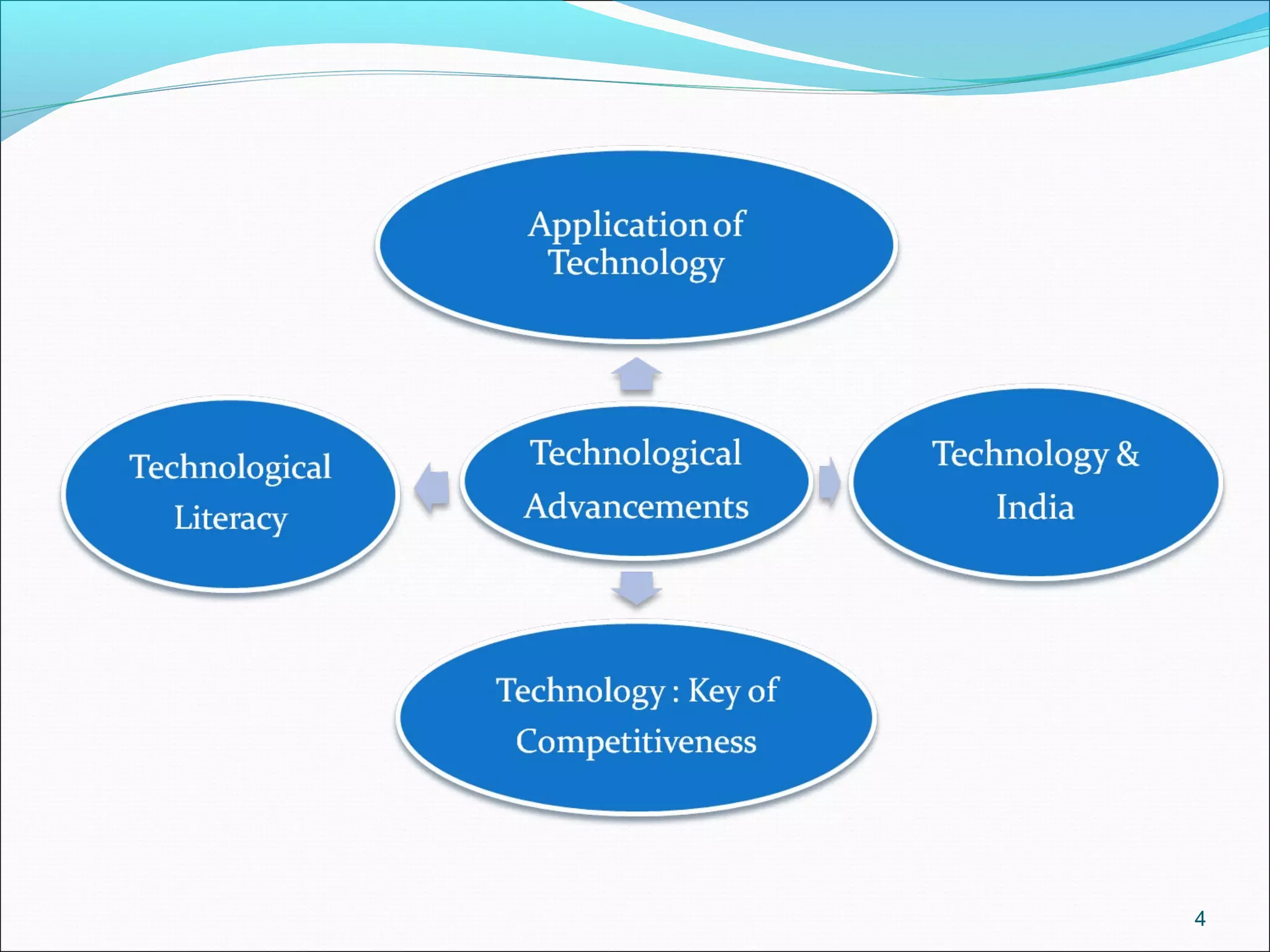
technological Advancements
Technological Explosion
Both authors surmise that 90% of our present technical
knowledge has been generated during the last 55 years
Shortening of the technical cycle
The technological Cycle includes scientific and technological
developments prior to the traditional products life cycle.
globalization of technology
Substantial increase in technology transfer in the form of
licensing and strategic alliances.
5
Application of technology
technology also requires the ability to make effective
use oftechnological knowledge.technological
capabilities reqiuire better application of technology
including the ability to acquire, use, assimilate, adapt,
change and create technology.
 The walkman – the invention of the walkman meant no new
technologies, only a new application of technology
 The breakthrough of the internet in the mid -90s; at that time
this particular technology was already old.
6
Change in technology, affects
Employee training needs
The nature of employee’s tasks
Organizational Structure
 Employee’s Job satisfaction and attitude towards work.
7
Technological literacy
Understanding that technology includes hardware,
Know-how, cultural needs and desires, and economic
and political decision making;
understanding how technology shapes and is shaped by
society;
Understanding that technological issues involve
conflicting assumptions, interpretations and options;
8
9
 Having the necessary data collection and
decision making skills to make intelligent
choices
 having the ability and desire to take
responsible actions on social issues.
Technology : The Key to Competitiveness
Change in technology only possible through
INNOVATION .
Innovative companies are those that keep their
collective eyes and ears open to change and
opportunity and respond with ideas and actions that
keep them growing and profitable .
10
Technology provides an edge
over competitors on all the four
Ps of marketing :
Product
Price
Promotion
Place
11
Technology and India
Some of the remarkable achievements in the field of
science and technology over last 50 years are listed as
below:
Achievements related satellites in India
Achievements in biotechnologists
Alternative energy
Achievements in atomic research
Developed three indigenous diagnostics kits for AIDS
12
Development of diagnostics kits for other
deseases
Defence research organisations e.g wide range of
tactical missiles
Battle tanks: ARJUN & AJEYA.
13
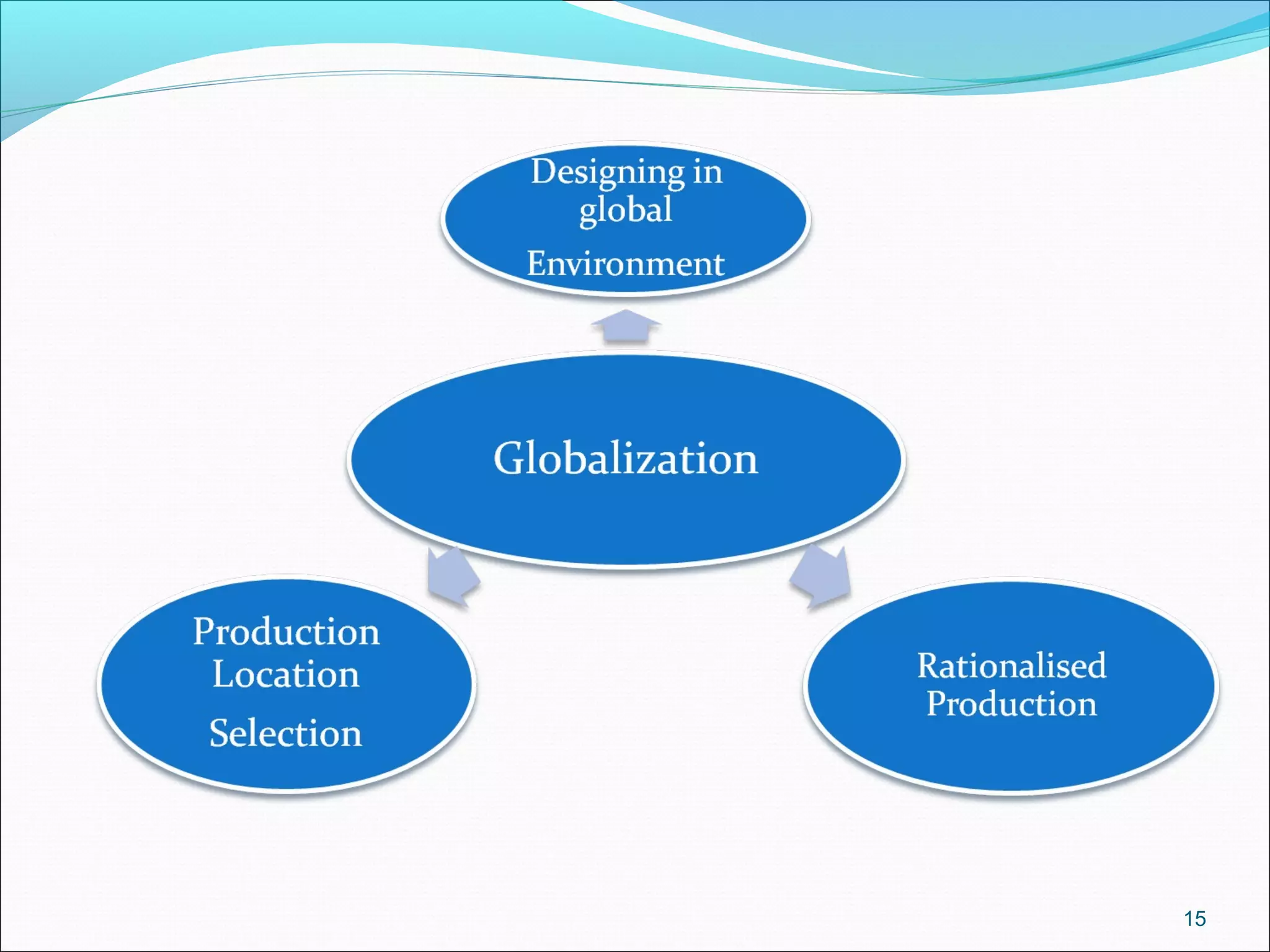
globalization
14
Globalization (or globalisation) is the process
of international integration arising from the
interchange of world views, products, ideas and
other aspects of culture. Advances
in transportation and telecommunications infras
tructure, including the rise of the telegraph and
its development the Internet, are major factors
in globalization, generating
further interdependence of economic and
cultural activities.
15
16
Impact of globalization
 Designing in Global Environment
 Production Location Selection
 Rationalised Production
 Vertical Integration
 Product Strategy
17

Changes in business environment

  • 1.
    1 MONIKAMONIKA Student of L.P.UStudentof L.P.U Stnd. (M.B.A)Stnd. (M.B.A)
  • 2.
    2 Introduction to IS In modern world Advanced technology  helps in changes in business environment
  • 3.
    Types of changesin Business Environment 3
  • 4.
  • 5.
    technological Advancements Technological Explosion Bothauthors surmise that 90% of our present technical knowledge has been generated during the last 55 years Shortening of the technical cycle The technological Cycle includes scientific and technological developments prior to the traditional products life cycle. globalization of technology Substantial increase in technology transfer in the form of licensing and strategic alliances. 5
  • 6.
    Application of technology technologyalso requires the ability to make effective use oftechnological knowledge.technological capabilities reqiuire better application of technology including the ability to acquire, use, assimilate, adapt, change and create technology.  The walkman – the invention of the walkman meant no new technologies, only a new application of technology  The breakthrough of the internet in the mid -90s; at that time this particular technology was already old. 6
  • 7.
    Change in technology,affects Employee training needs The nature of employee’s tasks Organizational Structure  Employee’s Job satisfaction and attitude towards work. 7
  • 8.
    Technological literacy Understanding thattechnology includes hardware, Know-how, cultural needs and desires, and economic and political decision making; understanding how technology shapes and is shaped by society; Understanding that technological issues involve conflicting assumptions, interpretations and options; 8
  • 9.
    9  Having thenecessary data collection and decision making skills to make intelligent choices  having the ability and desire to take responsible actions on social issues.
  • 10.
    Technology : TheKey to Competitiveness Change in technology only possible through INNOVATION . Innovative companies are those that keep their collective eyes and ears open to change and opportunity and respond with ideas and actions that keep them growing and profitable . 10
  • 11.
    Technology provides anedge over competitors on all the four Ps of marketing : Product Price Promotion Place 11
  • 12.
    Technology and India Someof the remarkable achievements in the field of science and technology over last 50 years are listed as below: Achievements related satellites in India Achievements in biotechnologists Alternative energy Achievements in atomic research Developed three indigenous diagnostics kits for AIDS 12
  • 13.
    Development of diagnosticskits for other deseases Defence research organisations e.g wide range of tactical missiles Battle tanks: ARJUN & AJEYA. 13
  • 14.
    globalization 14 Globalization (or globalisation) is theprocess of international integration arising from the interchange of world views, products, ideas and other aspects of culture. Advances in transportation and telecommunications infras tructure, including the rise of the telegraph and its development the Internet, are major factors in globalization, generating further interdependence of economic and cultural activities.
  • 15.
  • 16.
    16 Impact of globalization Designing in Global Environment  Production Location Selection  Rationalised Production  Vertical Integration  Product Strategy
  • 17.