
Future Change Agents - an oceanographic perspective

LOOKING BACK-MOVING FORWARD


                                                Bob Fournier
                                                Atlantic Geomatics Association
                                                13 June 2012
Road Map

 Introduction
 Ocean Warming
 Sea level Rise
 Ocean Acidification
 Human Element
 Tipping Point
 Geo-engineering
Competing Explanations


 •Orbital variation

 •Plate tectonics

 •Volcanism

 •Ocean variability

 •Tilt of earth’s axis

 •Atmos. chemistry

 •Solar output


                         Based on IPCC Report 2007
Letter to Editor, Wall Street Journal, January 26, 2012


                                               Wall Street Journal, 26 January 2012
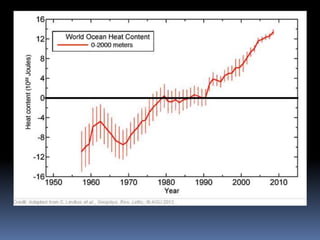
OCEAN WARMING
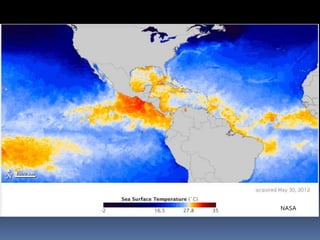
NASA
Cape Verde
                                                              Islands


Birthplace of Hurricanes (affects North and South Atlantic)
Science 309: 1844 (2005)
Category Five: 268 kph (2 days earlier = 287 )
       o
     Category


                                                 NASA
Recent Observations

 Past 20 years extreme winds increased ~10% and
  extreme wave height increased average of 7%

 Longer lasting storms with higher wind velocities
  inflict greater damage - function of (wind speed)3

 Surface warming of 20C would intensify hurricane
  wind speeds by 3-7 m/s or 5-13 %.

 Global Water Cycle – recently doubled re models
SEA LEVEL RISE
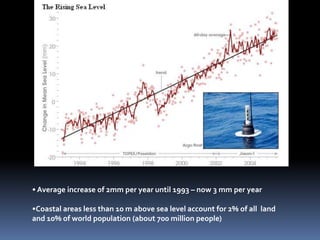
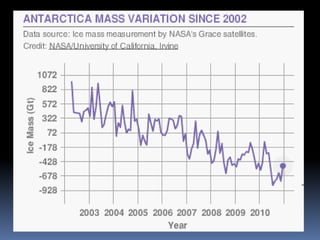
• Average increase of 2mm per year until 1993 – now 3 mm per year

•Coastal areas less than 10 m above sea level account for 2% of all land
and 10% of world population (about 700 million people)
NASA Image, Cindy Starr

 Illulisat (Western Greenland) – largest single glacier in the North Atlantic
1.5 m SL rise

                                               Dhaka                   People affected
                                                                       17 million
                                                                       (15%)


                                                                       Land affected:
           Calcutta
                                                                        22,000 km2
                                                                       (16%)


Bangladesh, Bay of Bengal - 1970 Bhola cyclone claimed 500,000 lives
Dhaka slum of Korail (National Geographic May 2011)
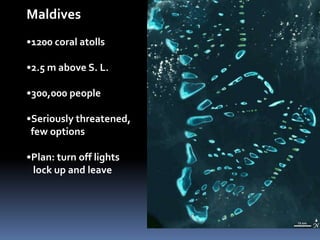
Maldives
•1200 coral atolls

•2.5 m above S. L.

•300,000 people

•Seriously threatened,
 few options

•Plan: turn off lights
 lock up and leave
Male, Capital of Maldives
 Population: 80,000         Protective wall:
                            10% of GDP
Shaw, J. et al. 1998. Geological Survey of Canada, Bulletin 505.


                                                                     Natural Resources Canada


Maritime Provinces - highly vulnerable with potentially greatest social disruption
The number of people at risk from flooding by coastal
storm surges is projected to increase from the current 75
million to 200 million....in which a rise in sea level of 40 cm
is envisaged by the 2080s
                         (from Patz et al 2006 after McCarthy et al 2001)
Global Warming’s Evil Twin

OCEAN ACIDIFICATION
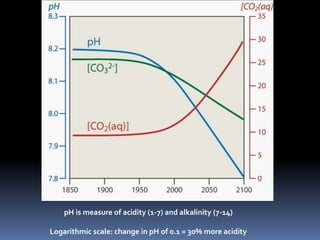
pH is measure of acidity (1-7) and alkalinity (7-14)

Logarithmic scale: change in pH of 0.1 = 30% more acidity
Great Barrier Reef, Australia
What is the Impact of Acidification?
•Ocean food chain threatened by loss of
  small plankton organisms

• Corals (surface and deep), upon which
   many people depend, for:
    -food
    -raw materials
    -recreation
    -water purification
    -tourism
    -storm impact reduction


• Economic hit to the global economy
  will fall between $30-170 billion per yr

• Displacement of millions of people
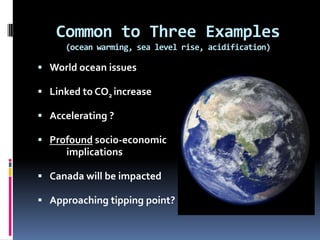
Common to Three Examples
     (ocean warming, sea level rise, acidification)

 World ocean issues

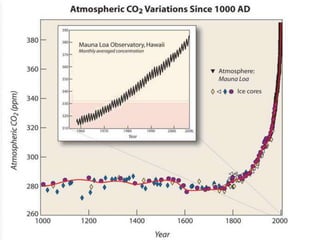
 Linked to CO2 increase

 Accelerating ?

 Profound socio-economic
      implications

 Canada will be impacted

 Approaching tipping point?
THE HUMAN ELEMENT
Environmental Refugees
 Hundreds of millions of
  people on the move over
  next few decades

 10 million refugees last year
  & UN claims 50 million by
  end of next decade

 Red Cross: “environmental
 disasters already displace
 more than war”                   In addition to 3 examples:
                                     drought
 Expected to become one of the      soil moisture
  foremost crises of our time        intense precipitation
                                     desertification
Population and Environment cannot be separated
Two-thirds of 22 megacities are coastal – presently 310 million people
Potential Impacts on Human Health

 Coastal flooding/erosion     Extreme weather

 SW intrusion into            Harmful algal blooms
  aquifers
                               Focus on poorest regions
 Altered coral reefs
                               Famine and malnutrition
 Altered Coastal fisheries
                               Microbial diseases
 Human displacement
                               War
 Economic disruption
After Malcolm Gladwell (2002)

TIPPING POINT
• Stable on top

• Stable at bottom

• Chaotic transition
   begins with
   “Tipping Point”
stable


    chaotic


stable
• 25X more effective as
  GHG than CO2

• Vast untapped deposits
   in cold seas

• Exit into atmosphere
  accelerates warming
  which accelerates
  methane release
  which accelerates....


                           Frozen Sea-Bed Methane (Hydrates)
A Possible Remedy?

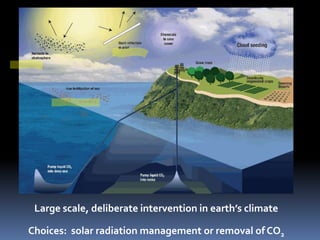
GEO-ENGINEERING
Large scale, deliberate intervention in earth’s climate

Choices: solar radiation management or removal of CO2
“When you start to reflect light
away from the planet, you can
easily imagine a chain of events
that would extinguish life on
earth”
                     Dr. David Keith
                     Prof. of Engineering
                        and Public Policy
                     Harvard University
Change Agents (MCISUR 2012)

Change Agents (MCISUR 2012)

  • 1.
    Future Change Agents- an oceanographic perspective LOOKING BACK-MOVING FORWARD Bob Fournier Atlantic Geomatics Association 13 June 2012
  • 3.
    Road Map  Introduction Ocean Warming  Sea level Rise  Ocean Acidification  Human Element  Tipping Point  Geo-engineering
  • 4.
    Competing Explanations •Orbitalvariation •Plate tectonics •Volcanism •Ocean variability •Tilt of earth’s axis •Atmos. chemistry •Solar output Based on IPCC Report 2007
  • 5.
    Letter to Editor,Wall Street Journal, January 26, 2012 Wall Street Journal, 26 January 2012
  • 8.
  • 10.
  • 11.
    Cape Verde Islands Birthplace of Hurricanes (affects North and South Atlantic)
  • 12.
  • 13.
    Category Five: 268kph (2 days earlier = 287 ) o Category NASA
  • 14.
    Recent Observations  Past20 years extreme winds increased ~10% and extreme wave height increased average of 7%  Longer lasting storms with higher wind velocities inflict greater damage - function of (wind speed)3  Surface warming of 20C would intensify hurricane wind speeds by 3-7 m/s or 5-13 %.  Global Water Cycle – recently doubled re models
  • 15.
  • 16.
    • Average increaseof 2mm per year until 1993 – now 3 mm per year •Coastal areas less than 10 m above sea level account for 2% of all land and 10% of world population (about 700 million people)
  • 18.
    NASA Image, CindyStarr Illulisat (Western Greenland) – largest single glacier in the North Atlantic
  • 19.
    1.5 m SLrise Dhaka People affected 17 million (15%) Land affected: Calcutta 22,000 km2 (16%) Bangladesh, Bay of Bengal - 1970 Bhola cyclone claimed 500,000 lives
  • 20.
    Dhaka slum ofKorail (National Geographic May 2011)
  • 21.
    Maldives •1200 coral atolls •2.5m above S. L. •300,000 people •Seriously threatened, few options •Plan: turn off lights lock up and leave
  • 22.
    Male, Capital ofMaldives Population: 80,000 Protective wall: 10% of GDP
  • 23.
    Shaw, J. etal. 1998. Geological Survey of Canada, Bulletin 505. Natural Resources Canada Maritime Provinces - highly vulnerable with potentially greatest social disruption
  • 25.
    The number ofpeople at risk from flooding by coastal storm surges is projected to increase from the current 75 million to 200 million....in which a rise in sea level of 40 cm is envisaged by the 2080s (from Patz et al 2006 after McCarthy et al 2001)
  • 26.
    Global Warming’s EvilTwin OCEAN ACIDIFICATION
  • 27.
    pH is measureof acidity (1-7) and alkalinity (7-14) Logarithmic scale: change in pH of 0.1 = 30% more acidity
  • 28.
  • 31.
    What is theImpact of Acidification? •Ocean food chain threatened by loss of small plankton organisms • Corals (surface and deep), upon which many people depend, for: -food -raw materials -recreation -water purification -tourism -storm impact reduction • Economic hit to the global economy will fall between $30-170 billion per yr • Displacement of millions of people
  • 32.
    Common to ThreeExamples (ocean warming, sea level rise, acidification)  World ocean issues  Linked to CO2 increase  Accelerating ?  Profound socio-economic implications  Canada will be impacted  Approaching tipping point?
  • 33.
  • 34.
    Environmental Refugees  Hundredsof millions of people on the move over next few decades  10 million refugees last year & UN claims 50 million by end of next decade  Red Cross: “environmental disasters already displace more than war” In addition to 3 examples: drought  Expected to become one of the soil moisture foremost crises of our time intense precipitation desertification
  • 35.
    Population and Environmentcannot be separated
  • 36.
    Two-thirds of 22megacities are coastal – presently 310 million people
  • 37.
    Potential Impacts onHuman Health  Coastal flooding/erosion  Extreme weather  SW intrusion into  Harmful algal blooms aquifers  Focus on poorest regions  Altered coral reefs  Famine and malnutrition  Altered Coastal fisheries  Microbial diseases  Human displacement  War  Economic disruption
  • 38.
    After Malcolm Gladwell(2002) TIPPING POINT
  • 39.
    • Stable ontop • Stable at bottom • Chaotic transition begins with “Tipping Point”
  • 40.
    stable chaotic stable
  • 42.
    • 25X moreeffective as GHG than CO2 • Vast untapped deposits in cold seas • Exit into atmosphere accelerates warming which accelerates methane release which accelerates.... Frozen Sea-Bed Methane (Hydrates)
  • 43.
  • 44.
    Large scale, deliberateintervention in earth’s climate Choices: solar radiation management or removal of CO2
  • 45.
    “When you startto reflect light away from the planet, you can easily imagine a chain of events that would extinguish life on earth” Dr. David Keith Prof. of Engineering and Public Policy Harvard University