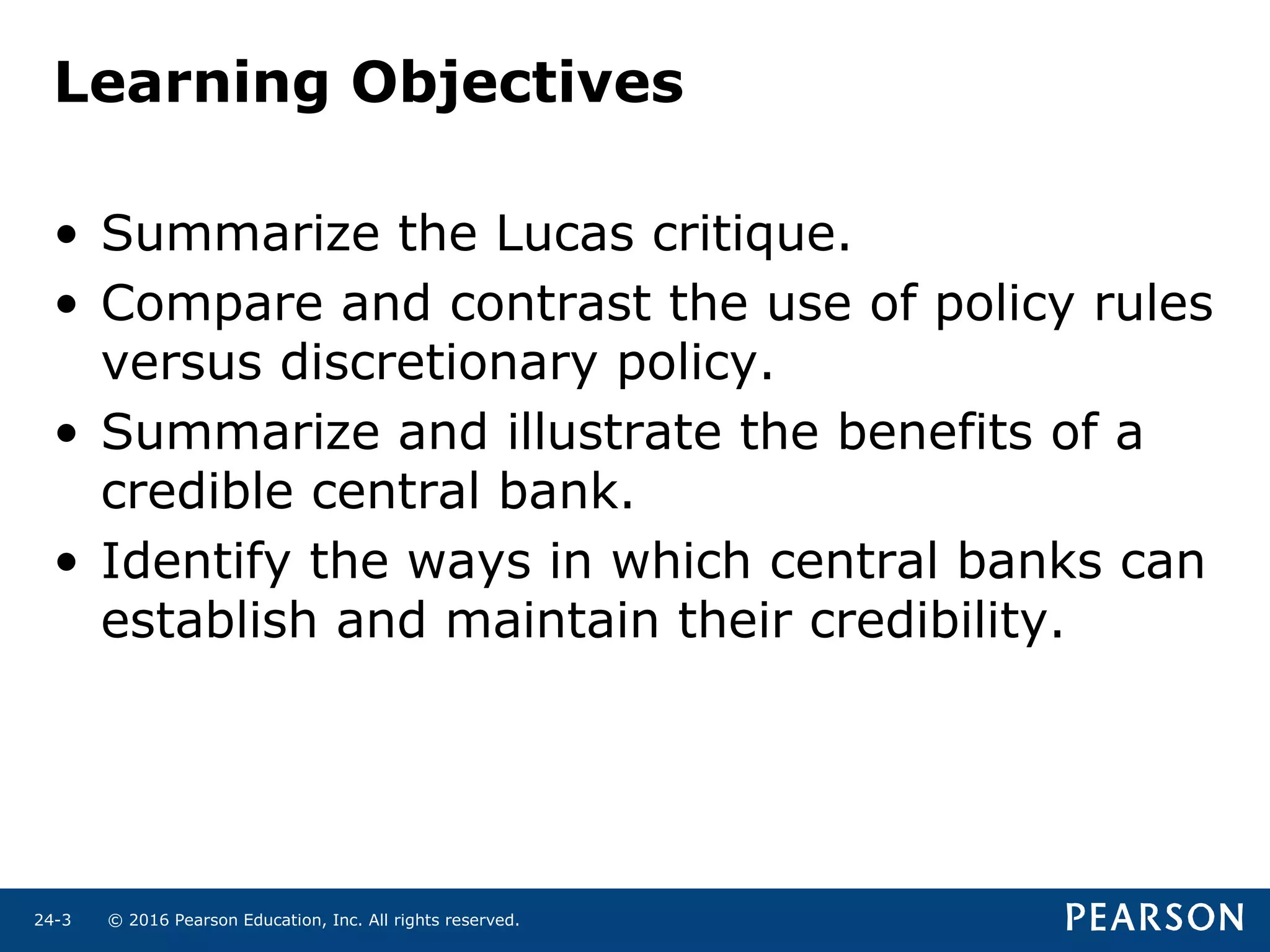
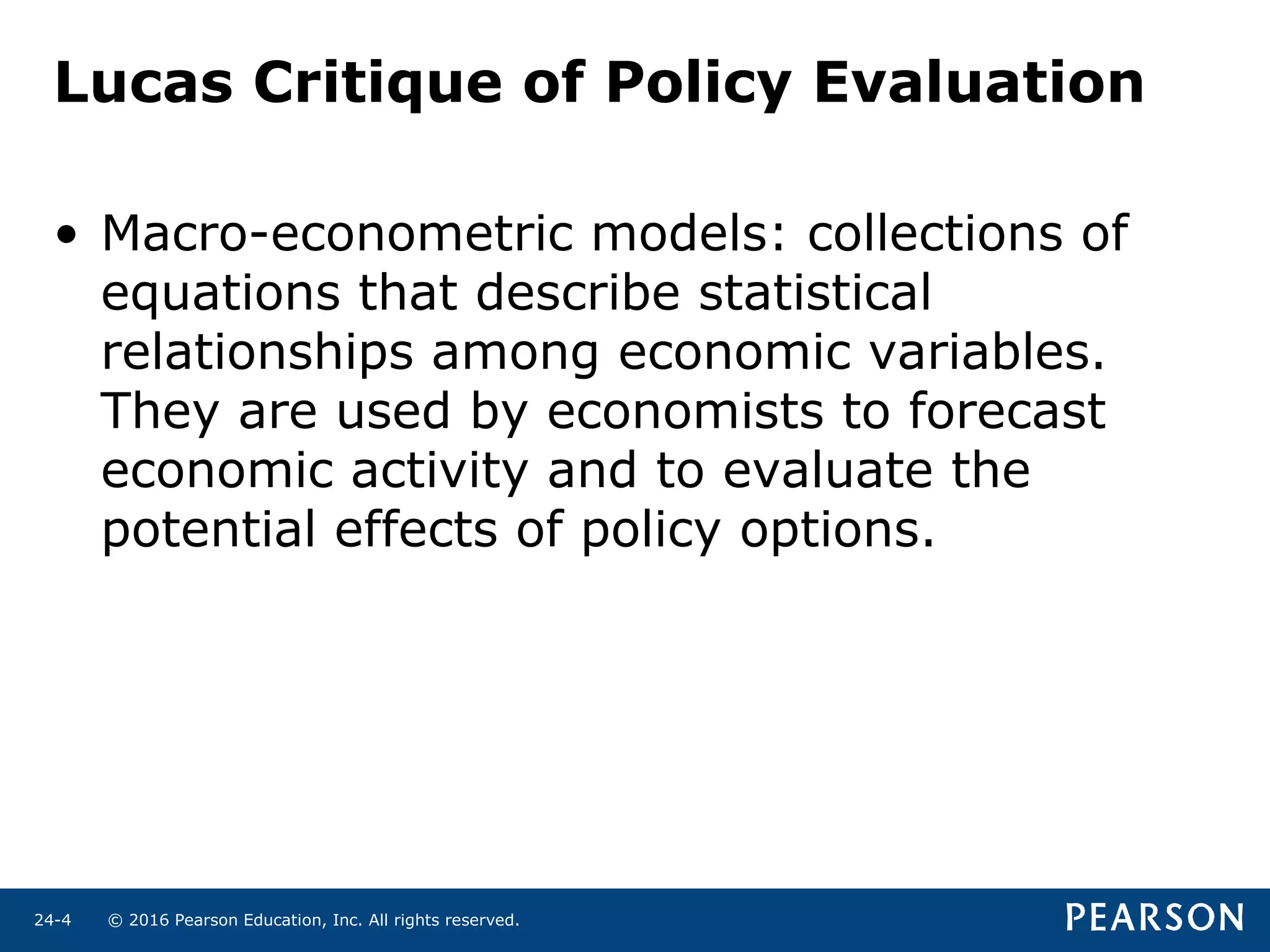
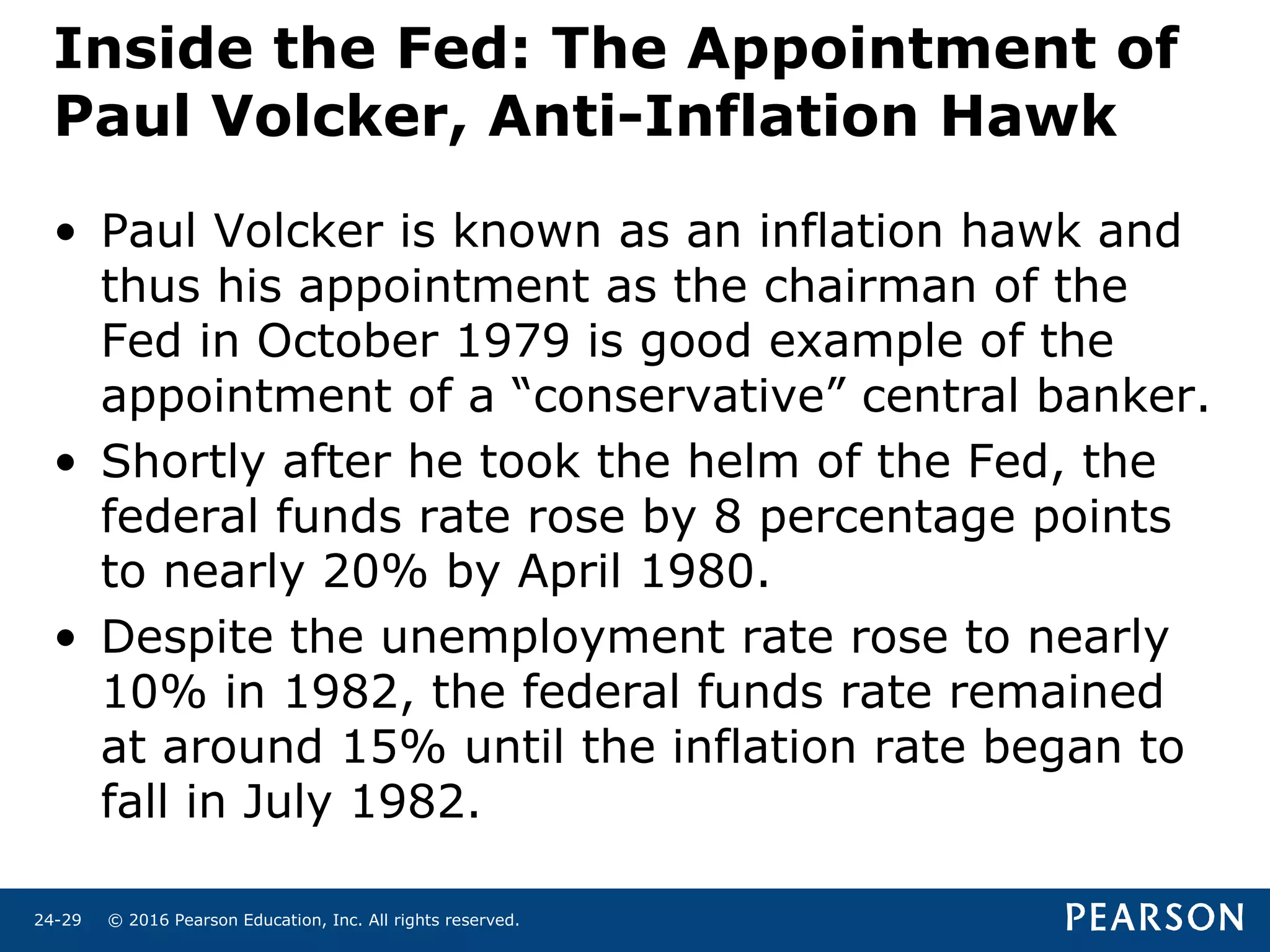
This chapter discusses the importance of expectations in monetary policy. It summarizes the Lucas critique, which argues that changes in policy will also change public expectations in ways that impact the economy. As such, econometric models that don't account for rational expectations cannot reliably evaluate policy options. The chapter also compares monetary policy rules versus discretion, noting that rules help address the time inconsistency problem but lack flexibility. A credible central bank that commits to a nominal anchor through constrained discretion can achieve price stability while allowing some flexibility in policy.