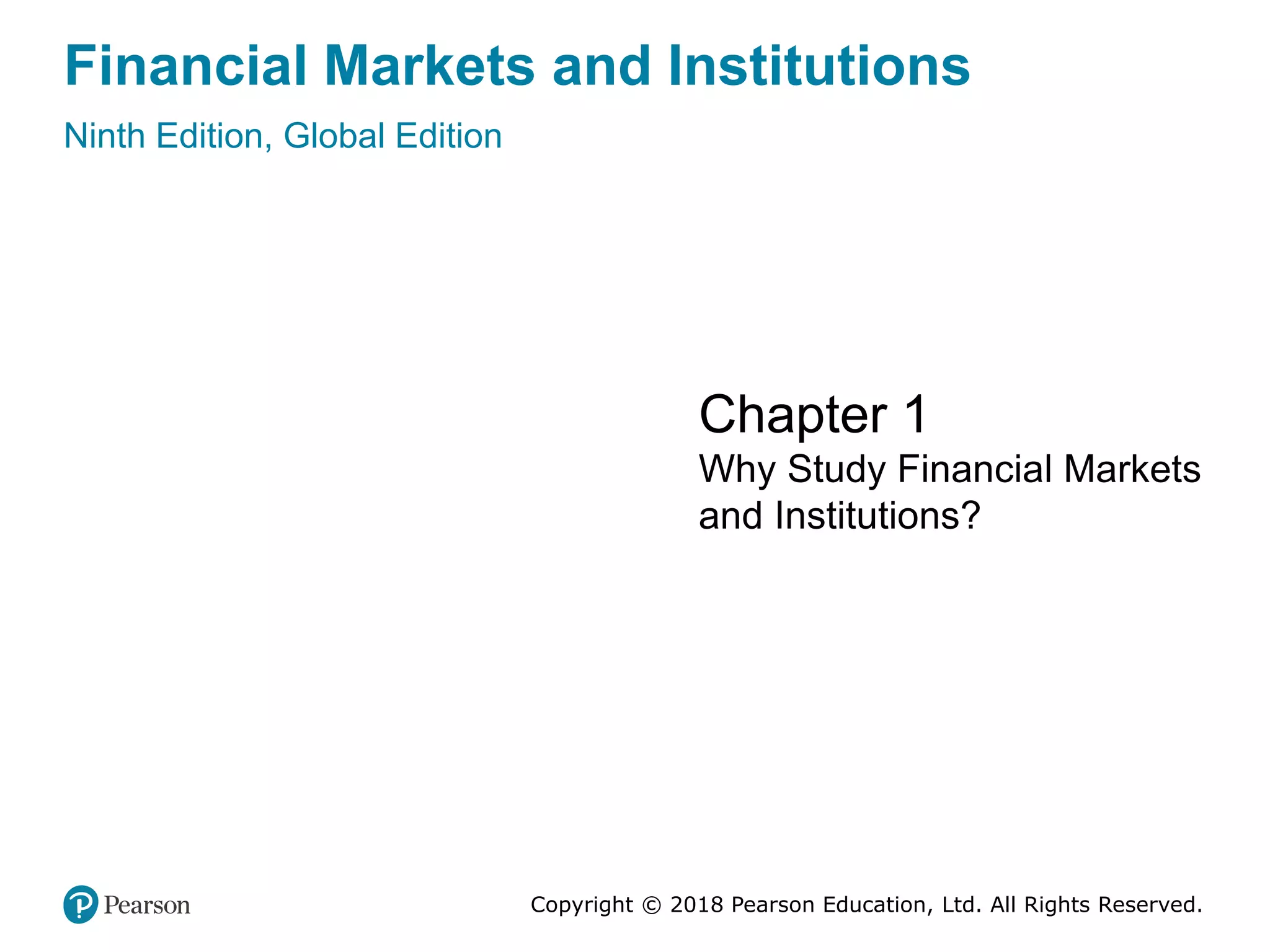
Financial Markets
10871225
Dr. Muath Asmar
AN-NAJAH
NATIONAL UNIVERSITY
Faculty of Economics and
Social Sciences
Department of Finance
Financial Markets and Institutions
Ninth Edition, Global Edition
Chapter 1
Why Study Financial Markets
and Institutions?
Copyright © 2018 Pearson Education, Ltd. All Rights Reserved.
Chapter Preview (1 of 4)
The evening news features a segment about the bond
market and interest rates. What does this mean for your
small retail business? Should you borrow money? Issue
stock instead of using a bank loan?
What does all this mean? Do I care about interest rates?
What about the turmoil in Europe? Are imports more
expensive?
Copyright © 2018 Pearson Education, Ltd. All Rights Reserved.
Chapter Preview (2 of 4)
These are good questions. Of course, the answer to these
questions can be found in this book. In fact, this books
touches on a variety of topics, including the Fed, stocks
markets, bond markets, and banks. We will begin to
appreciate many exciting issues related to these topics
during the course of this term.
Copyright © 2018 Pearson Education, Ltd. All Rights Reserved.
Chapter Preview (3 of 4)
We preview subjects of interest to anyone who is a part of a
productive society. Topics include:
• Why Study Financial Markets?
• Why Study Financial Institutions?
• Applied Managerial Perspective
• How Will We Study Financial Markets and Institutions
Copyright © 2018 Pearson Education, Ltd. All Rights Reserved.
Chapter Preview (4 of 4)
We preview subjects of interest to anyone who is a part of a
productive society. Topics include: Web Exercise
• Concluding Remarks
Copyright © 2018 Pearson Education, Ltd. All Rights Reserved.
Why Study Financial Markets? (1 of 2)
Financial markets are crucial in our economy.
1. Channel funds from savers to investors, promoting
economic efficiency.
2. Market activity affects: personal wealth, business firms,
and economy
Copyright © 2018 Pearson Education, Ltd. All Rights Reserved.
Why Study Financial Markets? (2 of 2)
• Well functioning financial markets are key factors in
producing high economic growth.
• We will briefly examine each of these markets, key
statistics, and how we will examine them throughout this
course.
Copyright © 2018 Pearson Education, Ltd. All Rights Reserved.
Why Study Financial Markets?
Debt Markets & Interest Rates (1 of 3)
• Debt markets allow governments, corporations, and
individuals to borrow.
• Borrowers issue a security, called a bond, offering interest
and principal over time.
• The interest rate is the cost of borrowing.
Copyright © 2018 Pearson Education, Ltd. All Rights Reserved.
Why Study Financial Markets?
Debt Markets & Interest Rates (2 of 3)
• Many types of market interest rates: mortgage rates, car
loan rates, credit card rates, etc.
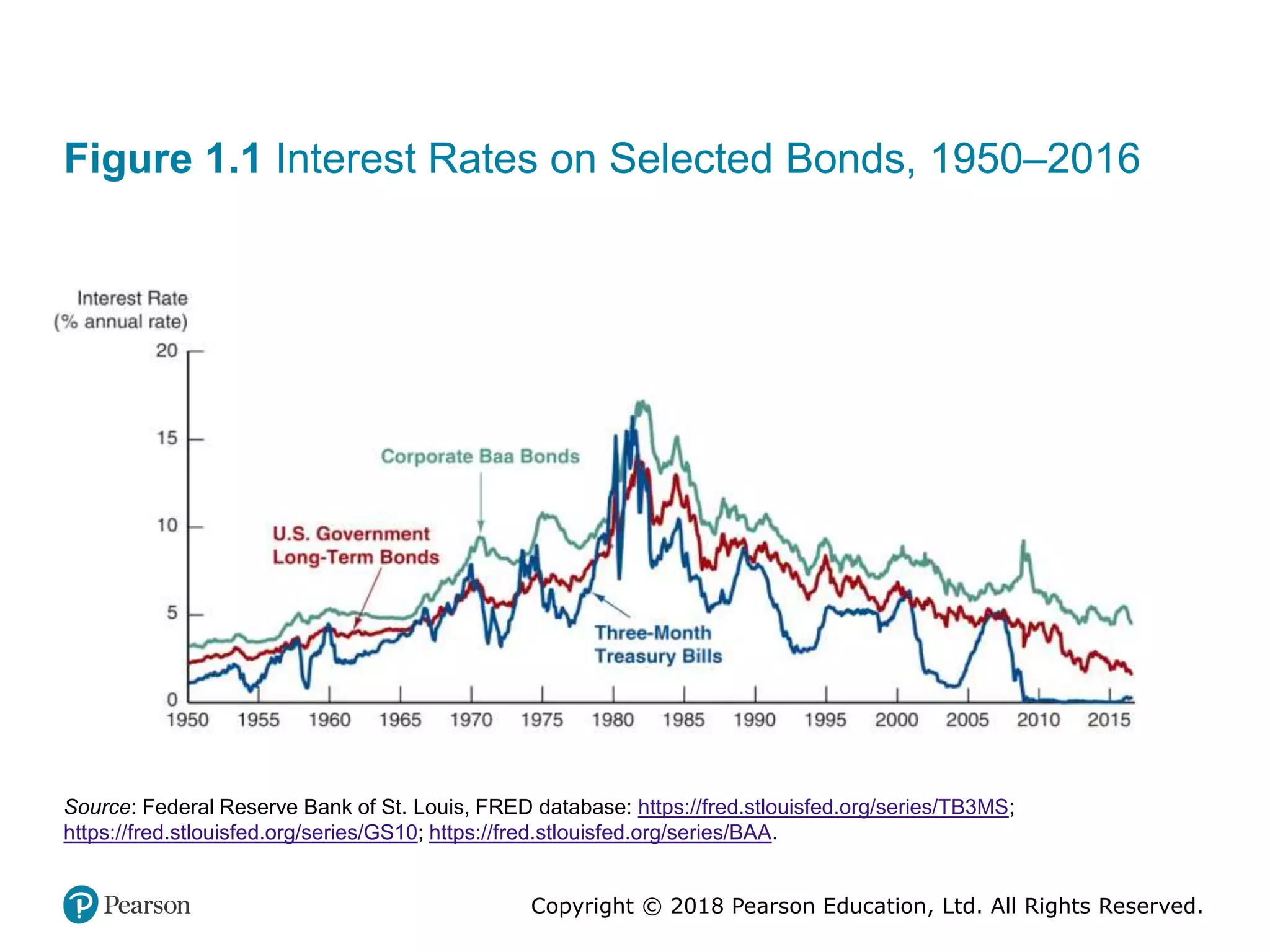
• The level of these rates are important. For example,
mortgage rates in the early part of 1983 exceeded 13%.
Copyright © 2018 Pearson Education, Ltd. All Rights Reserved.
Why Study Financial Markets?
Debt Markets & Interest Rates (3 of 3)
• Understanding the history of interest rates is beneficial.
• We will study these further in the book: types and
characteristics of bonds; theories on how rates are
determined.
Copyright © 2018 Pearson Education, Ltd. All Rights Reserved.
Figure 1.1 Interest Rates on Selected Bonds, 1950–2016
Source: Federal Reserve Bank of St. Louis, FRED database: https://fred.stlouisfed.org/series/TB3MS;
https://fred.stlouisfed.org/series/GS10; https://fred.stlouisfed.org/series/BAA.
Copyright © 2018 Pearson Education, Ltd. All Rights Reserved.
Why Study Financial Markets?
Debt Markets & Interest Rates (4 of 4)
• For the moment, we will turn to other topics, but revisit
these topics.
• In chapters 2, 11, 12, and 14, we will examine the role of
debt markets in the economy.
• In chapters 3 through 5, we will examine the
characteristics of interest rates.
Copyright © 2018 Pearson Education, Ltd. All Rights Reserved.
Why Study Financial Markets?
The Stock Market (1 of 3)
• The stock market is the market where common stock (or
just stock) are traded.
• Companies initially sell stock (in the primary market) to
raise money. After that, the stock is traded among
investors.
• The stock market receives the most attention from the
media.
Copyright © 2018 Pearson Education, Ltd. All Rights Reserved.
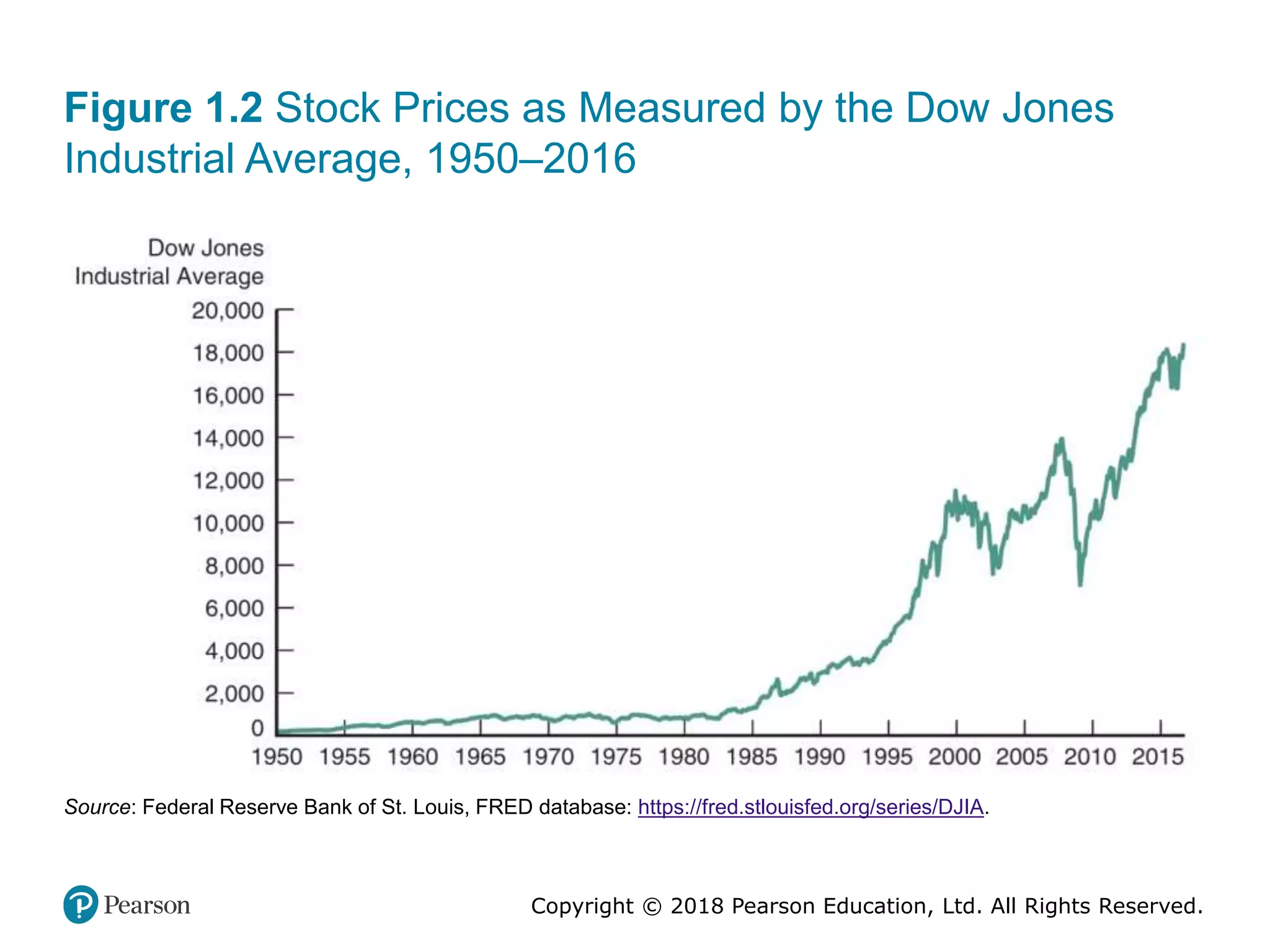
Figure 1.2 Stock Prices as Measured by the Dow Jones
Industrial Average, 1950–2016
Source: Federal Reserve Bank of St. Louis, FRED database: https://fred.stlouisfed.org/series/DJIA.
Copyright © 2018 Pearson Education, Ltd. All Rights Reserved.
Why Study Financial Markets?
The Stock Market (2 of 3)
Companies, not just individuals, also watch the market.
• Often seeking additional funding
• The success of SEOs is dependent on the company’s
stock
Copyright © 2018 Pearson Education, Ltd. All Rights Reserved.
Why Study Financial Markets?
The Stock Market (3 of 3)
• In chapter 2, we will examine the role of the stock market
in the financial system.
• In chapters 6 and 13, we will further look at how stock
prices behave to information in the marketplace.
Copyright © 2018 Pearson Education, Ltd. All Rights Reserved.
Why Study Financial Markets?
The Foreign Exchange Market (1 of 3)
• The foreign exchange market is where international
currencies trade and exchange rates are set.
• Although most people know little about this market, it has a
daily volume around $5 trillion!
Copyright © 2018 Pearson Education, Ltd. All Rights Reserved.
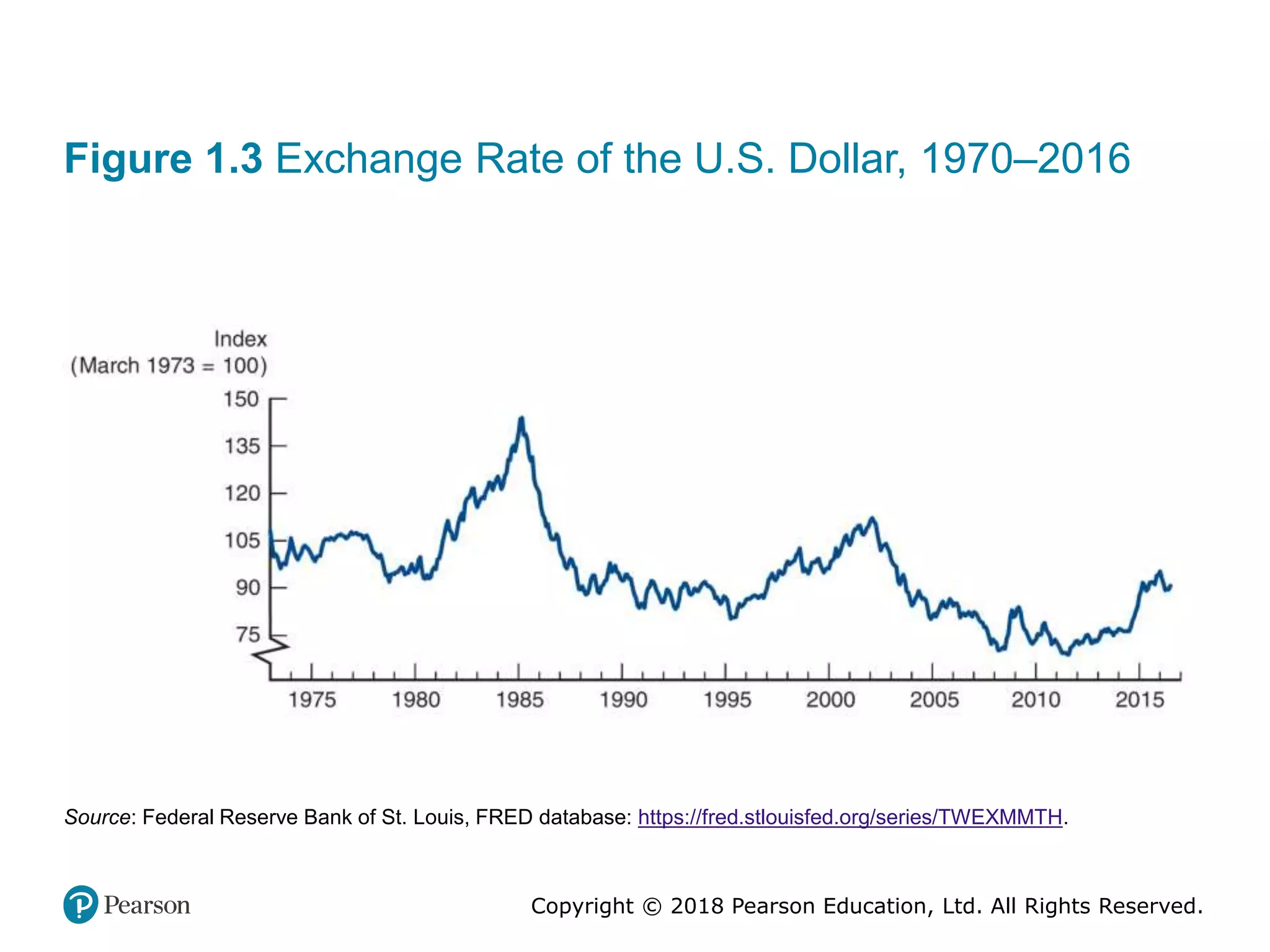
Figure 1.3 Exchange Rate of the U.S. Dollar, 1970–2016
Source: Federal Reserve Bank of St. Louis, FRED database: https://fred.stlouisfed.org/series/TWEXMMTH.
Copyright © 2018 Pearson Education, Ltd. All Rights Reserved.
Why Study Financial Markets?
The Foreign Exchange Market (2 of 3)
• These fluctuations matter!
– In recent years, consumers have found that
vacationing in Europe is expensive, due to a
weakening dollar relative to the Euro.
– When the dollar strengthens, foreign purchase of
domestic goods falls.
Copyright © 2018 Pearson Education, Ltd. All Rights Reserved.
Why Study Financial Markets?
The Foreign Exchange Market (3 of 3)
In chapter 15, we will examine how exchange rates are
determined in both the short- and long-run.
Copyright © 2018 Pearson Education, Ltd. All Rights Reserved.
Why Study Financial Institutions? (1 of 3)
We will also spend considerable time discussing financial
institutions - the corporations, organizations, and networks
that operate the so-called “marketplaces.” We will look at:
1. Structure of the Financial System
– Helps funds move from savers to investors, typically
through financial intermediaries
2. Financial Crises
– The “Great Recession” of 2007–2009 was the worst
financial crisis since the Great Depression. Why did it
happen?
Copyright © 2018 Pearson Education, Ltd. All Rights Reserved.
Why Study Financial Institutions? (2 of 3)
3. Central Banks and the Conduit of Monetary Policy
– The role of the Fed, and foreign counterparts, in the
management of interest rates and the money supply
4. The International Financial System
– Capital flows between countries impacts domestic
economies
– Need to understand exchange rates, capital controls,
and the role of agencies such as the IMF
Copyright © 2018 Pearson Education, Ltd. All Rights Reserved.
Why Study Financial Institutions? (3 of 3)
5. Banks and Other Financial Institutions
– Includes the role of insurance companies, mutual
funds, pension funds, etc.
6. Financial Innovation
– Focusing on improvements in technology and the
impact on financial product delivery
7. Managing Risk in Financial Institutions
– Focusing on risk management in the financial
institution
Copyright © 2018 Pearson Education, Ltd. All Rights Reserved.
Applied Managerial Perspective
• Financial institutions are among the largest employers in
the U.S. and often pay high salaries.
• Knowing how financial institutions are managed may help
you better deal with them.
Copyright © 2018 Pearson Education, Ltd. All Rights Reserved.
How We Study Financial Markets and
Institutions (1 of 2)
Basic Analytic Framework
1. Simplified models are constructed, explained, and then
manipulated to illustrate various phenomena.
2. “Practicing Manager” cases are used to tie theoretical and
empirical aspects.
Copyright © 2018 Pearson Education, Ltd. All Rights Reserved.
How We Study Financial Markets and
Institutions (2 of 2)
Other features
1. Case studies
2. Applications and Numerical Examples
3. Special Interest Boxes
4. Hundred of analytical end-of-chapter problems
5. Predicting the Future problems
Copyright © 2018 Pearson Education, Ltd. All Rights Reserved.
Exploring the Web (1 of 2)
Web Exercise
The World Wide Web is an enormous resource for present
and historical information. We will periodically present web
exercises to introduce some of the important locations for
information, and how to use it.
Copyright © 2018 Pearson Education, Ltd. All Rights Reserved.
Exploring the Web (2 of 2)
Web Exercise
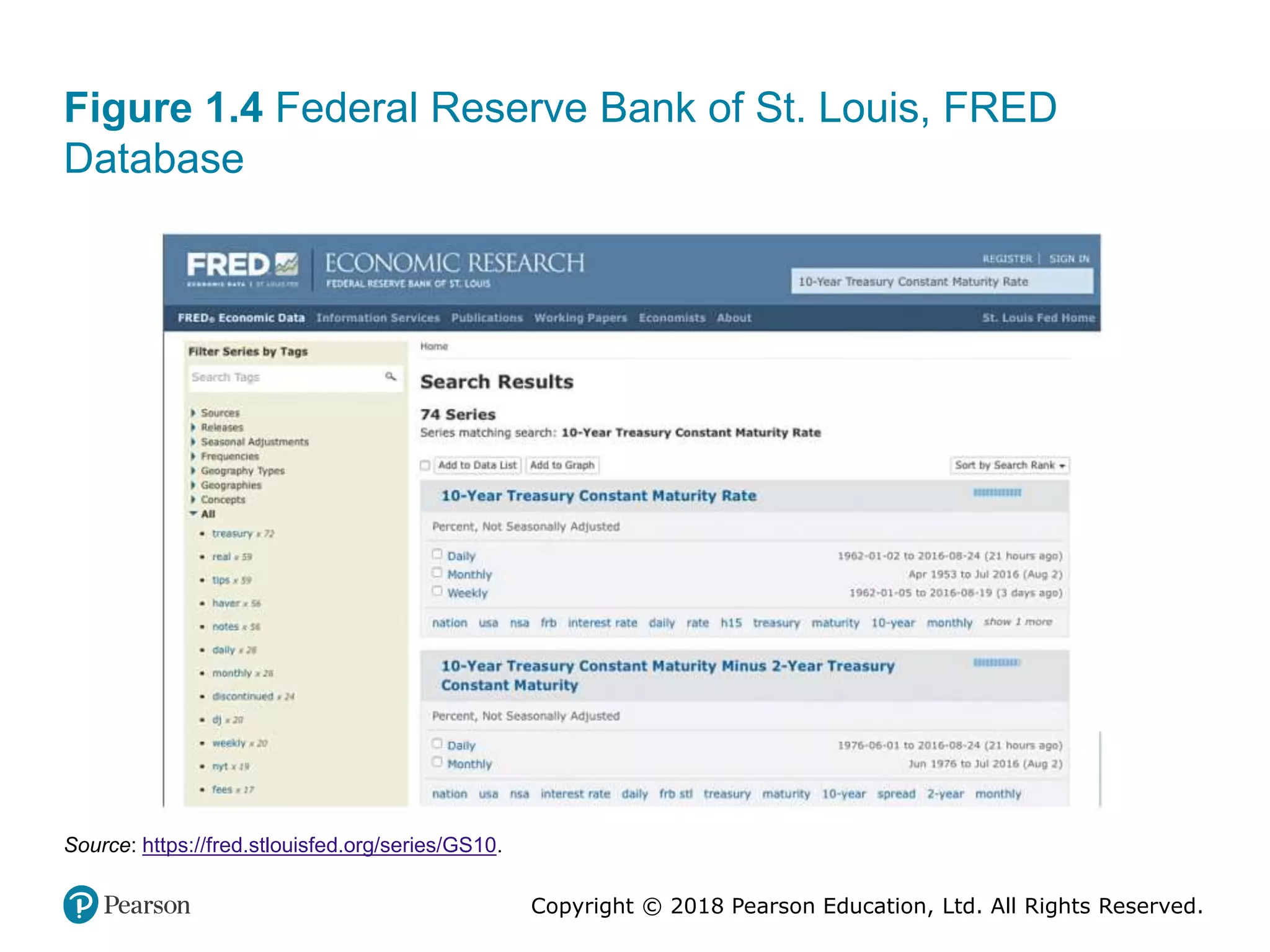
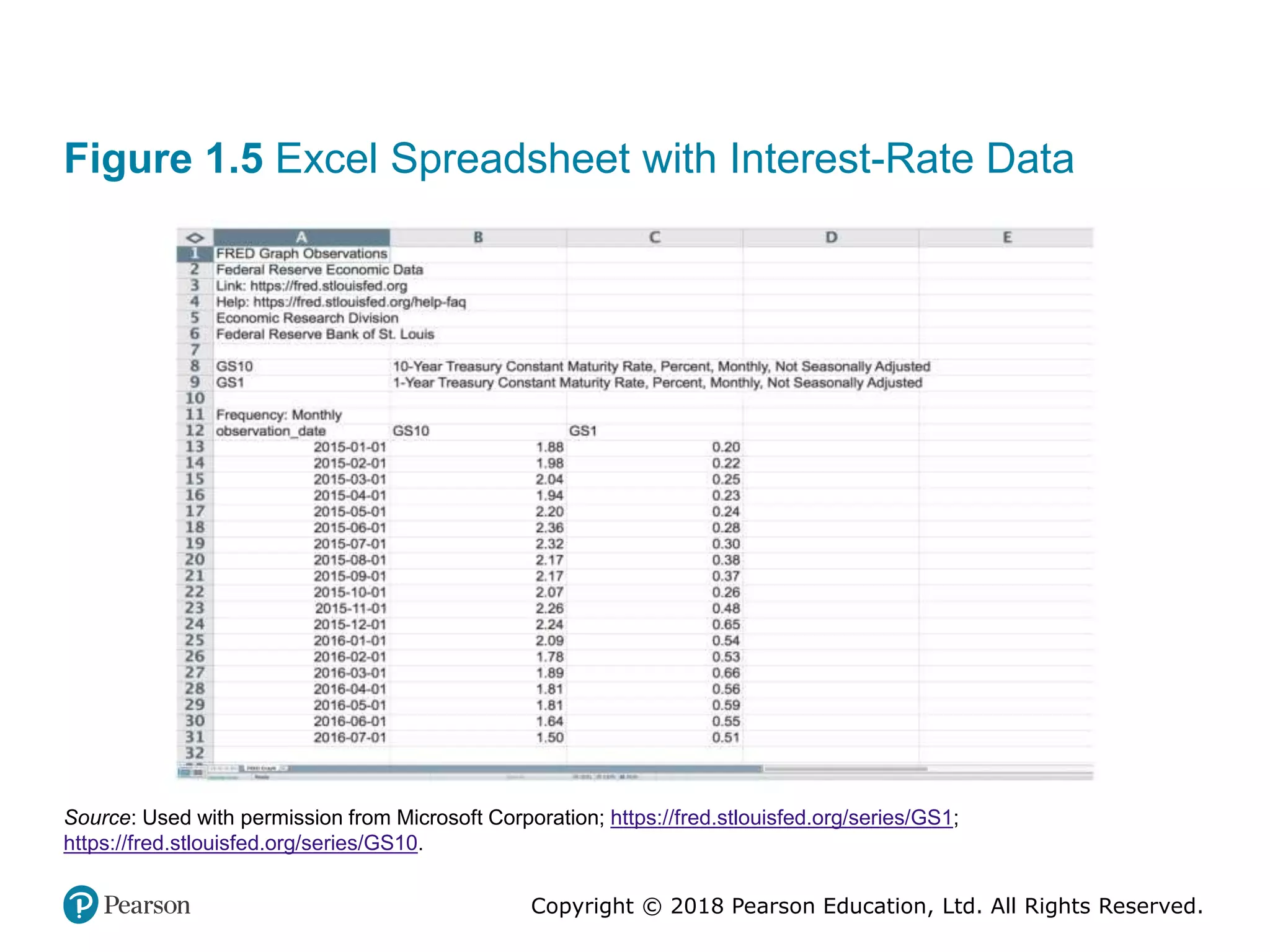
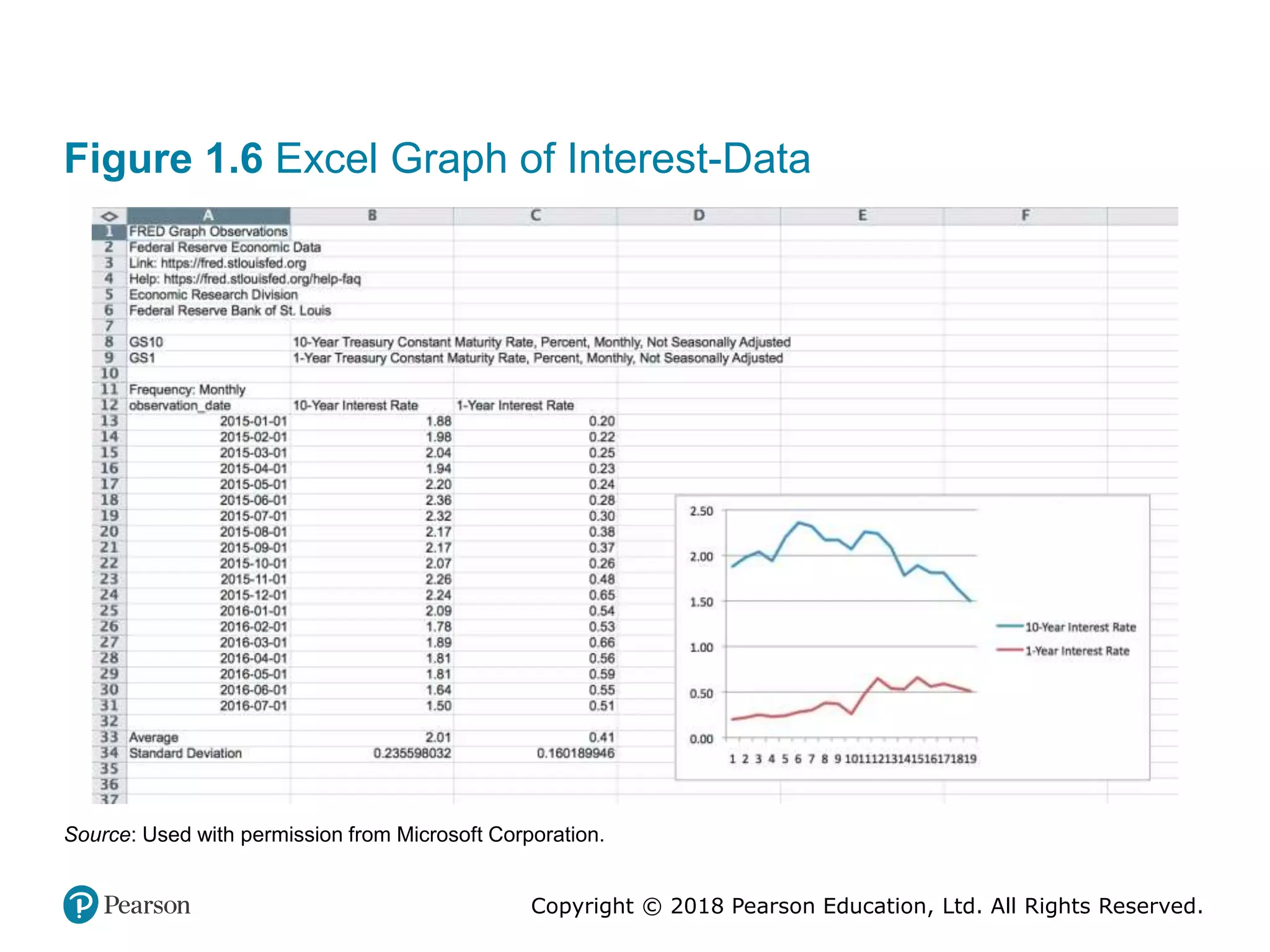
The next three slides (starting on page 11 in the text) show
you how to (1) find historical interest rates from the Fed
and save the information, (2) how to import the data into
Excel, and (3) how to examine the information using an
Excel chart.
Copyright © 2018 Pearson Education, Ltd. All Rights Reserved.
Figure 1.4 Federal Reserve Bank of St. Louis, FRED
Database
Source: https://fred.stlouisfed.org/series/GS10.
Copyright © 2018 Pearson Education, Ltd. All Rights Reserved.
Figure 1.5 Excel Spreadsheet with Interest-Rate Data
Source: Used with permission from Microsoft Corporation; https://fred.stlouisfed.org/series/GS1;
https://fred.stlouisfed.org/series/GS10.
Copyright © 2018 Pearson Education, Ltd. All Rights Reserved.
Figure 1.6 Excel Graph of Interest-Data
Source: Used with permission from Microsoft Corporation.
Copyright © 2018 Pearson Education, Ltd. All Rights Reserved.
Concluding Remarks
• This field is an exciting one, and this book will help you
develop skills to further your career and your
understanding of financial events.
• You will also have a better understanding of the
controversies to hotly debated in the political arena.
Copyright © 2018 Pearson Education, Ltd. All Rights Reserved.
Chapter Summary (1 of 2)
• Why Study Financial Markets?: the three primary markets
(bond, stock, and foreign exchange) were briefly
introduced.
• Why Study Financial Institutions?: the market, institutions,
and key changes affecting these were outlined.
Copyright © 2018 Pearson Education, Ltd. All Rights Reserved.
Chapter Summary (2 of 2)
• Applied Managerial Perspective: the book will often
present material to better understand how actual
managers use the information in daily operations.
• How We Will Study Financial Markets and Institutions: we
outlines the three key components: analytical framework,
features, and web exercises.

Mishkin fmi9ge ppt_c01

  • 1.
    Financial Markets 10871225 Dr. MuathAsmar AN-NAJAH NATIONAL UNIVERSITY Faculty of Economics and Social Sciences Department of Finance
  • 2.
    Financial Markets andInstitutions Ninth Edition, Global Edition Chapter 1 Why Study Financial Markets and Institutions? Copyright © 2018 Pearson Education, Ltd. All Rights Reserved.
  • 3.
    Copyright © 2018Pearson Education, Ltd. All Rights Reserved. Chapter Preview (1 of 4) The evening news features a segment about the bond market and interest rates. What does this mean for your small retail business? Should you borrow money? Issue stock instead of using a bank loan? What does all this mean? Do I care about interest rates? What about the turmoil in Europe? Are imports more expensive?
  • 4.
    Copyright © 2018Pearson Education, Ltd. All Rights Reserved. Chapter Preview (2 of 4) These are good questions. Of course, the answer to these questions can be found in this book. In fact, this books touches on a variety of topics, including the Fed, stocks markets, bond markets, and banks. We will begin to appreciate many exciting issues related to these topics during the course of this term.
  • 5.
    Copyright © 2018Pearson Education, Ltd. All Rights Reserved. Chapter Preview (3 of 4) We preview subjects of interest to anyone who is a part of a productive society. Topics include: • Why Study Financial Markets? • Why Study Financial Institutions? • Applied Managerial Perspective • How Will We Study Financial Markets and Institutions
  • 6.
    Copyright © 2018Pearson Education, Ltd. All Rights Reserved. Chapter Preview (4 of 4) We preview subjects of interest to anyone who is a part of a productive society. Topics include: Web Exercise • Concluding Remarks
  • 7.
    Copyright © 2018Pearson Education, Ltd. All Rights Reserved. Why Study Financial Markets? (1 of 2) Financial markets are crucial in our economy. 1. Channel funds from savers to investors, promoting economic efficiency. 2. Market activity affects: personal wealth, business firms, and economy
  • 8.
    Copyright © 2018Pearson Education, Ltd. All Rights Reserved. Why Study Financial Markets? (2 of 2) • Well functioning financial markets are key factors in producing high economic growth. • We will briefly examine each of these markets, key statistics, and how we will examine them throughout this course.
  • 9.
    Copyright © 2018Pearson Education, Ltd. All Rights Reserved. Why Study Financial Markets? Debt Markets & Interest Rates (1 of 3) • Debt markets allow governments, corporations, and individuals to borrow. • Borrowers issue a security, called a bond, offering interest and principal over time. • The interest rate is the cost of borrowing.
  • 10.
    Copyright © 2018Pearson Education, Ltd. All Rights Reserved. Why Study Financial Markets? Debt Markets & Interest Rates (2 of 3) • Many types of market interest rates: mortgage rates, car loan rates, credit card rates, etc. • The level of these rates are important. For example, mortgage rates in the early part of 1983 exceeded 13%.
  • 11.
    Copyright © 2018Pearson Education, Ltd. All Rights Reserved. Why Study Financial Markets? Debt Markets & Interest Rates (3 of 3) • Understanding the history of interest rates is beneficial. • We will study these further in the book: types and characteristics of bonds; theories on how rates are determined.
  • 12.
    Copyright © 2018Pearson Education, Ltd. All Rights Reserved. Figure 1.1 Interest Rates on Selected Bonds, 1950–2016 Source: Federal Reserve Bank of St. Louis, FRED database: https://fred.stlouisfed.org/series/TB3MS; https://fred.stlouisfed.org/series/GS10; https://fred.stlouisfed.org/series/BAA.
  • 13.
    Copyright © 2018Pearson Education, Ltd. All Rights Reserved. Why Study Financial Markets? Debt Markets & Interest Rates (4 of 4) • For the moment, we will turn to other topics, but revisit these topics. • In chapters 2, 11, 12, and 14, we will examine the role of debt markets in the economy. • In chapters 3 through 5, we will examine the characteristics of interest rates.
  • 14.
    Copyright © 2018Pearson Education, Ltd. All Rights Reserved. Why Study Financial Markets? The Stock Market (1 of 3) • The stock market is the market where common stock (or just stock) are traded. • Companies initially sell stock (in the primary market) to raise money. After that, the stock is traded among investors. • The stock market receives the most attention from the media.
  • 15.
    Copyright © 2018Pearson Education, Ltd. All Rights Reserved. Figure 1.2 Stock Prices as Measured by the Dow Jones Industrial Average, 1950–2016 Source: Federal Reserve Bank of St. Louis, FRED database: https://fred.stlouisfed.org/series/DJIA.
  • 16.
    Copyright © 2018Pearson Education, Ltd. All Rights Reserved. Why Study Financial Markets? The Stock Market (2 of 3) Companies, not just individuals, also watch the market. • Often seeking additional funding • The success of SEOs is dependent on the company’s stock
  • 17.
    Copyright © 2018Pearson Education, Ltd. All Rights Reserved. Why Study Financial Markets? The Stock Market (3 of 3) • In chapter 2, we will examine the role of the stock market in the financial system. • In chapters 6 and 13, we will further look at how stock prices behave to information in the marketplace.
  • 18.
    Copyright © 2018Pearson Education, Ltd. All Rights Reserved. Why Study Financial Markets? The Foreign Exchange Market (1 of 3) • The foreign exchange market is where international currencies trade and exchange rates are set. • Although most people know little about this market, it has a daily volume around $5 trillion!
  • 19.
    Copyright © 2018Pearson Education, Ltd. All Rights Reserved. Figure 1.3 Exchange Rate of the U.S. Dollar, 1970–2016 Source: Federal Reserve Bank of St. Louis, FRED database: https://fred.stlouisfed.org/series/TWEXMMTH.
  • 20.
    Copyright © 2018Pearson Education, Ltd. All Rights Reserved. Why Study Financial Markets? The Foreign Exchange Market (2 of 3) • These fluctuations matter! – In recent years, consumers have found that vacationing in Europe is expensive, due to a weakening dollar relative to the Euro. – When the dollar strengthens, foreign purchase of domestic goods falls.
  • 21.
    Copyright © 2018Pearson Education, Ltd. All Rights Reserved. Why Study Financial Markets? The Foreign Exchange Market (3 of 3) In chapter 15, we will examine how exchange rates are determined in both the short- and long-run.
  • 22.
    Copyright © 2018Pearson Education, Ltd. All Rights Reserved. Why Study Financial Institutions? (1 of 3) We will also spend considerable time discussing financial institutions - the corporations, organizations, and networks that operate the so-called “marketplaces.” We will look at: 1. Structure of the Financial System – Helps funds move from savers to investors, typically through financial intermediaries 2. Financial Crises – The “Great Recession” of 2007–2009 was the worst financial crisis since the Great Depression. Why did it happen?
  • 23.
    Copyright © 2018Pearson Education, Ltd. All Rights Reserved. Why Study Financial Institutions? (2 of 3) 3. Central Banks and the Conduit of Monetary Policy – The role of the Fed, and foreign counterparts, in the management of interest rates and the money supply 4. The International Financial System – Capital flows between countries impacts domestic economies – Need to understand exchange rates, capital controls, and the role of agencies such as the IMF
  • 24.
    Copyright © 2018Pearson Education, Ltd. All Rights Reserved. Why Study Financial Institutions? (3 of 3) 5. Banks and Other Financial Institutions – Includes the role of insurance companies, mutual funds, pension funds, etc. 6. Financial Innovation – Focusing on improvements in technology and the impact on financial product delivery 7. Managing Risk in Financial Institutions – Focusing on risk management in the financial institution
  • 25.
    Copyright © 2018Pearson Education, Ltd. All Rights Reserved. Applied Managerial Perspective • Financial institutions are among the largest employers in the U.S. and often pay high salaries. • Knowing how financial institutions are managed may help you better deal with them.
  • 26.
    Copyright © 2018Pearson Education, Ltd. All Rights Reserved. How We Study Financial Markets and Institutions (1 of 2) Basic Analytic Framework 1. Simplified models are constructed, explained, and then manipulated to illustrate various phenomena. 2. “Practicing Manager” cases are used to tie theoretical and empirical aspects.
  • 27.
    Copyright © 2018Pearson Education, Ltd. All Rights Reserved. How We Study Financial Markets and Institutions (2 of 2) Other features 1. Case studies 2. Applications and Numerical Examples 3. Special Interest Boxes 4. Hundred of analytical end-of-chapter problems 5. Predicting the Future problems
  • 28.
    Copyright © 2018Pearson Education, Ltd. All Rights Reserved. Exploring the Web (1 of 2) Web Exercise The World Wide Web is an enormous resource for present and historical information. We will periodically present web exercises to introduce some of the important locations for information, and how to use it.
  • 29.
    Copyright © 2018Pearson Education, Ltd. All Rights Reserved. Exploring the Web (2 of 2) Web Exercise The next three slides (starting on page 11 in the text) show you how to (1) find historical interest rates from the Fed and save the information, (2) how to import the data into Excel, and (3) how to examine the information using an Excel chart.
  • 30.
    Copyright © 2018Pearson Education, Ltd. All Rights Reserved. Figure 1.4 Federal Reserve Bank of St. Louis, FRED Database Source: https://fred.stlouisfed.org/series/GS10.
  • 31.
    Copyright © 2018Pearson Education, Ltd. All Rights Reserved. Figure 1.5 Excel Spreadsheet with Interest-Rate Data Source: Used with permission from Microsoft Corporation; https://fred.stlouisfed.org/series/GS1; https://fred.stlouisfed.org/series/GS10.
  • 32.
    Copyright © 2018Pearson Education, Ltd. All Rights Reserved. Figure 1.6 Excel Graph of Interest-Data Source: Used with permission from Microsoft Corporation.
  • 33.
    Copyright © 2018Pearson Education, Ltd. All Rights Reserved. Concluding Remarks • This field is an exciting one, and this book will help you develop skills to further your career and your understanding of financial events. • You will also have a better understanding of the controversies to hotly debated in the political arena.
  • 34.
    Copyright © 2018Pearson Education, Ltd. All Rights Reserved. Chapter Summary (1 of 2) • Why Study Financial Markets?: the three primary markets (bond, stock, and foreign exchange) were briefly introduced. • Why Study Financial Institutions?: the market, institutions, and key changes affecting these were outlined.
  • 35.
    Copyright © 2018Pearson Education, Ltd. All Rights Reserved. Chapter Summary (2 of 2) • Applied Managerial Perspective: the book will often present material to better understand how actual managers use the information in daily operations. • How We Will Study Financial Markets and Institutions: we outlines the three key components: analytical framework, features, and web exercises.

Editor's Notes

  • #2 If this PowerPoint presentation contains mathematical equations, you may need to check that your computer has the following installed: 1) MathType Plugin 2) Math Player (free versions available) 3) NVDA Reader (free versions available)
  • #3 If this PowerPoint presentation contains mathematical equations, you may need to check that your computer has the following installed: 1) MathType Plugin 2) Math Player (free versions available) 3) NVDA Reader (free versions available)