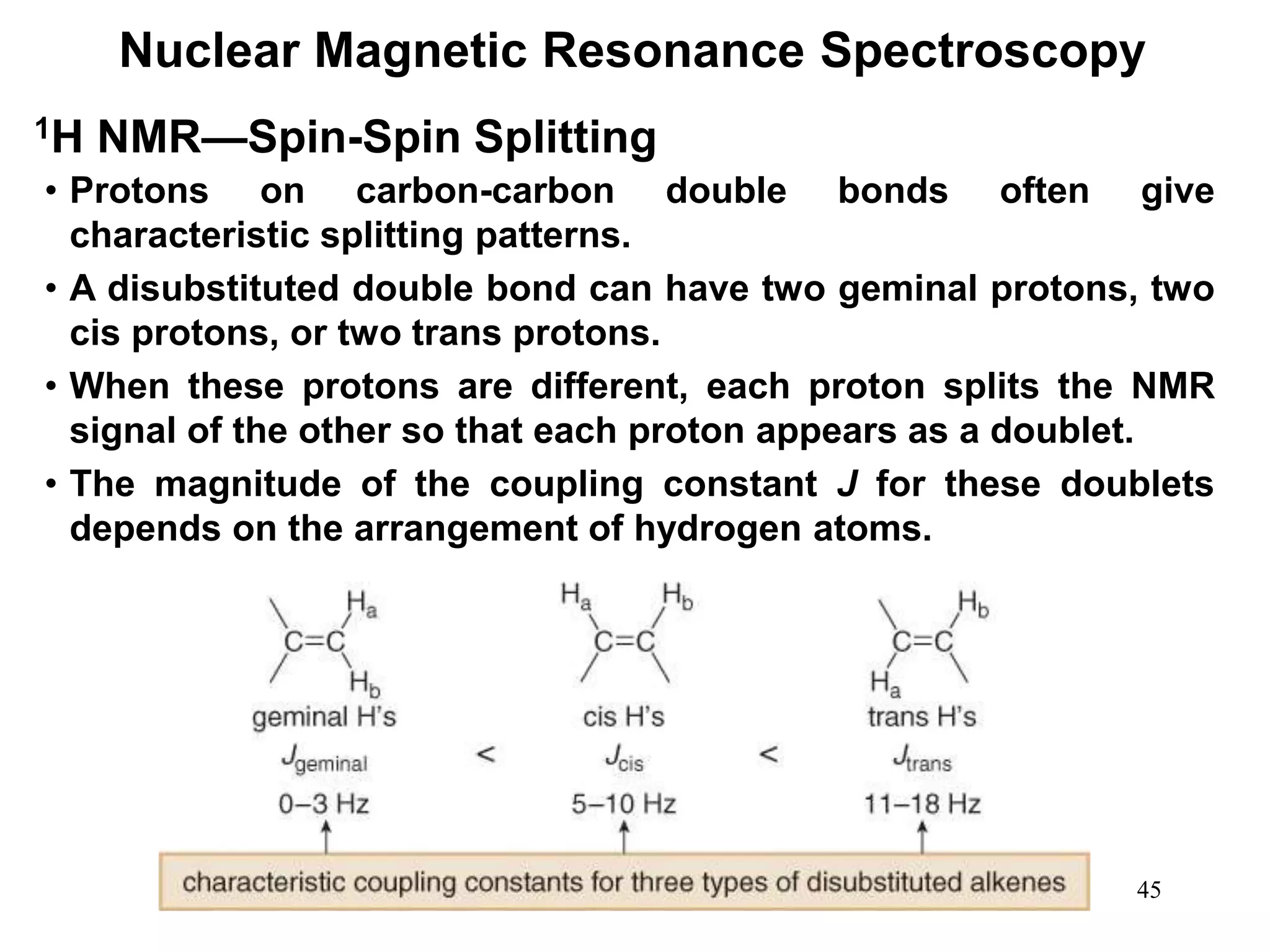
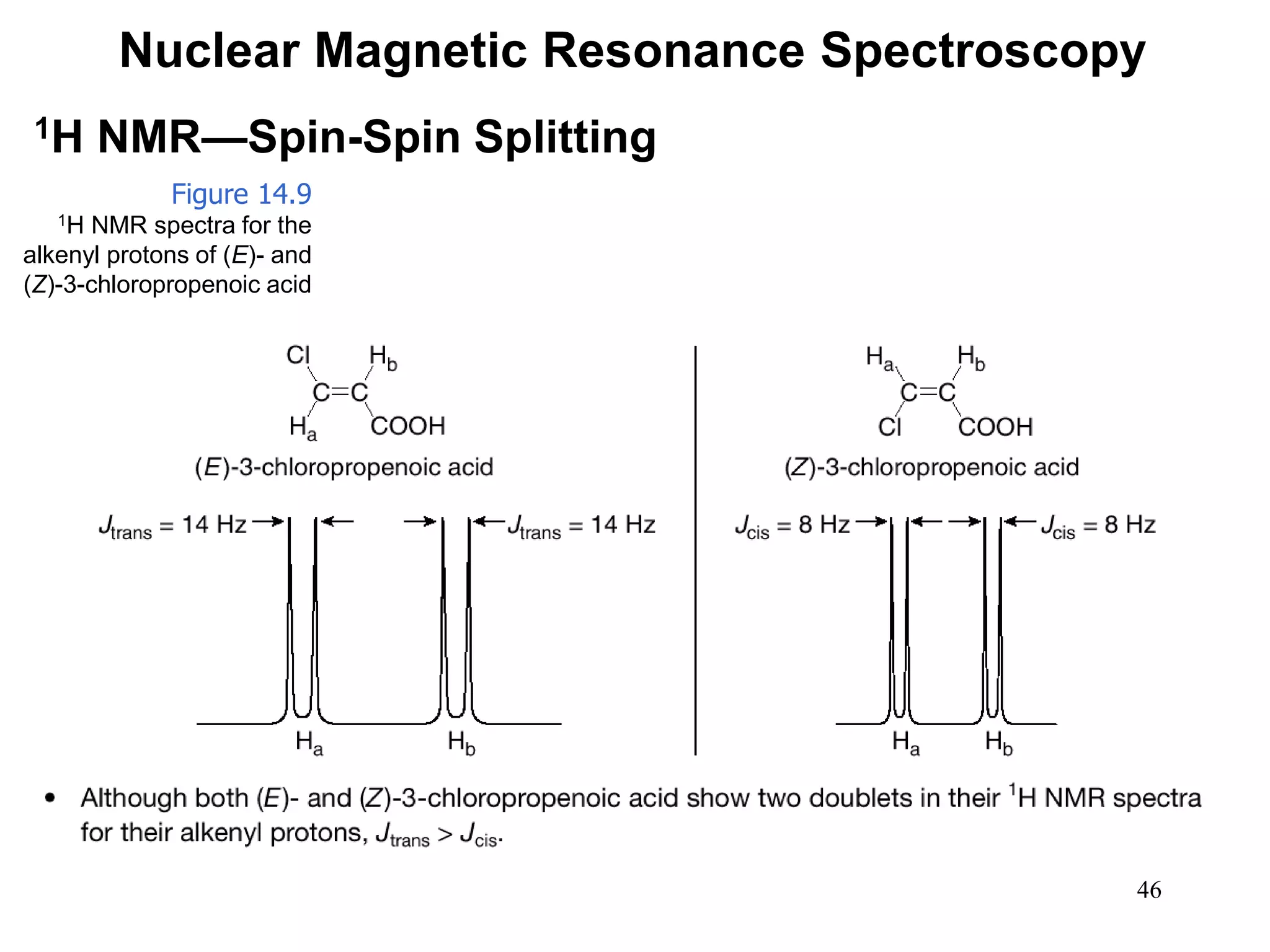
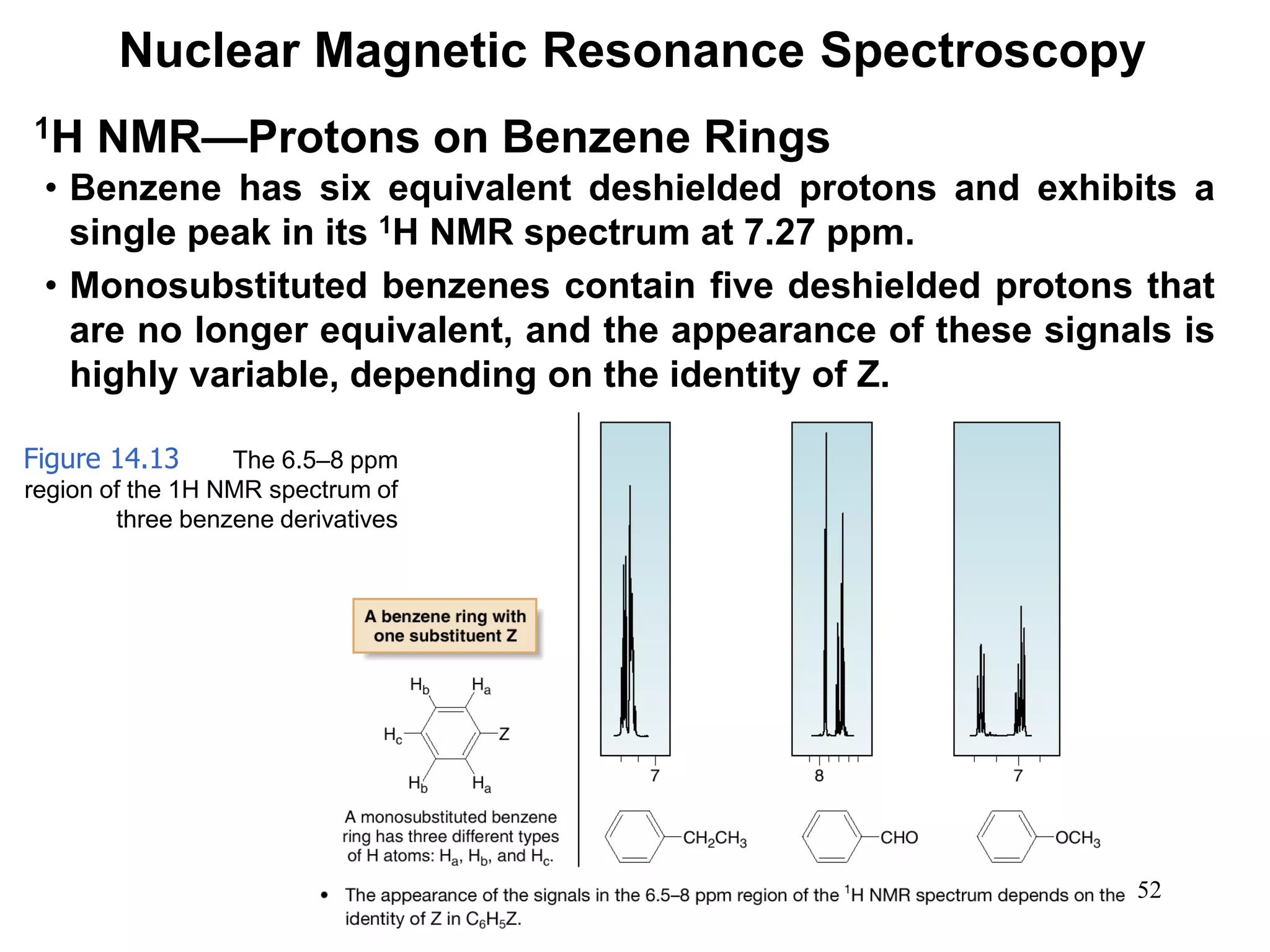
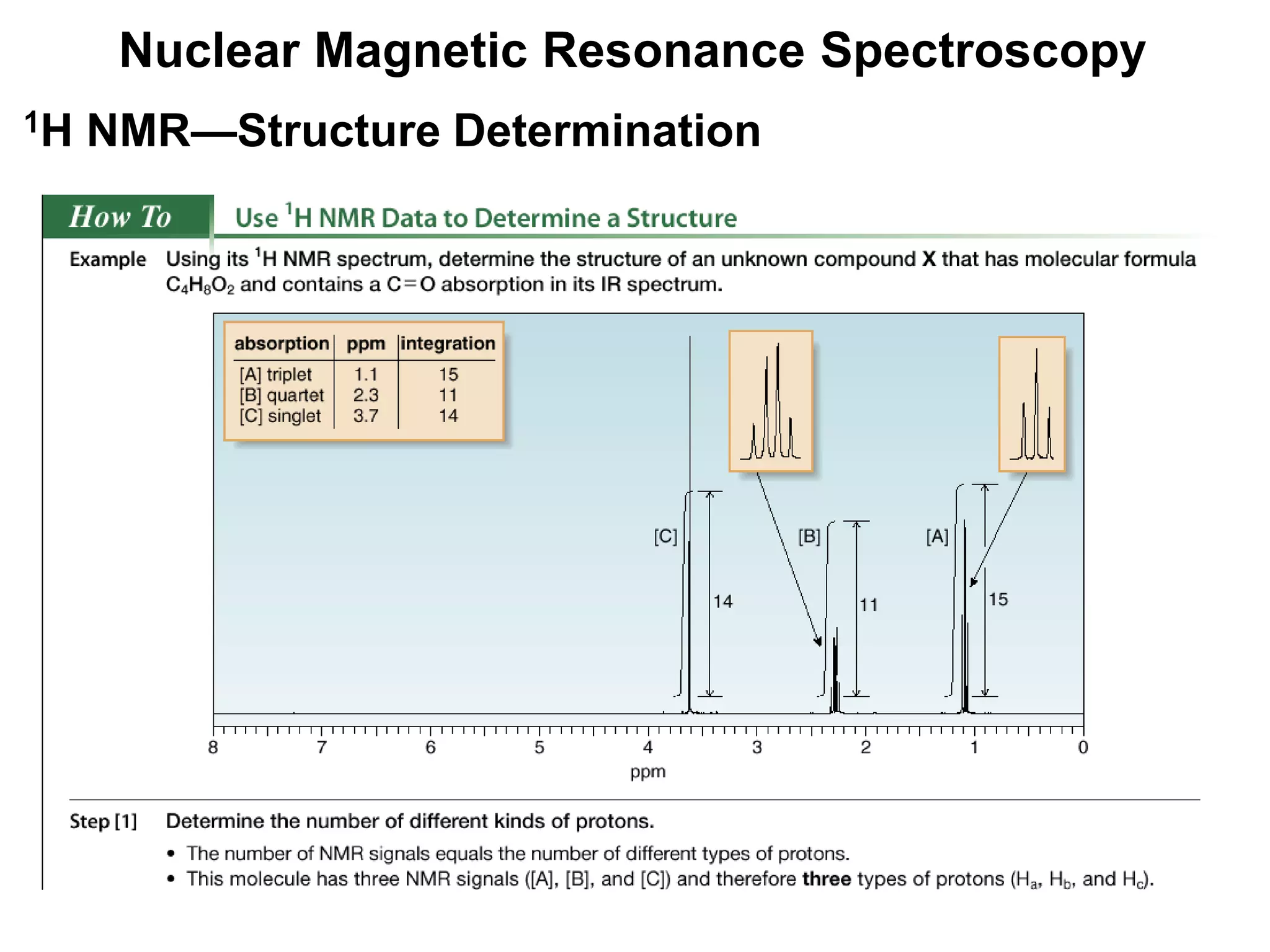
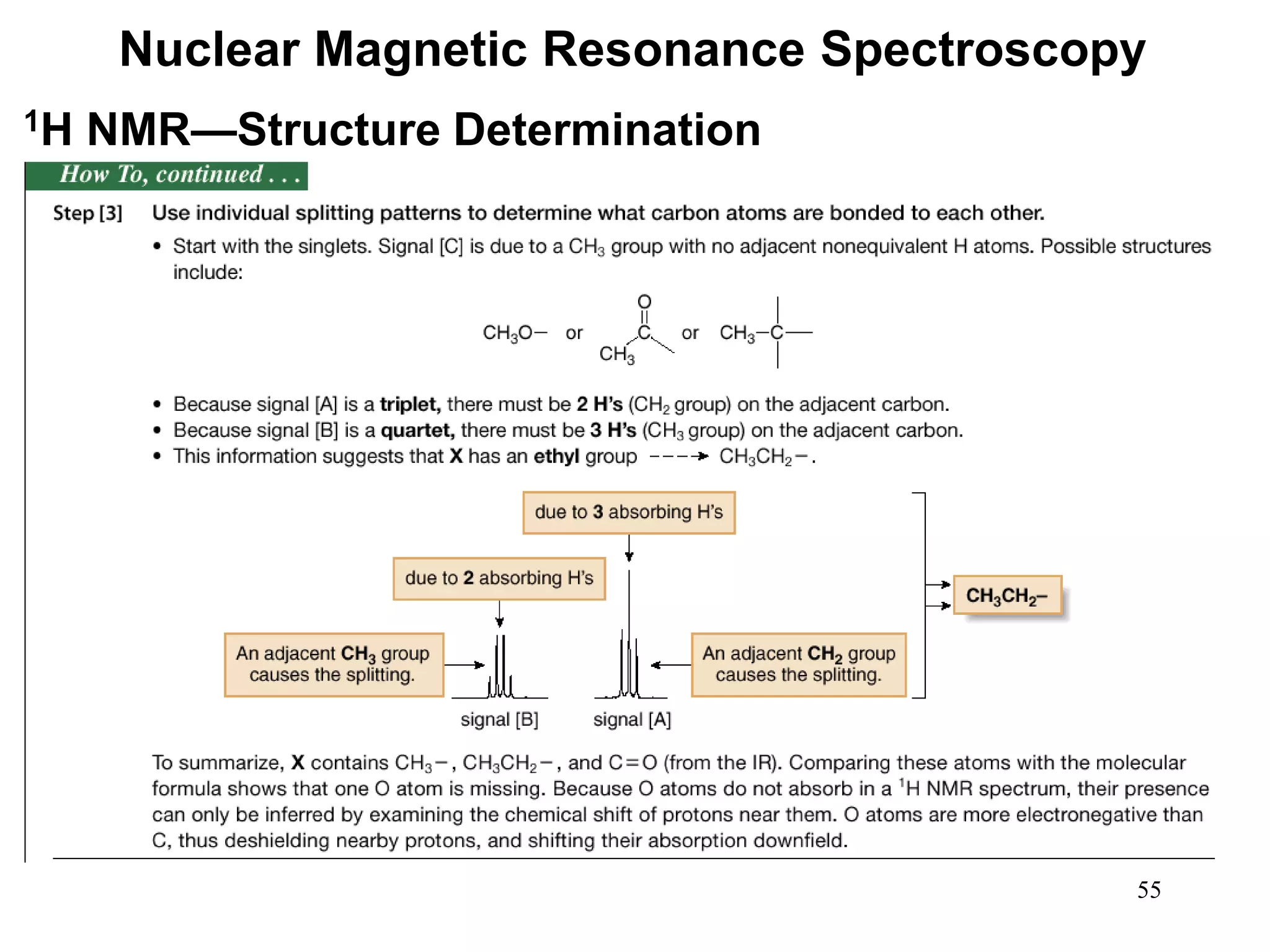
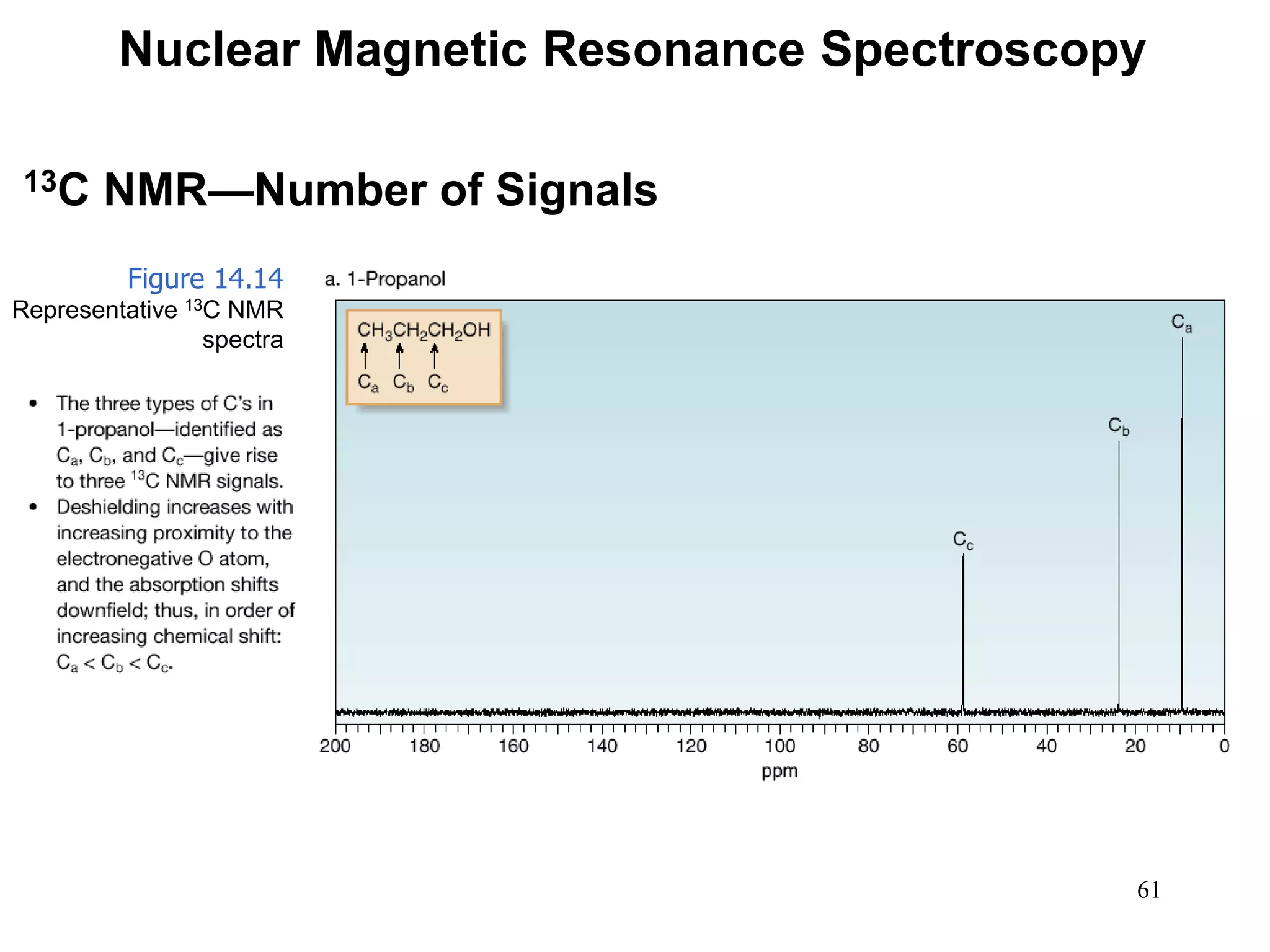
1. Nuclear magnetic resonance (NMR) spectroscopy is an analytical technique used to characterize organic molecules by identifying carbon-hydrogen frameworks. 1H NMR determines types and numbers of hydrogen atoms, while 13C NMR determines types of carbon atoms.
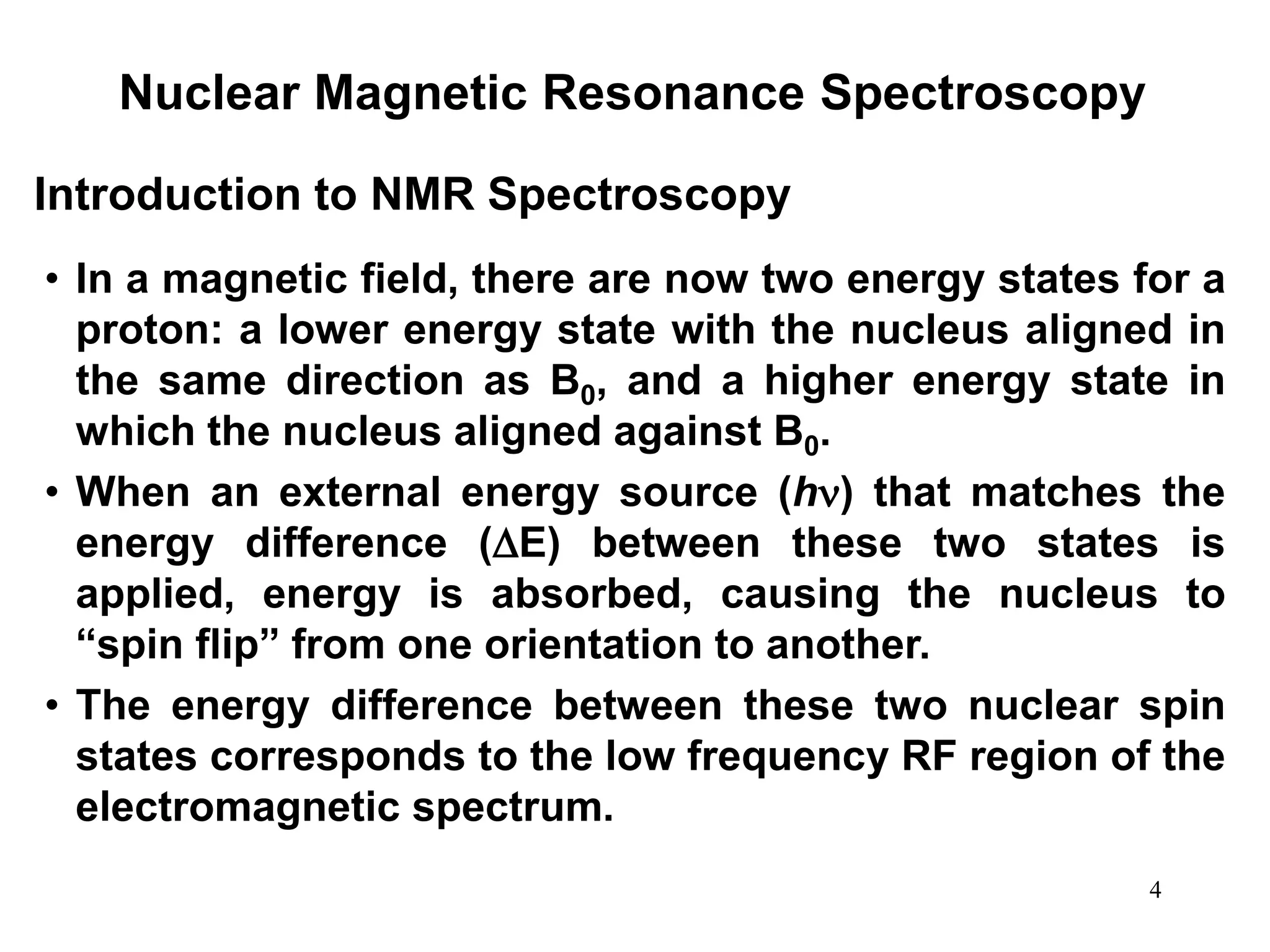
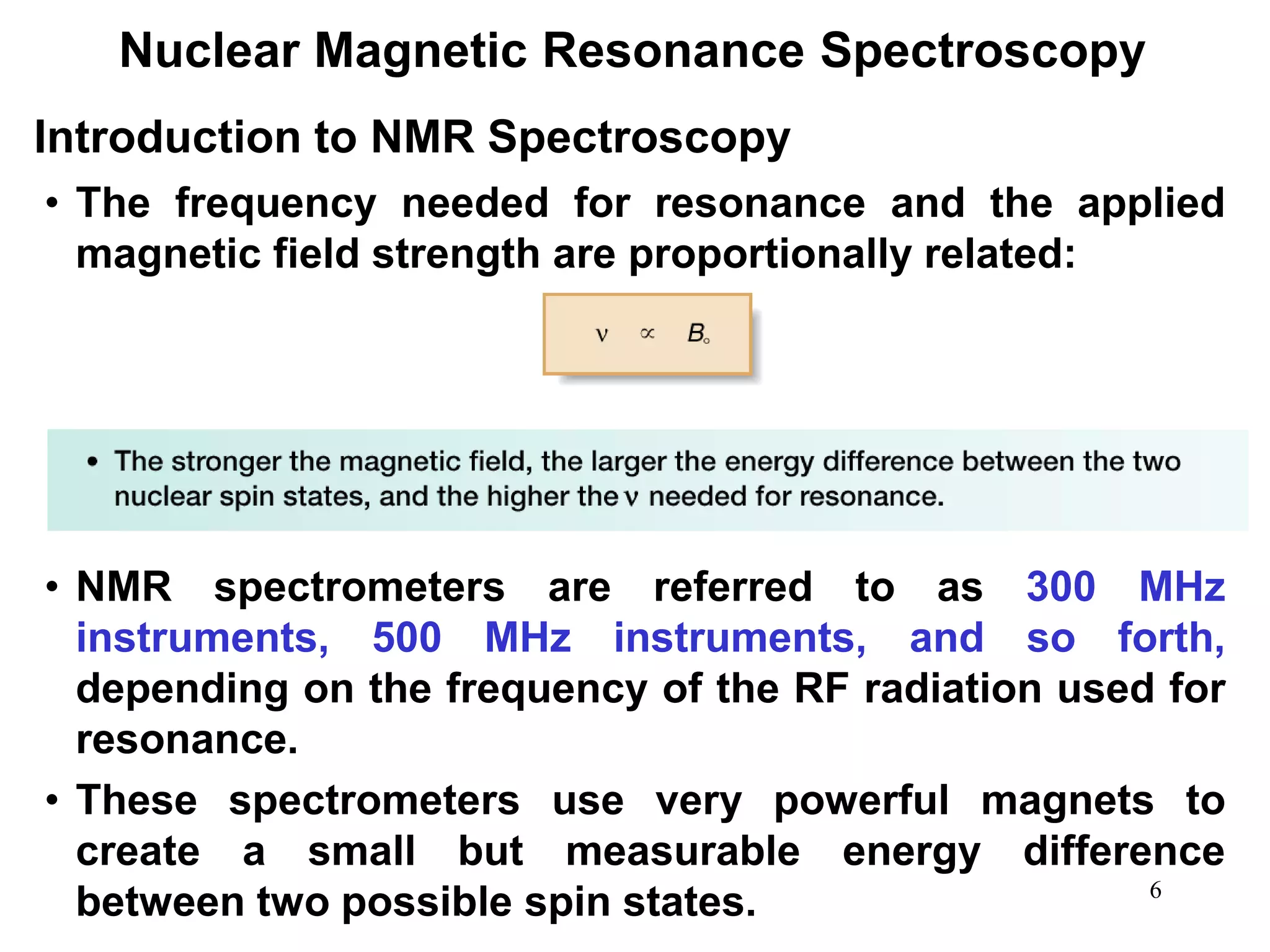
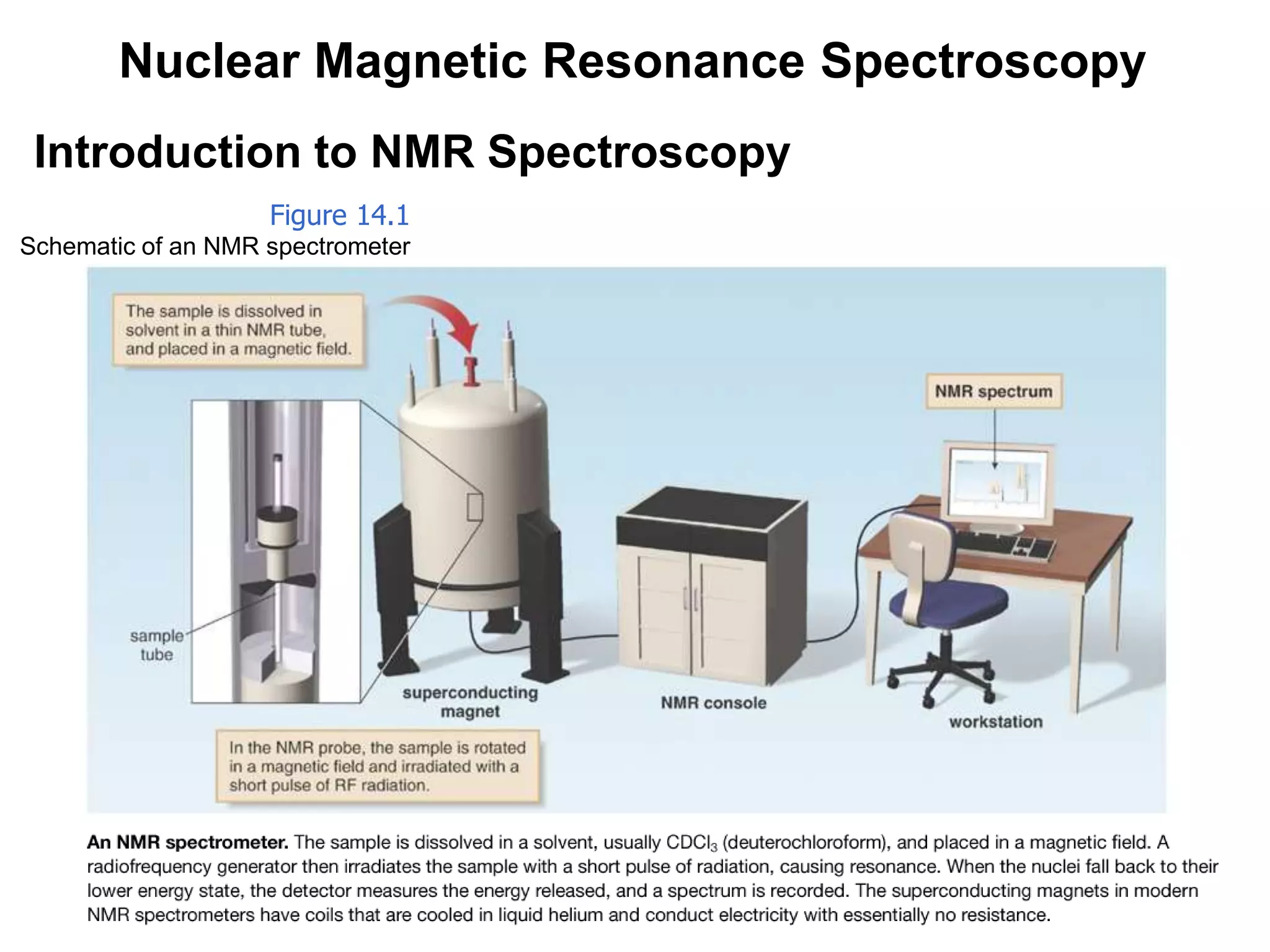
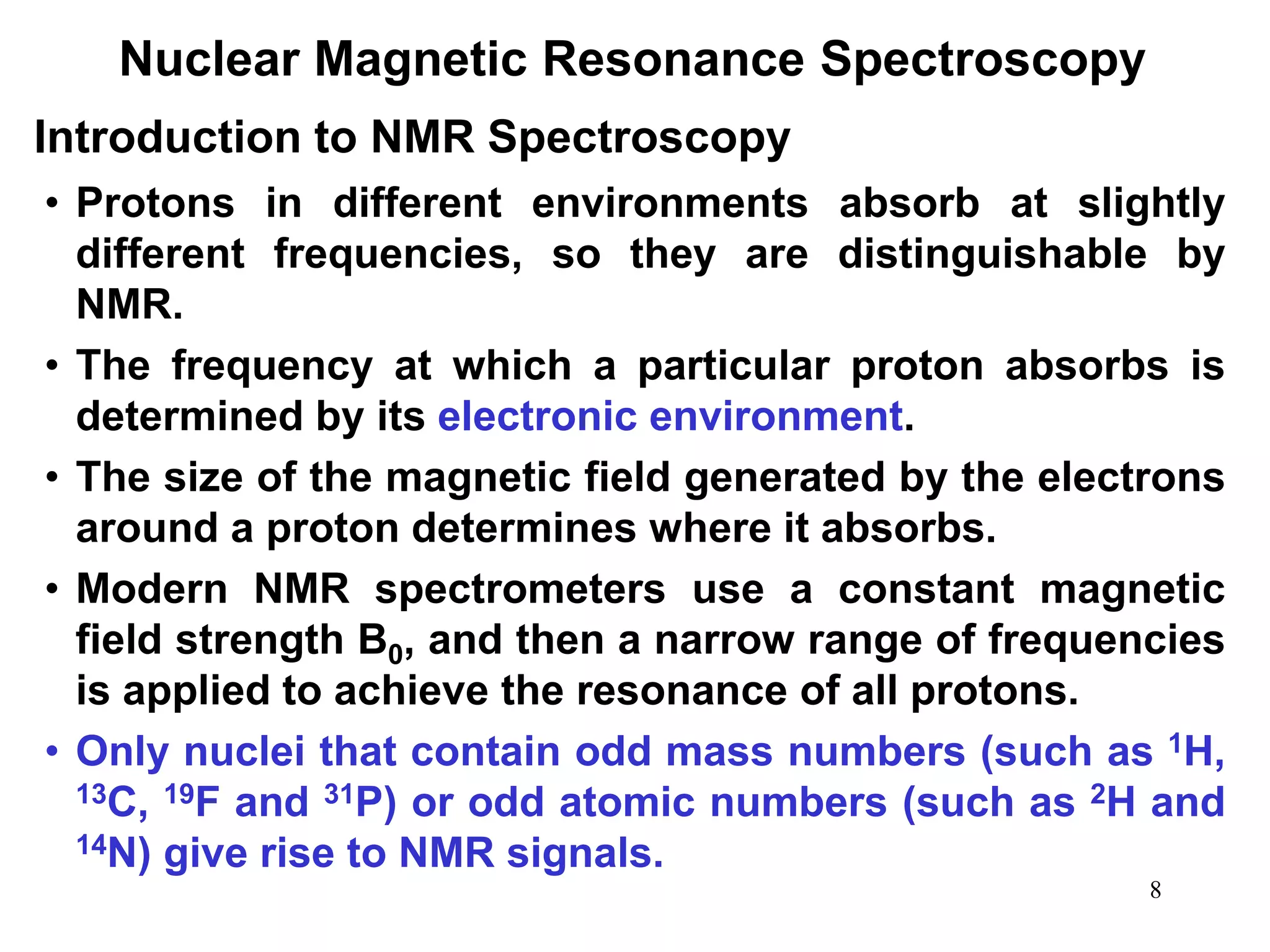
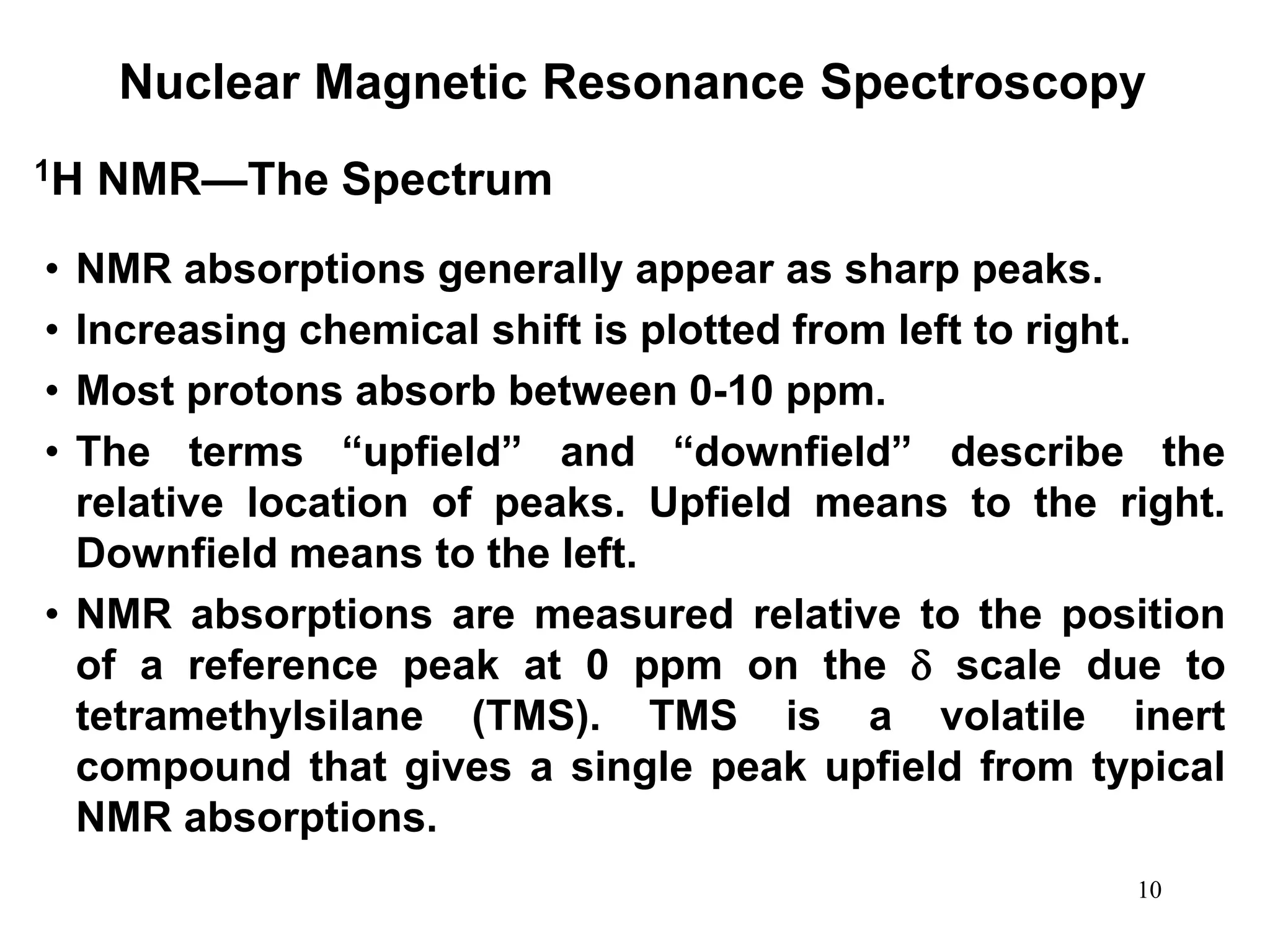
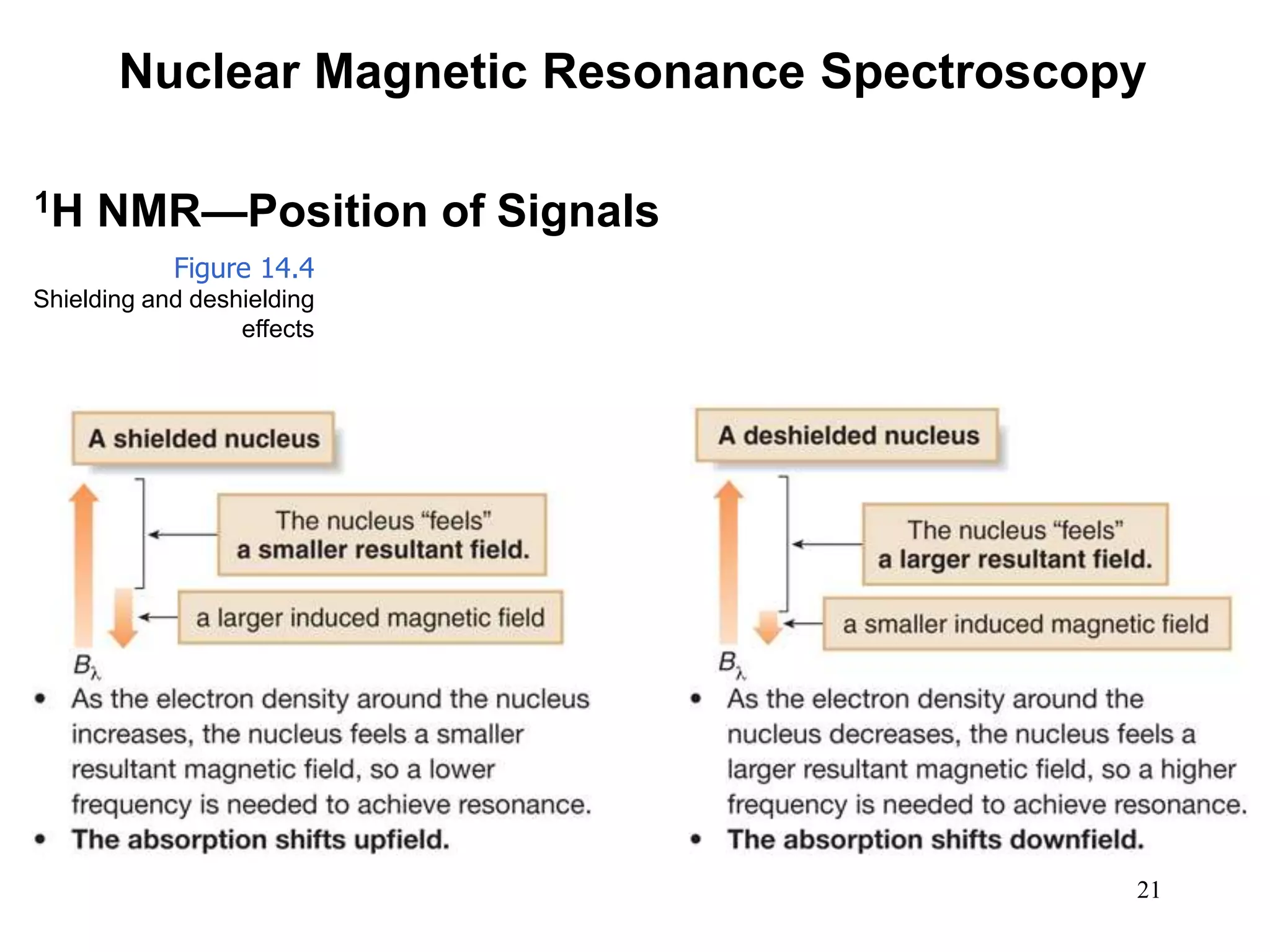
2. When placed in a strong magnetic field, atomic nuclei with an odd number of protons and/or neutrons may absorb radio waves, causing the nuclei to change their spin state. The frequency of absorbed radiation is dependent on the magnetic field strength and chemical environment of the nucleus.
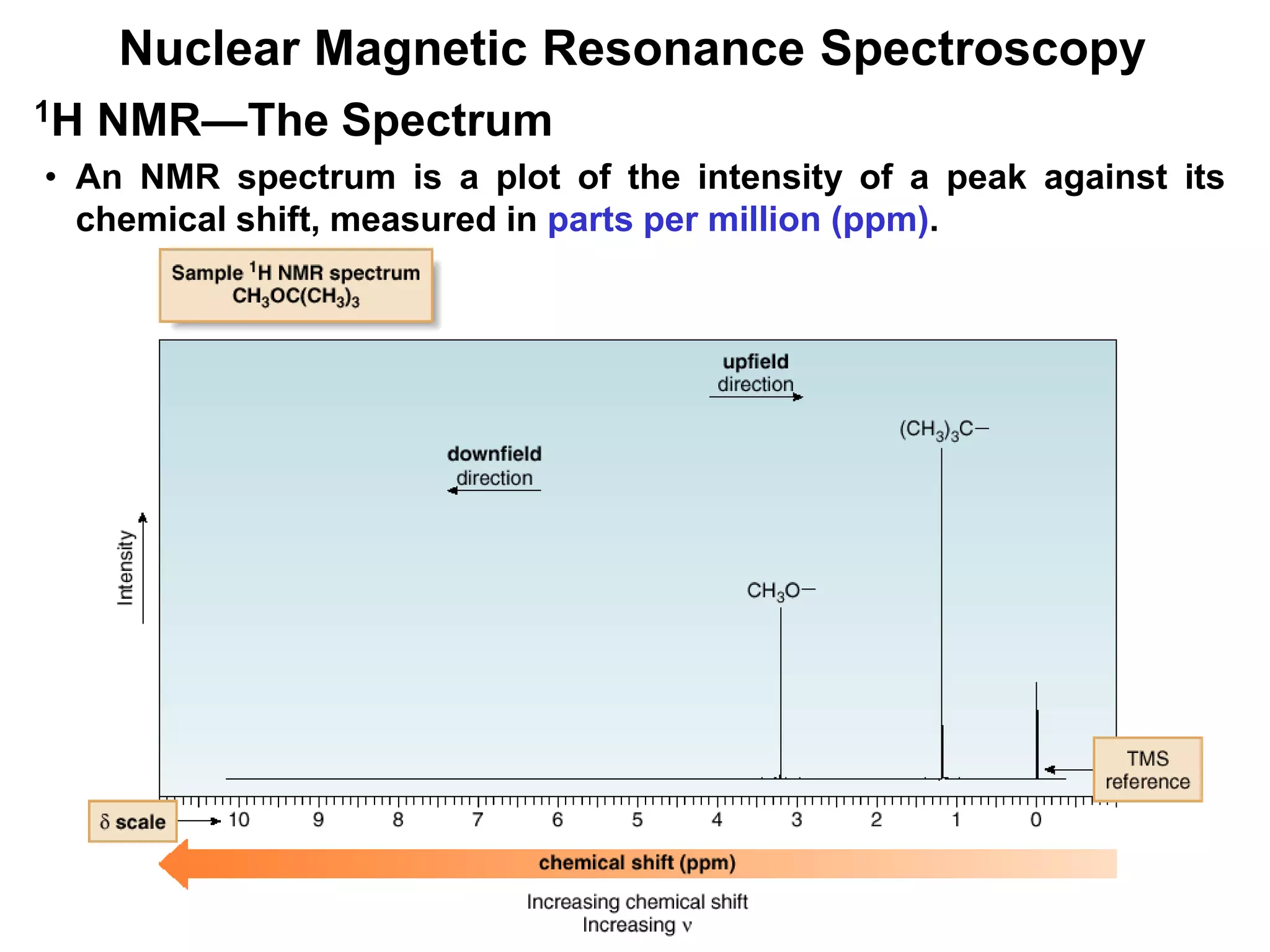
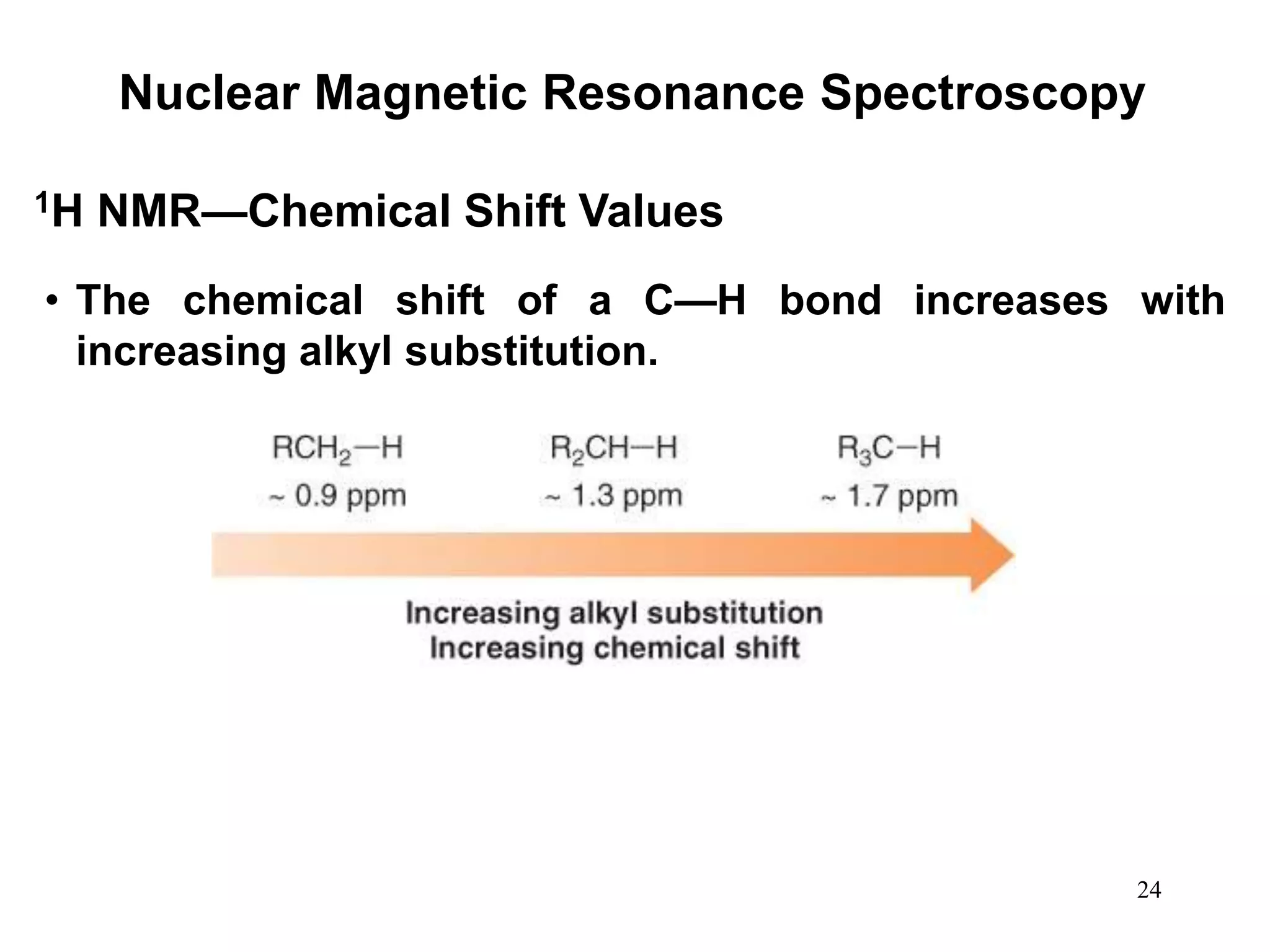
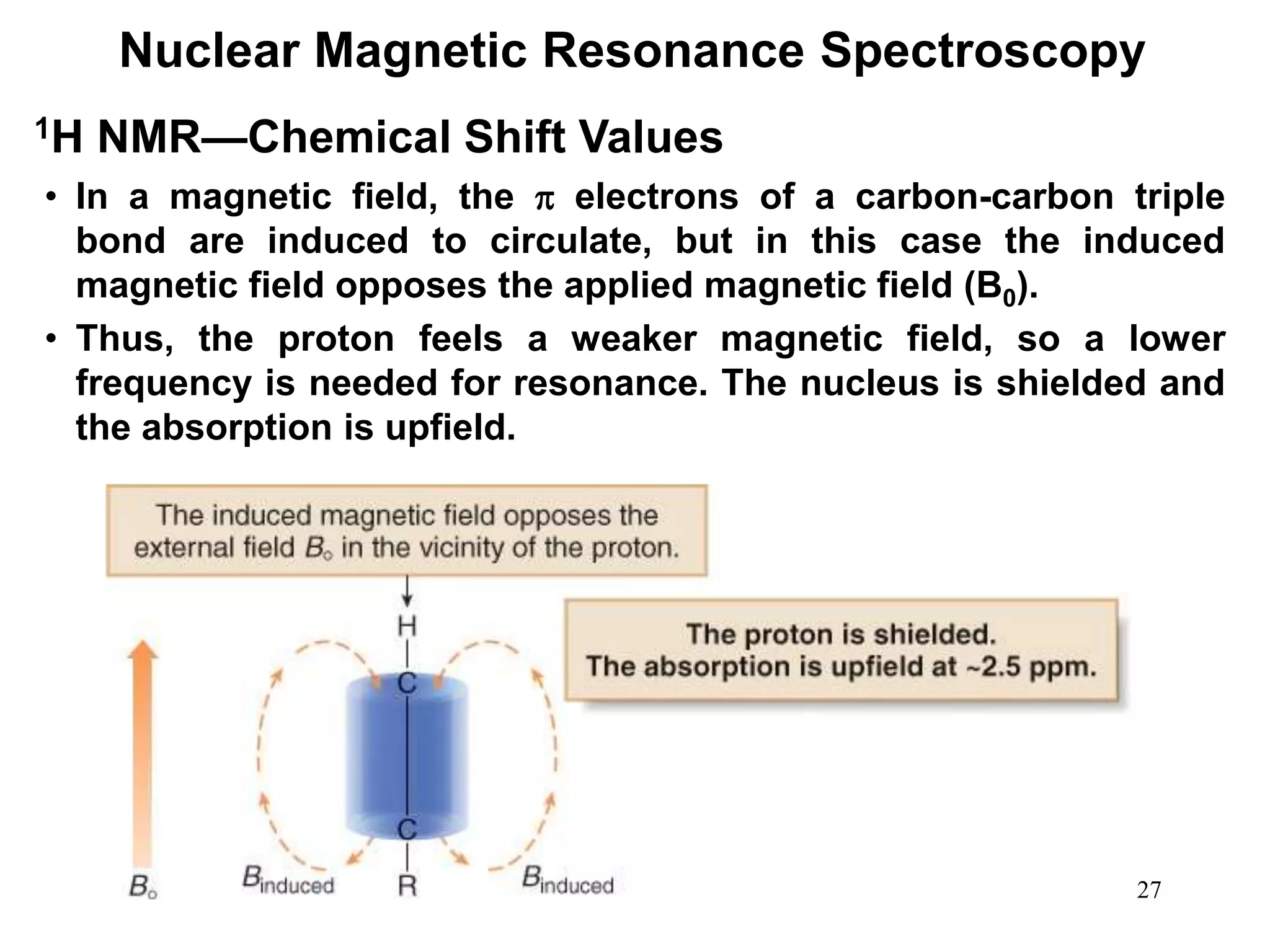
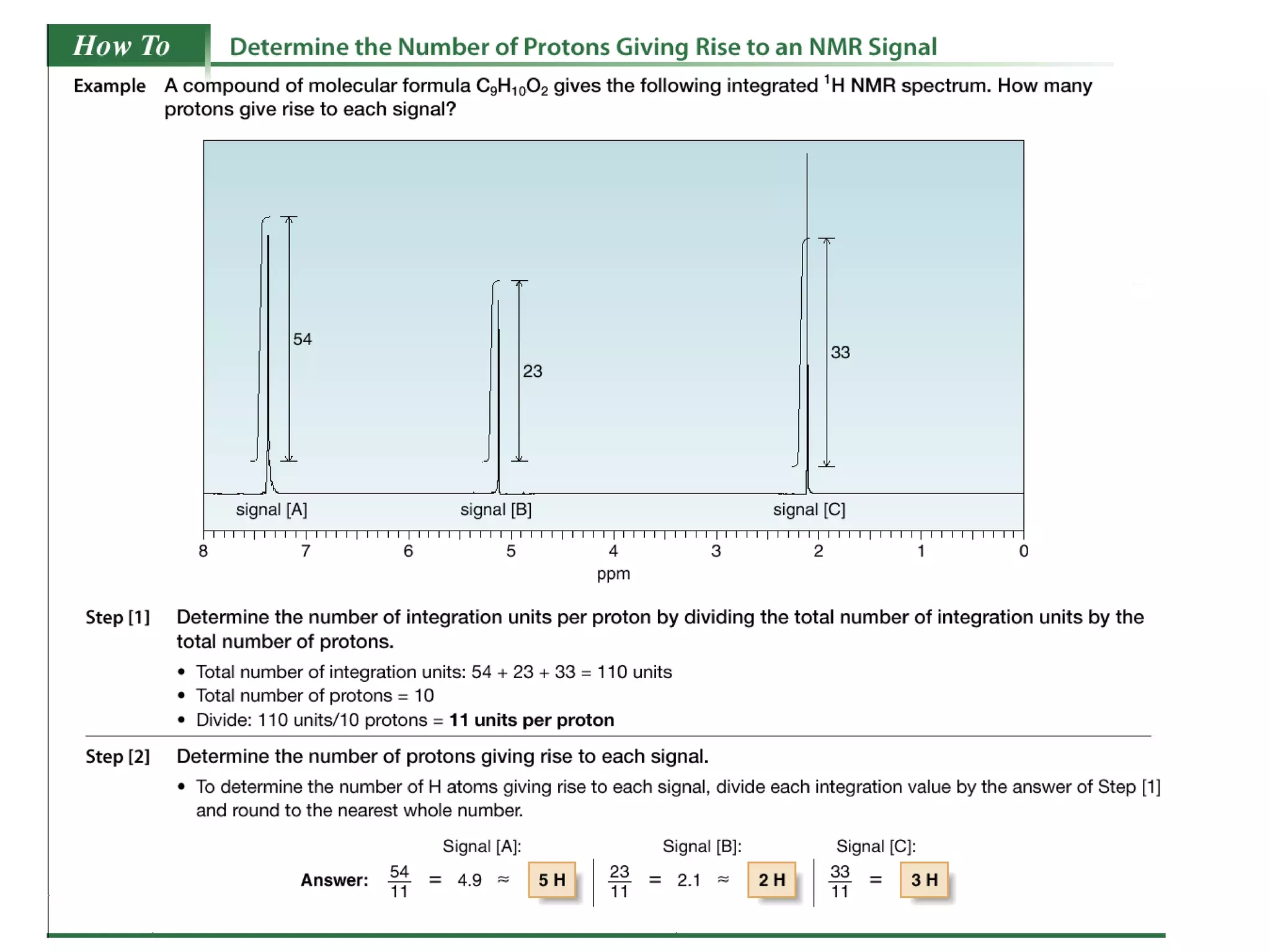
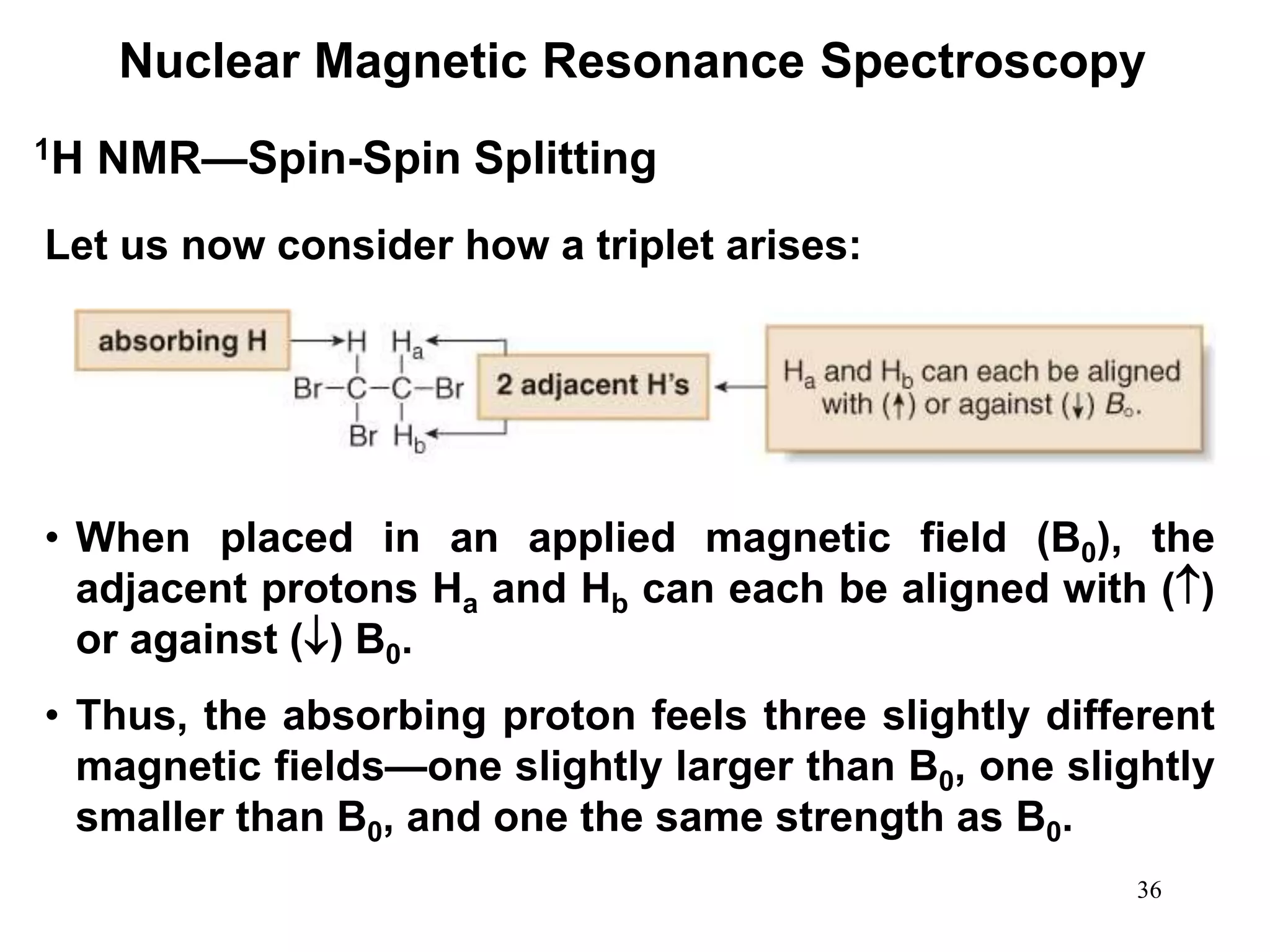
3. NMR spectra provide information on the number, position, intensity, and spin-spin splitting of signals. This allows structural features like functional groups, ring substituents, and stereochemistry to
















![42
Nuclear Magnetic Resonance Spectroscopy
1H NMR—Spin-Spin Splitting
Whenever two (or three) different sets of adjacent protons are
equivalent to each other, use the n + 1 rule to determine the
splitting pattern.
Figure 14.6
The 1H NMR spectrum of
2-bromopropane, [(CH3)2CHBr]](https://image.slidesharecdn.com/ch14nmr-220906063056-375a17dd/75/Ch14nmr-ppt-42-2048.jpg)