Marketing Channels, Logistics & Supply Chain ManagementIntro to MarketingChapter 13
Marketing Channels(Distribution Channels)System of marketing institutions that promote the physical flow of goods and services, along with ownership title, from producer to consumer or business user; also called distribution channelMoving goods and services from producers to customers
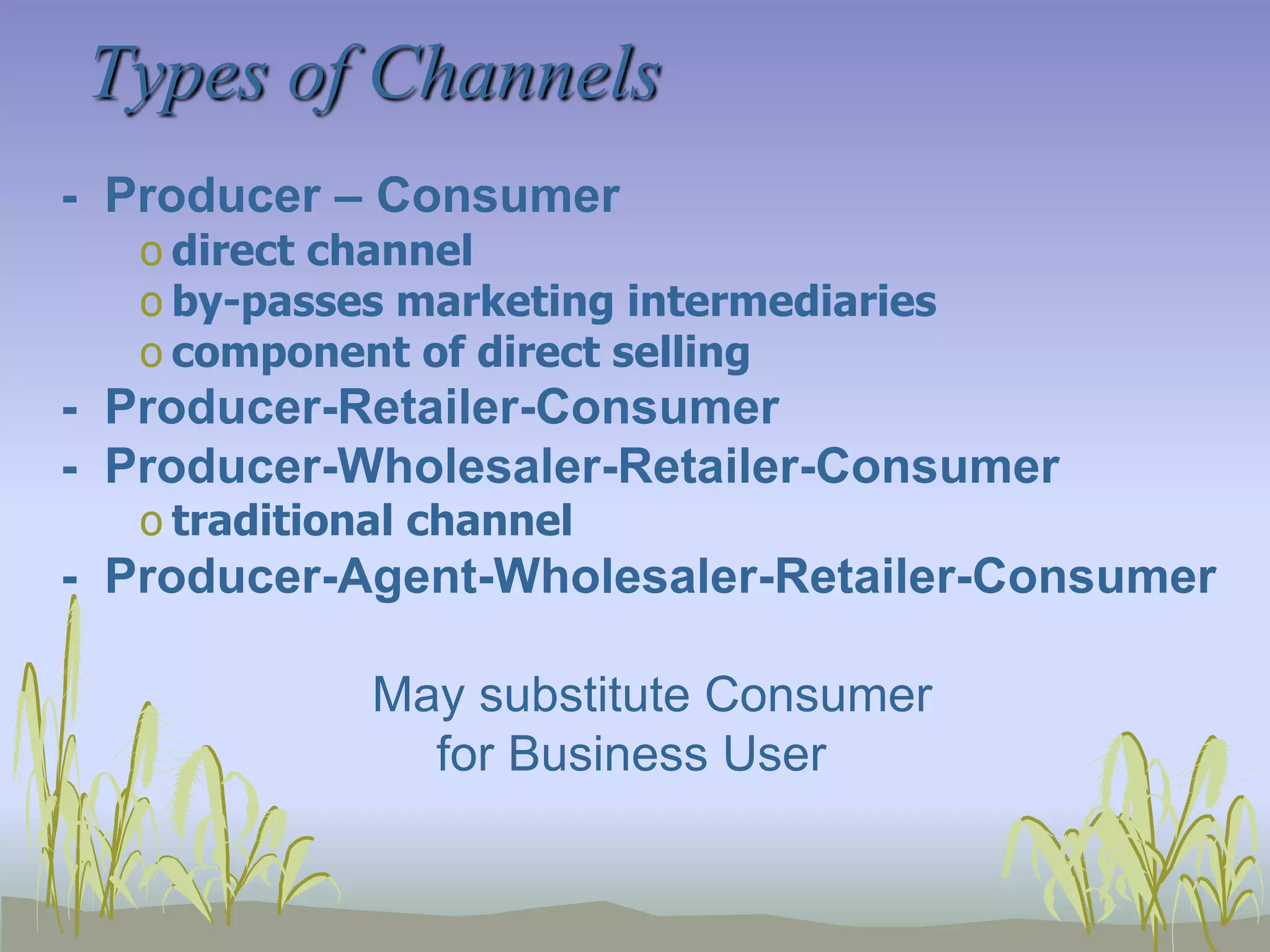
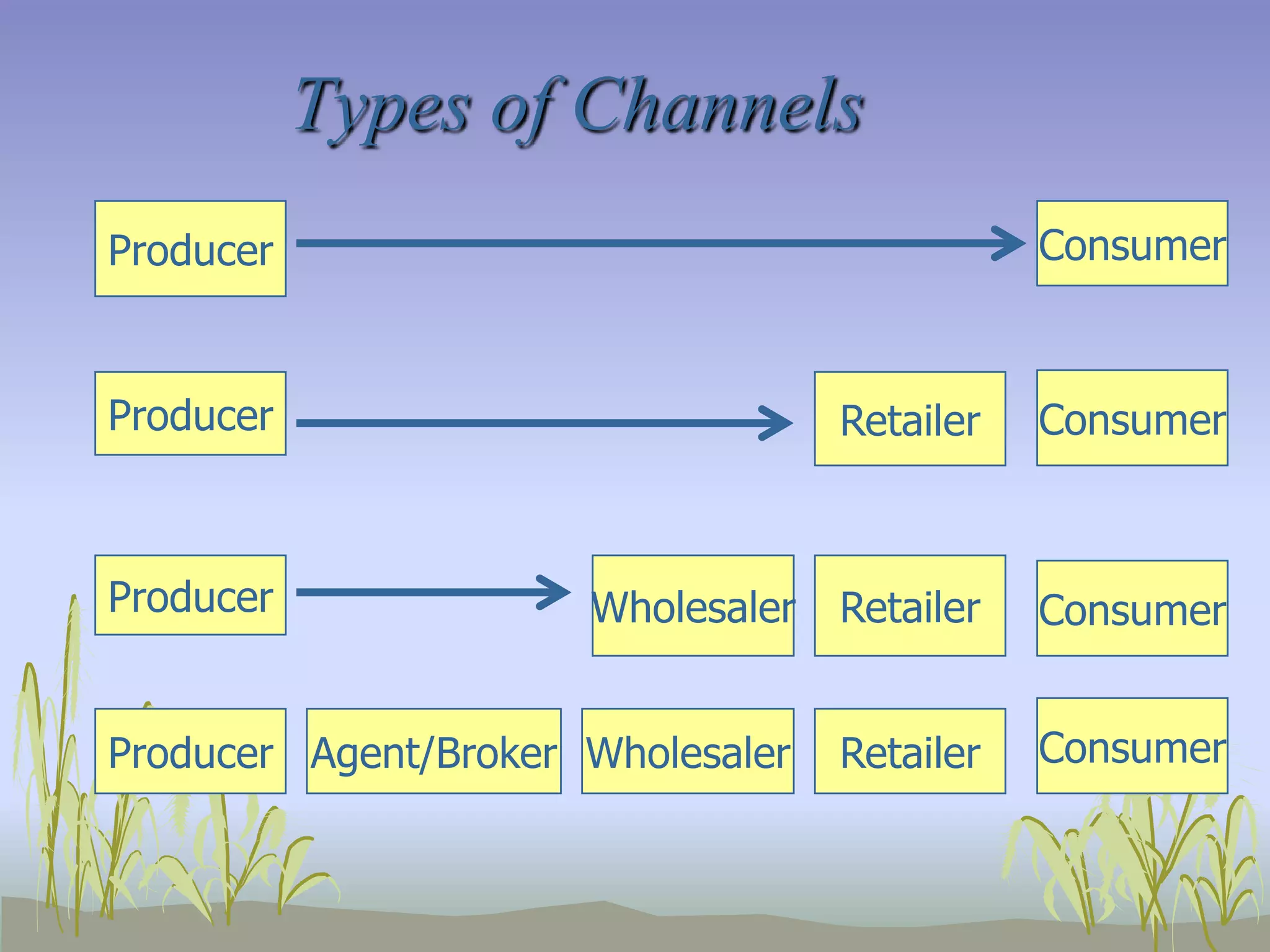
Types of Channels	-  Producer – Consumerdirect channel
by-passes marketing intermediaries
component of direct selling	-  Producer-Retailer-Consumer	-  Producer-Wholesaler-Retailer-Consumertraditional channel	-  Producer-Agent-Wholesaler-Retailer-Consumer		                 May substitute Consumer                               for Business User
Types of ChannelsProducerConsumerConsumerProducerRetailerProducerRetailerWholesalerConsumerConsumerProducerRetailerWholesalerAgent/Broker
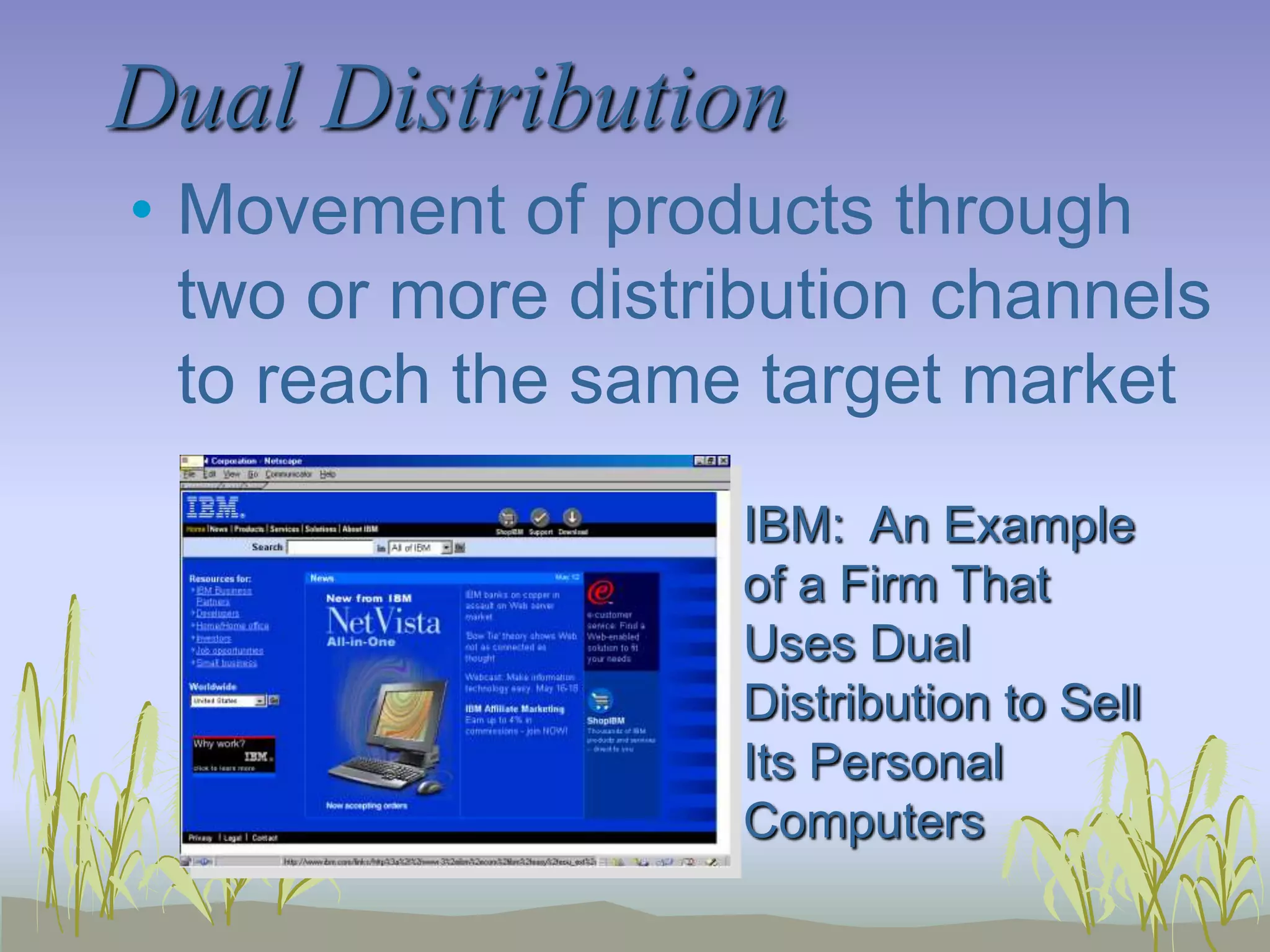
Dual DistributionMovement of products through two or more distribution channels to reach the same target marketIBM:  An Example of a Firm That Uses Dual Distribution to Sell Its Personal Computers
Reverse Channels	Channels designed to return goods to their producers.
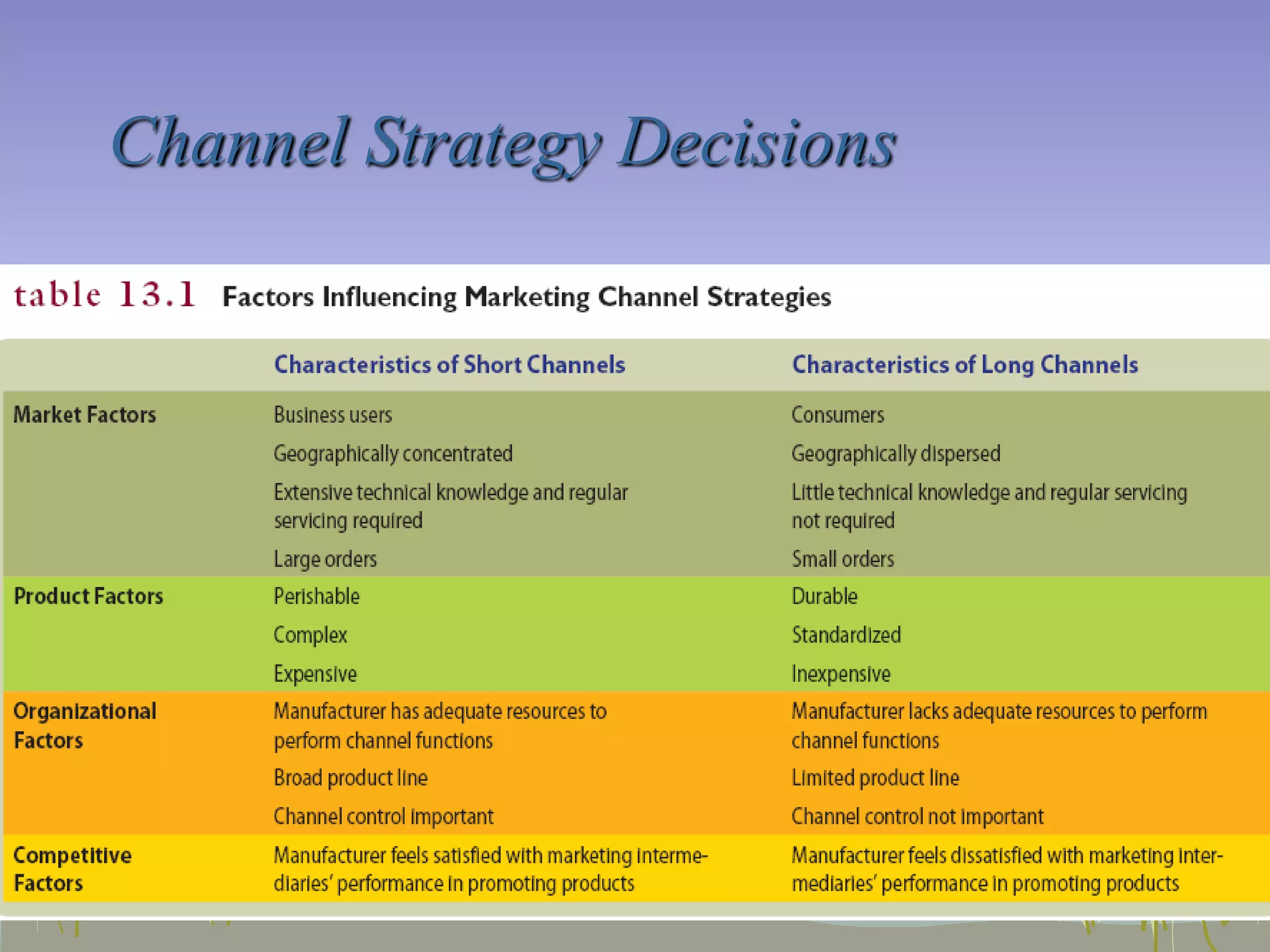
Channel Strategy Decisions
Determining Distribution IntensityIntensive Distribution	-  used for convenience goods	-  saturation coverage of the marketSelective Distribution	-  a firm chooses only a limited number of 	retailer in a market area to handle its 	product.	-  cooperative advertising is frequently usedExclusive Distribution	-  specialty goods	-  one wholesaler or retailer in a geographic 	region.
Channel Management & LeadershipHistorically, producers or wholesalers served as channel captains, over small retailers.  However, many retailers increasingly are taking on the role of channel captain as large chains assume traditional wholesaling functions.
Logistics And Supply Chain ManagementProcess of coordinating the flow of information, goods, and services among members of the distribution channel.Physical DistributionActivities to achieve efficient movement of finished goods from the end of the production line to the consumer.  Transportation is part of it.
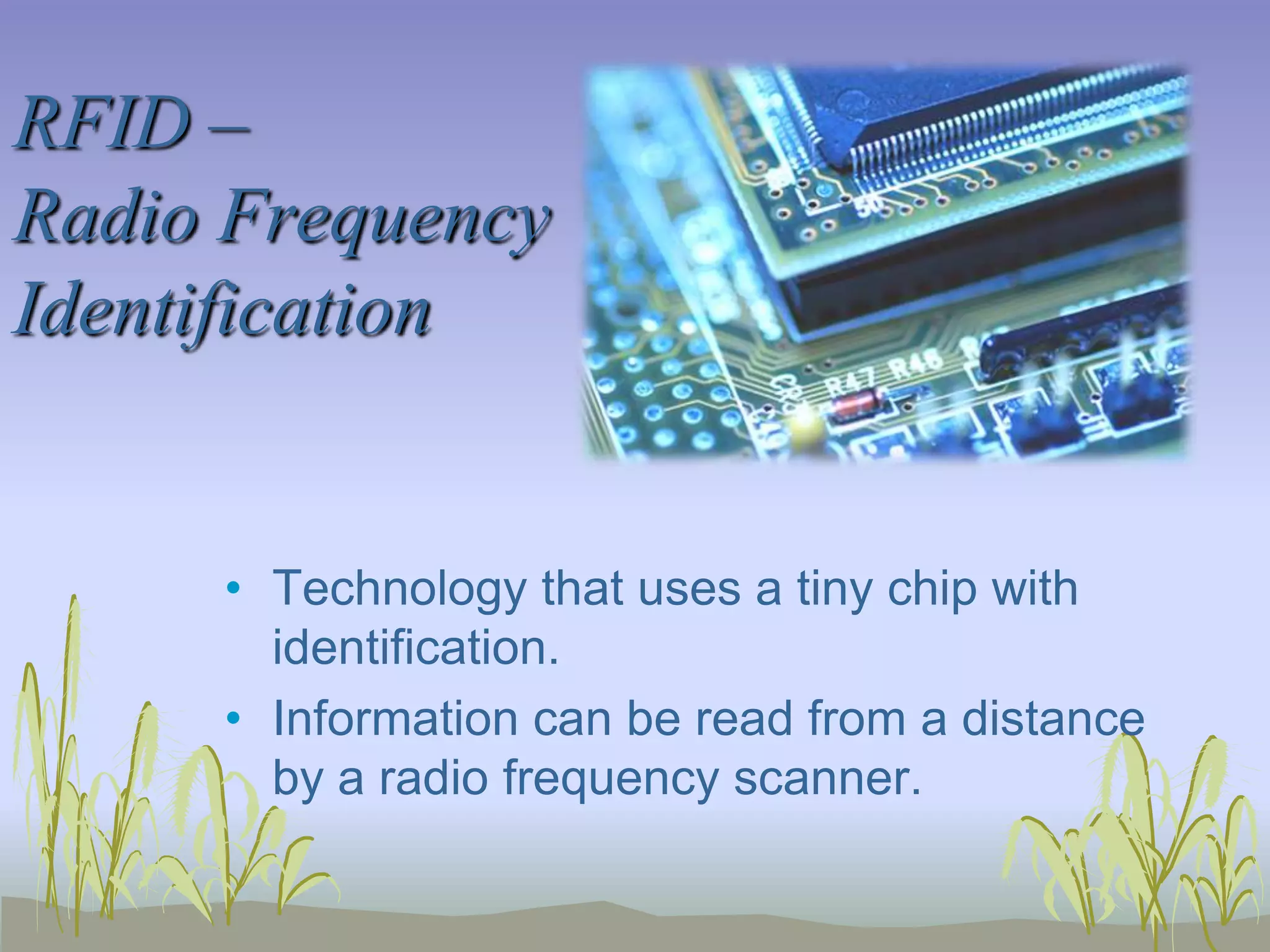
RFID – Radio Frequency IdentificationTechnology that uses a tiny chip with identification.Information can be read from a distance by a radio frequency scanner.
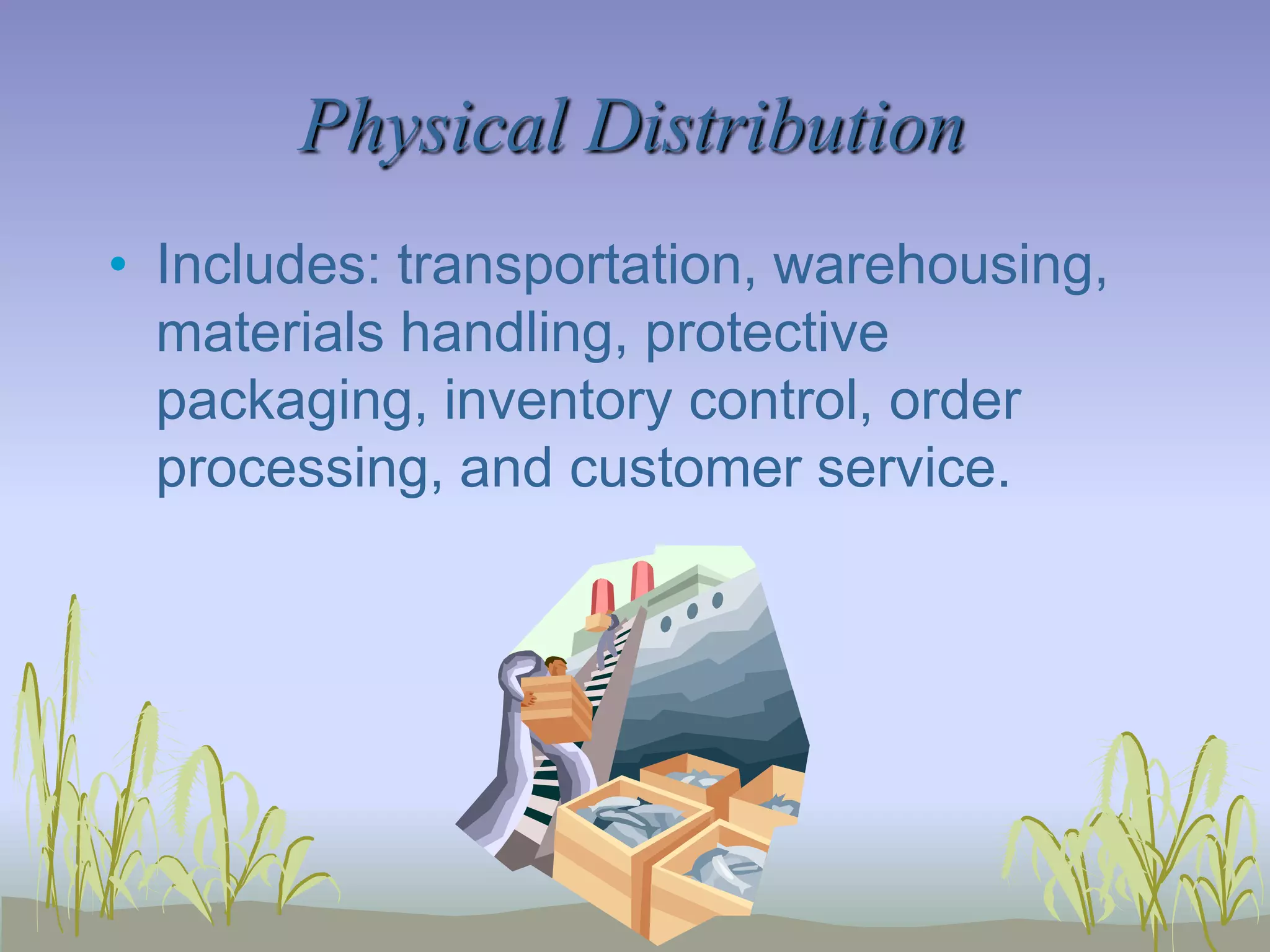
Physical DistributionIncludes: transportation, warehousing, materials handling, protective packaging, inventory control, order processing, and customer service.
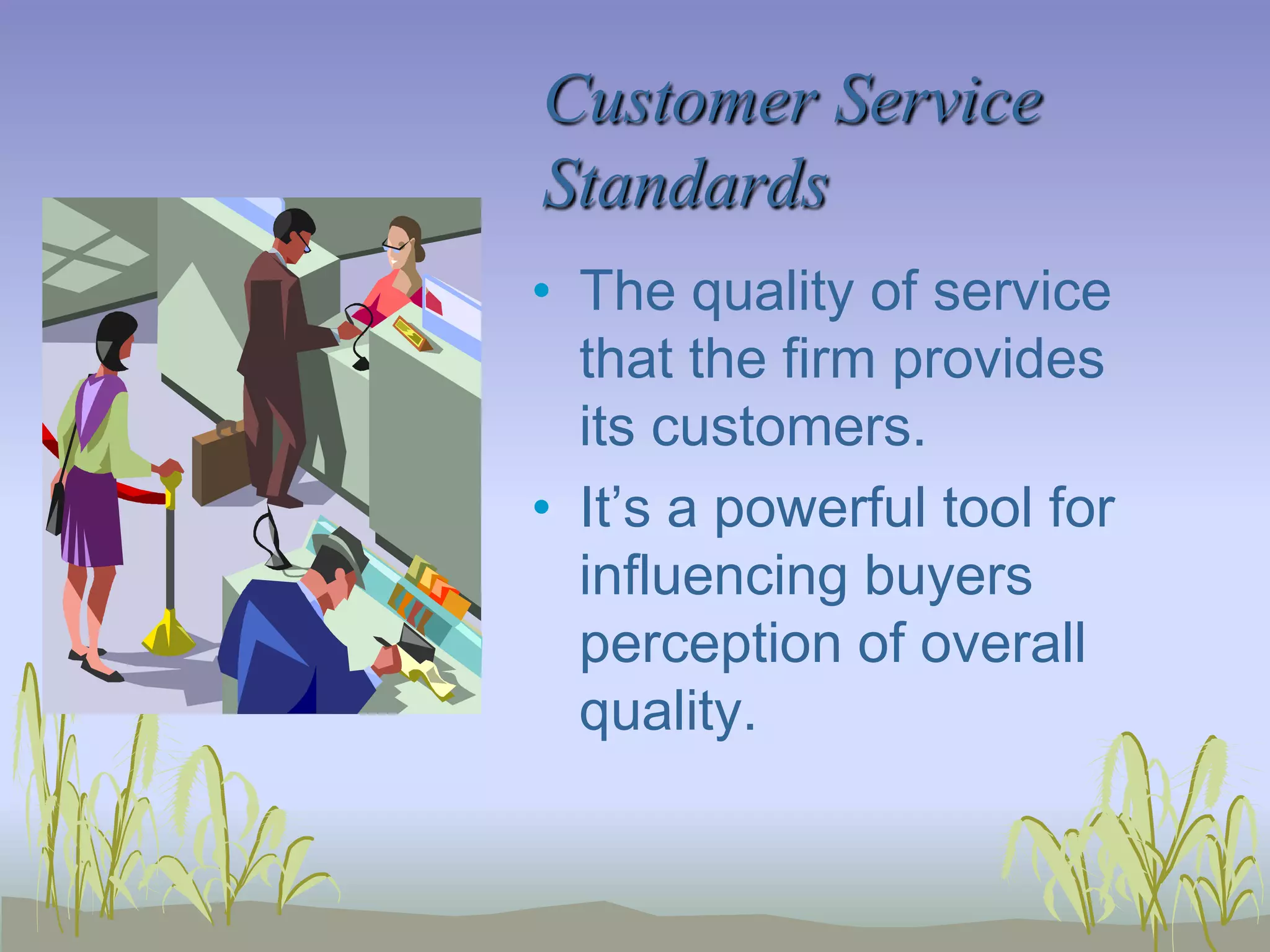
Customer Service StandardsThe quality of service that the firm provides its customers.It’s a powerful tool for influencing buyers perception of overall quality.
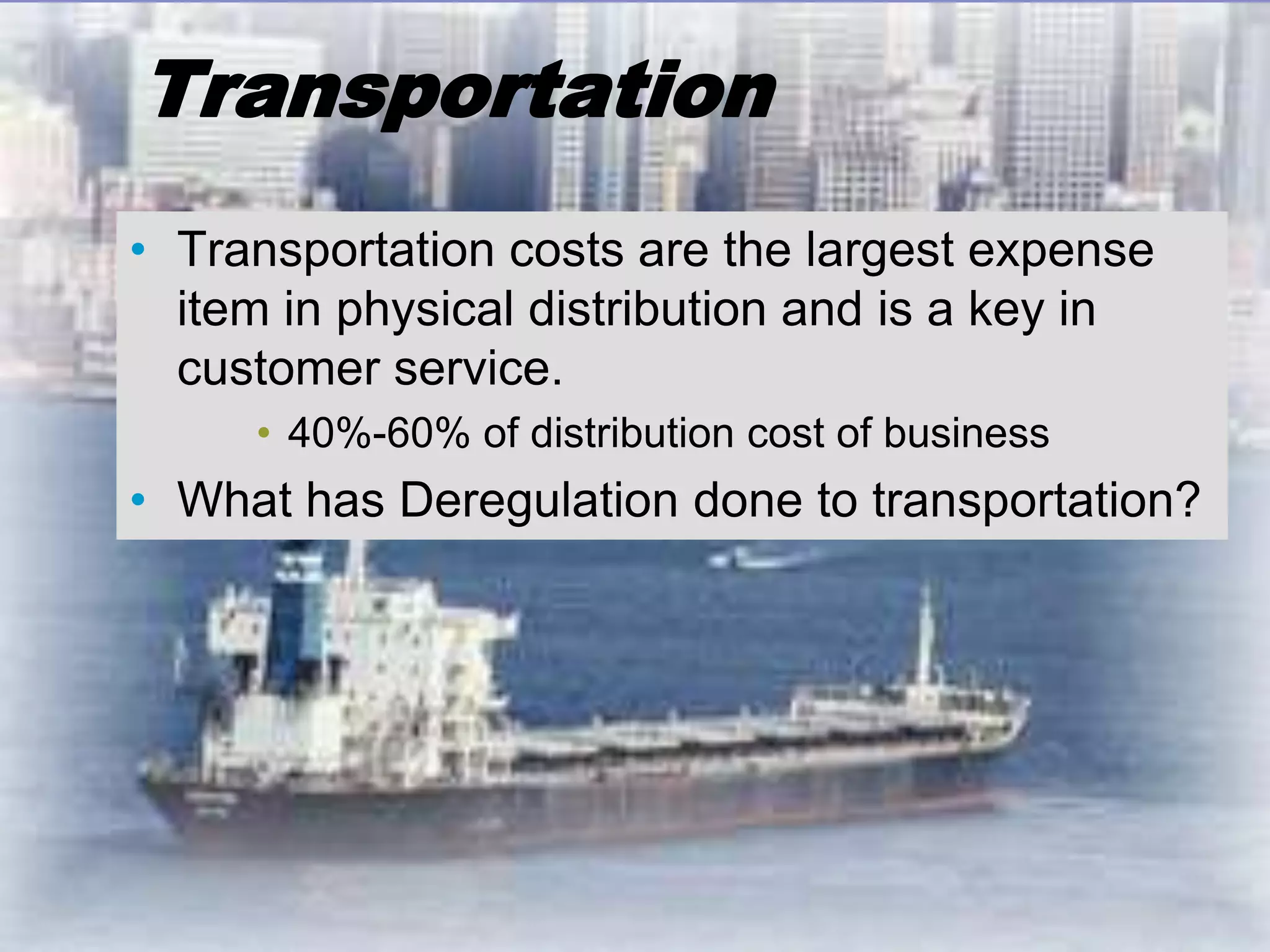
TransportationTransportation costs are the largest expense item in physical distribution and is a key in customer service.40%-60% of distribution cost of businessWhat has Deregulation done to transportation?
Classes for CarriersAll forms of transportation.Ex: trucksCommon carriers are for-hire carriers who serve the general public.Contract carriers contract to work for only specific customers and in only one industry.Private carriers are not-for-hire carriers who transport for only one specific firm.

Ch.13

  • 1.
    Marketing Channels, Logistics& Supply Chain ManagementIntro to MarketingChapter 13
  • 2.
    Marketing Channels(Distribution Channels)Systemof marketing institutions that promote the physical flow of goods and services, along with ownership title, from producer to consumer or business user; also called distribution channelMoving goods and services from producers to customers
  • 3.
    Types of Channels - Producer – Consumerdirect channel
  • 4.
  • 5.
    component of directselling - Producer-Retailer-Consumer - Producer-Wholesaler-Retailer-Consumertraditional channel - Producer-Agent-Wholesaler-Retailer-Consumer May substitute Consumer for Business User
  • 6.
  • 7.
    Dual DistributionMovement ofproducts through two or more distribution channels to reach the same target marketIBM: An Example of a Firm That Uses Dual Distribution to Sell Its Personal Computers
  • 8.
    Reverse Channels Channels designedto return goods to their producers.
  • 9.
  • 10.
    Determining Distribution IntensityIntensiveDistribution - used for convenience goods - saturation coverage of the marketSelective Distribution - a firm chooses only a limited number of retailer in a market area to handle its product. - cooperative advertising is frequently usedExclusive Distribution - specialty goods - one wholesaler or retailer in a geographic region.
  • 11.
    Channel Management &LeadershipHistorically, producers or wholesalers served as channel captains, over small retailers. However, many retailers increasingly are taking on the role of channel captain as large chains assume traditional wholesaling functions.
  • 12.
    Logistics And SupplyChain ManagementProcess of coordinating the flow of information, goods, and services among members of the distribution channel.Physical DistributionActivities to achieve efficient movement of finished goods from the end of the production line to the consumer. Transportation is part of it.
  • 13.
    RFID – RadioFrequency IdentificationTechnology that uses a tiny chip with identification.Information can be read from a distance by a radio frequency scanner.
  • 14.
    Physical DistributionIncludes: transportation,warehousing, materials handling, protective packaging, inventory control, order processing, and customer service.
  • 15.
    Customer Service StandardsThequality of service that the firm provides its customers.It’s a powerful tool for influencing buyers perception of overall quality.
  • 16.
    TransportationTransportation costs arethe largest expense item in physical distribution and is a key in customer service.40%-60% of distribution cost of businessWhat has Deregulation done to transportation?
  • 17.
    Classes for CarriersAllforms of transportation.Ex: trucksCommon carriers are for-hire carriers who serve the general public.Contract carriers contract to work for only specific customers and in only one industry.Private carriers are not-for-hire carriers who transport for only one specific firm.
  • 18.
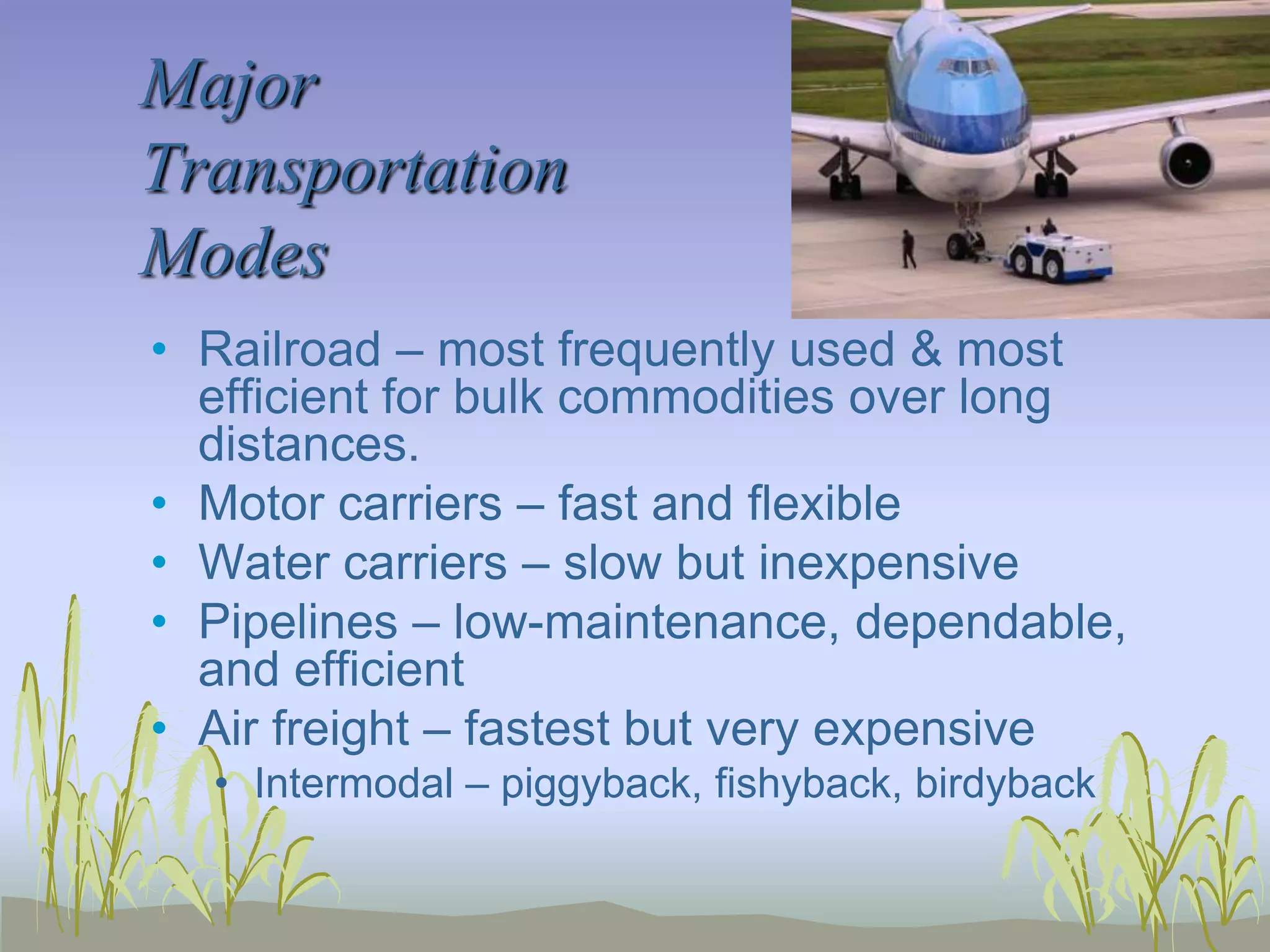
    Major Transportation ModesRailroad– most frequently used & most efficient for bulk commodities over long distances.Motor carriers – fast and flexibleWater carriers – slow but inexpensivePipelines – low-maintenance, dependable, and efficientAir freight – fastest but very expensiveIntermodal – piggyback, fishyback, birdyback
  • 19.
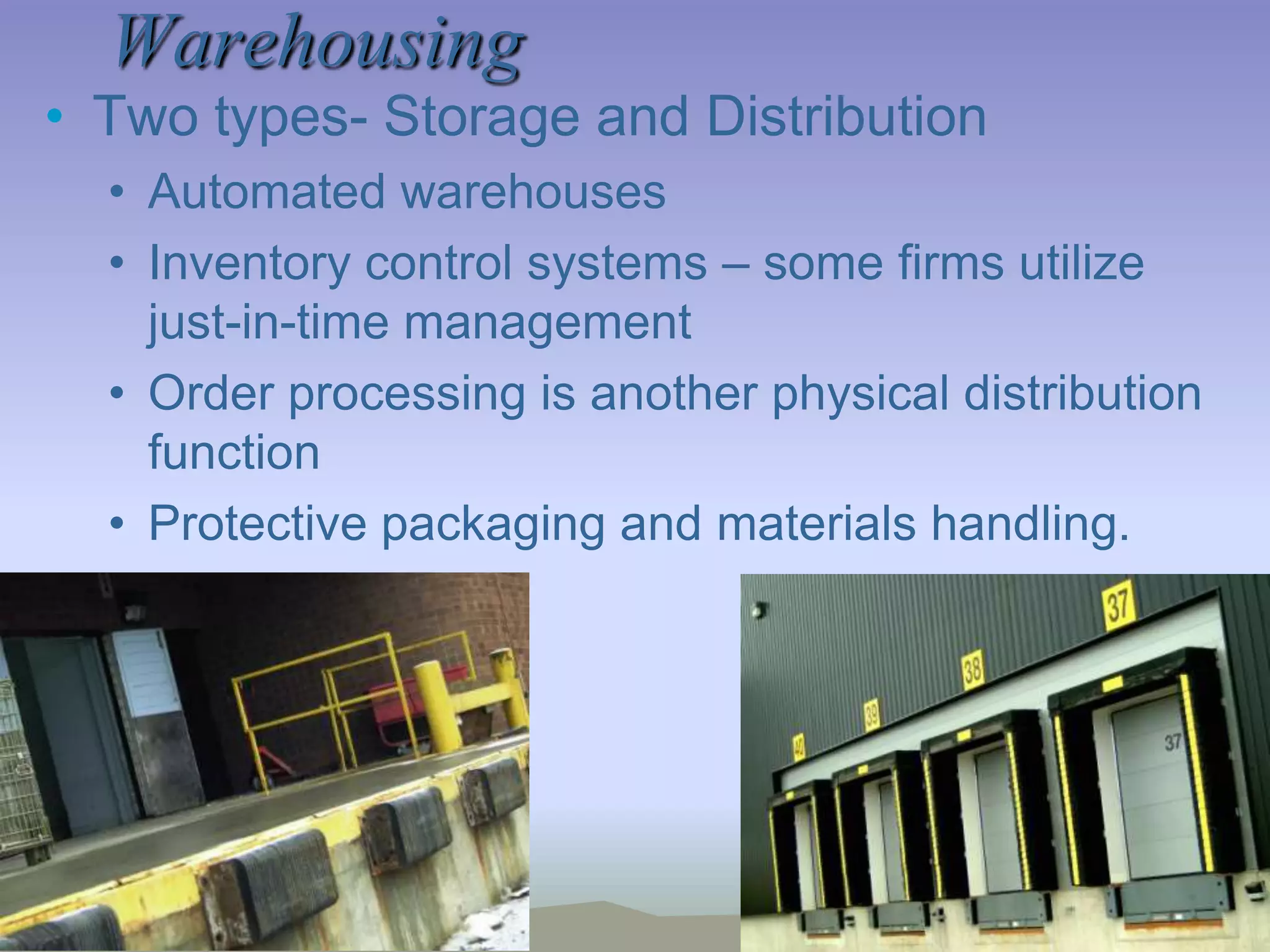
    WarehousingTwo types- Storageand DistributionAutomated warehousesInventory control systems – some firms utilize just-in-time managementOrder processing is another physical distribution functionProtective packaging and materials handling.