Contact: +923006641921 Usman Waheed
1
SM
BELTEI INTERNATIONAL
UNIVERSITY
Faculty of Business
Administration
Bachelor’s Program
Moeung Phanny
Master of Business Administration (MBA) / ( MJM )
Tel: 011 78 78 80
E-mail: phannyart@yahoo.com
2
SMSM
Part 3
LISTENING TO
CUSTOMER THROUGH
RESEARCH
UNDERSTANDING
CUSTOMER REQUIREMENTS
Chapter 5
3
SM
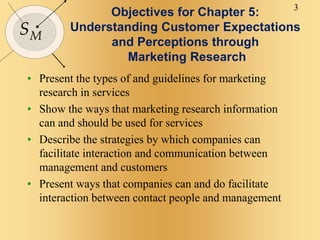
Objectives for Chapter 5:
Understanding Customer Expectations
and Perceptions through
Marketing Research
• Present the types of and guidelines for marketing
research in services
• Show the ways that marketing research information
can and should be used for services
• Describe the strategies by which companies can
facilitate interaction and communication between
management and customers
• Present ways that companies can and do facilitate
interaction between contact people and management
4
SM
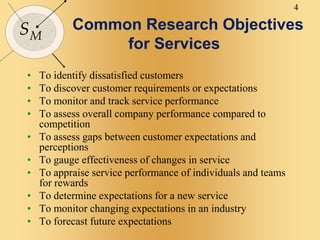
Common Research Objectives
for Services
• To identify dissatisfied customers
• To discover customer requirements or expectations
• To monitor and track service performance
• To assess overall company performance compared to
competition
• To assess gaps between customer expectations and
perceptions
• To gauge effectiveness of changes in service
• To appraise service performance of individuals and teams
for rewards
• To determine expectations for a new service
• To monitor changing expectations in an industry
• To forecast future expectations
5
SM
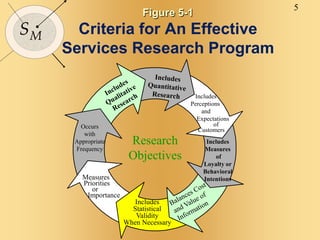
Figure 5-1
Criteria for An Effective
Services Research Program
Research
Objectives
Includes
Perceptions
and
Expectations
of
Customers
Includes
Measures
of
Loyalty or
Behavioral
Intentions
Includes
Statistical
Validity
When Necessary
Measures
Priorities
or
Importance
Occurs
with
Appropriate
Frequency
6
SM
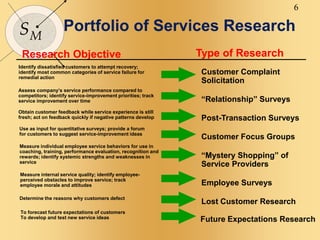
Portfolio of Services Research
Customer Complaint
Solicitation
“Relationship” Surveys
Post-Transaction Surveys
Customer Focus Groups
“Mystery Shopping” of
Service Providers
Employee Surveys
Lost Customer Research
Identify dissatisfied customers to attempt recovery;
identify most common categories of service failure for
remedial action
Obtain customer feedback while service experience is still
fresh; act on feedback quickly if negative patterns develop
Use as input for quantitative surveys; provide a forum
for customers to suggest service-improvement ideas
Assess company’s service performance compared to
competitors; identify service-improvement priorities; track
service improvement over time
Measure individual employee service behaviors for use in
coaching, training, performance evaluation, recognition and
rewards; identify systemic strengths and weaknesses in
service
Measure internal service quality; identify employee-
perceived obstacles to improve service; track
employee morale and attitudes
Determine the reasons why customers defect
Research Objective Type of Research
Future Expectations Research
To forecast future expectations of customers
To develop and test new service ideas
7
SM
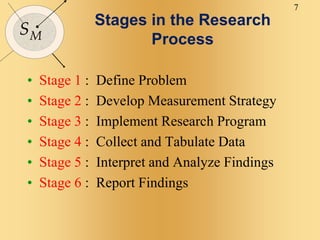
Stages in the Research
Process
• Stage 1 : Define Problem
• Stage 2 : Develop Measurement Strategy
• Stage 3 : Implement Research Program
• Stage 4 : Collect and Tabulate Data
• Stage 5 : Interpret and Analyze Findings
• Stage 6 : Report Findings
8
SM
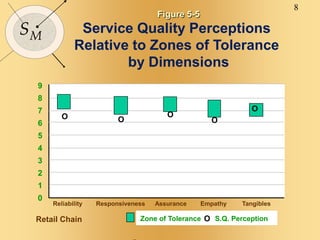
Figure 5-5
Service Quality Perceptions
Relative to Zones of Tolerance
by Dimensions
Retail Chain
9
8
7
6
5
4
3
2
1
0
Reliability Responsiveness Assurance Empathy Tangibles
OO O
O
Zone of Tolerance S.Q. PerceptionO
O
9
SM
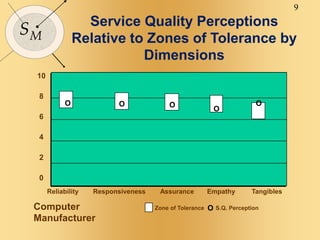
Service Quality Perceptions
Relative to Zones of Tolerance by
Dimensions
Computer
Manufacturer
10
8
6
4
2
0
Reliability Responsiveness Assurance Empathy Tangibles
OO O
O
O
Zone of Tolerance S.Q. PerceptionO
10
SM
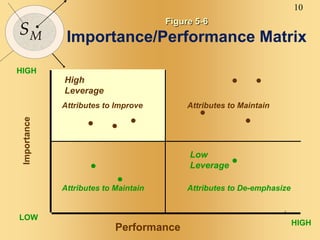
Figure 5-6
Importance/Performance Matrix
HIGH
HIGH
LOW
Performance
Importance


 






Attributes to Improve Attributes to Maintain
High
Leverage
Attributes to De-emphasizeAttributes to Maintain
Low
Leverage
Contact: +923006641921 Usman Waheed
11
SM
THANK YOU FOR YOUR
ATTENTION !
A n y
q u e s t i o n ?

Ch 5 services marketing2817

  • 1.
    Contact: +923006641921 UsmanWaheed 1 SM BELTEI INTERNATIONAL UNIVERSITY Faculty of Business Administration Bachelor’s Program Moeung Phanny Master of Business Administration (MBA) / ( MJM ) Tel: 011 78 78 80 E-mail: phannyart@yahoo.com
  • 2.
    2 SMSM Part 3 LISTENING TO CUSTOMERTHROUGH RESEARCH UNDERSTANDING CUSTOMER REQUIREMENTS Chapter 5
  • 3.
    3 SM Objectives for Chapter5: Understanding Customer Expectations and Perceptions through Marketing Research • Present the types of and guidelines for marketing research in services • Show the ways that marketing research information can and should be used for services • Describe the strategies by which companies can facilitate interaction and communication between management and customers • Present ways that companies can and do facilitate interaction between contact people and management
  • 4.
    4 SM Common Research Objectives forServices • To identify dissatisfied customers • To discover customer requirements or expectations • To monitor and track service performance • To assess overall company performance compared to competition • To assess gaps between customer expectations and perceptions • To gauge effectiveness of changes in service • To appraise service performance of individuals and teams for rewards • To determine expectations for a new service • To monitor changing expectations in an industry • To forecast future expectations
  • 5.
    5 SM Figure 5-1 Criteria forAn Effective Services Research Program Research Objectives Includes Perceptions and Expectations of Customers Includes Measures of Loyalty or Behavioral Intentions Includes Statistical Validity When Necessary Measures Priorities or Importance Occurs with Appropriate Frequency
  • 6.
    6 SM Portfolio of ServicesResearch Customer Complaint Solicitation “Relationship” Surveys Post-Transaction Surveys Customer Focus Groups “Mystery Shopping” of Service Providers Employee Surveys Lost Customer Research Identify dissatisfied customers to attempt recovery; identify most common categories of service failure for remedial action Obtain customer feedback while service experience is still fresh; act on feedback quickly if negative patterns develop Use as input for quantitative surveys; provide a forum for customers to suggest service-improvement ideas Assess company’s service performance compared to competitors; identify service-improvement priorities; track service improvement over time Measure individual employee service behaviors for use in coaching, training, performance evaluation, recognition and rewards; identify systemic strengths and weaknesses in service Measure internal service quality; identify employee- perceived obstacles to improve service; track employee morale and attitudes Determine the reasons why customers defect Research Objective Type of Research Future Expectations Research To forecast future expectations of customers To develop and test new service ideas
  • 7.
    7 SM Stages in theResearch Process • Stage 1 : Define Problem • Stage 2 : Develop Measurement Strategy • Stage 3 : Implement Research Program • Stage 4 : Collect and Tabulate Data • Stage 5 : Interpret and Analyze Findings • Stage 6 : Report Findings
  • 8.
    8 SM Figure 5-5 Service QualityPerceptions Relative to Zones of Tolerance by Dimensions Retail Chain 9 8 7 6 5 4 3 2 1 0 Reliability Responsiveness Assurance Empathy Tangibles OO O O Zone of Tolerance S.Q. PerceptionO O
  • 9.
    9 SM Service Quality Perceptions Relativeto Zones of Tolerance by Dimensions Computer Manufacturer 10 8 6 4 2 0 Reliability Responsiveness Assurance Empathy Tangibles OO O O O Zone of Tolerance S.Q. PerceptionO
  • 10.
    10 SM Figure 5-6 Importance/Performance Matrix HIGH HIGH LOW Performance Importance          Attributes to Improve Attributes to Maintain High Leverage Attributes to De-emphasizeAttributes to Maintain Low Leverage
  • 11.
    Contact: +923006641921 UsmanWaheed 11 SM THANK YOU FOR YOUR ATTENTION ! A n y q u e s t i o n ?