Downloaded 34 times

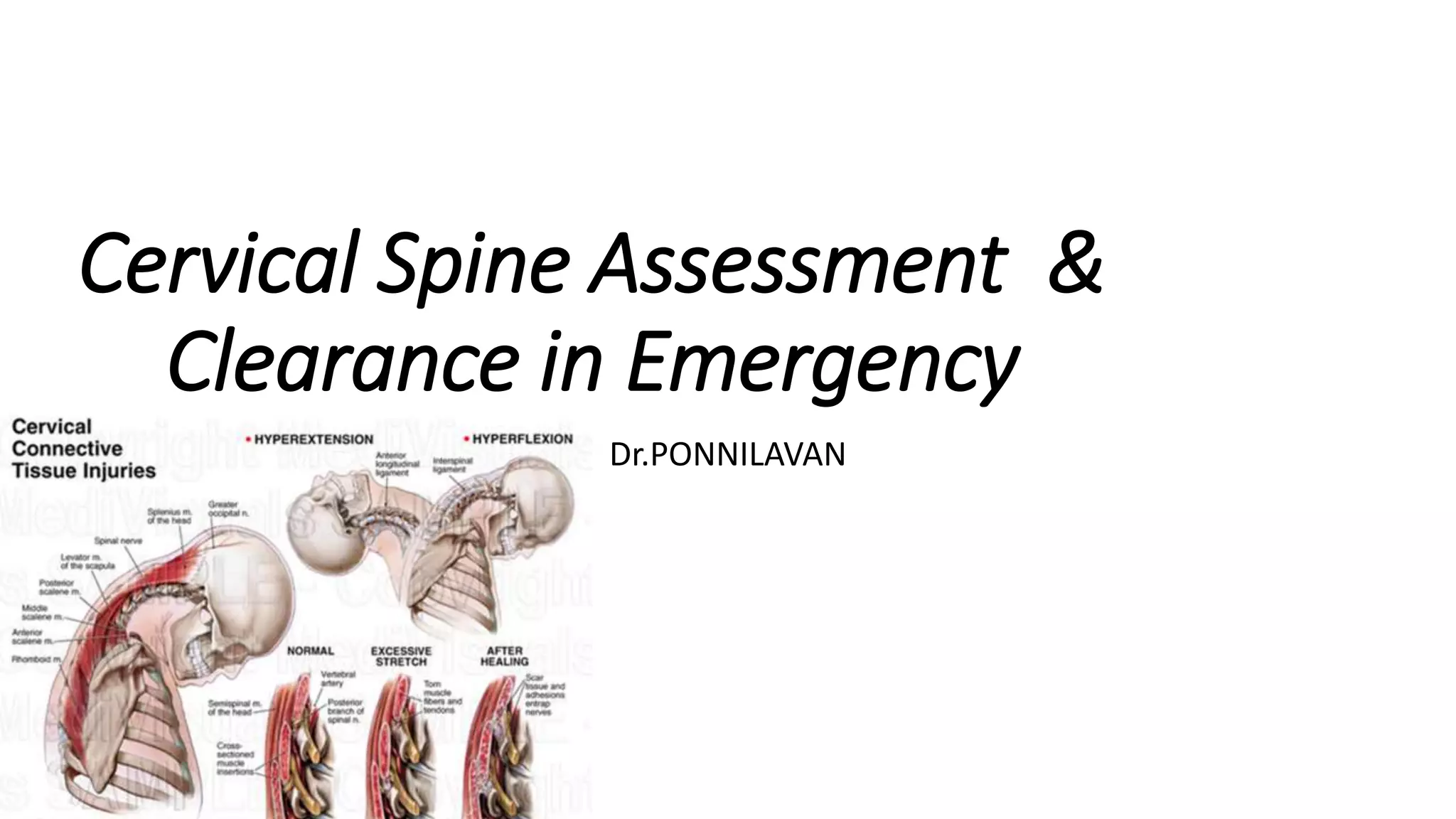
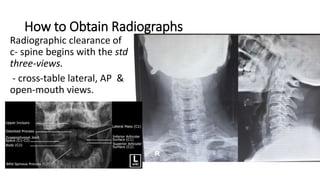
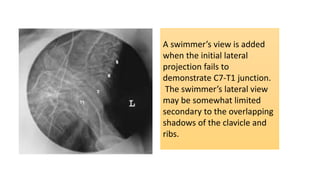
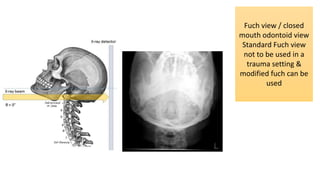
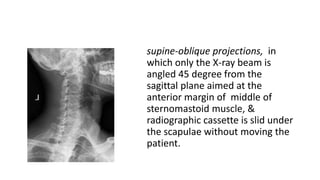
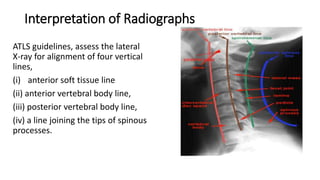
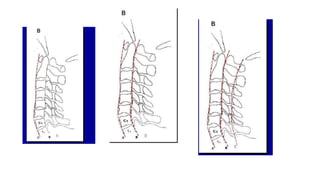
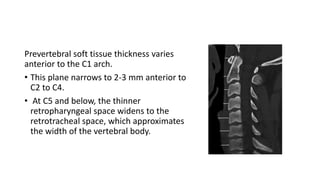
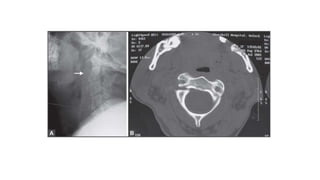
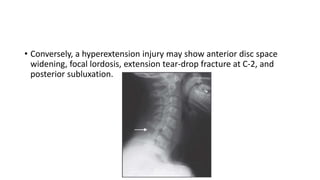
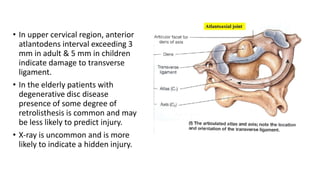
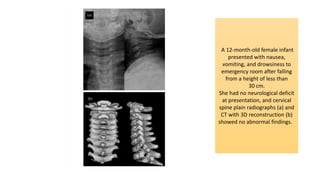
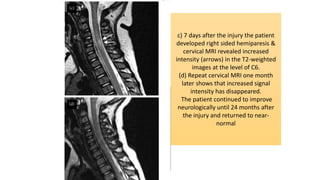

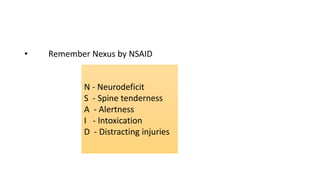
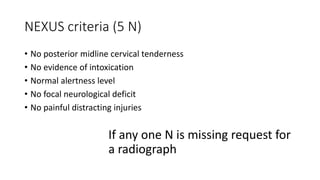
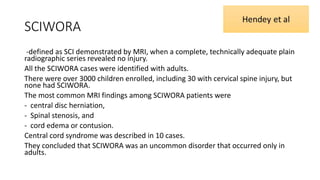

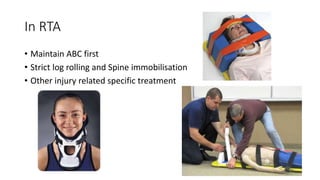


Cervical spine injuries are common and can be difficult to diagnose, especially in polytrauma patients. A thorough understanding of cervical spine anatomy is important for accurate diagnosis and treatment planning. Goals of management are prompt recognition and prevention of secondary neurological damage. While plain radiographs are usually the initial imaging method, other imaging such as CT, MRI, and flexion-extension views may be needed to fully evaluate the injury. Dynamic imaging should only be performed once the patient is pain free and able to fully move the cervical spine. SCIWORA describes spinal cord injuries identified by MRI where plain radiographs show no abnormality, and can occur in both children and adults.


![PERI-PROSTHETIC FRACTURE NAIL-PLATE CONSTRUCT [NPC].pptx](https://cdn.slidesharecdn.com/ss_thumbnails/drarunkumardrmohamedashrafperiprostheticfrasturenail-plateconstructnpc-260209164459-7e9d15a1-thumbnail.jpg?width=640&height=640&fit=bounds)


