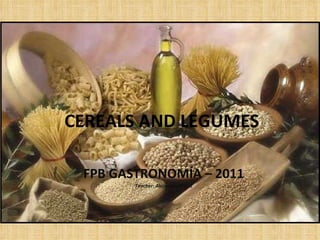
CEREALS AND LEGUMES FPB GASTRONOMÍA – 2011 Teacher: Alejandra Pintos
What is a cereal? Cereals are all members of the grass family Examples include rice, wheat, maize and sorghum They are grown for their seeds (grains) which are high in carbohydrates and protein The water content of the grains is low compared to other vegetables
RICE High carbohidrate food 85% carbohidrate 7% fat 8% protein Protein quality higher than wheat  or corn
WHEAT Good source of energy Whole wheat flour  - Refined wheat flour 69.4% carbohydrates  73.9% carbohydrates 12.1% protein  11.0% protein 2.7% minerals  0.9% fat 1.9% fibre  0.6% minerals 1.7% fat  0.3% fibre
MAIZE Third most important cereal in the world Originary from Mexico and Central America Good source of carbohydrates 66.2% carbohydrates 3.6% proteins 2.7% minerals 1.5% fats 0.5% fibre
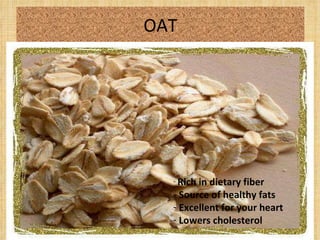
OAT Rich in dietary fiber Source of healthy fats Excellent for your heart Lowers cholesterol
What are legumes? Legumes are a class of vegetables that includes beans, peas and lentils  They are among the most versatile and nutritious foods available.  Legumes are typically low in fat, contain no cholesterol, and are high in folate, potassium, iron and magnesium. They also contain beneficial fats and soluble and insoluble fiber.  A good source of protein, legumes can be a healthy substitute for meat, which has more fat and cholesterol.
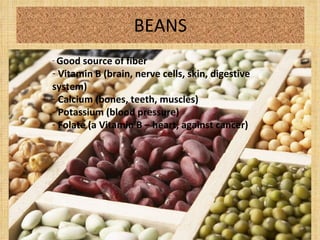
BEANS Good source of fiber Vitamin B (brain, nerve cells, skin, digestive system) Calcium (bones, teeth, muscles) Potassium (blood pressure) Folate (a Vitamin B – heart, against cancer)
PEAS Lower in calcium and phosphorus than beans Similar levels of protein and carbohydrates Good source of protein, B vitamins,  magnesium, phosphorus, manganese, iron, and potassium
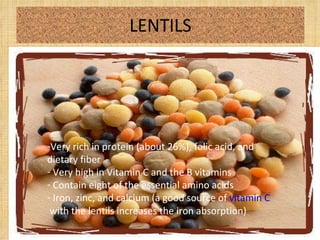
LENTILS Very rich in protein (about 26%), folic acid, and dietary fiber Very high in Vitamin C and the B vitamins Contain eight of the essential amino acids Iron, zinc, and calcium ( a good source of  vitamin C  with the lentils increases the iron absorption)
What cereals can we use to make bread?
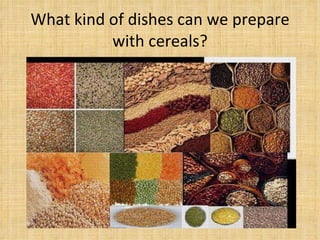
What kind of dishes can we prepare with cereals?
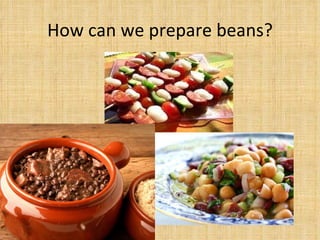
How can we prepare beans?
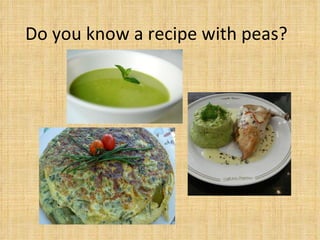
Do you know a recipe with peas?
How can we increase the intake of lentil?

Cereals and legumes

  • 1.
    CEREALS AND LEGUMESFPB GASTRONOMÍA – 2011 Teacher: Alejandra Pintos
  • 2.
    What is acereal? Cereals are all members of the grass family Examples include rice, wheat, maize and sorghum They are grown for their seeds (grains) which are high in carbohydrates and protein The water content of the grains is low compared to other vegetables
  • 3.
    RICE High carbohidratefood 85% carbohidrate 7% fat 8% protein Protein quality higher than wheat or corn
  • 4.
    WHEAT Good sourceof energy Whole wheat flour - Refined wheat flour 69.4% carbohydrates 73.9% carbohydrates 12.1% protein 11.0% protein 2.7% minerals 0.9% fat 1.9% fibre 0.6% minerals 1.7% fat 0.3% fibre
  • 5.
    MAIZE Third mostimportant cereal in the world Originary from Mexico and Central America Good source of carbohydrates 66.2% carbohydrates 3.6% proteins 2.7% minerals 1.5% fats 0.5% fibre
  • 6.
    OAT Rich indietary fiber Source of healthy fats Excellent for your heart Lowers cholesterol
  • 7.
    What are legumes?Legumes are a class of vegetables that includes beans, peas and lentils They are among the most versatile and nutritious foods available. Legumes are typically low in fat, contain no cholesterol, and are high in folate, potassium, iron and magnesium. They also contain beneficial fats and soluble and insoluble fiber. A good source of protein, legumes can be a healthy substitute for meat, which has more fat and cholesterol.
  • 8.
    BEANS Good sourceof fiber Vitamin B (brain, nerve cells, skin, digestive system) Calcium (bones, teeth, muscles) Potassium (blood pressure) Folate (a Vitamin B – heart, against cancer)
  • 9.
    PEAS Lower incalcium and phosphorus than beans Similar levels of protein and carbohydrates Good source of protein, B vitamins,  magnesium, phosphorus, manganese, iron, and potassium
  • 10.
    LENTILS Very richin protein (about 26%), folic acid, and dietary fiber Very high in Vitamin C and the B vitamins Contain eight of the essential amino acids Iron, zinc, and calcium ( a good source of  vitamin C  with the lentils increases the iron absorption)
  • 11.
    What cereals canwe use to make bread?
  • 12.
    What kind ofdishes can we prepare with cereals?
  • 13.
    How can weprepare beans?
  • 14.
    Do you knowa recipe with peas?
  • 15.
    How can weincrease the intake of lentil?