OSMOSIS/DIFFUSION
GUIDED NOTES
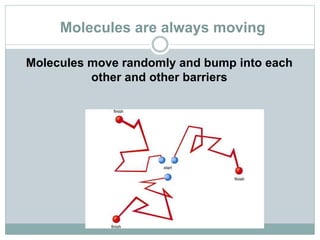
Molecules are always moving
Molecules move randomly and bump into each
other and other barriers
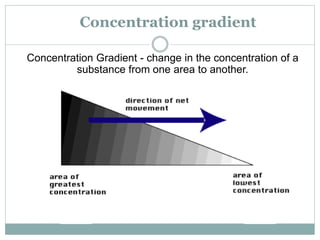
Concentration gradient
Concentration Gradient - change in the concentration of a
substance from one area to another.
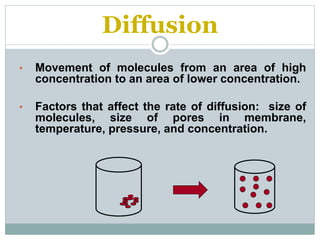
Diffusion
• Movement of molecules from an area of high
concentration to an area of lower concentration.
• Factors that affect the rate of diffusion: size of
molecules, size of pores in membrane,
temperature, pressure, and concentration.
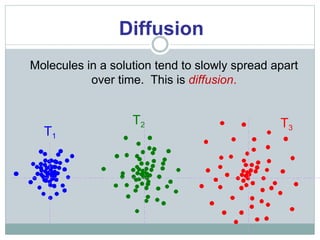
Molecules in a solution tend to slowly spread apart
over time. This is diffusion.
T1
T2 T3
Diffusion
Diffusion
[High] [Low]
concentrated, high energy molecules
diffuse, low energy molecules
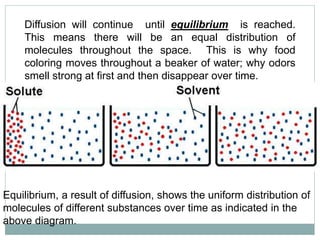
Diffusion will continue until equilibrium is reached.
This means there will be an equal distribution of
molecules throughout the space. This is why food
coloring moves throughout a beaker of water; why odors
smell strong at first and then disappear over time.
Equilibrium, a result of diffusion, shows the uniform distribution of
molecules of different substances over time as indicated in the
above diagram.
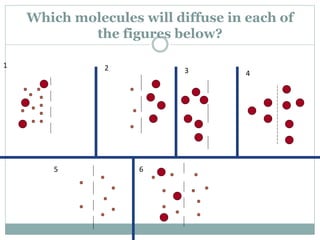
Which molecules will diffuse in each of
the figures below?
1 2 3 4
5 6
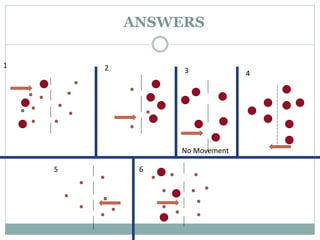
ANSWERS
1 2 3 4
5 6
No Movement
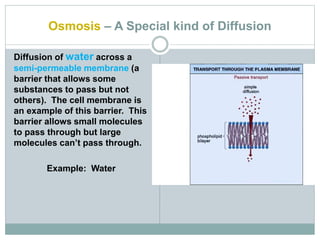
Osmosis – A Special kind of Diffusion
Diffusion of water across a
semi-permeable membrane (a
barrier that allows some
substances to pass but not
others). The cell membrane is
an example of this barrier. This
barrier allows small molecules
to pass through but large
molecules can’t pass through.
Example: Water
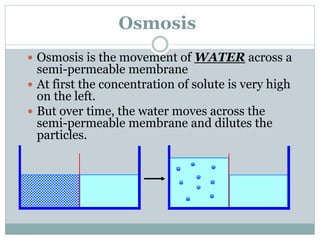
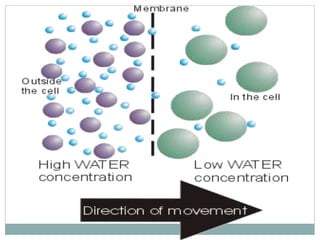
Osmosis
 Osmosis is the movement of WATER across a
semi-permeable membrane
 At first the concentration of solute is very high
on the left.
 But over time, the water moves across the
semi-permeable membrane and dilutes the
particles.
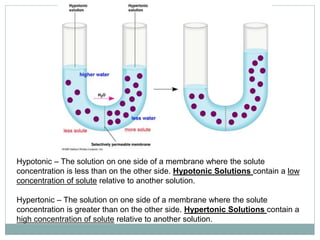
Hypotonic – The solution on one side of a membrane where the solute
concentration is less than on the other side. Hypotonic Solutions contain a low
concentration of solute relative to another solution.
Hypertonic – The solution on one side of a membrane where the solute
concentration is greater than on the other side. Hypertonic Solutions contain a
high concentration of solute relative to another solution.
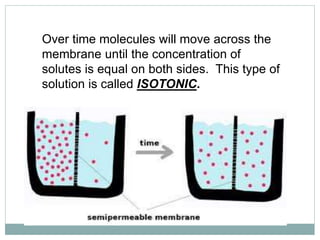
Over time molecules will move across the
membrane until the concentration of
solutes is equal on both sides. This type of
solution is called ISOTONIC.
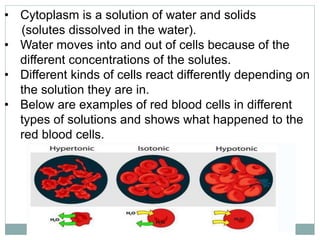
• Cytoplasm is a solution of water and solids
(solutes dissolved in the water).
• Water moves into and out of cells because of the
different concentrations of the solutes.
• Different kinds of cells react differently depending on
the solution they are in.
• Below are examples of red blood cells in different
types of solutions and shows what happened to the
red blood cells.
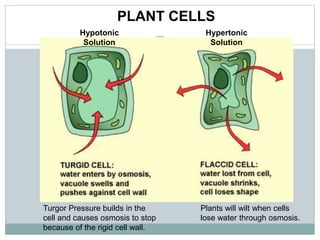
Turgor Pressure builds in the
cell and causes osmosis to stop
because of the rigid cell wall.
Plants will wilt when cells
lose water through osmosis.
Hypotonic
Solution
Hypertonic
Solution
PLANT CELLS
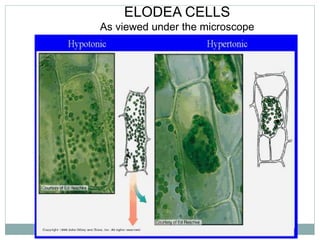
ELODEA CELLS
As viewed under the microscope
PASSIVE TRANSPORT
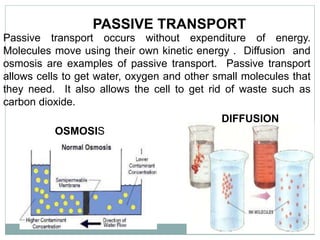
Passive transport occurs without expenditure of energy.
Molecules move using their own kinetic energy . Diffusion and
osmosis are examples of passive transport. Passive transport
allows cells to get water, oxygen and other small molecules that
they need. It also allows the cell to get rid of waste such as
carbon dioxide.
DIFFUSION
OSMOSIS
OSMOSIS and DIFFUSION
THE END

Differentiate between Osmosis and diffusion.ppt

  • 1.
  • 2.
    Molecules are alwaysmoving Molecules move randomly and bump into each other and other barriers
  • 3.
    Concentration gradient Concentration Gradient- change in the concentration of a substance from one area to another.
  • 4.
    Diffusion • Movement ofmolecules from an area of high concentration to an area of lower concentration. • Factors that affect the rate of diffusion: size of molecules, size of pores in membrane, temperature, pressure, and concentration.
  • 5.
    Molecules in asolution tend to slowly spread apart over time. This is diffusion. T1 T2 T3 Diffusion
  • 6.
    Diffusion [High] [Low] concentrated, highenergy molecules diffuse, low energy molecules
  • 7.
    Diffusion will continueuntil equilibrium is reached. This means there will be an equal distribution of molecules throughout the space. This is why food coloring moves throughout a beaker of water; why odors smell strong at first and then disappear over time. Equilibrium, a result of diffusion, shows the uniform distribution of molecules of different substances over time as indicated in the above diagram.
  • 8.
    Which molecules willdiffuse in each of the figures below? 1 2 3 4 5 6
  • 9.
    ANSWERS 1 2 34 5 6 No Movement
  • 10.
    Osmosis – ASpecial kind of Diffusion Diffusion of water across a semi-permeable membrane (a barrier that allows some substances to pass but not others). The cell membrane is an example of this barrier. This barrier allows small molecules to pass through but large molecules can’t pass through. Example: Water
  • 11.
    Osmosis  Osmosis isthe movement of WATER across a semi-permeable membrane  At first the concentration of solute is very high on the left.  But over time, the water moves across the semi-permeable membrane and dilutes the particles.
  • 13.
    Hypotonic – Thesolution on one side of a membrane where the solute concentration is less than on the other side. Hypotonic Solutions contain a low concentration of solute relative to another solution. Hypertonic – The solution on one side of a membrane where the solute concentration is greater than on the other side. Hypertonic Solutions contain a high concentration of solute relative to another solution.
  • 14.
    Over time moleculeswill move across the membrane until the concentration of solutes is equal on both sides. This type of solution is called ISOTONIC.
  • 15.
    • Cytoplasm isa solution of water and solids (solutes dissolved in the water). • Water moves into and out of cells because of the different concentrations of the solutes. • Different kinds of cells react differently depending on the solution they are in. • Below are examples of red blood cells in different types of solutions and shows what happened to the red blood cells.
  • 16.
    Turgor Pressure buildsin the cell and causes osmosis to stop because of the rigid cell wall. Plants will wilt when cells lose water through osmosis. Hypotonic Solution Hypertonic Solution PLANT CELLS
  • 17.
    ELODEA CELLS As viewedunder the microscope
  • 18.
    PASSIVE TRANSPORT Passive transportoccurs without expenditure of energy. Molecules move using their own kinetic energy . Diffusion and osmosis are examples of passive transport. Passive transport allows cells to get water, oxygen and other small molecules that they need. It also allows the cell to get rid of waste such as carbon dioxide. DIFFUSION OSMOSIS
  • 19.
  • 20.