Cell and macromolecules
1.Cellular classification
2.Subcellular organelles
3.Macromolecules and Macromolecular
Assemblies
B. REVATHI
VIPS
1. Cellular classification
THE DYNAMIC CELL
• The cell comes from the Latin cellula, meaning “a small room”.
• The cell is the structural and functional unit of all living organisms.
• The cell was discovered by Robert Hooke in 1665.
• Human contains about 10 trillion cells.
• Most plant and animal cells are between 1 and 100µm and therefore
are visible only under the microscope.
Types of cells
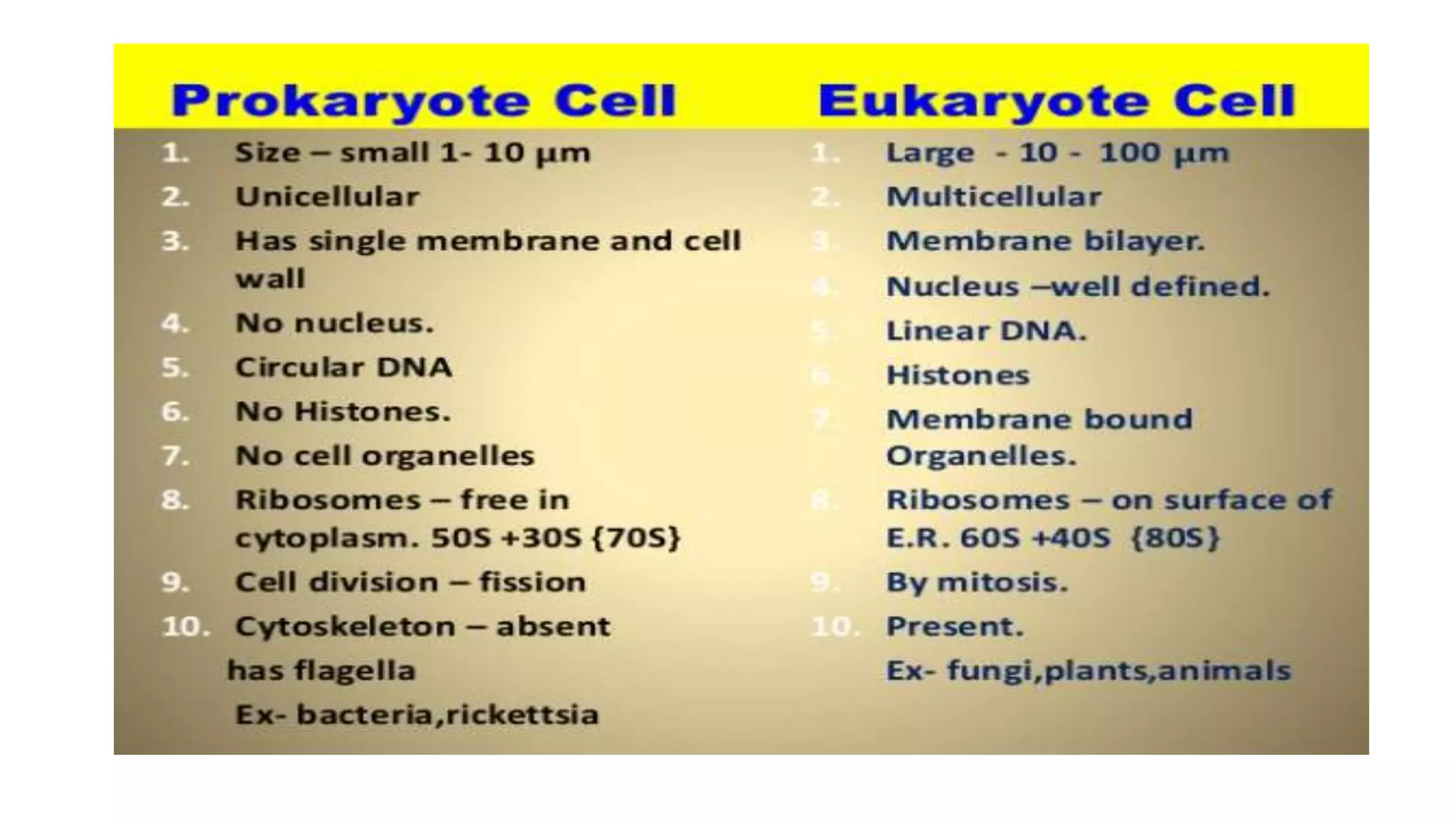
• There are two types of cell. Prokaryotic and eukaryotic.
• Prokaryotic (Prokaryotic word derived from Greek meaning- before
nuclei) -lack a nucleus or membrane-bound structures.
Ex- Bacteria, Cyanobacteria.
• Eukaryotic (Greek- eu means good and karyon means nut or kernel) -
have a nucleus and membrane-bound organelles .
Ex- Fungi, Plants, Animals.
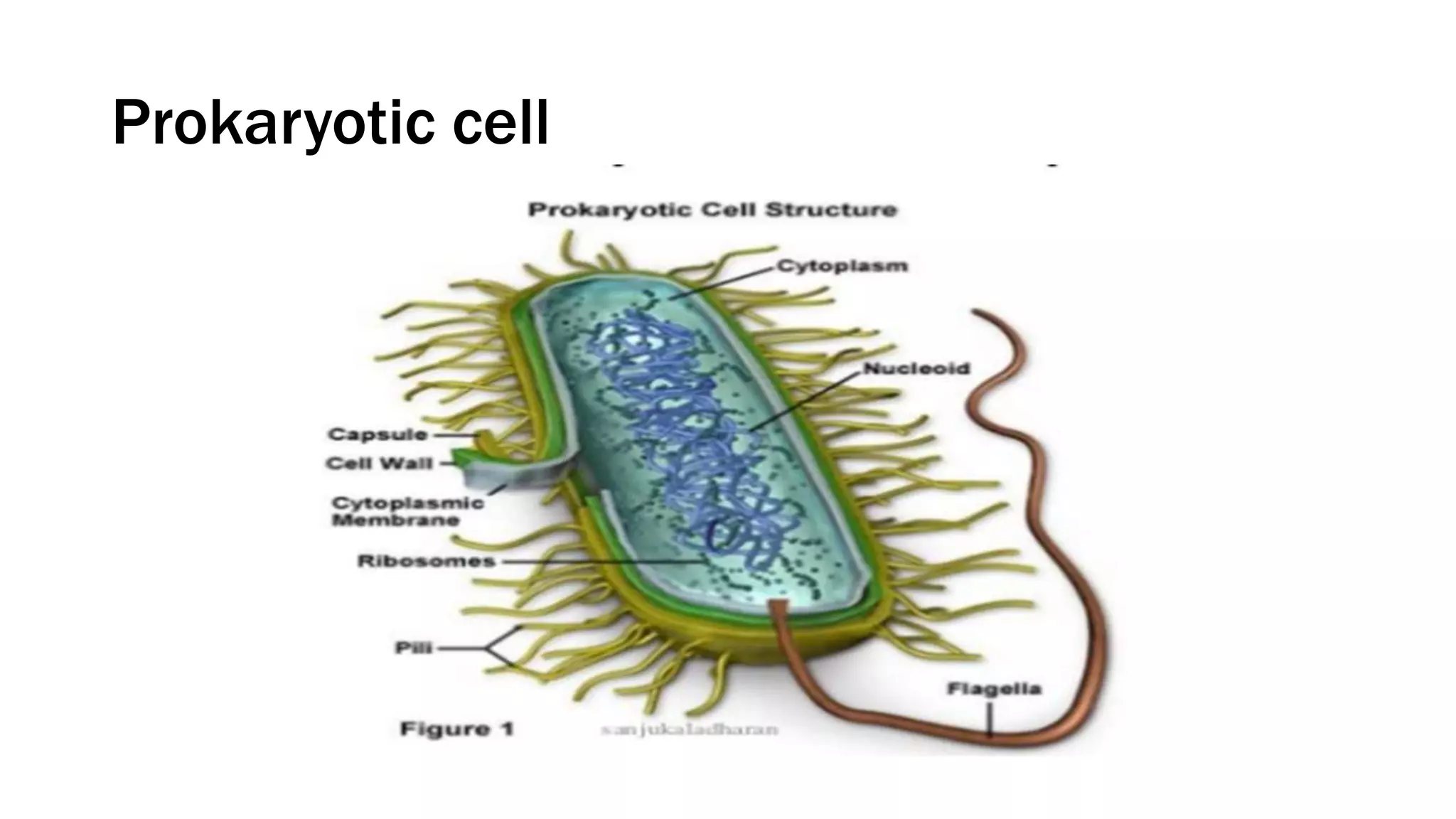
Prokaryotic cell
Prokaryotic cell
• The bacterial cells are very small (about 1-2 µm diameter and 10
µm long).
• These cells have 3 shapes- rod, spherical and spiral.
• The cell division is by binary fission.
• The structural components of prokaryotic cells:
The nuclear material of prokaryotic cell consists of a single
chromosome.
• The flagella and pili are projected from the cell surface. These consist
of proteins. They facilitate the movement and communication
between the cells.
• The cells enclosed by cell envelop. This consists of plasma membrane
and cell wall. Some bacteria also have another layer- capsule. This
envelop gives the rigidity to the cell.
• Inside the cell is the cytoplasm is present that contains the cell
genome (DNA), ribosomes and various cell inclusions.
• The DNA is condensed to a nucleoid. There are circular structures
called plasmids, which carry extra chromosomal DNA.
Eukaryotic cells
• These cells contain complex structures enclosed within the
membranes.
• The membrane bound nucleus is present in these cells.
• Most of these cells also contain other membrane bound organelles
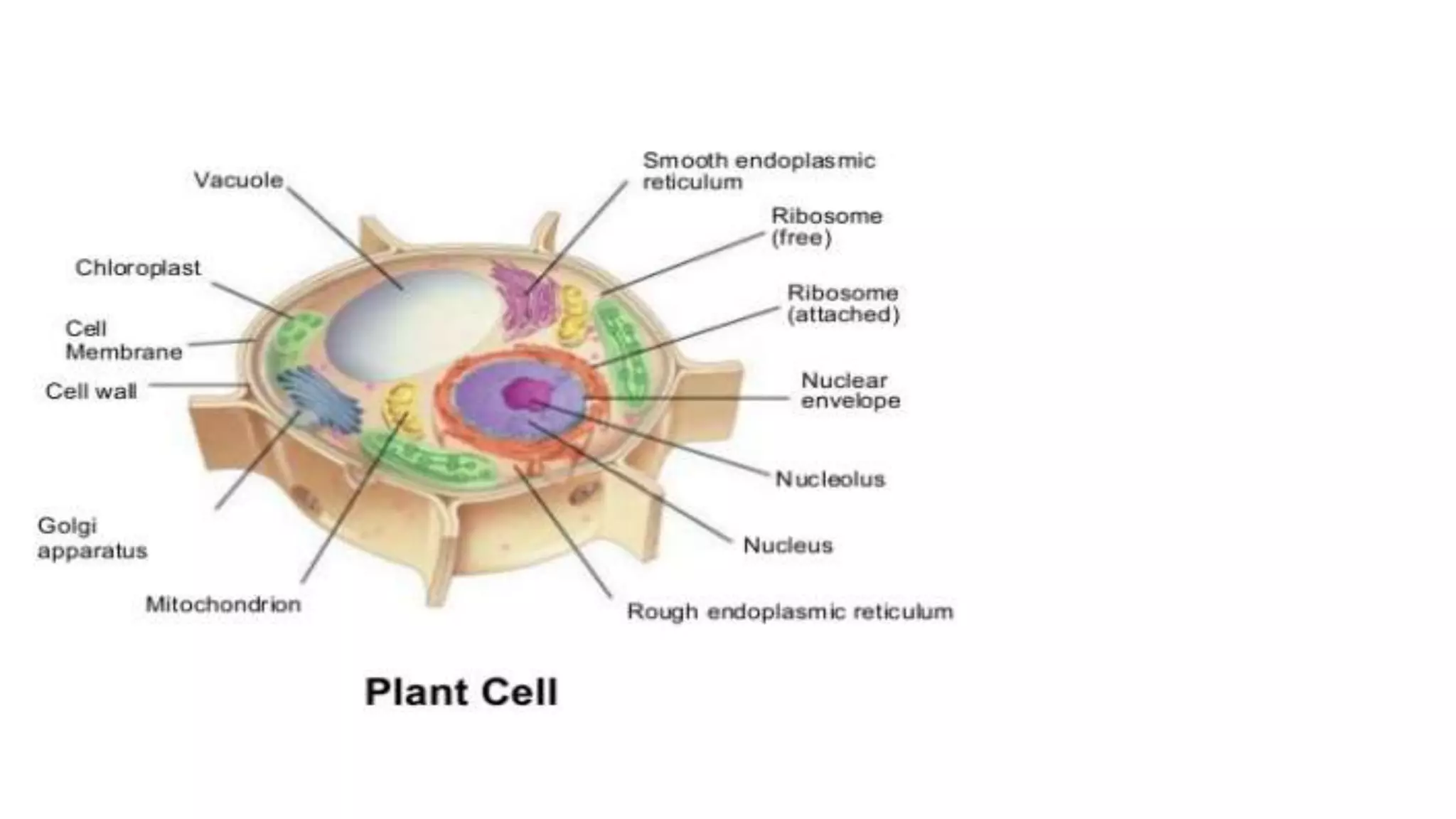
such as mitochondria, chloroplast and the Golgi apparatus.
• All species of large complex organisms are eukaryotes, including
animals, plants and fungi.
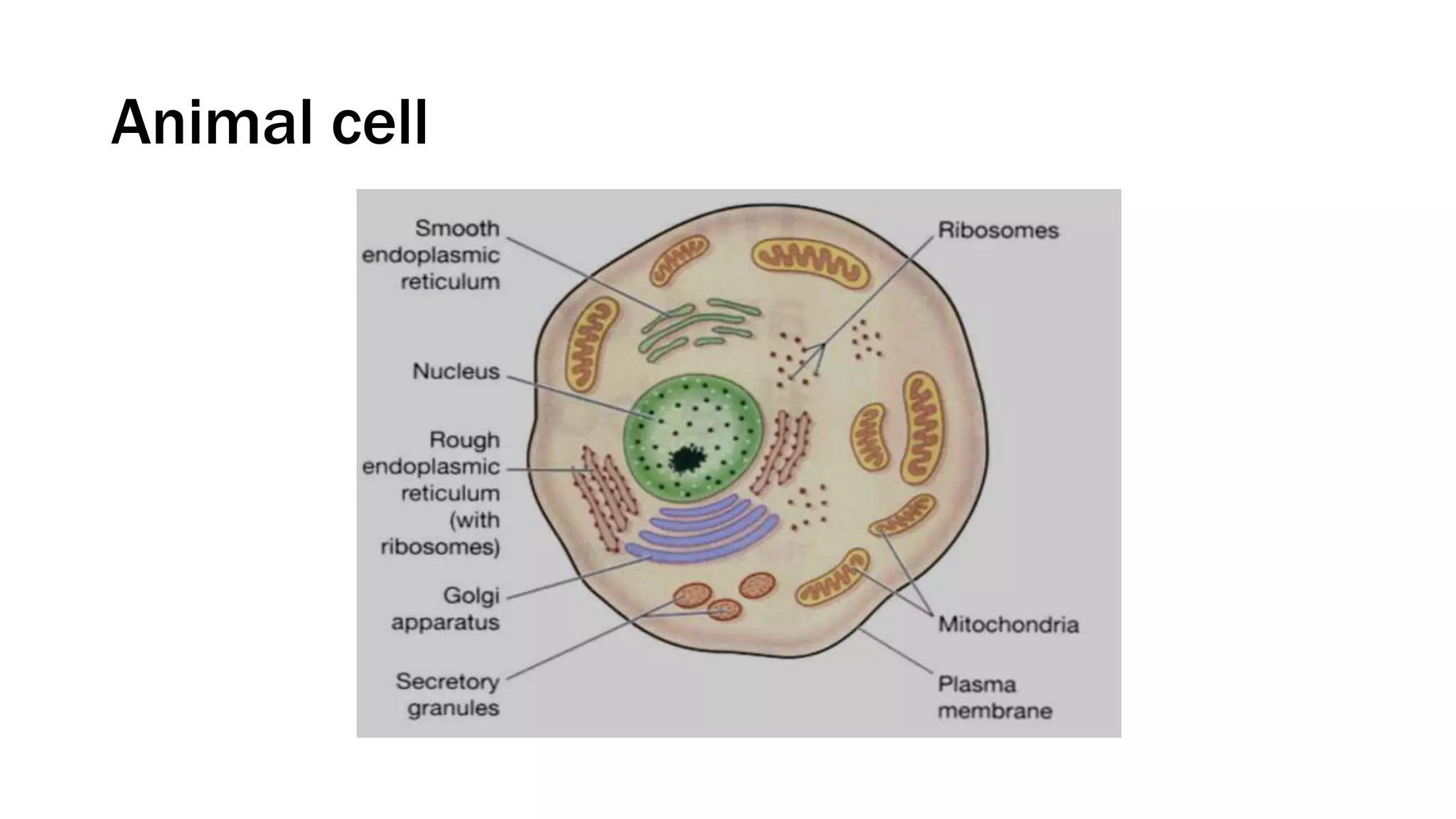
Animal cell
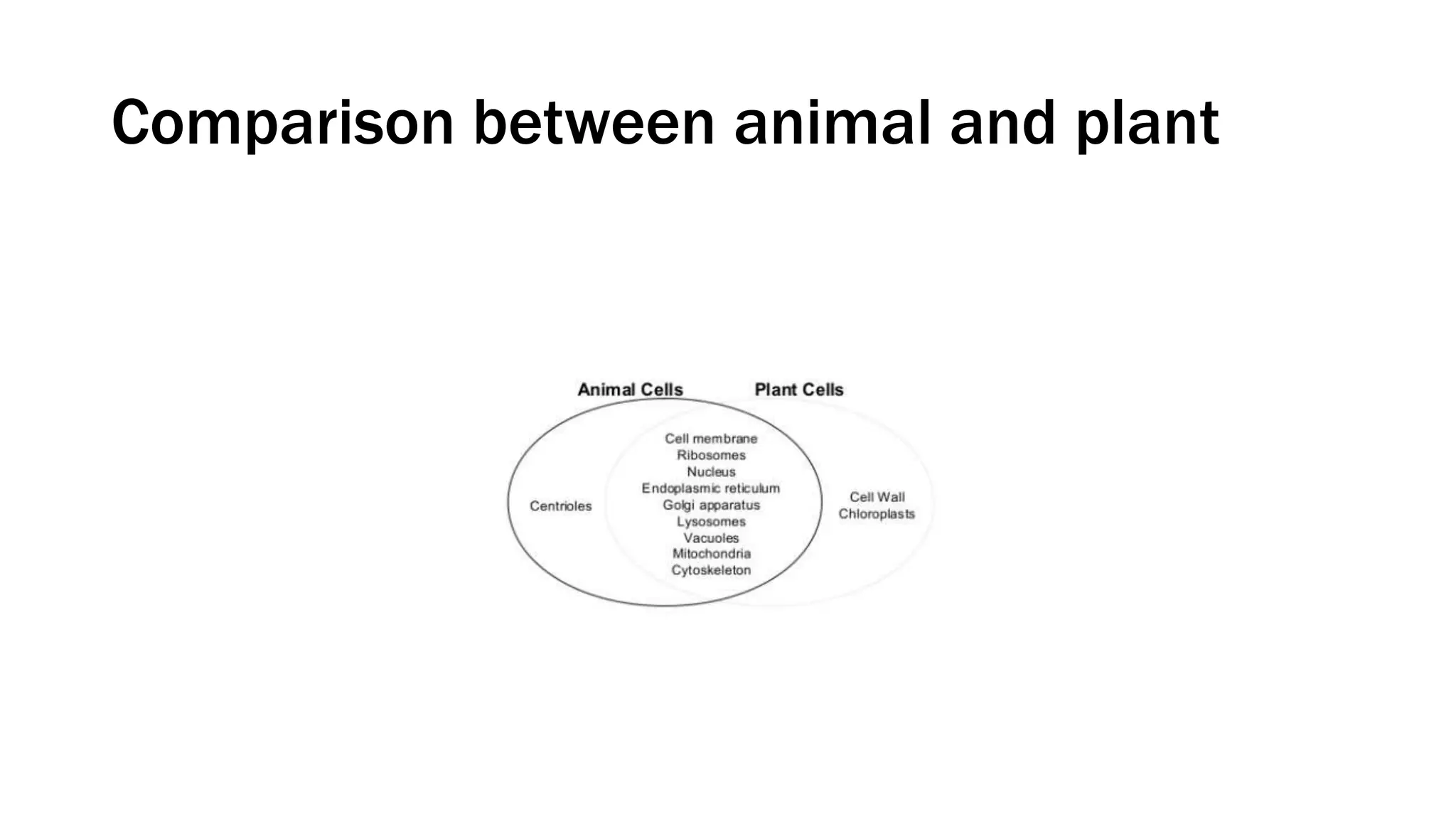
Comparison between animal and plant
2. Subcellular organelles
(eukaryotes)
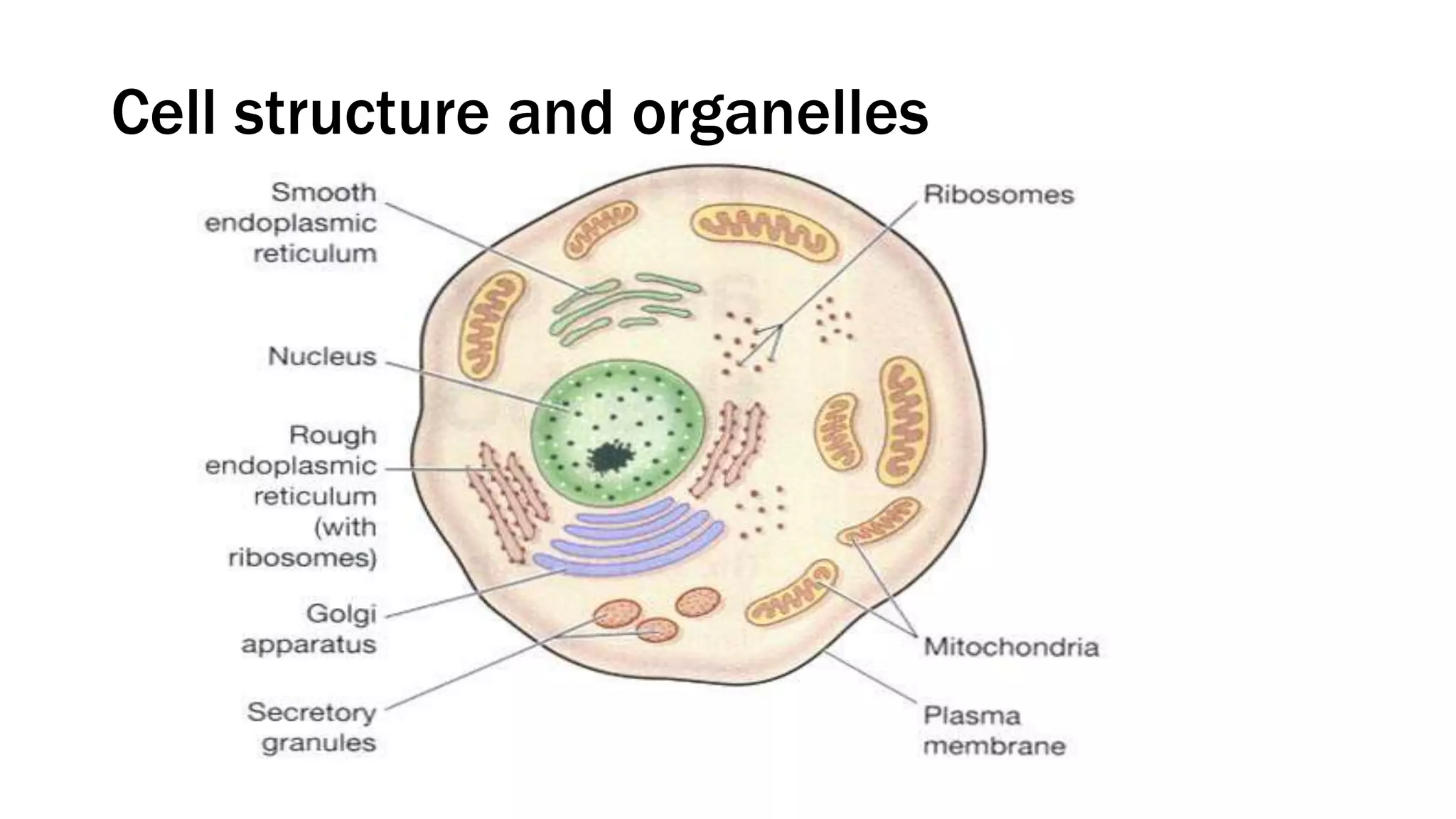
• A cell consists of a plasma membrane inside which there are a
number of organelles floating in a watery fluid called cytosol.
• Organelles are small structures with highly specialised functions,
many of which are contained within a membrane.
• They include: the nucleus, mitochondria, ribosomes, endoplasmic
reticulum,Golgi apparatus, centrioles, lysosomes, microfilaments and
Cell structure and organelles
Plasma membrane
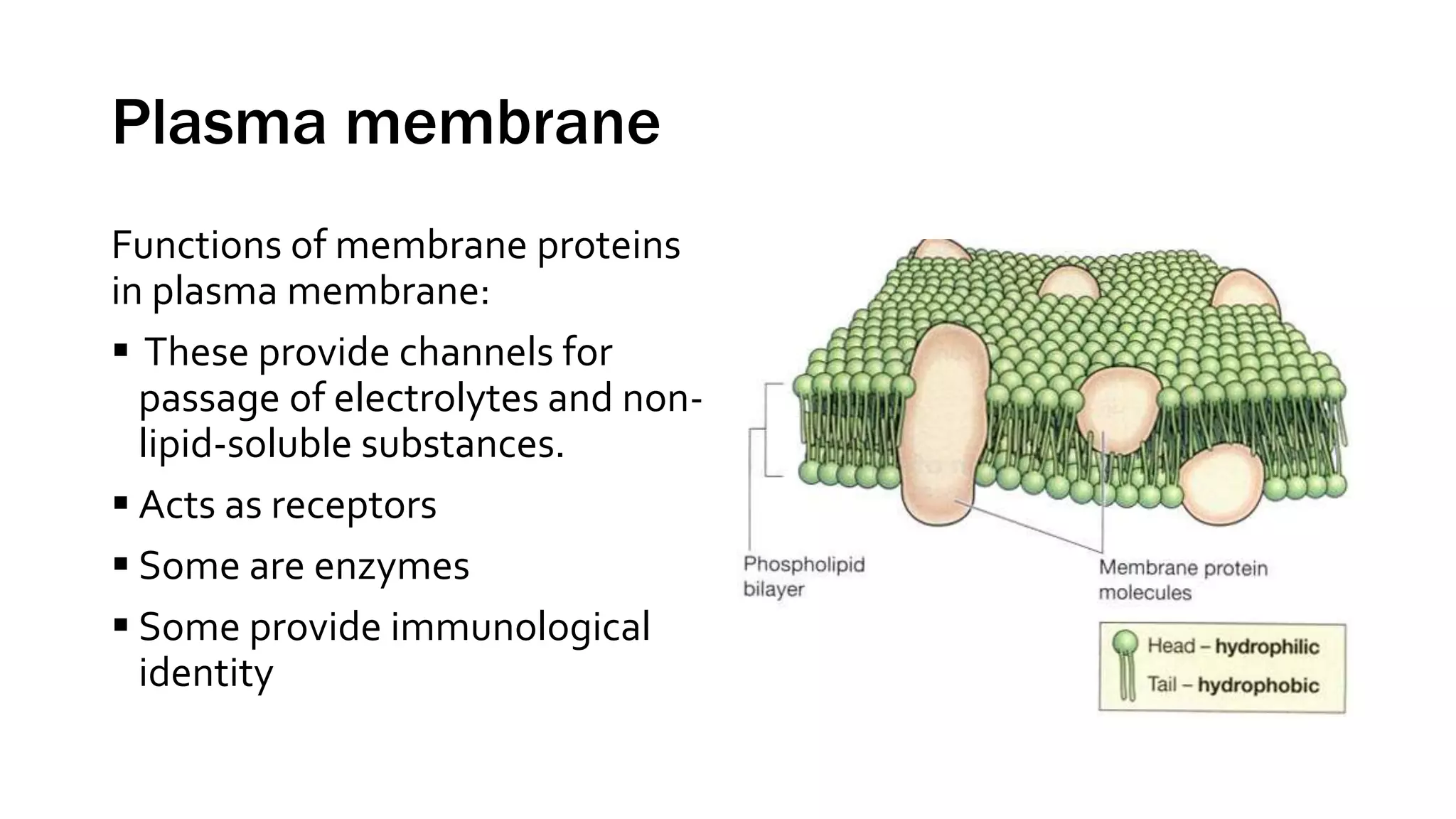
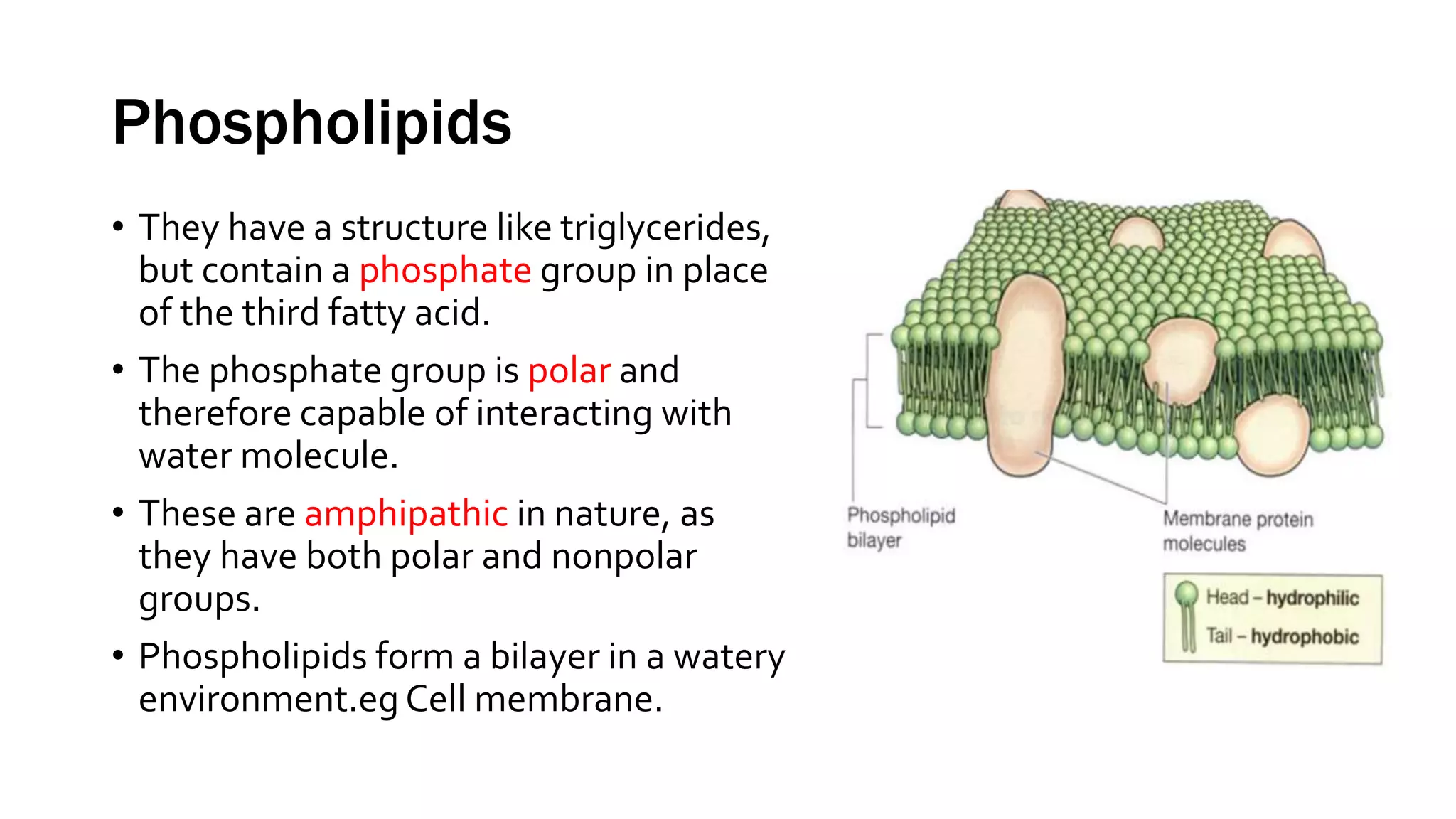
• It consist of two layers of phospholipids (fatty substances) with some
protein molecules embedded in them.
• The phospholipid molecules have a head which is hydrophilic and a
tail which has no charge and is hydrophobic.
• The phospholipid bilayer is arranged like a sandwich
• These differences influence the transfer of substances across the
membrane.
Plasma membrane
Functions of membrane proteins
in plasma membrane:
 These provide channels for
passage of electrolytes and non-
lipid-soluble substances.
 Acts as receptors
 Some are enzymes
 Some provide immunological
identity
Nucleus
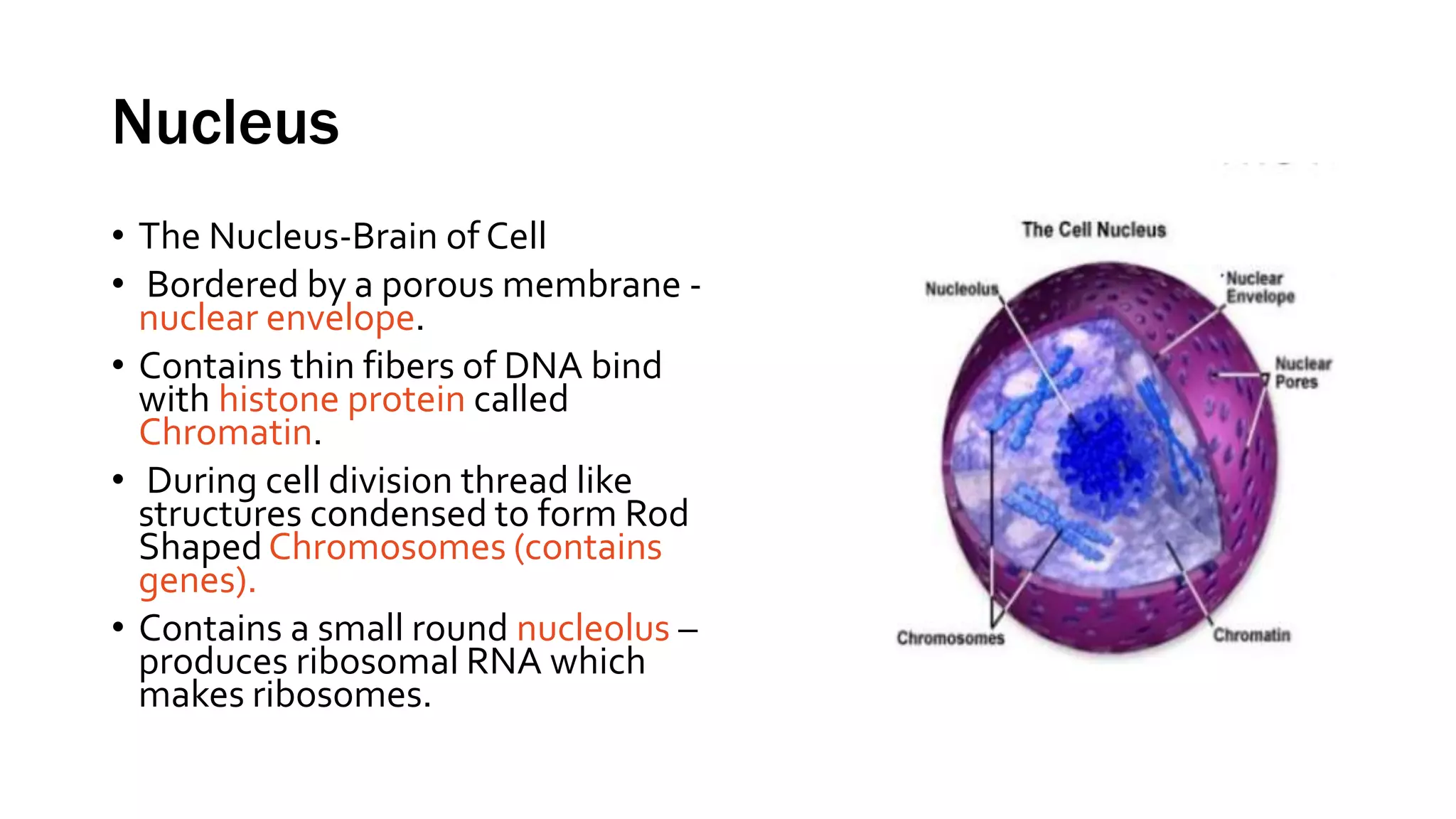
• The Nucleus-Brain of Cell
• Bordered by a porous membrane -
nuclear envelope.
• Contains thin fibers of DNA bind
with histone protein called
Chromatin.
• During cell division thread like
structures condensed to form Rod
ShapedChromosomes (contains
genes).
• Contains a small round nucleolus –
produces ribosomal RNA which
makes ribosomes.
Nucleoli
• The nuclei of most cells contain one or more highly staining
structures called nucleoli.
• it is simply an accumulation of large amounts of RNA and
proteins of the types found in ribosomes.
•The nucleolus becomes considerably enlarged when the cell
is actively synthesizing proteins.
Functions of nucleus:
• It contains the body's genetic material, which directs the
activities of the cell and synthesis all the proteins required.
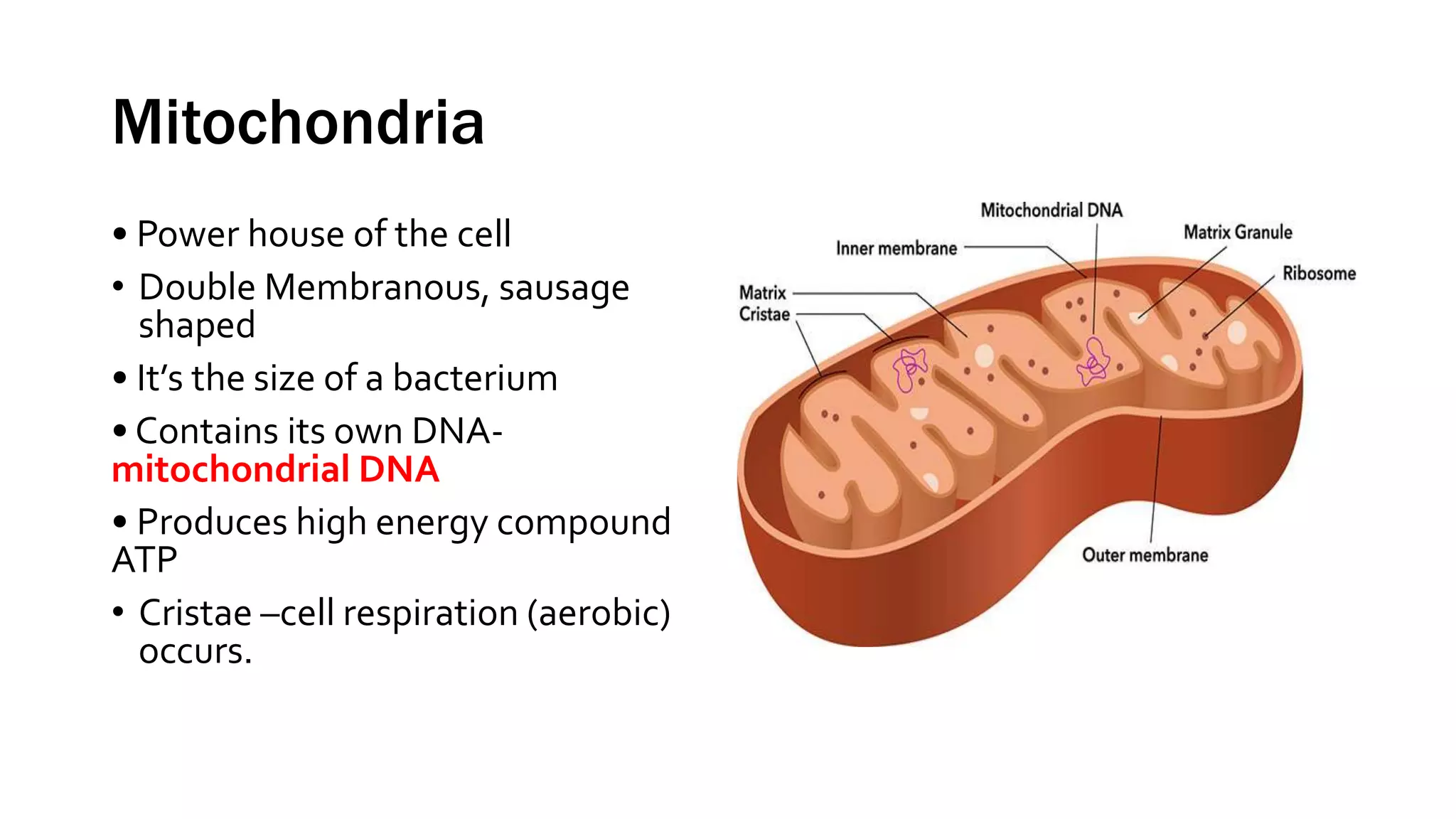
Mitochondria
• Power house of the cell
• Double Membranous, sausage
shaped
• It’s the size of a bacterium
• Contains its own DNA-
mitochondrial DNA
• Produces high energy compound
ATP
• Cristae –cell respiration (aerobic)
occurs.
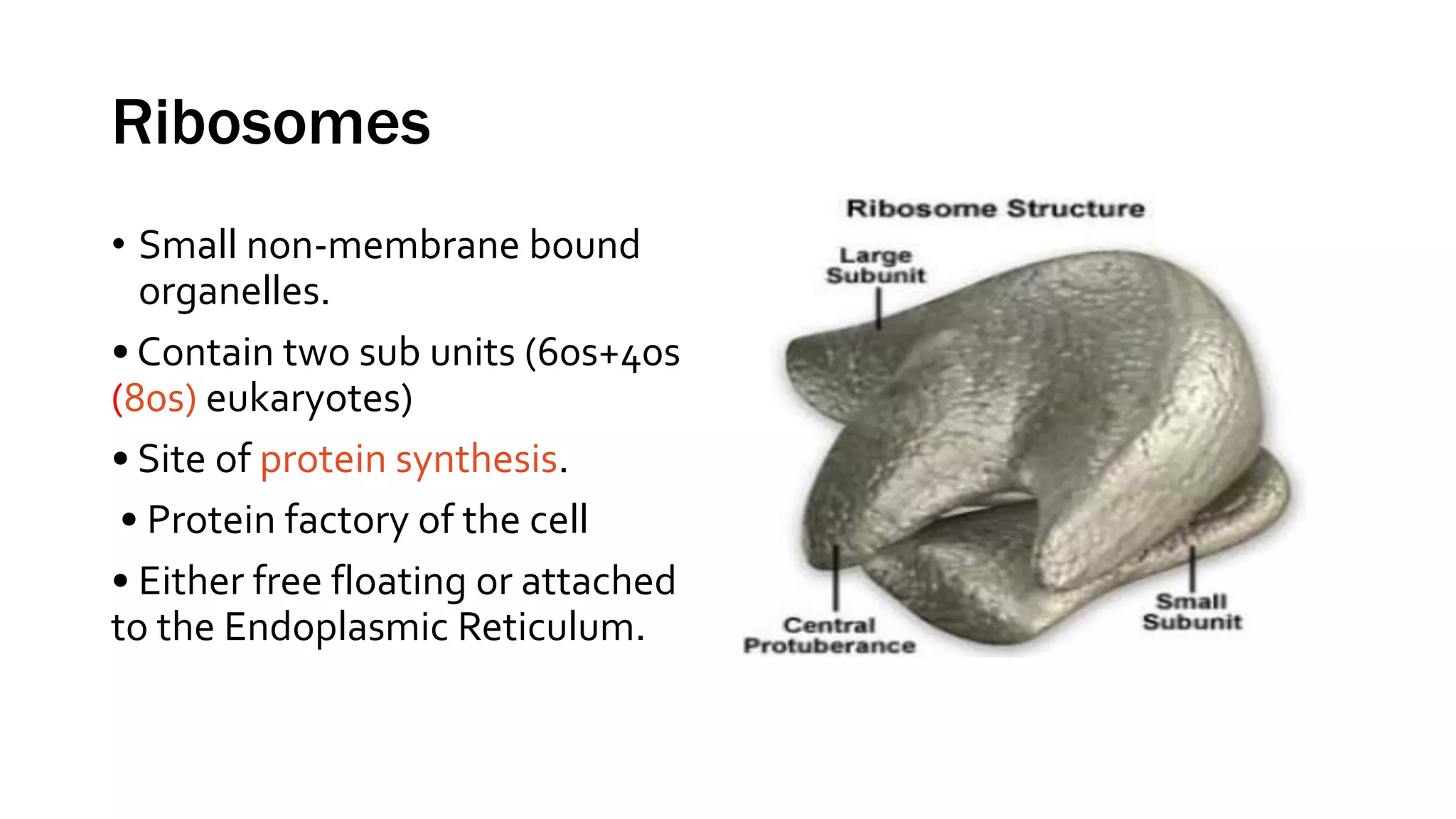
Ribosomes
• Small non-membrane bound
organelles.
• Contain two sub units (60s+40s
(80s) eukaryotes)
• Site of protein synthesis.
• Protein factory of the cell
• Either free floating or attached
to the Endoplasmic Reticulum.
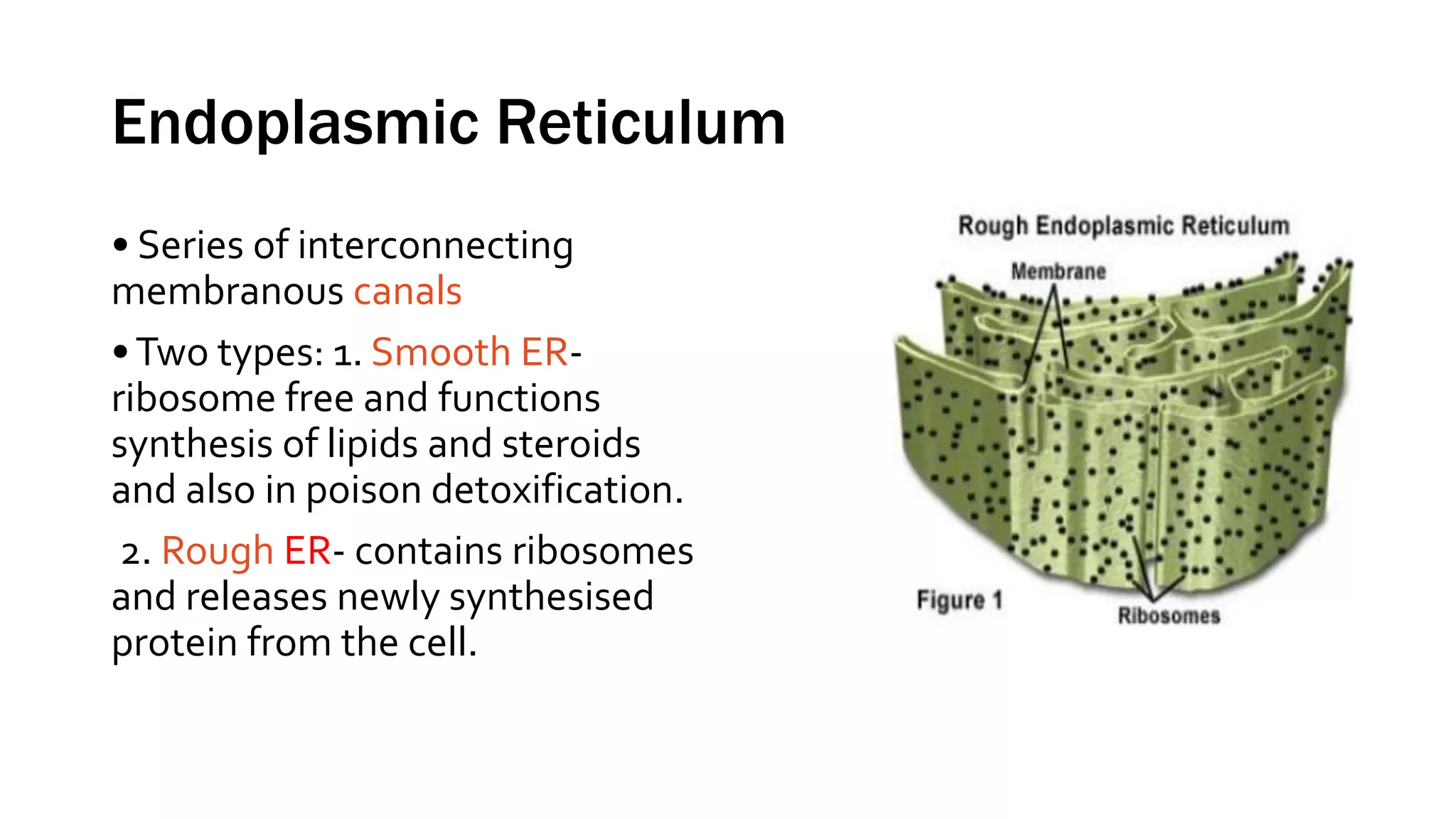
Endoplasmic Reticulum
• Series of interconnecting
membranous canals
•Two types: 1. Smooth ER-
ribosome free and functions
synthesis of lipids and steroids
and also in poison detoxification.
2. Rough ER- contains ribosomes
and releases newly synthesised
protein from the cell.
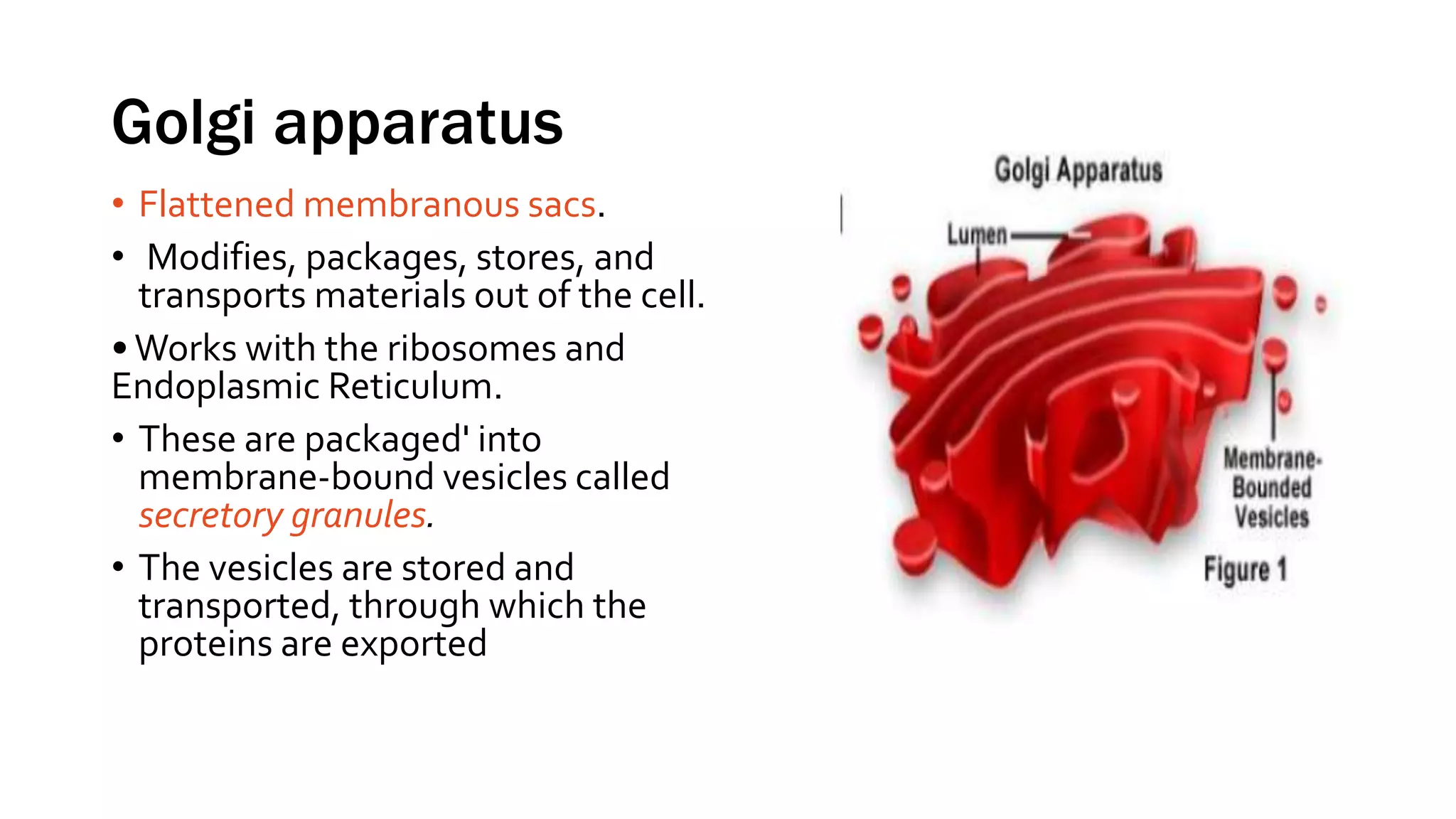
Golgi apparatus
• Flattened membranous sacs.
• Modifies, packages, stores, and
transports materials out of the cell.
•Works with the ribosomes and
Endoplasmic Reticulum.
• These are packaged' into
membrane-bound vesicles called
secretory granules.
• The vesicles are stored and
transported, through which the
proteins are exported
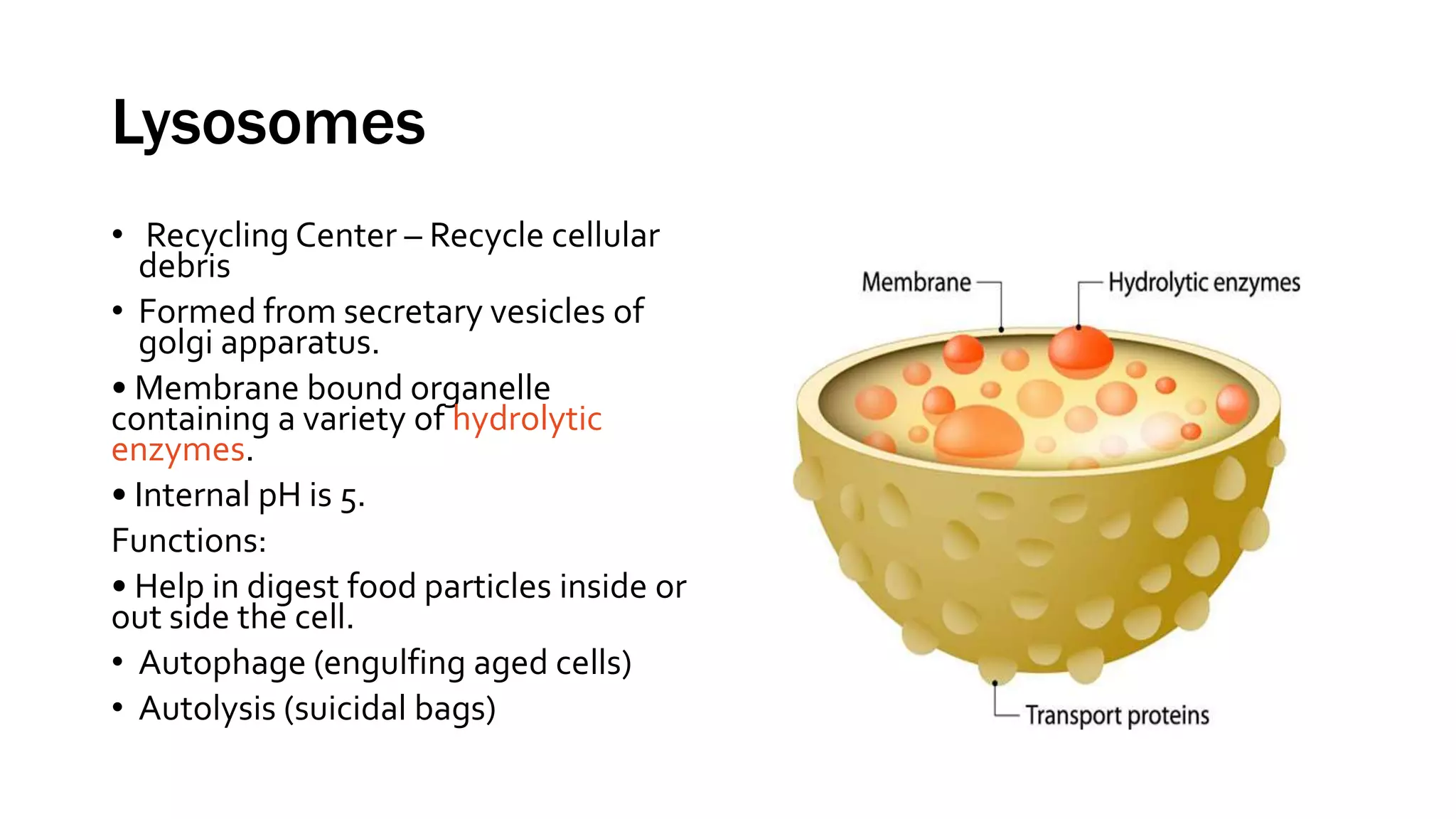
Lysosomes
• Recycling Center – Recycle cellular
debris
• Formed from secretary vesicles of
golgi apparatus.
• Membrane bound organelle
containing a variety of hydrolytic
enzymes.
• Internal pH is 5.
Functions:
• Help in digest food particles inside or
out side the cell.
• Autophage (engulfing aged cells)
• Autolysis (suicidal bags)
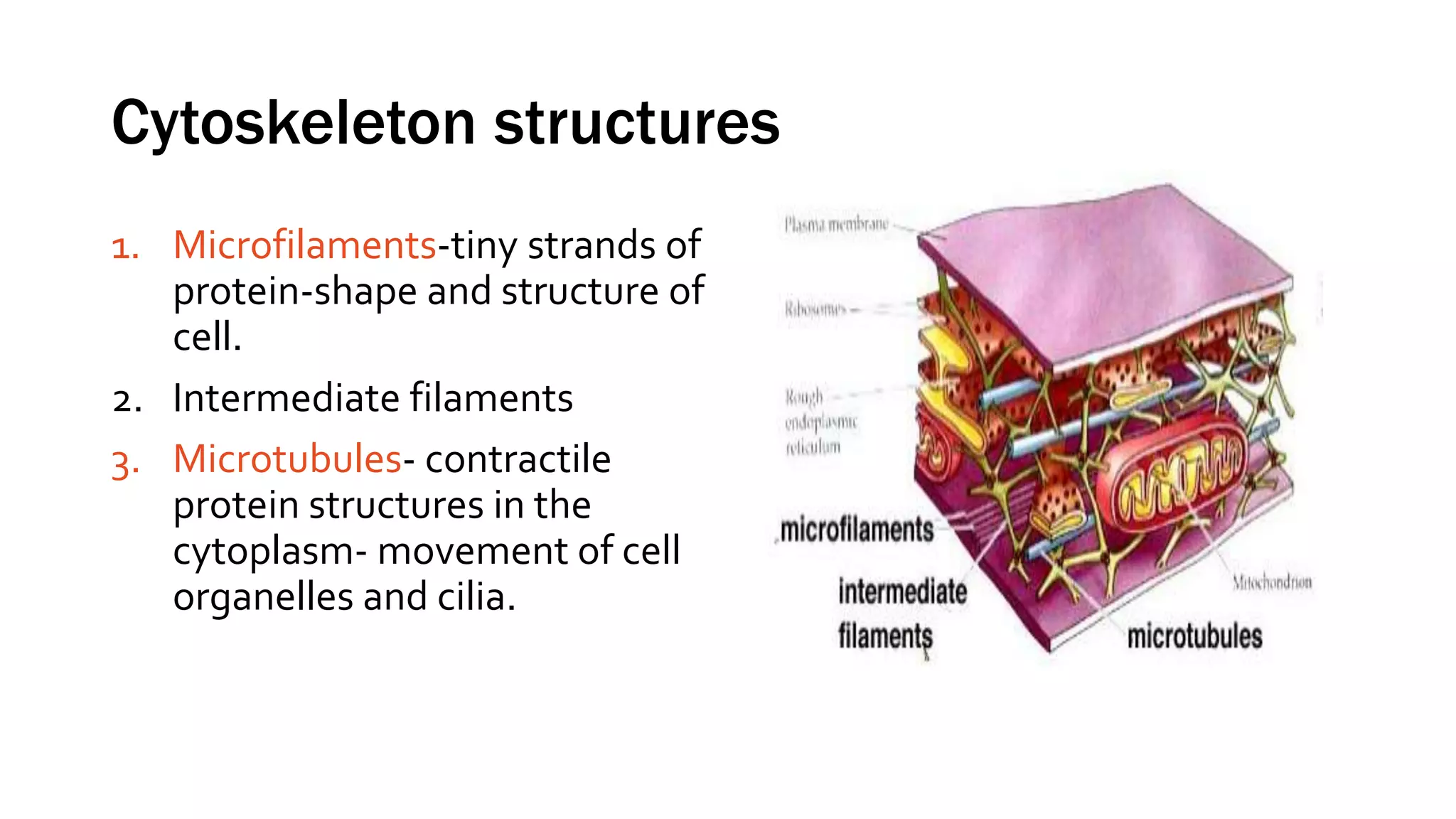
Cytoskeleton structures
1. Microfilaments-tiny strands of
protein-shape and structure of
cell.
2. Intermediate filaments
3. Microtubules- contractile
protein structures in the
cytoplasm- movement of cell
organelles and cilia.
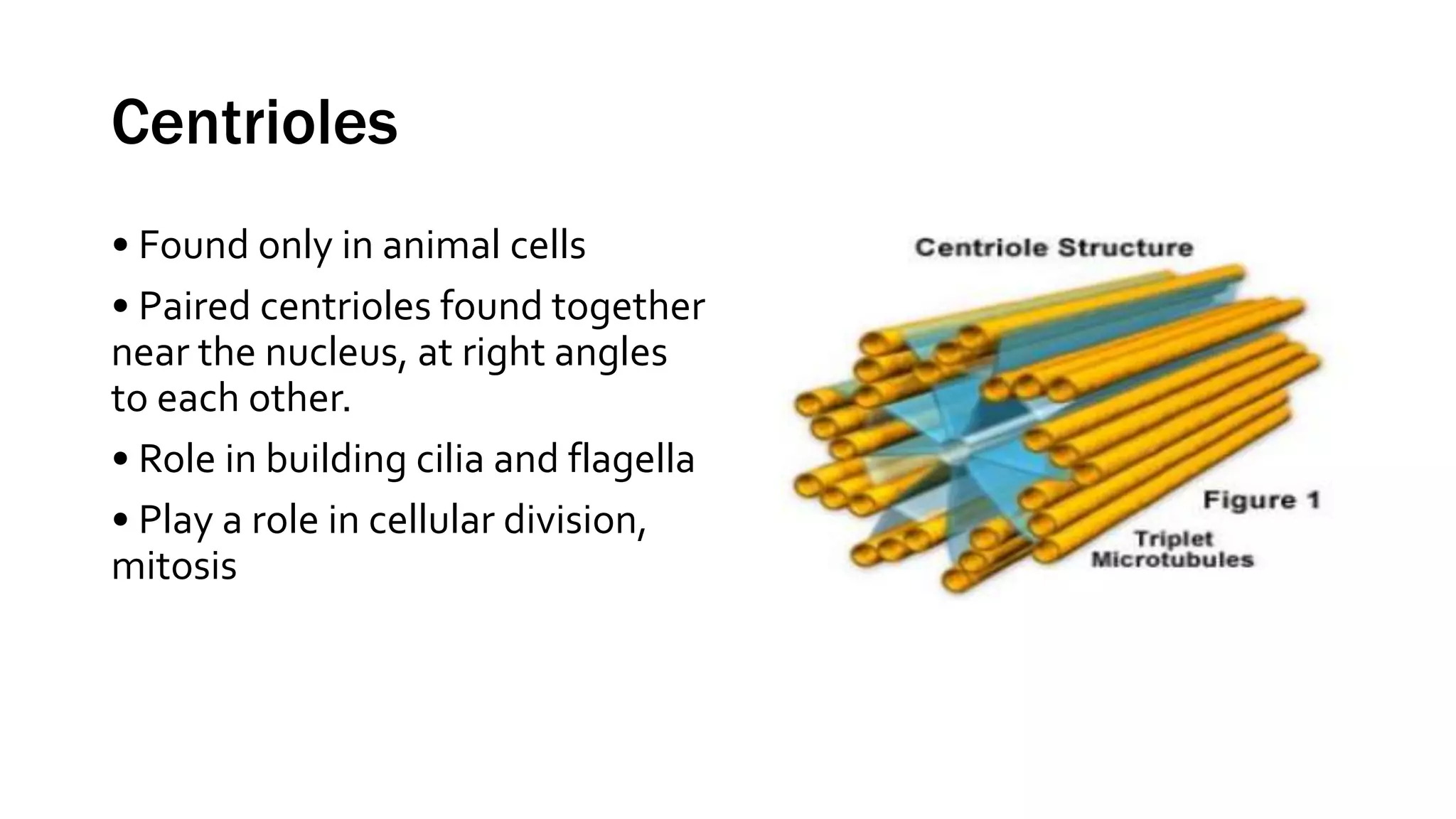
Centrioles
• Found only in animal cells
• Paired centrioles found together
near the nucleus, at right angles
to each other.
• Role in building cilia and flagella
• Play a role in cellular division,
mitosis
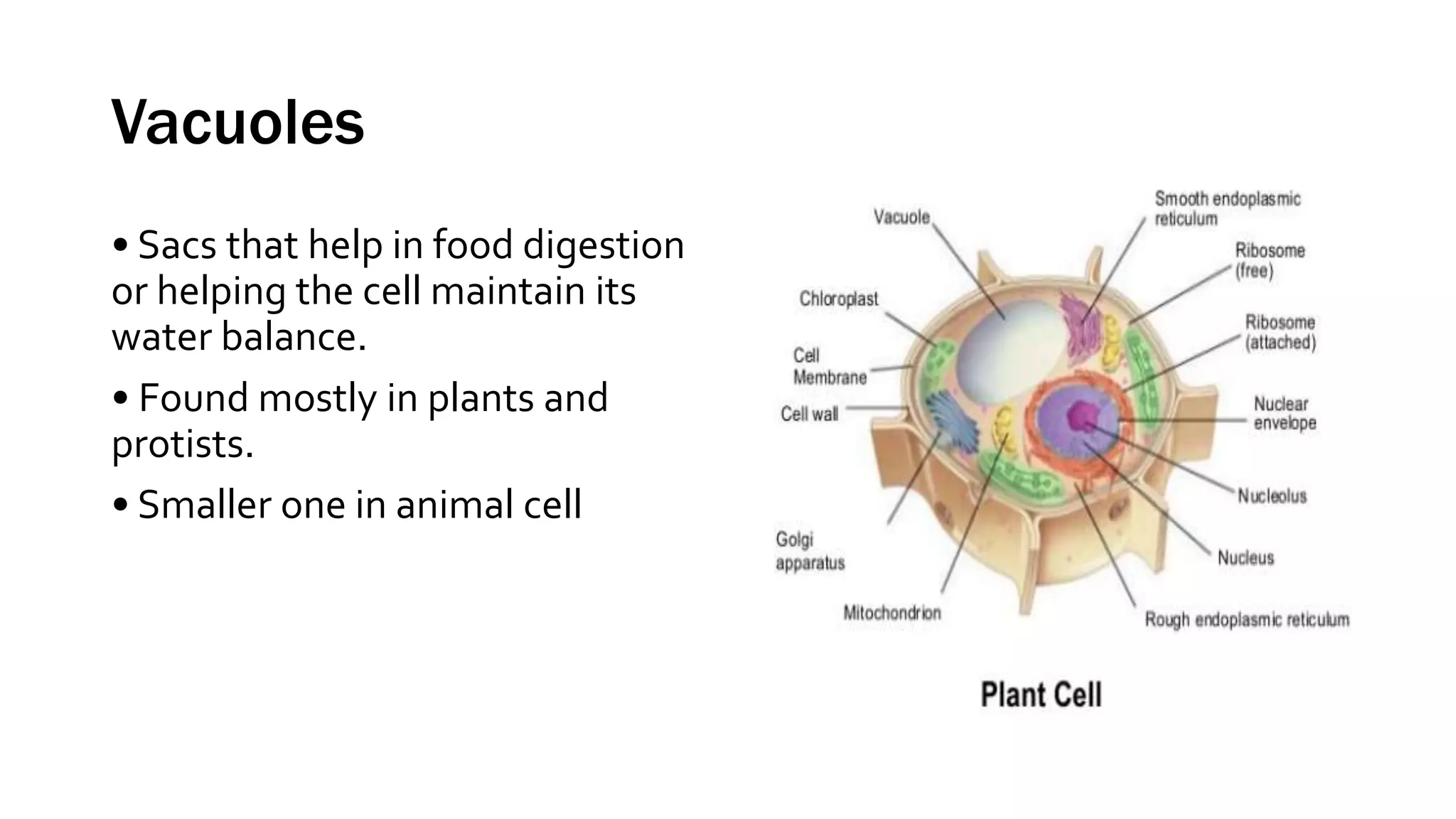
Vacuoles
• Sacs that help in food digestion
or helping the cell maintain its
water balance.
• Found mostly in plants and
protists.
• Smaller one in animal cell
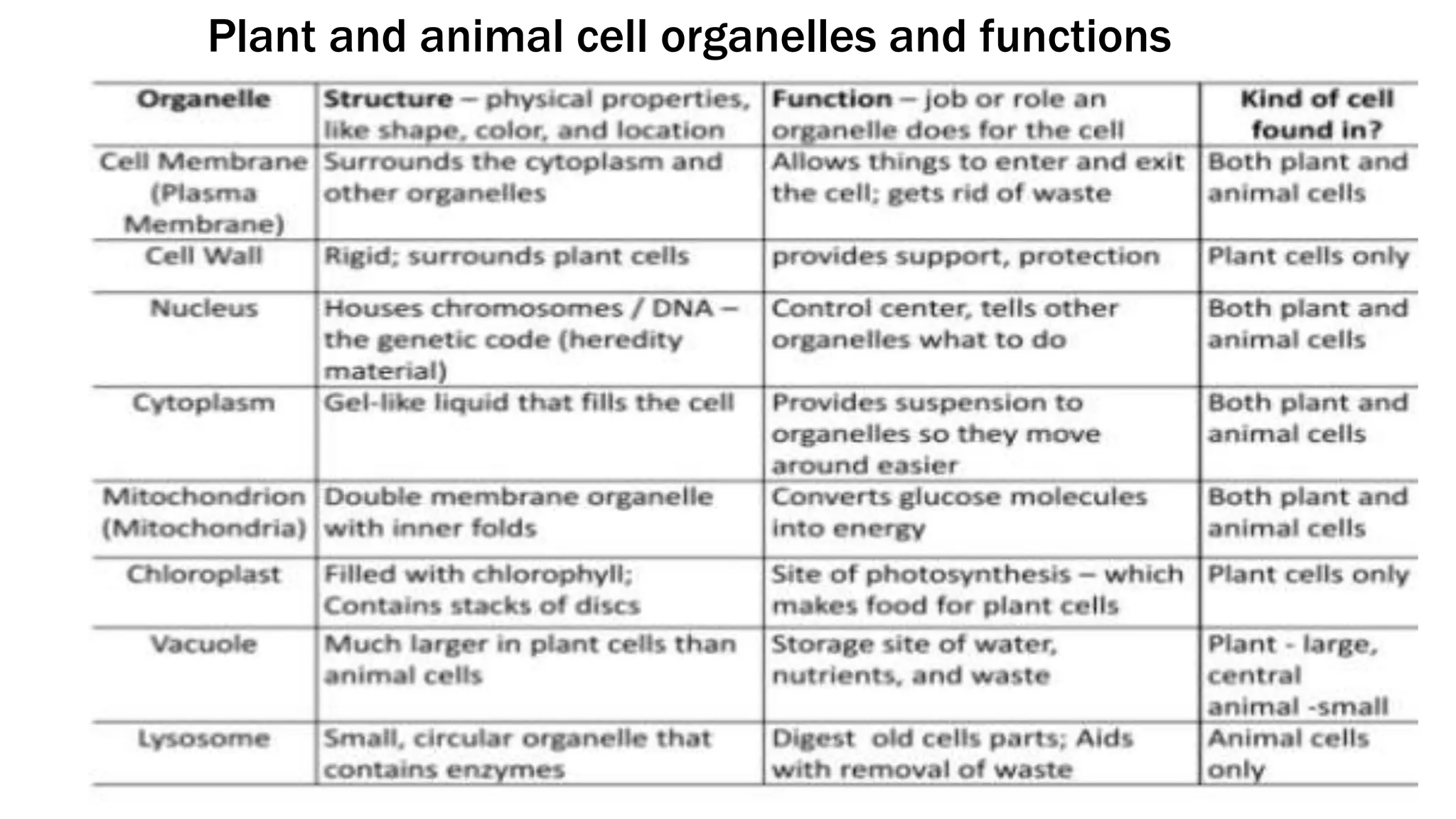
Plant and animal cell organelles and functions
3. Macromolecules and
macromolecular assemblies
The FOUR Classes of Large Biomolecules or macromolecules present
in all cells.
• Carbohydrates
• Lipids
• Protein
• Nucleic Acids
• Macromolecules are large molecules composed of thousands of
covalently bonded atoms. (carbon and hydrogen bonds)
• Have different Molecular structure and functions.
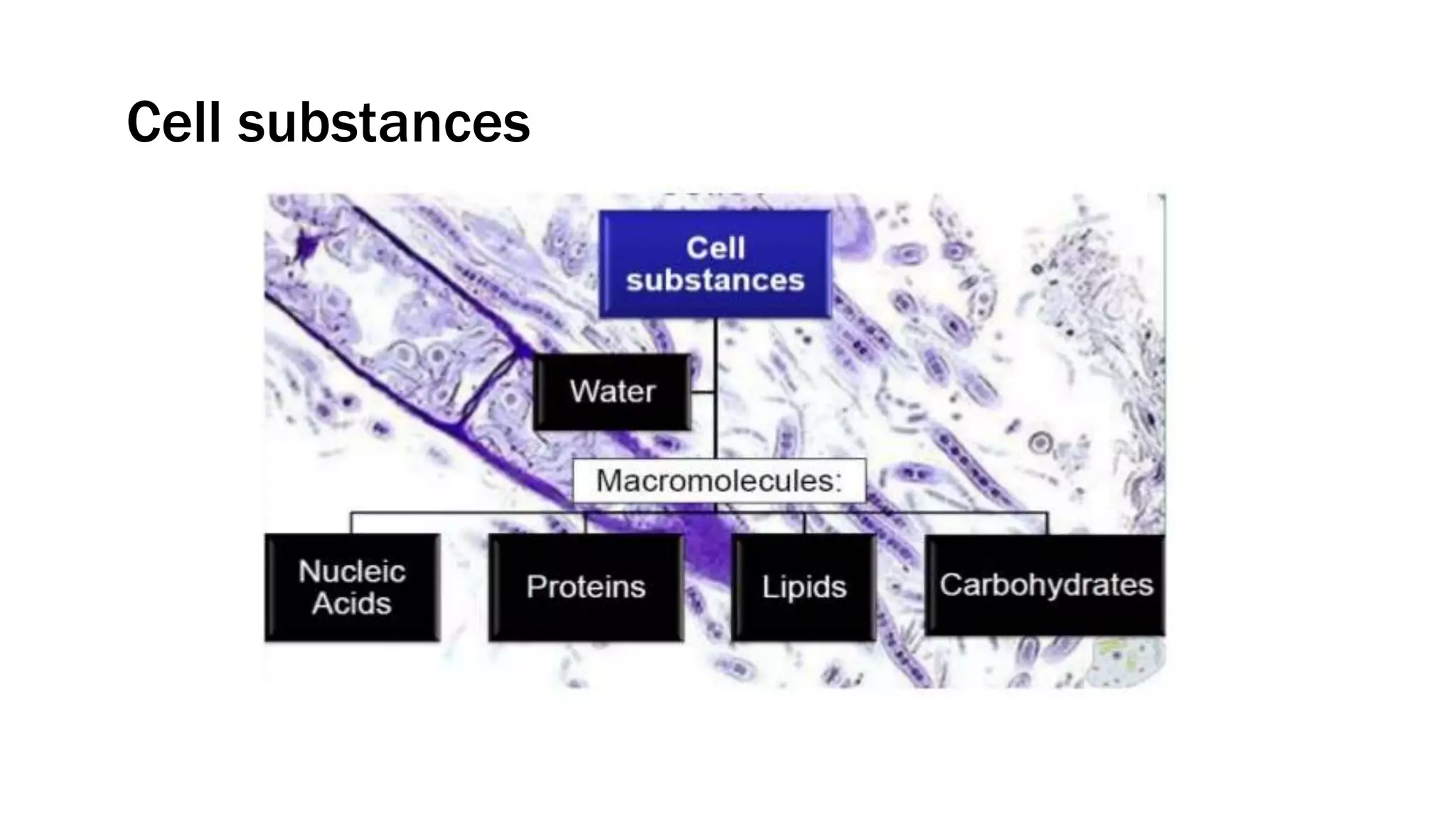
Cell substances
Macromolecles and their importance
Carbohydrates
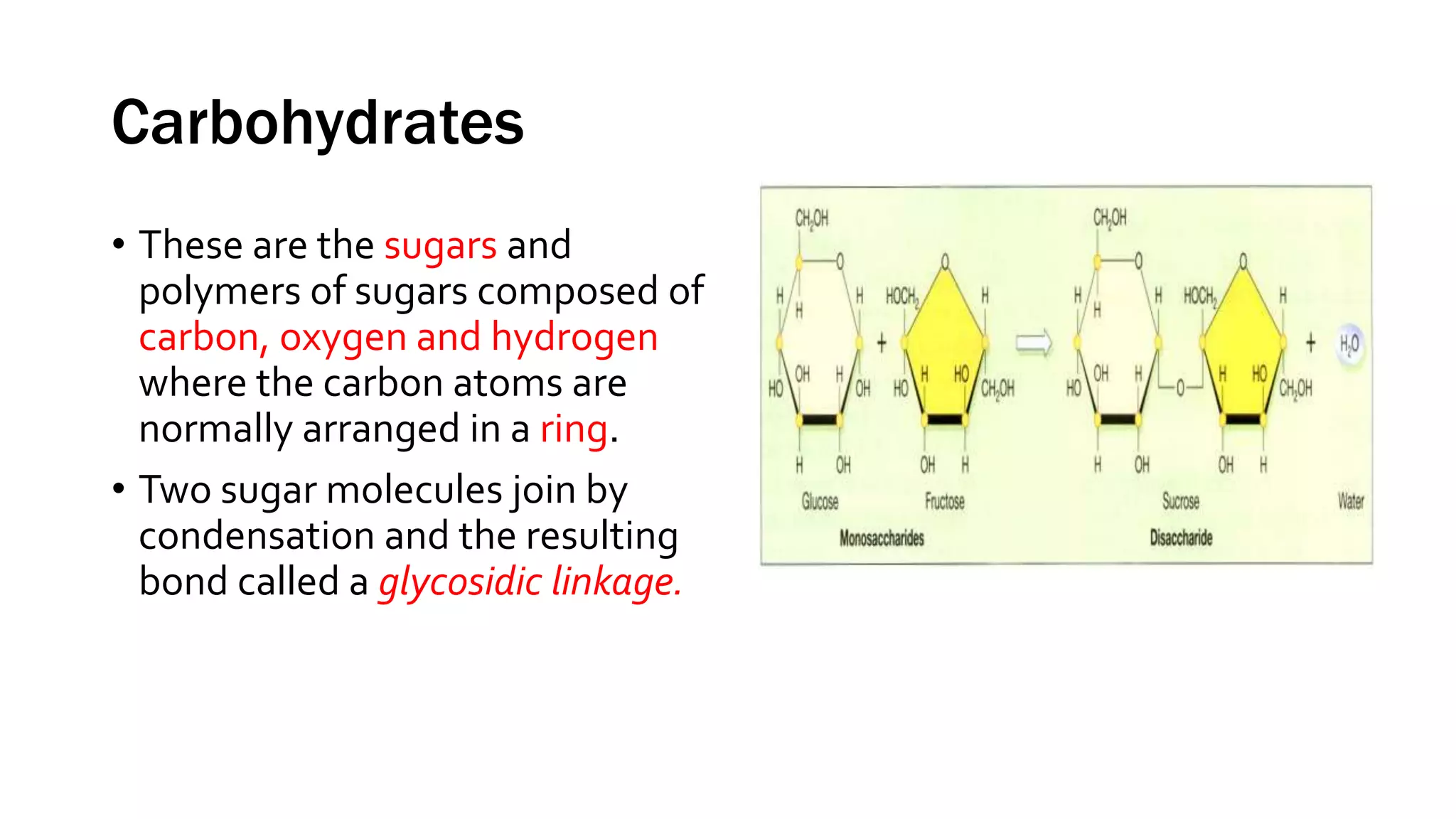
• These are the sugars and
polymers of sugars composed of
carbon, oxygen and hydrogen
where the carbon atoms are
normally arranged in a ring.
• Two sugar molecules join by
condensation and the resulting
bond called a glycosidic linkage.
Functions of carbohydrates
• Function mainly as a source of chemical energy for generating ATP
needed to drive metabolic reactions in living cells.
• Provides a form of energy storage, e.g. glycogen
• Forms an integral part of the structure of DNA (deoxyribose) and
RNA (ribose)
• Can act as receptors on the cell surface, allowing the cell to recognise
other molecules and cells
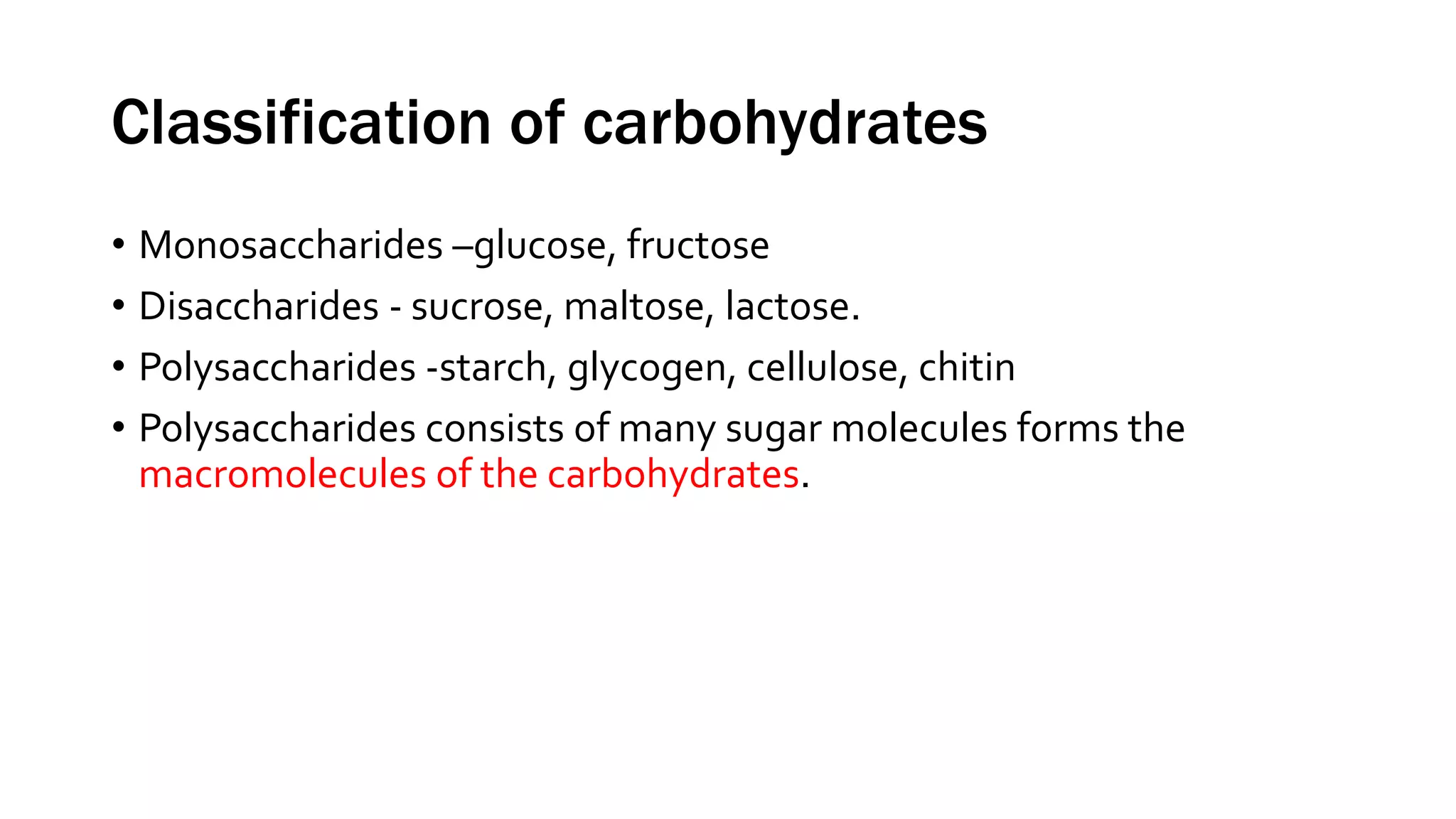
Classification of carbohydrates
• Monosaccharides –glucose, fructose
• Disaccharides - sucrose, maltose, lactose.
• Polysaccharides -starch, glycogen, cellulose, chitin
• Polysaccharides consists of many sugar molecules forms the
macromolecules of the carbohydrates.
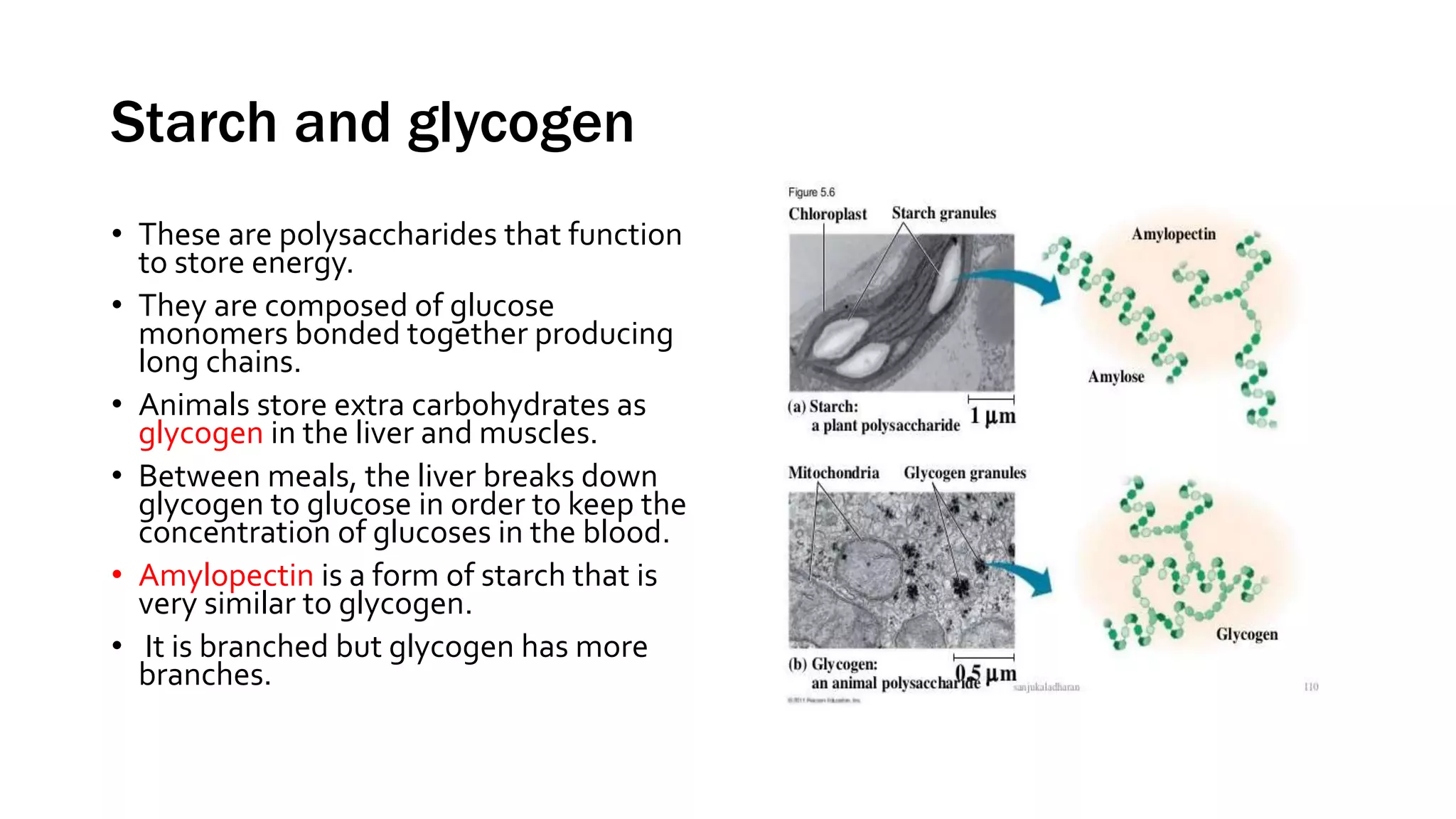
Starch and glycogen
• These are polysaccharides that function
to store energy.
• They are composed of glucose
monomers bonded together producing
long chains.
• Animals store extra carbohydrates as
glycogen in the liver and muscles.
• Between meals, the liver breaks down
glycogen to glucose in order to keep the
concentration of glucoses in the blood.
• Amylopectin is a form of starch that is
very similar to glycogen.
• It is branched but glycogen has more
branches.
Cellulose and chitin
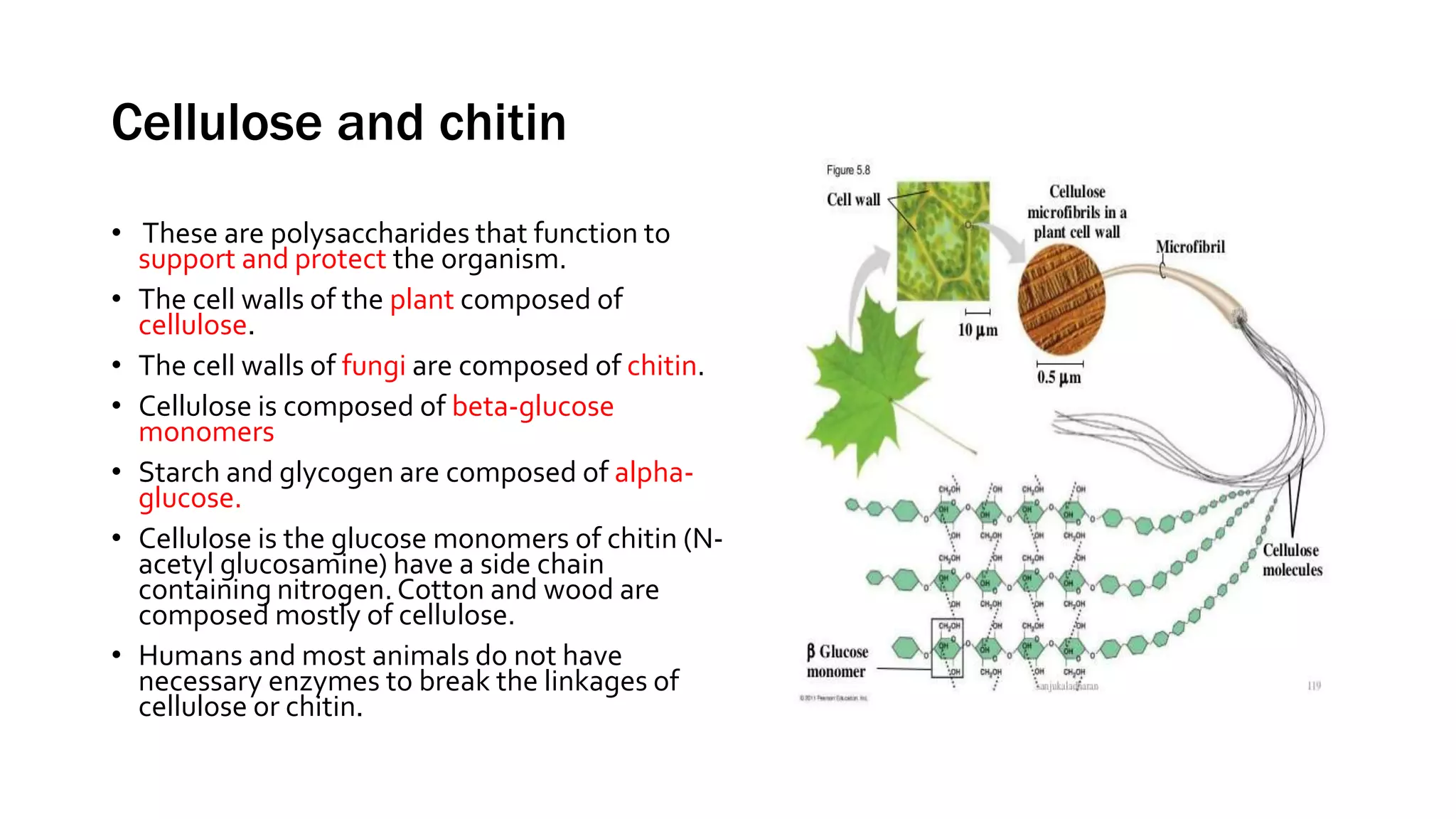
• These are polysaccharides that function to
support and protect the organism.
• The cell walls of the plant composed of
cellulose.
• The cell walls of fungi are composed of chitin.
• Cellulose is composed of beta-glucose
monomers
• Starch and glycogen are composed of alpha-
glucose.
• Cellulose is the glucose monomers of chitin (N-
acetyl glucosamine) have a side chain
containing nitrogen. Cotton and wood are
composed mostly of cellulose.
• Humans and most animals do not have
necessary enzymes to break the linkages of
cellulose or chitin.
Lipids
• Lipids are made up of carbon, hydrogen
and oxygen atoms are insoluble in water
but soluble in nonpolar solvents.
• Lipids make 18-25% of body mass in lean
adults.
• Triglycerides (fat): A molecule of fat
fat consists of three fatty acids, each
linked to a molecule of glycerol.
• They are used in the body for: insulation,
protection of body parts (cell membrane)
and energy storage.
Types of lipids
• Triglycerides (fats and oils)
• Phospholipids
• Steroids
• Eicosanoids (Prostaglandins)
• A variety of other lipids including fat-soluble vitamins (A,D,E and K)
and lipoproteins.
Fats and oils (Triglycerides)
• These consist of two moeities, a single glycerol molecule and three
fatty acid molecules.
• Fatty acids have a long hydrocarbon chain with a carboxyl (acid)
group.
• Hydrohobic molecules
• The chains usually contain 16 to 18 carbons.
• Glycerol contains 3 carbons and 3 hydroxyl groups.
Types of fats
1. Saturated fat- Palmitic acid (C15H31 COOH), stearic acid
(C15H35COOH), butter, cocoa butter, coconut oil, meats, etc.
2. Unsaturated fats
• Monounsaturated fats- Eg- olive oil, peanut oil.These fats are
decrease the risk of heart disease.
• Poly unsaturated fats- Eg- corn oil, sunflower oil, soybean oil and
fatty fish.
Phospholipids
• They have a structure like triglycerides,
but contain a phosphate group in place
of the third fatty acid.
• The phosphate group is polar and
therefore capable of interacting with
water molecule.
• These are amphipathic in nature, as
they have both polar and nonpolar
groups.
• Phospholipids form a bilayer in a watery
environment.eg Cell membrane.
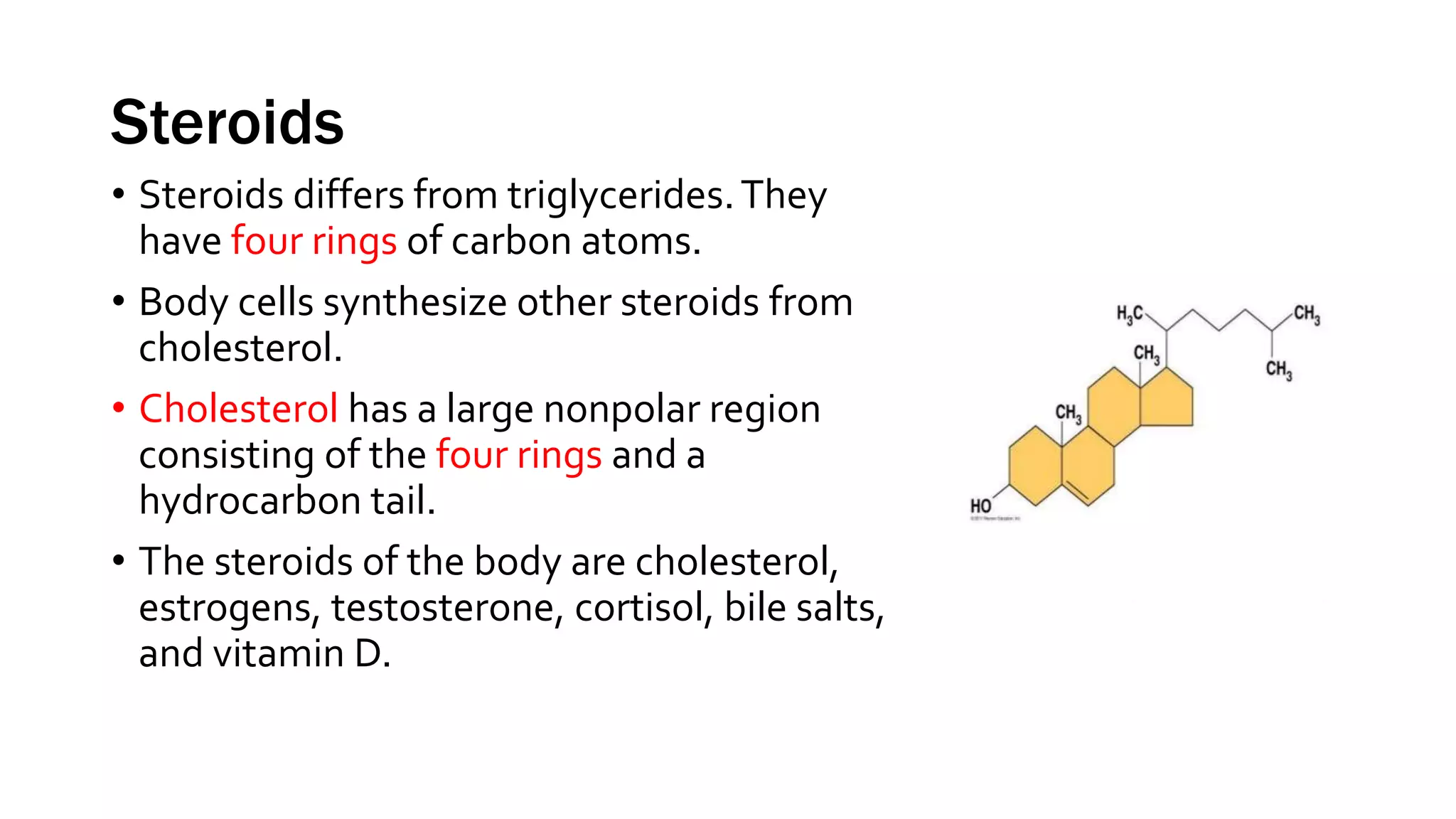
Steroids
• Steroids differs from triglycerides.They
have four rings of carbon atoms.
• Body cells synthesize other steroids from
cholesterol.
• Cholesterol has a large nonpolar region
consisting of the four rings and a
hydrocarbon tail.
• The steroids of the body are cholesterol,
estrogens, testosterone, cortisol, bile salts,
and vitamin D.
Important functions of the steroids
1.Cholesterol is needed for cell membrane structure.
2.Estrogen and testosterone are required for regulating sexual
functions.
3.Cortisol is needed for maintaining the stress of body.
4.Bile salts are needed for lipid digestion and absorption.
5.Vitamin D is related to bone growth.
Proteins
• Proteins are large molecules that contain hydrogen, oxygen and
nitrogen. Some proteins also contain sulfur.
• Proteins have complex structure.The proteins make up 12-18% of
body mass in a lean adult.
• Proteins have many roles in the body and are largely responsible for
the structure of the body tissues and functioning of body eg. Enzymes,
hormones (insulin), antibodies and carrier molecules (haemoglobin)
etc.,
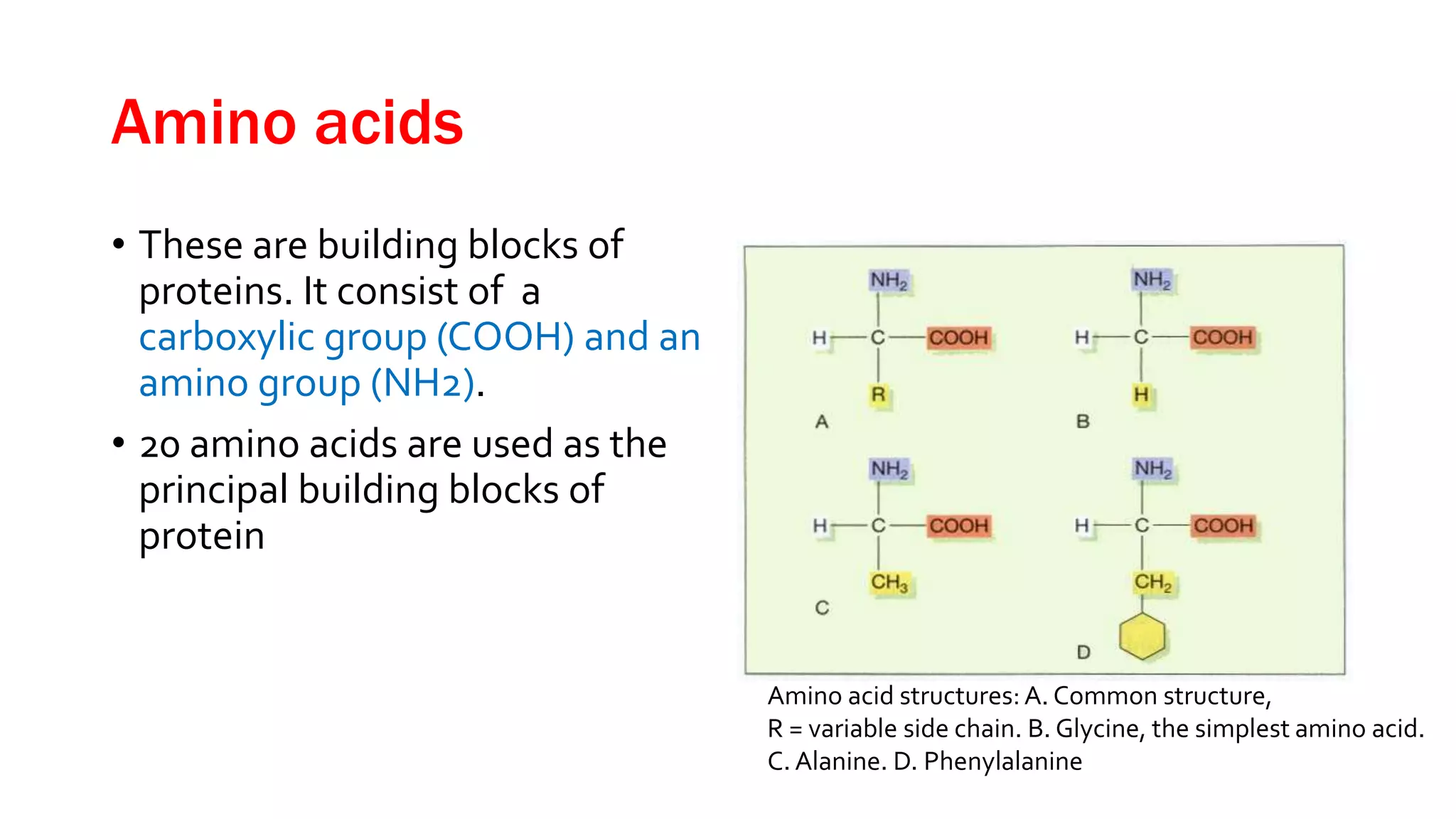
Amino acids
• These are building blocks of
proteins. It consist of a
carboxylic group (COOH) and an
amino group (NH2).
• 20 amino acids are used as the
principal building blocks of
protein
Amino acid structures:A. Common structure,
R = variable side chain. B. Glycine, the simplest amino acid.
C. Alanine. D. Phenylalanine
Classification of amino acids
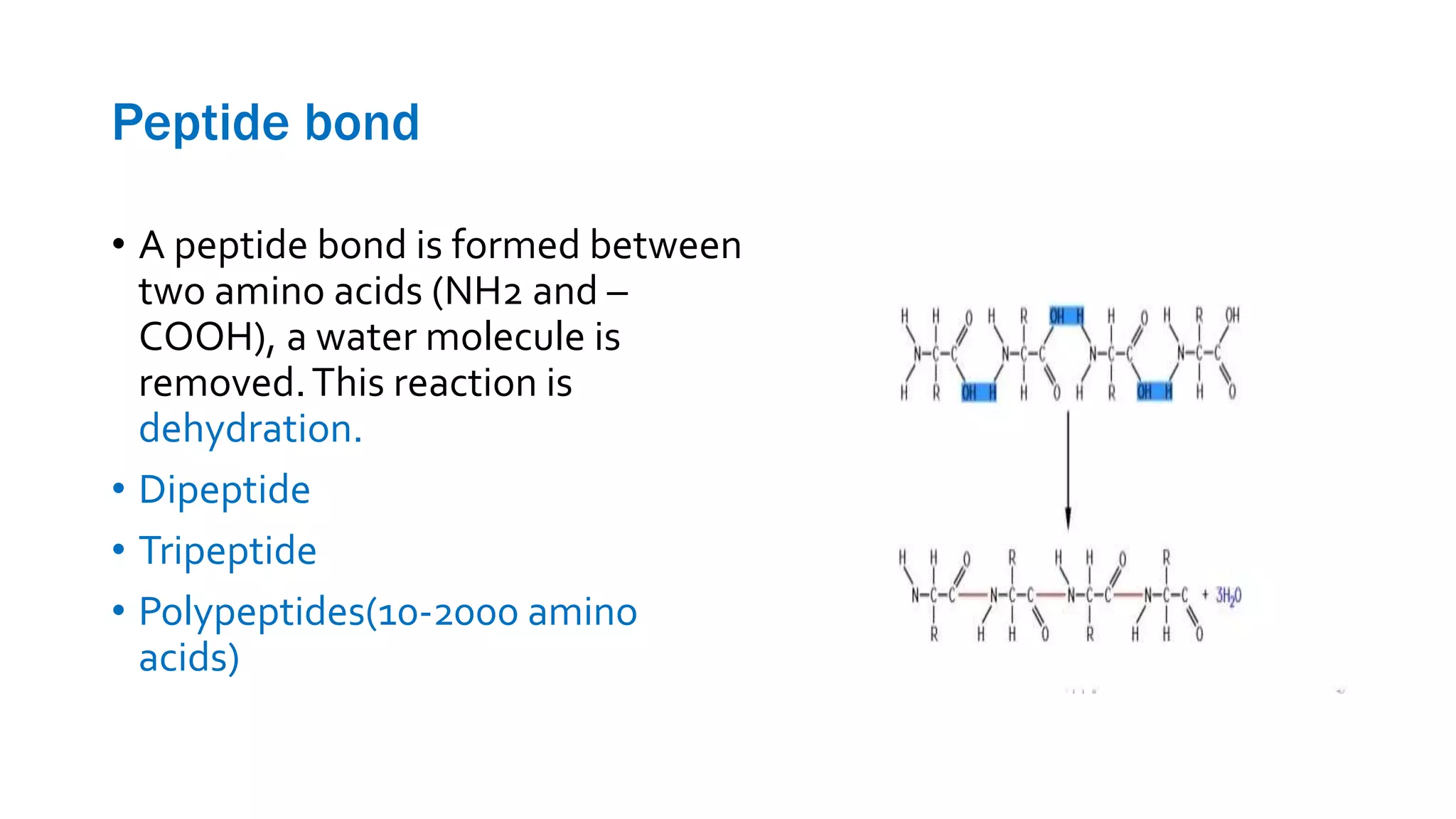
Peptide bond
• A peptide bond is formed between
two amino acids (NH2 and –
COOH), a water molecule is
removed.This reaction is
dehydration.
• Dipeptide
• Tripeptide
• Polypeptides(10-2000 amino
acids)
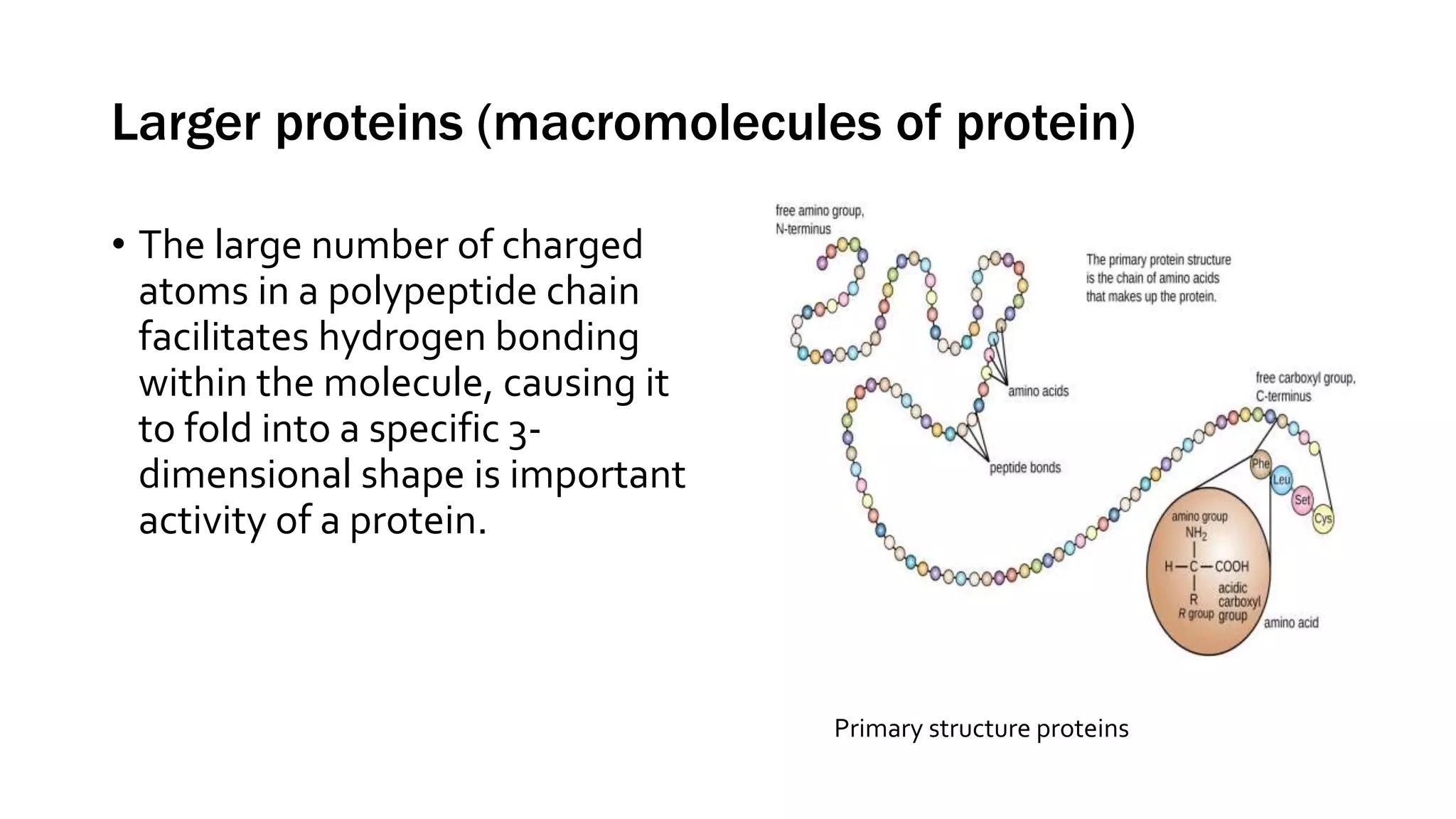
Larger proteins (macromolecules of protein)
• The large number of charged
atoms in a polypeptide chain
facilitates hydrogen bonding
within the molecule, causing it
to fold into a specific 3-
dimensional shape is important
activity of a protein.
Primary structure proteins
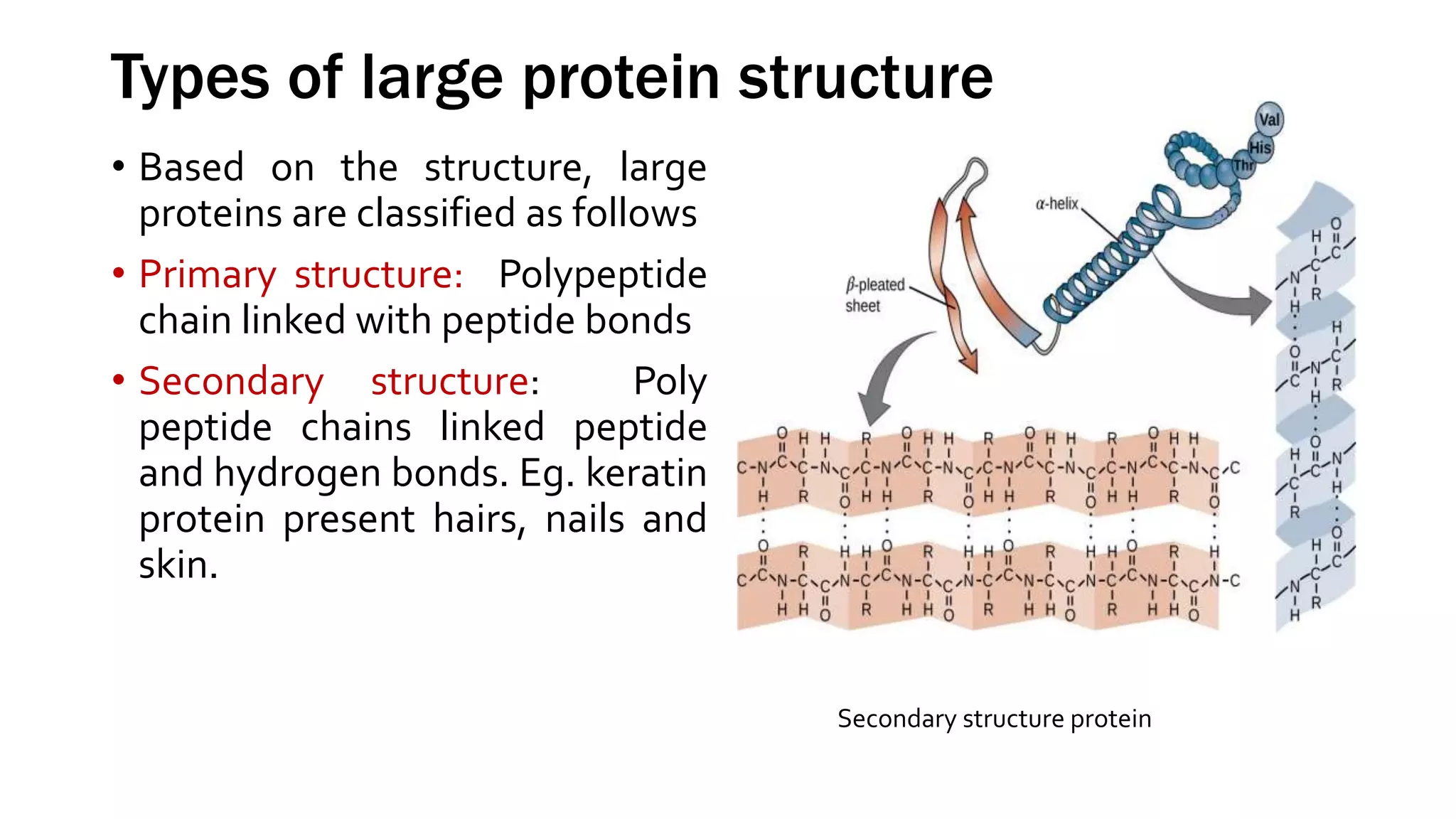
Types of large protein structure
• Based on the structure, large
proteins are classified as follows
• Primary structure: Polypeptide
chain linked with peptide bonds
• Secondary structure: Poly
peptide chains linked peptide
and hydrogen bonds. Eg. keratin
protein present hairs, nails and
skin.
Secondary structure protein
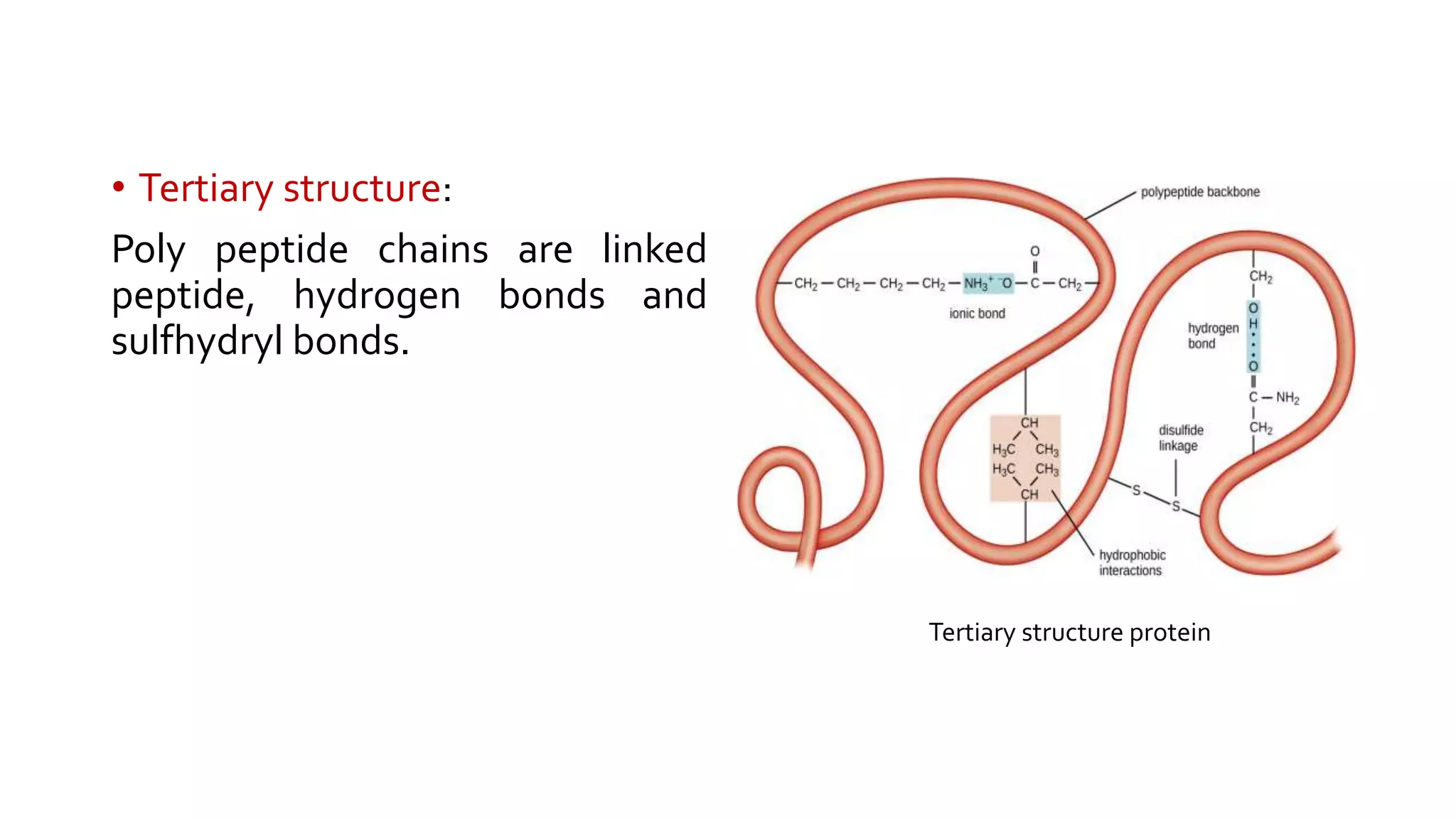
• Tertiary structure:
Poly peptide chains are linked
peptide, hydrogen bonds and
sulfhydryl bonds.
Tertiary structure protein
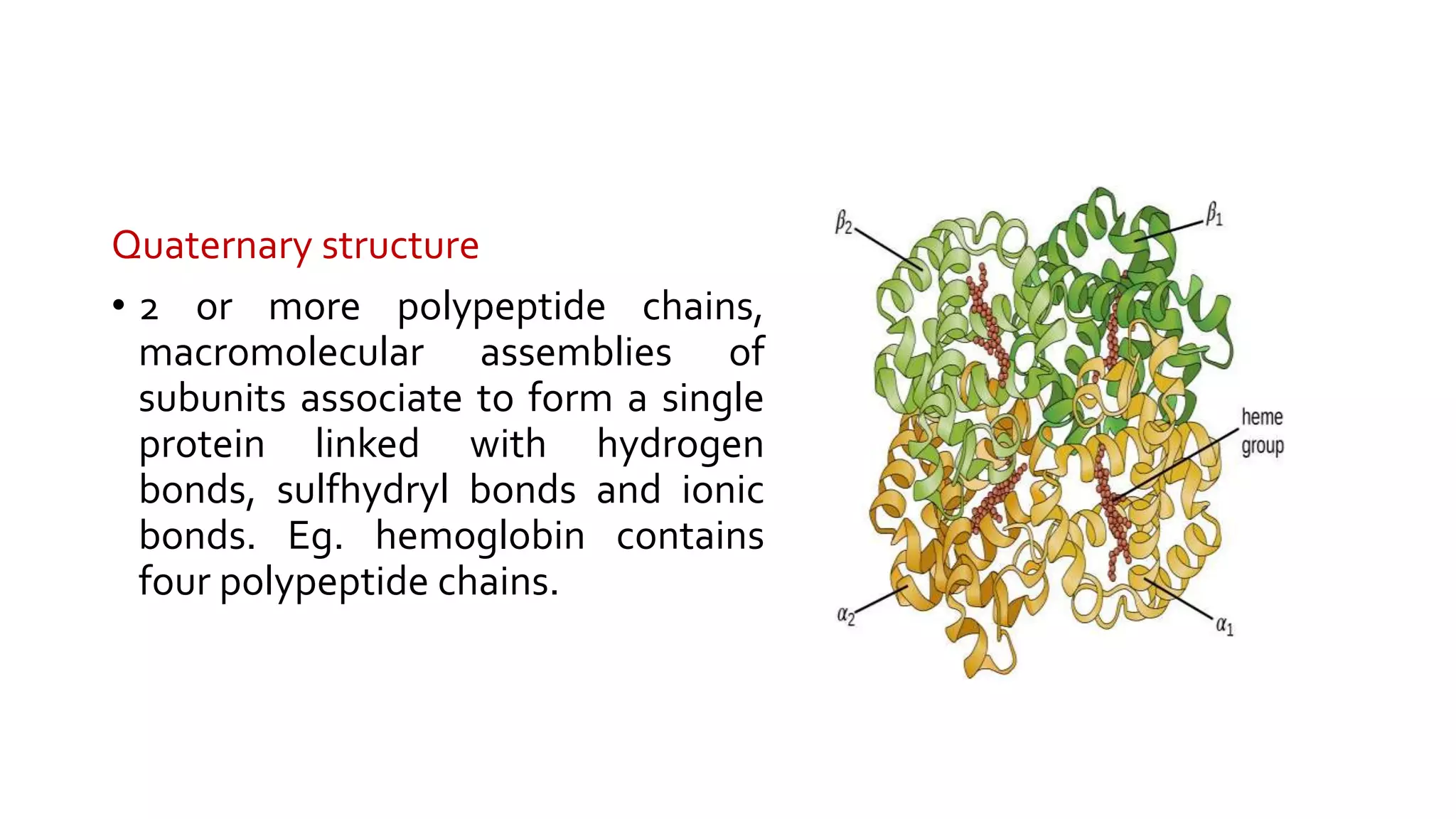
Quaternary structure
• 2 or more polypeptide chains,
macromolecular assemblies of
subunits associate to form a single
protein linked with hydrogen
bonds, sulfhydryl bonds and ionic
bonds. Eg. hemoglobin contains
four polypeptide chains.
Conjugated proteins
• Simple proteins contains only proteins
• Conjugated proteins contain proteins combined with other
macromolecules.
• For example- glycoproteins contain glucose
• nucleoproteins contain nucleic acids,
• lipoprotein contains lipids.
Nucleotides
• Nucleotides are defined as phosphoric acid esters of nucleosides.
• A nucleotide is made up of 3 components, namely a nitrogen base, a pentose
sugar and a phosphoric acid.
• The nucleotides are named according to purines and pyrimidines.
• Purine : Adenine [A], Guanine [G]
• Pyrimidine:Thymine [T], Cytosine[C], Uracil.
• Adenosine monophosphate
• Guanosine monophosphate
• Cytidine monophosphate
• Thymidine monophosphate
• Uridine monophosphate
• In addition many nucleotides occur freely in the tissues.They are ADP and ATP.
Bonds linking nucleotides
• Many nucleotides are linked together to form a polynucleotide chain.
• Two nucleotides are joined by a phosphodiesterase bond. It is formed
between sugar of one nucleotide and phosphate component of
another nucleotide.
• The linking between purines and pyrimidines is brought about by
hydrogen bonds.There are two hydrogen bonds betweenA andT
(A=T), and 3 hydrogen bonds between G and C (G= C).
• The amount of adenine is equivalent to the amount of thymine and
the amount of guanine is equivalent to the amount of cytosine.
Nucleic acids
• Nucleic acids are the largest macromolecule in the body and are built from
components called nucleotides, which consist of three subunits:
• a sugar unit
• a base
• one or more phosphate groups linked together.
• Nucleic acids are found in all organisms such as plants, animals, bacteria
and viruses.
• Deoxyribonucleic acid (DNA)
• Ribonucleic acid (RNA)
DNA
• Double strand of poly nucleotide chains arranged in a spiral (helix)
• The nucleotides contain the sugar deoxyribose, phosphate groups
and one of nitrogenous bases.
• The DNA contains four different types of nucleotides.
• Deoxy Adenosine monophosphate
• Deoxy Guanosine monophosphate
• Deoxy Cytidine monophosphate and
• DeoxyThymidine monophosphate.
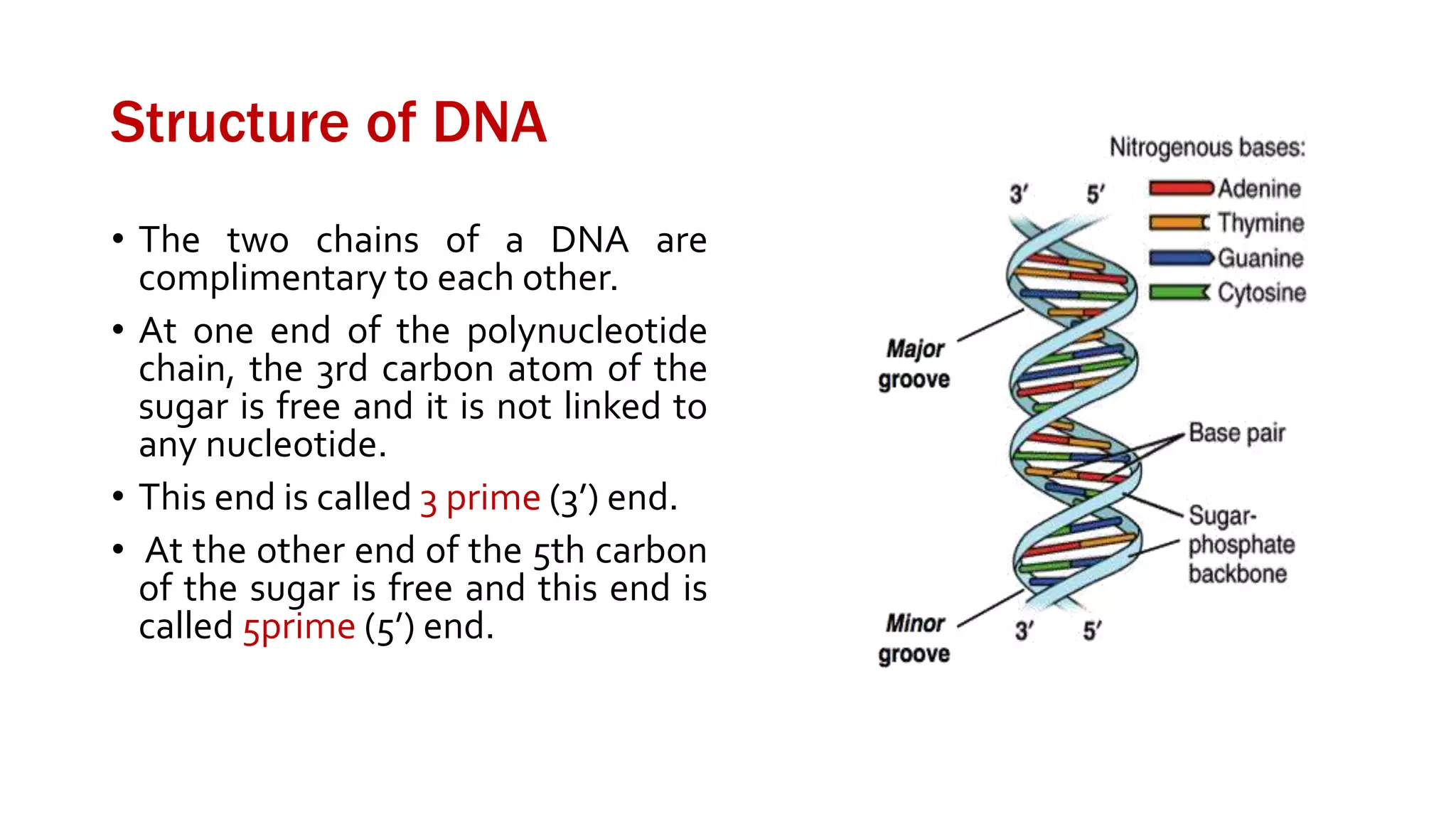
Structure of DNA
• The two chains of a DNA are
complimentary to each other.
• At one end of the polynucleotide
chain, the 3rd carbon atom of the
sugar is free and it is not linked to
any nucleotide.
• This end is called 3 prime (3’) end.
• At the other end of the 5th carbon
of the sugar is free and this end is
called 5prime (5’) end.
Types of DNA
• Circular DNA / plasmid DNA (prokaryotes)
• Double stranded DNA (Eukaryotes)
Functions of DNA
• DNA acts as the template for protein synthesis and is stored safely in
the nucleus.
• It acts as the carrier of genetic information from generation to
generation.
• It plays an important role in all biosynthetic and hereditary functions
of all living organisms.
• It controls all developmental processes of an organisms and all life
activities.
• DNA synthesizes RNAs
RNA
• It is a nucleic acid containing ribose sugar with single strand of
nucleotides (nitrogenous base, sugar and phosphate).
• It contains no thymine, instead contains uracil [U] (uridine
monophosphate).
• Present in cytoplasm and nucleus.
• Function: Synthesised in the nucleus from the DNA template, and
carries the message instructing synthesis of a new protein from the
DNA (which cannot leave the nucleus) to the protein-synthesis
(ribosomes) in the cell cytoplasm.
Types of RNA
• Messenger RNA (mRNA): Its sequence is copied from genetic
DNA and travels to cytoplasm during proteins synthesis.
• Ribosomal RNA (rRNA): Ribosomes are a complex of proteins and
rRNA.The rRNA provides both structure and catalysis.
• Transfer RNA (tRNA):Transports amino acids to the ribosomes
where they are joined together to make proteins
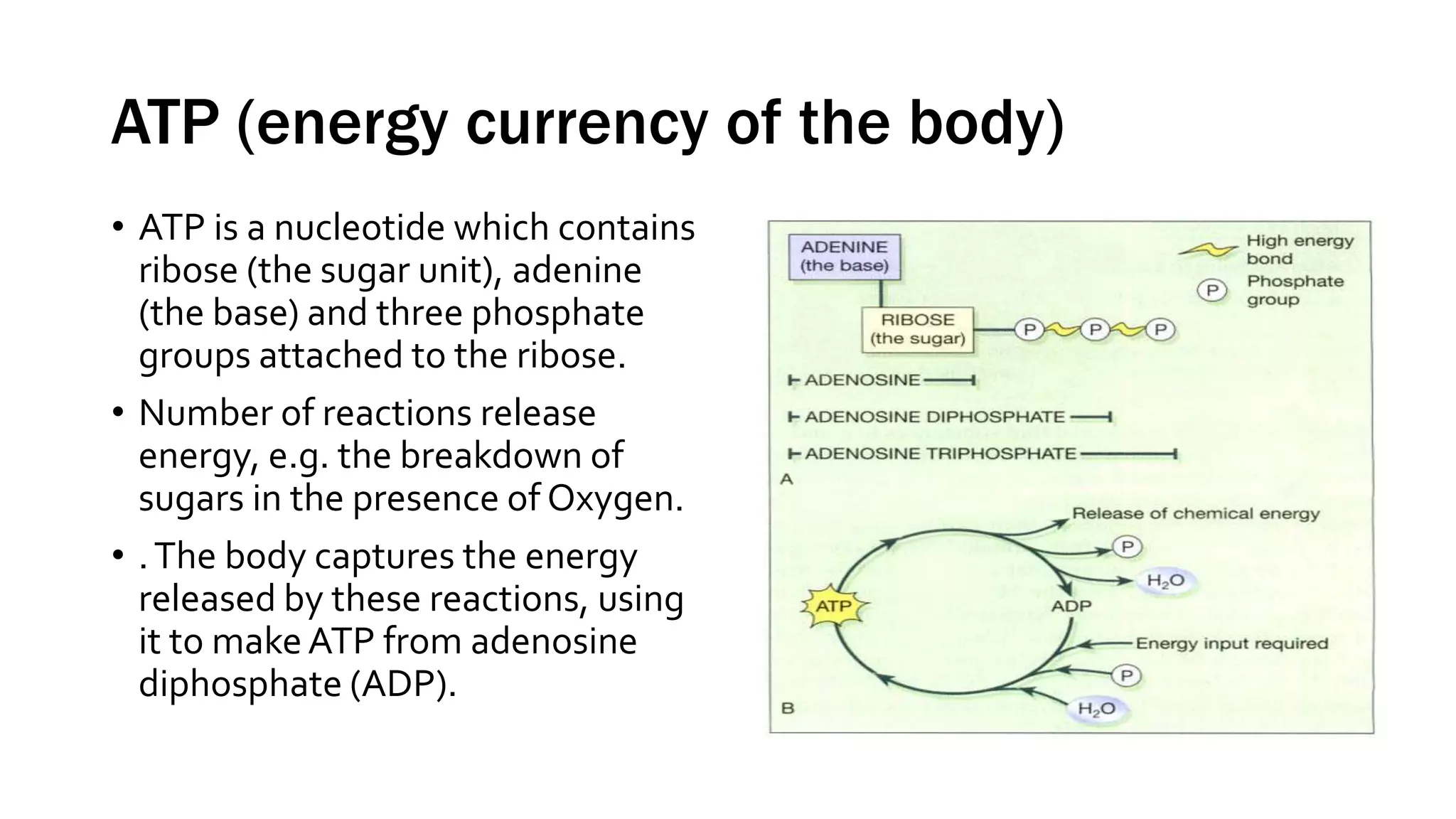
ATP (energy currency of the body)
• ATP is a nucleotide which contains
ribose (the sugar unit), adenine
(the base) and three phosphate
groups attached to the ribose.
• Number of reactions release
energy, e.g. the breakdown of
sugars in the presence of Oxygen.
• .The body captures the energy
released by these reactions, using
it to makeATP from adenosine
diphosphate (ADP).
Functions of ATP
• Drive synthetic reactions (i.e. building biological molecules)
• Fuel movement
• Transport substances across membranes
Functions of Nucleotides and Nucleic Acids
• Nucleotide Functions:
• – Energy for metabolism (ATP)
• – Enzyme cofactors (NAD+ Nicotinamide adenine dinucleotide )
• – Signal transduction (cAMP)
• NucleicAcid Functions (Macromolecular nucleotides):
• – Storage of genetic info (DNA)
• –Transmission of genetic info (mRNA)
• – Processing of genetic information (ribosomes)
• – Protein synthesis (tRNA and rRNA)
Macromolecular assembly (MA)
•The term macromolecular assembly (MA) refers to massive chemical
structures such as viruses and non-biological nanoparticles cellular
organelles and membranes and ribosomes,
They are complex mixtures of polypeptide, polynucleotide,
polysaccharide or other polymeric molecules.
Examples for macromolecular complexes
• Protein complexes
• RNA-protein complexes: ribosome. Such complexes in cell nucleus
are called ribonucleoproteins (RNPs).
• DNA-protein complexes: nucleosome.
• Protein-lipid complexes: lipoprotein
• They are generally the mixtures
of macromolecules are defined
spatially (i.e., with regard to
their chemical shape), and with
regard to their underlying
chemical composition and
structure [1].
• Eg :Each subunits of Ribosomes
is assembly –poly peptide chains
and rRNA

Cell and macromolecules

  • 1.
    Cell and macromolecules 1.Cellularclassification 2.Subcellular organelles 3.Macromolecules and Macromolecular Assemblies B. REVATHI VIPS
  • 2.
    1. Cellular classification THEDYNAMIC CELL • The cell comes from the Latin cellula, meaning “a small room”. • The cell is the structural and functional unit of all living organisms. • The cell was discovered by Robert Hooke in 1665. • Human contains about 10 trillion cells. • Most plant and animal cells are between 1 and 100µm and therefore are visible only under the microscope.
  • 3.
    Types of cells •There are two types of cell. Prokaryotic and eukaryotic. • Prokaryotic (Prokaryotic word derived from Greek meaning- before nuclei) -lack a nucleus or membrane-bound structures. Ex- Bacteria, Cyanobacteria. • Eukaryotic (Greek- eu means good and karyon means nut or kernel) - have a nucleus and membrane-bound organelles . Ex- Fungi, Plants, Animals.
  • 4.
  • 5.
    Prokaryotic cell • Thebacterial cells are very small (about 1-2 µm diameter and 10 µm long). • These cells have 3 shapes- rod, spherical and spiral. • The cell division is by binary fission. • The structural components of prokaryotic cells: The nuclear material of prokaryotic cell consists of a single chromosome.
  • 6.
    • The flagellaand pili are projected from the cell surface. These consist of proteins. They facilitate the movement and communication between the cells. • The cells enclosed by cell envelop. This consists of plasma membrane and cell wall. Some bacteria also have another layer- capsule. This envelop gives the rigidity to the cell. • Inside the cell is the cytoplasm is present that contains the cell genome (DNA), ribosomes and various cell inclusions. • The DNA is condensed to a nucleoid. There are circular structures called plasmids, which carry extra chromosomal DNA.
  • 7.
    Eukaryotic cells • Thesecells contain complex structures enclosed within the membranes. • The membrane bound nucleus is present in these cells. • Most of these cells also contain other membrane bound organelles such as mitochondria, chloroplast and the Golgi apparatus. • All species of large complex organisms are eukaryotes, including animals, plants and fungi.
  • 8.
  • 10.
  • 12.
    2. Subcellular organelles (eukaryotes) •A cell consists of a plasma membrane inside which there are a number of organelles floating in a watery fluid called cytosol. • Organelles are small structures with highly specialised functions, many of which are contained within a membrane. • They include: the nucleus, mitochondria, ribosomes, endoplasmic reticulum,Golgi apparatus, centrioles, lysosomes, microfilaments and
  • 13.
  • 14.
    Plasma membrane • Itconsist of two layers of phospholipids (fatty substances) with some protein molecules embedded in them. • The phospholipid molecules have a head which is hydrophilic and a tail which has no charge and is hydrophobic. • The phospholipid bilayer is arranged like a sandwich • These differences influence the transfer of substances across the membrane.
  • 15.
    Plasma membrane Functions ofmembrane proteins in plasma membrane:  These provide channels for passage of electrolytes and non- lipid-soluble substances.  Acts as receptors  Some are enzymes  Some provide immunological identity
  • 16.
    Nucleus • The Nucleus-Brainof Cell • Bordered by a porous membrane - nuclear envelope. • Contains thin fibers of DNA bind with histone protein called Chromatin. • During cell division thread like structures condensed to form Rod ShapedChromosomes (contains genes). • Contains a small round nucleolus – produces ribosomal RNA which makes ribosomes.
  • 17.
    Nucleoli • The nucleiof most cells contain one or more highly staining structures called nucleoli. • it is simply an accumulation of large amounts of RNA and proteins of the types found in ribosomes. •The nucleolus becomes considerably enlarged when the cell is actively synthesizing proteins. Functions of nucleus: • It contains the body's genetic material, which directs the activities of the cell and synthesis all the proteins required.
  • 18.
    Mitochondria • Power houseof the cell • Double Membranous, sausage shaped • It’s the size of a bacterium • Contains its own DNA- mitochondrial DNA • Produces high energy compound ATP • Cristae –cell respiration (aerobic) occurs.
  • 19.
    Ribosomes • Small non-membranebound organelles. • Contain two sub units (60s+40s (80s) eukaryotes) • Site of protein synthesis. • Protein factory of the cell • Either free floating or attached to the Endoplasmic Reticulum.
  • 20.
    Endoplasmic Reticulum • Seriesof interconnecting membranous canals •Two types: 1. Smooth ER- ribosome free and functions synthesis of lipids and steroids and also in poison detoxification. 2. Rough ER- contains ribosomes and releases newly synthesised protein from the cell.
  • 21.
    Golgi apparatus • Flattenedmembranous sacs. • Modifies, packages, stores, and transports materials out of the cell. •Works with the ribosomes and Endoplasmic Reticulum. • These are packaged' into membrane-bound vesicles called secretory granules. • The vesicles are stored and transported, through which the proteins are exported
  • 22.
    Lysosomes • Recycling Center– Recycle cellular debris • Formed from secretary vesicles of golgi apparatus. • Membrane bound organelle containing a variety of hydrolytic enzymes. • Internal pH is 5. Functions: • Help in digest food particles inside or out side the cell. • Autophage (engulfing aged cells) • Autolysis (suicidal bags)
  • 23.
    Cytoskeleton structures 1. Microfilaments-tinystrands of protein-shape and structure of cell. 2. Intermediate filaments 3. Microtubules- contractile protein structures in the cytoplasm- movement of cell organelles and cilia.
  • 24.
    Centrioles • Found onlyin animal cells • Paired centrioles found together near the nucleus, at right angles to each other. • Role in building cilia and flagella • Play a role in cellular division, mitosis
  • 25.
    Vacuoles • Sacs thathelp in food digestion or helping the cell maintain its water balance. • Found mostly in plants and protists. • Smaller one in animal cell
  • 26.
    Plant and animalcell organelles and functions
  • 27.
    3. Macromolecules and macromolecularassemblies The FOUR Classes of Large Biomolecules or macromolecules present in all cells. • Carbohydrates • Lipids • Protein • Nucleic Acids • Macromolecules are large molecules composed of thousands of covalently bonded atoms. (carbon and hydrogen bonds) • Have different Molecular structure and functions.
  • 28.
  • 29.
  • 30.
    Carbohydrates • These arethe sugars and polymers of sugars composed of carbon, oxygen and hydrogen where the carbon atoms are normally arranged in a ring. • Two sugar molecules join by condensation and the resulting bond called a glycosidic linkage.
  • 31.
    Functions of carbohydrates •Function mainly as a source of chemical energy for generating ATP needed to drive metabolic reactions in living cells. • Provides a form of energy storage, e.g. glycogen • Forms an integral part of the structure of DNA (deoxyribose) and RNA (ribose) • Can act as receptors on the cell surface, allowing the cell to recognise other molecules and cells
  • 32.
    Classification of carbohydrates •Monosaccharides –glucose, fructose • Disaccharides - sucrose, maltose, lactose. • Polysaccharides -starch, glycogen, cellulose, chitin • Polysaccharides consists of many sugar molecules forms the macromolecules of the carbohydrates.
  • 33.
    Starch and glycogen •These are polysaccharides that function to store energy. • They are composed of glucose monomers bonded together producing long chains. • Animals store extra carbohydrates as glycogen in the liver and muscles. • Between meals, the liver breaks down glycogen to glucose in order to keep the concentration of glucoses in the blood. • Amylopectin is a form of starch that is very similar to glycogen. • It is branched but glycogen has more branches.
  • 34.
    Cellulose and chitin •These are polysaccharides that function to support and protect the organism. • The cell walls of the plant composed of cellulose. • The cell walls of fungi are composed of chitin. • Cellulose is composed of beta-glucose monomers • Starch and glycogen are composed of alpha- glucose. • Cellulose is the glucose monomers of chitin (N- acetyl glucosamine) have a side chain containing nitrogen. Cotton and wood are composed mostly of cellulose. • Humans and most animals do not have necessary enzymes to break the linkages of cellulose or chitin.
  • 35.
    Lipids • Lipids aremade up of carbon, hydrogen and oxygen atoms are insoluble in water but soluble in nonpolar solvents. • Lipids make 18-25% of body mass in lean adults. • Triglycerides (fat): A molecule of fat fat consists of three fatty acids, each linked to a molecule of glycerol. • They are used in the body for: insulation, protection of body parts (cell membrane) and energy storage.
  • 36.
    Types of lipids •Triglycerides (fats and oils) • Phospholipids • Steroids • Eicosanoids (Prostaglandins) • A variety of other lipids including fat-soluble vitamins (A,D,E and K) and lipoproteins.
  • 37.
    Fats and oils(Triglycerides) • These consist of two moeities, a single glycerol molecule and three fatty acid molecules. • Fatty acids have a long hydrocarbon chain with a carboxyl (acid) group. • Hydrohobic molecules • The chains usually contain 16 to 18 carbons. • Glycerol contains 3 carbons and 3 hydroxyl groups.
  • 38.
    Types of fats 1.Saturated fat- Palmitic acid (C15H31 COOH), stearic acid (C15H35COOH), butter, cocoa butter, coconut oil, meats, etc. 2. Unsaturated fats • Monounsaturated fats- Eg- olive oil, peanut oil.These fats are decrease the risk of heart disease. • Poly unsaturated fats- Eg- corn oil, sunflower oil, soybean oil and fatty fish.
  • 39.
    Phospholipids • They havea structure like triglycerides, but contain a phosphate group in place of the third fatty acid. • The phosphate group is polar and therefore capable of interacting with water molecule. • These are amphipathic in nature, as they have both polar and nonpolar groups. • Phospholipids form a bilayer in a watery environment.eg Cell membrane.
  • 40.
    Steroids • Steroids differsfrom triglycerides.They have four rings of carbon atoms. • Body cells synthesize other steroids from cholesterol. • Cholesterol has a large nonpolar region consisting of the four rings and a hydrocarbon tail. • The steroids of the body are cholesterol, estrogens, testosterone, cortisol, bile salts, and vitamin D.
  • 41.
    Important functions ofthe steroids 1.Cholesterol is needed for cell membrane structure. 2.Estrogen and testosterone are required for regulating sexual functions. 3.Cortisol is needed for maintaining the stress of body. 4.Bile salts are needed for lipid digestion and absorption. 5.Vitamin D is related to bone growth.
  • 42.
    Proteins • Proteins arelarge molecules that contain hydrogen, oxygen and nitrogen. Some proteins also contain sulfur. • Proteins have complex structure.The proteins make up 12-18% of body mass in a lean adult. • Proteins have many roles in the body and are largely responsible for the structure of the body tissues and functioning of body eg. Enzymes, hormones (insulin), antibodies and carrier molecules (haemoglobin) etc.,
  • 43.
    Amino acids • Theseare building blocks of proteins. It consist of a carboxylic group (COOH) and an amino group (NH2). • 20 amino acids are used as the principal building blocks of protein Amino acid structures:A. Common structure, R = variable side chain. B. Glycine, the simplest amino acid. C. Alanine. D. Phenylalanine
  • 44.
  • 45.
    Peptide bond • Apeptide bond is formed between two amino acids (NH2 and – COOH), a water molecule is removed.This reaction is dehydration. • Dipeptide • Tripeptide • Polypeptides(10-2000 amino acids)
  • 46.
    Larger proteins (macromoleculesof protein) • The large number of charged atoms in a polypeptide chain facilitates hydrogen bonding within the molecule, causing it to fold into a specific 3- dimensional shape is important activity of a protein. Primary structure proteins
  • 47.
    Types of largeprotein structure • Based on the structure, large proteins are classified as follows • Primary structure: Polypeptide chain linked with peptide bonds • Secondary structure: Poly peptide chains linked peptide and hydrogen bonds. Eg. keratin protein present hairs, nails and skin. Secondary structure protein
  • 48.
    • Tertiary structure: Polypeptide chains are linked peptide, hydrogen bonds and sulfhydryl bonds. Tertiary structure protein
  • 49.
    Quaternary structure • 2or more polypeptide chains, macromolecular assemblies of subunits associate to form a single protein linked with hydrogen bonds, sulfhydryl bonds and ionic bonds. Eg. hemoglobin contains four polypeptide chains.
  • 50.
    Conjugated proteins • Simpleproteins contains only proteins • Conjugated proteins contain proteins combined with other macromolecules. • For example- glycoproteins contain glucose • nucleoproteins contain nucleic acids, • lipoprotein contains lipids.
  • 51.
    Nucleotides • Nucleotides aredefined as phosphoric acid esters of nucleosides. • A nucleotide is made up of 3 components, namely a nitrogen base, a pentose sugar and a phosphoric acid. • The nucleotides are named according to purines and pyrimidines. • Purine : Adenine [A], Guanine [G] • Pyrimidine:Thymine [T], Cytosine[C], Uracil. • Adenosine monophosphate • Guanosine monophosphate • Cytidine monophosphate • Thymidine monophosphate • Uridine monophosphate • In addition many nucleotides occur freely in the tissues.They are ADP and ATP.
  • 52.
    Bonds linking nucleotides •Many nucleotides are linked together to form a polynucleotide chain. • Two nucleotides are joined by a phosphodiesterase bond. It is formed between sugar of one nucleotide and phosphate component of another nucleotide. • The linking between purines and pyrimidines is brought about by hydrogen bonds.There are two hydrogen bonds betweenA andT (A=T), and 3 hydrogen bonds between G and C (G= C). • The amount of adenine is equivalent to the amount of thymine and the amount of guanine is equivalent to the amount of cytosine.
  • 53.
    Nucleic acids • Nucleicacids are the largest macromolecule in the body and are built from components called nucleotides, which consist of three subunits: • a sugar unit • a base • one or more phosphate groups linked together. • Nucleic acids are found in all organisms such as plants, animals, bacteria and viruses. • Deoxyribonucleic acid (DNA) • Ribonucleic acid (RNA)
  • 54.
    DNA • Double strandof poly nucleotide chains arranged in a spiral (helix) • The nucleotides contain the sugar deoxyribose, phosphate groups and one of nitrogenous bases. • The DNA contains four different types of nucleotides. • Deoxy Adenosine monophosphate • Deoxy Guanosine monophosphate • Deoxy Cytidine monophosphate and • DeoxyThymidine monophosphate.
  • 55.
    Structure of DNA •The two chains of a DNA are complimentary to each other. • At one end of the polynucleotide chain, the 3rd carbon atom of the sugar is free and it is not linked to any nucleotide. • This end is called 3 prime (3’) end. • At the other end of the 5th carbon of the sugar is free and this end is called 5prime (5’) end.
  • 56.
    Types of DNA •Circular DNA / plasmid DNA (prokaryotes) • Double stranded DNA (Eukaryotes)
  • 57.
    Functions of DNA •DNA acts as the template for protein synthesis and is stored safely in the nucleus. • It acts as the carrier of genetic information from generation to generation. • It plays an important role in all biosynthetic and hereditary functions of all living organisms. • It controls all developmental processes of an organisms and all life activities. • DNA synthesizes RNAs
  • 59.
    RNA • It isa nucleic acid containing ribose sugar with single strand of nucleotides (nitrogenous base, sugar and phosphate). • It contains no thymine, instead contains uracil [U] (uridine monophosphate). • Present in cytoplasm and nucleus. • Function: Synthesised in the nucleus from the DNA template, and carries the message instructing synthesis of a new protein from the DNA (which cannot leave the nucleus) to the protein-synthesis (ribosomes) in the cell cytoplasm.
  • 60.
    Types of RNA •Messenger RNA (mRNA): Its sequence is copied from genetic DNA and travels to cytoplasm during proteins synthesis. • Ribosomal RNA (rRNA): Ribosomes are a complex of proteins and rRNA.The rRNA provides both structure and catalysis. • Transfer RNA (tRNA):Transports amino acids to the ribosomes where they are joined together to make proteins
  • 61.
    ATP (energy currencyof the body) • ATP is a nucleotide which contains ribose (the sugar unit), adenine (the base) and three phosphate groups attached to the ribose. • Number of reactions release energy, e.g. the breakdown of sugars in the presence of Oxygen. • .The body captures the energy released by these reactions, using it to makeATP from adenosine diphosphate (ADP).
  • 62.
    Functions of ATP •Drive synthetic reactions (i.e. building biological molecules) • Fuel movement • Transport substances across membranes
  • 63.
    Functions of Nucleotidesand Nucleic Acids • Nucleotide Functions: • – Energy for metabolism (ATP) • – Enzyme cofactors (NAD+ Nicotinamide adenine dinucleotide ) • – Signal transduction (cAMP) • NucleicAcid Functions (Macromolecular nucleotides): • – Storage of genetic info (DNA) • –Transmission of genetic info (mRNA) • – Processing of genetic information (ribosomes) • – Protein synthesis (tRNA and rRNA)
  • 64.
    Macromolecular assembly (MA) •Theterm macromolecular assembly (MA) refers to massive chemical structures such as viruses and non-biological nanoparticles cellular organelles and membranes and ribosomes, They are complex mixtures of polypeptide, polynucleotide, polysaccharide or other polymeric molecules.
  • 65.
    Examples for macromolecularcomplexes • Protein complexes • RNA-protein complexes: ribosome. Such complexes in cell nucleus are called ribonucleoproteins (RNPs). • DNA-protein complexes: nucleosome. • Protein-lipid complexes: lipoprotein
  • 66.
    • They aregenerally the mixtures of macromolecules are defined spatially (i.e., with regard to their chemical shape), and with regard to their underlying chemical composition and structure [1]. • Eg :Each subunits of Ribosomes is assembly –poly peptide chains and rRNA