Biology Class - 1168
Points to Remember
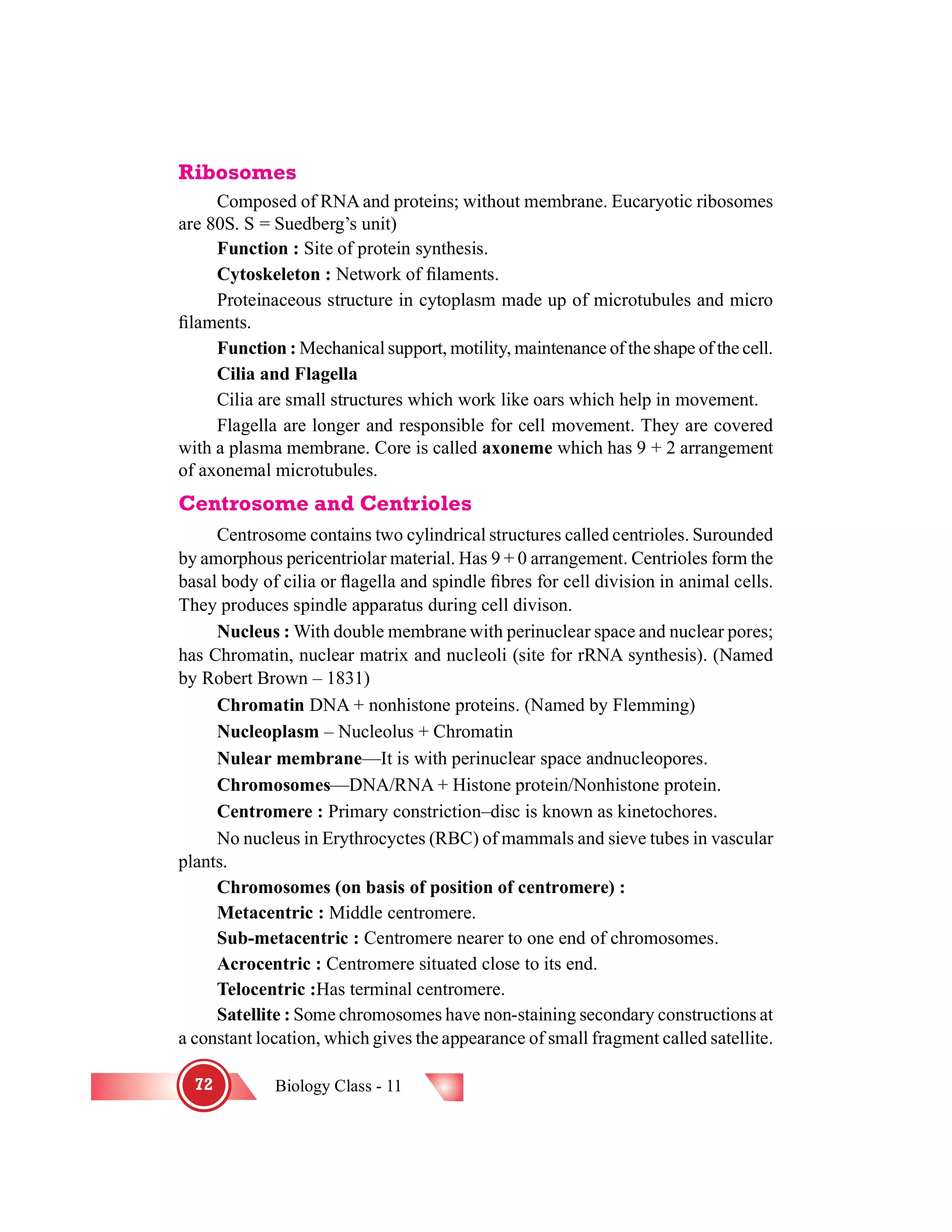
Cell Theory : Cell Theory was formulated by Scheleiden and Schwann, and
was modi®ed by Rudolf Virchow. Cell theory States.
(A) All living organisms are composed of cells and products of cells.
(B) All cells arise from pre-existing cells.
Cell : Cell is the structural and functional unit of life.
Prokaryotic Cell Eukaryotic Cells
 Generally small sized (1–10 m)  Generally large sized (5–10 m)
 Well de®ned nucleus absent  Well de®ned nucleus present
 Membrane bounded cell organelles  Membrane bounded cell organelles
absent present
 DNA without histone covering  DNA with histone covering
e.g., Bacteria, Mycoplasma, Blue e.g., Amoeba, Euglena and other
green Algae higher organism
Prokaryotic Cell Cell envelope
 Gram positive bacteria  Gram negative bacteria
 Bacteria that take up gram  Bacteria do not take up gram stain
Stain. e.g., Bacillus escherichia coli
Modification of cell envelope
 Slime layer : Clycocalyx in form of loose sheath.
 Capsule : Glycocalyx in form of thick and tough sheath.
 Mesosomes : Extension of plasma membrane. These can be in the form of
vesicles, tubules and lamellae.
69Cell : The Unit of Life
Functions : Cell was formation, DNAreplication and distribution to daughter
cells, respiration, secretion processes, to increase surface area of plasma
membrane and enzyme content.
 Flagella : Extension of cell wall. It is composed of three structure–®lament,
hook and basal body. They help in motility of bacteria.
 Pili and ®mbriae : Surface structure of some bacteria which attaches them
to rocks in streams and to host tissues.
Genetic Material : It is not covered by nuclear envelope. In addition to the
genomic DNA(the single chromosome/circular DNA), many bacteria have small
circular self replicating, double straned DNAwhich is called as plasmid, plasmid
contain genes like antibiotic resistance.
Eukaryotic cells
Possess an oragnized nucleus with nuclear envelope and have a variety of
complex locomotory and cytoskeletal structures.
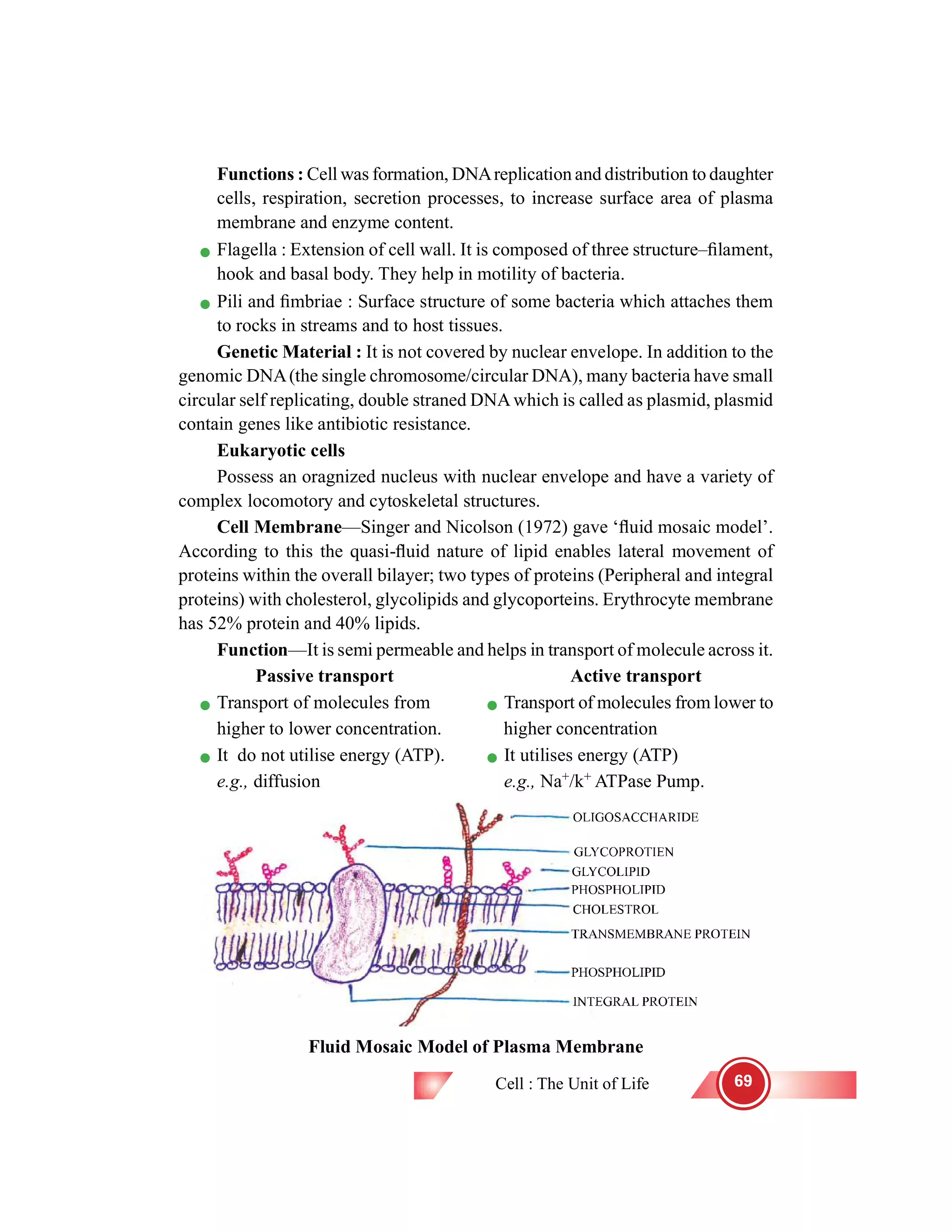
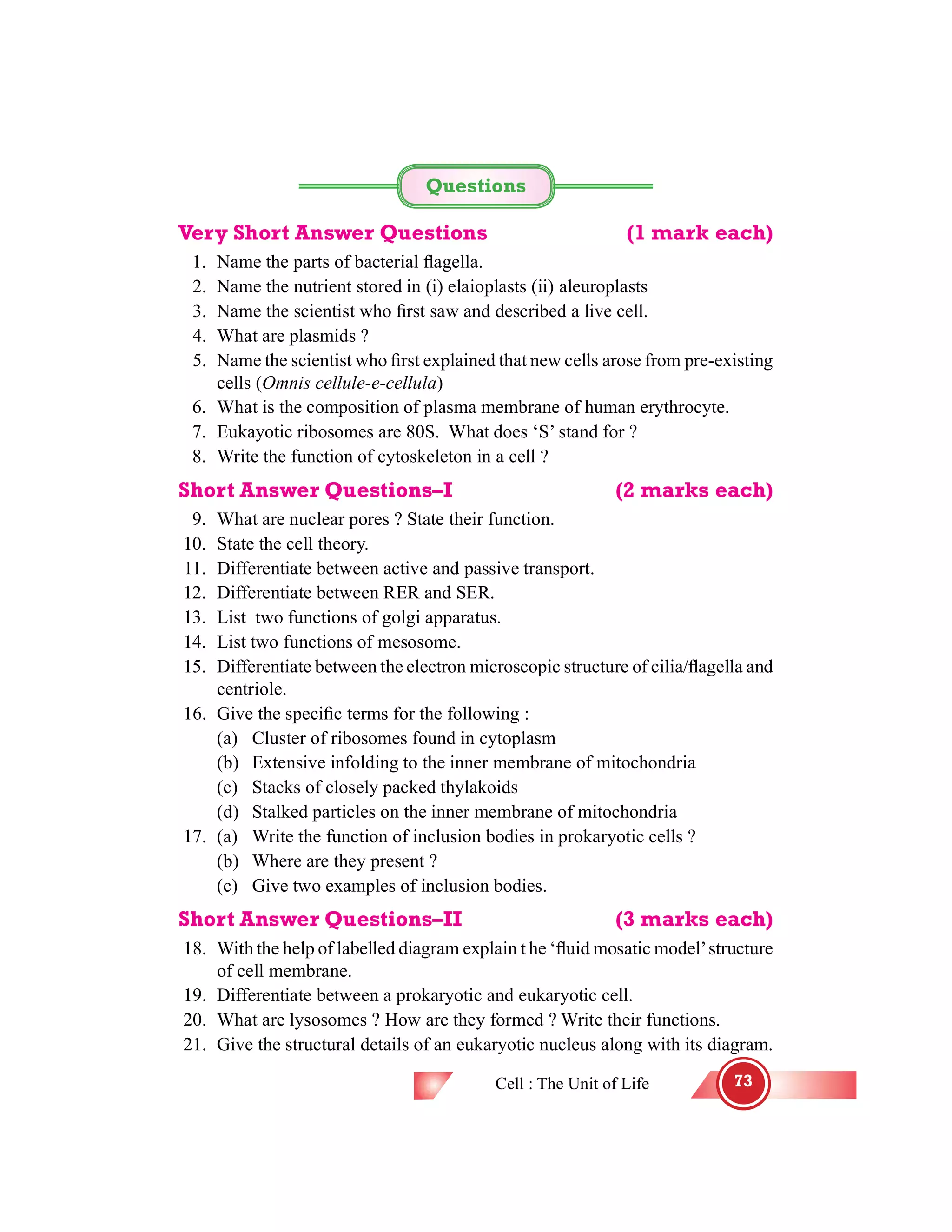
Cell Membrane—Singer and Nicolson (1972) gave ‘¯uid mosaic model’.
According to this the quasi-¯uid nature of lipid enables lateral movement of
proteins within the overall bilayer; two types of proteins (Peripheral and integral
proteins) with cholesterol, glycolipids and glycoporteins. Erythrocyte membrane
has 52% protein and 40% lipids.
Function—It is semi permeable and helps in transport of molecule across it.
Passive transport Active transport
 Transport of molecules from  Transport of molecules from lower to
higher to lower concentration. higher concentration
 It do not utilise energy (ATP).  It utilises energy (ATP)
e.g., diffusion e.g., Na+/k+ ATPase Pump.
Fluid Mosaic Model of Plasma Membrane
Biology Class - 1170
Cell Wall is non-living rigid structure which gives shape to the cell and
protects cell from mechanical damage and infection, helps in cell-to-cell interaction
and provides barrier to undsirable macromolecules.
Cell wall of algae is made of cellulose, galactans, mannans and minerals like
calcium carbonate. Plant cell wall consists of cellulose, hemicellulose, pectins
and proteins.
Middle lamella is made of calcium pectate which holds neighbouring cells
together.
Plasmodesmata connect the cytplasm of neighbouring cells.
Endoplasmic Reticulum (ER)
Consists of network of tiny tubular structure. ER divides the intracellular
space into two distinct compartments–luminal (inside ER) and extra luminal
(cytoplasm).
(i) Rough Endoplasmic Reticulum (RER) :
Ribosomes attached to outer surface.
Function :  Involved in protein synthesis and secretion.
(ii) Smooth Endoplasmic Reticulum (SER) :  Lack ribosomes.
Function  Site for synthesis of lipid.
Golgi apparatus : First observed by Camillo Golgi (in 1898)
Consist of cisternae stacked parallel to each other. Two faces of the organelle
are convex/cis or forming face and concave/trans or maturing face.
Functions : Performs packaging of materials, to be delivered either to the
intra-cellar targets or secreted outside the cell. Important site of formation of
glycoproteins and glycolipids.
Lysosomes :
Membrane bound vesicular structures formed by the process of packaging
in the golgi apparatus. Contain hydrolysing enzymes (lipases, proteases,
carbohydroses) which are active in acidic pH. Also called ‘Suicidal Bag’.
Function : Intracellular digestion.
Vacuoles : Member bound space found in the cytoplasm. Contain water, sap,
excretory product, etc. In plant cell, vacoule occupies 90% of space.
Function : In plants tonoplast (single membrane of vacuole) faciliates
transport of ions and other substances.
Contractile vacuole for excretion in Amoeba and food vacuoles formed in
protists for digestion of food.
71Cell : The Unit of Life
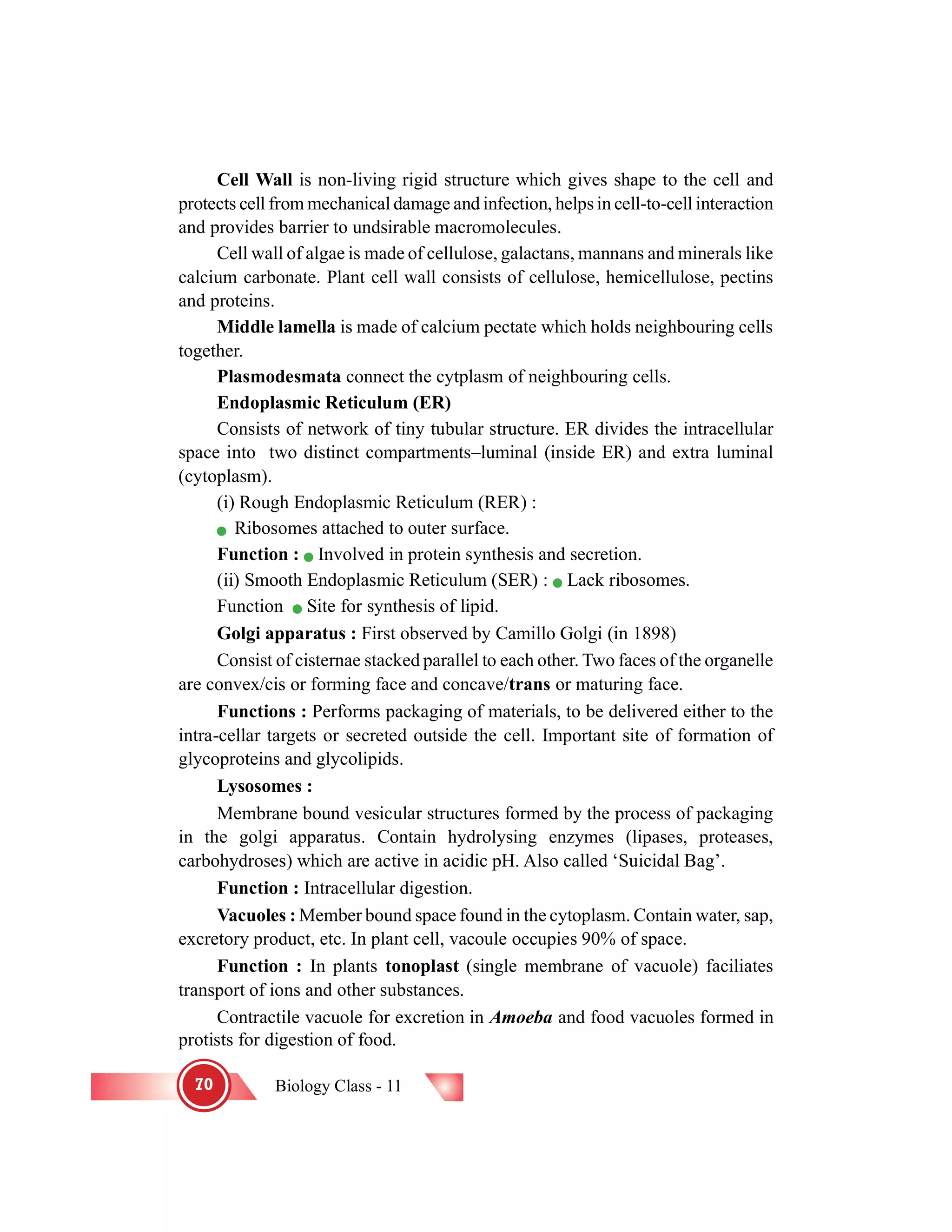
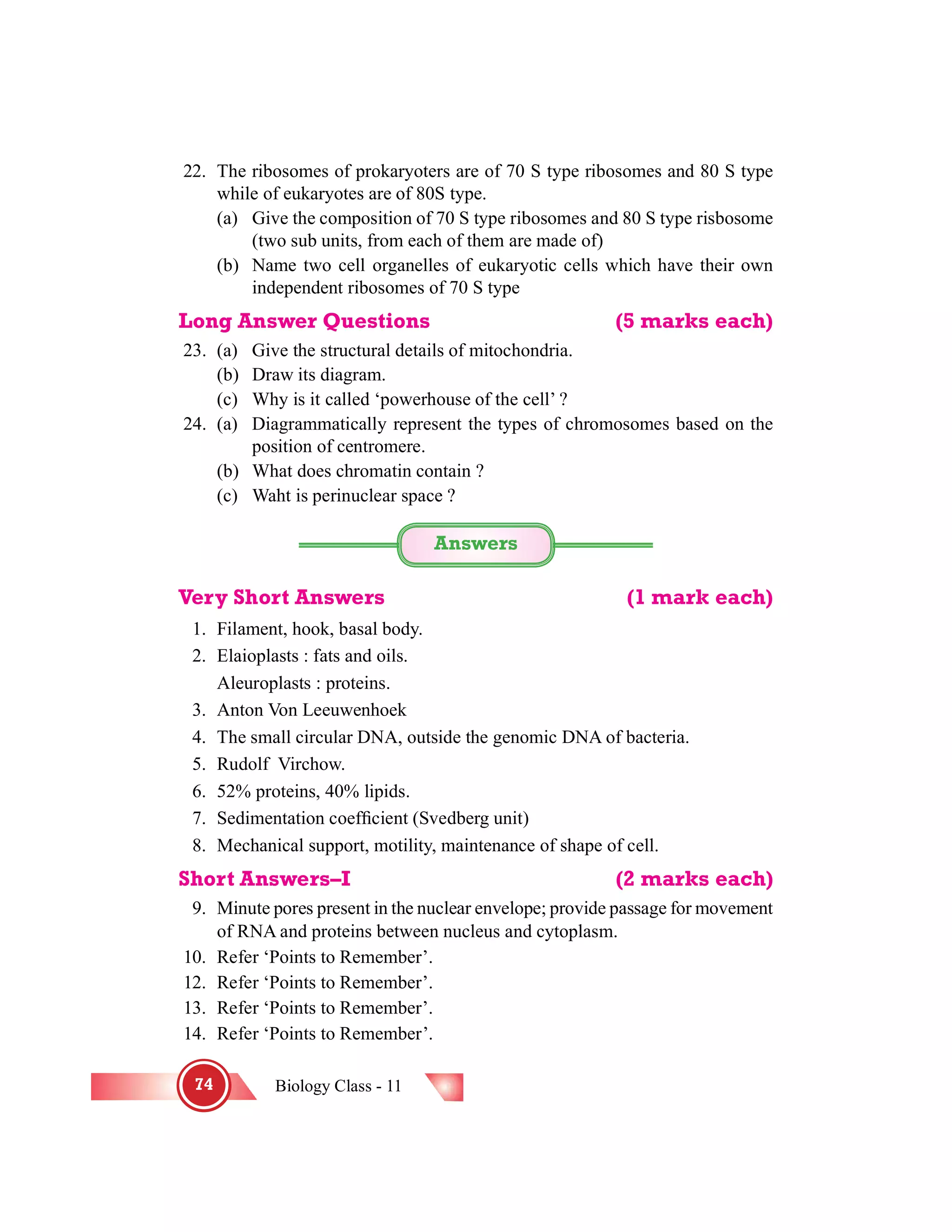
Mitochondria : Double membraned structure. Out membrane smooth and
innermembrane forms a number of infoldings called cristaeThe inner compartment
is called matrix. The cristae increase the surface area.
Function : Sites of aerobic respiration. Called ’power houses’ of cell as
produce cellular energy in the form ofATP. Matrix possesses single circular DNA
molecule, a few RNA molecules, ribsomes (70S). It divides by binary ®ssion.
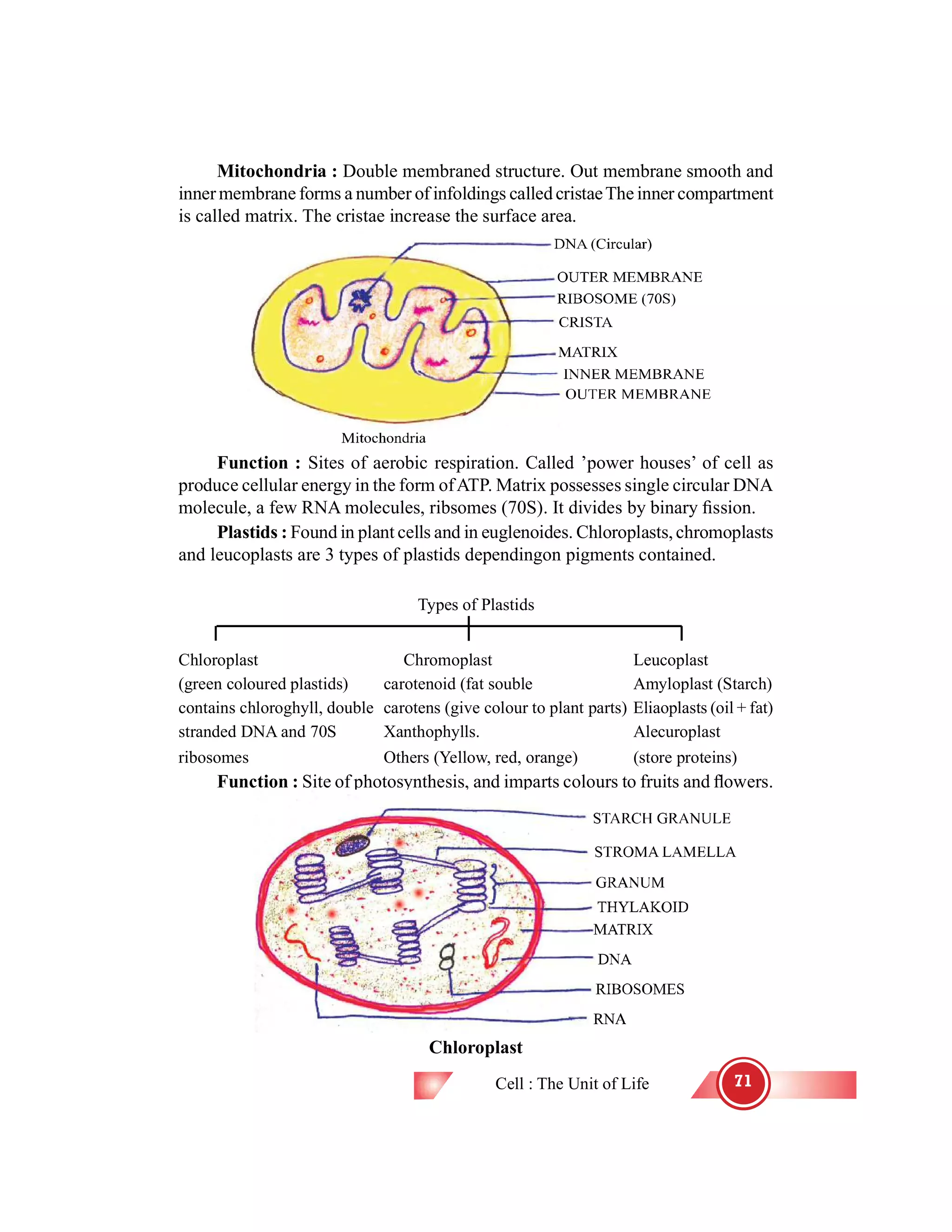
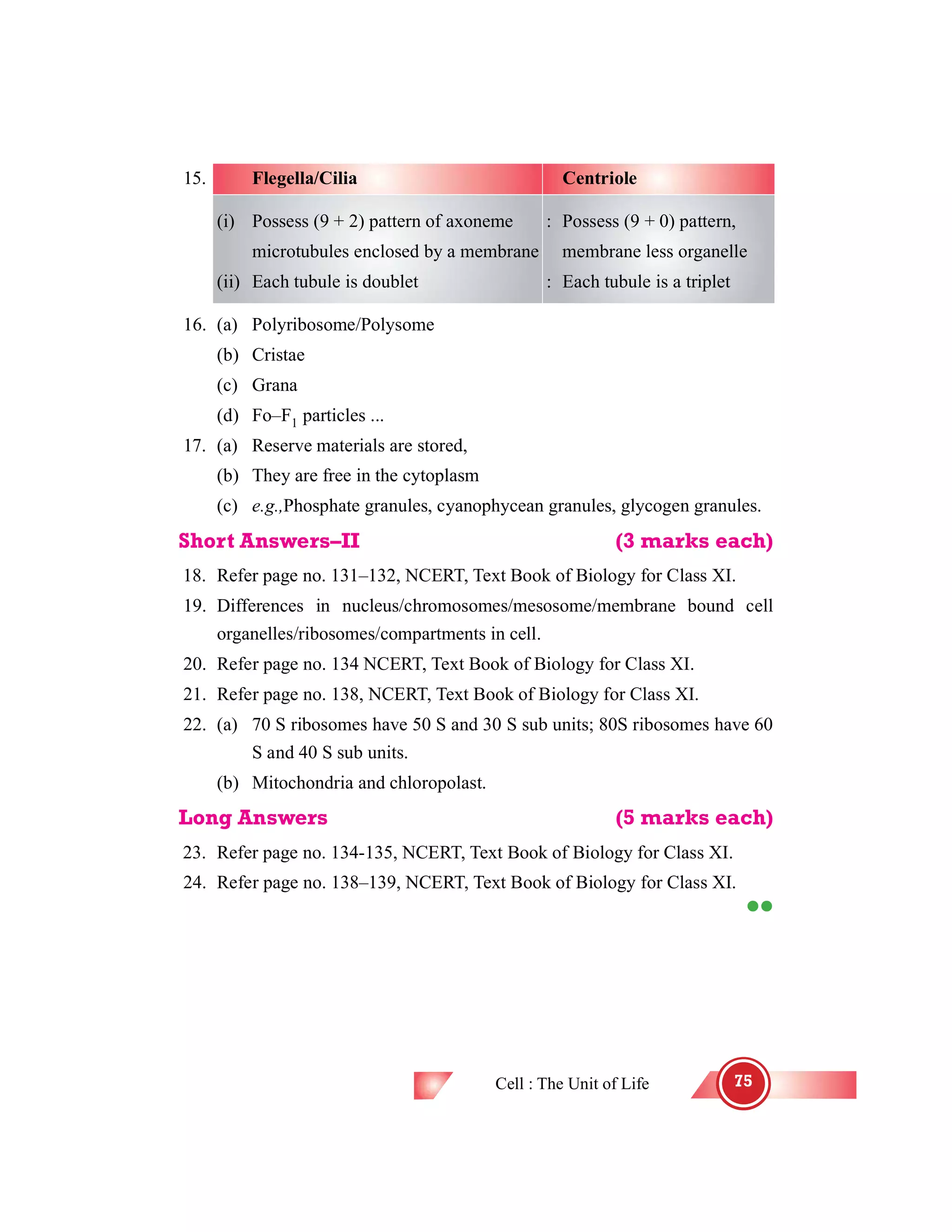
Plastids : Found in plant cells and in euglenoides. Chloroplasts, chromoplasts
and leucoplasts are 3 types of plastids dependingon pigments contained.
Types of Plastids
Chloroplast Chromoplast Leucoplast
(green coloured plastids) carotenoid (fat souble Amyloplast (Starch)
contains chloroghyll, double carotens (give colour to plant parts) Eliaoplasts (oil + fat)
stranded DNA and 70S Xanthophylls. Alecuroplast
ribosomes Others (Yellow, red, orange) (store proteins)
Function : Site of photosynthesis, and imparts colours to fruits and ¯owers.
Chloroplast
Biology Class - 1172
Ribosomes
Composed of RNA and proteins; without membrane. Eucaryotic ribosomes
are 80S. S = Suedberg’s unit)
Function : Site of protein synthesis.
Cytoskeleton : Network of ®laments.
Proteinaceous structure in cytoplasm made up of microtubules and micro
®laments.
Function : Mechanical support, motility, maintenance of the shape of the cell.
Cilia and Flagella
Cilia are small structures which work like oars which help in movement.
Flagella are longer and responsible for cell movement. They are covered
with a plasma membrane. Core is called axoneme which has 9 + 2 arrangement
of axonemal microtubules.
Centrosome and Centrioles
Centrosome contains two cylindrical structures called centrioles. Surounded
by amorphous pericentriolar material. Has 9 + 0 arrangement. Centrioles form the
basal body of cilia or ¯agella and spindle ®bres for cell division in animal cells.
They produces spindle apparatus during cell divison.
Nucleus : With double membrane with perinuclear space and nuclear pores;
has Chromatin, nuclear matrix and nucleoli (site for rRNA synthesis). (Named
by Robert Brown – 1831)
Chromatin DNA + nonhistone proteins. (Named by Flemming)
Nucleoplasm – Nucleolus + Chromatin
Nulear membrane—It is with perinuclear space andnucleopores.
Chromosomes—DNA/RNA + Histone protein/Nonhistone protein.
Centromere : Primary constriction–disc is known as kinetochores.
No nucleus in Erythrocyctes (RBC) of mammals and sieve tubes in vascular
plants.
Chromosomes (on basis of position of centromere) :
Metacentric : Middle centromere.
Sub-metacentric : Centromere nearer to one end of chromosomes.
Acrocentric : Centromere situated close to its end.
Telocentric :Has terminal centromere.
Satellite : Some chromosomes have non-staining secondary constructions at
a constant location, which gives the appearance of small fragment called satellite.
73Cell : The Unit of Life
Questions
Very Short Answer Questions (1 mark each)
1. Name the parts of bacterial ¯agella.
2. Name the nutrient stored in (i) elaioplasts (ii) aleuroplasts
3. Name the scientist who ®rst saw and described a live cell.
4. What are plasmids ?
5. Name the scientist who ®rst explained that new cells arose from pre-existing
cells (Omnis cellule-e-cellula)
6. What is the composition of plasma membrane of human erythrocyte.
7. Eukayotic ribosomes are 80S. What does ‘S’ stand for ?
8. Write the function of cytoskeleton in a cell ?
Short Answer Questions–I (2 marks each)
9. What are nuclear pores ? State their function.
10. State the cell theory.
11. Differentiate between active and passive transport.
12. Differentiate between RER and SER.
13. List two functions of golgi apparatus.
14. List two functions of mesosome.
15. Differentiate between the electron microscopic structure of cilia/¯agella and
centriole.
16. Give the speci®c terms for the following :
(a) Cluster of ribosomes found in cytoplasm
(b) Extensive infolding to the inner membrane of mitochondria
(c) Stacks of closely packed thylakoids
(d) Stalked particles on the inner membrane of mitochondria
17. (a) Write the function of inclusion bodies in prokaryotic cells ?
(b) Where are they present ?
(c) Give two examples of inclusion bodies.
Short Answer Questions–II (3 marks each)
18. With the help of labelled diagram explain t he ‘¯uid mosatic model’structure
of cell membrane.
19. Differentiate between a prokaryotic and eukaryotic cell.
20. What are lysosomes ? How are they formed ? Write their functions.
21. Give the structural details of an eukaryotic nucleus along with its diagram.
Biology Class - 1174
22. The ribosomes of prokaryoters are of 70 S type ribosomes and 80 S type
while of eukaryotes are of 80S type.
(a) Give the composition of 70 S type ribosomes and 80 S type risbosome
(two sub units, from each of them are made of)
(b) Name two cell organelles of eukaryotic cells which have their own
independent ribosomes of 70 S type
Long Answer Questions (5 marks each)
23. (a) Give the structural details of mitochondria.
(b) Draw its diagram.
(c) Why is it called ‘powerhouse of the cell’ ?
24. (a) Diagrammatically represent the types of chromosomes based on the
position of centromere.
(b) What does chromatin contain ?
(c) Waht is perinuclear space ?
Answers
Very Short Answers (1 mark each)
1. Filament, hook, basal body.
2. Elaioplasts : fats and oils.
Aleuroplasts : proteins.
3. Anton Von Leeuwenhoek
4. The small circular DNA, outside the genomic DNA of bacteria.
5. Rudolf Virchow.
6. 52% proteins, 40% lipids.
7. Sedimentation coef®cient (Svedberg unit)
8. Mechanical support, motility, maintenance of shape of cell.
Short Answers–I (2 marks each)
9. Minute pores present in the nuclear envelope; provide passage for movement
of RNA and proteins between nucleus and cytoplasm.
10. Refer ‘Points to Remember’.
12. Refer ‘Points to Remember’.
13. Refer ‘Points to Remember’.
14. Refer ‘Points to Remember’.
75Cell : The Unit of Life
15. Flegella/Cilia Centriole
(i) Possess (9 + 2) pattern of axoneme : Possess (9 + 0) pattern,
microtubules enclosed by a membrane membrane less organelle
(ii) Each tubule is doublet : Each tubule is a triplet
16. (a) Polyribosome/Polysome
(b) Cristae
(c) Grana
(d) Fo–F1 particles ...
17. (a) Reserve materials are stored,
(b) They are free in the cytoplasm
(c) e.g.,Phosphate granules, cyanophycean granules, glycogen granules.
Short Answers–II (3 marks each)
18. Refer page no. 131–132, NCERT, Text Book of Biology for Class XI.
19. Differences in nucleus/chromosomes/mesosome/membrane bound cell
organelles/ribosomes/compartments in cell.
20. Refer page no. 134 NCERT, Text Book of Biology for Class XI.
21. Refer page no. 138, NCERT, Text Book of Biology for Class XI.
22. (a) 70 S ribosomes have 50 S and 30 S sub units; 80S ribosomes have 60
S and 40 S sub units.
(b) Mitochondria and chloropolast.
Long Answers (5 marks each)
23. Refer page no. 134-135, NCERT, Text Book of Biology for Class XI.
24. Refer page no. 138–139, NCERT, Text Book of Biology for Class XI.


Cell and Cellular Process - The Unit of Life

  • 1.
    Biology Class -1168 Points to Remember Cell Theory : Cell Theory was formulated by Scheleiden and Schwann, and was modi®ed by Rudolf Virchow. Cell theory States. (A) All living organisms are composed of cells and products of cells. (B) All cells arise from pre-existing cells. Cell : Cell is the structural and functional unit of life. Prokaryotic Cell Eukaryotic Cells  Generally small sized (1–10 m)  Generally large sized (5–10 m)  Well de®ned nucleus absent  Well de®ned nucleus present  Membrane bounded cell organelles  Membrane bounded cell organelles absent present  DNA without histone covering  DNA with histone covering e.g., Bacteria, Mycoplasma, Blue e.g., Amoeba, Euglena and other green Algae higher organism Prokaryotic Cell Cell envelope  Gram positive bacteria  Gram negative bacteria  Bacteria that take up gram  Bacteria do not take up gram stain Stain. e.g., Bacillus escherichia coli Modification of cell envelope  Slime layer : Clycocalyx in form of loose sheath.  Capsule : Glycocalyx in form of thick and tough sheath.  Mesosomes : Extension of plasma membrane. These can be in the form of vesicles, tubules and lamellae.
  • 2.
    69Cell : TheUnit of Life Functions : Cell was formation, DNAreplication and distribution to daughter cells, respiration, secretion processes, to increase surface area of plasma membrane and enzyme content.  Flagella : Extension of cell wall. It is composed of three structure–®lament, hook and basal body. They help in motility of bacteria.  Pili and ®mbriae : Surface structure of some bacteria which attaches them to rocks in streams and to host tissues. Genetic Material : It is not covered by nuclear envelope. In addition to the genomic DNA(the single chromosome/circular DNA), many bacteria have small circular self replicating, double straned DNAwhich is called as plasmid, plasmid contain genes like antibiotic resistance. Eukaryotic cells Possess an oragnized nucleus with nuclear envelope and have a variety of complex locomotory and cytoskeletal structures. Cell Membrane—Singer and Nicolson (1972) gave ‘¯uid mosaic model’. According to this the quasi-¯uid nature of lipid enables lateral movement of proteins within the overall bilayer; two types of proteins (Peripheral and integral proteins) with cholesterol, glycolipids and glycoporteins. Erythrocyte membrane has 52% protein and 40% lipids. Function—It is semi permeable and helps in transport of molecule across it. Passive transport Active transport  Transport of molecules from  Transport of molecules from lower to higher to lower concentration. higher concentration  It do not utilise energy (ATP).  It utilises energy (ATP) e.g., diffusion e.g., Na+/k+ ATPase Pump. Fluid Mosaic Model of Plasma Membrane
  • 3.
    Biology Class -1170 Cell Wall is non-living rigid structure which gives shape to the cell and protects cell from mechanical damage and infection, helps in cell-to-cell interaction and provides barrier to undsirable macromolecules. Cell wall of algae is made of cellulose, galactans, mannans and minerals like calcium carbonate. Plant cell wall consists of cellulose, hemicellulose, pectins and proteins. Middle lamella is made of calcium pectate which holds neighbouring cells together. Plasmodesmata connect the cytplasm of neighbouring cells. Endoplasmic Reticulum (ER) Consists of network of tiny tubular structure. ER divides the intracellular space into two distinct compartments–luminal (inside ER) and extra luminal (cytoplasm). (i) Rough Endoplasmic Reticulum (RER) : Ribosomes attached to outer surface. Function :  Involved in protein synthesis and secretion. (ii) Smooth Endoplasmic Reticulum (SER) :  Lack ribosomes. Function  Site for synthesis of lipid. Golgi apparatus : First observed by Camillo Golgi (in 1898) Consist of cisternae stacked parallel to each other. Two faces of the organelle are convex/cis or forming face and concave/trans or maturing face. Functions : Performs packaging of materials, to be delivered either to the intra-cellar targets or secreted outside the cell. Important site of formation of glycoproteins and glycolipids. Lysosomes : Membrane bound vesicular structures formed by the process of packaging in the golgi apparatus. Contain hydrolysing enzymes (lipases, proteases, carbohydroses) which are active in acidic pH. Also called ‘Suicidal Bag’. Function : Intracellular digestion. Vacuoles : Member bound space found in the cytoplasm. Contain water, sap, excretory product, etc. In plant cell, vacoule occupies 90% of space. Function : In plants tonoplast (single membrane of vacuole) faciliates transport of ions and other substances. Contractile vacuole for excretion in Amoeba and food vacuoles formed in protists for digestion of food.
  • 4.
    71Cell : TheUnit of Life Mitochondria : Double membraned structure. Out membrane smooth and innermembrane forms a number of infoldings called cristaeThe inner compartment is called matrix. The cristae increase the surface area. Function : Sites of aerobic respiration. Called ’power houses’ of cell as produce cellular energy in the form ofATP. Matrix possesses single circular DNA molecule, a few RNA molecules, ribsomes (70S). It divides by binary ®ssion. Plastids : Found in plant cells and in euglenoides. Chloroplasts, chromoplasts and leucoplasts are 3 types of plastids dependingon pigments contained. Types of Plastids Chloroplast Chromoplast Leucoplast (green coloured plastids) carotenoid (fat souble Amyloplast (Starch) contains chloroghyll, double carotens (give colour to plant parts) Eliaoplasts (oil + fat) stranded DNA and 70S Xanthophylls. Alecuroplast ribosomes Others (Yellow, red, orange) (store proteins) Function : Site of photosynthesis, and imparts colours to fruits and ¯owers. Chloroplast
  • 5.
    Biology Class -1172 Ribosomes Composed of RNA and proteins; without membrane. Eucaryotic ribosomes are 80S. S = Suedberg’s unit) Function : Site of protein synthesis. Cytoskeleton : Network of ®laments. Proteinaceous structure in cytoplasm made up of microtubules and micro ®laments. Function : Mechanical support, motility, maintenance of the shape of the cell. Cilia and Flagella Cilia are small structures which work like oars which help in movement. Flagella are longer and responsible for cell movement. They are covered with a plasma membrane. Core is called axoneme which has 9 + 2 arrangement of axonemal microtubules. Centrosome and Centrioles Centrosome contains two cylindrical structures called centrioles. Surounded by amorphous pericentriolar material. Has 9 + 0 arrangement. Centrioles form the basal body of cilia or ¯agella and spindle ®bres for cell division in animal cells. They produces spindle apparatus during cell divison. Nucleus : With double membrane with perinuclear space and nuclear pores; has Chromatin, nuclear matrix and nucleoli (site for rRNA synthesis). (Named by Robert Brown – 1831) Chromatin DNA + nonhistone proteins. (Named by Flemming) Nucleoplasm – Nucleolus + Chromatin Nulear membrane—It is with perinuclear space andnucleopores. Chromosomes—DNA/RNA + Histone protein/Nonhistone protein. Centromere : Primary constriction–disc is known as kinetochores. No nucleus in Erythrocyctes (RBC) of mammals and sieve tubes in vascular plants. Chromosomes (on basis of position of centromere) : Metacentric : Middle centromere. Sub-metacentric : Centromere nearer to one end of chromosomes. Acrocentric : Centromere situated close to its end. Telocentric :Has terminal centromere. Satellite : Some chromosomes have non-staining secondary constructions at a constant location, which gives the appearance of small fragment called satellite.
  • 6.
    73Cell : TheUnit of Life Questions Very Short Answer Questions (1 mark each) 1. Name the parts of bacterial ¯agella. 2. Name the nutrient stored in (i) elaioplasts (ii) aleuroplasts 3. Name the scientist who ®rst saw and described a live cell. 4. What are plasmids ? 5. Name the scientist who ®rst explained that new cells arose from pre-existing cells (Omnis cellule-e-cellula) 6. What is the composition of plasma membrane of human erythrocyte. 7. Eukayotic ribosomes are 80S. What does ‘S’ stand for ? 8. Write the function of cytoskeleton in a cell ? Short Answer Questions–I (2 marks each) 9. What are nuclear pores ? State their function. 10. State the cell theory. 11. Differentiate between active and passive transport. 12. Differentiate between RER and SER. 13. List two functions of golgi apparatus. 14. List two functions of mesosome. 15. Differentiate between the electron microscopic structure of cilia/¯agella and centriole. 16. Give the speci®c terms for the following : (a) Cluster of ribosomes found in cytoplasm (b) Extensive infolding to the inner membrane of mitochondria (c) Stacks of closely packed thylakoids (d) Stalked particles on the inner membrane of mitochondria 17. (a) Write the function of inclusion bodies in prokaryotic cells ? (b) Where are they present ? (c) Give two examples of inclusion bodies. Short Answer Questions–II (3 marks each) 18. With the help of labelled diagram explain t he ‘¯uid mosatic model’structure of cell membrane. 19. Differentiate between a prokaryotic and eukaryotic cell. 20. What are lysosomes ? How are they formed ? Write their functions. 21. Give the structural details of an eukaryotic nucleus along with its diagram.
  • 7.
    Biology Class -1174 22. The ribosomes of prokaryoters are of 70 S type ribosomes and 80 S type while of eukaryotes are of 80S type. (a) Give the composition of 70 S type ribosomes and 80 S type risbosome (two sub units, from each of them are made of) (b) Name two cell organelles of eukaryotic cells which have their own independent ribosomes of 70 S type Long Answer Questions (5 marks each) 23. (a) Give the structural details of mitochondria. (b) Draw its diagram. (c) Why is it called ‘powerhouse of the cell’ ? 24. (a) Diagrammatically represent the types of chromosomes based on the position of centromere. (b) What does chromatin contain ? (c) Waht is perinuclear space ? Answers Very Short Answers (1 mark each) 1. Filament, hook, basal body. 2. Elaioplasts : fats and oils. Aleuroplasts : proteins. 3. Anton Von Leeuwenhoek 4. The small circular DNA, outside the genomic DNA of bacteria. 5. Rudolf Virchow. 6. 52% proteins, 40% lipids. 7. Sedimentation coef®cient (Svedberg unit) 8. Mechanical support, motility, maintenance of shape of cell. Short Answers–I (2 marks each) 9. Minute pores present in the nuclear envelope; provide passage for movement of RNA and proteins between nucleus and cytoplasm. 10. Refer ‘Points to Remember’. 12. Refer ‘Points to Remember’. 13. Refer ‘Points to Remember’. 14. Refer ‘Points to Remember’.
  • 8.
    75Cell : TheUnit of Life 15. Flegella/Cilia Centriole (i) Possess (9 + 2) pattern of axoneme : Possess (9 + 0) pattern, microtubules enclosed by a membrane membrane less organelle (ii) Each tubule is doublet : Each tubule is a triplet 16. (a) Polyribosome/Polysome (b) Cristae (c) Grana (d) Fo–F1 particles ... 17. (a) Reserve materials are stored, (b) They are free in the cytoplasm (c) e.g.,Phosphate granules, cyanophycean granules, glycogen granules. Short Answers–II (3 marks each) 18. Refer page no. 131–132, NCERT, Text Book of Biology for Class XI. 19. Differences in nucleus/chromosomes/mesosome/membrane bound cell organelles/ribosomes/compartments in cell. 20. Refer page no. 134 NCERT, Text Book of Biology for Class XI. 21. Refer page no. 138, NCERT, Text Book of Biology for Class XI. 22. (a) 70 S ribosomes have 50 S and 30 S sub units; 80S ribosomes have 60 S and 40 S sub units. (b) Mitochondria and chloropolast. Long Answers (5 marks each) 23. Refer page no. 134-135, NCERT, Text Book of Biology for Class XI. 24. Refer page no. 138–139, NCERT, Text Book of Biology for Class XI. 