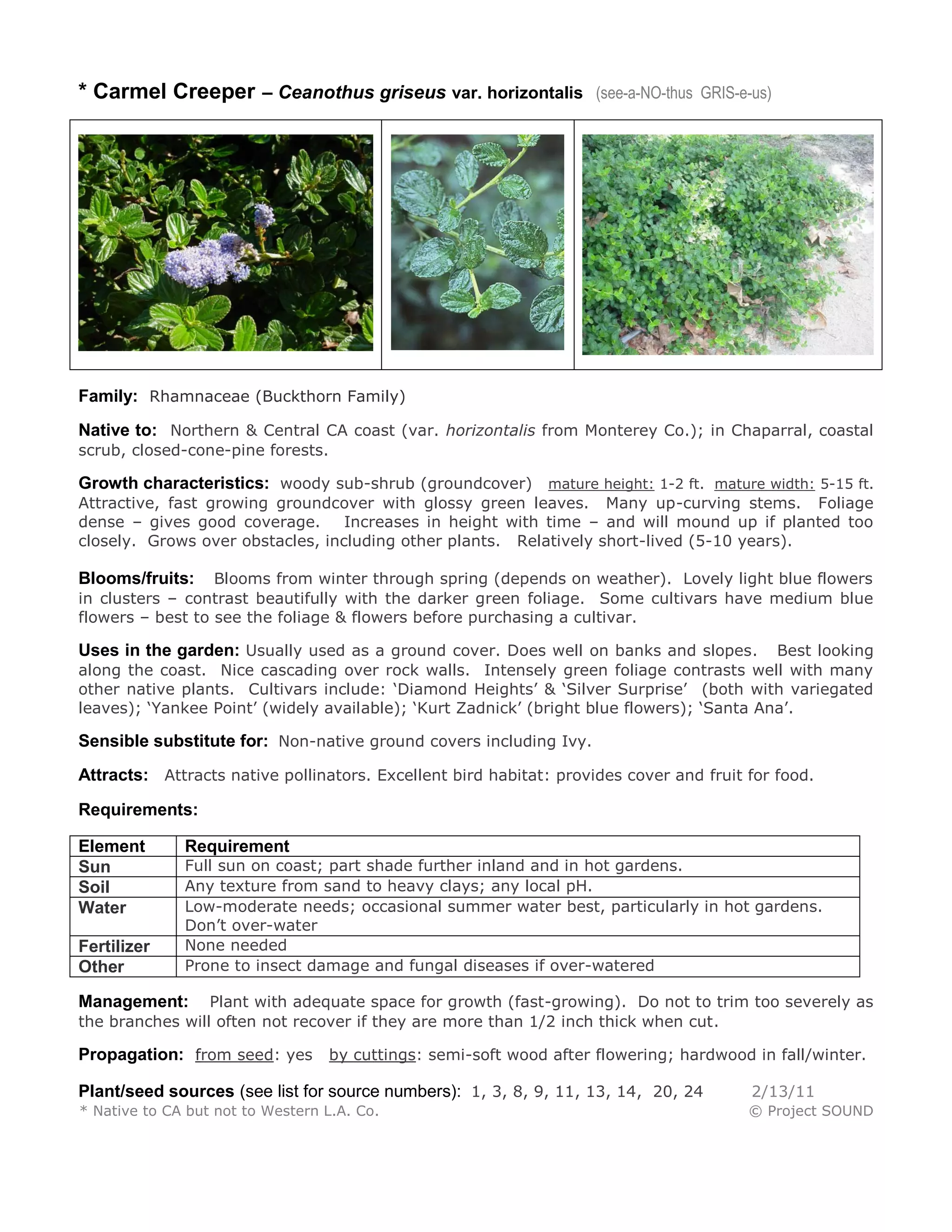
* Carmel Creeper – Ceanothus griseus var. horizontalis

(see-a-NO-thus GRIS-e-us)

Family: Rhamnaceae (Buckthorn Family)
Native to: Northern & Central CA coast (var. horizontalis from Monterey Co.); in Chaparral, coastal
scrub, closed-cone-pine forests.

Growth characteristics: woody sub-shrub (groundcover) mature height: 1-2 ft. mature width: 5-15 ft.
Attractive, fast growing groundcover with glossy green leaves. Many up-curving stems. Foliage
dense – gives good coverage.
Increases in height with time – and will mound up if planted too
closely. Grows over obstacles, including other plants. Relatively short-lived (5-10 years).
Blooms from winter through spring (depends on weather). Lovely light blue flowers
in clusters – contrast beautifully with the darker green foliage. Some cultivars have medium blue
flowers – best to see the foliage & flowers before purchasing a cultivar.

Blooms/fruits:

Uses in the garden: Usually used as a ground cover. Does well on banks and slopes.

Best looking
along the coast. Nice cascading over rock walls. Intensely green foliage contrasts well with many
other native plants. Cultivars include: ‘Diamond Heights’ & ‘Silver Surprise’ (both with variegated
leaves); ‘Yankee Point’ (widely available); ‘Kurt Zadnick’ (bright blue flowers); ‘Santa Ana’.

Sensible substitute for: Non-native ground covers including Ivy.
Attracts: Attracts native pollinators. Excellent bird habitat: provides cover and fruit for food.
Requirements:
Element
Sun
Soil
Water
Fertilizer
Other

Requirement

Full sun on coast; part shade further inland and in hot gardens.
Any texture from sand to heavy clays; any local pH.
Low-moderate needs; occasional summer water best, particularly in hot gardens.
Don’t over-water
None needed
Prone to insect damage and fungal diseases if over-watered

Plant with adequate space for growth (fast-growing). Do not to trim too severely as
the branches will often not recover if they are more than 1/2 inch thick when cut.

Management:

Propagation: from seed: yes by cuttings: semi-soft wood after flowering; hardwood in fall/winter.
Plant/seed sources (see list for source numbers): 1, 3, 8, 9, 11, 13, 14, 20, 24

2/13/11

* Native to CA but not to Western L.A. Co.

© Project SOUND

Ceanothus griseus

  • 1.
    * Carmel Creeper– Ceanothus griseus var. horizontalis (see-a-NO-thus GRIS-e-us) Family: Rhamnaceae (Buckthorn Family) Native to: Northern & Central CA coast (var. horizontalis from Monterey Co.); in Chaparral, coastal scrub, closed-cone-pine forests. Growth characteristics: woody sub-shrub (groundcover) mature height: 1-2 ft. mature width: 5-15 ft. Attractive, fast growing groundcover with glossy green leaves. Many up-curving stems. Foliage dense – gives good coverage. Increases in height with time – and will mound up if planted too closely. Grows over obstacles, including other plants. Relatively short-lived (5-10 years). Blooms from winter through spring (depends on weather). Lovely light blue flowers in clusters – contrast beautifully with the darker green foliage. Some cultivars have medium blue flowers – best to see the foliage & flowers before purchasing a cultivar. Blooms/fruits: Uses in the garden: Usually used as a ground cover. Does well on banks and slopes. Best looking along the coast. Nice cascading over rock walls. Intensely green foliage contrasts well with many other native plants. Cultivars include: ‘Diamond Heights’ & ‘Silver Surprise’ (both with variegated leaves); ‘Yankee Point’ (widely available); ‘Kurt Zadnick’ (bright blue flowers); ‘Santa Ana’. Sensible substitute for: Non-native ground covers including Ivy. Attracts: Attracts native pollinators. Excellent bird habitat: provides cover and fruit for food. Requirements: Element Sun Soil Water Fertilizer Other Requirement Full sun on coast; part shade further inland and in hot gardens. Any texture from sand to heavy clays; any local pH. Low-moderate needs; occasional summer water best, particularly in hot gardens. Don’t over-water None needed Prone to insect damage and fungal diseases if over-watered Plant with adequate space for growth (fast-growing). Do not to trim too severely as the branches will often not recover if they are more than 1/2 inch thick when cut. Management: Propagation: from seed: yes by cuttings: semi-soft wood after flowering; hardwood in fall/winter. Plant/seed sources (see list for source numbers): 1, 3, 8, 9, 11, 13, 14, 20, 24 2/13/11 * Native to CA but not to Western L.A. Co. © Project SOUND