Presented at CCSBE,Victora BC, May 2013
by
Norris Krueger, Max Planck Institute & Entrepreneurship Northwest
(thanks to great colleagues, Mellani Day,Angela Stanton, IsabellWelpe
and so many more)
Neuroentrepreneurship:
What Can Entrepreneurship Scholars
& Educators (& Practitioners) Learn
from Neuroscience?
Example: Libet, et.al.
(1983):
 Experimenter can detect intent almost 500
milliseconds before subject perceives it
 Suggests neurological antecedents to:
 Intentions
 Behavior
 What does this mean with regards to
antecedents of entrepreneurial intent?
Why Neuro-entrepreneurship?
 Behavior starts at the “neuro” level
 Current methods don’t reach this deep
 Opportunity to ask questions:
 That we could not answer before
 That we couldn’t think to ask before
 In a better way
 To get better answers then ever before
Latest Work such as...
 Entrepreneurship becoming focus?
 Sahakian team – 'hot' cognitions
 Wald team - dopamine
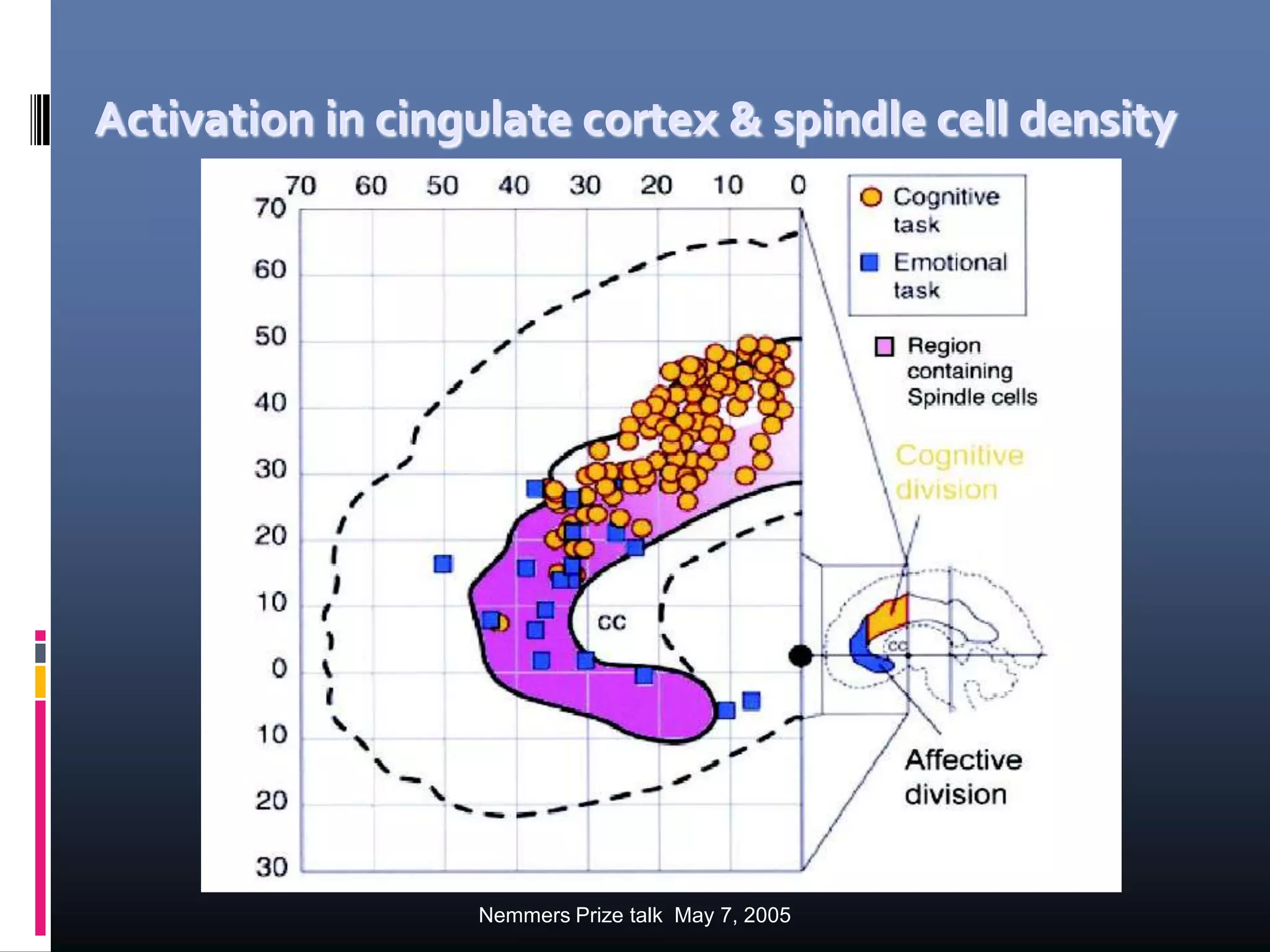
Nemmers Prize talk May 7, 2005
Activation in cingulate cortex & spindle cell density
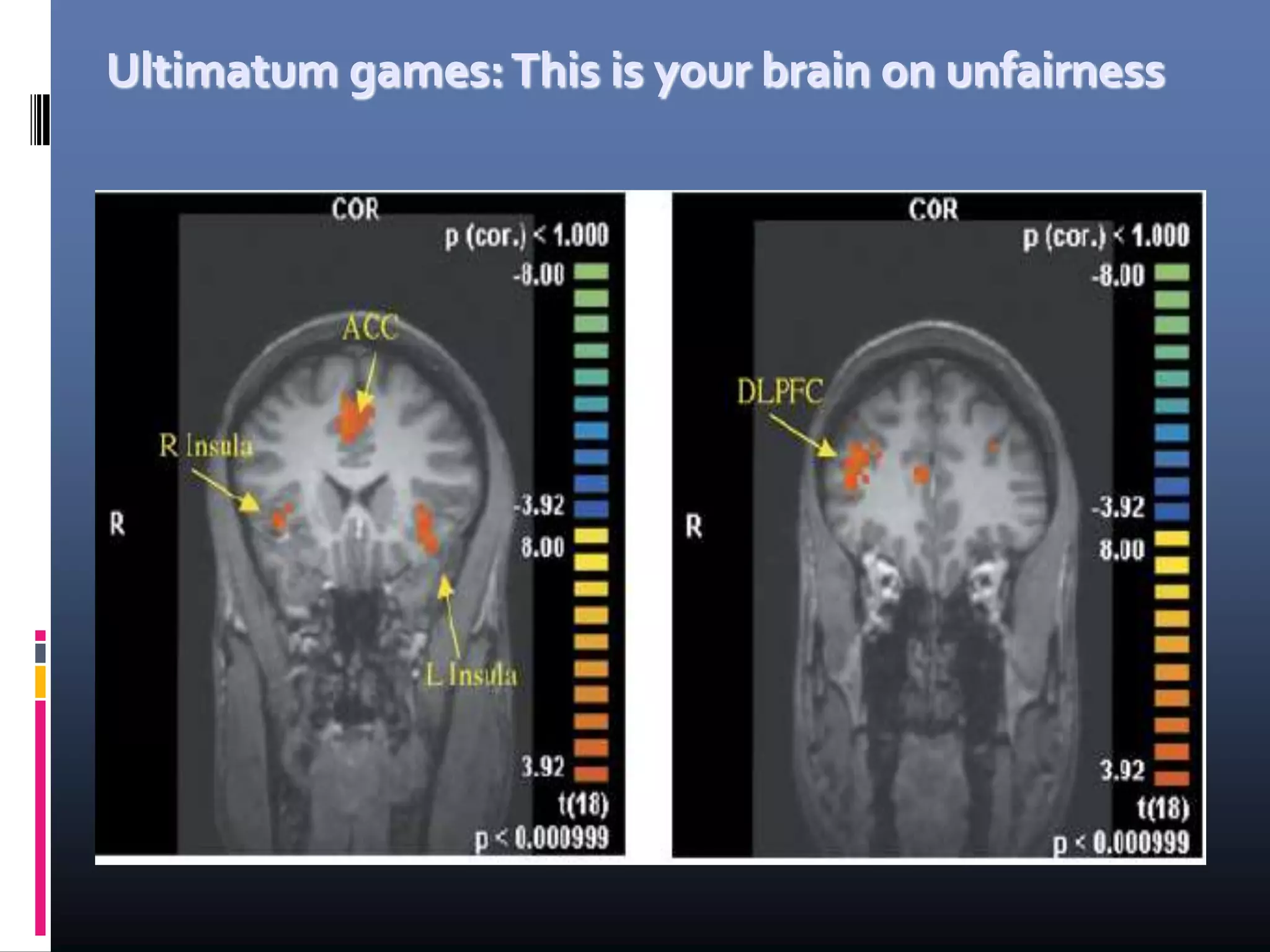
Ultimatum games:This is your brain on unfairness
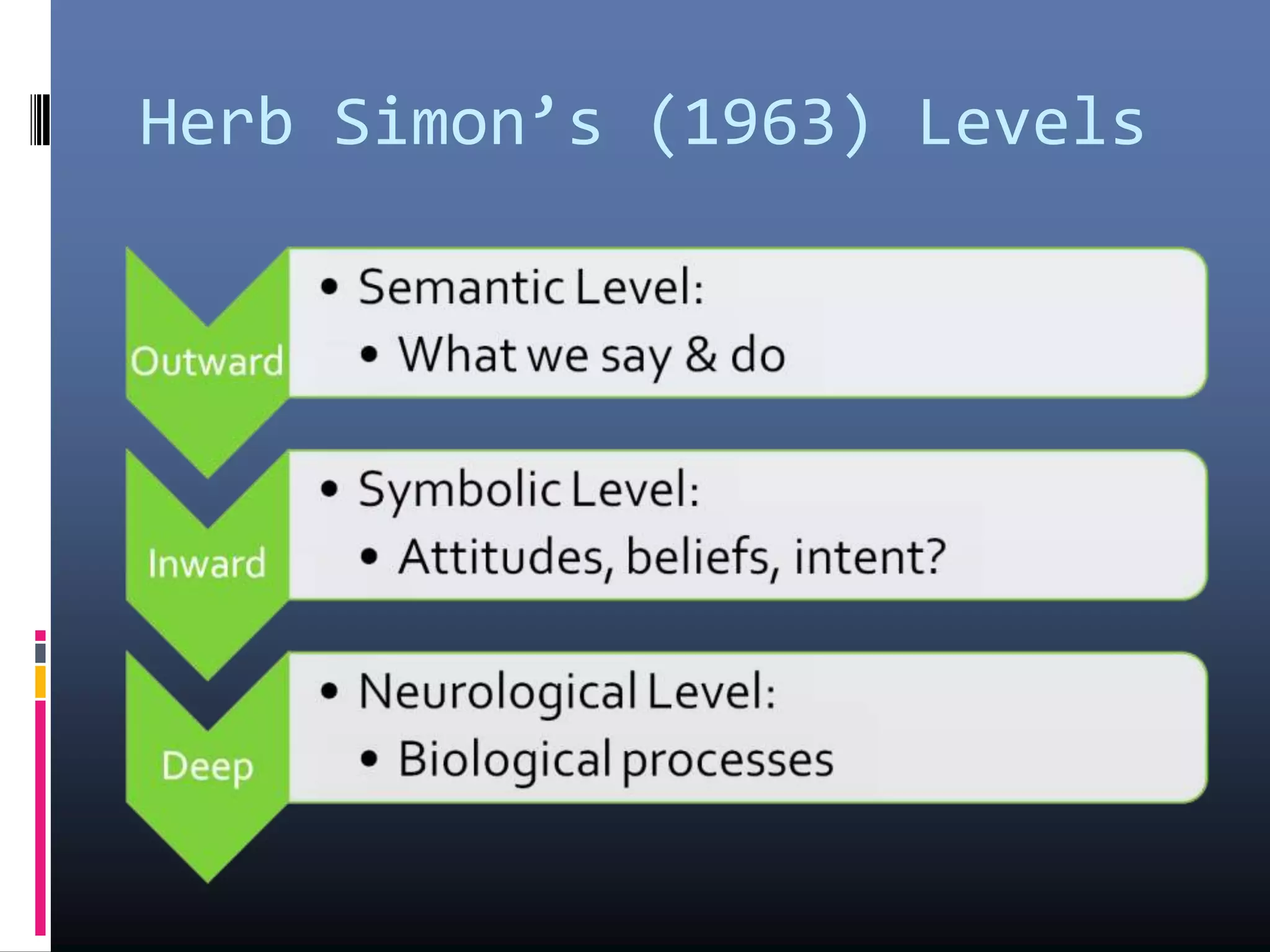
Herb Simon’s (1963) Levels
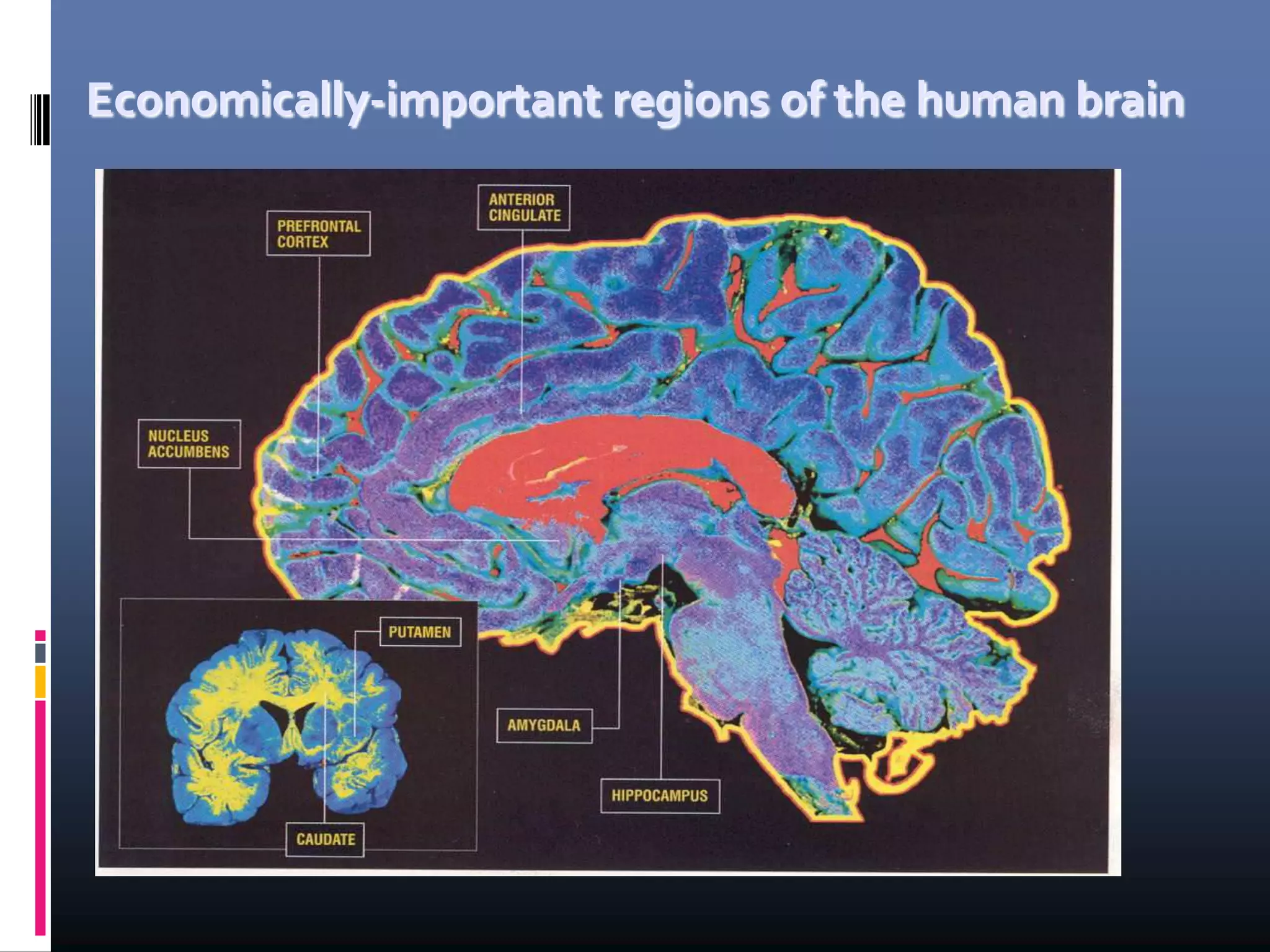
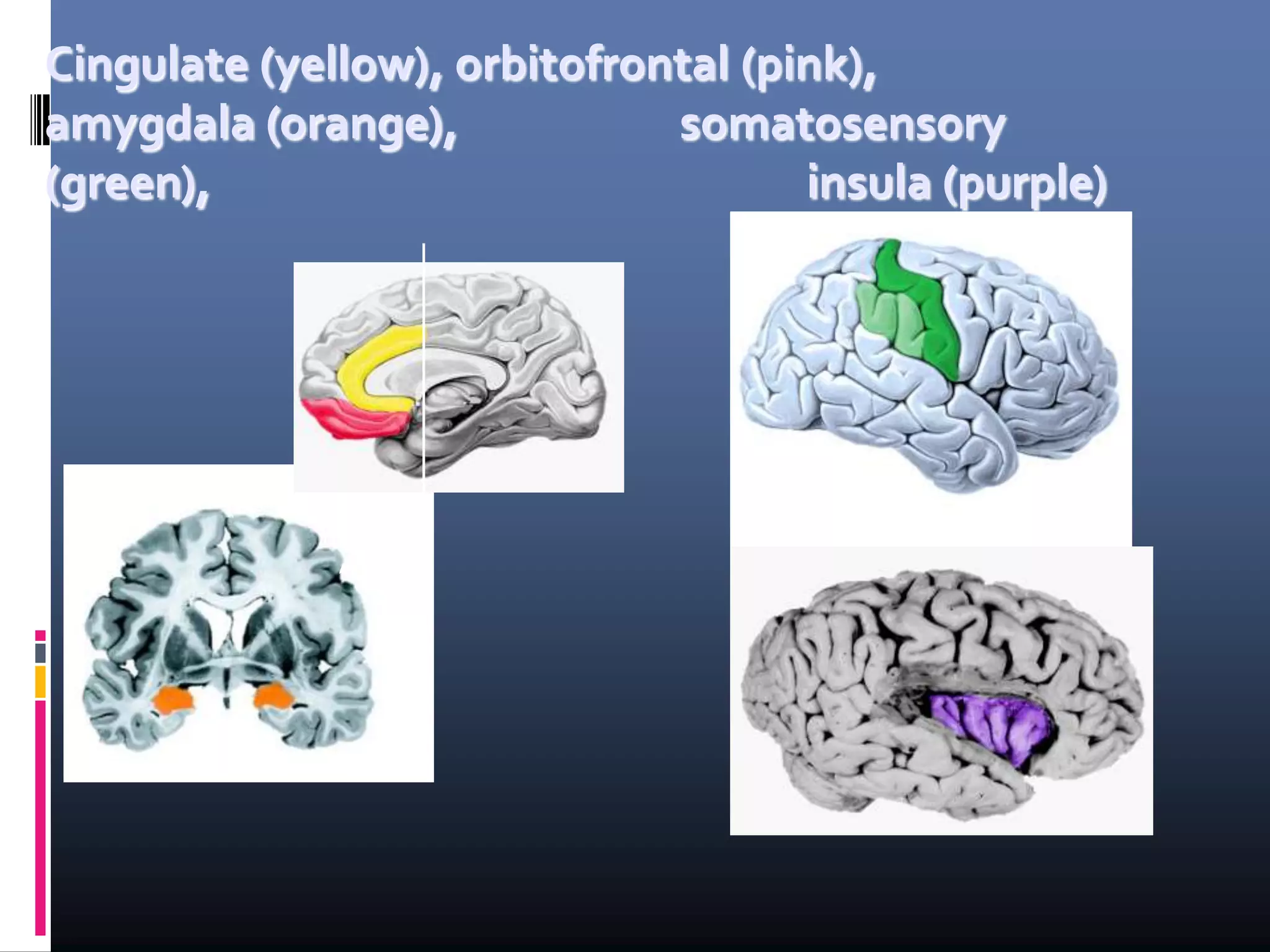
Economically-important regions of the human brain
Cingulate (yellow), orbitofrontal (pink),
amygdala (orange), somatosensory
(green), insula (purple)
Neuroeconomics has shown us
that Experimental Methods Can:
 Reveal gaps in current theory
 Lead to better specified hypotheses and
propositions (Dolan 2008).
 Identify and analyze antecedent states and
their effects upon decision-making
 Identify reflexive versus reflective behaviors
and effects
What can neuroscience
offer?
 Look into the “ultimate black box”
 Rigorous experimental methodologies
 Can allow us to:
 Understand deeper structures of entrepreneurial
cognition
 Map pre-decisional dynamics
 Conceptualize and measure entrepreneurial
decision-making
 Overcome “retrospective bias” and the
interactions among independent variables
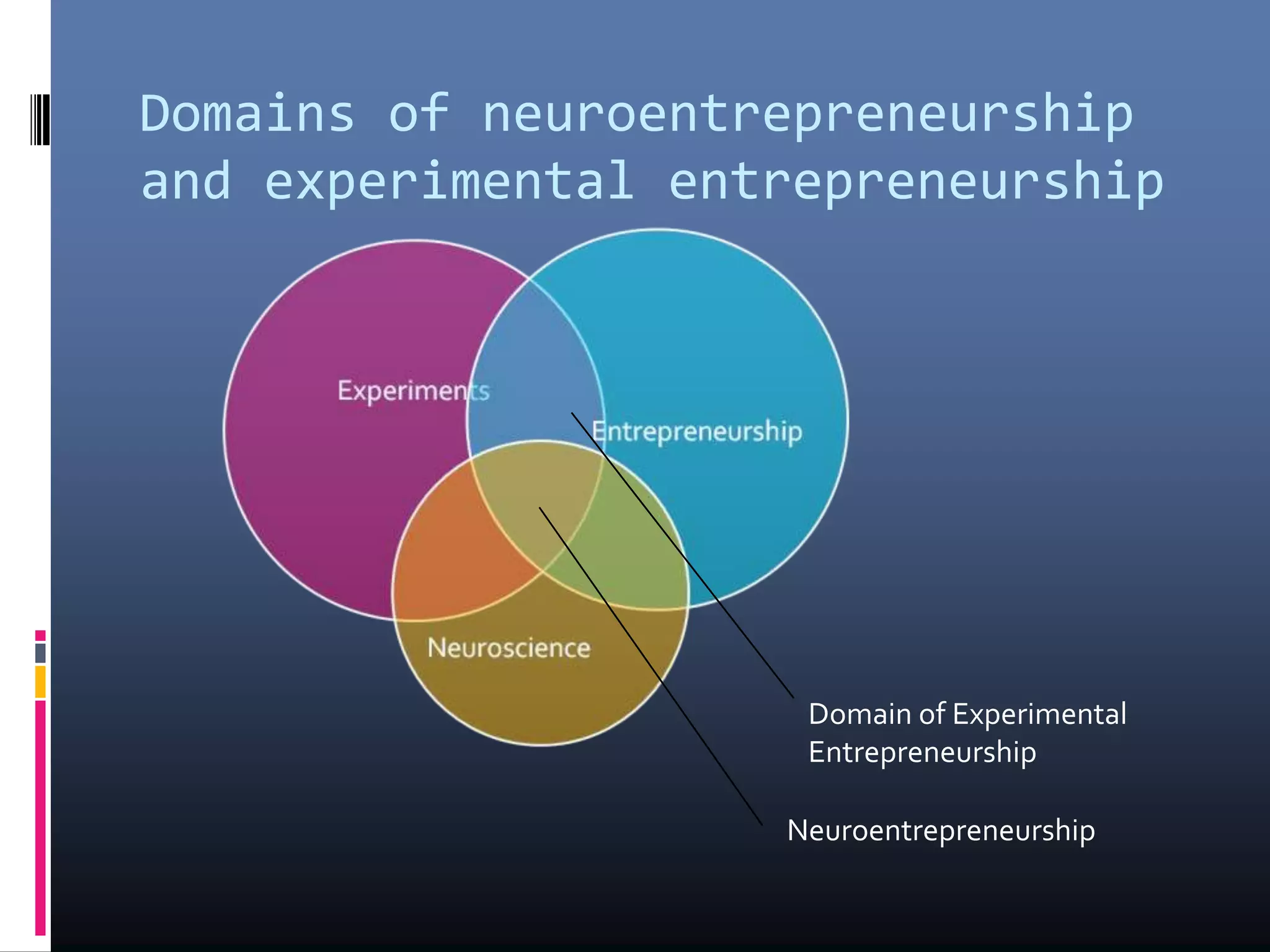
Domains of neuroentrepreneurship
and experimental entrepreneurship
Domain of Experimental
Entrepreneurship
Neuroentrepreneurship
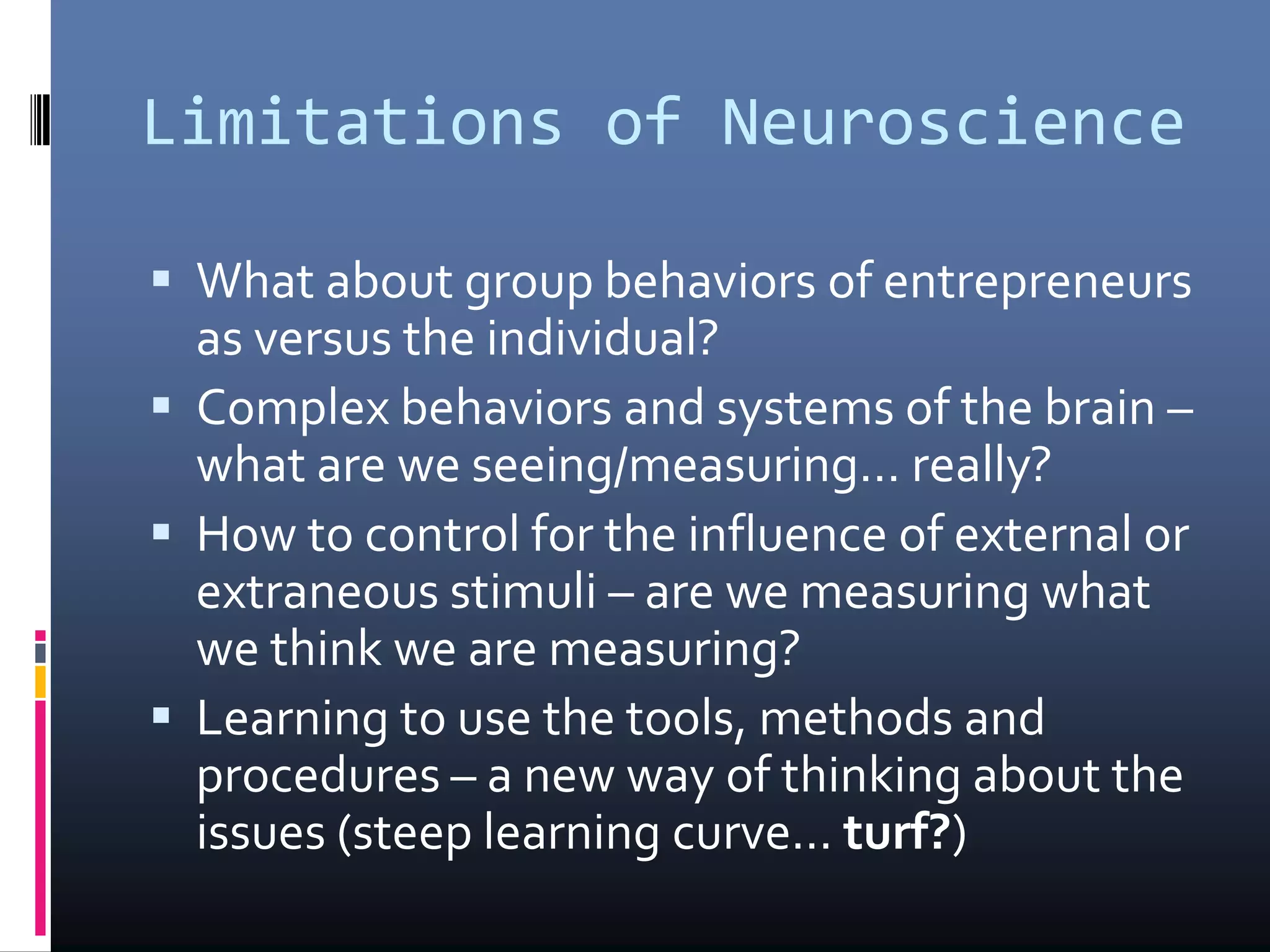
Limitations of Neuroscience
 What about group behaviors of entrepreneurs
as versus the individual?
 Complex behaviors and systems of the brain –
what are we seeing/measuring… really?
 How to control for the influence of external or
extraneous stimuli – are we measuring what
we think we are measuring?
 Learning to use the tools, methods and
procedures – a new way of thinking about the
issues (steep learning curve... turf?)
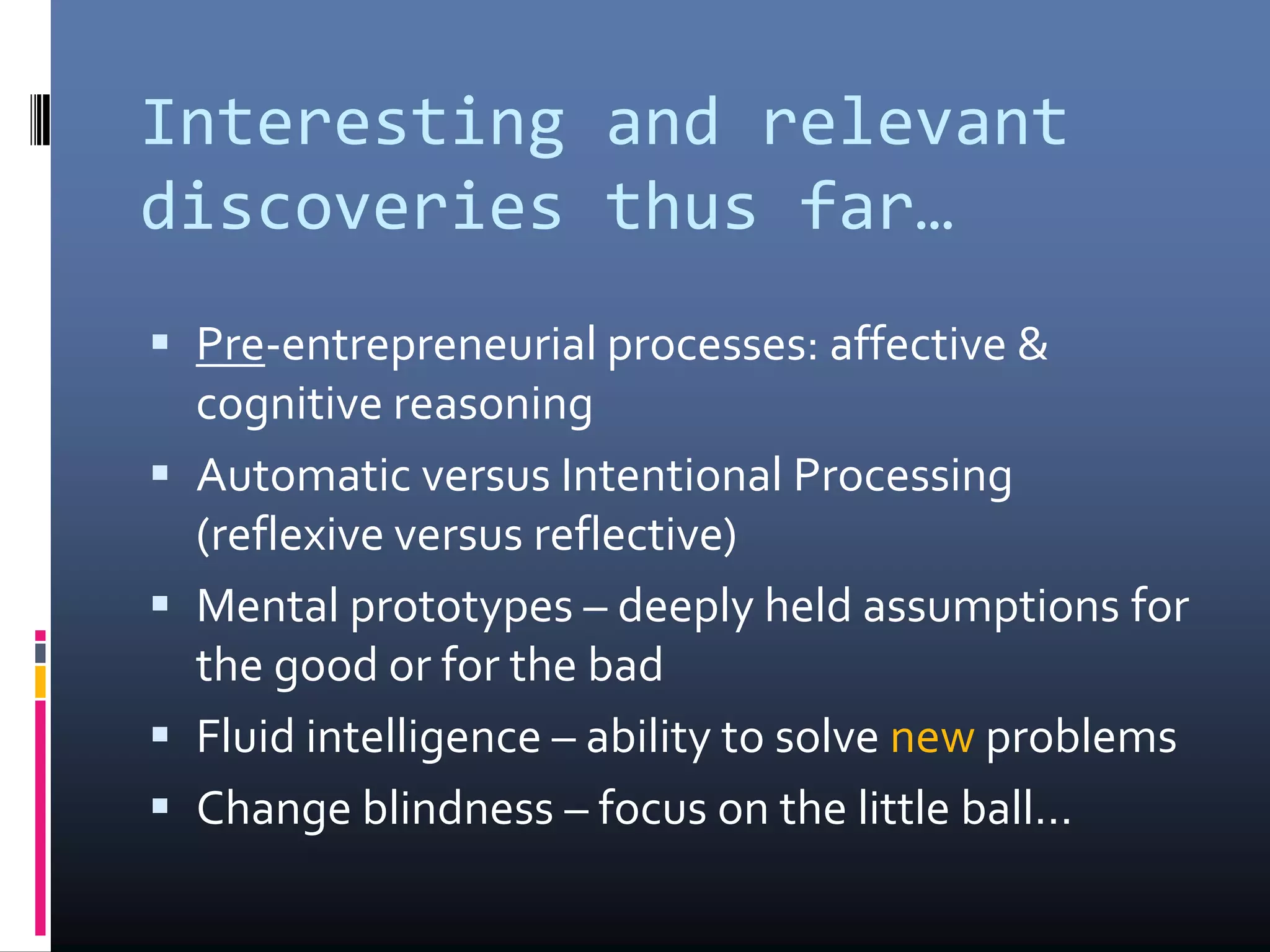
Interesting and relevant
discoveries thus far…
 Pre-entrepreneurial processes: affective &
cognitive reasoning
 Automatic versus Intentional Processing
(reflexive versus reflective)
 Mental prototypes – deeply held assumptions for
the good or for the bad
 Fluid intelligence – ability to solve new problems
 Change blindness – focus on the little ball…
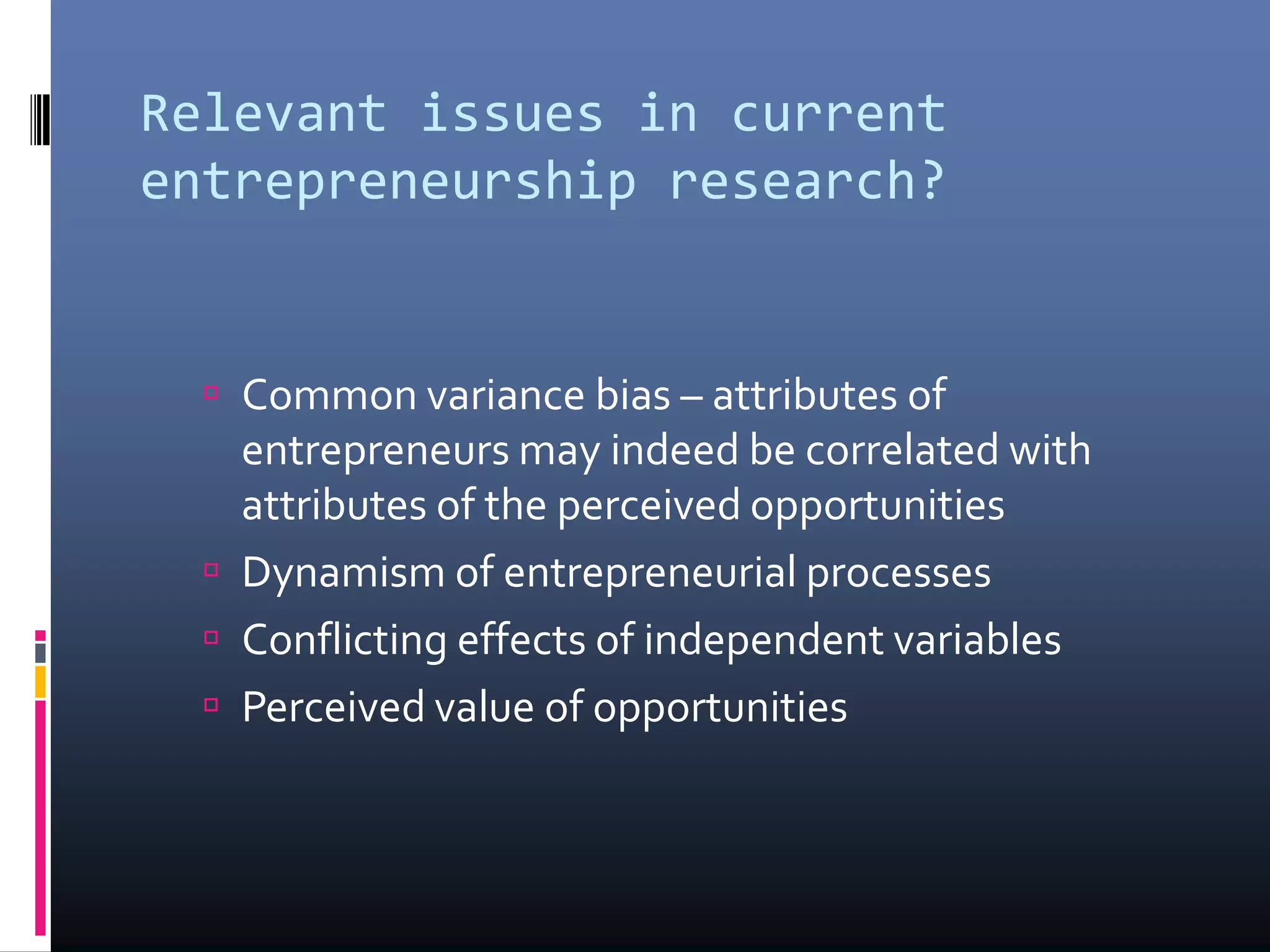
Relevant issues in current
entrepreneurship research?
 Common variance bias – attributes of
entrepreneurs may indeed be correlated with
attributes of the perceived opportunities
 Dynamism of entrepreneurial processes
 Conflicting effects of independent variables
 Perceived value of opportunities
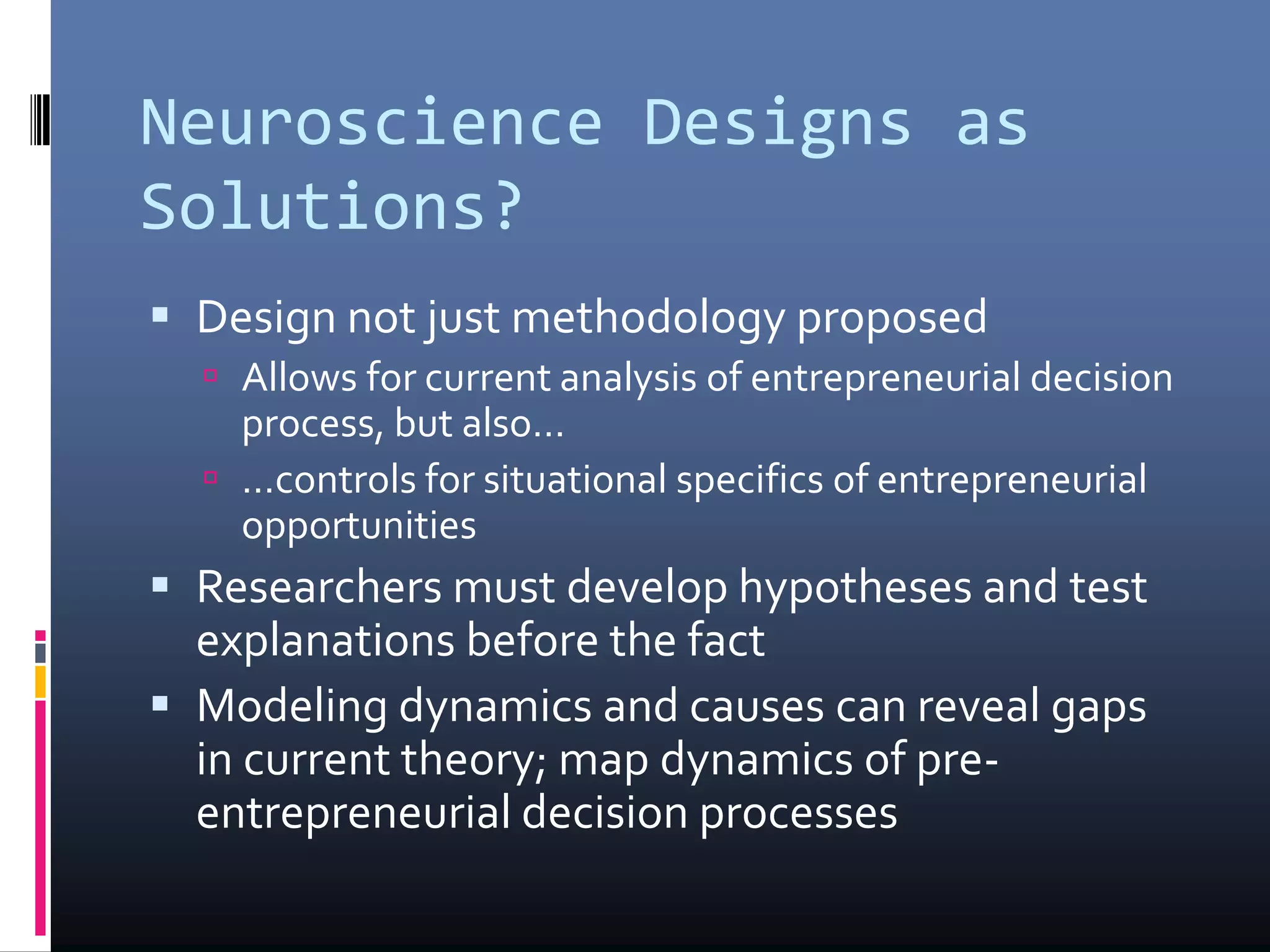
Neuroscience Designs as
Solutions?
 Design not just methodology proposed
 Allows for current analysis of entrepreneurial decision
process, but also…
 …controls for situational specifics of entrepreneurial
opportunities
 Researchers must develop hypotheses and test
explanations before the fact
 Modeling dynamics and causes can reveal gaps
in current theory; map dynamics of pre-
entrepreneurial decision processes
Where to begin? What questions
might we start with?
 Deeper cognitive structures (Mitchell, 2000)
 E.g. Detect entrepreneurial scripts and switches
(on/off)?
 When does the idea become an opportunity?
 When is that opportunity triggered as something to
act upon?
 Detecting discontinuous changes – “Aha!”
Potential topics for research?
 Behavioral DecisionTheory:
 Framing Effects and Paradoxes
 Preferences
 Utilities
 GameTheory
 Perceptions
 Emotions & Affect
 Affect
 Passion & Fear
 Trust
 Much, much more – applications in your area
of research
Conclusion
 Neuroscience methodologies and designs
have much to offer
 Could substantially advance the field of
entrepreneurship
 Exciting new world to explore and apply
 We will undoubtedly be surprised and may
very well have to change some current beliefs
and assumptions
Thank you!
Norris.krueger@gmail.com
@entrep_thinking (also FB, L-In)
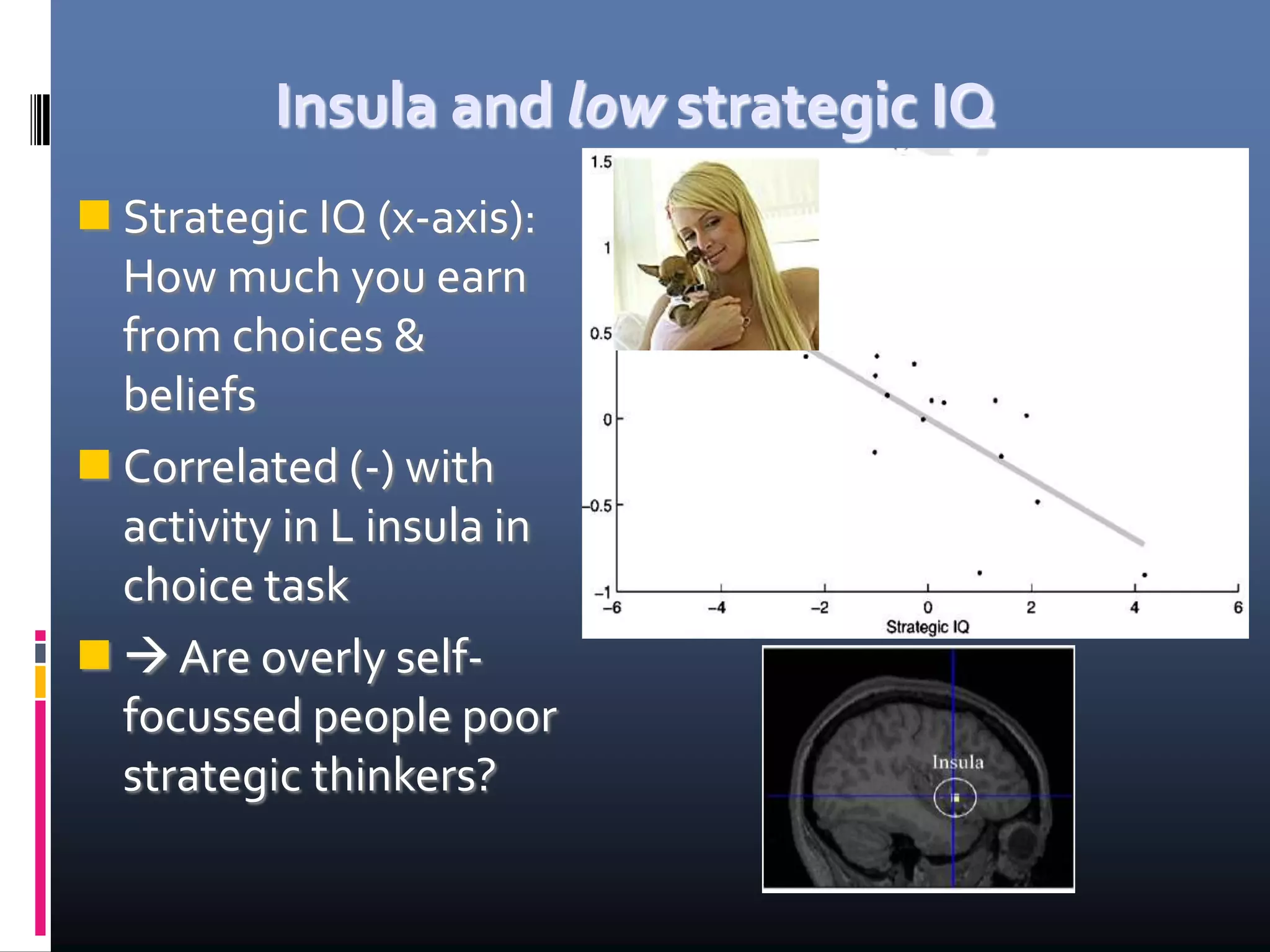
Insula and low strategic IQ
 Strategic IQ (x-axis):
How much you earn
from choices &
beliefs
 Correlated (-) with
activity in L insula in
choice task
  Are overly self-
focussed people poor
strategic thinkers?
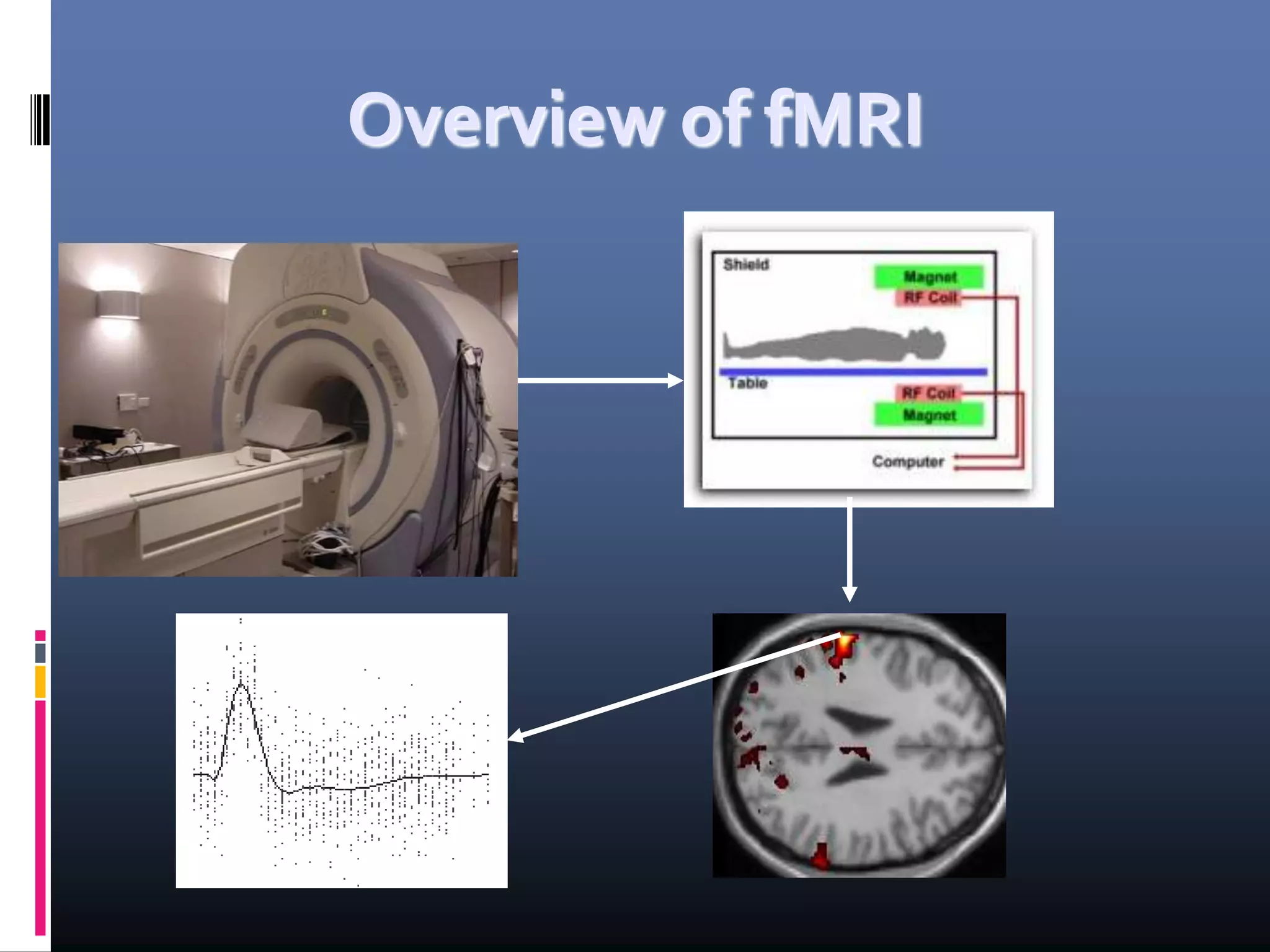
Overview of fMRI
Example: Entrepreneurial Opportunity
 Various issues in current research:
 Dependent and independent variables not
specified or confounding variables not recognized
or controlled for (Shane, 2000, 2004;
Venkataraman, 1997)
 Static versus dynamic perspective
 Opportunity characteristics not recognized or
matched with entrepreneur
 Absence of experimental approaches

CCSBE 2013 neuroentrepreneurship

  • 1.
    Presented at CCSBE,VictoraBC, May 2013 by Norris Krueger, Max Planck Institute & Entrepreneurship Northwest (thanks to great colleagues, Mellani Day,Angela Stanton, IsabellWelpe and so many more) Neuroentrepreneurship: What Can Entrepreneurship Scholars & Educators (& Practitioners) Learn from Neuroscience?
  • 2.
    Example: Libet, et.al. (1983): Experimenter can detect intent almost 500 milliseconds before subject perceives it  Suggests neurological antecedents to:  Intentions  Behavior  What does this mean with regards to antecedents of entrepreneurial intent?
  • 3.
    Why Neuro-entrepreneurship?  Behaviorstarts at the “neuro” level  Current methods don’t reach this deep  Opportunity to ask questions:  That we could not answer before  That we couldn’t think to ask before  In a better way  To get better answers then ever before
  • 4.
    Latest Work suchas...  Entrepreneurship becoming focus?  Sahakian team – 'hot' cognitions  Wald team - dopamine
  • 5.
    Nemmers Prize talkMay 7, 2005 Activation in cingulate cortex & spindle cell density
  • 6.
    Ultimatum games:This isyour brain on unfairness
  • 7.
  • 8.
  • 9.
    Cingulate (yellow), orbitofrontal(pink), amygdala (orange), somatosensory (green), insula (purple)
  • 10.
    Neuroeconomics has shownus that Experimental Methods Can:  Reveal gaps in current theory  Lead to better specified hypotheses and propositions (Dolan 2008).  Identify and analyze antecedent states and their effects upon decision-making  Identify reflexive versus reflective behaviors and effects
  • 11.
    What can neuroscience offer? Look into the “ultimate black box”  Rigorous experimental methodologies  Can allow us to:  Understand deeper structures of entrepreneurial cognition  Map pre-decisional dynamics  Conceptualize and measure entrepreneurial decision-making  Overcome “retrospective bias” and the interactions among independent variables
  • 12.
    Domains of neuroentrepreneurship andexperimental entrepreneurship Domain of Experimental Entrepreneurship Neuroentrepreneurship
  • 13.
    Limitations of Neuroscience What about group behaviors of entrepreneurs as versus the individual?  Complex behaviors and systems of the brain – what are we seeing/measuring… really?  How to control for the influence of external or extraneous stimuli – are we measuring what we think we are measuring?  Learning to use the tools, methods and procedures – a new way of thinking about the issues (steep learning curve... turf?)
  • 14.
    Interesting and relevant discoveriesthus far…  Pre-entrepreneurial processes: affective & cognitive reasoning  Automatic versus Intentional Processing (reflexive versus reflective)  Mental prototypes – deeply held assumptions for the good or for the bad  Fluid intelligence – ability to solve new problems  Change blindness – focus on the little ball…
  • 15.
    Relevant issues incurrent entrepreneurship research?  Common variance bias – attributes of entrepreneurs may indeed be correlated with attributes of the perceived opportunities  Dynamism of entrepreneurial processes  Conflicting effects of independent variables  Perceived value of opportunities
  • 16.
    Neuroscience Designs as Solutions? Design not just methodology proposed  Allows for current analysis of entrepreneurial decision process, but also…  …controls for situational specifics of entrepreneurial opportunities  Researchers must develop hypotheses and test explanations before the fact  Modeling dynamics and causes can reveal gaps in current theory; map dynamics of pre- entrepreneurial decision processes
  • 17.
    Where to begin?What questions might we start with?  Deeper cognitive structures (Mitchell, 2000)  E.g. Detect entrepreneurial scripts and switches (on/off)?  When does the idea become an opportunity?  When is that opportunity triggered as something to act upon?  Detecting discontinuous changes – “Aha!”
  • 18.
    Potential topics forresearch?  Behavioral DecisionTheory:  Framing Effects and Paradoxes  Preferences  Utilities  GameTheory  Perceptions  Emotions & Affect  Affect  Passion & Fear  Trust  Much, much more – applications in your area of research
  • 19.
    Conclusion  Neuroscience methodologiesand designs have much to offer  Could substantially advance the field of entrepreneurship  Exciting new world to explore and apply  We will undoubtedly be surprised and may very well have to change some current beliefs and assumptions
  • 20.
  • 21.
    Insula and lowstrategic IQ  Strategic IQ (x-axis): How much you earn from choices & beliefs  Correlated (-) with activity in L insula in choice task   Are overly self- focussed people poor strategic thinkers?
  • 22.
  • 23.
    Example: Entrepreneurial Opportunity Various issues in current research:  Dependent and independent variables not specified or confounding variables not recognized or controlled for (Shane, 2000, 2004; Venkataraman, 1997)  Static versus dynamic perspective  Opportunity characteristics not recognized or matched with entrepreneur  Absence of experimental approaches