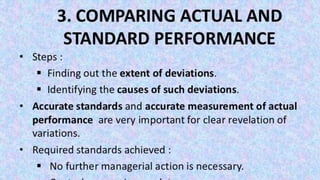
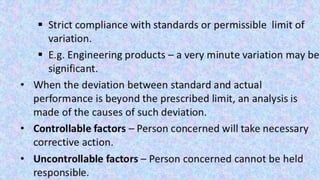
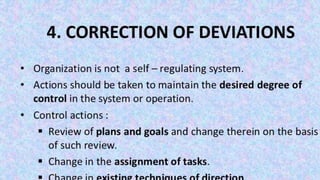
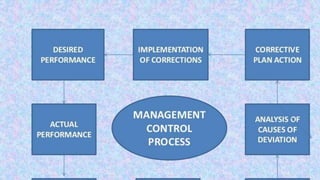

Meaning of Controlling
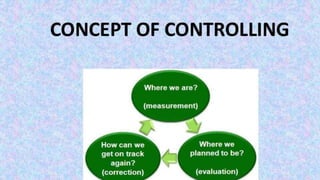
 Controlling is a pervasive managerial function which
ensures that the activities in an organization are
performed as per the plans, using resources efficiently
and effectively for the achievement of predetermined
goals by setting performance standards, measuring
actual performance, comparing actual performance
with the standards set, analyzing the deviations and
taking corrective actions.
Importance of Controlling
 Accomplishing organizational goals
 Judging accuracy of standards
 Making efficient use of resources
 Improving employee motivation
 Ensuring order and discipline
 Facilitating coordination in action
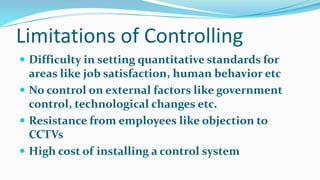
Limitations of Controlling
 Difficulty in setting quantitative standards for
areas like job satisfaction, human behavior etc
 No control on external factors like government
control, technological changes etc.
 Resistance from employees like objection to
CCTVs
 High cost of installing a control system
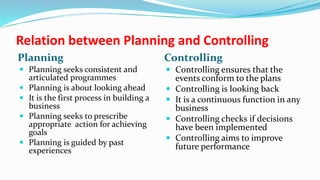
Relation between Planning and Controlling
Planning Controlling
 Planning seeks consistent and
articulated programmes
 Planning is about looking ahead
 It is the first process in building a
business
 Planning seeks to prescribe
appropriate action for achieving
goals
 Planning is guided by past
experiences
 Controlling ensures that the
events conform to the plans
 Controlling is looking back
 It is a continuous function in any
business
 Controlling checks if decisions
have been implemented
 Controlling aims to improve
future performance
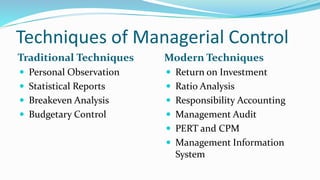
Techniques of Managerial Control
Traditional Techniques Modern Techniques
 Personal Observation
 Statistical Reports
 Breakeven Analysis
 Budgetary Control
 Return on Investment
 Ratio Analysis
 Responsibility Accounting
 Management Audit
 PERT and CPM
 Management Information
System
CBSE XII Business Studies Chapter 8 Controlling

CBSE XII Business Studies Chapter 8 Controlling

  • 3.
    Meaning of Controlling Controlling is a pervasive managerial function which ensures that the activities in an organization are performed as per the plans, using resources efficiently and effectively for the achievement of predetermined goals by setting performance standards, measuring actual performance, comparing actual performance with the standards set, analyzing the deviations and taking corrective actions.
  • 4.
    Importance of Controlling Accomplishing organizational goals  Judging accuracy of standards  Making efficient use of resources  Improving employee motivation  Ensuring order and discipline  Facilitating coordination in action
  • 5.
    Limitations of Controlling Difficulty in setting quantitative standards for areas like job satisfaction, human behavior etc  No control on external factors like government control, technological changes etc.  Resistance from employees like objection to CCTVs  High cost of installing a control system
  • 6.
    Relation between Planningand Controlling Planning Controlling  Planning seeks consistent and articulated programmes  Planning is about looking ahead  It is the first process in building a business  Planning seeks to prescribe appropriate action for achieving goals  Planning is guided by past experiences  Controlling ensures that the events conform to the plans  Controlling is looking back  It is a continuous function in any business  Controlling checks if decisions have been implemented  Controlling aims to improve future performance
  • 13.
    Techniques of ManagerialControl Traditional Techniques Modern Techniques  Personal Observation  Statistical Reports  Breakeven Analysis  Budgetary Control  Return on Investment  Ratio Analysis  Responsibility Accounting  Management Audit  PERT and CPM  Management Information System