Case Study Presentation on
KOTA FIBRES LTD.

Presented by :- Chandresh
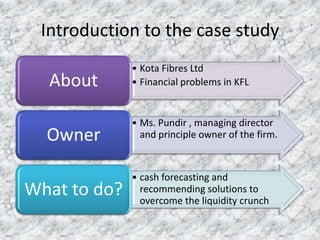
Introduction to the case study
About

• Kota Fibres Ltd
• Financial problems in KFL

Owner

• Ms. Pundir , managing director
and principle owner of the firm.

What to do?

• cash forecasting and
recommending solutions to
overcome the liquidity crunch
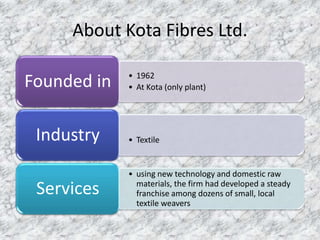
About Kota Fibres Ltd.
Founded in
Industry

Services

• 1962
• At Kota (only plant)

• Textile

• using new technology and domestic raw
materials, the firm had developed a steady
franchise among dozens of small, local
textile weavers
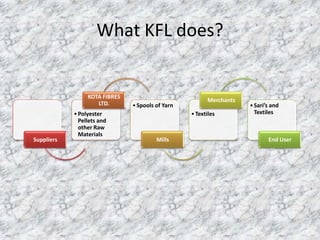
What KFL does?

KOTA FIBRES
LTD.

Suppliers

• Polyester
Pellets and
other Raw
Materials

• Spools of Yarn

Merchants
• Textiles

Mills

• Sari’s and
Textiles

End User
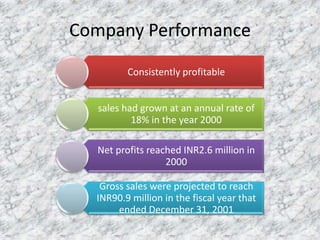
Company Performance
Consistently profitable
sales had grown at an annual rate of
18% in the year 2000
Net profits reached INR2.6 million in
2000
Gross sales were projected to reach
INR90.9 million in the fiscal year that
ended December 31, 2001
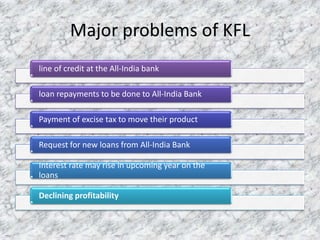
Major problems of KFL
line of credit at the All-India bank
loan repayments to be done to All-India Bank
Payment of excise tax to move their product
Request for new loans from All-India Bank

Interest rate may rise in upcoming year on the
loans
Declining profitability
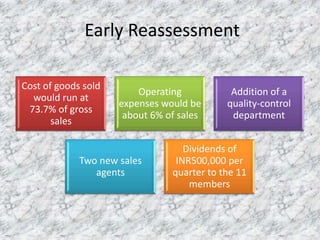
Early Reassessment
Cost of goods sold
would run at
73.7% of gross
sales

Operating
expenses would be
about 6% of sales

Two new sales
agents

Addition of a
quality-control
department

Dividends of
INR500,000 per
quarter to the 11
members
Result
Financial Ratios
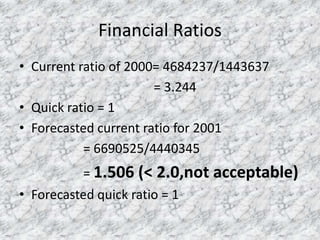
• Current ratio of 2000= 4684237/1443637
= 3.244
• Quick ratio = 1
• Forecasted current ratio for 2001
= 6690525/4440345
= 1.506 (< 2.0,not acceptable)

• Forecasted quick ratio = 1
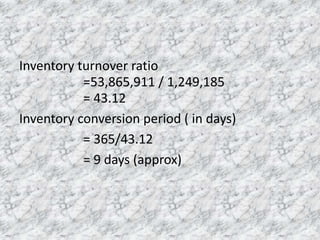
Inventory turnover ratio
=53,865,911 / 1,249,185
= 43.12
Inventory conversion period ( in days)
= 365/43.12
= 9 days (approx)
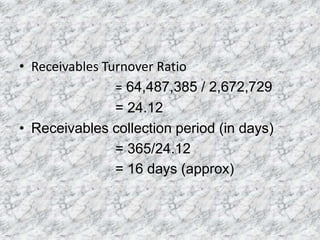
• Receivables Turnover Ratio
= 64,487,385 / 2,672,729
= 24.12
• Receivables collection period (in days)
= 365/24.12
= 16 days (approx)
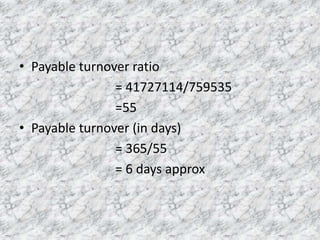
• Payable turnover ratio
= 41727114/759535
=55
• Payable turnover (in days)
= 365/55
= 6 days approx
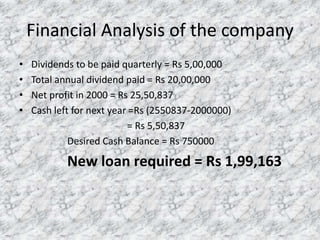
Financial Analysis of the company
•
•
•
•

Dividends to be paid quarterly = Rs 5,00,000
Total annual dividend paid = Rs 20,00,000
Net profit in 2000 = Rs 25,50,837
Cash left for next year =Rs (2550837-2000000)
= Rs 5,50,837
Desired Cash Balance = Rs 750000

New loan required = Rs 1,99,163
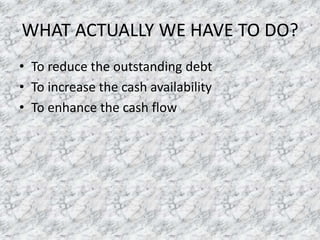
WHAT ACTUALLY WE HAVE TO DO?
• To reduce the outstanding debt
• To increase the cash availability
• To enhance the cash flow
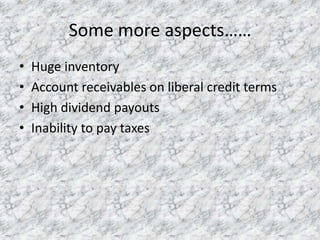
Some more aspects……
•
•
•
•

Huge inventory
Account receivables on liberal credit terms
High dividend payouts
Inability to pay taxes
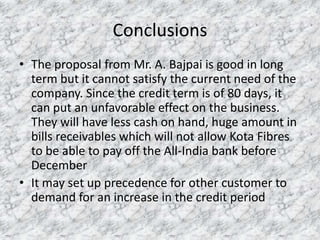
Conclusions
• The proposal from Mr. A. Bajpai is good in long
term but it cannot satisfy the current need of the
company. Since the credit term is of 80 days, it
can put an unfavorable effect on the business.
They will have less cash on hand, huge amount in
bills receivables which will not allow Kota Fibres
to be able to pay off the All-India bank before
December
• It may set up precedence for other customer to
demand for an increase in the credit period
• Proposals from the Transportation Manager
and the Purchasing manager should be
considered seriously. It can result in less
inventory expenditures and can increase the
amount of overall liquidity.
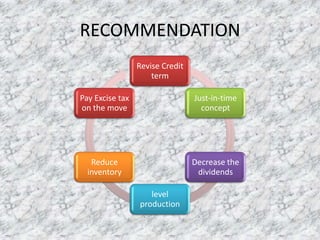
RECOMMENDATION
Revise Credit
term
Pay Excise tax
on the move

Just-in-time
concept

Reduce
inventory

Decrease the
dividends
level
production
Credit Term
• Since the company has a huge accounts
receivable , it must check out its credit term.
• It may reduce its credit term from 45 to 30
days
Just-in-time concept
• Hibachi Chemicals of Yokohama can account
for 35% of our raw - material purchases
• It would reduce the inventory of pellets from
60 days outstanding to only 7 to 10 days
Reduced Dividends
• Since the company is providing a huge
dividend of Rs 500000 quarterly to Ms.
Pundir’s extended family, it must reduce its
dividend by 50% or go for half-yearly dividend
in place of quarterly payment
• It will provide more cash in hand to overcome
the requirements in the peak season
• csf.xlsx
Level Production
• Gross profit margin would rise by 2% or 3%
• Level production entails lower manufacturing
risk
• Seasonal hirings and layoffs would no longer
be necessary
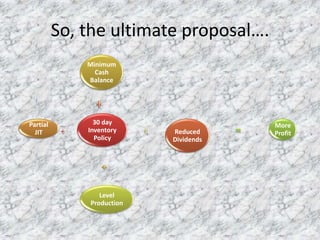
So, the ultimate proposal….
Minimum
Cash
Balance

Partial
JIT

30 day
Inventory
Policy

Level
Production

Reduced
Dividends

More
Profit
Case study presentation on kota fibers limited

Case study presentation on kota fibers limited

  • 1.
    Case Study Presentationon KOTA FIBRES LTD. Presented by :- Chandresh
  • 2.
    Introduction to thecase study About • Kota Fibres Ltd • Financial problems in KFL Owner • Ms. Pundir , managing director and principle owner of the firm. What to do? • cash forecasting and recommending solutions to overcome the liquidity crunch
  • 3.
    About Kota FibresLtd. Founded in Industry Services • 1962 • At Kota (only plant) • Textile • using new technology and domestic raw materials, the firm had developed a steady franchise among dozens of small, local textile weavers
  • 4.
    What KFL does? KOTAFIBRES LTD. Suppliers • Polyester Pellets and other Raw Materials • Spools of Yarn Merchants • Textiles Mills • Sari’s and Textiles End User
  • 5.
    Company Performance Consistently profitable saleshad grown at an annual rate of 18% in the year 2000 Net profits reached INR2.6 million in 2000 Gross sales were projected to reach INR90.9 million in the fiscal year that ended December 31, 2001
  • 6.
    Major problems ofKFL line of credit at the All-India bank loan repayments to be done to All-India Bank Payment of excise tax to move their product Request for new loans from All-India Bank Interest rate may rise in upcoming year on the loans Declining profitability
  • 7.
    Early Reassessment Cost ofgoods sold would run at 73.7% of gross sales Operating expenses would be about 6% of sales Two new sales agents Addition of a quality-control department Dividends of INR500,000 per quarter to the 11 members
  • 8.
  • 9.
    Financial Ratios • Currentratio of 2000= 4684237/1443637 = 3.244 • Quick ratio = 1 • Forecasted current ratio for 2001 = 6690525/4440345 = 1.506 (< 2.0,not acceptable) • Forecasted quick ratio = 1
  • 10.
    Inventory turnover ratio =53,865,911/ 1,249,185 = 43.12 Inventory conversion period ( in days) = 365/43.12 = 9 days (approx)
  • 11.
    • Receivables TurnoverRatio = 64,487,385 / 2,672,729 = 24.12 • Receivables collection period (in days) = 365/24.12 = 16 days (approx)
  • 12.
    • Payable turnoverratio = 41727114/759535 =55 • Payable turnover (in days) = 365/55 = 6 days approx
  • 13.
    Financial Analysis ofthe company • • • • Dividends to be paid quarterly = Rs 5,00,000 Total annual dividend paid = Rs 20,00,000 Net profit in 2000 = Rs 25,50,837 Cash left for next year =Rs (2550837-2000000) = Rs 5,50,837 Desired Cash Balance = Rs 750000 New loan required = Rs 1,99,163
  • 14.
    WHAT ACTUALLY WEHAVE TO DO? • To reduce the outstanding debt • To increase the cash availability • To enhance the cash flow
  • 15.
    Some more aspects…… • • • • Hugeinventory Account receivables on liberal credit terms High dividend payouts Inability to pay taxes
  • 16.
    Conclusions • The proposalfrom Mr. A. Bajpai is good in long term but it cannot satisfy the current need of the company. Since the credit term is of 80 days, it can put an unfavorable effect on the business. They will have less cash on hand, huge amount in bills receivables which will not allow Kota Fibres to be able to pay off the All-India bank before December • It may set up precedence for other customer to demand for an increase in the credit period
  • 17.
    • Proposals fromthe Transportation Manager and the Purchasing manager should be considered seriously. It can result in less inventory expenditures and can increase the amount of overall liquidity.
  • 18.
    RECOMMENDATION Revise Credit term Pay Excisetax on the move Just-in-time concept Reduce inventory Decrease the dividends level production
  • 19.
    Credit Term • Sincethe company has a huge accounts receivable , it must check out its credit term. • It may reduce its credit term from 45 to 30 days
  • 20.
    Just-in-time concept • HibachiChemicals of Yokohama can account for 35% of our raw - material purchases • It would reduce the inventory of pellets from 60 days outstanding to only 7 to 10 days
  • 21.
    Reduced Dividends • Sincethe company is providing a huge dividend of Rs 500000 quarterly to Ms. Pundir’s extended family, it must reduce its dividend by 50% or go for half-yearly dividend in place of quarterly payment • It will provide more cash in hand to overcome the requirements in the peak season • csf.xlsx
  • 22.
    Level Production • Grossprofit margin would rise by 2% or 3% • Level production entails lower manufacturing risk • Seasonal hirings and layoffs would no longer be necessary
  • 23.
    So, the ultimateproposal…. Minimum Cash Balance Partial JIT 30 day Inventory Policy Level Production Reduced Dividends More Profit