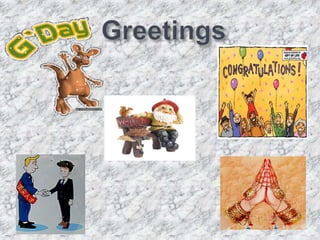
Greetings
By:- Chandresh Suprit
Handshakes
Handshakes are known as:
 Greeting gestures
 Business etiquette procedure
 A form of introduction

The Cultural Differences:
 Indian – Hands together and no eye contact
 African – Soft handshakes, thumbs up
 Arab – Hold both hands
 Asia – Handshake and slight bow


A handshake is a short ritual in which two
people grasp one of each other's opposite
hands, and most cases accompanied by a brief
up and down movement of the grasped hands.
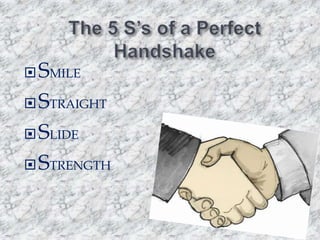
 SMILE
 STRAIGHT
 SLIDE
 STRENGTH




The prison handshake: When the

handshaker keeps your hand in his hand too
long and seems not to want to give it back. Are
they saying, "what‟s in it for me"?
The robot handshake: Offering the hand
automatically, without apparent thought or
feeling. They appear uninterested and
indifferent.




The jackhammer handshake: Shaking the

hand vigorously to show power and
determination. These people might be a little
inflexible. Their way is the right way!
The squeezing handshake: Used by men to
show their strength and power. It might mean
covering up their feelings of insecurity.




The next-to-the-body handshake:
Keeping the arm close to the body while
bending it at the elbow, used by people who do
not want to take risks, like politicians.
The normal handshake: a brief, firm
handshake that is the best for conveying
confidence and professionalism.


Now, get up and offer your hand to the person
next to you for a handshake test. Shake hands
like you normally would. Can you tell what
kind of handshake you have? How about your
partner‟s handshake. What does his handshake
say about him?





Begin With an Oral Introduction of Yourself
Shake From Your Elbow
Pump Your Hand Only 2-3 Times
Do Not Use a Forceful Grip




Avoid Offering a “Fish Hand”
Forget “Lady Fingers”
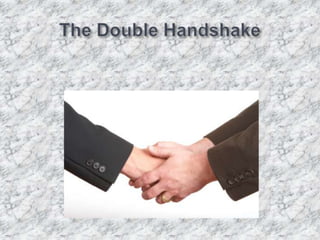
One Hand is Better than Two






If you shake hands with someone who has
sweaty palms, do not immediately wipe your
hands on your clothing, handkerchief, or
tissue.
This will further embarrass the other person,
who is probably already aware they have
sweaty hands.
You can discretely wipe them on something
after you are out of site, and wash them later.






End the handshake after 3-4 seconds, or 2-3
pumps.
In order to avoid creating an awkward
moment, your shake should end before the oral
introduction exchange does.
Without conversation taking place during the
entire handshake, it becomes too intimate, and
can feel more like hand holding.




Even if you make a mistake, do not panic.
There are many ways to save the moment.
If you are worried that your handshake did not
convey the right message about yourself,
simply change the focus of the moment by
offering a quick compliment or asking the
other person a question.








It is considered appropriate and acceptable to
offer a handshake when greeting:
New business contacts, staff, coworkers, or
others you are meeting for the first time;
A former business or casual acquaintance,
especially if it has been a while since you last
saw them;
Concluding a business transaction or meeting;




Congratulating someone else for an award,
event, or accomplishment; and
When leaving a business event, including
social settings where business contacts or
acquaintances are involved.






It is not a good idea to be the one to initiate a
handshake:
With someone of higher status (let them
approach you or make the first gesture);
To break an awkward moment of silence when
being introduced to someone new (a proper
handshake should also involve conversation);




If you have nothing to say to the person (a
handshake is an invitation for conversation or
desire for social interaction);
Someone whose right hand, arm, or shoulder,
is clearly injured, or they need their hand to
support their weight with a cane or crutches; or


If the other person‟s hands are full and a
handshake would require them to shift items
from one hand to another, or to have to put
things down.


Handshaking is not an inborn talent. It is
culturally acquired. People who are not
familiar with the meanings of the handshake
may not know how to perform the "normal
handshake". Their handshakes might be
misinterpreted by the people from
„handshaking cultures" as weak and
uninspired.
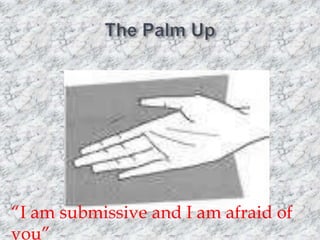
“I am submissive and I am afraid of
you”
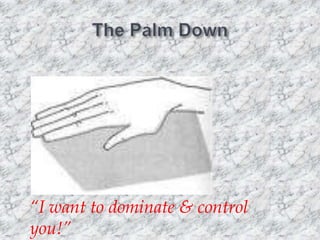
“I want to dominate & control
you!”
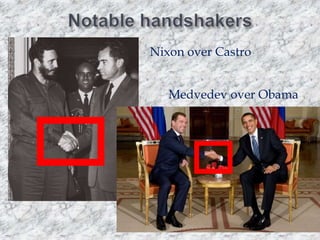
Nixon over Castro
Medvedev over Obama


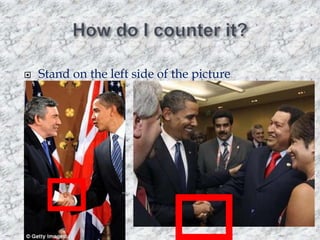
Stand on the left side of the picture
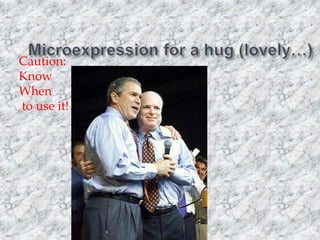
Caution:
Know
When
to use it!
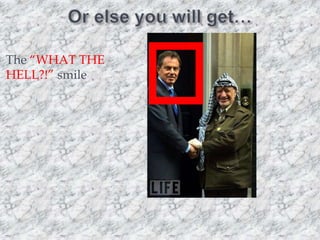
The “WHAT THE
HELL?!” smile




Why is the handshake so important in the
business world?
Why are most meetings between diplomats
ended with a handshake?


The handshake represents an expression of


From interviewing for a job, to meeting with
the CEO, to attracting a mate, advice abounds
about the power of the handshake. Even if you
consider yourself an experienced handshaker,
it does not hurt to freshen up on your
handshaking skills. And if you are an
inexperienced one, practice handshaking until
it feels natural to you.
smile
Proper etiquette

Appropriate titles and gestures
use polite language such as "please"
and "thank you".
Shaking hands





Introduce yourself with name and title.
Shake hands.
Express happiness to meet the other person.
Give or accept directions.






“Please have a seat.”
“Thanks for agreeing to meet with me.”
“He'll be right with you.”
“Can I offer you something to drink?”
“My pleasure.”
China
 Greets

the most senior person first
 Surname is followed by first name
 Bow or Nod when greeting, shakes hands with
westerners
 Agents are used to introduce you with the
person you want to start business
England
 Handshakes

are soft
 “How do you do?”
 Loud conversations are not acceptable
France
 Handshake

is light and quick upon greeting and
when saying good bye
 Women are kissed on both cheeks as a part of
greetings
Germany
 Handshakes

are firm and used upon meeting
and departing
 Status matters.
 Titles or surname is used . First name is rarely
used by Germans
Handshakes and greetings

Handshakes and greetings

  • 1.
  • 2.
  • 3.
    Handshakes are knownas:  Greeting gestures  Business etiquette procedure  A form of introduction The Cultural Differences:  Indian – Hands together and no eye contact  African – Soft handshakes, thumbs up  Arab – Hold both hands  Asia – Handshake and slight bow
  • 4.
     A handshake isa short ritual in which two people grasp one of each other's opposite hands, and most cases accompanied by a brief up and down movement of the grasped hands.
  • 5.
     SMILE  STRAIGHT SLIDE  STRENGTH
  • 6.
      The prison handshake:When the handshaker keeps your hand in his hand too long and seems not to want to give it back. Are they saying, "what‟s in it for me"? The robot handshake: Offering the hand automatically, without apparent thought or feeling. They appear uninterested and indifferent.
  • 7.
      The jackhammer handshake:Shaking the hand vigorously to show power and determination. These people might be a little inflexible. Their way is the right way! The squeezing handshake: Used by men to show their strength and power. It might mean covering up their feelings of insecurity.
  • 8.
      The next-to-the-body handshake: Keepingthe arm close to the body while bending it at the elbow, used by people who do not want to take risks, like politicians. The normal handshake: a brief, firm handshake that is the best for conveying confidence and professionalism.
  • 9.
     Now, get upand offer your hand to the person next to you for a handshake test. Shake hands like you normally would. Can you tell what kind of handshake you have? How about your partner‟s handshake. What does his handshake say about him?
  • 10.
        Begin With anOral Introduction of Yourself Shake From Your Elbow Pump Your Hand Only 2-3 Times Do Not Use a Forceful Grip
  • 11.
       Avoid Offering a“Fish Hand” Forget “Lady Fingers” One Hand is Better than Two
  • 12.
       If you shakehands with someone who has sweaty palms, do not immediately wipe your hands on your clothing, handkerchief, or tissue. This will further embarrass the other person, who is probably already aware they have sweaty hands. You can discretely wipe them on something after you are out of site, and wash them later.
  • 13.
       End the handshakeafter 3-4 seconds, or 2-3 pumps. In order to avoid creating an awkward moment, your shake should end before the oral introduction exchange does. Without conversation taking place during the entire handshake, it becomes too intimate, and can feel more like hand holding.
  • 14.
       Even if youmake a mistake, do not panic. There are many ways to save the moment. If you are worried that your handshake did not convey the right message about yourself, simply change the focus of the moment by offering a quick compliment or asking the other person a question.
  • 15.
        It is consideredappropriate and acceptable to offer a handshake when greeting: New business contacts, staff, coworkers, or others you are meeting for the first time; A former business or casual acquaintance, especially if it has been a while since you last saw them; Concluding a business transaction or meeting;
  • 16.
      Congratulating someone elsefor an award, event, or accomplishment; and When leaving a business event, including social settings where business contacts or acquaintances are involved.
  • 17.
       It is nota good idea to be the one to initiate a handshake: With someone of higher status (let them approach you or make the first gesture); To break an awkward moment of silence when being introduced to someone new (a proper handshake should also involve conversation);
  • 18.
      If you havenothing to say to the person (a handshake is an invitation for conversation or desire for social interaction); Someone whose right hand, arm, or shoulder, is clearly injured, or they need their hand to support their weight with a cane or crutches; or
  • 19.
     If the otherperson‟s hands are full and a handshake would require them to shift items from one hand to another, or to have to put things down.
  • 20.
     Handshaking is notan inborn talent. It is culturally acquired. People who are not familiar with the meanings of the handshake may not know how to perform the "normal handshake". Their handshakes might be misinterpreted by the people from „handshaking cultures" as weak and uninspired.
  • 22.
    “I am submissiveand I am afraid of you”
  • 23.
    “I want todominate & control you!”
  • 25.
  • 26.
     Stand on theleft side of the picture
  • 28.
  • 29.
  • 30.
      Why is thehandshake so important in the business world? Why are most meetings between diplomats ended with a handshake?
  • 31.
  • 32.
     From interviewing fora job, to meeting with the CEO, to attracting a mate, advice abounds about the power of the handshake. Even if you consider yourself an experienced handshaker, it does not hurt to freshen up on your handshaking skills. And if you are an inexperienced one, practice handshaking until it feels natural to you.
  • 34.
    smile Proper etiquette Appropriate titlesand gestures use polite language such as "please" and "thank you". Shaking hands
  • 35.
        Introduce yourself withname and title. Shake hands. Express happiness to meet the other person. Give or accept directions.
  • 36.
         “Please have aseat.” “Thanks for agreeing to meet with me.” “He'll be right with you.” “Can I offer you something to drink?” “My pleasure.”
  • 37.
    China  Greets the mostsenior person first  Surname is followed by first name  Bow or Nod when greeting, shakes hands with westerners  Agents are used to introduce you with the person you want to start business
  • 38.
    England  Handshakes are soft “How do you do?”  Loud conversations are not acceptable
  • 39.
    France  Handshake is lightand quick upon greeting and when saying good bye  Women are kissed on both cheeks as a part of greetings
  • 40.
    Germany  Handshakes are firmand used upon meeting and departing  Status matters.  Titles or surname is used . First name is rarely used by Germans