HOW TO
SOLVE A CASE
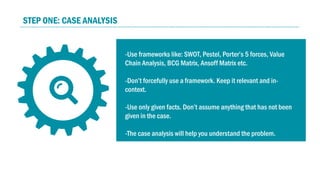
STEP ONE: CASE ANALYSIS
-Use frameworks like: SWOT, Pestel, Porter’s 5 forces, Value
Chain Analysis, BCG Matrix, Ansoff Matrix etc.
-Don’t forcefully use a framework. Keep it relevant and in-
context.
-Use only given facts. Don’t assume anything that has not been
given in the case.
-The case analysis will help you understand the problem.
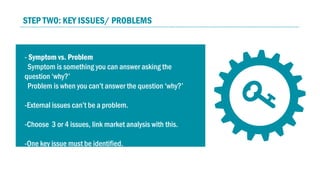
- Symptom vs. Problem
Symptom is something you can answer asking the
question ‘why?’
Problem is when you can’t answer the question ‘why?’
-External issues can’t be a problem.
-Choose 3 or 4 issues, link market analysis with this.
-One key issue must be identified.
STEP TWO: KEY ISSUES/ PROBLEMS
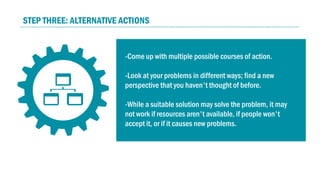
-Come up with multiple possible courses of action.
-Look at your problems in different ways; find a new
perspective that you haven't thought of before.
-While a suitable solution may solve the problem, it may
not work if resources aren't available, if people won't
accept it, or if it causes new problems.
STEP THREE: ALTERNATIVE ACTIONS
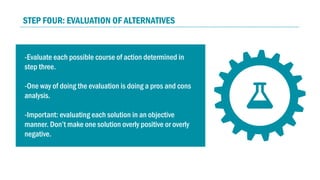
-Evaluate each possible course of action determined in
step three.
-One way of doing the evaluation is doing a pros and cons
analysis.
-Important: evaluating each solution in an objective
manner. Don’t make one solution overly positive or overly
negative.
-Make sure that the solution you are giving is
implementable and relevant.
STEP FOUR: EVALUATION OF ALTERNATIVES
STEP FIVE: RECOMMENDATIONS
-This is where you showcase your creativity.
-Consider compromising when you have a full grasp of the
problem. Competing solutions may yield a hybrid solution.
-Always monitor and evaluate the effects of it on your
resources and stakeholders.
-Define a clear end goal and explain how you will achieve
it.
1
3
5
2
4
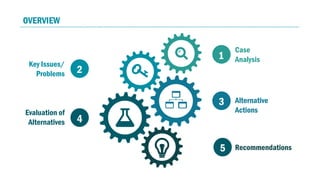
OVERVIEW
Case
Analysis
Key Issues/
Problems
Recommendations
Alternative
ActionsEvaluation of
Alternatives
THANK YOU!

Case solving Tips shown in Brandwitz'15 RoadShow

  • 1.
  • 2.
    STEP ONE: CASEANALYSIS -Use frameworks like: SWOT, Pestel, Porter’s 5 forces, Value Chain Analysis, BCG Matrix, Ansoff Matrix etc. -Don’t forcefully use a framework. Keep it relevant and in- context. -Use only given facts. Don’t assume anything that has not been given in the case. -The case analysis will help you understand the problem.
  • 3.
    - Symptom vs.Problem Symptom is something you can answer asking the question ‘why?’ Problem is when you can’t answer the question ‘why?’ -External issues can’t be a problem. -Choose 3 or 4 issues, link market analysis with this. -One key issue must be identified. STEP TWO: KEY ISSUES/ PROBLEMS
  • 4.
    -Come up withmultiple possible courses of action. -Look at your problems in different ways; find a new perspective that you haven't thought of before. -While a suitable solution may solve the problem, it may not work if resources aren't available, if people won't accept it, or if it causes new problems. STEP THREE: ALTERNATIVE ACTIONS
  • 5.
    -Evaluate each possiblecourse of action determined in step three. -One way of doing the evaluation is doing a pros and cons analysis. -Important: evaluating each solution in an objective manner. Don’t make one solution overly positive or overly negative. -Make sure that the solution you are giving is implementable and relevant. STEP FOUR: EVALUATION OF ALTERNATIVES
  • 6.
    STEP FIVE: RECOMMENDATIONS -Thisis where you showcase your creativity. -Consider compromising when you have a full grasp of the problem. Competing solutions may yield a hybrid solution. -Always monitor and evaluate the effects of it on your resources and stakeholders. -Define a clear end goal and explain how you will achieve it.
  • 7.
  • 8.