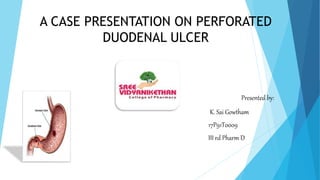
A CASE PRESENTATION ON PERFORATED
DUODENAL ULCER
Presented by:
K. Sai Gowtham
17P91T0009
III rd Pharm D
CASE DETAILS:
 A 58 years old male patient bearing ip no:
69264 was admitted in the department of
General medicine (surgery) on 25/10/19 and
got discharged on 1/11/19 and the length of
stay of patient in hospital is 8 days.
Complaints of;
 Vomiting's since 2days
 Abdominal pain since 2days
 No passage of stools and flatus since 2days
Past medical history;
 Not a known case of hypertension and diabetes mellitus.
 No history of the fever.
Personal history;
 Diet – mixed
 No sleep disturbances
 Bowel and bladder habits normal
Social history;
 Known a chronic smoker and alcoholic and the last intake
is 4days back.
Surgical history;
 No past surgical history.
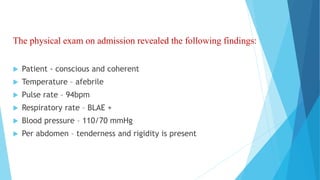
The physical exam on admission revealed the following findings:
 Patient - conscious and coherent
 Temperature – afebrile
 Pulse rate – 94bpm
 Respiratory rate – BLAE +
 Blood pressure – 110/70 mmHg
 Per abdomen – tenderness and rigidity is present
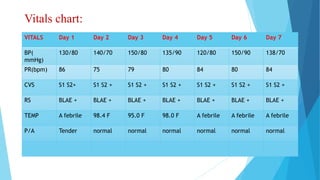
Vitals chart:
VITALS Day 1 Day 2 Day 3 Day 4 Day 5 Day 6 Day 7
BP(
mmHg)
130/80 140/70 150/80 135/90 120/80 150/90 138/70
PR(bpm) 86 75 79 80 84 80 84
CVS S1 S2+ S1 S2 + S1 S2 + S1 S2 + S1 S2 + S1 S2 + S1 S2 +
RS BLAE + BLAE + BLAE + BLAE + BLAE + BLAE + BLAE +
TEMP A febrile 98.4 F 95.0 F 98.0 F A febrile A febrile A febrile
P/A Tender normal normal normal normal normal normal
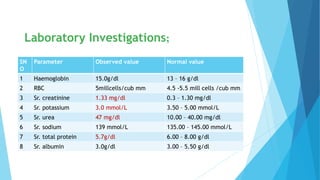
Laboratory Investigations;
SN
O
Parameter Observed value Normal value
1 Haemoglobin 15.0g/dl 13 – 16 g/dl
2 RBC 5millcells/cub mm 4.5 -5.5 mill cells /cub mm
3 Sr. creatinine 1.33 mg/dl 0.3 – 1.30 mg/dl
4 Sr. potassium 3.0 mmol/L 3.50 – 5.00 mmol/L
5 Sr. urea 47 mg/dl 10.00 – 40.00 mg/dl
6 Sr. sodium 139 mmol/L 135.00 – 145.00 mmol/L
7 Sr. total protein 5.7g/dl 6.00 – 8.00 g/dl
8 Sr. albumin 3.0g/dl 3.00 – 5.50 g/dl
Other investigations;
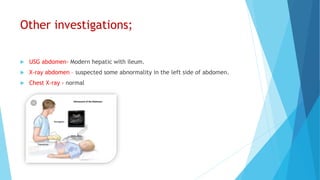
 USG abdomen- Modern hepatic with ileum.
 X-ray abdomen – suspected some abnormality in the left side of abdomen.
 Chest X-ray - normal
On diagnosis;
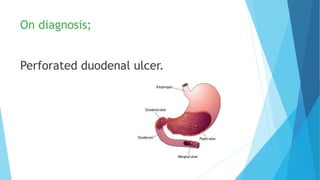
Perforated duodenal ulcer.
Contd;
 Due to perforated ulcer surgery was performed to the
patient.
 Date of surgery : 25/10/19
 Method of surgery : laparotomy method
Surgical findings;
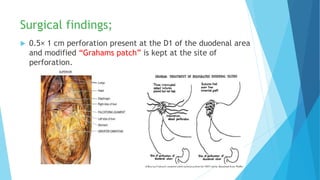
 0.5× 1 cm perforation present at the D1 of the duodenal area
and modified “Grahams patch” is kept at the site of
perforation.
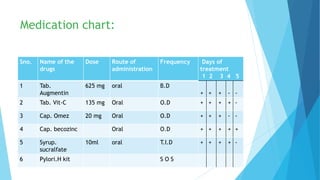
Medication chart:
Sno. Name of the
drugs
Dose Route of
administration
Frequency Days of
treatment
1 2 3 4 5
1 Tab.
Augmentin
625 mg oral B.D
+ + + - -
2 Tab. Vit-C 135 mg Oral O.D + + + + -
3 Cap. Omez 20 mg Oral O.D + + + - -
4 Cap. becozinc Oral O.D + + + + +
5 Syrup.
sucralfate
10ml oral T.I.D + + + + -
6 Pylori.H kit S O S
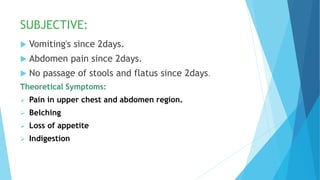
SUBJECTIVE:
 Vomiting's since 2days.
 Abdomen pain since 2days.
 No passage of stools and flatus since 2days.
Theoretical Symptoms:
 Pain in upper chest and abdomen region.
 Belching
 Loss of appetite
 Indigestion
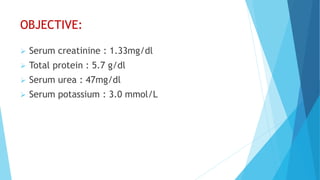
OBJECTIVE:
 Serum creatinine : 1.33mg/dl
 Total protein : 5.7 g/dl
 Serum urea : 47mg/dl
 Serum potassium : 3.0 mmol/L
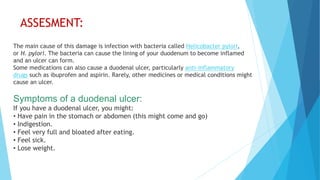
ASSESMENT:
The main cause of this damage is infection with bacteria called Helicobacter pylori,
or H. pylori. The bacteria can cause the lining of your duodenum to become inflamed
and an ulcer can form.
Some medications can also cause a duodenal ulcer, particularly anti-inflammatory
drugs such as ibuprofen and aspirin. Rarely, other medicines or medical conditions might
cause an ulcer.
Symptoms of a duodenal ulcer:
If you have a duodenal ulcer, you might:
• Have pain in the stomach or abdomen (this might come and go)
• Indigestion.
• Feel very full and bloated after eating.
• Feel sick.
• Lose weight.
PLAN:
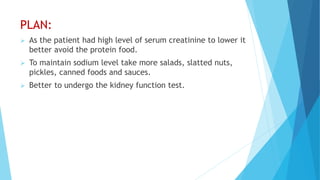
 As the patient had high level of serum creatinine to lower it
better avoid the protein food.
 To maintain sodium level take more salads, slatted nuts,
pickles, canned foods and sauces.
 Better to undergo the kidney function test.
PATIENT COUNSELLING:
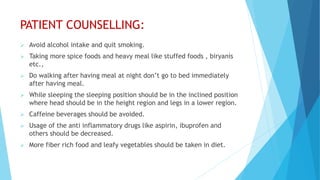
 Avoid alcohol intake and quit smoking.
 Taking more spice foods and heavy meal like stuffed foods , biryanis
etc.,
 Do walking after having meal at night don’t go to bed immediately
after having meal.
 While sleeping the sleeping position should be in the inclined position
where head should be in the height region and legs in a lower region.
 Caffeine beverages should be avoided.
 Usage of the anti inflammatory drugs like aspirin, ibuprofen and
others should be decreased.
 More fiber rich food and leafy vegetables should be taken in diet.
Case Presentation on Perforated Duodenal Ulcer

Case Presentation on Perforated Duodenal Ulcer

  • 1.
    A CASE PRESENTATIONON PERFORATED DUODENAL ULCER Presented by: K. Sai Gowtham 17P91T0009 III rd Pharm D
  • 2.
    CASE DETAILS:  A58 years old male patient bearing ip no: 69264 was admitted in the department of General medicine (surgery) on 25/10/19 and got discharged on 1/11/19 and the length of stay of patient in hospital is 8 days.
  • 3.
    Complaints of;  Vomiting'ssince 2days  Abdominal pain since 2days  No passage of stools and flatus since 2days
  • 4.
    Past medical history; Not a known case of hypertension and diabetes mellitus.  No history of the fever. Personal history;  Diet – mixed  No sleep disturbances  Bowel and bladder habits normal
  • 5.
    Social history;  Knowna chronic smoker and alcoholic and the last intake is 4days back. Surgical history;  No past surgical history.
  • 6.
    The physical examon admission revealed the following findings:  Patient - conscious and coherent  Temperature – afebrile  Pulse rate – 94bpm  Respiratory rate – BLAE +  Blood pressure – 110/70 mmHg  Per abdomen – tenderness and rigidity is present
  • 7.
    Vitals chart: VITALS Day1 Day 2 Day 3 Day 4 Day 5 Day 6 Day 7 BP( mmHg) 130/80 140/70 150/80 135/90 120/80 150/90 138/70 PR(bpm) 86 75 79 80 84 80 84 CVS S1 S2+ S1 S2 + S1 S2 + S1 S2 + S1 S2 + S1 S2 + S1 S2 + RS BLAE + BLAE + BLAE + BLAE + BLAE + BLAE + BLAE + TEMP A febrile 98.4 F 95.0 F 98.0 F A febrile A febrile A febrile P/A Tender normal normal normal normal normal normal
  • 8.
    Laboratory Investigations; SN O Parameter Observedvalue Normal value 1 Haemoglobin 15.0g/dl 13 – 16 g/dl 2 RBC 5millcells/cub mm 4.5 -5.5 mill cells /cub mm 3 Sr. creatinine 1.33 mg/dl 0.3 – 1.30 mg/dl 4 Sr. potassium 3.0 mmol/L 3.50 – 5.00 mmol/L 5 Sr. urea 47 mg/dl 10.00 – 40.00 mg/dl 6 Sr. sodium 139 mmol/L 135.00 – 145.00 mmol/L 7 Sr. total protein 5.7g/dl 6.00 – 8.00 g/dl 8 Sr. albumin 3.0g/dl 3.00 – 5.50 g/dl
  • 9.
    Other investigations;  USGabdomen- Modern hepatic with ileum.  X-ray abdomen – suspected some abnormality in the left side of abdomen.  Chest X-ray - normal
  • 10.
  • 11.
    Contd;  Due toperforated ulcer surgery was performed to the patient.  Date of surgery : 25/10/19  Method of surgery : laparotomy method
  • 12.
    Surgical findings;  0.5×1 cm perforation present at the D1 of the duodenal area and modified “Grahams patch” is kept at the site of perforation.
  • 13.
    Medication chart: Sno. Nameof the drugs Dose Route of administration Frequency Days of treatment 1 2 3 4 5 1 Tab. Augmentin 625 mg oral B.D + + + - - 2 Tab. Vit-C 135 mg Oral O.D + + + + - 3 Cap. Omez 20 mg Oral O.D + + + - - 4 Cap. becozinc Oral O.D + + + + + 5 Syrup. sucralfate 10ml oral T.I.D + + + + - 6 Pylori.H kit S O S
  • 15.
    SUBJECTIVE:  Vomiting's since2days.  Abdomen pain since 2days.  No passage of stools and flatus since 2days. Theoretical Symptoms:  Pain in upper chest and abdomen region.  Belching  Loss of appetite  Indigestion
  • 16.
    OBJECTIVE:  Serum creatinine: 1.33mg/dl  Total protein : 5.7 g/dl  Serum urea : 47mg/dl  Serum potassium : 3.0 mmol/L
  • 17.
    ASSESMENT: The main causeof this damage is infection with bacteria called Helicobacter pylori, or H. pylori. The bacteria can cause the lining of your duodenum to become inflamed and an ulcer can form. Some medications can also cause a duodenal ulcer, particularly anti-inflammatory drugs such as ibuprofen and aspirin. Rarely, other medicines or medical conditions might cause an ulcer. Symptoms of a duodenal ulcer: If you have a duodenal ulcer, you might: • Have pain in the stomach or abdomen (this might come and go) • Indigestion. • Feel very full and bloated after eating. • Feel sick. • Lose weight.
  • 18.
    PLAN:  As thepatient had high level of serum creatinine to lower it better avoid the protein food.  To maintain sodium level take more salads, slatted nuts, pickles, canned foods and sauces.  Better to undergo the kidney function test.
  • 19.
    PATIENT COUNSELLING:  Avoidalcohol intake and quit smoking.  Taking more spice foods and heavy meal like stuffed foods , biryanis etc.,  Do walking after having meal at night don’t go to bed immediately after having meal.  While sleeping the sleeping position should be in the inclined position where head should be in the height region and legs in a lower region.  Caffeine beverages should be avoided.  Usage of the anti inflammatory drugs like aspirin, ibuprofen and others should be decreased.  More fiber rich food and leafy vegetables should be taken in diet.