ILT 3210_3220: Webinar in Science /
Technology Education
Activity 3: Learning Theories and
Creation of Cartoons on Science and
Technology

Howard Gardner's
multiple intelligences
theory
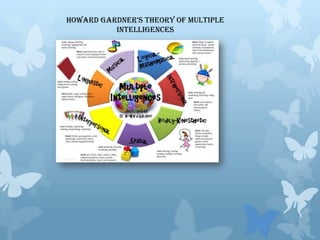
Howard Gardner's theory of multiple
intelligences
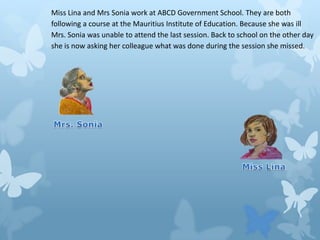
Miss Lina and Mrs Sonia work at ABCD Government School. They are both
following a course at the Mauritius Institute of Education. Because she was ill
Mrs. Sonia was unable to attend the last session. Back to school on the other day
she is now asking her colleague what was done during the session she missed.
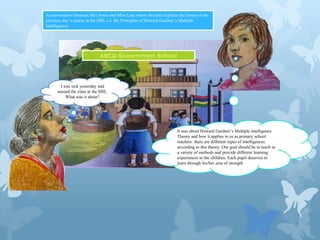
A conversation between Mrs Sonia and Miss Lina where the later explains the lesson of the
previous day’s course at the MIE, i.e. the Principles of Howard Gardner’s Multiple
Intelligences

I was sick yesterday and
missed the class at the MIE.
What was it about?

It was about Howard Gardner’s Multiple intelligence
Theory and how it applies to us as primary school
teachers. there are different types of intelligences
according to this theory. Our goal should be to teach in
a variety of methods and provide different learning
experiences to the children. Each pupil deserves to
learn through his/her area of strength
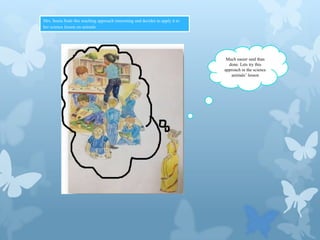
Mrs. Sonia finds this teaching approach interesting and decides to apply it to
her science lesson on animals

Much easier said than
done. Lets try this
approach in the science
animals’ lesson
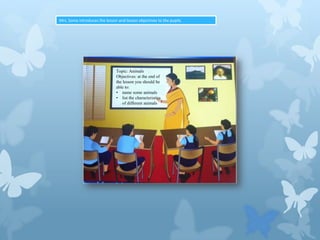
Mrs. Sonia introduces the lesson and lesson objectives to the pupils.

Topic: Animals
Objectives: at the end of
the lesson you should be
able to:
• name some animals
• list the characteristics
of different animals
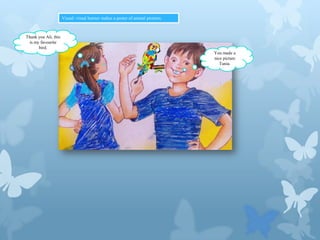
Visual: visual learner makes a poster of animal pictures.

Thank you Ali, this
is my favourite
bird.
You made a
nice picture
Tania.
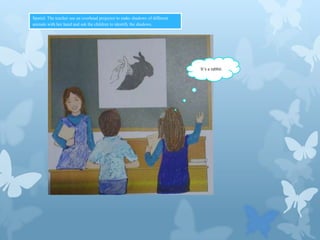
Spatial: The teacher use an overhead projector to make shadows of different
animals with her hand and ask the children to identify the shadows.

It’s a rabbit.
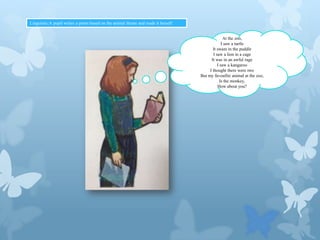
Linguistic:A pupil writes a poem based on the animal theme and reads it herself

At the zoo,
I saw a turtle
It swam in the puddle
I saw a lion in a cage
It was in an awful rage
I saw a kangaroo
I thought there were two
But my favoufite animal at the zoo,
Is the monkey,
How about you?
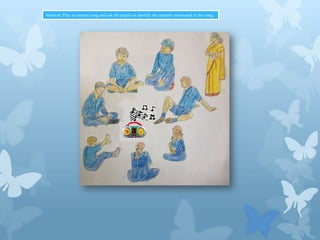
Musical: Play an animal song and ask the pupils to identify the animals mentioned in the song.
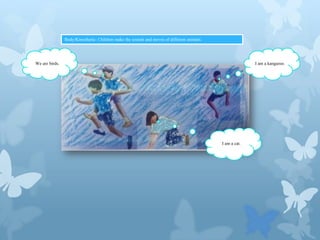
Body/Kinesthetic: Children make the sounds and moves of different animals.

We are birds.

I am a kangaroo.

I am a cat.
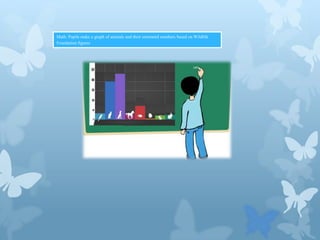
Math: Pupils make a graph of animals and their estimated numbers based on Wildlife
Foundation figures
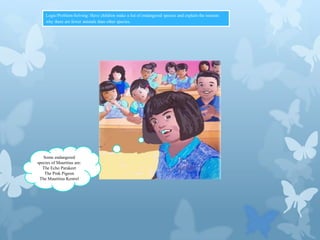
Logic/Problem-Solving: Have children make a list of endangered species and explain the reasons
why there are fewer animals than other species.

Some endangered
species of Mauritius are:
The Echo Parakeet
The Pink Pigeon
The Mauritius Kestrel
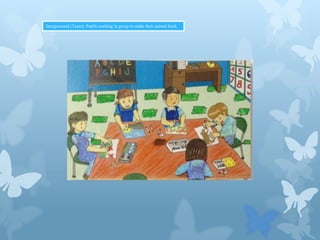
Interpersonal (Team): Pupils working in group to make their animal book.
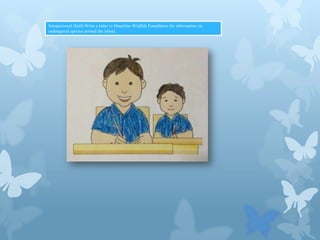
Intrapersonal (Self):Write a letter to Mauritius Wildlife Foundation for information on
endangered species around the island.
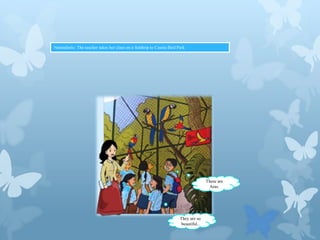
Naturalistic: The teacher takes her class on a fieldtrip to Casela Bird Park

These are
Aras.

They are so
beautiful..
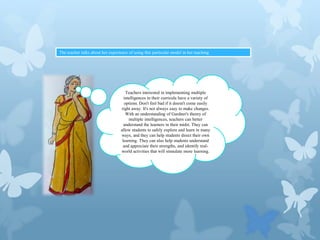
The teacher talks about her experience of using this particular model in her teaching

Teachers interested in implementing multiple
intelligences in their curricula have a variety of
options. Don't feel bad if it doesn't come easily
right away. It's not always easy to make changes.
With an understanding of Gardner's theory of
multiple intelligences, teachers can better
understand the learners in their midst. They can
allow students to safely explore and learn in many
ways, and they can help students direct their own
learning. They can also help students understand
and appreciate their strengths, and identify realworld activities that will stimulate more learning.
Thank you for watching.

Cartoon Creation in science : activity 3

  • 1.
    ILT 3210_3220: Webinarin Science / Technology Education Activity 3: Learning Theories and Creation of Cartoons on Science and Technology Howard Gardner's multiple intelligences theory
  • 2.
    Howard Gardner's theoryof multiple intelligences
  • 3.
    Miss Lina andMrs Sonia work at ABCD Government School. They are both following a course at the Mauritius Institute of Education. Because she was ill Mrs. Sonia was unable to attend the last session. Back to school on the other day she is now asking her colleague what was done during the session she missed.
  • 4.
    A conversation betweenMrs Sonia and Miss Lina where the later explains the lesson of the previous day’s course at the MIE, i.e. the Principles of Howard Gardner’s Multiple Intelligences I was sick yesterday and missed the class at the MIE. What was it about? It was about Howard Gardner’s Multiple intelligence Theory and how it applies to us as primary school teachers. there are different types of intelligences according to this theory. Our goal should be to teach in a variety of methods and provide different learning experiences to the children. Each pupil deserves to learn through his/her area of strength
  • 5.
    Mrs. Sonia findsthis teaching approach interesting and decides to apply it to her science lesson on animals Much easier said than done. Lets try this approach in the science animals’ lesson
  • 6.
    Mrs. Sonia introducesthe lesson and lesson objectives to the pupils. Topic: Animals Objectives: at the end of the lesson you should be able to: • name some animals • list the characteristics of different animals
  • 7.
    Visual: visual learnermakes a poster of animal pictures. Thank you Ali, this is my favourite bird. You made a nice picture Tania.
  • 8.
    Spatial: The teacheruse an overhead projector to make shadows of different animals with her hand and ask the children to identify the shadows. It’s a rabbit.
  • 9.
    Linguistic:A pupil writesa poem based on the animal theme and reads it herself At the zoo, I saw a turtle It swam in the puddle I saw a lion in a cage It was in an awful rage I saw a kangaroo I thought there were two But my favoufite animal at the zoo, Is the monkey, How about you?
  • 10.
    Musical: Play ananimal song and ask the pupils to identify the animals mentioned in the song.
  • 11.
    Body/Kinesthetic: Children makethe sounds and moves of different animals. We are birds. I am a kangaroo. I am a cat.
  • 12.
    Math: Pupils makea graph of animals and their estimated numbers based on Wildlife Foundation figures
  • 13.
    Logic/Problem-Solving: Have childrenmake a list of endangered species and explain the reasons why there are fewer animals than other species. Some endangered species of Mauritius are: The Echo Parakeet The Pink Pigeon The Mauritius Kestrel
  • 14.
    Interpersonal (Team): Pupilsworking in group to make their animal book.
  • 15.
    Intrapersonal (Self):Write aletter to Mauritius Wildlife Foundation for information on endangered species around the island.
  • 16.
    Naturalistic: The teachertakes her class on a fieldtrip to Casela Bird Park These are Aras. They are so beautiful..
  • 17.
    The teacher talksabout her experience of using this particular model in her teaching Teachers interested in implementing multiple intelligences in their curricula have a variety of options. Don't feel bad if it doesn't come easily right away. It's not always easy to make changes. With an understanding of Gardner's theory of multiple intelligences, teachers can better understand the learners in their midst. They can allow students to safely explore and learn in many ways, and they can help students direct their own learning. They can also help students understand and appreciate their strengths, and identify realworld activities that will stimulate more learning.
  • 18.
    Thank you forwatching.