What can we learn from a political cartoon?
When trying to find out about experiences of
people living in the past, images such as
etchings, sketches, cartoons, photographs and
paintings from time to time can be very
useful. They are primary sources and have
limitations, but they are also important
sources of attitudes, fears, values and
propaganda.
Persuasive techniques used in cartoons
 Exaggeration
 Symbolism
 Labelling
 Analogy
 Irony
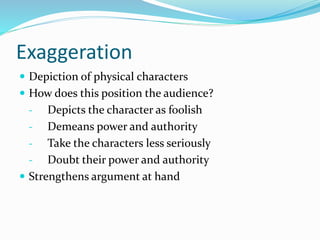
Exaggeration
 Depiction of physical characters
 How does this position the audience?
- Depicts the character as foolish
- Demeans power and authority
- Take the characters less seriously
- Doubt their power and authority
 Strengthens argument at hand
Symbolism
 Takes a simple or well-know object and creates them to
stand as a larger concept or idea
 Illuminates the foolishness of the ideas surrounding
the issue
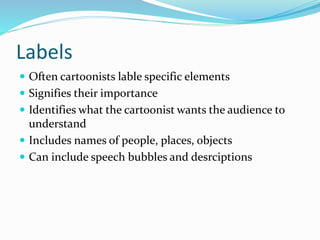
Labels
 Often cartoonists lable specific elements
 Signifies their importance
 Identifies what the cartoonist wants the audience to
understand
 Includes names of people, places, objects
 Can include speech bubbles and desrciptions
Analogy
 Comparison between two things that are not alike
 Complex issue that can be related to a more familiar
concept and the ideas that are related to that concept
 Helps the audience understand what values the
cartoonist may be trying to depict
Irony
 The difference between the way things are and the way
things are supposed to be or are expected to be
 Positions the readers to see the way that things
actually are, despite what they’re expected to think or
how they’re expected to react
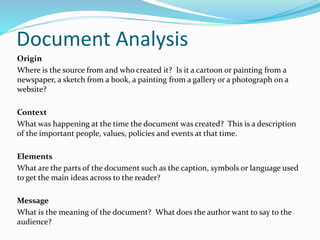
Document Analysis
Origin
Where is the source from and who created it? Is it a cartoon or painting from a
newspaper, a sketch from a book, a painting from a gallery or a photograph on a
website?
Context
What was happening at the time the document was created? This is a description
of the important people, values, policies and events at that time.
Elements
What are the parts of the document such as the caption, symbols or language used
to get the main ideas across to the reader?
Message
What is the meaning of the document? What does the author want to say to the
audience?
Purpose
Why was the document created? This could be used to
reinforce ideas from the time, convince people, promote
political ideas or describe an experience.
Point of View
What were the attitudes and beliefs of the person who
created the document? This is the perspective of the author,
which can be biased towards or against a person or idea.
Reliability
Can the source be trusted as truthful? Who was the author?
What was the purpose of the document? Is it biased? What
are its limitations? What gaps exist? Has the document
been censored, falsified or exaggerated?
Your turn
 Using the worksheet provided, analyse the cartoons
 The table provided in the worksheet will help you to
analyse historical documents, both primary and
secondary sources, to decide whether the sources are
useful in providing information for your period of
study
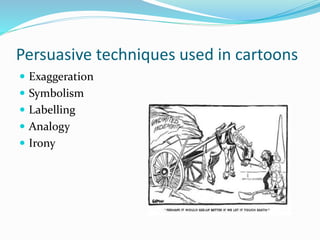
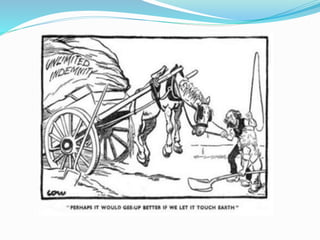
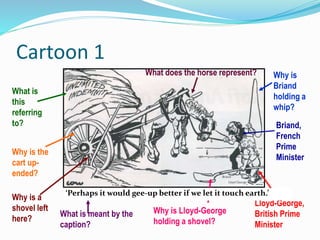
Briand,
French
Prime
Minister
Lloyd-George,
British Prime
Minister
What is
this
referring
to?
What does the horse represent?
Why is the
cart up-
ended?
What is meant by the
caption?
Why is Lloyd-George
holding a shovel?
Why is
Briand
holding a
whip?
Why is a
shovel left
here?
‘Perhaps it would gee-up better if we let it touch earth.’
Cartoon 1

Cartoon analysis ppt

  • 2.
    What can welearn from a political cartoon? When trying to find out about experiences of people living in the past, images such as etchings, sketches, cartoons, photographs and paintings from time to time can be very useful. They are primary sources and have limitations, but they are also important sources of attitudes, fears, values and propaganda.
  • 3.
    Persuasive techniques usedin cartoons  Exaggeration  Symbolism  Labelling  Analogy  Irony
  • 4.
    Exaggeration  Depiction ofphysical characters  How does this position the audience? - Depicts the character as foolish - Demeans power and authority - Take the characters less seriously - Doubt their power and authority  Strengthens argument at hand
  • 6.
    Symbolism  Takes asimple or well-know object and creates them to stand as a larger concept or idea  Illuminates the foolishness of the ideas surrounding the issue
  • 8.
    Labels  Often cartoonistslable specific elements  Signifies their importance  Identifies what the cartoonist wants the audience to understand  Includes names of people, places, objects  Can include speech bubbles and desrciptions
  • 10.
    Analogy  Comparison betweentwo things that are not alike  Complex issue that can be related to a more familiar concept and the ideas that are related to that concept  Helps the audience understand what values the cartoonist may be trying to depict
  • 12.
    Irony  The differencebetween the way things are and the way things are supposed to be or are expected to be  Positions the readers to see the way that things actually are, despite what they’re expected to think or how they’re expected to react
  • 14.
    Document Analysis Origin Where isthe source from and who created it? Is it a cartoon or painting from a newspaper, a sketch from a book, a painting from a gallery or a photograph on a website? Context What was happening at the time the document was created? This is a description of the important people, values, policies and events at that time. Elements What are the parts of the document such as the caption, symbols or language used to get the main ideas across to the reader? Message What is the meaning of the document? What does the author want to say to the audience?
  • 15.
    Purpose Why was thedocument created? This could be used to reinforce ideas from the time, convince people, promote political ideas or describe an experience. Point of View What were the attitudes and beliefs of the person who created the document? This is the perspective of the author, which can be biased towards or against a person or idea. Reliability Can the source be trusted as truthful? Who was the author? What was the purpose of the document? Is it biased? What are its limitations? What gaps exist? Has the document been censored, falsified or exaggerated?
  • 16.
    Your turn  Usingthe worksheet provided, analyse the cartoons  The table provided in the worksheet will help you to analyse historical documents, both primary and secondary sources, to decide whether the sources are useful in providing information for your period of study
  • 17.
    Briand, French Prime Minister Lloyd-George, British Prime Minister What is this referring to? Whatdoes the horse represent? Why is the cart up- ended? What is meant by the caption? Why is Lloyd-George holding a shovel? Why is Briand holding a whip? Why is a shovel left here? ‘Perhaps it would gee-up better if we let it touch earth.’ Cartoon 1