A lesson that introduces a framework for understanding
and interpreting political cartoons in a history course
Perhaps the least explored art form
for serious historical analysis
is the political cartoon.
Political cartoons are vivid primary sources
that offer intriguing and entertaining insights
into the public mood,
the underlying cultural assumptions of an age,
and attitudes toward key events or trends
of the times.
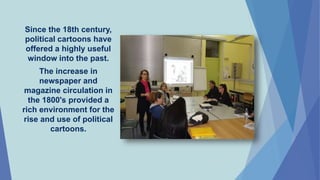
Since the 18th century,
political cartoons have
offered a highly useful
window into the past.
The increase in
newspaper and
magazine circulation in
the 1800's provided a
rich environment for the
rise and use of political
cartoons.
Just about every school history textbook now
has its quota of political cartoons.
Yet some studies reveal that substantial
percentages of adults
fail to understand the political cartoons
in their daily newspaper.
How much harder then must it be for young
people to make sense of cartoons from the
distant past?
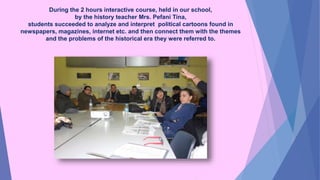
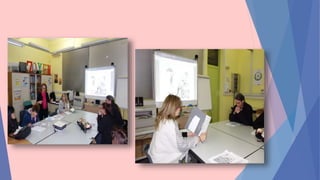
During the 2 hours interactive course, held in our school,
by the history teacher Mrs. Pefani Tina,
students succeeded to analyze and interpret political cartoons found in
newspapers, magazines, internet etc. and then connect them with the themes
and the problems of the historical era they were referred to.
Using political cartoons, caricatures
and drawings
during the history course,
we realized that students interest
in political issues
as well as their analytical thinking
skills were promoted
Edited by Koundouraki Eftyhia
March 2017

Political cartoons

  • 2.
    A lesson thatintroduces a framework for understanding and interpreting political cartoons in a history course
  • 3.
    Perhaps the leastexplored art form for serious historical analysis is the political cartoon. Political cartoons are vivid primary sources that offer intriguing and entertaining insights into the public mood, the underlying cultural assumptions of an age, and attitudes toward key events or trends of the times.
  • 4.
    Since the 18thcentury, political cartoons have offered a highly useful window into the past. The increase in newspaper and magazine circulation in the 1800's provided a rich environment for the rise and use of political cartoons.
  • 6.
    Just about everyschool history textbook now has its quota of political cartoons. Yet some studies reveal that substantial percentages of adults fail to understand the political cartoons in their daily newspaper. How much harder then must it be for young people to make sense of cartoons from the distant past?
  • 7.
    During the 2hours interactive course, held in our school, by the history teacher Mrs. Pefani Tina, students succeeded to analyze and interpret political cartoons found in newspapers, magazines, internet etc. and then connect them with the themes and the problems of the historical era they were referred to.
  • 9.
    Using political cartoons,caricatures and drawings during the history course, we realized that students interest in political issues as well as their analytical thinking skills were promoted
  • 12.
    Edited by KoundourakiEftyhia March 2017