
AGENDA
Introductions
What is the GED® Test?
Typical Tutoring Session
Tutoring Materials & Paperwork
The First Session
INTRODUCTIONS
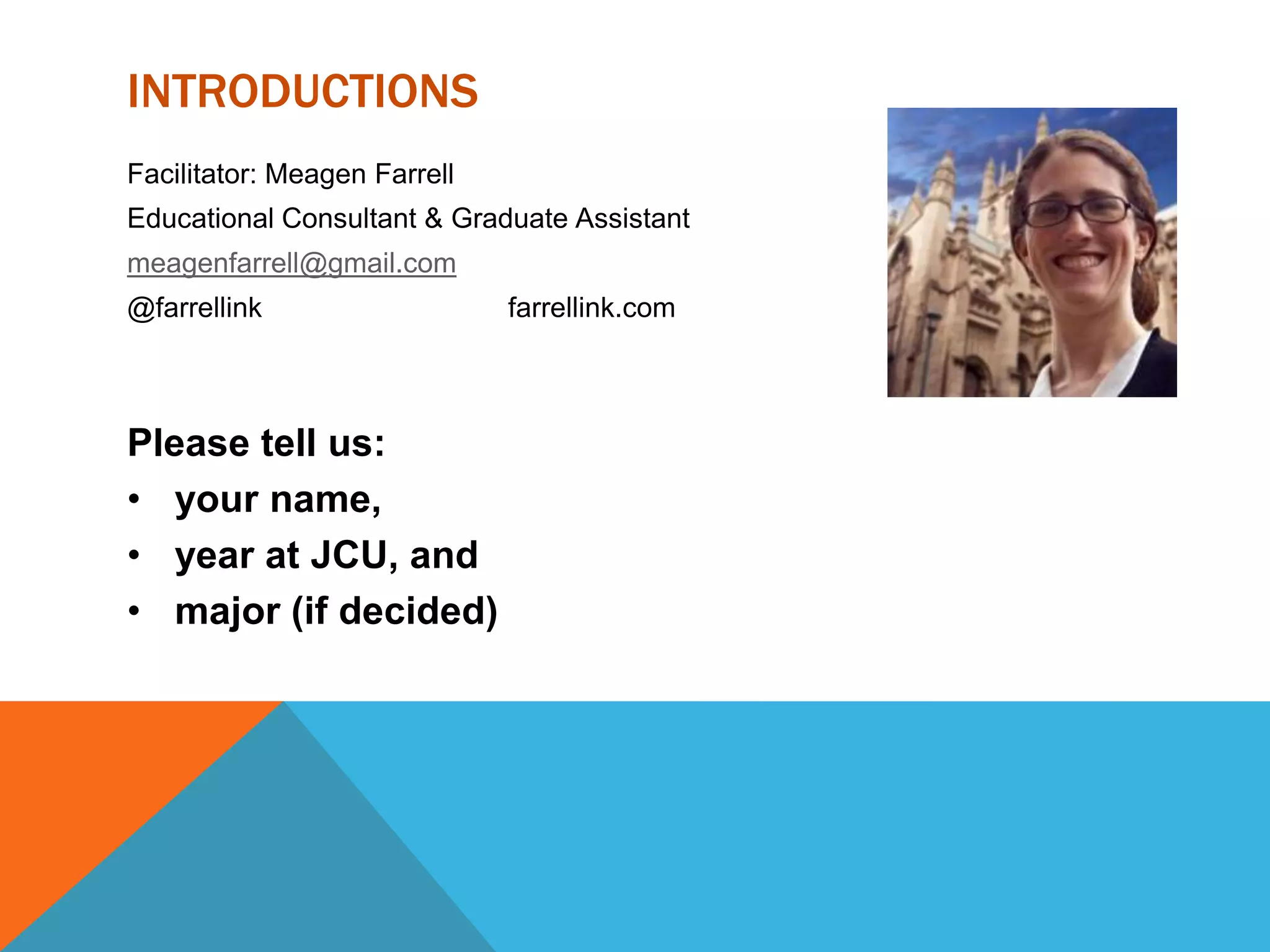
Facilitator: Meagen Farrell
Educational Consultant & Graduate Assistant
meagenfarrell@gmail.com
@farrellink farrellink.com
Please tell us:
• your name,
• year at JCU, and
• major (if decided)
BY THE END OF THIS SESSION, YOU WILL KNOW:
What is the GED® Test?
What are the four subjects on the 2014 GED® Test?
What three tasks will you need to do in every tutoring
session?
What are the primary materials you will have available
for tutoring?
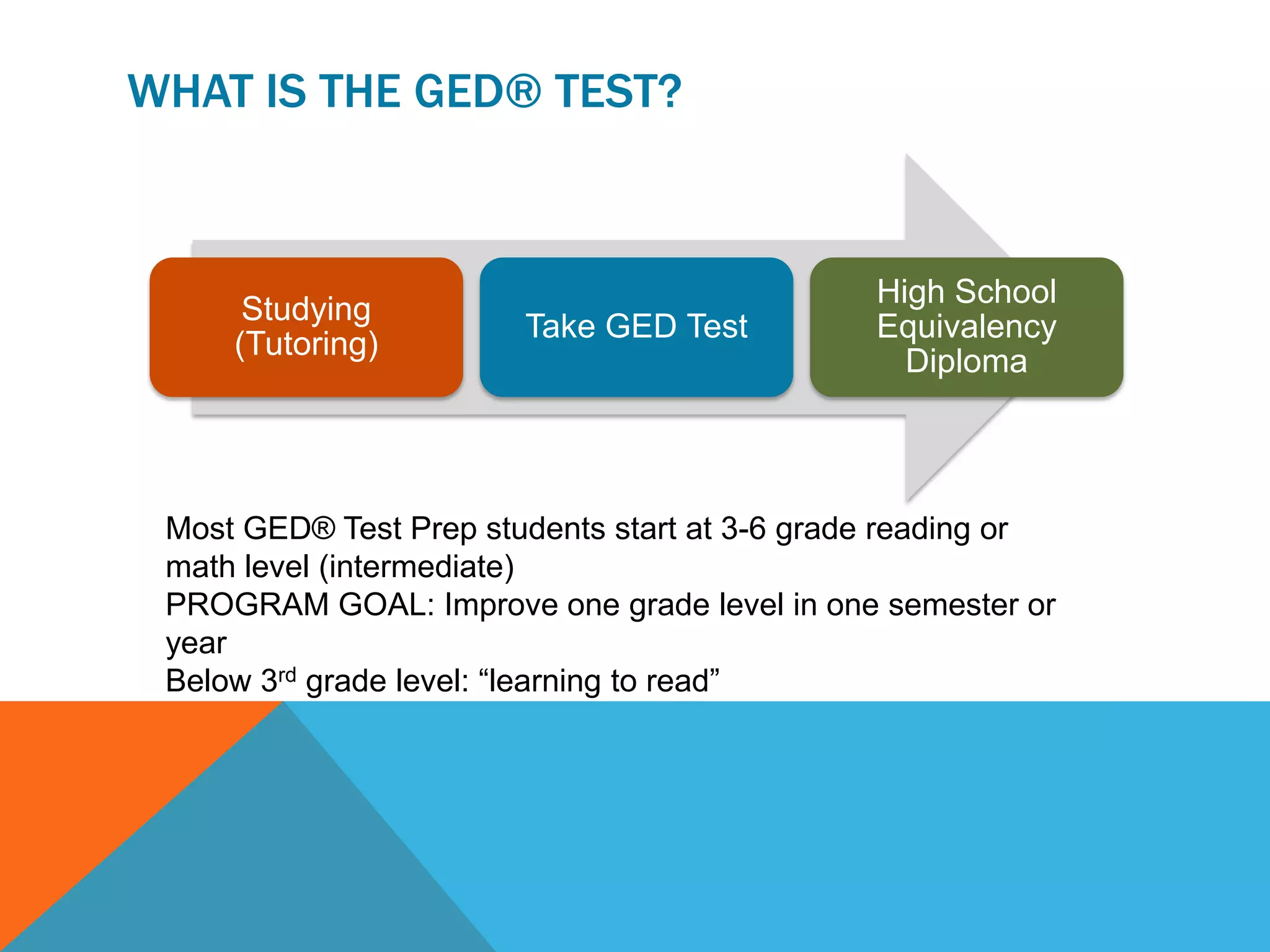
WHAT IS THE GED® TEST?
Studying
(Tutoring)
Take GED Test
High School
Equivalency
Diploma
Most GED® Test Prep students start at 3-6 grade reading or
math level (intermediate)
PROGRAM GOAL: Improve one grade level in one semester or
year
Below 3rd grade level: “learning to read”
Equivalent to high school
graduation tests: written
at the 10th grade level
Changing in 2014: Cannot
take the test until
January!
It is taken on the computer,
but ONLY at authorized
testing sites.
WHAT SHOULD YOU KNOW ABOUT THE TEST?
Did you take a high school graduation test? What was it
like?
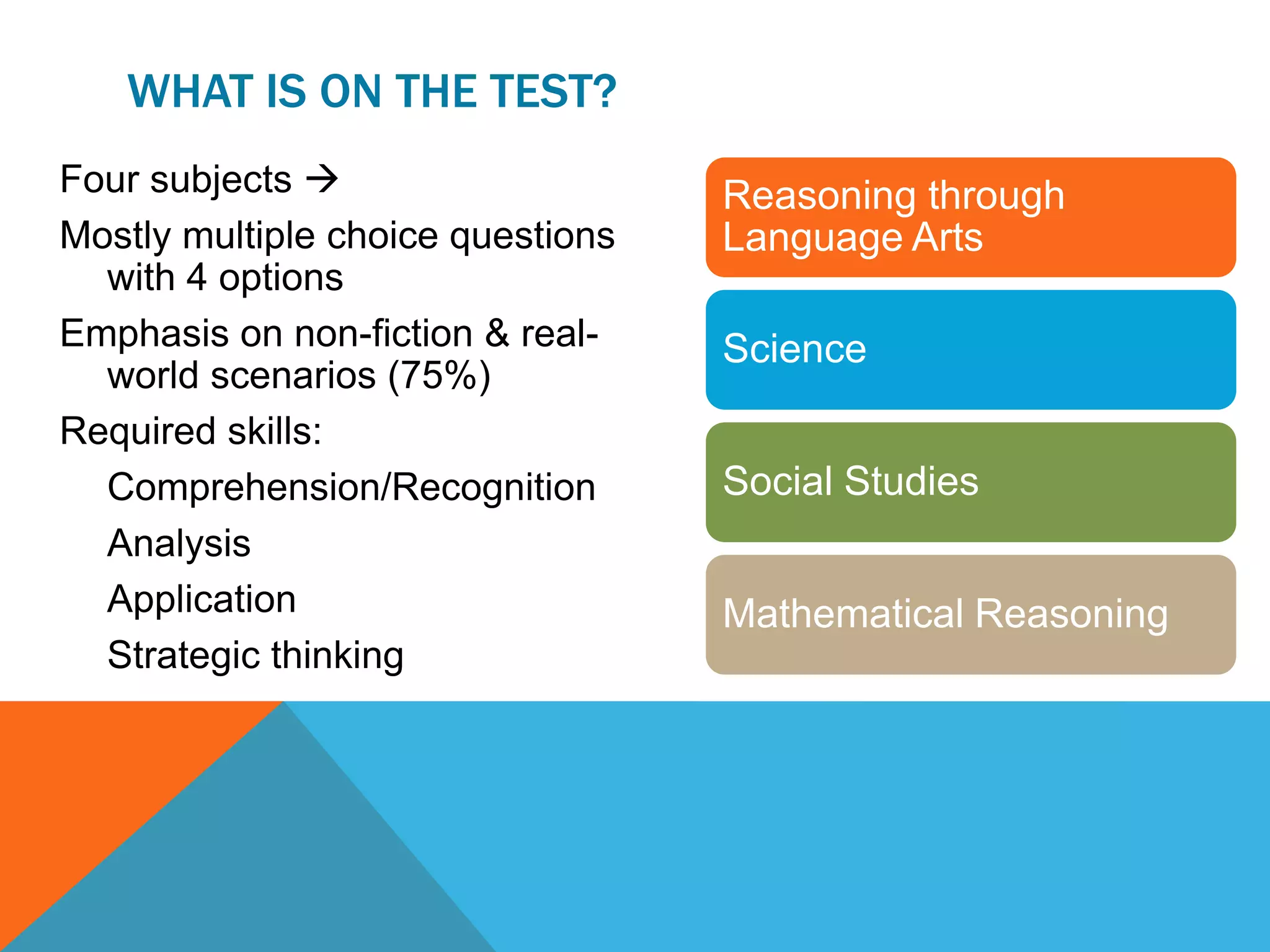
WHAT IS ON THE TEST?
Four subjects 
Mostly multiple choice questions
with 4 options
Emphasis on non-fiction & real-
world scenarios (75%)
Required skills:
Comprehension/Recognition
Analysis
Application
Strategic thinking
Reasoning through
Language Arts
Science
Social Studies
Mathematical Reasoning
WHAT IS ON THE GED® TEST? WRITING
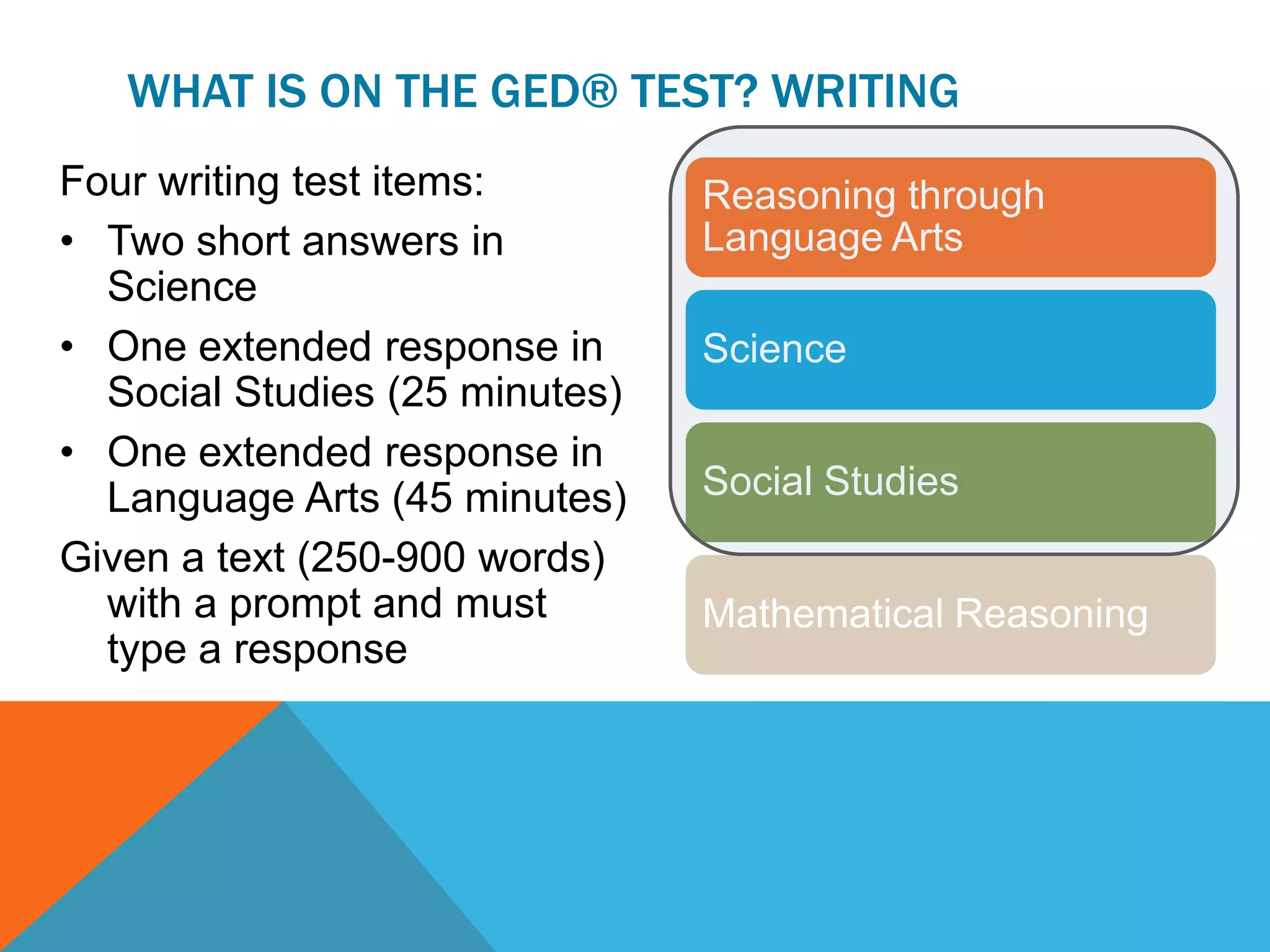
Four writing test items:
• Two short answers in
Science
• One extended response in
Social Studies (25 minutes)
• One extended response in
Language Arts (45 minutes)
Given a text (250-900 words)
with a prompt and must
type a response
Reasoning through
Language Arts
Science
Social Studies
Mathematical Reasoning
WHAT IS ON THE GED® TEST? MATH
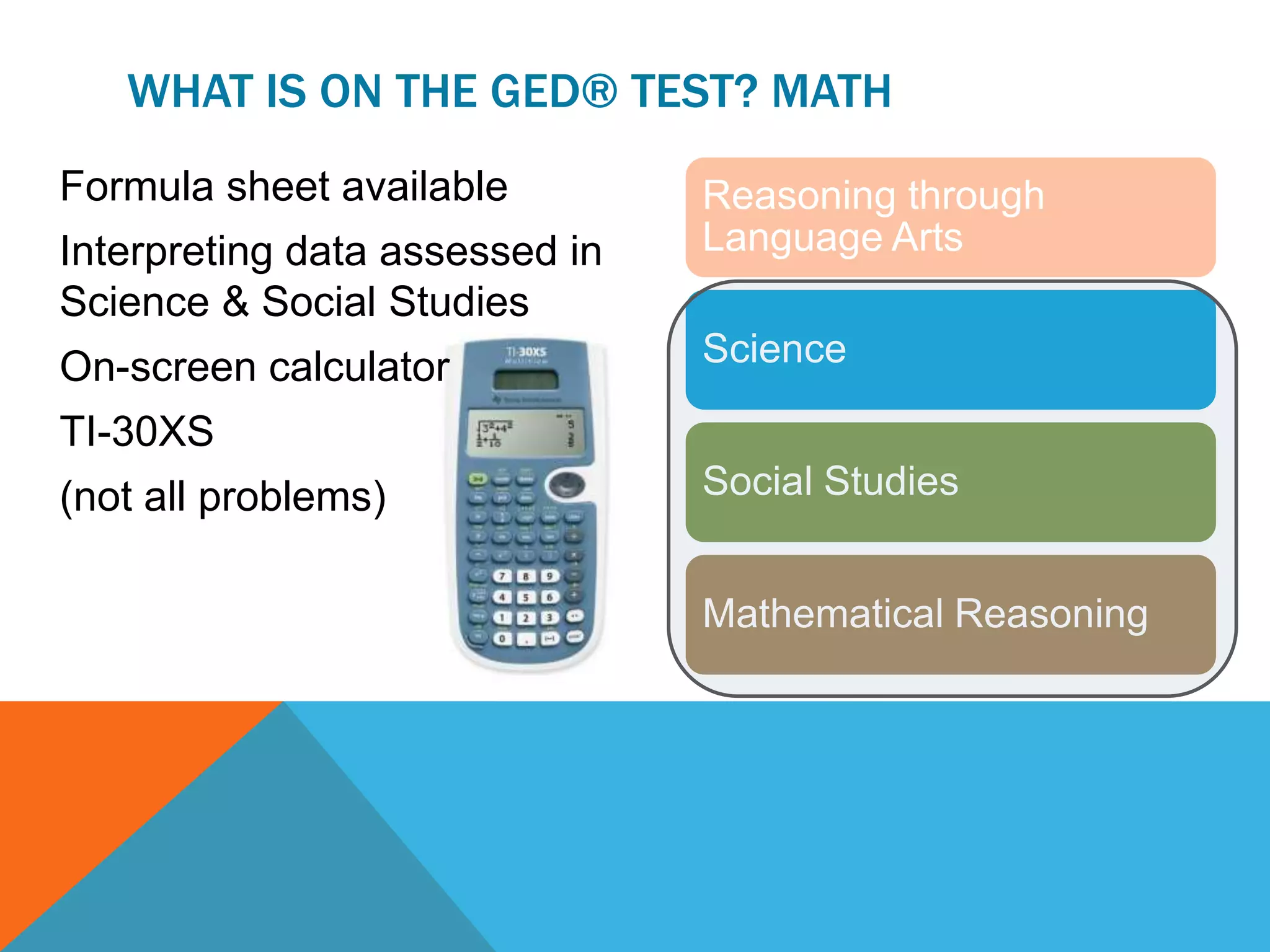
Formula sheet available
Interpreting data assessed in
Science & Social Studies
On-screen calculator
TI-30XS
(not all problems)
Reasoning through
Language Arts
Science
Social Studies
Mathematical Reasoning
TYPICAL TUTORING SESSION
1. Activity check in: What have you worked on in the
past week? Focus on goals.
2. Knowledge check in: Ask resident to explain what
he’s learned (writing or graphic organizer).
3. Paperwork: Summary of session & decide on next
work.
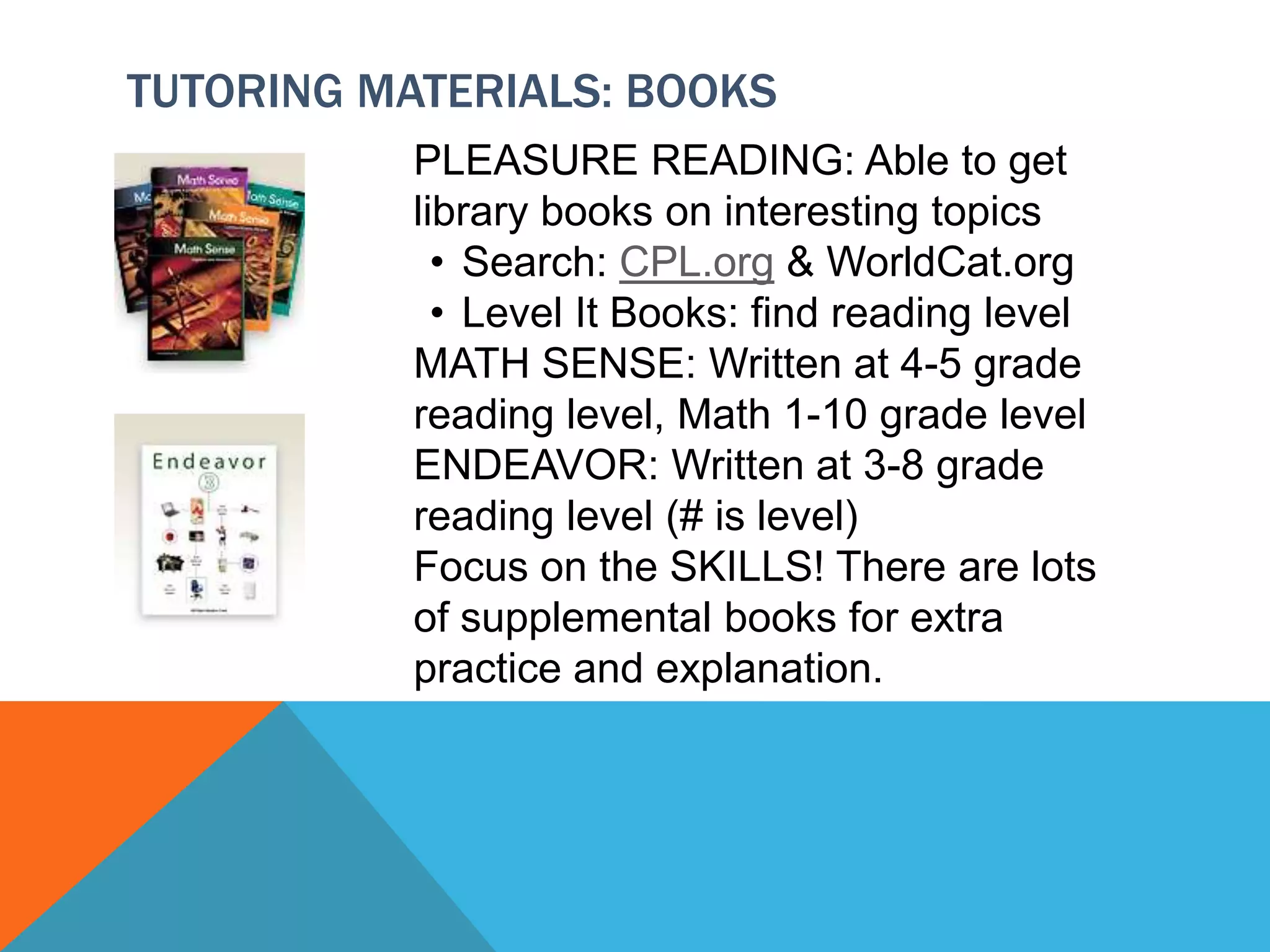
TUTORING MATERIALS: BOOKS
PLEASURE READING: Able to get
library books on interesting topics
• Search: CPL.org & WorldCat.org
• Level It Books: find reading level
MATH SENSE: Written at 4-5 grade
reading level, Math 1-10 grade level
ENDEAVOR: Written at 3-8 grade
reading level (# is level)
Focus on the SKILLS! There are lots
of supplemental books for extra
practice and explanation.
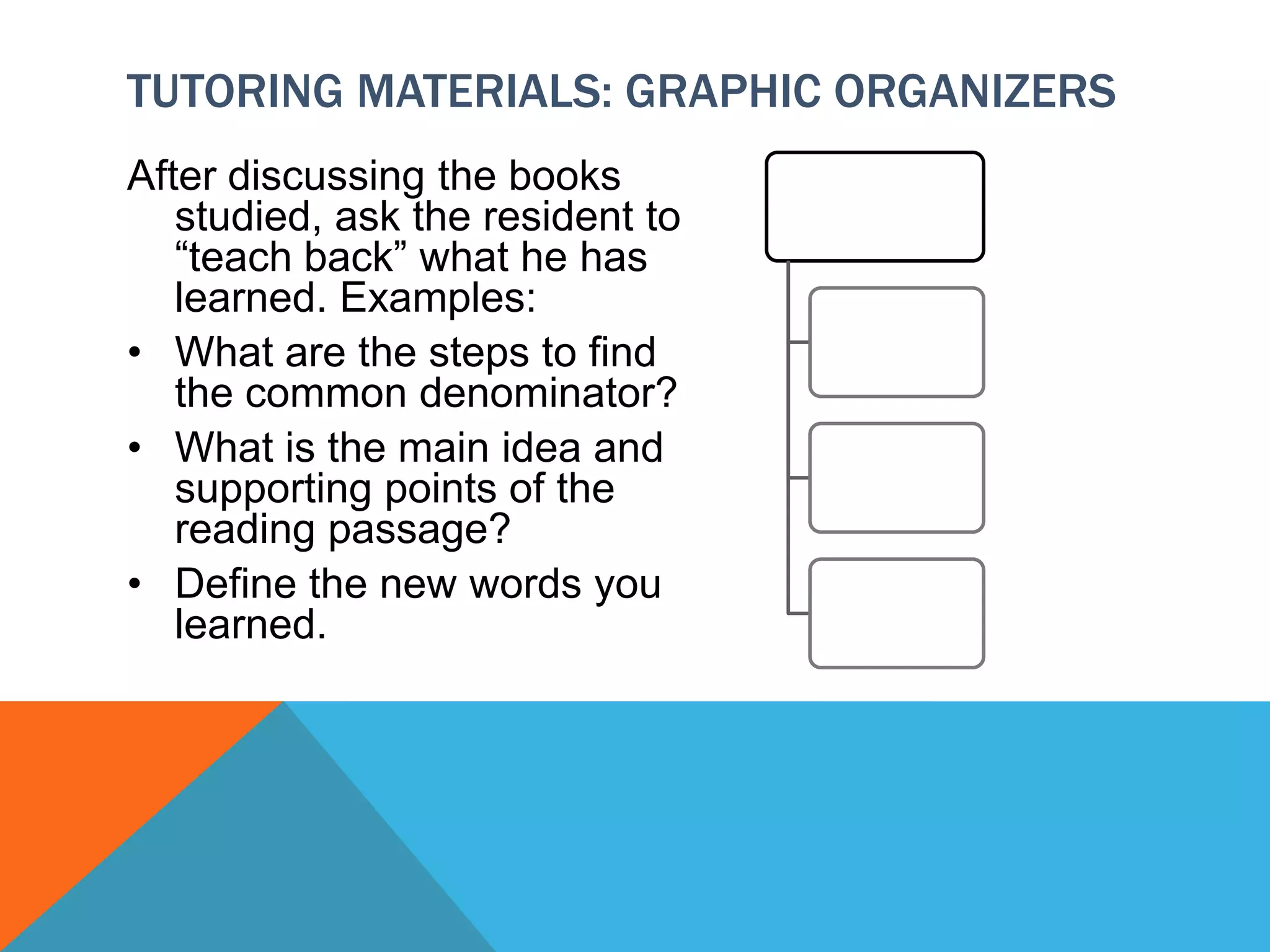
TUTORING MATERIALS: GRAPHIC ORGANIZERS
After discussing the books
studied, ask the resident to
“teach back” what he has
learned. Examples:
• What are the steps to find
the common denominator?
• What is the main idea and
supporting points of the
reading passage?
• Define the new words you
learned.
PAPERWORK: DAILY SUMMARY
• Date
• Tutor name & group
• Instructional activities (books
and pages)
• Skills demonstrated or review
• Notes: Behavior,
achievements
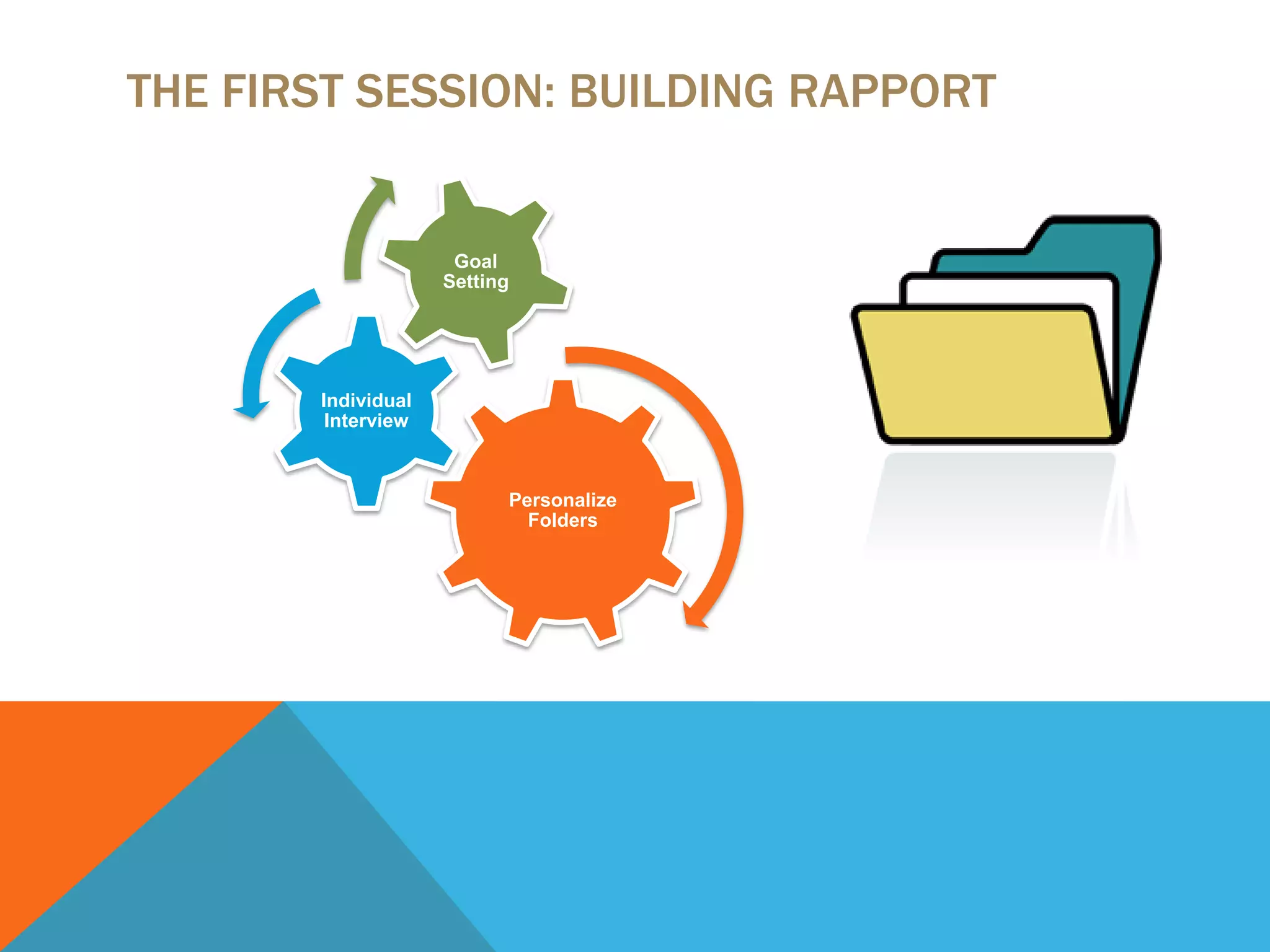
THE FIRST SESSION: BUILDING RAPPORT
Personalize
Folders
Individual
Interview
Goal
Setting
PRACTICE: ROLE PLAYING
Get in pairs
One pretend to be a resident
Choose a scenario:
1. It is the first day and the Carroll Ballers tutor is
interviewing the resident and setting goals.
2. It is a regular tutoring session. Sample resident
Javon has completed Math Sense: Fractions
addition and Endeavor 5 lesson 2.
After done, switch roles & practice the other scenario.
WHAT DID YOU LEARN TODAY?
What are the four sections of the 2014 GED® Test?
What are the three tasks in a normal tutoring session?
What are the sections of a personal profile?
What is the overall goal of tutoring?

GED Tutor Training

  • 2.
    AGENDA Introductions What is theGED® Test? Typical Tutoring Session Tutoring Materials & Paperwork The First Session
  • 3.
    INTRODUCTIONS Facilitator: Meagen Farrell EducationalConsultant & Graduate Assistant meagenfarrell@gmail.com @farrellink farrellink.com Please tell us: • your name, • year at JCU, and • major (if decided)
  • 4.
    BY THE ENDOF THIS SESSION, YOU WILL KNOW: What is the GED® Test? What are the four subjects on the 2014 GED® Test? What three tasks will you need to do in every tutoring session? What are the primary materials you will have available for tutoring?
  • 5.
    WHAT IS THEGED® TEST? Studying (Tutoring) Take GED Test High School Equivalency Diploma Most GED® Test Prep students start at 3-6 grade reading or math level (intermediate) PROGRAM GOAL: Improve one grade level in one semester or year Below 3rd grade level: “learning to read”
  • 6.
    Equivalent to highschool graduation tests: written at the 10th grade level Changing in 2014: Cannot take the test until January! It is taken on the computer, but ONLY at authorized testing sites. WHAT SHOULD YOU KNOW ABOUT THE TEST? Did you take a high school graduation test? What was it like?
  • 7.
    WHAT IS ONTHE TEST? Four subjects  Mostly multiple choice questions with 4 options Emphasis on non-fiction & real- world scenarios (75%) Required skills: Comprehension/Recognition Analysis Application Strategic thinking Reasoning through Language Arts Science Social Studies Mathematical Reasoning
  • 8.
    WHAT IS ONTHE GED® TEST? WRITING Four writing test items: • Two short answers in Science • One extended response in Social Studies (25 minutes) • One extended response in Language Arts (45 minutes) Given a text (250-900 words) with a prompt and must type a response Reasoning through Language Arts Science Social Studies Mathematical Reasoning
  • 9.
    WHAT IS ONTHE GED® TEST? MATH Formula sheet available Interpreting data assessed in Science & Social Studies On-screen calculator TI-30XS (not all problems) Reasoning through Language Arts Science Social Studies Mathematical Reasoning
  • 10.
    TYPICAL TUTORING SESSION 1.Activity check in: What have you worked on in the past week? Focus on goals. 2. Knowledge check in: Ask resident to explain what he’s learned (writing or graphic organizer). 3. Paperwork: Summary of session & decide on next work.
  • 11.
    TUTORING MATERIALS: BOOKS PLEASUREREADING: Able to get library books on interesting topics • Search: CPL.org & WorldCat.org • Level It Books: find reading level MATH SENSE: Written at 4-5 grade reading level, Math 1-10 grade level ENDEAVOR: Written at 3-8 grade reading level (# is level) Focus on the SKILLS! There are lots of supplemental books for extra practice and explanation.
  • 12.
    TUTORING MATERIALS: GRAPHICORGANIZERS After discussing the books studied, ask the resident to “teach back” what he has learned. Examples: • What are the steps to find the common denominator? • What is the main idea and supporting points of the reading passage? • Define the new words you learned.
  • 13.
    PAPERWORK: DAILY SUMMARY •Date • Tutor name & group • Instructional activities (books and pages) • Skills demonstrated or review • Notes: Behavior, achievements
  • 14.
    THE FIRST SESSION:BUILDING RAPPORT Personalize Folders Individual Interview Goal Setting
  • 15.
    PRACTICE: ROLE PLAYING Getin pairs One pretend to be a resident Choose a scenario: 1. It is the first day and the Carroll Ballers tutor is interviewing the resident and setting goals. 2. It is a regular tutoring session. Sample resident Javon has completed Math Sense: Fractions addition and Endeavor 5 lesson 2. After done, switch roles & practice the other scenario.
  • 16.
    WHAT DID YOULEARN TODAY? What are the four sections of the 2014 GED® Test? What are the three tasks in a normal tutoring session? What are the sections of a personal profile? What is the overall goal of tutoring?