Are  we Rowing in Circles? Christine Flanagan U.S. Botanic Garden APGA  2010
Overview Review of target 14-what we do / don’t do Historical context Case studies Recommendations for the next 40 years
Global Strategy for Plant Conservation Targets for 2010 Target 14:  “ The importance of plant diversity and the need for its conservation incorporated into communication, educational and public awareness programmes.”
What Botanic Gardens do well:  education programs: Model and teach stewardship Host school field trips, projects,  youth ladder programs with content about plants/environment Support school gardens, teachers Teach botany, conservation, restoration
What Botanic Gardens do well:  set the   example Steward  gardens, arboreta, natural areas Offer nature-based places that are nurturing to the human psyche Showcase biodiversity of plants Support wildlife, pollinators, ecosystems Value science-based approach to knowledge
What we are starting to do: Promote sustainable practices  Recognize ourselves as keepers of  plant knowledge  Translate technical knowledge about plants into  relevant information
What many Botanic Gardens   don’t do well : “ Speak” for plants Promote public action about the environment  Advocate at public meetings, school boards, neighborhood associations Promote empathic relationships with plants
Are we rowing in circles?
We are becoming estranged from the environment on which we depend – and from our living kin, especially those that are   green. We have been saying this for more than 150 years
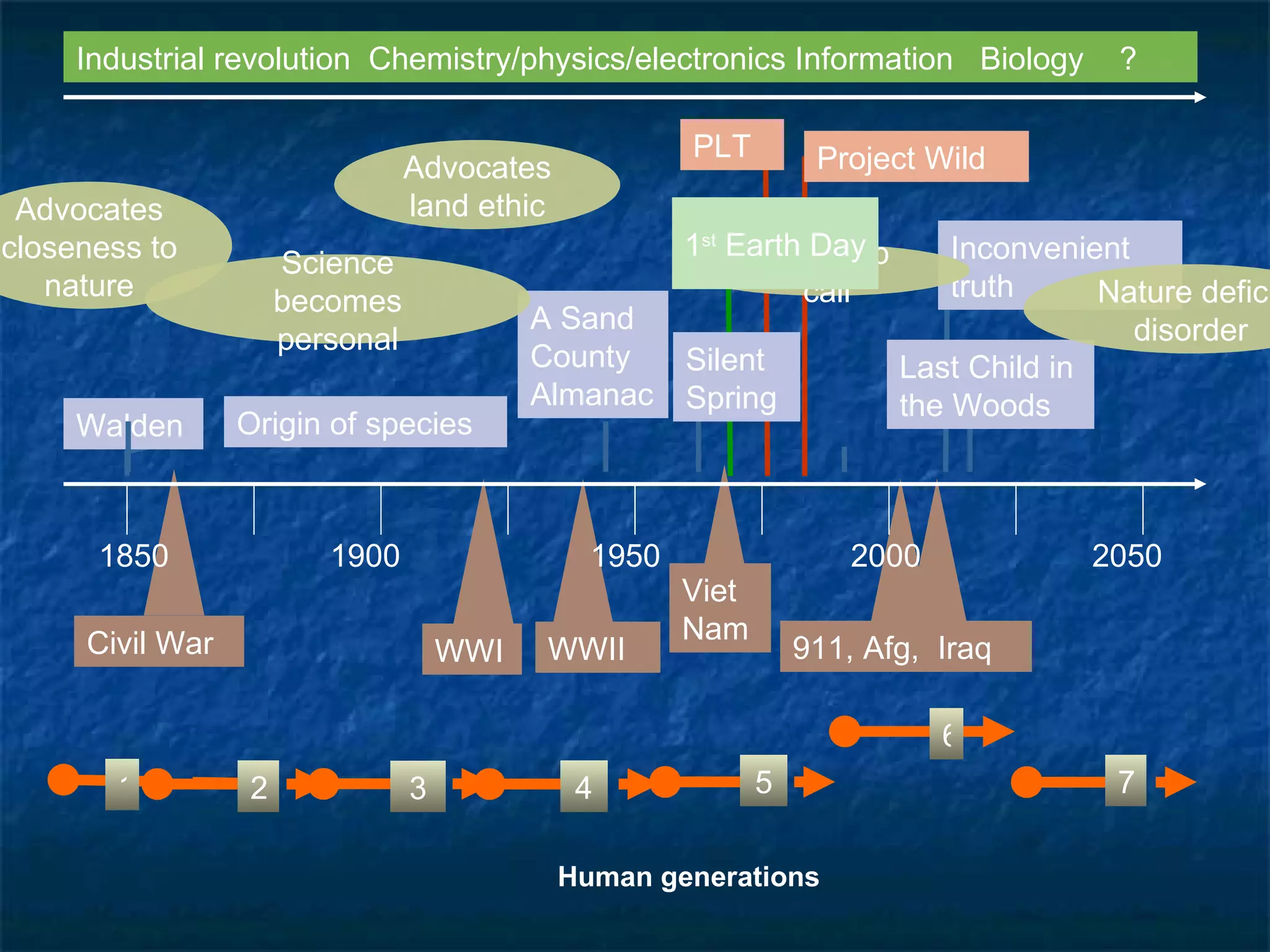
1 st  Earth Day WWI WWII Civil War 911, Afg,  Iraq Viet Nam 1900 2000 2050 1950 1850 Project Wild PLT 6 3 4 5 7 1 2 Human generations Industrial revolution  Chemistry/physics/electronics Information  Biology  ? Walden A Sand County Almanac Silent Spring Inconvenient truth Last Child in the Woods Origin of species Advocates closeness to nature Advocates land ethic Nature deficit disorder Wake up call Science becomes personal
1. “Ultimately, botanic gardens need to engage their visitors to challenge them intellectually and emotionally in order to change attitudes, behavior, and values ...”
2. “…public understanding is necessary to engage public and political support for conservation.”  Havens et al 2006  [teach them and  they will become]
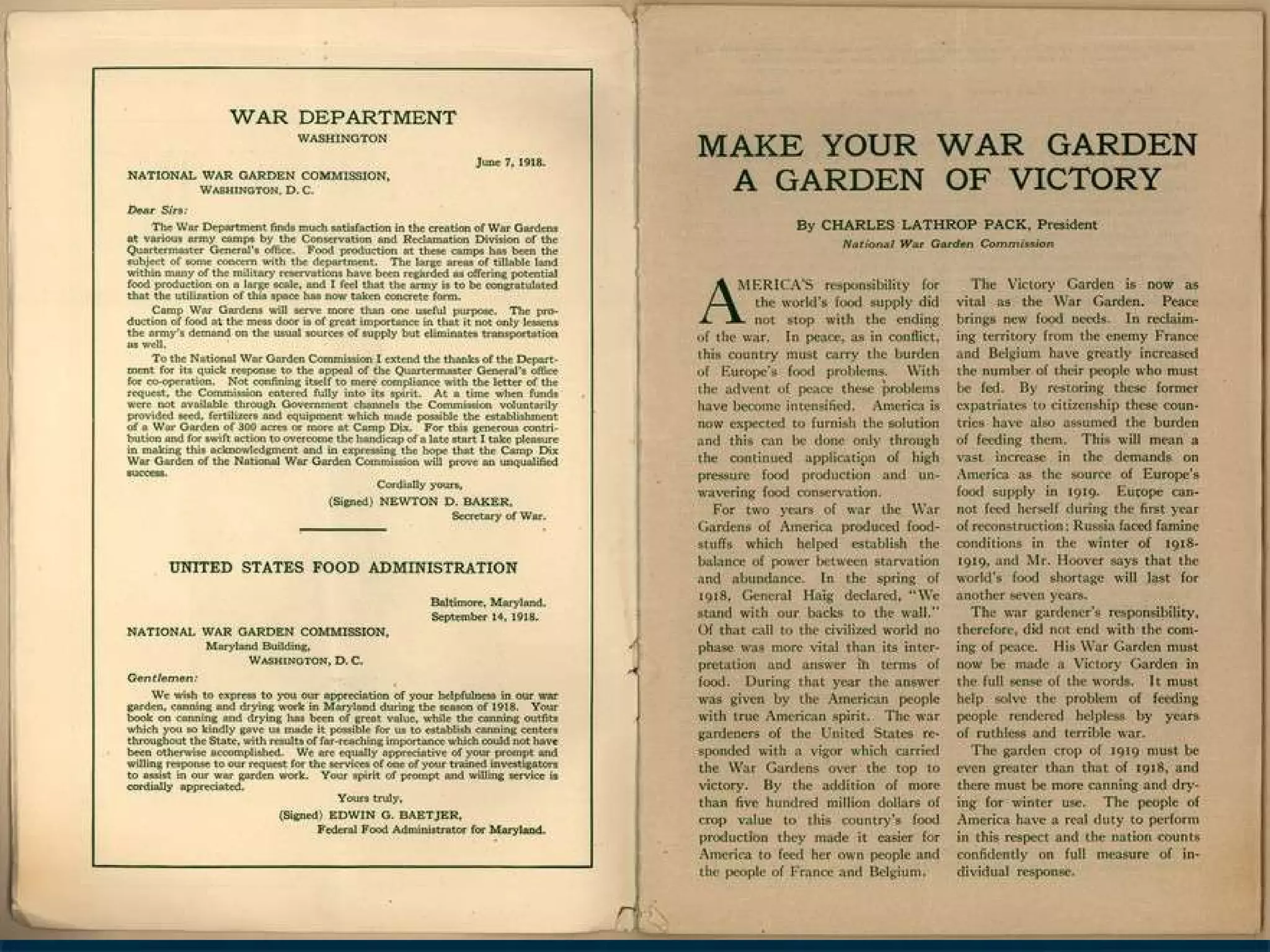
National social initiatives  based on educational projects Case I: Victory Gardens of WWI and WWII
 
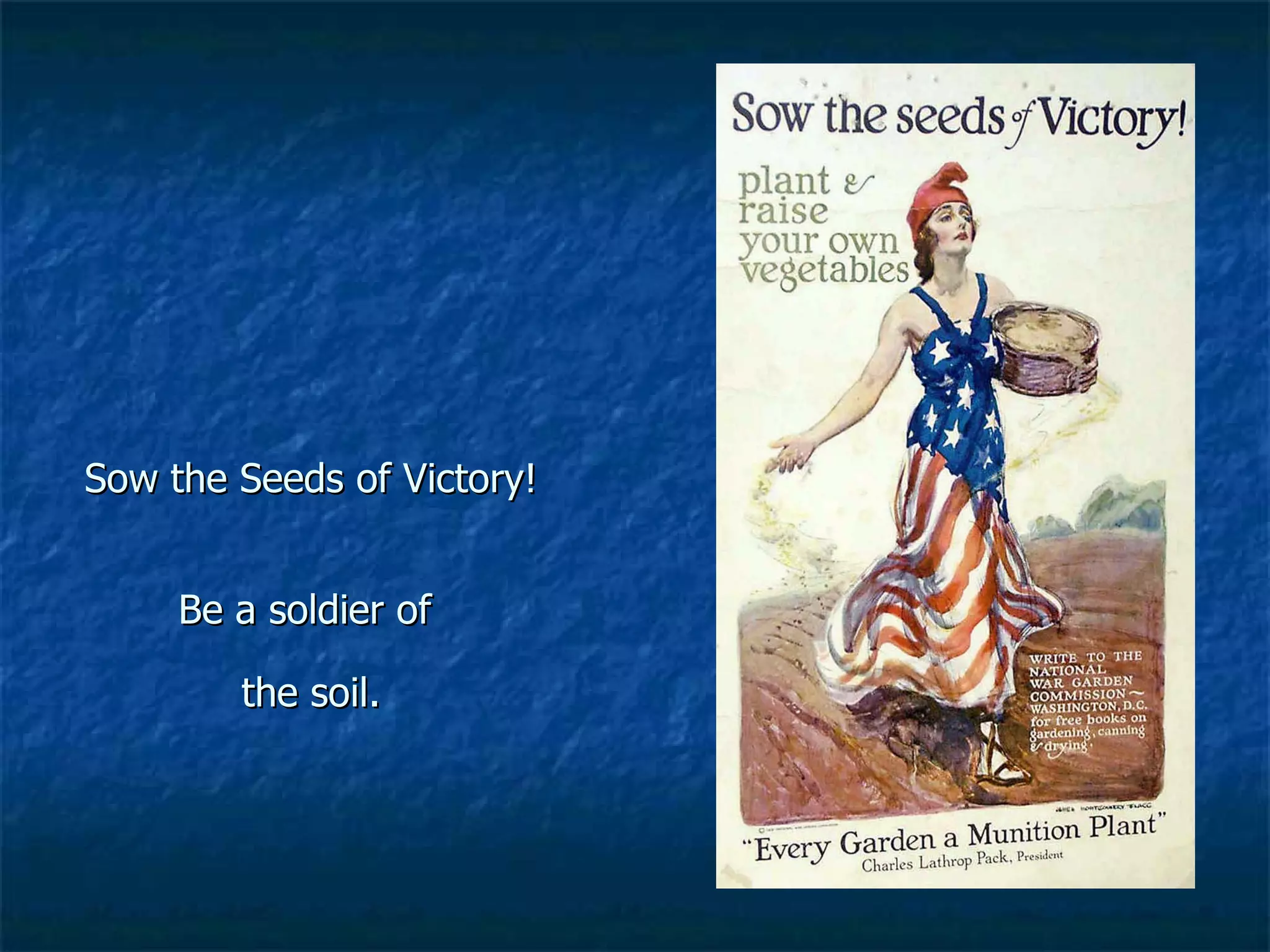
Sow the Seeds of Victory! Be a soldier of  the soil.
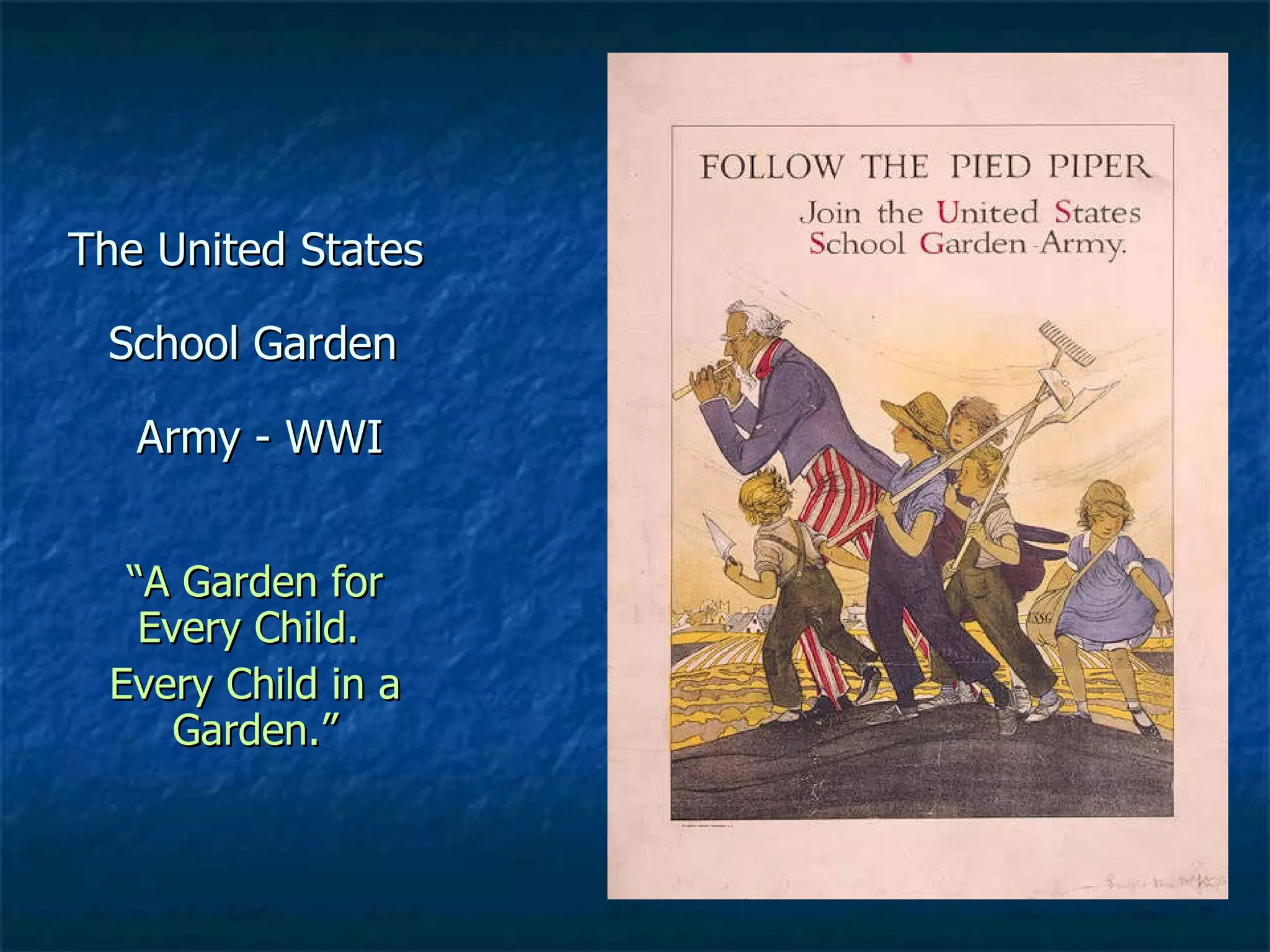
The United States  School Garden  Army - WWI “ A Garden for Every Child.  Every Child in a Garden.”
World War II Victory Gardens “ Food For Freedom” “ Plant to Prosper” Strong youth component
Government Concerns/Goals WWII: Improve American health via gardens Encourage proper food storage and preservation of surplus Enable families/institutions to augment their food dollars Community gardens for urban dwellers Encourage local production and consumption to  reduce   the food mile   Mobilize and unify Americans around food conservation and production efforts, (morale, spiritual well-being and recreation)
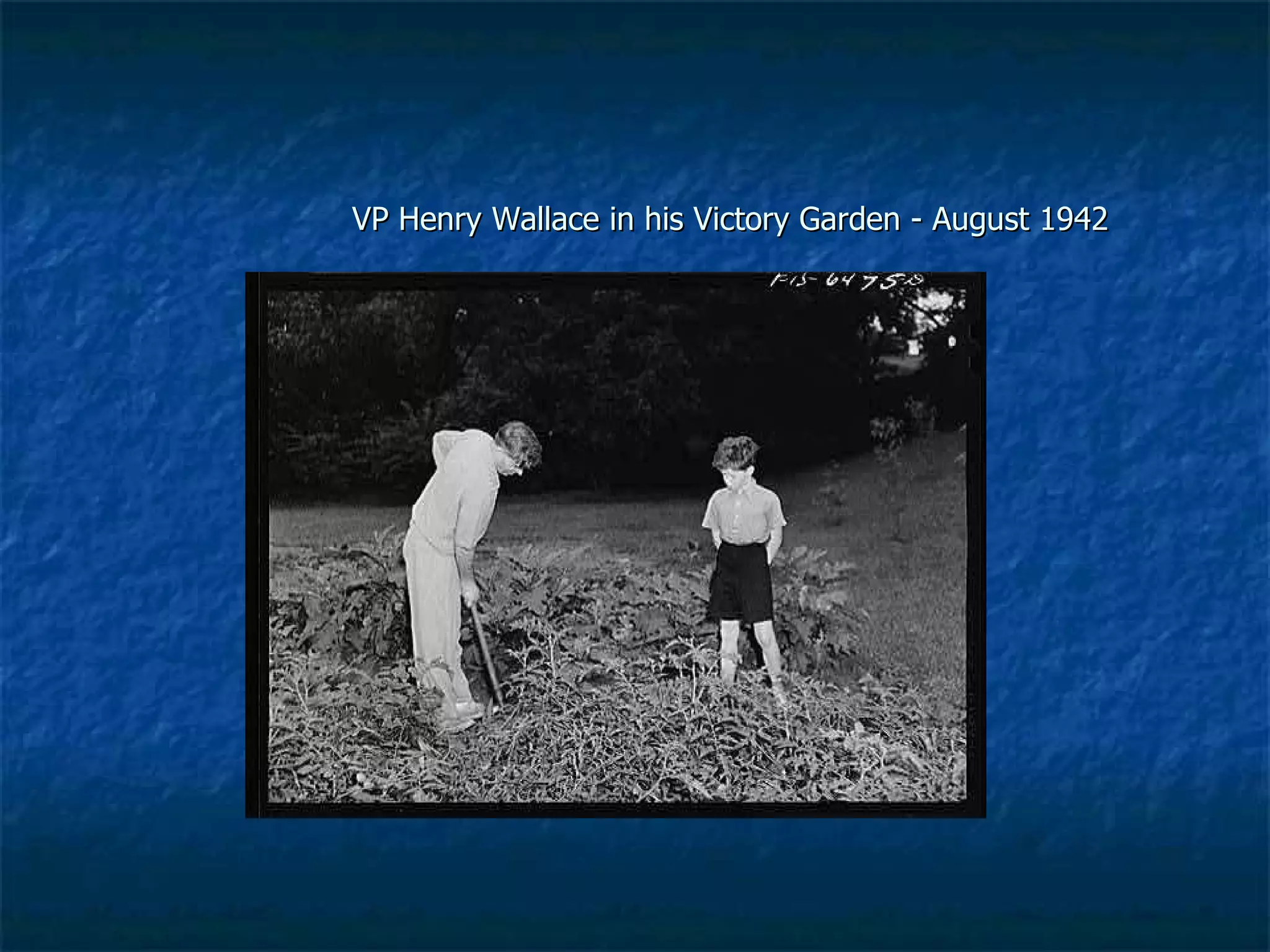
VP Henry Wallace in his Victory Garden - August 1942
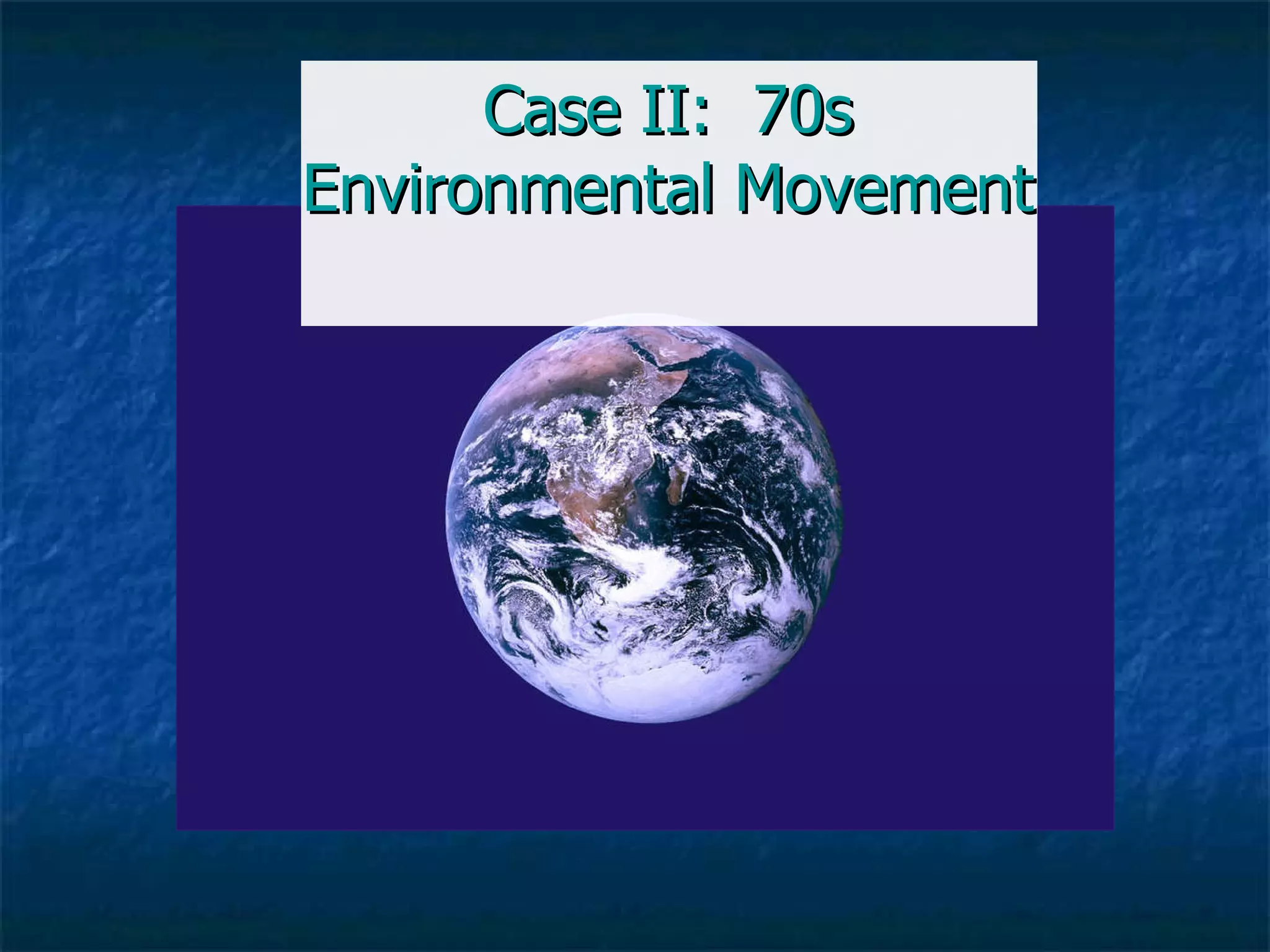
Case II:  70s Environmental Movement
Forty years and an entire generation ago
1970 First Earth Day 20,000 colleges and universities 10,000  schools 20 million Americans demonstrated for environmental reform U.S. politicians saw that environment had constituency Clean Air Act, creation of EPA
Endangered Species Act of 1973: designed to protect critically imperiled species from extinction as a "consequence of economic growth and development untempered by adequate concern and conservation."
Case III:  Energy Crisis of 1970s
In 1973, OPEC reduced world supplies of oil sparking an Oil Crisis   shortages and long lines for gasoline President Carter: World oil supply would likely meet Americans' demand for 6-8 more years  Clear and present danger to our nation  The moral equivalent of war
July 15, 1979:  Carter’s "malaise" speech:  “ I want to talk to you right now about a fundamental threat to American democracy.” “ The threat is nearly invisible in ordinary ways. It is a crisis that strikes at the very heart and soul and spirit of our national will. We can see this crisis in the growing doubt about the meaning of our own lives and in the loss of a unity of purpose for our nation.  ”
Carter’s "malaise" speech (cont):  “…  too many of us now tend to worship self-indulgence and consumption. Human identity is no longer defined by what one does, but by what one owns. But we've discovered that owning things and consuming things does not satisfy our longing for meaning.” “ I'm asking you for your good and for your nation's security …”carpool, obey speed limit, have car-free days,  reset  the thermostat . ..”
Carter’s speech  was not well received
Social change in retrospect: Victory garden campaigns - forgotten at wars’ end; move toward factory food and industrial agriculture; vegetable gardening passe 70s environmental movement-  introduced important green reforms, legislation Energy crisis – strides in mpg, energy- saving appliance  …  BUT
then came the 80s & 90s
 
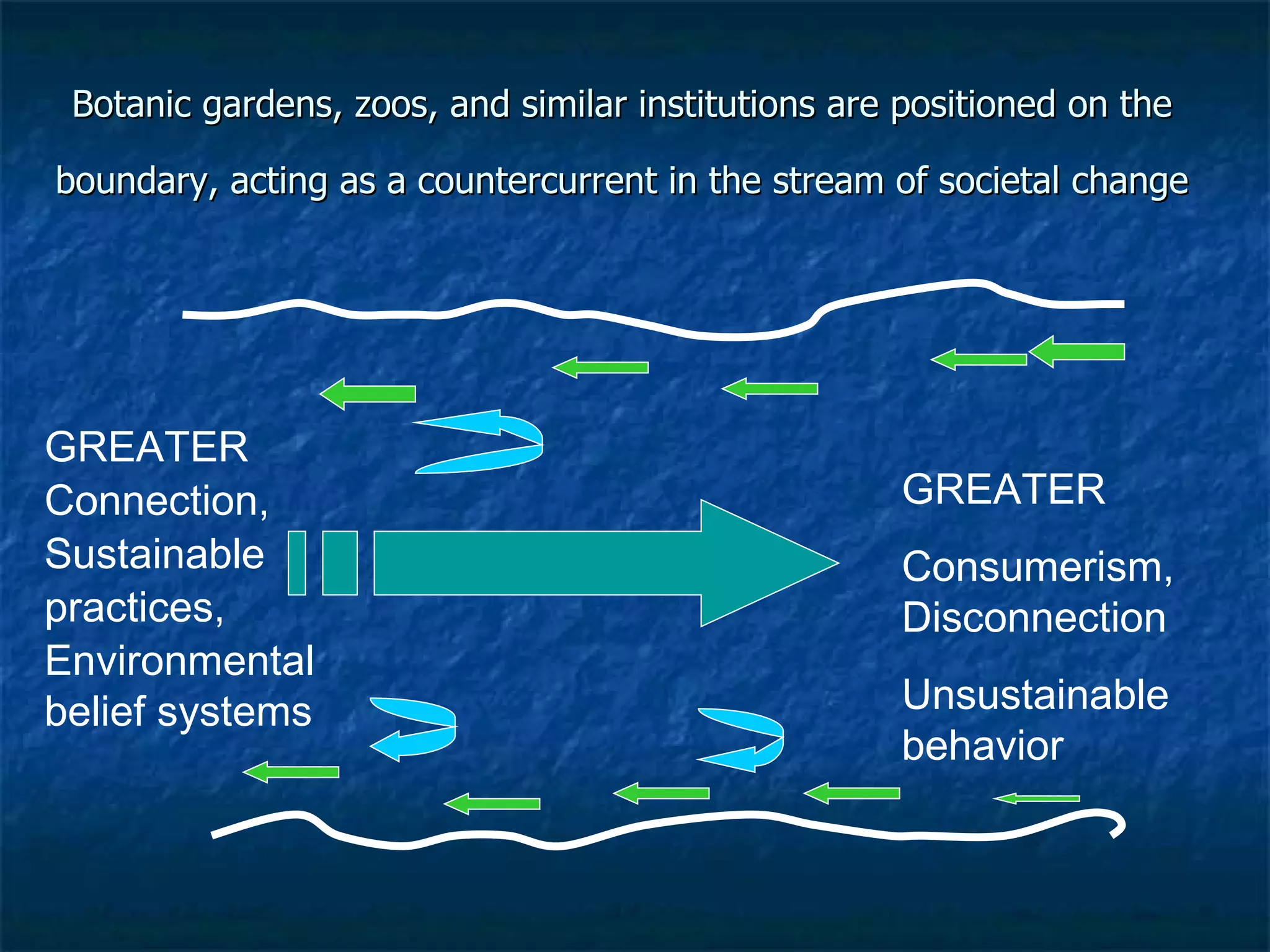
Botanic gardens, zoos, and similar institutions are positioned on the boundary, acting as a countercurrent in the stream of societal change GREATER Consumerism, Disconnection Unsustainable behavior GREATER Connection, Sustainable practices, Environmental belief systems
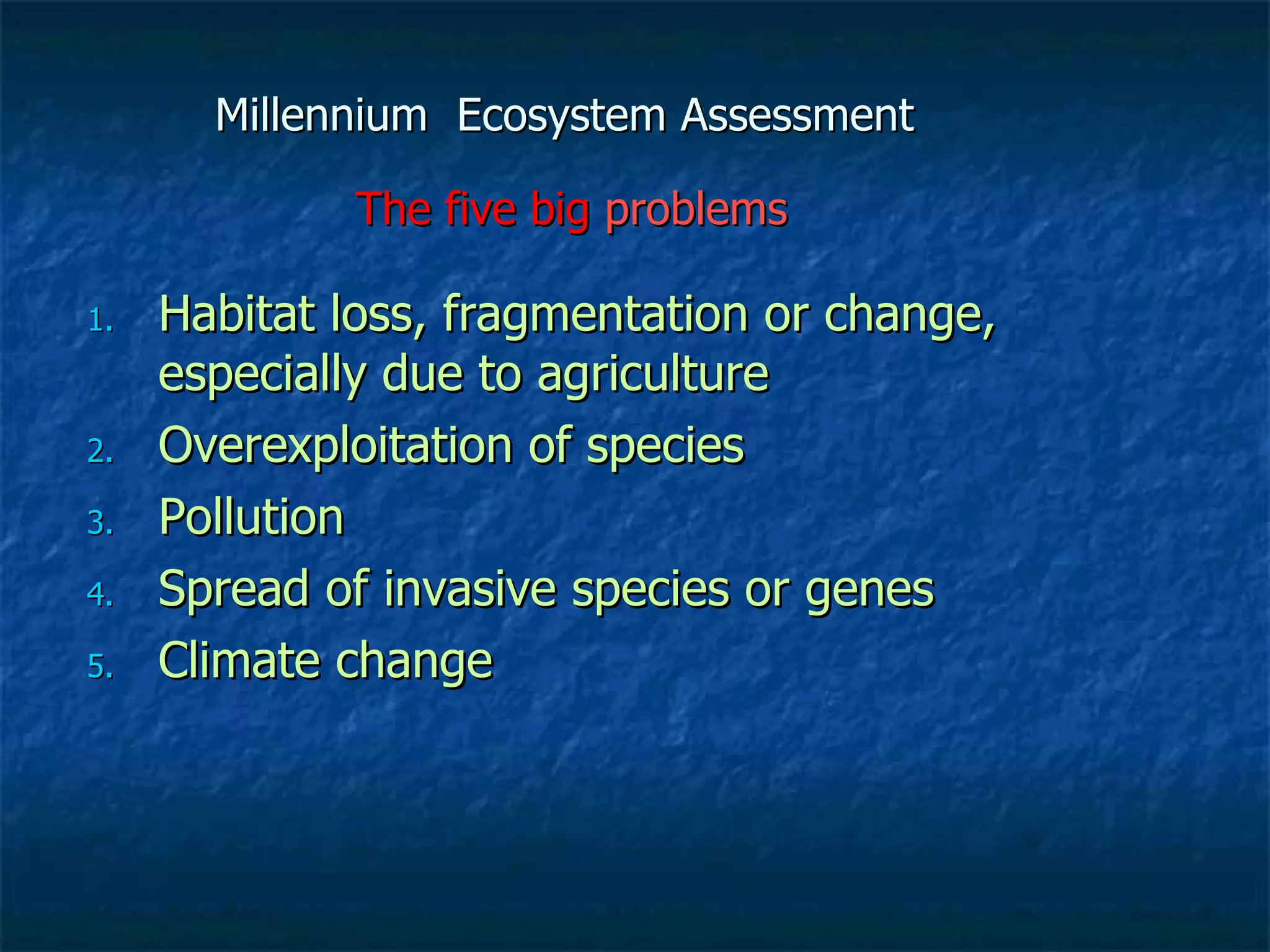
Millennium  Ecosystem Assessment  The five big  problems Habitat loss, fragmentation or change, especially due to agriculture Overexploitation of species Pollution Spread of invasive species or genes Climate change
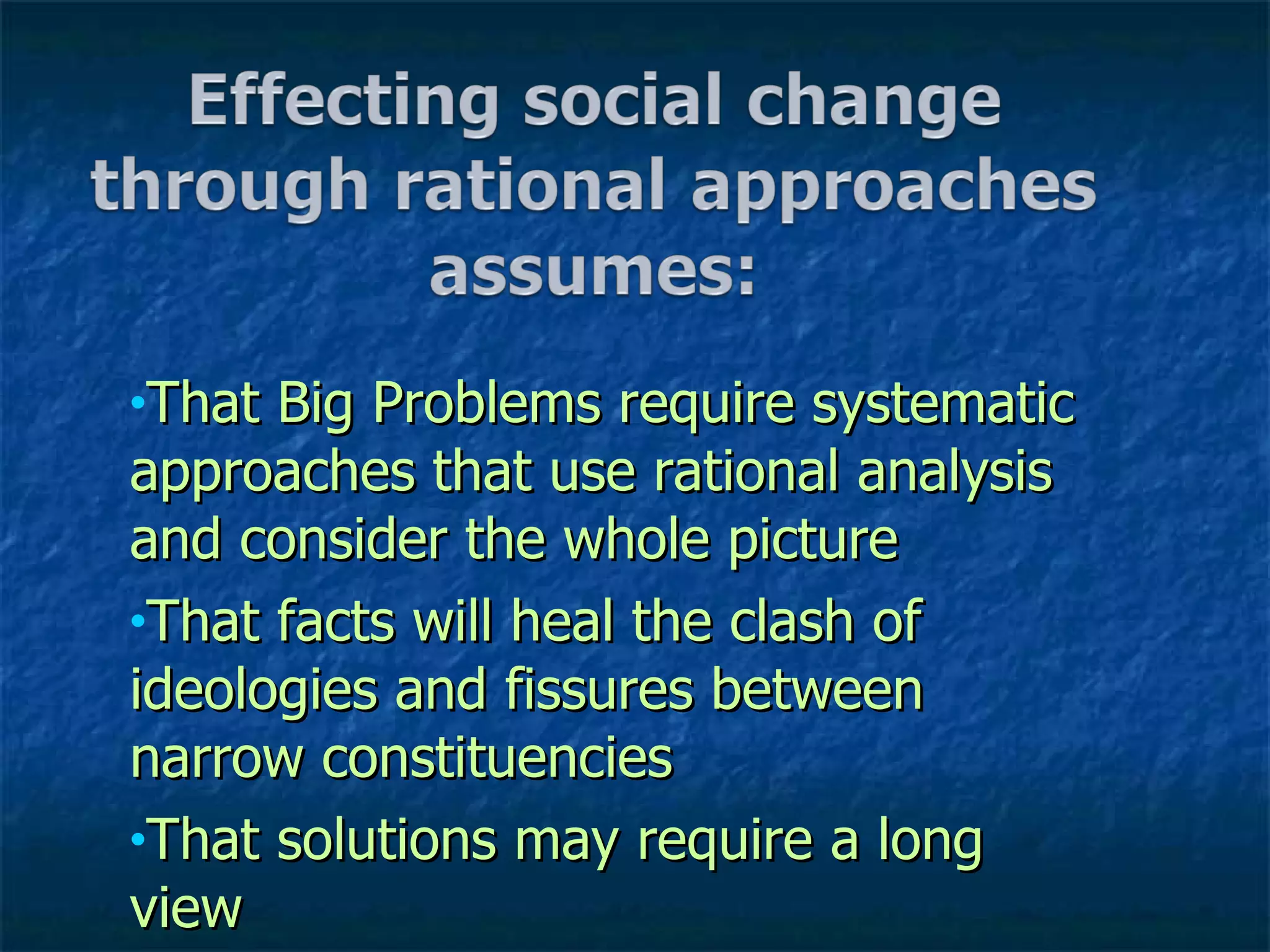
That Big Problems require systematic approaches that use rational analysis and consider the whole picture That facts will heal the clash of ideologies and fissures between narrow constituencies That solutions may require a long view
The One Big Problem In democratic societies power is apportioned among many different players, most of whom are far more concerned with  particular narrow details and parochial viewpoint, rather than the overall coherence of the solution
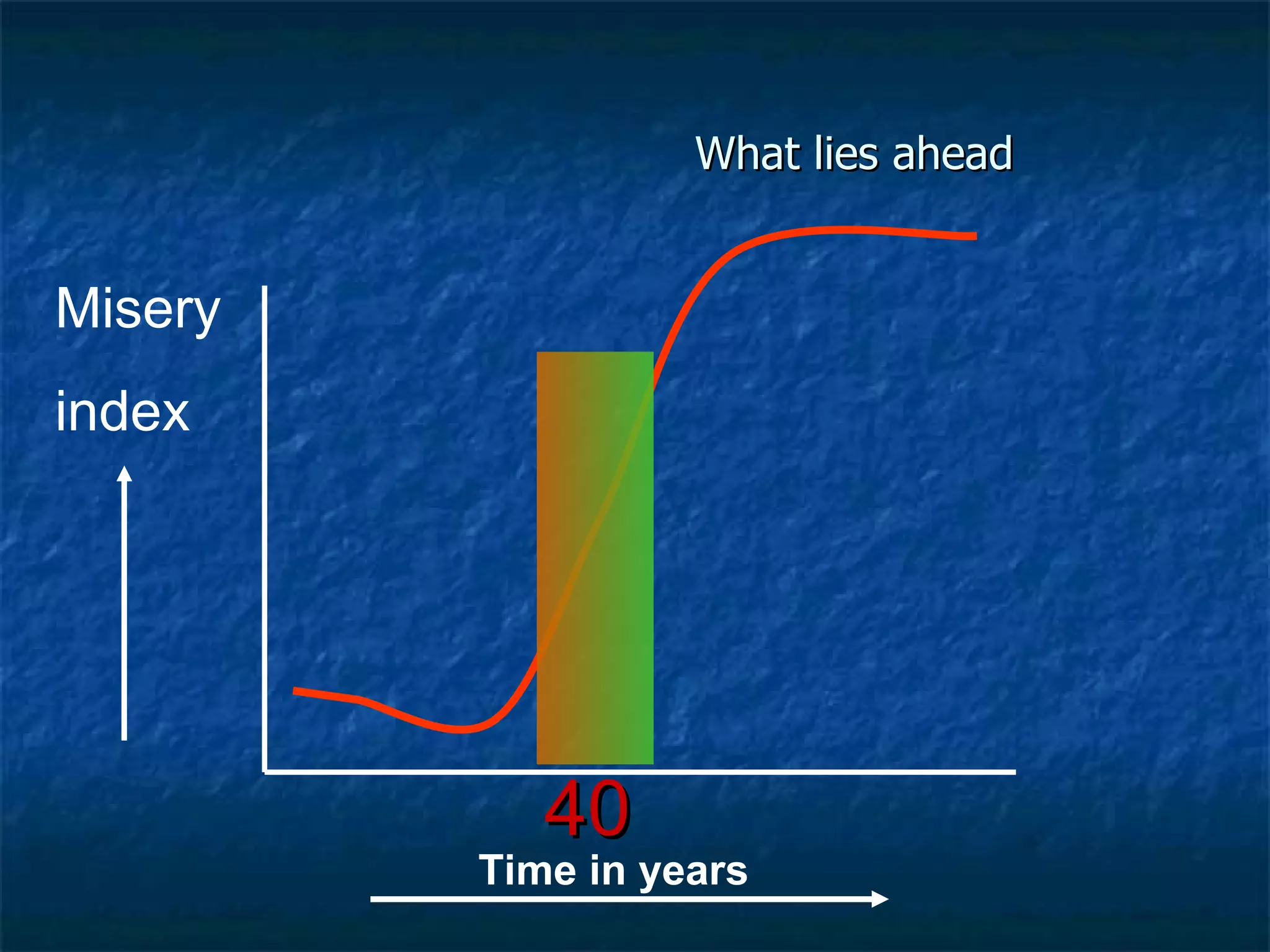
What lies ahead Misery index Time in years 40
Target 14: The importance of plant diversity and the need for its conservation incorporated into communication, educational and public awareness programmes.
From here to 2020 ( and 2050)
Have provocative conversations
Plants use to be included in the living throng we call creatures.
Plants need clean air, clean water, and healthy soil;  so do we .
Plants capture and transform more energy than they use.  That is why the world is (or could be) green.
Plants have lives-- really .
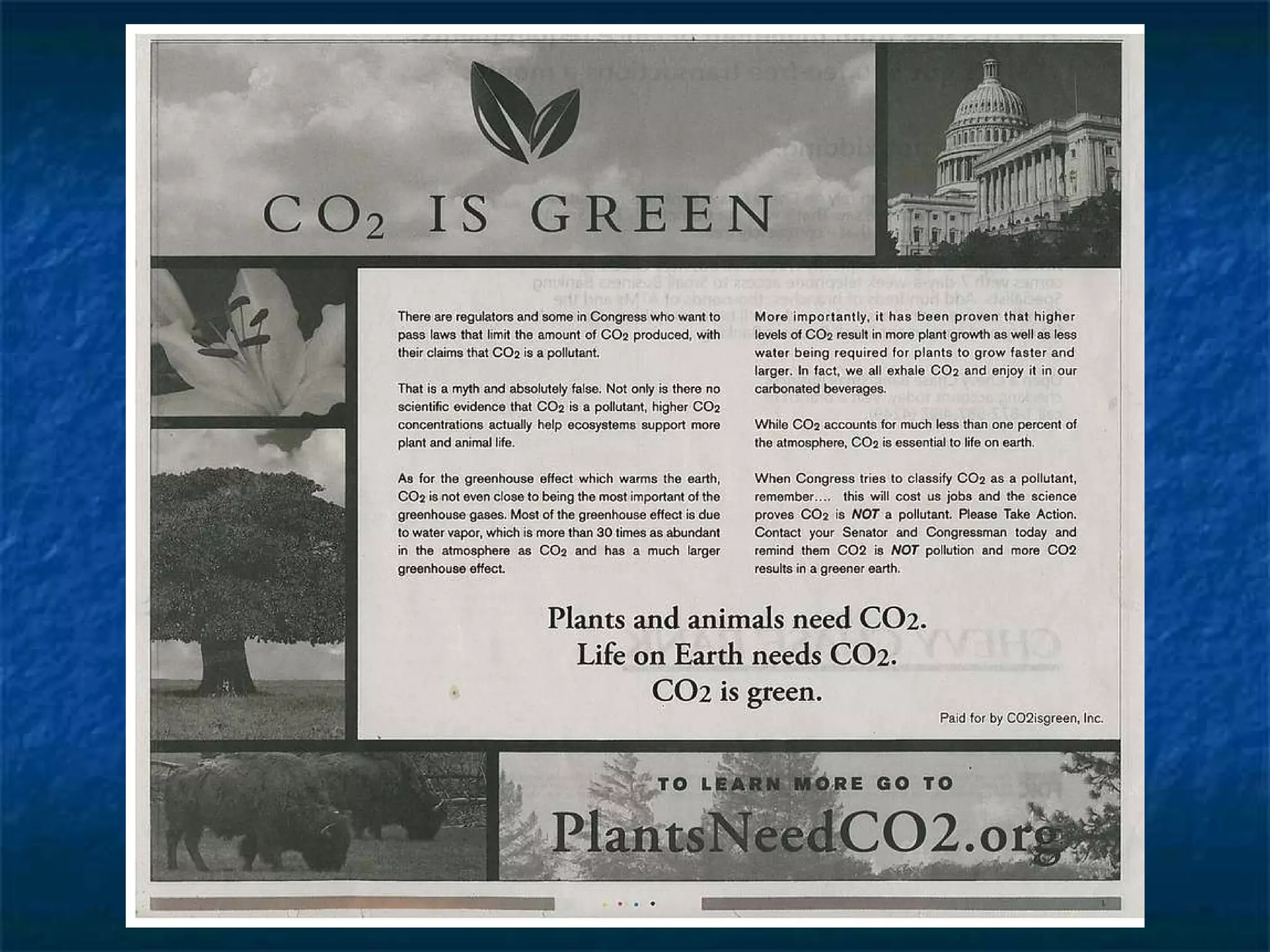
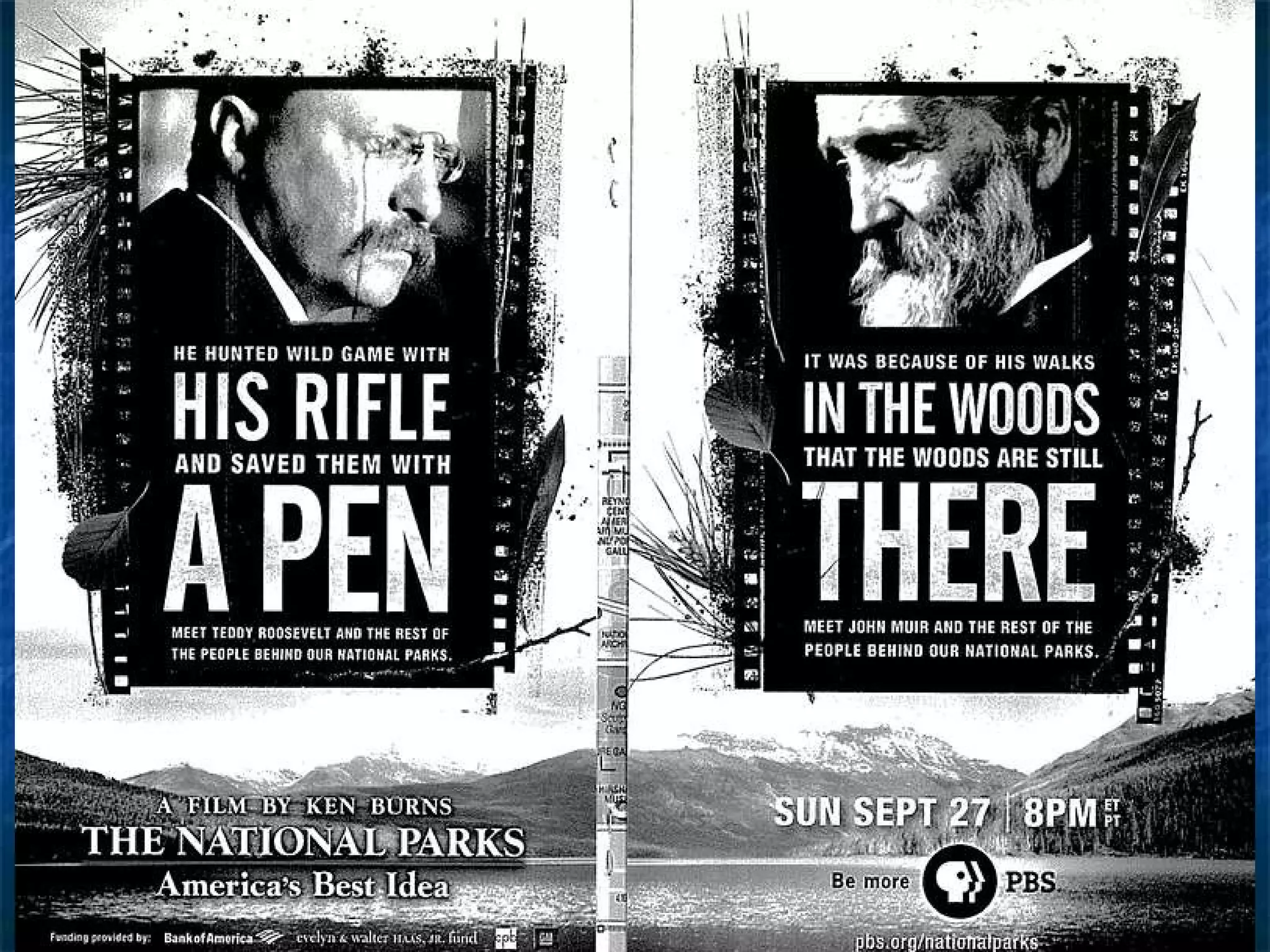
Challenge mis-information Take bold actions to be an advocate for plants Protect habitat and establish corridors Communicate that plants are not optional Make a documentary film Use the media
L ife is made possible   (and meaningful, and beautiful, and nutritious, and pain-free, and …)   by plants a friendly reminder from a botanic garden near you


Carpe Plantas! Strategic Actions All Botanic Gardens Can Take to Advance Plant Conservation Flanagan

  • 1.
    Are weRowing in Circles? Christine Flanagan U.S. Botanic Garden APGA 2010
  • 2.
    Overview Review oftarget 14-what we do / don’t do Historical context Case studies Recommendations for the next 40 years
  • 3.
    Global Strategy forPlant Conservation Targets for 2010 Target 14: “ The importance of plant diversity and the need for its conservation incorporated into communication, educational and public awareness programmes.”
  • 4.
    What Botanic Gardensdo well: education programs: Model and teach stewardship Host school field trips, projects, youth ladder programs with content about plants/environment Support school gardens, teachers Teach botany, conservation, restoration
  • 5.
    What Botanic Gardensdo well: set the example Steward gardens, arboreta, natural areas Offer nature-based places that are nurturing to the human psyche Showcase biodiversity of plants Support wildlife, pollinators, ecosystems Value science-based approach to knowledge
  • 6.
    What we arestarting to do: Promote sustainable practices Recognize ourselves as keepers of plant knowledge Translate technical knowledge about plants into relevant information
  • 7.
    What many BotanicGardens don’t do well : “ Speak” for plants Promote public action about the environment Advocate at public meetings, school boards, neighborhood associations Promote empathic relationships with plants
  • 8.
    Are we rowingin circles?
  • 9.
    We are becomingestranged from the environment on which we depend – and from our living kin, especially those that are green. We have been saying this for more than 150 years
  • 10.
    1 st Earth Day WWI WWII Civil War 911, Afg, Iraq Viet Nam 1900 2000 2050 1950 1850 Project Wild PLT 6 3 4 5 7 1 2 Human generations Industrial revolution Chemistry/physics/electronics Information Biology ? Walden A Sand County Almanac Silent Spring Inconvenient truth Last Child in the Woods Origin of species Advocates closeness to nature Advocates land ethic Nature deficit disorder Wake up call Science becomes personal
  • 11.
    1. “Ultimately, botanicgardens need to engage their visitors to challenge them intellectually and emotionally in order to change attitudes, behavior, and values ...”
  • 12.
    2. “…public understandingis necessary to engage public and political support for conservation.” Havens et al 2006 [teach them and they will become]
  • 13.
    National social initiatives based on educational projects Case I: Victory Gardens of WWI and WWII
  • 14.
  • 15.
    Sow the Seedsof Victory! Be a soldier of the soil.
  • 16.
    The United States School Garden Army - WWI “ A Garden for Every Child. Every Child in a Garden.”
  • 17.
    World War IIVictory Gardens “ Food For Freedom” “ Plant to Prosper” Strong youth component
  • 18.
    Government Concerns/Goals WWII:Improve American health via gardens Encourage proper food storage and preservation of surplus Enable families/institutions to augment their food dollars Community gardens for urban dwellers Encourage local production and consumption to reduce the food mile Mobilize and unify Americans around food conservation and production efforts, (morale, spiritual well-being and recreation)
  • 19.
    VP Henry Wallacein his Victory Garden - August 1942
  • 20.
    Case II: 70s Environmental Movement
  • 21.
    Forty years andan entire generation ago
  • 22.
    1970 First EarthDay 20,000 colleges and universities 10,000 schools 20 million Americans demonstrated for environmental reform U.S. politicians saw that environment had constituency Clean Air Act, creation of EPA
  • 23.
    Endangered Species Actof 1973: designed to protect critically imperiled species from extinction as a "consequence of economic growth and development untempered by adequate concern and conservation."
  • 24.
    Case III: Energy Crisis of 1970s
  • 25.
    In 1973, OPECreduced world supplies of oil sparking an Oil Crisis shortages and long lines for gasoline President Carter: World oil supply would likely meet Americans' demand for 6-8 more years Clear and present danger to our nation The moral equivalent of war
  • 26.
    July 15, 1979: Carter’s "malaise" speech: “ I want to talk to you right now about a fundamental threat to American democracy.” “ The threat is nearly invisible in ordinary ways. It is a crisis that strikes at the very heart and soul and spirit of our national will. We can see this crisis in the growing doubt about the meaning of our own lives and in the loss of a unity of purpose for our nation. ”
  • 27.
    Carter’s "malaise" speech(cont): “… too many of us now tend to worship self-indulgence and consumption. Human identity is no longer defined by what one does, but by what one owns. But we've discovered that owning things and consuming things does not satisfy our longing for meaning.” “ I'm asking you for your good and for your nation's security …”carpool, obey speed limit, have car-free days, reset the thermostat . ..”
  • 28.
    Carter’s speech was not well received
  • 29.
    Social change inretrospect: Victory garden campaigns - forgotten at wars’ end; move toward factory food and industrial agriculture; vegetable gardening passe 70s environmental movement- introduced important green reforms, legislation Energy crisis – strides in mpg, energy- saving appliance … BUT
  • 30.
    then came the80s & 90s
  • 31.
  • 32.
    Botanic gardens, zoos,and similar institutions are positioned on the boundary, acting as a countercurrent in the stream of societal change GREATER Consumerism, Disconnection Unsustainable behavior GREATER Connection, Sustainable practices, Environmental belief systems
  • 33.
    Millennium EcosystemAssessment The five big problems Habitat loss, fragmentation or change, especially due to agriculture Overexploitation of species Pollution Spread of invasive species or genes Climate change
  • 34.
    That Big Problemsrequire systematic approaches that use rational analysis and consider the whole picture That facts will heal the clash of ideologies and fissures between narrow constituencies That solutions may require a long view
  • 35.
    The One BigProblem In democratic societies power is apportioned among many different players, most of whom are far more concerned with particular narrow details and parochial viewpoint, rather than the overall coherence of the solution
  • 36.
    What lies aheadMisery index Time in years 40
  • 37.
    Target 14: Theimportance of plant diversity and the need for its conservation incorporated into communication, educational and public awareness programmes.
  • 38.
    From here to2020 ( and 2050)
  • 39.
  • 40.
    Plants use tobe included in the living throng we call creatures.
  • 41.
    Plants need cleanair, clean water, and healthy soil; so do we .
  • 42.
    Plants capture andtransform more energy than they use. That is why the world is (or could be) green.
  • 43.
  • 44.
    Challenge mis-information Takebold actions to be an advocate for plants Protect habitat and establish corridors Communicate that plants are not optional Make a documentary film Use the media
  • 45.
    L ife ismade possible (and meaningful, and beautiful, and nutritious, and pain-free, and …) by plants a friendly reminder from a botanic garden near you
  • 46.
  • 47.
  • 48.

Editor's Notes