Activity-based approach to curriculum design
Professor Linda Creanor, Sheila MacNeill, Jim Emery
Blended Learning Team, GCU LEAD
With acknowledgements to:
Professor Gilly Salmon, University of Western Australia
Prof Alejandro Armellini, University of Northampton
This work is licensed under a
Creative Commons Attribution-NonCommercial-ShareAlike 4.0 International License.
 To plan the development of online
programmes through –
 creating a curriculum design framework
for online programmes and modules
 developing a team-based approach
 sharing experiences and ideas
http://ow.ly/JcJEl
10.00 – 10.10 Welcome and introductions
10.10 - 10.20 Overview of ‘Carpe Diem’
10.20 – 11.00 Blueprint and Action Plan
11.00 – 11.10 TEA / COFFEE
11.10 - 11.50 Creating Storyboards -
Calendar for the module
Topics covered
Assessment and feedback points
Learning activities
Resources
Tools and techniques
11.50 – 12.00 Summary and next steps
 What are the essential aspects of
your programme?
 Aims and learning outcomes?
 How can these be assessed?
 What about feedback?
http://farm3.static.flickr.com/2059/2237177661_99d3e8de8e.jpg
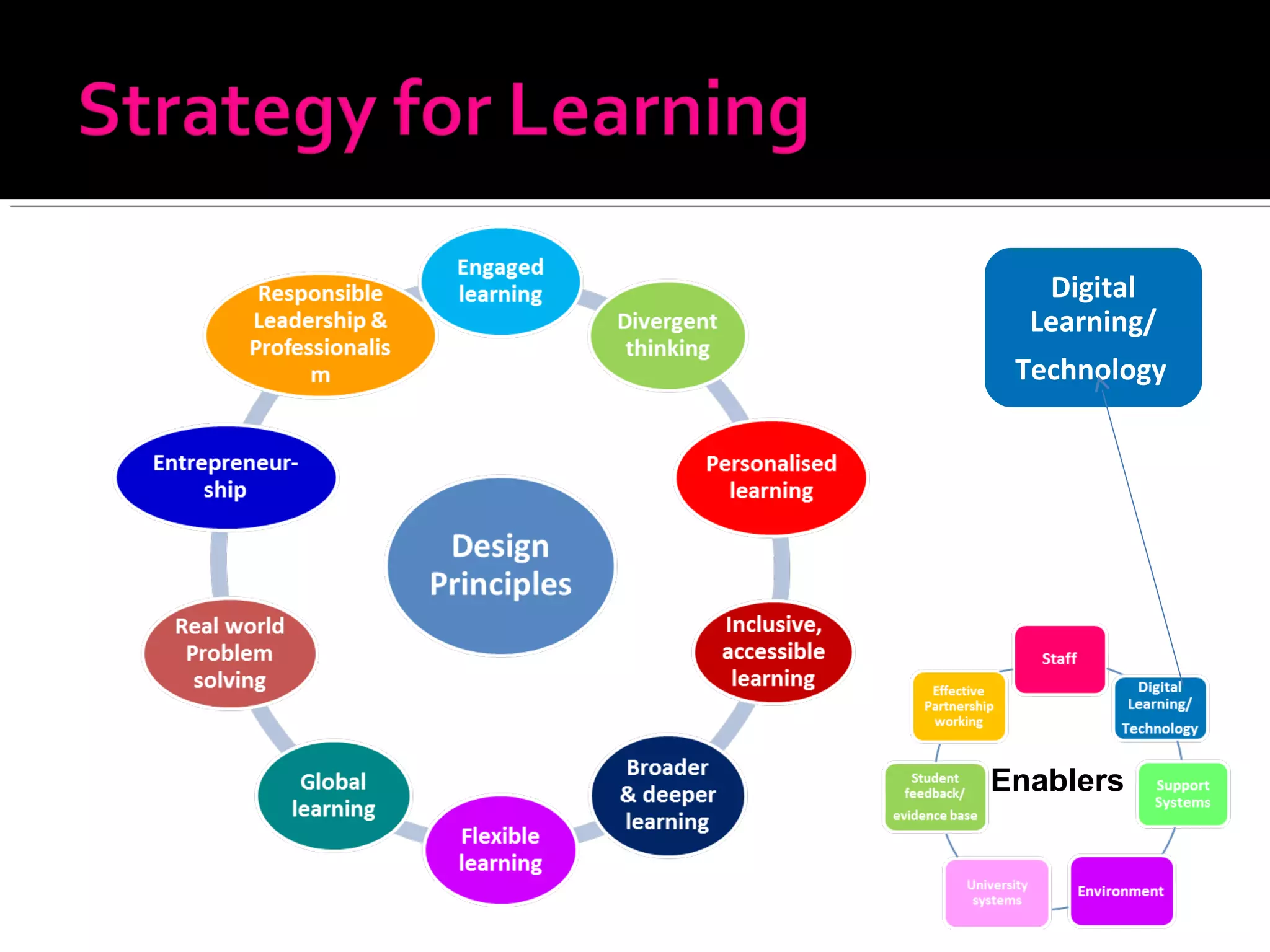
Digital
Learning/
Technology
Enablers
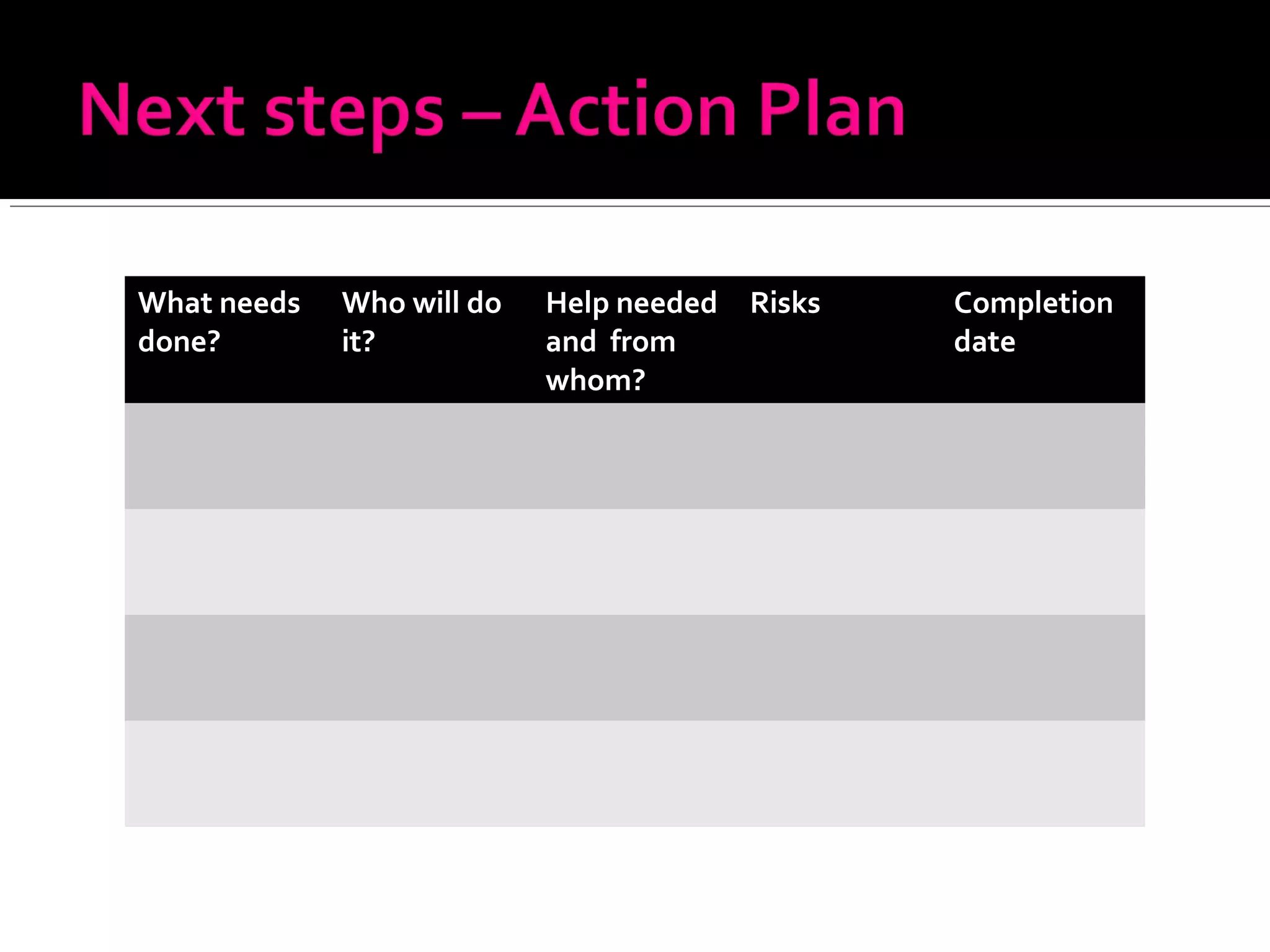
What needs
done?
Who will do
it?
Help needed
and from
whom?
Risks Completion
date
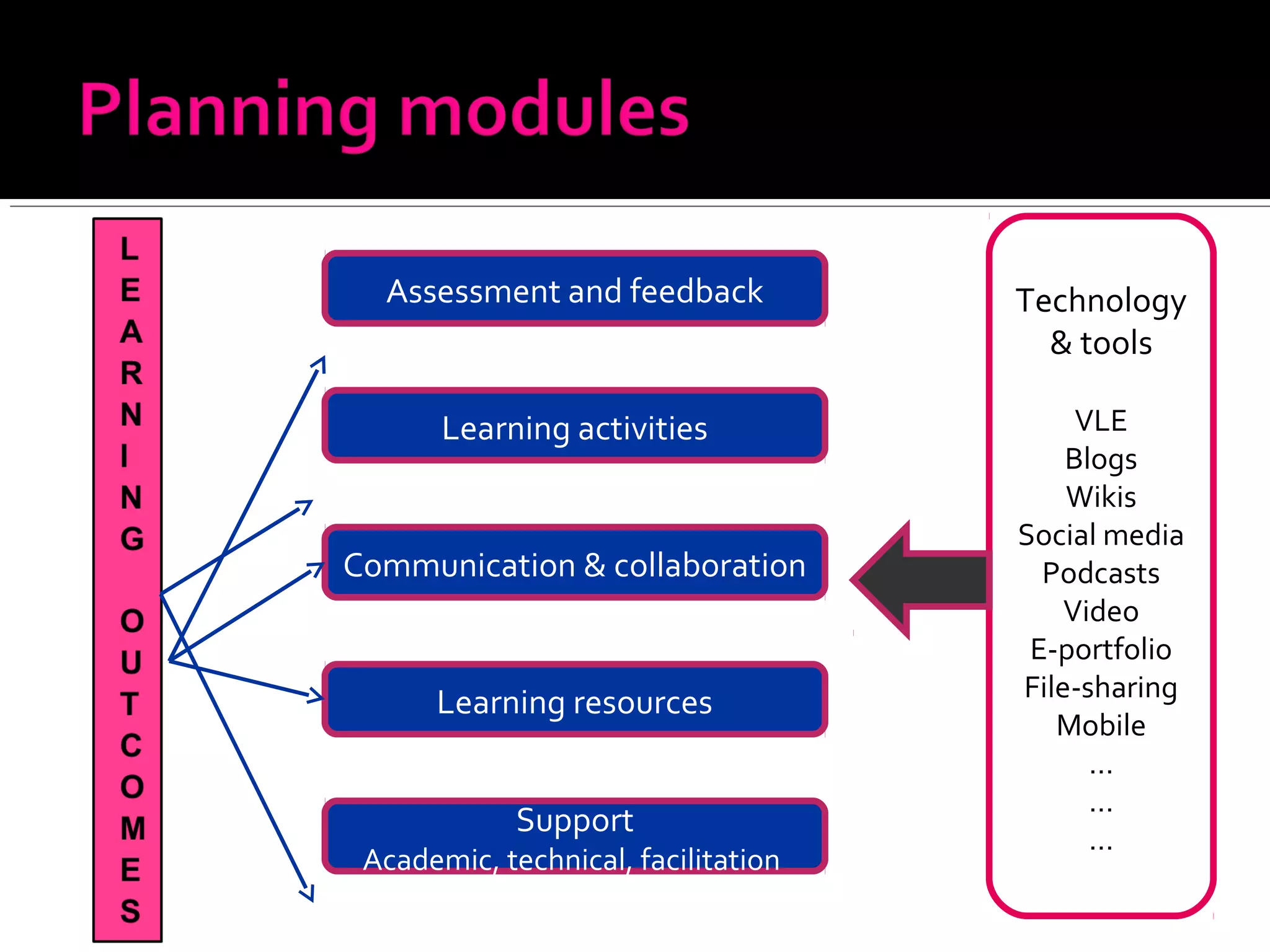
Assessment and feedback
Learning activities
Communication & collaboration
Learning resources
Support
Academic, technical, facilitation
Technology
& tools
VLE
Blogs
Wikis
Social media
Podcasts
Video
E-portfolio
File-sharing
Mobile
…
…
…
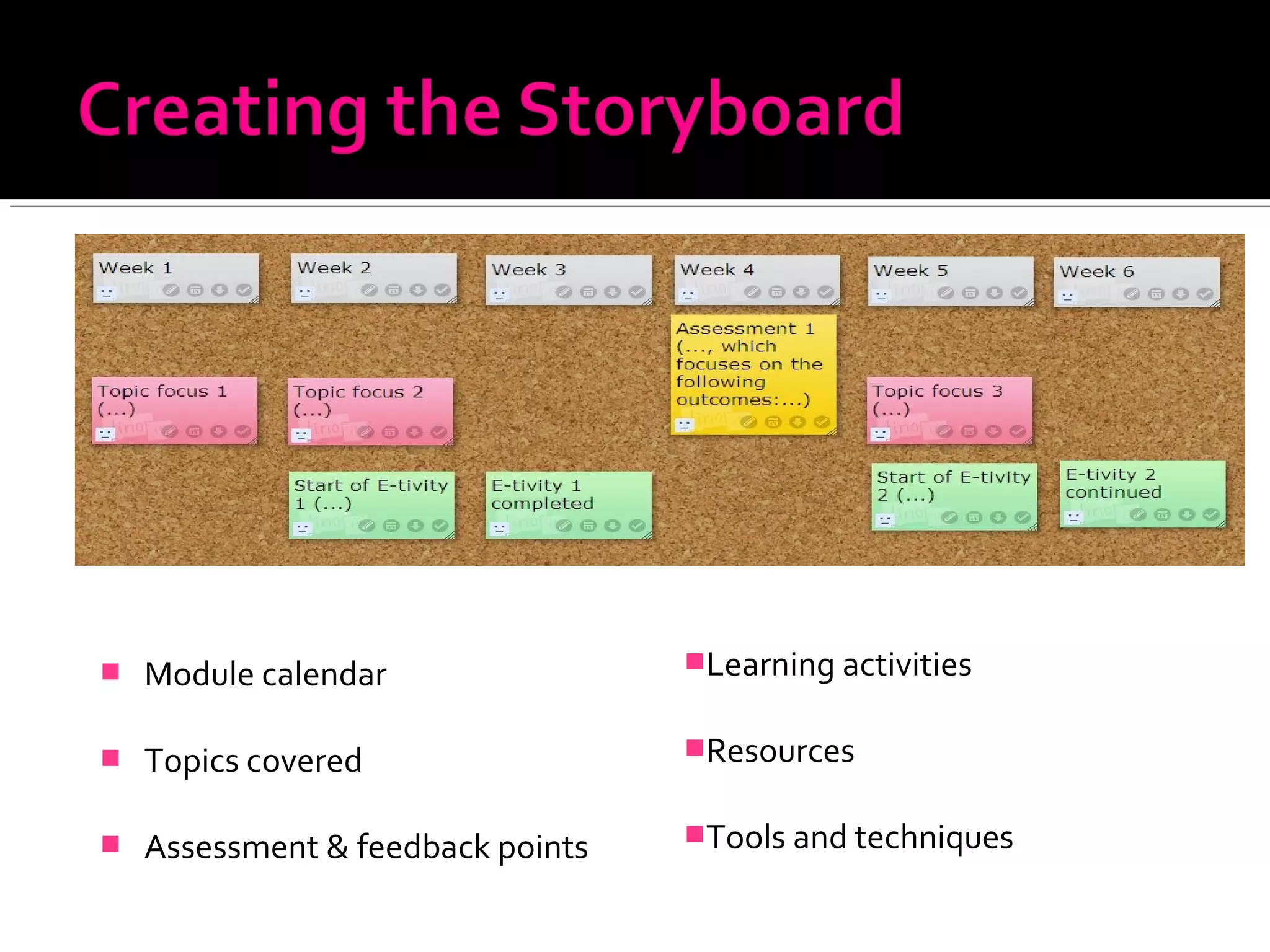
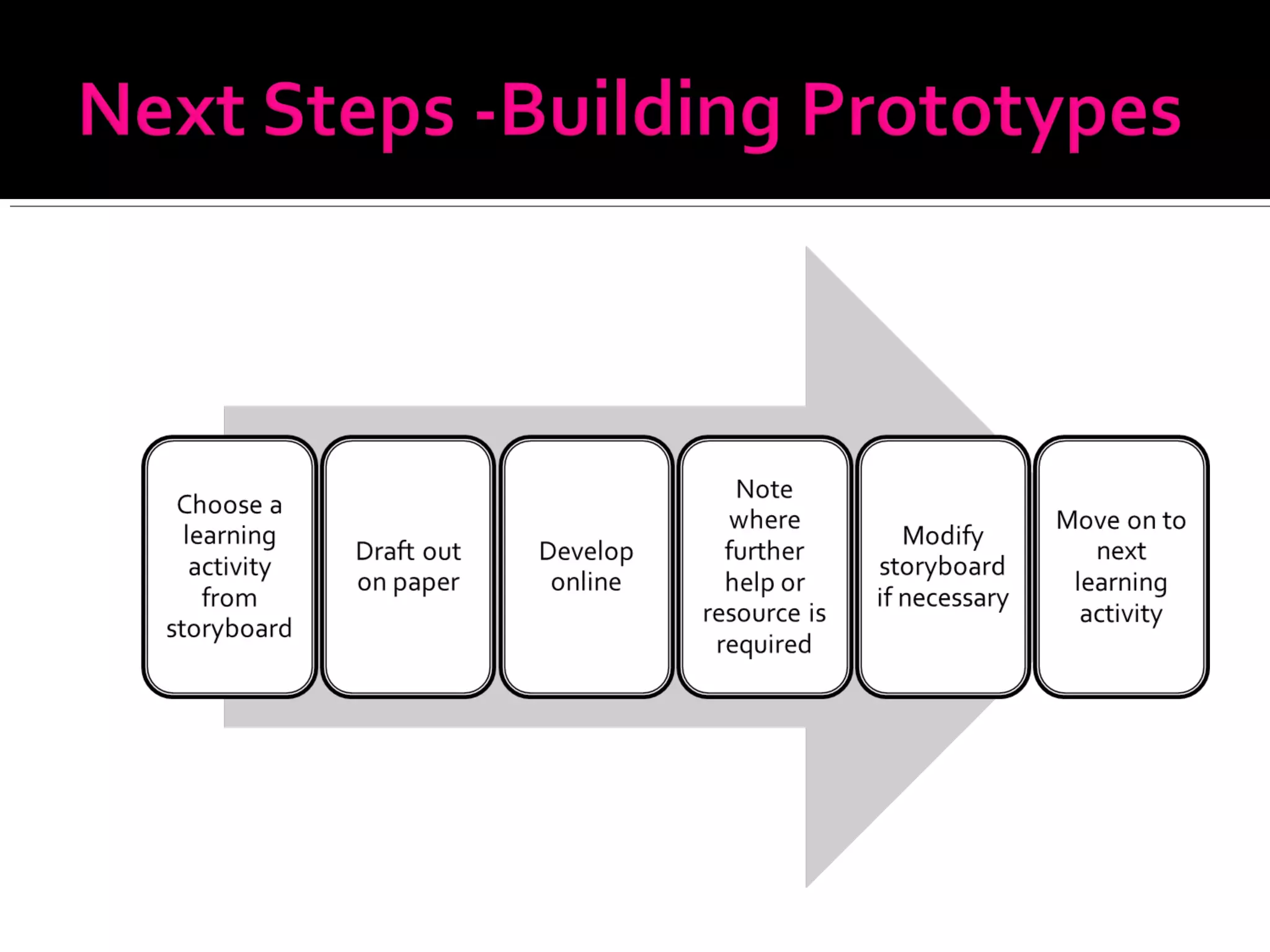
 Module calendar
 Topics covered
 Assessment & feedback points
Learning activities
Resources
Tools and techniques
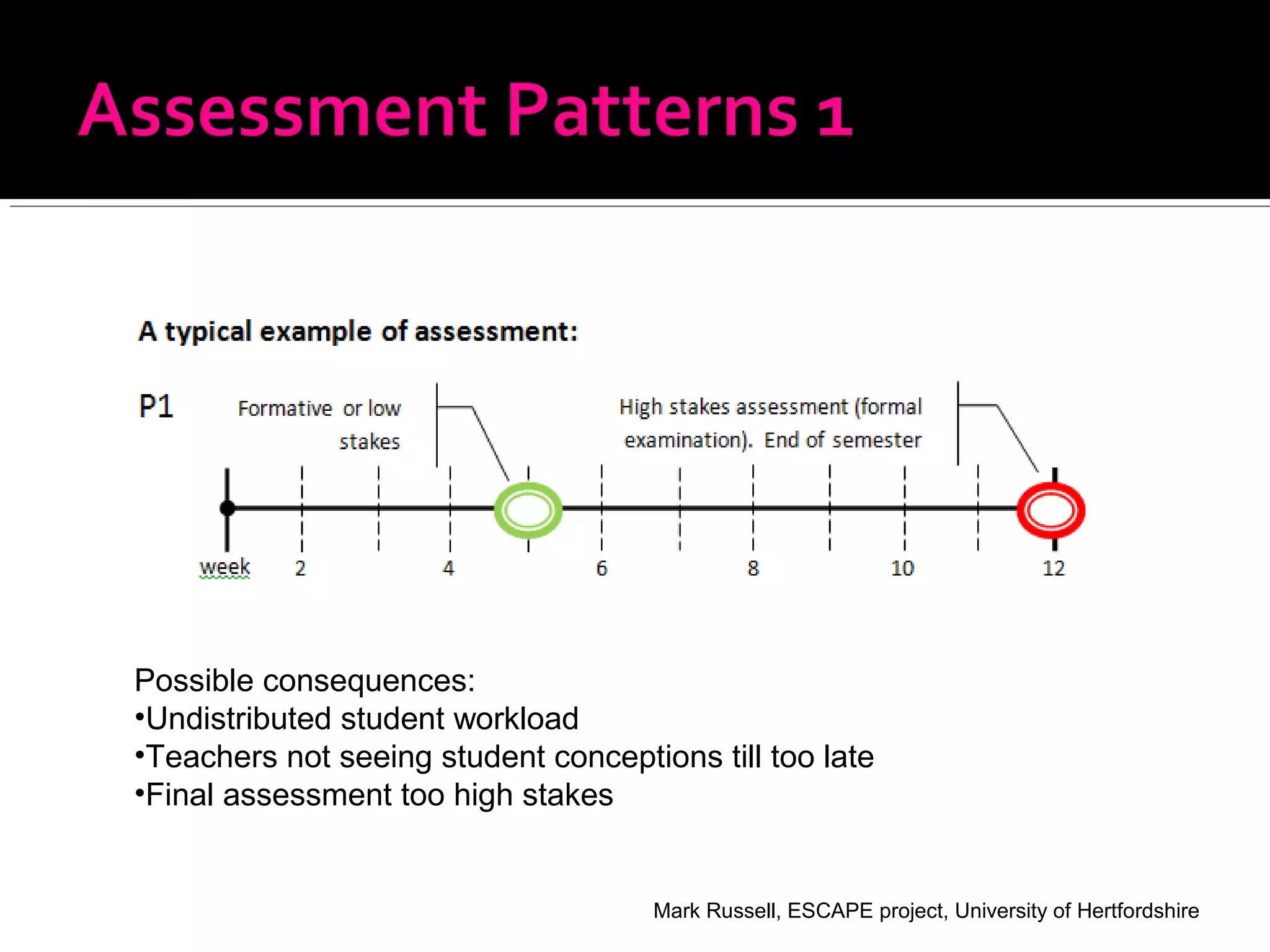
Possible consequences:
•Undistributed student workload
•Teachers not seeing student conceptions till too late
•Final assessment too high stakes
Mark Russell, ESCAPE project, University of Hertfordshire
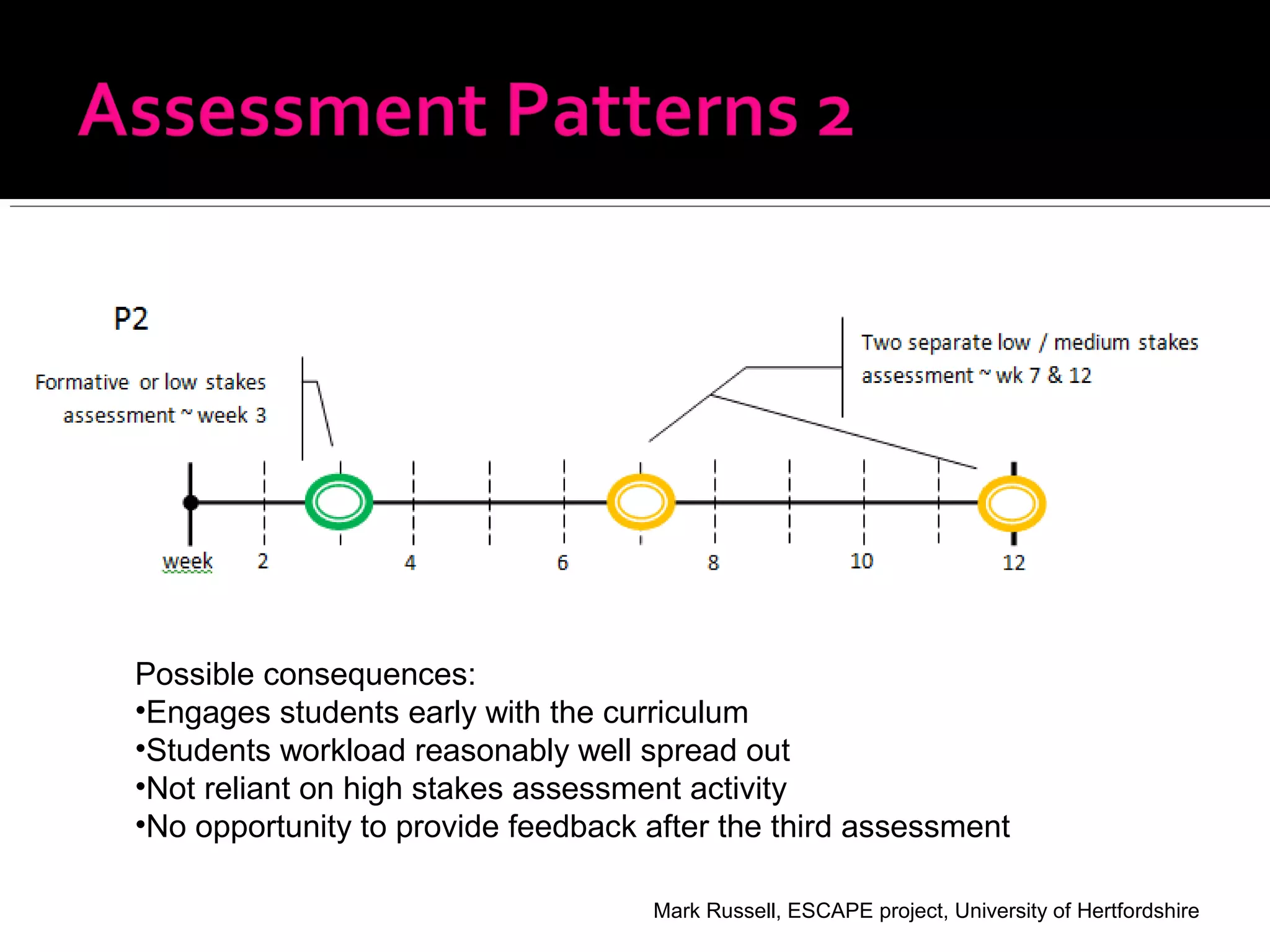
Possible consequences:
•Engages students early with the curriculum
•Students workload reasonably well spread out
•Not reliant on high stakes assessment activity
•No opportunity to provide feedback after the third assessment
Mark Russell, ESCAPE project, University of Hertfordshire
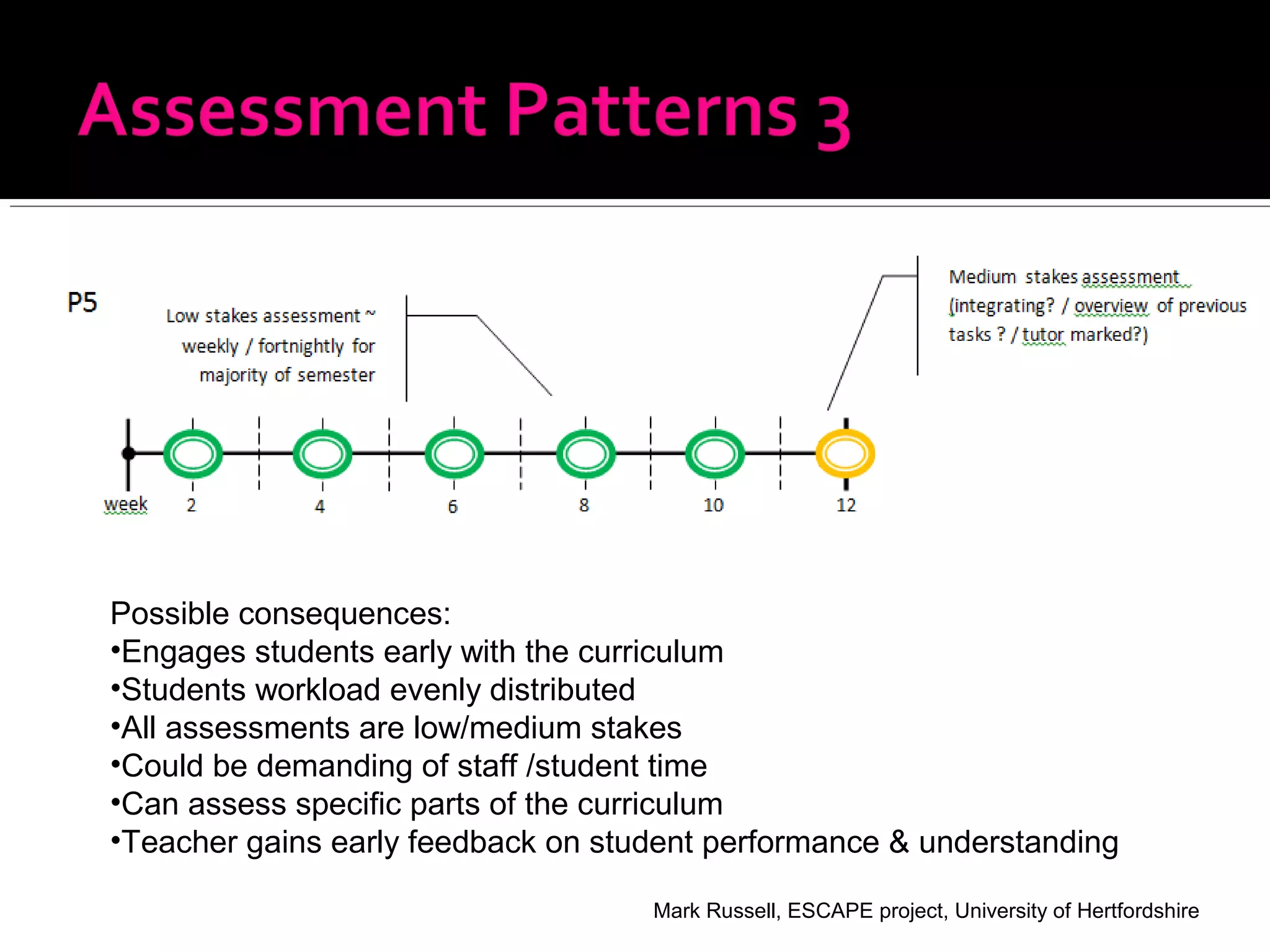
Possible consequences:
•Engages students early with the curriculum
•Students workload evenly distributed
•All assessments are low/medium stakes
•Could be demanding of staff /student time
•Can assess specific parts of the curriculum
•Teacher gains early feedback on student performance & understanding
Mark Russell, ESCAPE project, University of Hertfordshire
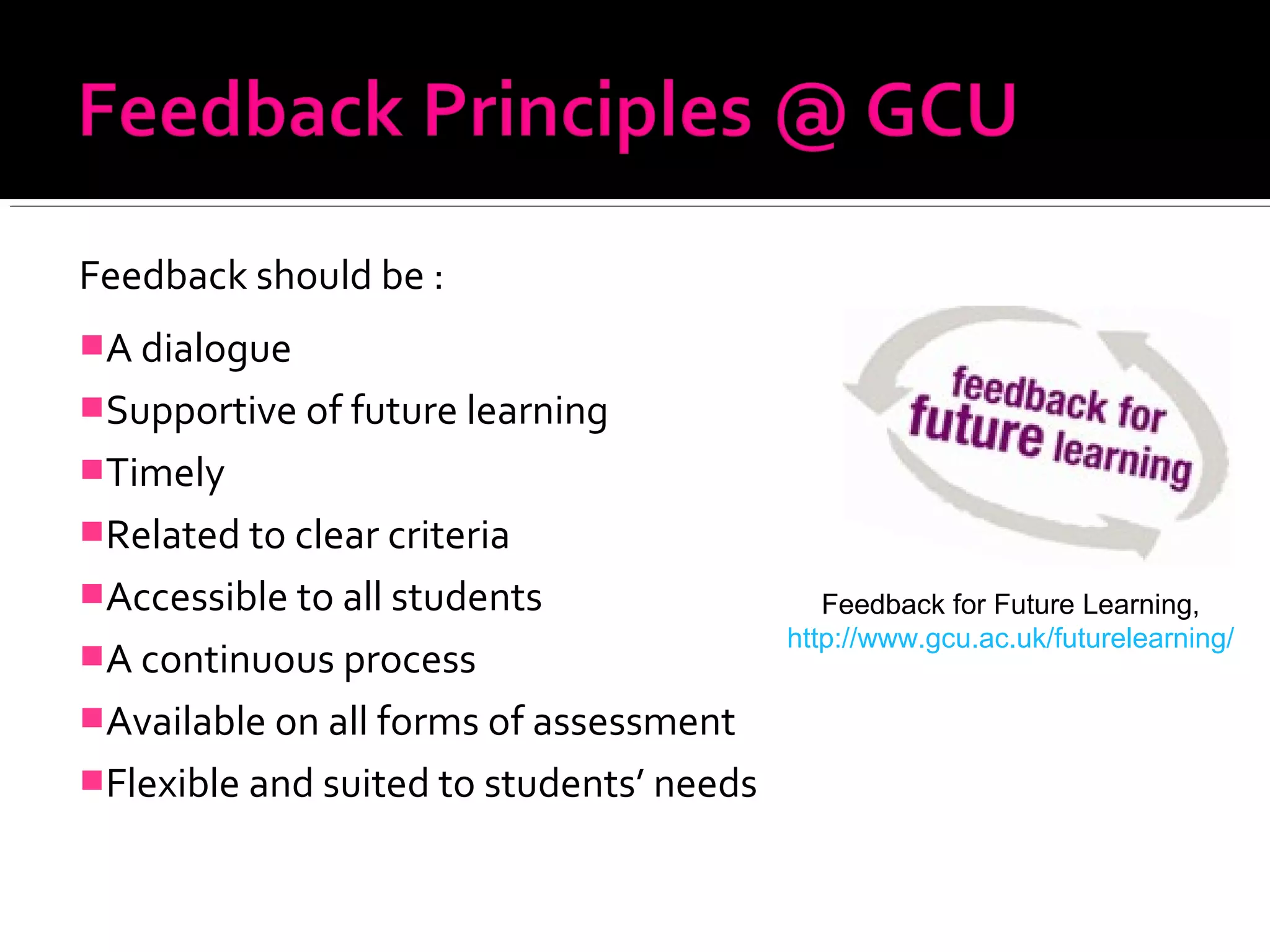
Feedback should be :
A dialogue
Supportive of future learning
Timely
Related to clear criteria
Accessible to all students
A continuous process
Available on all forms of assessment
Flexible and suited to students’ needs
Feedback for Future Learning,
http://www.gcu.ac.uk/futurelearning/
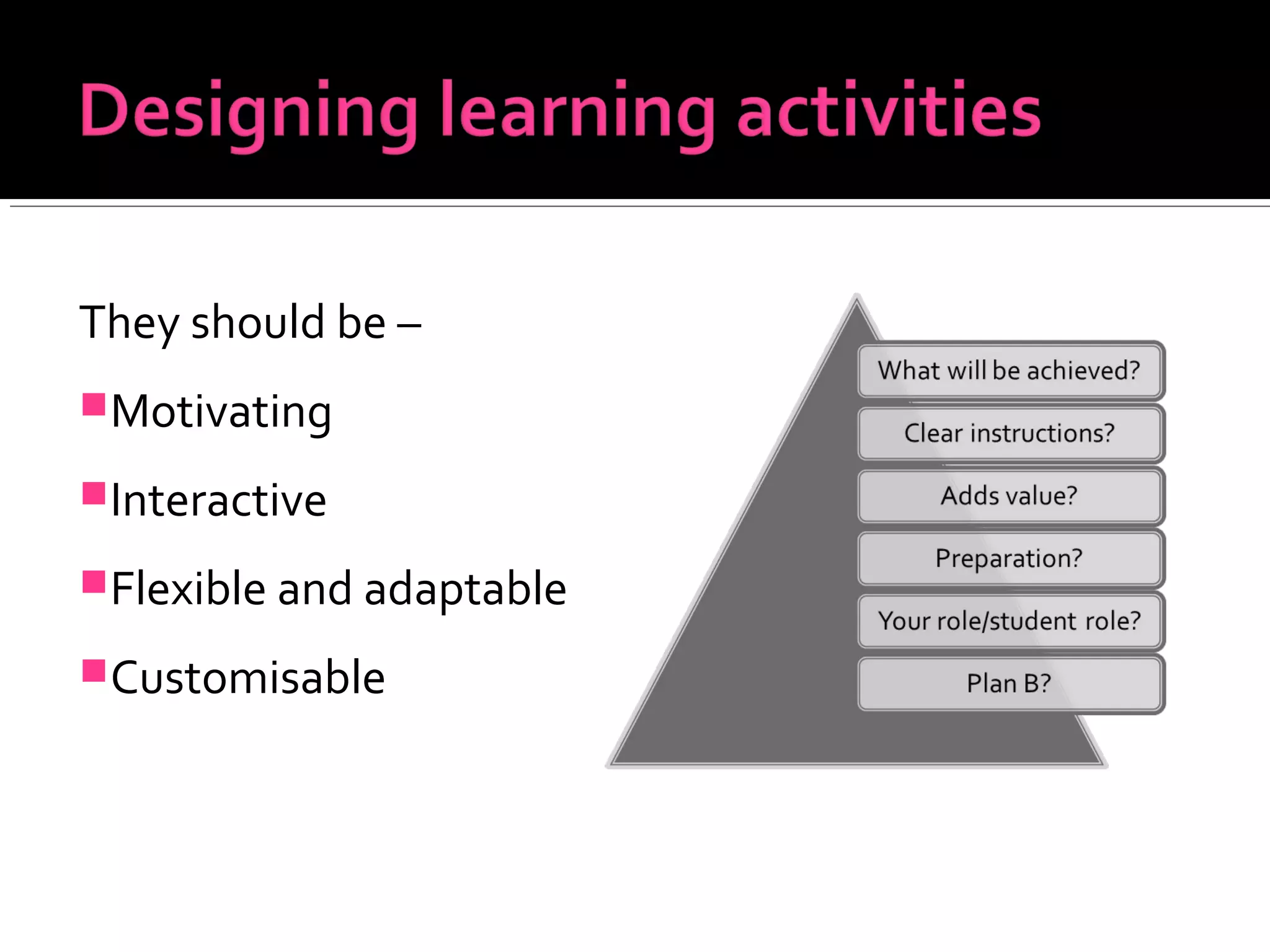
They should be –
Motivating
Interactive
Flexible and adaptable
Customisable
Carpe Diem web site http://www.gillysalmon.com/carpe-diem.html
REAP Project, http://www.reap.ac.uk
Feedback for Future Learning, Glasgow Caledonian University, http://www.gcu.ac.uk/futurelearning/
Escape Project, University of Hertfordshire, http://jiscdesignstudio.pbworks.com/w/page/12458419/ESCAPE
%20Project
Jisc Design studio, http://jiscdesignstudio.pbworks.com/w/page/12458422/Welcome%20to%20the
%20Design%20Studio
Jisc (2009) Effective Assessment in a Digital Age, http://www.jisc.ac.uk/digiassess
MacDonald, J. & Creanor, L. (2010), Learning with online and mobile technologies: a student survival guide,
Gower http://www.gowerpublishing.com/isbn/9780566089305
Nicol, D. (2009), Assessment for learner self-regulation: Enhancing achievement in the first year using
learning technologies. Assessment and Evaluation in Higher Education, 34 (3), 335 -352.

Carpe diem gcu feb2015

  • 1.
    Activity-based approach tocurriculum design Professor Linda Creanor, Sheila MacNeill, Jim Emery Blended Learning Team, GCU LEAD With acknowledgements to: Professor Gilly Salmon, University of Western Australia Prof Alejandro Armellini, University of Northampton This work is licensed under a Creative Commons Attribution-NonCommercial-ShareAlike 4.0 International License.
  • 2.
     To planthe development of online programmes through –  creating a curriculum design framework for online programmes and modules  developing a team-based approach  sharing experiences and ideas http://ow.ly/JcJEl
  • 3.
    10.00 – 10.10Welcome and introductions 10.10 - 10.20 Overview of ‘Carpe Diem’ 10.20 – 11.00 Blueprint and Action Plan 11.00 – 11.10 TEA / COFFEE 11.10 - 11.50 Creating Storyboards - Calendar for the module Topics covered Assessment and feedback points Learning activities Resources Tools and techniques 11.50 – 12.00 Summary and next steps
  • 4.
     What arethe essential aspects of your programme?  Aims and learning outcomes?  How can these be assessed?  What about feedback? http://farm3.static.flickr.com/2059/2237177661_99d3e8de8e.jpg
  • 5.
  • 6.
    What needs done? Who willdo it? Help needed and from whom? Risks Completion date
  • 7.
    Assessment and feedback Learningactivities Communication & collaboration Learning resources Support Academic, technical, facilitation Technology & tools VLE Blogs Wikis Social media Podcasts Video E-portfolio File-sharing Mobile … … …
  • 8.
     Module calendar Topics covered  Assessment & feedback points Learning activities Resources Tools and techniques
  • 9.
    Possible consequences: •Undistributed studentworkload •Teachers not seeing student conceptions till too late •Final assessment too high stakes Mark Russell, ESCAPE project, University of Hertfordshire
  • 10.
    Possible consequences: •Engages studentsearly with the curriculum •Students workload reasonably well spread out •Not reliant on high stakes assessment activity •No opportunity to provide feedback after the third assessment Mark Russell, ESCAPE project, University of Hertfordshire
  • 11.
    Possible consequences: •Engages studentsearly with the curriculum •Students workload evenly distributed •All assessments are low/medium stakes •Could be demanding of staff /student time •Can assess specific parts of the curriculum •Teacher gains early feedback on student performance & understanding Mark Russell, ESCAPE project, University of Hertfordshire
  • 12.
    Feedback should be: A dialogue Supportive of future learning Timely Related to clear criteria Accessible to all students A continuous process Available on all forms of assessment Flexible and suited to students’ needs Feedback for Future Learning, http://www.gcu.ac.uk/futurelearning/
  • 13.
    They should be– Motivating Interactive Flexible and adaptable Customisable
  • 16.
    Carpe Diem website http://www.gillysalmon.com/carpe-diem.html REAP Project, http://www.reap.ac.uk Feedback for Future Learning, Glasgow Caledonian University, http://www.gcu.ac.uk/futurelearning/ Escape Project, University of Hertfordshire, http://jiscdesignstudio.pbworks.com/w/page/12458419/ESCAPE %20Project Jisc Design studio, http://jiscdesignstudio.pbworks.com/w/page/12458422/Welcome%20to%20the %20Design%20Studio Jisc (2009) Effective Assessment in a Digital Age, http://www.jisc.ac.uk/digiassess MacDonald, J. & Creanor, L. (2010), Learning with online and mobile technologies: a student survival guide, Gower http://www.gowerpublishing.com/isbn/9780566089305 Nicol, D. (2009), Assessment for learner self-regulation: Enhancing achievement in the first year using learning technologies. Assessment and Evaluation in Higher Education, 34 (3), 335 -352.