1
“
▸ What is your reactions/
reflections after watching
the video clip?
2
“
▸ A young man tries fails at
every job he tries, until
he finds his dreams
position.
3
CAREER PATHWAYS
objectives
▸ Explain that understanding of the concepts of career and
life goals can help in career planning.
▸ 2. Identify the internal and external factors influencing
career choices.
▸ 3. Take a self-assessment tool to know one’s personality
traits and other personal factors in relation to one’s life
goals.
▸ 4. Identify career options based on the different factors,
career development concepts and personal goals.
5
Activity: My Future! (answer in 1 phrase only)
▸ Imagine that you are retiring from
a job you have held for so many
years. How old do you think you
are that time?
▸ 2. What do you think you have
accomplished by then?
6
Activity: My Future! (answer in 1 phrase only)
▸ 3. Do you consider yourself
successful? Why or why not?
▸ 4. How do you measure your
happiness or contentment at
the end of your career?
7
▸ Your career basically dictates a lot of
things in life. It can determine the kind
of lifestyle that you will be leading.
▸ It can also affect the quality of
relationships that you have with
people around you, like your family
and friends.
8
Career Concepts
▸ CAREER is defined as the
combination and sequence of roles
played by a person during the
course of a lifetime.
▸ JOB is a position an individual
holds doing specific duties.
9
Career Concepts
▸ OCCUPATION is defined as the similar
work for which people have similar
responsibilities and for which they develop
a common set of skills and knowledge.
▸ WORK -an activity that produces
something of value for oneself.
10
LIFE GOALS are your dreams for your future and
they are more realistic versions of
dreams.
▸ Characteristics of a Realistic Life
Goal:
▸ 1. A life goal is attainable.
▸ 2. A life goal is time bound.
▸ 3. A life goal is specific.
11
Career
Planning
12
Is planning and career important?
▸ Careers dictate the amount of
salary a person can have.
▸ Careers also affect how happy
or satisfied a person can
become. 13
Is planning and career important?
▸ People who are forced into the job
or people who took-on a job simply
because it is where the money is,
are people who tend to experience
an unsatisfying work life.
14
Is planning and career important?
▸ People who take careers that fit their
needs and wants in life are people
whom you see retiring happily in their
old-age.
▸ Career planning is a series of steps to
help you clarify and determine your
short and long – term career goals.
15
What are the
factors that
influence career
choices?
.
16
1. Internal factors
2. External factors
17
18
Internal Factors:
1. Self-concept or self-identity
There is a need to know and
understand what you want to do or not
want to do.
Your values will also play a role in
your career choice.
19
Internal Factors:
2. Interest and Personal Type /
Personal Preferences
A classification system that matches
personality characteristics and
personal preferences to job
characteristics.
20
Internal Factors:
3. Motivation
The drive to fulfill one’s fullest
potentials is the best motivation
desire to improve the quality of their
family’s lives.
A person WITHOUT any motivation
will end up wasting a life of unfulfilled
potentials.
21
Internal Factors:
4. Self confidence
keep his eyes on his goals, and
declare to the world, the universe
rather, that he can do it and will
succeed in the pursuit of his
dreams.
22
Internal Factors:
5. Personal Skills and Abilities
Considering your skills and abilities and how they may fit
a particular occupation comes out of the earliest career
development fields.
Ask yourself what you like and enjoy doing.
The skill that you have may be hidden because some
people around you do not accept it or you may be afraid to
show it because you might be misjudged.
Have the courage to stand up and take the relevant course that
will hone your skills.
Be the master of your own destiny.
23
Internal Factors:
8. Emotional Consideration
Check yourself when you are
deciding on what course to take.
It is always best to be levelheaded
and calm when making these life-
directing decisions.
24
Internal Factors:
9. Previous Experiences
Having positive experiences and role
models working in specific careers may
influence the set of careers we consider
as options for ourselves.
focus on areas in which we have had
proven success and achieved positive self-
esteem.
25
Internal Factors:
10. Childhood Fantasies
What do you want to be when you
grow up? You may remember this
question from your childhood, and it may
have helped shape how you
thought about careers then, as well as
later in life.
26
Internal Factors:
11. Self-sabotaging Thoughts
These are thoughts that deter a person
from developing a healthy and wholesome
self-concept.
Knowing one’s strengths and
weaknesses will put a person’s feet on the
ground and make him realistic about his
capabilities and limitations
27
Internal Factors:
12. Life Roles
We play multiple roles in our lives wherein
these roles change over the course of our lives.
How we think about ourselves in these
roles, their requirements of them, and the
external forces that affect them, may influence
how we look at careers in general and how we
make choices for ourselves.
▸ 1. Parental Preferences
▸ there will be no friction between you and
your parents if your parents have some idea
of what course you should take.
▸ if what they think does not match with your
own choice, then you can ask your parents
for their reasons. 28
external Factors:
▸ 2. Family Considerations
▸ You might have a sibling who
wants to take up the same
course you chose or a sibling
who wants to go to another
school, 29
external Factors:
3. Financial Constraints
▸ This would always be the
major consideration among
families especially if your
siblings are already in college.
30
external Factors:
3. Financial Constraints
▸ Your parents’ financial standing is a
determinant of whether you will even go to
college or if the course of your choice might be
feasible for them to support you.
▸ If this is the case, try looking for some
scholarships to aid in pursuing your dreams.
31
external Factors:
▸ 4. Culture
▸ may impact career decisions.
▸ Our culture often shapes our values
and expectations as they relate to
many parts of our lives, including jobs
and careers.
32
external Factors:
▸ 5. School Location
▸ If your family’s financial
capability is not a problem, then
there is the option to rent a
boarding room somewhere nearby
your school of choice.
33
external Factors:
▸ 6. Peer pressure
▸ Your friends may exert some pressure on
you to take up a course so that you can be
together even in college.
▸ But, at the end of the day, you decide
what is best for you.
34
external Factors:
7. Gender Bias
▸ How we view ourselves as
individuals may influence both the
opportunities and barriers we
perceive as we make career
decisions. 35
external Factors:
▸ 8. Language Limitation
▸ Language can be learned, so
if you have this challenge
before you, do not be
discouraged 36
external Factors:
9. Academic Performance
10. Job market preference (Immediate
Employment)
▸ Often, the first job may not be the one’s
first choice, but to gain experience and
immediate employment.
37
external Factors:
▸ 11. Social and Economic
Conditions
▸ All of our career choices take
place within the context of
society and the economy.
38
external Factors:
“
▸ Activity 1:
Personality
Test.
39
“
▸ This is a personality test, it will help
you understand why you act the way
that you do and how your personality
is structured. In the table below, mark
how muchyou agree with the
statement on the scale of 1-5, where:
40
“
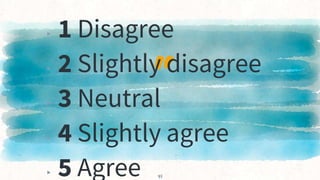
▸ 1 Disagree
▸ 2 Slightly disagree
▸ 3 Neutral
▸ 4 Slightly agree
▸ 5 Agree 41

CAREER-PATHWAYS.pptx

  • 1.
  • 2.
    “ ▸ What isyour reactions/ reflections after watching the video clip? 2
  • 3.
    “ ▸ A youngman tries fails at every job he tries, until he finds his dreams position. 3
  • 4.
  • 5.
    objectives ▸ Explain thatunderstanding of the concepts of career and life goals can help in career planning. ▸ 2. Identify the internal and external factors influencing career choices. ▸ 3. Take a self-assessment tool to know one’s personality traits and other personal factors in relation to one’s life goals. ▸ 4. Identify career options based on the different factors, career development concepts and personal goals. 5
  • 6.
    Activity: My Future!(answer in 1 phrase only) ▸ Imagine that you are retiring from a job you have held for so many years. How old do you think you are that time? ▸ 2. What do you think you have accomplished by then? 6
  • 7.
    Activity: My Future!(answer in 1 phrase only) ▸ 3. Do you consider yourself successful? Why or why not? ▸ 4. How do you measure your happiness or contentment at the end of your career? 7
  • 8.
    ▸ Your careerbasically dictates a lot of things in life. It can determine the kind of lifestyle that you will be leading. ▸ It can also affect the quality of relationships that you have with people around you, like your family and friends. 8
  • 9.
    Career Concepts ▸ CAREERis defined as the combination and sequence of roles played by a person during the course of a lifetime. ▸ JOB is a position an individual holds doing specific duties. 9
  • 10.
    Career Concepts ▸ OCCUPATIONis defined as the similar work for which people have similar responsibilities and for which they develop a common set of skills and knowledge. ▸ WORK -an activity that produces something of value for oneself. 10
  • 11.
    LIFE GOALS areyour dreams for your future and they are more realistic versions of dreams. ▸ Characteristics of a Realistic Life Goal: ▸ 1. A life goal is attainable. ▸ 2. A life goal is time bound. ▸ 3. A life goal is specific. 11
  • 12.
  • 13.
    Is planning andcareer important? ▸ Careers dictate the amount of salary a person can have. ▸ Careers also affect how happy or satisfied a person can become. 13
  • 14.
    Is planning andcareer important? ▸ People who are forced into the job or people who took-on a job simply because it is where the money is, are people who tend to experience an unsatisfying work life. 14
  • 15.
    Is planning andcareer important? ▸ People who take careers that fit their needs and wants in life are people whom you see retiring happily in their old-age. ▸ Career planning is a series of steps to help you clarify and determine your short and long – term career goals. 15
  • 16.
    What are the factorsthat influence career choices? . 16
  • 17.
    1. Internal factors 2.External factors 17
  • 18.
    18 Internal Factors: 1. Self-conceptor self-identity There is a need to know and understand what you want to do or not want to do. Your values will also play a role in your career choice.
  • 19.
    19 Internal Factors: 2. Interestand Personal Type / Personal Preferences A classification system that matches personality characteristics and personal preferences to job characteristics.
  • 20.
    20 Internal Factors: 3. Motivation Thedrive to fulfill one’s fullest potentials is the best motivation desire to improve the quality of their family’s lives. A person WITHOUT any motivation will end up wasting a life of unfulfilled potentials.
  • 21.
    21 Internal Factors: 4. Selfconfidence keep his eyes on his goals, and declare to the world, the universe rather, that he can do it and will succeed in the pursuit of his dreams.
  • 22.
    22 Internal Factors: 5. PersonalSkills and Abilities Considering your skills and abilities and how they may fit a particular occupation comes out of the earliest career development fields. Ask yourself what you like and enjoy doing. The skill that you have may be hidden because some people around you do not accept it or you may be afraid to show it because you might be misjudged. Have the courage to stand up and take the relevant course that will hone your skills. Be the master of your own destiny.
  • 23.
    23 Internal Factors: 8. EmotionalConsideration Check yourself when you are deciding on what course to take. It is always best to be levelheaded and calm when making these life- directing decisions.
  • 24.
    24 Internal Factors: 9. PreviousExperiences Having positive experiences and role models working in specific careers may influence the set of careers we consider as options for ourselves. focus on areas in which we have had proven success and achieved positive self- esteem.
  • 25.
    25 Internal Factors: 10. ChildhoodFantasies What do you want to be when you grow up? You may remember this question from your childhood, and it may have helped shape how you thought about careers then, as well as later in life.
  • 26.
    26 Internal Factors: 11. Self-sabotagingThoughts These are thoughts that deter a person from developing a healthy and wholesome self-concept. Knowing one’s strengths and weaknesses will put a person’s feet on the ground and make him realistic about his capabilities and limitations
  • 27.
    27 Internal Factors: 12. LifeRoles We play multiple roles in our lives wherein these roles change over the course of our lives. How we think about ourselves in these roles, their requirements of them, and the external forces that affect them, may influence how we look at careers in general and how we make choices for ourselves.
  • 28.
    ▸ 1. ParentalPreferences ▸ there will be no friction between you and your parents if your parents have some idea of what course you should take. ▸ if what they think does not match with your own choice, then you can ask your parents for their reasons. 28 external Factors:
  • 29.
    ▸ 2. FamilyConsiderations ▸ You might have a sibling who wants to take up the same course you chose or a sibling who wants to go to another school, 29 external Factors:
  • 30.
    3. Financial Constraints ▸This would always be the major consideration among families especially if your siblings are already in college. 30 external Factors:
  • 31.
    3. Financial Constraints ▸Your parents’ financial standing is a determinant of whether you will even go to college or if the course of your choice might be feasible for them to support you. ▸ If this is the case, try looking for some scholarships to aid in pursuing your dreams. 31 external Factors:
  • 32.
    ▸ 4. Culture ▸may impact career decisions. ▸ Our culture often shapes our values and expectations as they relate to many parts of our lives, including jobs and careers. 32 external Factors:
  • 33.
    ▸ 5. SchoolLocation ▸ If your family’s financial capability is not a problem, then there is the option to rent a boarding room somewhere nearby your school of choice. 33 external Factors:
  • 34.
    ▸ 6. Peerpressure ▸ Your friends may exert some pressure on you to take up a course so that you can be together even in college. ▸ But, at the end of the day, you decide what is best for you. 34 external Factors:
  • 35.
    7. Gender Bias ▸How we view ourselves as individuals may influence both the opportunities and barriers we perceive as we make career decisions. 35 external Factors:
  • 36.
    ▸ 8. LanguageLimitation ▸ Language can be learned, so if you have this challenge before you, do not be discouraged 36 external Factors:
  • 37.
    9. Academic Performance 10.Job market preference (Immediate Employment) ▸ Often, the first job may not be the one’s first choice, but to gain experience and immediate employment. 37 external Factors:
  • 38.
    ▸ 11. Socialand Economic Conditions ▸ All of our career choices take place within the context of society and the economy. 38 external Factors:
  • 39.
  • 40.
    “ ▸ This isa personality test, it will help you understand why you act the way that you do and how your personality is structured. In the table below, mark how muchyou agree with the statement on the scale of 1-5, where: 40
  • 41.
    “ ▸ 1 Disagree ▸2 Slightly disagree ▸ 3 Neutral ▸ 4 Slightly agree ▸ 5 Agree 41