Human Circulatory System
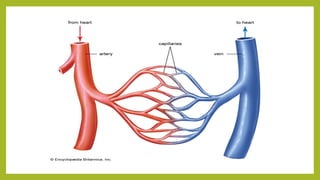
•The human circu latory system consists of a network of arteries, veins, and
capillaries, with the heart pumping blood through it. Its primary role is to provide
essential nutrients, minerals, and hormones to various parts of the body.
Alternatively, the circulatory system is also responsible for collecting metabolic
waste and toxins from the cells and tissues to be purified or expelled from the body.
3.
Organs of CirculatorySystem
The human circulatory system comprises 4 main organs that have specific roles and
functions. The vital circulatory system organs include:
• Heart
• Blood (technically, blood is considered a tissue and not an organ)
• Blood Vessels
• Lymphatic system
4.
Heart
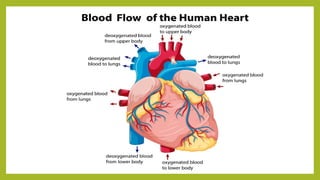
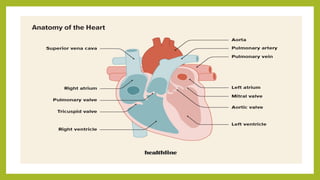
• The heartis a muscular organ located in the chest cavity, right between the lungs. It
is positioned slightly towards the left in the thoracic region and is enveloped by the
pericardium. The human heart is separated into four chambers; namely, two upper
chambers called atria (singular: atrium), and two lower chambers called ventricles.
• Though other animals possess a heart, the way their circulatory system functions is
quite different from humans. Moreover, in some cases, the human circulatory
system is much more evolved when compared to insects or molluscs.
7.
Double Circulation
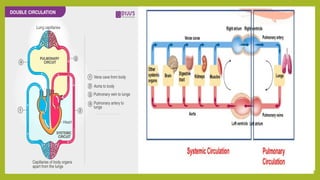
• Theway blood flows in the human body is unique, and it is quite efficient too. The
blood circulates through the heart twice, hence, it is called double circulation. Other
animals like fish have single circulation, where blood completes a circuit through
the entire animal only once.
• The main advantage of double circulation is that every tissue in the body has a
steady supply of oxygenated blood, and it does not get mixed with the
deoxygenated blood.
9.
Blood
Blood is thebody’s fluid connective tissue, and it forms a vital part of the human
circulatory system. Its main function is to circulate nutrients, hormones, minerals and
other essential components to different parts of the body. Blood flows through a
specified set of pathways called blood vessels. The organ which is involved in
pumping blood to different body parts is the heart. Blood cells, blood plasma,
proteins, and other mineral components (such as sodium, potassium and calcium)
constitute human blood.
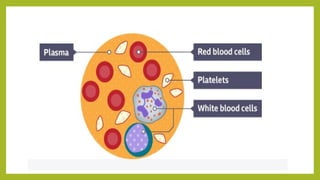
• Blood is composed of:
• Plasma – the fluid part of the blood and is composed of 90% of water.
• Red blood cells, white blood cells and platelets constitute the solid part of blood.
10.
Types of BloodCells
The human body consists of three types of blood cells, namely:
• Red blood cells (RBC) / Erythrocytes
• Red blood cells are mainly involved in transporting oxygen, nutrients, and other
substances to various parts of the body. These blood cells also remove waste from
the body.
• White blood cells (WBC) / Leukocytes
• White blood cells are specialized cells, which function as a body’s
defence system. They provide immunity by fending off pathogens and harmful
microorganisms.
• Platelets / Thrombocytes
• Platelets are cells that help to form clots and stop bleeding. They act on the site of
an injury or a wound.
12.
Blood Vessels
Blood vesselsare a network of pathways through which blood travels throughout
the body. Arteries and veins are the two primary types of blood vessels in the
circulatory system of the body.
Arteries
Arteries are blood vessels that transport oxygenated blood from the heart to various
parts of the body. They are thick, elastic and are divided into a small network of
blood vessels called capillaries. The only exception to this is the pulmonary arteries,
which carries deoxygenated blood to the lungs.
Veins
Veins are blood vessels that carry deoxygenated blood towards the heart from
various parts of the body. They are thin, elastic and are present closer to the surface
of the skin. However, pulmonary and umbilical veins are the only veins that carry
oxygenated blood in the entire body.
14.
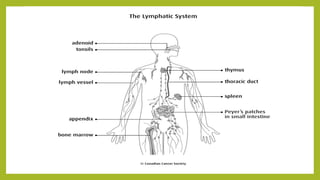
Lymphatic System
• Thehuman circulatory system consists of another body fluid called lymph. It is also
known as tissue fluid. It is produced by the lymphatic system which comprises a network
of interconnected organs, nodes and ducts.
• Lymph is a colourless fluid consisting of salts, proteins, water, which transport and
circulates digested food and absorbed fat to intercellular spaces in the tissues. Unlike the
circulatory system, lymph is not pumped; instead, it passively flows through a network of
vessels.
16.
Functions of CirculatorySystem
• The most important function of the circulatory system is transporting oxygen throughout
the body. The other vital functions of the human circulatory system are as follows:
1.It helps in sustaining all the organ systems.
2.It transports blood, nutrients, oxygen, carbon dioxide and hormones throughout the body.
3.It protects cells from pathogens.
4.It acts as an interface for cell-to-cell interaction.
5.The substances present in the blood help repair the damaged tissue.