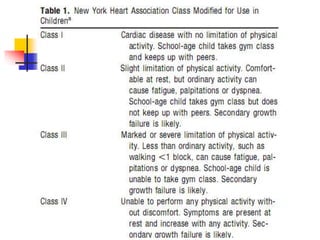
Cardiomyopathy in neonates
and children
Dr Rajesh Kumar
MD (PGI), DM (Neonatology) PGI,
Chandigarh, India
Rani Children Hospital, Ranchi
 Some cardiomyopathies are treatable
 Cardiomyopathy may presents as
recurrent wheeze
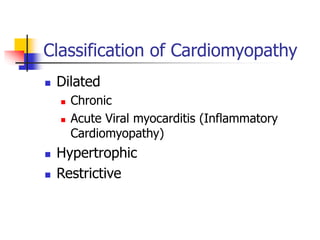
Classification of Cardiomyopathy
 Dilated
 Chronic
 Acute Viral myocarditis (Inflammatory
Cardiomyopathy)
 Hypertrophic
 Restrictive
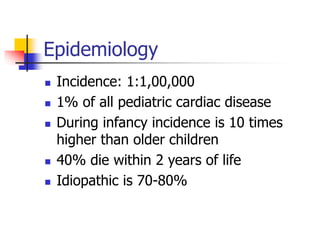
Epidemiology
 Incidence: 1:1,00,000
 1% of all pediatric cardiac disease
 During infancy incidence is 10 times
higher than older children
 40% die within 2 years of life
 Idiopathic is 70-80%
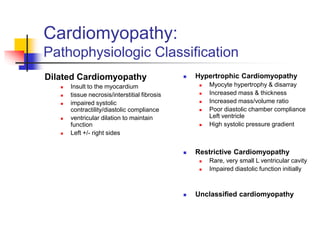
Cardiomyopathy:
Pathophysiologic Classification
Dilated Cardiomyopathy
 Insult to the myocardium
 tissue necrosis/interstitial fibrosis
 impaired systolic
contractility/diastolic compliance
 ventricular dilation to maintain
function
 Left +/- right sides
 Hypertrophic Cardiomyopathy
 Myocyte hypertrophy & disarray
 Increased mass & thickness
 Increased mass/volume ratio
 Poor diastolic chamber compliance
Left ventricle
 High systolic pressure gradient
 Restrictive Cardiomyopathy
 Rare, very small L ventricular cavity
 Impaired diastolic function initially
 Unclassified cardiomyopathy
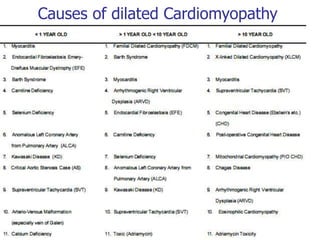
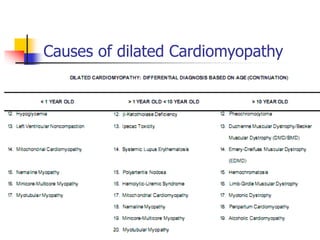
Causes of dilated Cardiomyopathy
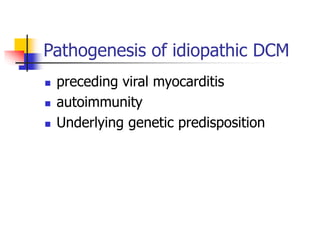
Pathogenesis of idiopathic DCM
 preceding viral myocarditis
 autoimmunity
 Underlying genetic predisposition
DCM: History
 Insidious onset, may be acute in up to 25% of patients, exacerbated
by a complicating LRTI
 Cough, poor feeding, irritability, and shortness of breath are usually the
initial presenting symptoms.
 Pallor, sweating, easy fatigability, failure to gain weight, and decreased
urine output may be present.
 Wheezing may be an important clinical sign, suggesting
congestive heart failure (CHF) manifestation in infants.
 Chest pain, palpitations, orthopnea, hemoptysis, frothy sputum, sudden
death, abdominal pain, syncope, and neurologic deficit are other
modes of presentation (20%).
 Cardiomegaly detected incidentally on a chest radiograph or an
arrhythmia detected incidentally on an ECG may be the basis for initial
cardiac referral.
 Approximately 50% of patients with dilated cardiomyopathy (DCM)
have a history of preceding viral illness. A detailed family history for
familial cardiomyopathy is revealing in up to 25% of cases.
DCM: physical findings
 In established disease, features of CCF are dominant.
 Major cardiac findings include cardiomegaly, quiet
precordium, tachycardia, gallop rhythm (S3 and/or
S4), accentuated P-2, and murmurs of mitral and
tricuspid regurgitation. Murmurs may be
inconspicuous initially when presenting in acute heart
failure.
 Infants often present with predominantly respiratory
signs and, in the absence of a precordial heave or
prominent murmur, the underlying cardiac disease
may remain undiagnosed until cardiomegaly is
detected on chest radiograph.
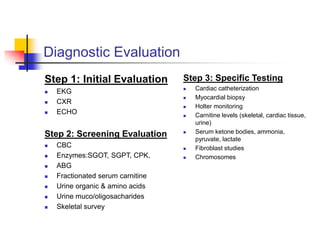
Diagnostic Evaluation
Step 1: Initial Evaluation
 EKG
 CXR
 ECHO
Step 2: Screening Evaluation
 CBC
 Enzymes:SGOT, SGPT, CPK,
 ABG
 Fractionated serum carnitine
 Urine organic & amino acids
 Urine muco/oligosacharides
 Skeletal survey
Step 3: Specific Testing
 Cardiac catheterization
 Myocardial biopsy
 Holter monitoring
 Carnitine levels (skeletal, cardiac tissue,
urine)
 Serum ketone bodies, ammonia,
pyruvate, lactate
 Fibroblast studies
 Chromosomes
ECG
 Presence of Q waves and inversion of T
waves in leads I, II, aVL, and V4
through V6 (anterolateral infarction
pattern): ALCAPA
 Significant arrhythmia: Arrythmia
causing DCM
 Low Voltage complexes: Pericardial
effusion
ECHO
 Dilated left ventricle (>95th percentile) with
global hypokinesia (fractional shortening
<25%, ejection fraction <50%), and no
demonstrable structural heart disease: DCM
 Left ventricular posterior wall hypokinesia
with hyper-echoic papillary muscles,
retrograde continuous flow into proximal
pulmonary artery: ALCAPA
 Significant pericardial effusion with
satisfactory left ventricular ejection fraction:
Pericardial effusion
Cardiomyopathy: Management
Supportive Therapy
 Non specific therapy for heart
failure, to improve survival &
alleviate symptoms
 ACE inhibitors (captopril, enalpril)
 Reduce afterload
 Improve cardiac ejection
 Reduce catecholamine drive
prolonging cardiac survival
 Careful titration necessary
 B blockers (metoprolol, carvedilol)
 Digoxin
 Diuretics
Specific Therapy
 Depends on the underlying disease
condition
 Most have no effective Rx
 Carnitine supplements
 Surgery
 Correction of aberrant vessels
 Implanable defibrillators
 Partial left venticulectomy
 Cardiac transplant
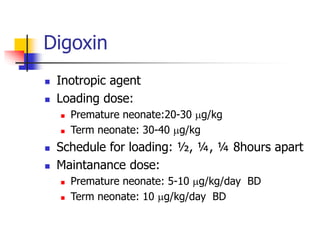
Digoxin
 Inotropic agent
 Loading dose:
 Premature neonate:20-30 mg/kg
 Term neonate: 30-40 mg/kg
 Schedule for loading: ½, ¼, ¼ 8hours apart
 Maintanance dose:
 Premature neonate: 5-10 mg/kg/day BD
 Term neonate: 10 mg/kg/day BD
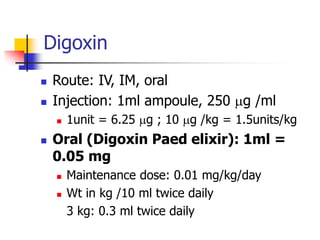
 Route: IV, IM, oral
 Injection: 1ml ampoule, 250 mg /ml
 1unit = 6.25 mg ; 10 mg /kg = 1.5units/kg
 Oral (Digoxin Paed elixir): 1ml =
0.05 mg
 Maintenance dose: 0.01 mg/kg/day
 Wt in kg /10 ml twice daily
3 kg: 0.3 ml twice daily
Digoxin
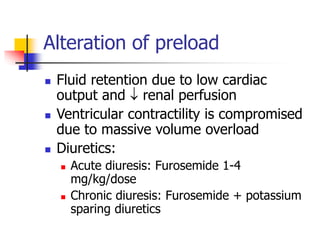
Alteration of preload
 Fluid retention due to low cardiac
output and  renal perfusion
 Ventricular contractility is compromised
due to massive volume overload
 Diuretics:
 Acute diuresis: Furosemide 1-4
mg/kg/dose
 Chronic diuresis: Furosemide + potassium
sparing diuretics
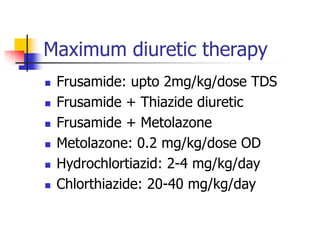
Maximum diuretic therapy
 Frusamide: upto 2mg/kg/dose TDS
 Frusamide + Thiazide diuretic
 Frusamide + Metolazone
 Metolazone: 0.2 mg/kg/dose OD
 Hydrochlortiazid: 2-4 mg/kg/day
 Chlorthiazide: 20-40 mg/kg/day
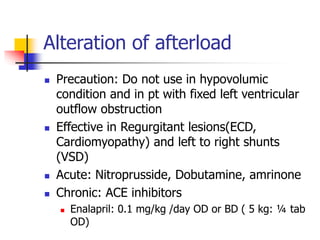
Alteration of afterload
 Precaution: Do not use in hypovolumic
condition and in pt with fixed left ventricular
outflow obstruction
 Effective in Regurgitant lesions(ECD,
Cardiomyopathy) and left to right shunts
(VSD)
 Acute: Nitroprusside, Dobutamine, amrinone
 Chronic: ACE inhibitors
 Enalapril: 0.1 mg/kg /day OD or BD ( 5 kg: ¼ tab
OD)
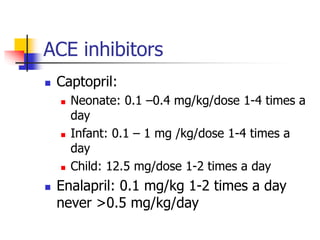
ACE inhibitors
 Captopril:
 Neonate: 0.1 –0.4 mg/kg/dose 1-4 times a
day
 Infant: 0.1 – 1 mg /kg/dose 1-4 times a
day
 Child: 12.5 mg/dose 1-2 times a day
 Enalapril: 0.1 mg/kg 1-2 times a day
never >0.5 mg/kg/day
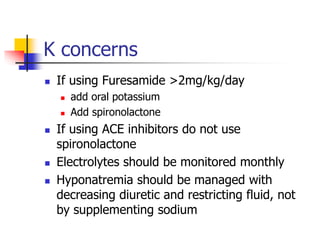
K concerns
 If using Furesamide >2mg/kg/day
 add oral potassium
 Add spironolactone
 If using ACE inhibitors do not use
spironolactone
 Electrolytes should be monitored monthly
 Hyponatremia should be managed with
decreasing diuretic and restricting fluid, not
by supplementing sodium
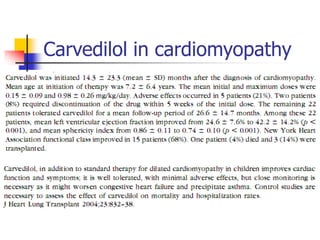
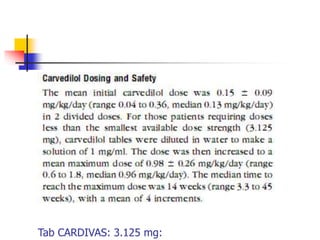
Carvedilol in cardiomyopathy
Tab CARDIVAS: 3.125 mg:
Role of beta blocker
 Adrenergic stimulation happens in CCF
 Increases HR and contractility
 Alpha stimulation leads to peripheral and
coronary constriction, increase O2 demand
and after load
 Beta1 receptor stimulation causes calcium
accumulation in cells and cell death
 Carvedilol is beta and alpha blocker
K concerns
 If using Furesamide >2mg/kg/day
 add oral potassium
 Add spironolactone
 If using ACE inhibitors do not use
spironolactone
 Electrolytes should be monitored monthly
 Hyponatremia should be managed with
decreasing diuretic and restricting fluid, not
by supplementing sodium
Treatment
 Carnitine: 25-50 mg / kg/dose BD or
TDS, Max 200mg/kg/day
 Coenzyme Q10: variable result
Hypertrophic Cardiomyopathy
 Clinical: Sudden death, Syncope,
Presyncope, dizziness, palpitation
 Murmur, S3
 ECG: Arrythmia
 ECHO: septal thickness is > 1.4 times
the posterior wall thickness
 Treatment: propanalol, Verapamil,
amiodarone
Restrictive Cardiomyopathy
 Restriction of diastolic filling
 Causes: amyloidosis, hemosiderosis,
hypereosinophilia, and endocardial
fibroelastosis
 Treatment: unhelpful, Only diuretic
MI in children
 ALCAPA
 Post TGA operation: coronary ostia
stenosis, kinking of coronary artery
 Thrombotic occlusion in KD
 Takayashu arteritis
 SCD
Aspirin in KD
 Acute intervention for Kawasaki disease:
80-100 mg/kg/d PO divided q6h until afebrile
for 2-3 d
 Subsequent antiplatelet dose:
3-5 mg/kg/d PO
 Duration of treatment is 6-8 wk from onset of
illness or until erythrocyte sedimentation rate
and platelet count return to reference range
 may require indefinite continuation if
coronary artery abnormalities are observed
MI in ALCAPA
 Infant develops irritability with dyspnea, tachycardia,
diaphoresis, and vomiting while feeding. Irritability is
secondary to anginal pain caused by a coronary artery steal
phenomenon to the anomalous origin of the left coronary
artery. The flow in this vessel, which has its distribution over
the left ventricular myocardium, is retrograde to the main
pulmonary artery.
 The diagnosis of ALCAPA is suspected in irritable anxious
infants presenting with pain while feeding. ECG
demonstrates classic findings of deep Q waves, peaked T
waves, and/or ST segment changes consistent with
ischemia, injury, or infarction.
MI in KD
 Coronary artery involvement occurs in 15-25% of
children with Kawasaki disease within 1-3 weeks of
onset. In patients with untreated Kawasaki disease,
sudden death has resulted from acute myocardial
infarction caused by ruptured coronary artery
aneurysms or thromboses.
 Detrimental changes in arterial wall hemodynamics
are present and persist after acute Kawasaki disease
which may predispose to long-term cardiovascular
events.
Neonatal Cardiomyopathy
Neonatal Cardiomyopathy:
Etiologic classification
DILATED
 Perinatal insult/ maladjustment
 Asphyxia
 Persistent fetal circulation
 Congenital anomalies
 Anomalous origin of Left coronary
 Inborn errors of metabolism
 Glycogen storage dses (Pompe’s dse)
 Mucopolysaccharidosis
 Disorders of fatty acid metabolism
(Carnitine deficiency)
 Amino & organic acidiurias
 Maternal connective Tissue dse
 SLE
HYPERTROPHIC
 Familial
 Idiopathic Hypertrophic
 Maternal disease
 Diabetes
 Myocarditis
 Infectious
 endotoxins, exotoxicins
 Drugs /Iatrogenic
 Dexamathasone (BPD)( case report)
 ECMO (case report)
 Adriamycin
 Chloramphenicol
 Malformation syndromes
 Beckwith wiedemann
 Noonan
 Leopard
 Downs (case report)
Neonatal Cardiomyopathy:
Asphyxia induced
 Hypoxia leads to myocardial ischemia/dilation
 Term infant with delivery complicated by hypoxic stress
 Apgars usually <3 @ 1
 Metabolic acidosis/ multi system ischemia
 Severe cases: Hypotension/shock
 Murmur of mitral/tricuspid regurg may be present
 EKG: Diffuse ST -T changes, R atrial hypertrophy
 Prognosis: Good without cardiogenic shock
Neonatal Cardiomyopathy:
From Maternal Diabetes
 Asymmetric hypertrophic cardiomyopathy
 Mechanism not clearly understood ? Hyperinsulinemia
 Prevalence unrelated to diabetic control of mother
 Puffy, Plethoric infant, with signs and symptoms of CCF
 SEM common and related to degree of outflow obstruction
 RX:Usually symptomatic
 Prognosis: Usually good, resolves in months
 Digitalis and other inotropics agents are contraindicated
except in very severe depression of myocardial contractility
Neonatal Cardiomyopathy:
Carnitine deficiency
 Autosomal recessive inheritance
 Plasma memb carnitine transport defect: Impairs fatty acid oxidation
 Metabolic acidosis, intractable hypoglycemia, severe non-immune hydrops, +/-muscle
weakness
 EKG: Giant T waves(pathognomonic)
 Subnormal carnitine level 1-2 %, heterozygous parents have 50 % levels
 Symptomatic Rx for the cardiac failure gives minimal benefits
 Definitive Rx: Oral carnitine supplements
 Prognosis: Usually good with early diagnosis and Rx
 Risk of growth and mental retardation
Neonatal Cardiomyopathy:
Myocarditis
 Any infectious agent, commonly Coxsackie B, ECHO viruses, herpes, HIV, Rubella
 Bacterial/fungal infections
 Vertical/horizontal spread
 Pathology: multicellular infiltrates
 Usually first 10 days of life
 Features of acute infective process
 Involvement of other organs like CNS esp Coxsackie B
 Gamma globulins beneficial
 Rx underlying infection: Interferon, Ribavirin
Neonatal Cardiomyopathy:
Pompe’s Disease
 Generalized form of glycogen storage dse (type II)
 Lysosomal alpha- glucosidase deficiency
 Autosomal recessive
 Infiltrative cardiomyopathy
 Skeletal muscular hypotonia: Protruding tongue, feeble cry, poor feeding
 Hyporeflexia
 Diagnosis: Measurement of enzyme activity or DNA analysis
 EKG: (characteristic)
 Short PR interval
 prominent P waves
 massive QRS voltage
 Uniformly fatal
Neonatal Cardiomyopathy:
Endocardial Fibroelastosis
 No established cause
 Also called elastic tissue hyperplasia
 Pathology: White opaque fibroblastic thickening of the endocardium
 1:6000 (1960); 1:70,000 (1980)
 Infants < 6 months usually
 Severe CCF/ rhythm disturbances
 Failure to thrive
 CXR : Massive cardiomegaly
 EKG: Low voltage as in severe myocarditis
 ECHO: Bright -appearing endocardial surface
Neonatal Cardiomyopathy:
Anomalous origin of the left coronary artery
 From the pulmonary artery
 Should be ruled out in all cases of cardiomyopathy
 EKG: anterolateral infarct
 Surgical correction usually successful

cardiomyopathyandthenewborn.ppt

  • 1.
    Cardiomyopathy in neonates andchildren Dr Rajesh Kumar MD (PGI), DM (Neonatology) PGI, Chandigarh, India Rani Children Hospital, Ranchi
  • 2.
     Some cardiomyopathiesare treatable  Cardiomyopathy may presents as recurrent wheeze
  • 3.
    Classification of Cardiomyopathy Dilated  Chronic  Acute Viral myocarditis (Inflammatory Cardiomyopathy)  Hypertrophic  Restrictive
  • 4.
    Epidemiology  Incidence: 1:1,00,000 1% of all pediatric cardiac disease  During infancy incidence is 10 times higher than older children  40% die within 2 years of life  Idiopathic is 70-80%
  • 5.
    Cardiomyopathy: Pathophysiologic Classification Dilated Cardiomyopathy Insult to the myocardium  tissue necrosis/interstitial fibrosis  impaired systolic contractility/diastolic compliance  ventricular dilation to maintain function  Left +/- right sides  Hypertrophic Cardiomyopathy  Myocyte hypertrophy & disarray  Increased mass & thickness  Increased mass/volume ratio  Poor diastolic chamber compliance Left ventricle  High systolic pressure gradient  Restrictive Cardiomyopathy  Rare, very small L ventricular cavity  Impaired diastolic function initially  Unclassified cardiomyopathy
  • 6.
    Causes of dilatedCardiomyopathy
  • 7.
    Causes of dilatedCardiomyopathy
  • 9.
    Pathogenesis of idiopathicDCM  preceding viral myocarditis  autoimmunity  Underlying genetic predisposition
  • 10.
    DCM: History  Insidiousonset, may be acute in up to 25% of patients, exacerbated by a complicating LRTI  Cough, poor feeding, irritability, and shortness of breath are usually the initial presenting symptoms.  Pallor, sweating, easy fatigability, failure to gain weight, and decreased urine output may be present.  Wheezing may be an important clinical sign, suggesting congestive heart failure (CHF) manifestation in infants.  Chest pain, palpitations, orthopnea, hemoptysis, frothy sputum, sudden death, abdominal pain, syncope, and neurologic deficit are other modes of presentation (20%).  Cardiomegaly detected incidentally on a chest radiograph or an arrhythmia detected incidentally on an ECG may be the basis for initial cardiac referral.  Approximately 50% of patients with dilated cardiomyopathy (DCM) have a history of preceding viral illness. A detailed family history for familial cardiomyopathy is revealing in up to 25% of cases.
  • 11.
    DCM: physical findings In established disease, features of CCF are dominant.  Major cardiac findings include cardiomegaly, quiet precordium, tachycardia, gallop rhythm (S3 and/or S4), accentuated P-2, and murmurs of mitral and tricuspid regurgitation. Murmurs may be inconspicuous initially when presenting in acute heart failure.  Infants often present with predominantly respiratory signs and, in the absence of a precordial heave or prominent murmur, the underlying cardiac disease may remain undiagnosed until cardiomegaly is detected on chest radiograph.
  • 12.
    Diagnostic Evaluation Step 1:Initial Evaluation  EKG  CXR  ECHO Step 2: Screening Evaluation  CBC  Enzymes:SGOT, SGPT, CPK,  ABG  Fractionated serum carnitine  Urine organic & amino acids  Urine muco/oligosacharides  Skeletal survey Step 3: Specific Testing  Cardiac catheterization  Myocardial biopsy  Holter monitoring  Carnitine levels (skeletal, cardiac tissue, urine)  Serum ketone bodies, ammonia, pyruvate, lactate  Fibroblast studies  Chromosomes
  • 13.
    ECG  Presence ofQ waves and inversion of T waves in leads I, II, aVL, and V4 through V6 (anterolateral infarction pattern): ALCAPA  Significant arrhythmia: Arrythmia causing DCM  Low Voltage complexes: Pericardial effusion
  • 14.
    ECHO  Dilated leftventricle (>95th percentile) with global hypokinesia (fractional shortening <25%, ejection fraction <50%), and no demonstrable structural heart disease: DCM  Left ventricular posterior wall hypokinesia with hyper-echoic papillary muscles, retrograde continuous flow into proximal pulmonary artery: ALCAPA  Significant pericardial effusion with satisfactory left ventricular ejection fraction: Pericardial effusion
  • 15.
    Cardiomyopathy: Management Supportive Therapy Non specific therapy for heart failure, to improve survival & alleviate symptoms  ACE inhibitors (captopril, enalpril)  Reduce afterload  Improve cardiac ejection  Reduce catecholamine drive prolonging cardiac survival  Careful titration necessary  B blockers (metoprolol, carvedilol)  Digoxin  Diuretics Specific Therapy  Depends on the underlying disease condition  Most have no effective Rx  Carnitine supplements  Surgery  Correction of aberrant vessels  Implanable defibrillators  Partial left venticulectomy  Cardiac transplant
  • 16.
    Digoxin  Inotropic agent Loading dose:  Premature neonate:20-30 mg/kg  Term neonate: 30-40 mg/kg  Schedule for loading: ½, ¼, ¼ 8hours apart  Maintanance dose:  Premature neonate: 5-10 mg/kg/day BD  Term neonate: 10 mg/kg/day BD
  • 17.
     Route: IV,IM, oral  Injection: 1ml ampoule, 250 mg /ml  1unit = 6.25 mg ; 10 mg /kg = 1.5units/kg  Oral (Digoxin Paed elixir): 1ml = 0.05 mg  Maintenance dose: 0.01 mg/kg/day  Wt in kg /10 ml twice daily 3 kg: 0.3 ml twice daily Digoxin
  • 18.
    Alteration of preload Fluid retention due to low cardiac output and  renal perfusion  Ventricular contractility is compromised due to massive volume overload  Diuretics:  Acute diuresis: Furosemide 1-4 mg/kg/dose  Chronic diuresis: Furosemide + potassium sparing diuretics
  • 19.
    Maximum diuretic therapy Frusamide: upto 2mg/kg/dose TDS  Frusamide + Thiazide diuretic  Frusamide + Metolazone  Metolazone: 0.2 mg/kg/dose OD  Hydrochlortiazid: 2-4 mg/kg/day  Chlorthiazide: 20-40 mg/kg/day
  • 20.
    Alteration of afterload Precaution: Do not use in hypovolumic condition and in pt with fixed left ventricular outflow obstruction  Effective in Regurgitant lesions(ECD, Cardiomyopathy) and left to right shunts (VSD)  Acute: Nitroprusside, Dobutamine, amrinone  Chronic: ACE inhibitors  Enalapril: 0.1 mg/kg /day OD or BD ( 5 kg: ¼ tab OD)
  • 21.
    ACE inhibitors  Captopril: Neonate: 0.1 –0.4 mg/kg/dose 1-4 times a day  Infant: 0.1 – 1 mg /kg/dose 1-4 times a day  Child: 12.5 mg/dose 1-2 times a day  Enalapril: 0.1 mg/kg 1-2 times a day never >0.5 mg/kg/day
  • 22.
    K concerns  Ifusing Furesamide >2mg/kg/day  add oral potassium  Add spironolactone  If using ACE inhibitors do not use spironolactone  Electrolytes should be monitored monthly  Hyponatremia should be managed with decreasing diuretic and restricting fluid, not by supplementing sodium
  • 23.
  • 24.
  • 25.
    Role of betablocker  Adrenergic stimulation happens in CCF  Increases HR and contractility  Alpha stimulation leads to peripheral and coronary constriction, increase O2 demand and after load  Beta1 receptor stimulation causes calcium accumulation in cells and cell death  Carvedilol is beta and alpha blocker
  • 26.
    K concerns  Ifusing Furesamide >2mg/kg/day  add oral potassium  Add spironolactone  If using ACE inhibitors do not use spironolactone  Electrolytes should be monitored monthly  Hyponatremia should be managed with decreasing diuretic and restricting fluid, not by supplementing sodium
  • 27.
    Treatment  Carnitine: 25-50mg / kg/dose BD or TDS, Max 200mg/kg/day  Coenzyme Q10: variable result
  • 28.
    Hypertrophic Cardiomyopathy  Clinical:Sudden death, Syncope, Presyncope, dizziness, palpitation  Murmur, S3  ECG: Arrythmia  ECHO: septal thickness is > 1.4 times the posterior wall thickness  Treatment: propanalol, Verapamil, amiodarone
  • 29.
    Restrictive Cardiomyopathy  Restrictionof diastolic filling  Causes: amyloidosis, hemosiderosis, hypereosinophilia, and endocardial fibroelastosis  Treatment: unhelpful, Only diuretic
  • 30.
    MI in children ALCAPA  Post TGA operation: coronary ostia stenosis, kinking of coronary artery  Thrombotic occlusion in KD  Takayashu arteritis  SCD
  • 31.
    Aspirin in KD Acute intervention for Kawasaki disease: 80-100 mg/kg/d PO divided q6h until afebrile for 2-3 d  Subsequent antiplatelet dose: 3-5 mg/kg/d PO  Duration of treatment is 6-8 wk from onset of illness or until erythrocyte sedimentation rate and platelet count return to reference range  may require indefinite continuation if coronary artery abnormalities are observed
  • 32.
    MI in ALCAPA Infant develops irritability with dyspnea, tachycardia, diaphoresis, and vomiting while feeding. Irritability is secondary to anginal pain caused by a coronary artery steal phenomenon to the anomalous origin of the left coronary artery. The flow in this vessel, which has its distribution over the left ventricular myocardium, is retrograde to the main pulmonary artery.  The diagnosis of ALCAPA is suspected in irritable anxious infants presenting with pain while feeding. ECG demonstrates classic findings of deep Q waves, peaked T waves, and/or ST segment changes consistent with ischemia, injury, or infarction.
  • 33.
    MI in KD Coronary artery involvement occurs in 15-25% of children with Kawasaki disease within 1-3 weeks of onset. In patients with untreated Kawasaki disease, sudden death has resulted from acute myocardial infarction caused by ruptured coronary artery aneurysms or thromboses.  Detrimental changes in arterial wall hemodynamics are present and persist after acute Kawasaki disease which may predispose to long-term cardiovascular events.
  • 34.
  • 35.
    Neonatal Cardiomyopathy: Etiologic classification DILATED Perinatal insult/ maladjustment  Asphyxia  Persistent fetal circulation  Congenital anomalies  Anomalous origin of Left coronary  Inborn errors of metabolism  Glycogen storage dses (Pompe’s dse)  Mucopolysaccharidosis  Disorders of fatty acid metabolism (Carnitine deficiency)  Amino & organic acidiurias  Maternal connective Tissue dse  SLE HYPERTROPHIC  Familial  Idiopathic Hypertrophic  Maternal disease  Diabetes  Myocarditis  Infectious  endotoxins, exotoxicins  Drugs /Iatrogenic  Dexamathasone (BPD)( case report)  ECMO (case report)  Adriamycin  Chloramphenicol  Malformation syndromes  Beckwith wiedemann  Noonan  Leopard  Downs (case report)
  • 36.
    Neonatal Cardiomyopathy: Asphyxia induced Hypoxia leads to myocardial ischemia/dilation  Term infant with delivery complicated by hypoxic stress  Apgars usually <3 @ 1  Metabolic acidosis/ multi system ischemia  Severe cases: Hypotension/shock  Murmur of mitral/tricuspid regurg may be present  EKG: Diffuse ST -T changes, R atrial hypertrophy  Prognosis: Good without cardiogenic shock
  • 37.
    Neonatal Cardiomyopathy: From MaternalDiabetes  Asymmetric hypertrophic cardiomyopathy  Mechanism not clearly understood ? Hyperinsulinemia  Prevalence unrelated to diabetic control of mother  Puffy, Plethoric infant, with signs and symptoms of CCF  SEM common and related to degree of outflow obstruction  RX:Usually symptomatic  Prognosis: Usually good, resolves in months  Digitalis and other inotropics agents are contraindicated except in very severe depression of myocardial contractility
  • 38.
    Neonatal Cardiomyopathy: Carnitine deficiency Autosomal recessive inheritance  Plasma memb carnitine transport defect: Impairs fatty acid oxidation  Metabolic acidosis, intractable hypoglycemia, severe non-immune hydrops, +/-muscle weakness  EKG: Giant T waves(pathognomonic)  Subnormal carnitine level 1-2 %, heterozygous parents have 50 % levels  Symptomatic Rx for the cardiac failure gives minimal benefits  Definitive Rx: Oral carnitine supplements  Prognosis: Usually good with early diagnosis and Rx  Risk of growth and mental retardation
  • 39.
    Neonatal Cardiomyopathy: Myocarditis  Anyinfectious agent, commonly Coxsackie B, ECHO viruses, herpes, HIV, Rubella  Bacterial/fungal infections  Vertical/horizontal spread  Pathology: multicellular infiltrates  Usually first 10 days of life  Features of acute infective process  Involvement of other organs like CNS esp Coxsackie B  Gamma globulins beneficial  Rx underlying infection: Interferon, Ribavirin
  • 40.
    Neonatal Cardiomyopathy: Pompe’s Disease Generalized form of glycogen storage dse (type II)  Lysosomal alpha- glucosidase deficiency  Autosomal recessive  Infiltrative cardiomyopathy  Skeletal muscular hypotonia: Protruding tongue, feeble cry, poor feeding  Hyporeflexia  Diagnosis: Measurement of enzyme activity or DNA analysis  EKG: (characteristic)  Short PR interval  prominent P waves  massive QRS voltage  Uniformly fatal
  • 41.
    Neonatal Cardiomyopathy: Endocardial Fibroelastosis No established cause  Also called elastic tissue hyperplasia  Pathology: White opaque fibroblastic thickening of the endocardium  1:6000 (1960); 1:70,000 (1980)  Infants < 6 months usually  Severe CCF/ rhythm disturbances  Failure to thrive  CXR : Massive cardiomegaly  EKG: Low voltage as in severe myocarditis  ECHO: Bright -appearing endocardial surface
  • 42.
    Neonatal Cardiomyopathy: Anomalous originof the left coronary artery  From the pulmonary artery  Should be ruled out in all cases of cardiomyopathy  EKG: anterolateral infarct  Surgical correction usually successful