Hanaa El Gendy
Lecturer Of Anesthesia and ICU
Cardiomyopathy
OBJECTIVES
-Discuss the pathophysiology and etiologies of various types
of cardiomyopathy
-Review current pharmacological and non pharmacological
managements of cardiomyopathy
-Discuss future trends in management
Cardiomyopathy is a disease of the heart muscle characterized by
abnormality in chamber size and wall thickness, or functional contractile
dysfunctions
2006 AHA defined cardiomyopathies as “a heterogeneous group of diseases
of the myocardium associated with mechanical &/or electrical dysfunction
which usually exhibit inappropriate ventricular hypertrophy or dilatation,
due to a variety of etiologies that frequently are genetic.
Definition
(Elliott et al., 2008).
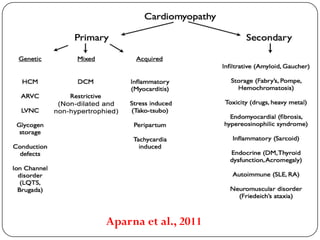
Aparna et al., 2011
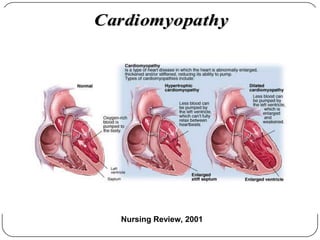
CardiomyopathyCardiomyopathy
Nursing Review, 2001
Dilated Cardiomyopathy
Primary (idiopathic 80 %) of unknown etiology that principally
affects the myocardium (LVEDD > 55 mm and LVEF <45% )
Secondary causes include ischemia, toxins, metabolic
peripartumpost-infectious, inflammatory ,
In adults, the prevalence is 1 in 2500 individuals
Most common age of diagnosis 20-50 yrs
Most common of the cardiomyopathies
(Taylor et al., 2006)
Clinical Manifestations
Symptoms/Signs of heart failure
-Pulmonary congestion (left heart failure) dyspnea (rest, exertional,
nocturnal), orthopnea
Systemic congestion (right heart failure) edema, nausea, abdominal
pain,nocturia
-Low cardiac output
-Hypotension, tachycardia, tachypnea
-Fatigue and weakness
Arrhythmia
Atrial fibrillation, conduction delays, complex PVC’s, sudden death
(Jefferies &Towbin, 2010; Luk et al., 2009)
Pathophysiology
Primary
Hypocontractility: BP, pulmonary edema
Dilated chambers: mitral insufficiency,
arrhythmias, thromboembolism
Secondary (compensatory)
Fluid retention: pulmonary edema
Vasoconstriction: pulmonary edema
(Jefferies &Towbin, 2010; Luk et al., 2009)
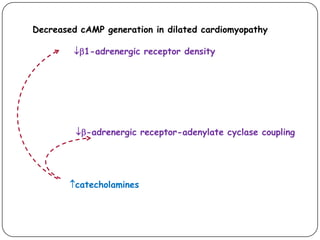
catecholamines
1-adrenergic receptor density
-adrenergic receptor-adenylate cyclase coupling
Decreased cAMP generation in dilated cardiomyopathy
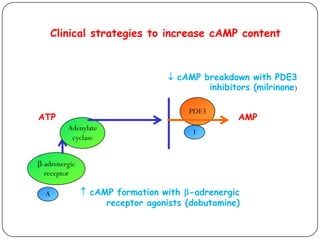
 cAMP breakdown with PDE3
inhibitors (milrinone)
I
PDE3
 cAMP formation with -adrenergic
receptor agonists (dobutamine)
A
-adrenergic
receptor
Adenylate
cyclase
ATP
Clinical strategies to increase cAMP content
AMP
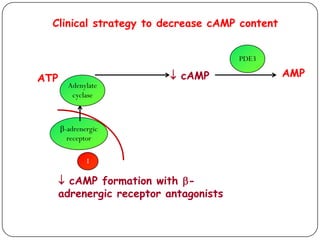
Clinical strategy to decrease cAMP content
 cAMP formation with -
adrenergic receptor antagonists
I
-adrenergic
receptor
Adenylate
cyclase
ATP  cAMP
PDE3
AMP
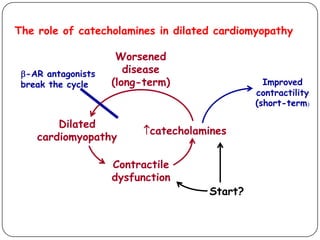
Dilated
cardiomyopathy
Worsened
disease
(long-term)
-AR antagonists
break the cycle
catecholamines
Contractile
dysfunction
Improved
contractility
(short-term)
Start?
The role of catecholamines in dilated cardiomyopathy
Contractile
dysfunction
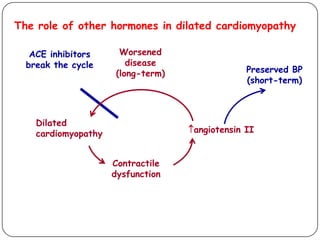
angiotensin II
Preserved BP
(short-term)
ACE inhibitors
break the cycle
Dilated
cardiomyopathy
Worsened
disease
(long-term)
The role of other hormones in dilated cardiomyopathy
Effect
on
[cAMP]
Short-term
effect
Long-term
effect
PDE3
inhibitors
  contractility  mortality
-adrenergic
receptor
agonists
  contractility  mortality
-adrenergic
receptor
antagonists
  contractility  mortality
cAMP-directed therapy: clinical results
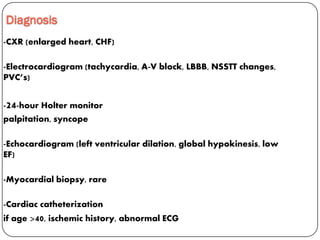
Diagnosis
-CXR (enlarged heart, CHF)
-Electrocardiogram (tachycardia, A-V block, LBBB, NSSTT changes,
PVC’s)
-24-hour Holter monitor
palpitation, syncope
-Echocardiogram (left ventricular dilation, global hypokinesis, low
EF)
-Myocardial biopsy, rare
-Cardiac catheterization
if age >40, ischemic history, abnormal ECG
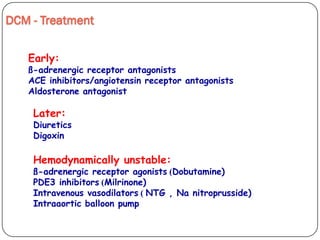
DCM - Treatment
Early:
ß-adrenergic receptor antagonists
ACE inhibitors/angiotensin receptor antagonists
Aldosterone antagonist
Later:
Diuretics
Digoxin
Hemodynamically unstable:
Dobutamine))ß-adrenergic receptor agonists
Milrinone))PDE3 inhibitors
NTG , Na nitroprusside))Intravenous vasodilators
Intraaortic balloon pump
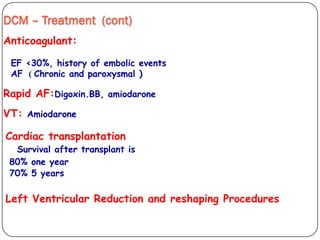
DCM – Treatment (cont)
Anticoagulant:
EF <30%, history of embolic events
Chronic and paroxysmal ))AF
Rapid AF:Digoxin.BB, amiodarone
VT: Amiodarone
Cardiac transplantation
Survival after transplant is
80% one year
70% 5 years
Left Ventricular Reduction and reshaping Procedures
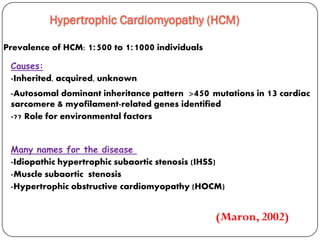
Hypertrophic Cardiomyopathy (HCM)
Prevalence of HCM: 1:500 to 1:1000 individuals
Many names for the disease
-Idiopathic hypertrophic subaortic stenosis (IHSS)
-Muscle subaortic stenosis
-Hypertrophic obstructive cardiomyopathy (HOCM)
Causes:
-Inherited, acquired, unknown
-Autosomal dominant inheritance pattern >450 mutations in 13 cardiac
sarcomere & myofilament-related genes identified
-?? Role for environmental factors
(Maron, 2002)
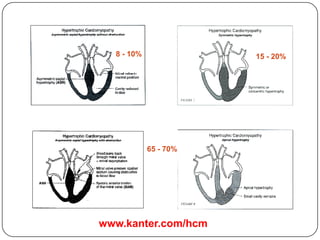
8 - 10% 15 - 20%
65 - 70%
www.kanter.com/hcm
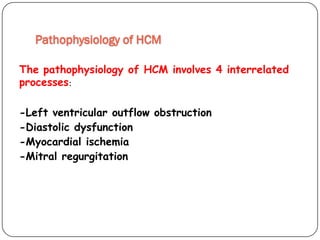
Pathophysiology of HCM
The pathophysiology of HCM involves 4 interrelated
processes:
-Left ventricular outflow obstruction
-Diastolic dysfunction
-Myocardial ischemia
-Mitral regurgitation
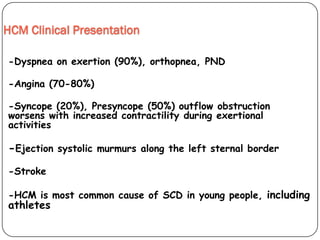
HCM Clinical Presentation
-Dyspnea on exertion (90%), orthopnea, PND
-Angina (70-80%)
-Syncope (20%), Presyncope (50%) outflow obstruction
worsens with increased contractility during exertional
activities
-Ejection systolic murmurs along the left sternal border
-Stroke
-HCM is most common cause of SCD in young people, including
athletes
Diagnostic Evaluation
-Electrocardiogram
-Echocardiogram
-Catheterization
-MRI
ECG Findings
Abnormal in 85-90% of cases
LVH, Strain pattern
Abnormal ST &T wave inversions
Bundle Branch Block
Left atrial enlargment
Ventricular arrhthymias
Echocardiogram
-Left ventricular hypertrophy >1.3 cm (usually >1.5 cm)
-Septal to posterior wall ratio >1.3:1
-Mitral regurgitation
-Systolic anterior motion of the mitral valve (SAM)
-Asymmetric septal hypertrophy (ASH)
-Diastolic dysfunction
-Left ventricular outflow tract obstruction (LVOT)
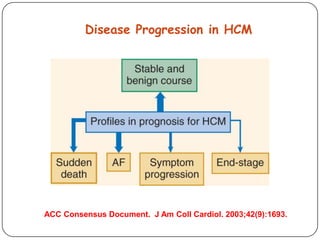
Disease Progression in HCM
ACC Consensus Document. J Am Coll Cardiol. 2003;42(9):1693.
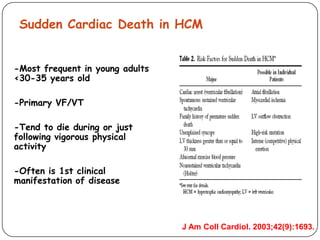
Sudden Cardiac Death in HCM
-Most frequent in young adults
<30-35 years old
-Primary VF/VT
-Tend to die during or just
following vigorous physical
activity
-Often is 1st clinical
manifestation of disease
J Am Coll Cardiol. 2003;42(9):1693.
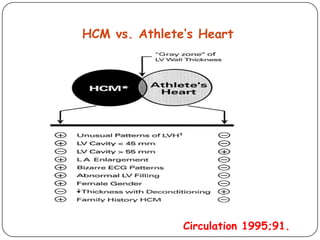
HCM vs. Athlete’s Heart
Circulation 1995;91.
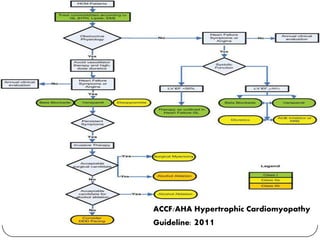
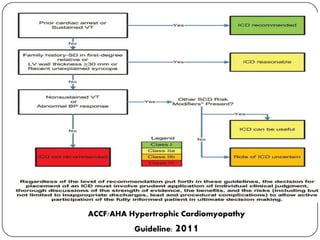
ACCF/AHA Hypertrophic Cardiomyopathy
Guideline: 2011
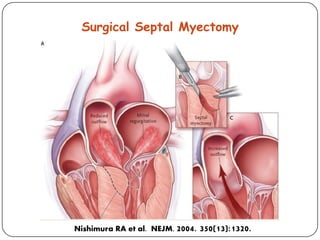
Surgical Septal Myectomy
Nishimura RA et al. NEJM. 2004. 350(13):1320.
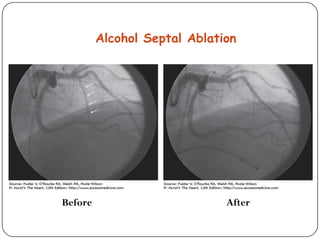
Alcohol Septal Ablation
Before After
ACCF/AHA Hypertrophic Cardiomyopathy
Guideline: 2011
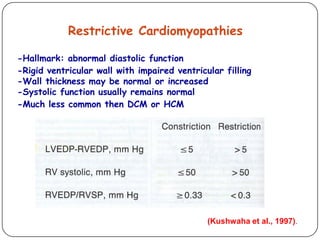
Restrictive Cardiomyopathies
-Hallmark: abnormal diastolic function
-Rigid ventricular wall with impaired ventricular filling
-Wall thickness may be normal or increased
-Systolic function usually remains normal
-Much less common then DCM or HCM
(Kushwaha et al., 1997).
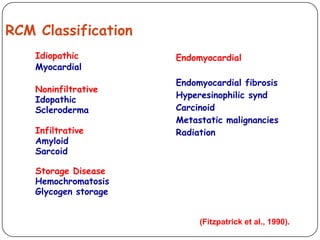
Idiopathic
Myocardial
Noninfiltrative
Idopathic
Scleroderma
Infiltrative
Amyloid
Sarcoid
Storage Disease
Hemochromatosis
Glycogen storage
RCM Classification
Endomyocardial
Endomyocardial fibrosis
Hyperesinophilic synd
Carcinoid
Metastatic malignancies
Radiation
(Fitzpatrick et al., 1990).
Treatment Of RCM
-Treatment of the cause
-No satisfactory medical therapy
-Diuretics for extremely high filling pressures
-Vasodilators may decrease filling pressure
-(?) Calcium channel blockers to improve diastolic compliance
-Digitalis and other inotropic agents are not indicated
Heart transplantation-
Arrhythmogenic RV Cardiomyopathy
-Characterized by fibroadipose replacement of segments of the free
wall of the right ventricle
-Familial and progressive
-Predominately found in young adults
-Arrhythmias, syncope, or cardiac arrest, as well as global or
segmental chamber dilatation or wall motion abnormalities
-ICD implantation in ALL patients who are symptomatic with
arrhythmias
-ICD implantation vs anti-arrhythmic meds in asymptomatic patients?
-Prognosis????
(Basso et al., 2009) (Marcus et al., 2010).
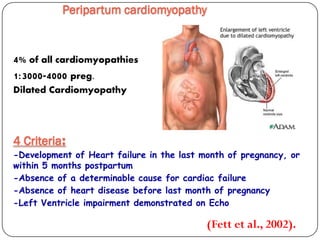
Peripartum cardiomyopathy
(Fett et al., 2002).
4% of all cardiomyopathies
1:3000-4000 preg.
Dilated Cardiomyopathy
:Criteria4
-Development of Heart failure in the last month of pregnancy, or
within 5 months postpartum
-Absence of a determinable cause for cardiac failure
-Absence of heart disease before last month of pregnancy
-Left Ventricle impairment demonstrated on Echo
37 of 48
Unfavorable Cases of Cardiomyopathy
Young age (<30 years)
Family history of sudden death
Aborted sudden death
History of sustained SVT,AF,VT, 2’ or 3’ heart block
Syncopal attacks
Pacer and/or implanted defibrillator
Prohibited from participating in any exercise
Enlarged heart (CT >55%)
EF <40% and/or generalized mod/severe hypokinesis
CHF
Substantial hypertrophy (> 2cm)
(Jan, 2009)
-Age greater than 30 years
-Multiparity
-Pregnancy with multiple fetuses
-A history of preeclampsia, eclampsia, or postpartum
hypertension
-Maternal cocaine abuse or selenium deficiency
-Long term (>4 weeks) oral tocolytic therapy with beta
adrenergic agonists
Risk factors
(Pearson et al., 2000)
DIAGNOSIS
ECG findings include
sinus tachycardia
nonspecific ST and T wave abnormalities
PR and QRS intervals may also be prolonged
(Elkayam et al., 2005)
FerritinCBC, BNP, TSH,Lab:
dimensional echocardiogram-Two
CXR
Cardiac catheterization
Myocardial biopsy?
/EF <55%Spherical LV /Left Atrial enlargement
-Pre-load reduction (diuretics, nitrates)
-After-load reduction (hydralazine, nitrates, amlodipine)
-Ionotropes (digoxin, dopamine, dobutamine)
-Beta-blockers
TREATMENT
-Anticoagulation
-Immunosuppressive agents
-Cardiac transplantation
(Bahloul, 2009).
-Delivery
-IV Immune Globulin
Prognosis
-Mortality estimates range from 25-50%.
-Most deaths occur within 3 months postpartum
-Deaths usually caused by:
Progressive pump failure
Arrhythmias
Thromboembolic events
-Opinions widely vary
-Patients with PPCM and persistent left ventricular dysfunction > 6
ms are at extremely high risk of complications and death with
subsequent pregnancies
-These patients should be advised to avoid pregnancy unless,
successful cardiac transplantation is performed
Future pregnancy ??
-If future pregnancy desired:
Maternal Echocardiogram per trimester
Serial sonograms for growth
Consult, consult, consult
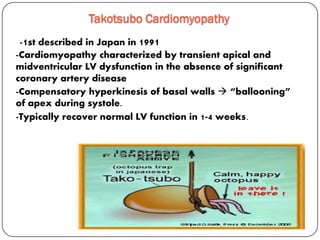
Takotsubo Cardiomyopathy
-Cardiomyopathy characterized by transient apical and
midventricular LV dysfunction in the absence of significant
coronary artery disease
-Compensatory hyperkinesis of basal walls  “ballooning”
of apex during systole.
-Typically recover normal LV function in 1-4 weeks.
-1st described in Japan in 1991
-May account for up to 2% of suspected ACS
-In-hospital mortality ranges 0-8%
-Much more common in women (~90%), especially postmenopausal
women (>80% of cases)
-Mean age 58-75 years
Takotsubo Cardiomyopathy
( Sealoveet al., 2008)
-Triggers: death of loved one, other catastrophic news,
devastating financial losses, natural disasters, physical
illness/ICU, etc.
-Substernal chest pain
-ECG abnormalities
ST elevation (usually anterior precordial leads)- 82%
ST depression
T wave inversion
QT prolongation
Abnormal Q waves
-Elevated cardiac biomarkers
-Dyspnea
-Shock
-Syncope
-Death
Presentation… (similar to acute MI)
Hydrate & Remove stress))-Supportive, conservative therapy
-Treat LV dysfunction with standard heart failure regimen- including
beta blocker, ACE inhibitor, diuretics, aspirin
-Usually treated for ~6 months
-For pts who are hypotensive with shock, perform echo to evaluate for
LVOT obstruction.
No LVOT obstruction inotropes, IABP if needed
+LVOT obstruction NO inotropes (can worsen obstruction), use beta
blockers (+/- α agonist Phenylephrine), IABP if needed
Management
Prognosis
Overall, good prognosis. If
patient survives the acute phase,
long-term prognosis is excellent.
-0-8% in-hospital mortality, likely closer to 1-2%
-Recovery of LV function, typically in 1-4 weeks
-Late sudden death (rare) and recurrent disease (<10%) have
been reported
USA – Successful Treatment of Cardiomyopathy with Stem Cells
An international team of physicians and scientists in Florida have discovered a way
with adult stem cells, including a rare metaboliccardiomyopathyto treat
condition otherwise requiring heart transplant.
Using stem cells extracted from patients’ blood to repair damaged heart muscle,
regenerate tissue, and create new vessels to improve circulation.
the team creates a newto the patient’s stem cellsgrowth factorsApplying specific
cell population which is educated to target the area of damage or deficiency when
placed into the patient’s heart and blood vessels.
“they’ve treated close to 100 patients with their own stem cells and seen an average
) with a significant improvement in heartEFpoint increase in ejection fraction (22
failure classification typically from a Class IV to a Class II status in less than 180
days,”
Zannos G. Grekos, 2012
Unfavorable Cases of Cardiomyopathy
-Young age (<30 years)
-Family history of sudden death
-Aborted sudden arrest
-History of sustained SVT, AF, VT, 2’ or 3’ heart
block
-Syncopal attacks
-Pacer and/or implanted defibrillator
-Prohibited from participating in any exercise
-Enlarged heart (CT >55%)
-EF <40% and/or generalized mod/severe hypokinesis
-CHF
-Ventricular hypertrophy (> 2cm)
Cardiomyopathy (3)

Cardiomyopathy (3)

  • 1.
    Hanaa El Gendy LecturerOf Anesthesia and ICU Cardiomyopathy
  • 2.
    OBJECTIVES -Discuss the pathophysiologyand etiologies of various types of cardiomyopathy -Review current pharmacological and non pharmacological managements of cardiomyopathy -Discuss future trends in management
  • 3.
    Cardiomyopathy is adisease of the heart muscle characterized by abnormality in chamber size and wall thickness, or functional contractile dysfunctions 2006 AHA defined cardiomyopathies as “a heterogeneous group of diseases of the myocardium associated with mechanical &/or electrical dysfunction which usually exhibit inappropriate ventricular hypertrophy or dilatation, due to a variety of etiologies that frequently are genetic. Definition (Elliott et al., 2008).
  • 4.
  • 5.
  • 6.
    Dilated Cardiomyopathy Primary (idiopathic80 %) of unknown etiology that principally affects the myocardium (LVEDD > 55 mm and LVEF <45% ) Secondary causes include ischemia, toxins, metabolic peripartumpost-infectious, inflammatory , In adults, the prevalence is 1 in 2500 individuals Most common age of diagnosis 20-50 yrs Most common of the cardiomyopathies (Taylor et al., 2006)
  • 7.
    Clinical Manifestations Symptoms/Signs ofheart failure -Pulmonary congestion (left heart failure) dyspnea (rest, exertional, nocturnal), orthopnea Systemic congestion (right heart failure) edema, nausea, abdominal pain,nocturia -Low cardiac output -Hypotension, tachycardia, tachypnea -Fatigue and weakness Arrhythmia Atrial fibrillation, conduction delays, complex PVC’s, sudden death (Jefferies &Towbin, 2010; Luk et al., 2009)
  • 8.
    Pathophysiology Primary Hypocontractility: BP, pulmonaryedema Dilated chambers: mitral insufficiency, arrhythmias, thromboembolism Secondary (compensatory) Fluid retention: pulmonary edema Vasoconstriction: pulmonary edema (Jefferies &Towbin, 2010; Luk et al., 2009)
  • 9.
    catecholamines 1-adrenergic receptor density -adrenergicreceptor-adenylate cyclase coupling Decreased cAMP generation in dilated cardiomyopathy
  • 10.
     cAMP breakdownwith PDE3 inhibitors (milrinone) I PDE3  cAMP formation with -adrenergic receptor agonists (dobutamine) A -adrenergic receptor Adenylate cyclase ATP Clinical strategies to increase cAMP content AMP
  • 11.
    Clinical strategy todecrease cAMP content  cAMP formation with - adrenergic receptor antagonists I -adrenergic receptor Adenylate cyclase ATP  cAMP PDE3 AMP
  • 12.
    Dilated cardiomyopathy Worsened disease (long-term) -AR antagonists break thecycle catecholamines Contractile dysfunction Improved contractility (short-term) Start? The role of catecholamines in dilated cardiomyopathy
  • 13.
    Contractile dysfunction angiotensin II Preserved BP (short-term) ACEinhibitors break the cycle Dilated cardiomyopathy Worsened disease (long-term) The role of other hormones in dilated cardiomyopathy
  • 14.
    Effect on [cAMP] Short-term effect Long-term effect PDE3 inhibitors   contractility mortality -adrenergic receptor agonists   contractility  mortality -adrenergic receptor antagonists   contractility  mortality cAMP-directed therapy: clinical results
  • 15.
    Diagnosis -CXR (enlarged heart,CHF) -Electrocardiogram (tachycardia, A-V block, LBBB, NSSTT changes, PVC’s) -24-hour Holter monitor palpitation, syncope -Echocardiogram (left ventricular dilation, global hypokinesis, low EF) -Myocardial biopsy, rare -Cardiac catheterization if age >40, ischemic history, abnormal ECG
  • 16.
    DCM - Treatment Early: ß-adrenergicreceptor antagonists ACE inhibitors/angiotensin receptor antagonists Aldosterone antagonist Later: Diuretics Digoxin Hemodynamically unstable: Dobutamine))ß-adrenergic receptor agonists Milrinone))PDE3 inhibitors NTG , Na nitroprusside))Intravenous vasodilators Intraaortic balloon pump
  • 17.
    DCM – Treatment(cont) Anticoagulant: EF <30%, history of embolic events Chronic and paroxysmal ))AF Rapid AF:Digoxin.BB, amiodarone VT: Amiodarone Cardiac transplantation Survival after transplant is 80% one year 70% 5 years Left Ventricular Reduction and reshaping Procedures
  • 18.
    Hypertrophic Cardiomyopathy (HCM) Prevalenceof HCM: 1:500 to 1:1000 individuals Many names for the disease -Idiopathic hypertrophic subaortic stenosis (IHSS) -Muscle subaortic stenosis -Hypertrophic obstructive cardiomyopathy (HOCM) Causes: -Inherited, acquired, unknown -Autosomal dominant inheritance pattern >450 mutations in 13 cardiac sarcomere & myofilament-related genes identified -?? Role for environmental factors (Maron, 2002)
  • 19.
    8 - 10%15 - 20% 65 - 70% www.kanter.com/hcm
  • 20.
    Pathophysiology of HCM Thepathophysiology of HCM involves 4 interrelated processes: -Left ventricular outflow obstruction -Diastolic dysfunction -Myocardial ischemia -Mitral regurgitation
  • 21.
    HCM Clinical Presentation -Dyspneaon exertion (90%), orthopnea, PND -Angina (70-80%) -Syncope (20%), Presyncope (50%) outflow obstruction worsens with increased contractility during exertional activities -Ejection systolic murmurs along the left sternal border -Stroke -HCM is most common cause of SCD in young people, including athletes
  • 22.
  • 23.
    ECG Findings Abnormal in85-90% of cases LVH, Strain pattern Abnormal ST &T wave inversions Bundle Branch Block Left atrial enlargment Ventricular arrhthymias
  • 24.
    Echocardiogram -Left ventricular hypertrophy>1.3 cm (usually >1.5 cm) -Septal to posterior wall ratio >1.3:1 -Mitral regurgitation -Systolic anterior motion of the mitral valve (SAM) -Asymmetric septal hypertrophy (ASH) -Diastolic dysfunction -Left ventricular outflow tract obstruction (LVOT)
  • 25.
    Disease Progression inHCM ACC Consensus Document. J Am Coll Cardiol. 2003;42(9):1693.
  • 26.
    Sudden Cardiac Deathin HCM -Most frequent in young adults <30-35 years old -Primary VF/VT -Tend to die during or just following vigorous physical activity -Often is 1st clinical manifestation of disease J Am Coll Cardiol. 2003;42(9):1693.
  • 27.
    HCM vs. Athlete’sHeart Circulation 1995;91.
  • 28.
  • 29.
    Surgical Septal Myectomy NishimuraRA et al. NEJM. 2004. 350(13):1320.
  • 30.
  • 31.
  • 32.
    Restrictive Cardiomyopathies -Hallmark: abnormaldiastolic function -Rigid ventricular wall with impaired ventricular filling -Wall thickness may be normal or increased -Systolic function usually remains normal -Much less common then DCM or HCM (Kushwaha et al., 1997).
  • 33.
    Idiopathic Myocardial Noninfiltrative Idopathic Scleroderma Infiltrative Amyloid Sarcoid Storage Disease Hemochromatosis Glycogen storage RCMClassification Endomyocardial Endomyocardial fibrosis Hyperesinophilic synd Carcinoid Metastatic malignancies Radiation (Fitzpatrick et al., 1990).
  • 34.
    Treatment Of RCM -Treatmentof the cause -No satisfactory medical therapy -Diuretics for extremely high filling pressures -Vasodilators may decrease filling pressure -(?) Calcium channel blockers to improve diastolic compliance -Digitalis and other inotropic agents are not indicated Heart transplantation-
  • 35.
    Arrhythmogenic RV Cardiomyopathy -Characterizedby fibroadipose replacement of segments of the free wall of the right ventricle -Familial and progressive -Predominately found in young adults -Arrhythmias, syncope, or cardiac arrest, as well as global or segmental chamber dilatation or wall motion abnormalities -ICD implantation in ALL patients who are symptomatic with arrhythmias -ICD implantation vs anti-arrhythmic meds in asymptomatic patients? -Prognosis???? (Basso et al., 2009) (Marcus et al., 2010).
  • 36.
    Peripartum cardiomyopathy (Fett etal., 2002). 4% of all cardiomyopathies 1:3000-4000 preg. Dilated Cardiomyopathy :Criteria4 -Development of Heart failure in the last month of pregnancy, or within 5 months postpartum -Absence of a determinable cause for cardiac failure -Absence of heart disease before last month of pregnancy -Left Ventricle impairment demonstrated on Echo
  • 37.
    37 of 48 UnfavorableCases of Cardiomyopathy Young age (<30 years) Family history of sudden death Aborted sudden death History of sustained SVT,AF,VT, 2’ or 3’ heart block Syncopal attacks Pacer and/or implanted defibrillator Prohibited from participating in any exercise Enlarged heart (CT >55%) EF <40% and/or generalized mod/severe hypokinesis CHF Substantial hypertrophy (> 2cm) (Jan, 2009)
  • 38.
    -Age greater than30 years -Multiparity -Pregnancy with multiple fetuses -A history of preeclampsia, eclampsia, or postpartum hypertension -Maternal cocaine abuse or selenium deficiency -Long term (>4 weeks) oral tocolytic therapy with beta adrenergic agonists Risk factors (Pearson et al., 2000)
  • 39.
    DIAGNOSIS ECG findings include sinustachycardia nonspecific ST and T wave abnormalities PR and QRS intervals may also be prolonged (Elkayam et al., 2005) FerritinCBC, BNP, TSH,Lab: dimensional echocardiogram-Two CXR Cardiac catheterization Myocardial biopsy? /EF <55%Spherical LV /Left Atrial enlargement
  • 40.
    -Pre-load reduction (diuretics,nitrates) -After-load reduction (hydralazine, nitrates, amlodipine) -Ionotropes (digoxin, dopamine, dobutamine) -Beta-blockers TREATMENT -Anticoagulation -Immunosuppressive agents -Cardiac transplantation (Bahloul, 2009). -Delivery -IV Immune Globulin
  • 41.
    Prognosis -Mortality estimates rangefrom 25-50%. -Most deaths occur within 3 months postpartum -Deaths usually caused by: Progressive pump failure Arrhythmias Thromboembolic events
  • 42.
    -Opinions widely vary -Patientswith PPCM and persistent left ventricular dysfunction > 6 ms are at extremely high risk of complications and death with subsequent pregnancies -These patients should be advised to avoid pregnancy unless, successful cardiac transplantation is performed Future pregnancy ?? -If future pregnancy desired: Maternal Echocardiogram per trimester Serial sonograms for growth Consult, consult, consult
  • 43.
    Takotsubo Cardiomyopathy -Cardiomyopathy characterizedby transient apical and midventricular LV dysfunction in the absence of significant coronary artery disease -Compensatory hyperkinesis of basal walls  “ballooning” of apex during systole. -Typically recover normal LV function in 1-4 weeks. -1st described in Japan in 1991
  • 44.
    -May account forup to 2% of suspected ACS -In-hospital mortality ranges 0-8% -Much more common in women (~90%), especially postmenopausal women (>80% of cases) -Mean age 58-75 years Takotsubo Cardiomyopathy ( Sealoveet al., 2008) -Triggers: death of loved one, other catastrophic news, devastating financial losses, natural disasters, physical illness/ICU, etc.
  • 45.
    -Substernal chest pain -ECGabnormalities ST elevation (usually anterior precordial leads)- 82% ST depression T wave inversion QT prolongation Abnormal Q waves -Elevated cardiac biomarkers -Dyspnea -Shock -Syncope -Death Presentation… (similar to acute MI)
  • 46.
    Hydrate & Removestress))-Supportive, conservative therapy -Treat LV dysfunction with standard heart failure regimen- including beta blocker, ACE inhibitor, diuretics, aspirin -Usually treated for ~6 months -For pts who are hypotensive with shock, perform echo to evaluate for LVOT obstruction. No LVOT obstruction inotropes, IABP if needed +LVOT obstruction NO inotropes (can worsen obstruction), use beta blockers (+/- α agonist Phenylephrine), IABP if needed Management
  • 47.
    Prognosis Overall, good prognosis.If patient survives the acute phase, long-term prognosis is excellent. -0-8% in-hospital mortality, likely closer to 1-2% -Recovery of LV function, typically in 1-4 weeks -Late sudden death (rare) and recurrent disease (<10%) have been reported
  • 48.
    USA – SuccessfulTreatment of Cardiomyopathy with Stem Cells An international team of physicians and scientists in Florida have discovered a way with adult stem cells, including a rare metaboliccardiomyopathyto treat condition otherwise requiring heart transplant. Using stem cells extracted from patients’ blood to repair damaged heart muscle, regenerate tissue, and create new vessels to improve circulation. the team creates a newto the patient’s stem cellsgrowth factorsApplying specific cell population which is educated to target the area of damage or deficiency when placed into the patient’s heart and blood vessels. “they’ve treated close to 100 patients with their own stem cells and seen an average ) with a significant improvement in heartEFpoint increase in ejection fraction (22 failure classification typically from a Class IV to a Class II status in less than 180 days,” Zannos G. Grekos, 2012
  • 49.
    Unfavorable Cases ofCardiomyopathy -Young age (<30 years) -Family history of sudden death -Aborted sudden arrest -History of sustained SVT, AF, VT, 2’ or 3’ heart block -Syncopal attacks -Pacer and/or implanted defibrillator -Prohibited from participating in any exercise -Enlarged heart (CT >55%) -EF <40% and/or generalized mod/severe hypokinesis -CHF -Ventricular hypertrophy (> 2cm)