CARDIAC
CYCLE
By: Sudarshan
Paik
DEFINITION
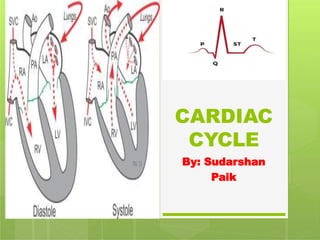
 Cardiac cycle is defined as the succession of
coordinated events taking place in the heart
during each beat.
 Each heart beat consists of two major periods
called systole and diastole.
 During systole heart contracts and pumps the
blood through arteries.
 During diastole heart relaxes and blood is filled
in the heart.
 All these events are repeated in a cyclic manner.
EVENTS OF CARDIAC
CYCLE
Atrial Events
Ventricular Events
Produce four hart sound
DIVISION & DURATION
 When the heart beats at a normal rate of
72/ minute duration of each cardiac cycle
is about 0.8 seconds.
 AtrialEvents
 Atrial Systole = 0.11 (0.1) sec
 Atrial Diastole = 0.69 (0.7) sec
 VentricularEvents
 Ventricular Systole = 0.27 (0.3)sec
 Ventricular diastole = 0.53 (0.5)sec
In Clinical terms
Systole – Ventricular Systole
Diastole – Ventricular Diastole
SUB DIVISIONS
Systole
 Isometric Contraction
= 0.05 sec
 Ejection Period = 0.22
Sec
 Total = 0.27 Sec
Ventricular Ventricular
Diastole
 Protodiastole = 0.04
 Isometric relaxation =
0.08
 Rapid filling = 0.11
 Slow filling = 0.19
 Last rapid filling = 0.11
 Total = 0.53
ATRIAL SYSTOLE
 Atrial systole is also known as last
rapid filling phase or presystole.
 It is usually considered as the last
phase of ventricular diastole.
 The duration is 0.11 sec.
 During this period, only a small
amount, i.e 10% of blood is forced
from atria into ventricles.
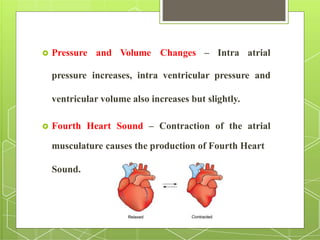
 Pressure and Volume Changes – Intra atrial
pressure increases, intra ventricular pressure and
ventricular volume also increases but slightly.
 Fourth Heart Sound – Contraction of the atrial
musculature causes the production of Fourth Heart
Sound.
ATRIAL DIASTOLE
 Atrial diastole starts after atrial systole.
 Simultaneously ventricular systole also starts.
 Atrial diastole last for about 0.7 sec.
 The long atrial diastole is necessary because, this is
the period during which atrial filling takes place.
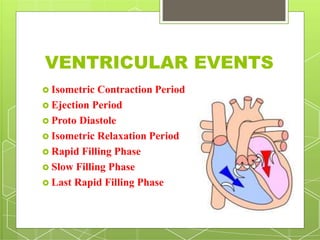
VENTRICULAR EVENTS
 Isometric Contraction Period
 Ejection Period
 Proto Diastole
 Isometric Relaxation Period
 Rapid Filling Phase
 Slow Filling Phase
 Last Rapid Filling Phase
ISOMETRIC CONTRACTION
PERIOD
 It is the first phase of ventricularsystole.
 It lasts for 0.05sec.
 This is a type of muscular contraction characterized
by increase in tension, without any change in the
length of muscle fibers.
ISOMETRIC CONTRACTION
PERIOD
 Immediately after atrial systole, the atrioventricular
valves are closed due to increase in ventricular
pressure.
 Semilunar valves are already closed.
 Now ventricles contract as closed cavities.
 In such a way there is no change in the volume
of ventricular chambers or in the length of
muscle fibers.
 Only the tension increases in ventricular
musculature.
 First Heart Sound – closure of atrioventricular
valves at the beginning of this phases produces
first heart sound.
EJECTION PERIOD
 Due to the opening of the semilunar valves and
isotonic contraction of ventricles, blood is
ejected out of both the ventricles.
 Hence this period is called as ejection period.
 Duration = 0.22 sec
 Ejection period is of two stages
1st Stage: Rapid Ejection
Period
 1st stage starts immediately
after the openingof semilunar
valves.
 During this stage, a large
amount of blood is rapidly
ejected from both the
ventricles. It last for 0.13 sec.
2nd Stage: Slow Ejection
Period
 During this stage, the blood is ejected slowly
with much less force.
 Duration of this period is 0.09 sec.
PROTODIASTOLE
 It is the first stage of ventricular diastole, hence
the name protodiastole.
 Duration of this period is 0.04 sec.
 Due to the ejection of blood, the pressure in
aorta and pulmonary artery increases and
pressure in ventricle drops.
PROTODIASTOLE (Cont)
 When intraventricular pressure becomes less
than the pressure in aorta and pulmonary
artery, the semilunar valves close.
 Second Heart Sound: Closure of Semilunar
valves during this phase produces second heart
sound.
ISOMETRIC RELAXATION
PERIOD
It is a type of muscular relaxation characterized by decrease in
tension without any change in the length of the muscle fibers.
During this period, once again all the valves of the heart are
closed once again.
Intraventricular pressure decreases.
Duration is 0.08 sec.
RAPID FILLING PHASE
 When AV– Valves are opened, there is a sudden
rush of blood from atria into ventricles.
 So, this period is called the first rapid filling
period.
 Ventricles also relax isotonic ally about 70 % of
filling takes place during this phase, which last
for 0.11 sec.
 Third Heart Sound – Rushing of blood into
ventricles during this phase causes production
of third heart sound.
SLOW FILLING PHASE
 After the sudden rush of blood, the ventricular
filling becomes slow. Now it is called slow
filling,
 It is also called as diastatsis.
 About 20 % of filling occurs in this phase.
 Duration = 0.19 sec.
LAST RAPID FILLING
PHASE
 Last rapid filling phase occurs because of atrial
systole,
 After slow filling period, the atria contract and push
a small amount o blood into ventricles.
 About 10% of ventricular filling takes place during
this period,
 Flow of additional amount of blood into ventricles
due to the atrial systole is atrial kick.
SUMMARY
 Definition
 Events
 Division andDuration
 SubDivisions
 HeartSounds
Cardiaccycle

Cardiaccycle

  • 1.
  • 2.
    DEFINITION  Cardiac cycleis defined as the succession of coordinated events taking place in the heart during each beat.  Each heart beat consists of two major periods called systole and diastole.  During systole heart contracts and pumps the blood through arteries.  During diastole heart relaxes and blood is filled in the heart.  All these events are repeated in a cyclic manner.
  • 3.
    EVENTS OF CARDIAC CYCLE AtrialEvents Ventricular Events Produce four hart sound
  • 4.
    DIVISION & DURATION When the heart beats at a normal rate of 72/ minute duration of each cardiac cycle is about 0.8 seconds.  AtrialEvents  Atrial Systole = 0.11 (0.1) sec  Atrial Diastole = 0.69 (0.7) sec
  • 5.
     VentricularEvents  VentricularSystole = 0.27 (0.3)sec  Ventricular diastole = 0.53 (0.5)sec In Clinical terms Systole – Ventricular Systole Diastole – Ventricular Diastole
  • 6.
    SUB DIVISIONS Systole  IsometricContraction = 0.05 sec  Ejection Period = 0.22 Sec  Total = 0.27 Sec Ventricular Ventricular Diastole  Protodiastole = 0.04  Isometric relaxation = 0.08  Rapid filling = 0.11  Slow filling = 0.19  Last rapid filling = 0.11  Total = 0.53
  • 7.
    ATRIAL SYSTOLE  Atrialsystole is also known as last rapid filling phase or presystole.  It is usually considered as the last phase of ventricular diastole.  The duration is 0.11 sec.  During this period, only a small amount, i.e 10% of blood is forced from atria into ventricles.
  • 8.
     Pressure andVolume Changes – Intra atrial pressure increases, intra ventricular pressure and ventricular volume also increases but slightly.  Fourth Heart Sound – Contraction of the atrial musculature causes the production of Fourth Heart Sound.
  • 9.
    ATRIAL DIASTOLE  Atrialdiastole starts after atrial systole.  Simultaneously ventricular systole also starts.  Atrial diastole last for about 0.7 sec.  The long atrial diastole is necessary because, this is the period during which atrial filling takes place.
  • 10.
    VENTRICULAR EVENTS  IsometricContraction Period  Ejection Period  Proto Diastole  Isometric Relaxation Period  Rapid Filling Phase  Slow Filling Phase  Last Rapid Filling Phase
  • 11.
    ISOMETRIC CONTRACTION PERIOD  Itis the first phase of ventricularsystole.  It lasts for 0.05sec.  This is a type of muscular contraction characterized by increase in tension, without any change in the length of muscle fibers.
  • 12.
    ISOMETRIC CONTRACTION PERIOD  Immediatelyafter atrial systole, the atrioventricular valves are closed due to increase in ventricular pressure.  Semilunar valves are already closed.  Now ventricles contract as closed cavities.
  • 13.
     In sucha way there is no change in the volume of ventricular chambers or in the length of muscle fibers.  Only the tension increases in ventricular musculature.  First Heart Sound – closure of atrioventricular valves at the beginning of this phases produces first heart sound.
  • 14.
    EJECTION PERIOD  Dueto the opening of the semilunar valves and isotonic contraction of ventricles, blood is ejected out of both the ventricles.  Hence this period is called as ejection period.  Duration = 0.22 sec  Ejection period is of two stages
  • 15.
    1st Stage: RapidEjection Period  1st stage starts immediately after the openingof semilunar valves.  During this stage, a large amount of blood is rapidly ejected from both the ventricles. It last for 0.13 sec.
  • 16.
    2nd Stage: SlowEjection Period  During this stage, the blood is ejected slowly with much less force.  Duration of this period is 0.09 sec.
  • 17.
    PROTODIASTOLE  It isthe first stage of ventricular diastole, hence the name protodiastole.  Duration of this period is 0.04 sec.  Due to the ejection of blood, the pressure in aorta and pulmonary artery increases and pressure in ventricle drops.
  • 18.
    PROTODIASTOLE (Cont)  Whenintraventricular pressure becomes less than the pressure in aorta and pulmonary artery, the semilunar valves close.  Second Heart Sound: Closure of Semilunar valves during this phase produces second heart sound.
  • 19.
    ISOMETRIC RELAXATION PERIOD It isa type of muscular relaxation characterized by decrease in tension without any change in the length of the muscle fibers. During this period, once again all the valves of the heart are closed once again. Intraventricular pressure decreases. Duration is 0.08 sec.
  • 20.
    RAPID FILLING PHASE When AV– Valves are opened, there is a sudden rush of blood from atria into ventricles.  So, this period is called the first rapid filling period.  Ventricles also relax isotonic ally about 70 % of filling takes place during this phase, which last for 0.11 sec.  Third Heart Sound – Rushing of blood into ventricles during this phase causes production of third heart sound.
  • 21.
    SLOW FILLING PHASE After the sudden rush of blood, the ventricular filling becomes slow. Now it is called slow filling,  It is also called as diastatsis.  About 20 % of filling occurs in this phase.  Duration = 0.19 sec.
  • 22.
    LAST RAPID FILLING PHASE Last rapid filling phase occurs because of atrial systole,  After slow filling period, the atria contract and push a small amount o blood into ventricles.  About 10% of ventricular filling takes place during this period,  Flow of additional amount of blood into ventricles due to the atrial systole is atrial kick.
  • 23.
    SUMMARY  Definition  Events Division andDuration  SubDivisions  HeartSounds