CARBON FOOT PRINTS
PRESENTED BY
PRADEEP KUMAR MISHRA
M.Sc.(Renewable Energy) 4th Sam
Carbon Footprints
 It is the basically in the term of define the total emission
of CO2 in respective with respect to and with respect to
time (If there is a population or area )
 It may be natural as well as artificial included both which
is produce at particular time at particular area
 In other words amount of carbon/greenhouse gas
emission produce in daily life by an individual a house
hold a building or a company
 Carbon footprints traps heat with in the atmosphere
which could have a serious impact on the global climate
by raising global temperature.
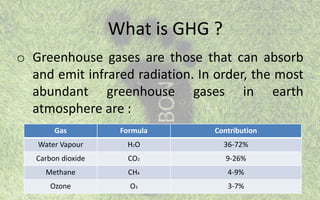
What is GHG ?
o Greenhouse gases are those that can absorb
and emit infrared radiation. In order, the most
abundant greenhouse gases in earth
atmosphere are :
Gas Formula Contribution
Water Vapour H2O 36-72%
Carbon dioxide CO2 9-26%
Methane CH4 4-9%
Ozone O3 3-7%
How Carbon Footprint Work
Carbon footprint measure how much carbon
dioxide we produce just by going about our
daily life.
When fossil fuel burn they emit green house
gases like co2 that contribute global warming.
98% of atmospheric co2 comes from the
combustion of fossil fuels.
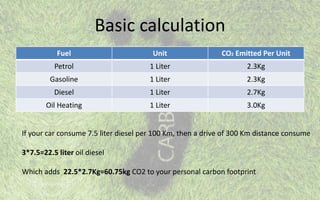
Basic calculation
Fuel Unit CO2 Emitted Per Unit
Petrol 1 Liter 2.3Kg
Gasoline 1 Liter 2.3Kg
Diesel 1 Liter 2.7Kg
Oil Heating 1 Liter 3.0Kg
If your car consume 7.5 liter diesel per 100 Km, then a drive of 300 Km distance consume
3*7.5=22.5 liter oil diesel
Which adds 22.5*2.7Kg=60.75kg CO2 to your personal carbon footprint
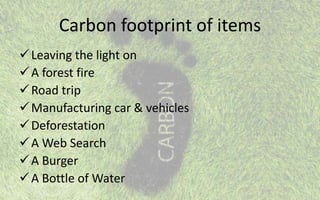
Carbon footprint of items
Leaving the light on
A forest fire
Road trip
Manufacturing car & vehicles
Deforestation
A Web Search
A Burger
A Bottle of Water
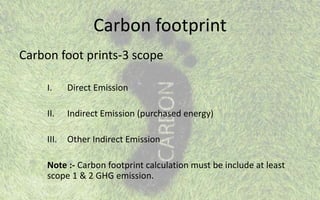
Carbon footprint
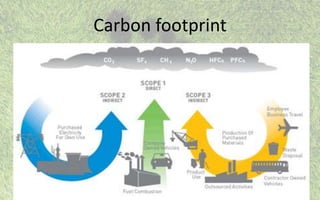
Carbon foot prints-3 scope
I. Direct Emission
II. Indirect Emission (purchased energy)
III. Other Indirect Emission
Note :- Carbon footprint calculation must be include at least
scope 1 & 2 GHG emission.
Carbon footprint
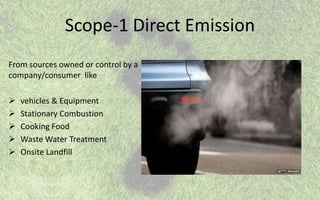
Scope-1 Direct Emission
From sources owned or control by a
company/consumer like
 vehicles & Equipment
 Stationary Combustion
 Cooking Food
 Waste Water Treatment
 Onsite Landfill
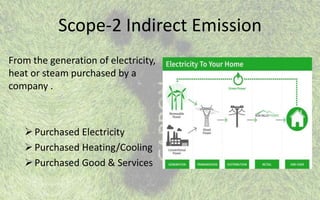
Scope-2 Indirect Emission
From the generation of electricity,
heat or steam purchased by a
company .
Purchased Electricity
Purchased Heating/Cooling
Purchased Good & Services
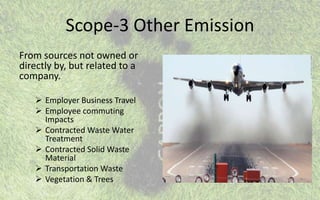
Scope-3 Other Emission
From sources not owned or
directly by, but related to a
company.
 Employer Business Travel
 Employee commuting
Impacts
 Contracted Waste Water
Treatment
 Contracted Solid Waste
Material
 Transportation Waste
 Vegetation & Trees
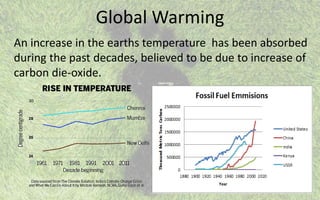
Global Warming
An increase in the earths temperature has been absorbed
during the past decades, believed to be due to increase of
carbon die-oxide.
Carbon Foot Prints Resulting In -
Global Warming
Catastrophe
Changes in rainfall patterns (more rain in some places,
less rain in others)
Higher temperature on land
Melting of ice worldwide which could result in a rise in
sea levels.
Severe weather conditions
Sea level increase,
Health effect,
Change in agricultural pattern
Context For Numbers
1 gram of CO2e would be produced if you
burned a pea sized blob of gasoline.
1 Kilogram (2 lbs) of CO2e would be produced
if you burned 2 cups of gasoline.
1 Ton of CO2e would be produced if you
burned 60 gallons of gasoline.
Reduce Carbon Footprint
Shop locally by affecting to reduce goods import.
Travelling light
Get your parents to change their driving habits...
and their car.
Solar energy is free
Eating: Learn to grow and cook!
Decrease using processed food, help reducing
your carbon foot print
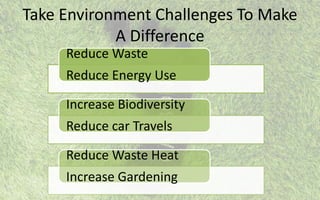
Take Environment Challenges To Make
A Difference
Reduce Waste
Reduce Energy Use
Increase Biodiversity
Reduce car Travels
Reduce Waste Heat
Increase Gardening
Reduce Carbon Footprint
I. Reuse
II. Recycle
III. Reduce &
IV. Refuse
V. Using renewable energy sources such as
solar energy, wind energy, hydropower can
reduce carbon footprint
Alternative energy
Any form of energy that dose not come
from fossil fuels.
Alternative energy sources produce energy
without the damaging or harmful by-products
common when burning fossil fuels
Alternative energy sources are renewable and
are thought to be "free" energy sources.
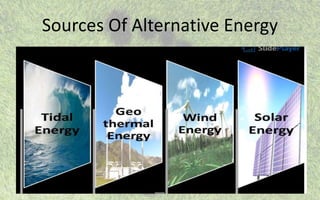
Sources Of Alternative Energy
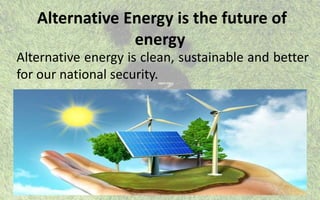
Alternative Energy is the future of
energy
Alternative energy is clean, sustainable and better
for our national security.
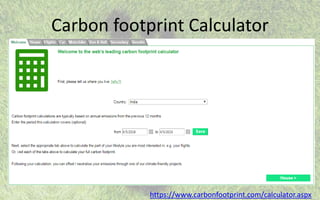
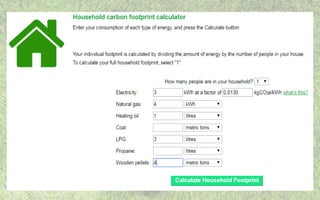
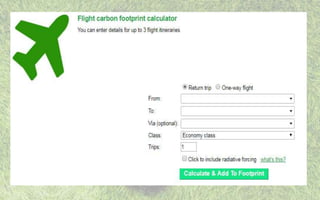
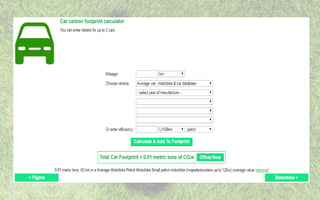
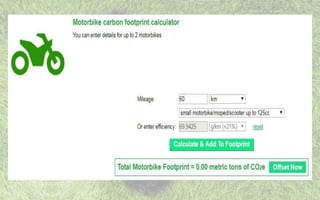
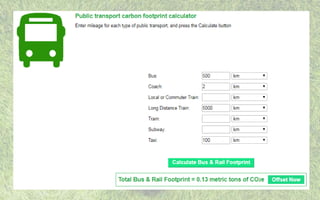
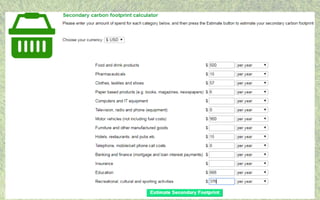
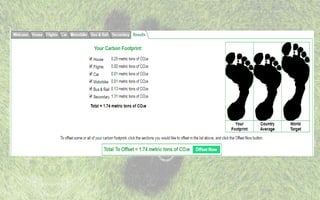
Carbon footprint Calculator
https://www.carbonfootprint.com/calculator.aspx
Carbon Footprint And Its Calculation

Carbon Footprint And Its Calculation

  • 1.
    CARBON FOOT PRINTS PRESENTEDBY PRADEEP KUMAR MISHRA M.Sc.(Renewable Energy) 4th Sam
  • 2.
    Carbon Footprints  Itis the basically in the term of define the total emission of CO2 in respective with respect to and with respect to time (If there is a population or area )  It may be natural as well as artificial included both which is produce at particular time at particular area  In other words amount of carbon/greenhouse gas emission produce in daily life by an individual a house hold a building or a company  Carbon footprints traps heat with in the atmosphere which could have a serious impact on the global climate by raising global temperature.
  • 3.
    What is GHG? o Greenhouse gases are those that can absorb and emit infrared radiation. In order, the most abundant greenhouse gases in earth atmosphere are : Gas Formula Contribution Water Vapour H2O 36-72% Carbon dioxide CO2 9-26% Methane CH4 4-9% Ozone O3 3-7%
  • 4.
    How Carbon FootprintWork Carbon footprint measure how much carbon dioxide we produce just by going about our daily life. When fossil fuel burn they emit green house gases like co2 that contribute global warming. 98% of atmospheric co2 comes from the combustion of fossil fuels.
  • 5.
    Basic calculation Fuel UnitCO2 Emitted Per Unit Petrol 1 Liter 2.3Kg Gasoline 1 Liter 2.3Kg Diesel 1 Liter 2.7Kg Oil Heating 1 Liter 3.0Kg If your car consume 7.5 liter diesel per 100 Km, then a drive of 300 Km distance consume 3*7.5=22.5 liter oil diesel Which adds 22.5*2.7Kg=60.75kg CO2 to your personal carbon footprint
  • 6.
    Carbon footprint ofitems Leaving the light on A forest fire Road trip Manufacturing car & vehicles Deforestation A Web Search A Burger A Bottle of Water
  • 7.
    Carbon footprint Carbon footprints-3 scope I. Direct Emission II. Indirect Emission (purchased energy) III. Other Indirect Emission Note :- Carbon footprint calculation must be include at least scope 1 & 2 GHG emission.
  • 8.
  • 9.
    Scope-1 Direct Emission Fromsources owned or control by a company/consumer like  vehicles & Equipment  Stationary Combustion  Cooking Food  Waste Water Treatment  Onsite Landfill
  • 10.
    Scope-2 Indirect Emission Fromthe generation of electricity, heat or steam purchased by a company . Purchased Electricity Purchased Heating/Cooling Purchased Good & Services
  • 11.
    Scope-3 Other Emission Fromsources not owned or directly by, but related to a company.  Employer Business Travel  Employee commuting Impacts  Contracted Waste Water Treatment  Contracted Solid Waste Material  Transportation Waste  Vegetation & Trees
  • 12.
    Global Warming An increasein the earths temperature has been absorbed during the past decades, believed to be due to increase of carbon die-oxide.
  • 13.
    Carbon Foot PrintsResulting In - Global Warming Catastrophe Changes in rainfall patterns (more rain in some places, less rain in others) Higher temperature on land Melting of ice worldwide which could result in a rise in sea levels. Severe weather conditions Sea level increase, Health effect, Change in agricultural pattern
  • 14.
    Context For Numbers 1gram of CO2e would be produced if you burned a pea sized blob of gasoline. 1 Kilogram (2 lbs) of CO2e would be produced if you burned 2 cups of gasoline. 1 Ton of CO2e would be produced if you burned 60 gallons of gasoline.
  • 15.
    Reduce Carbon Footprint Shoplocally by affecting to reduce goods import. Travelling light Get your parents to change their driving habits... and their car. Solar energy is free Eating: Learn to grow and cook! Decrease using processed food, help reducing your carbon foot print
  • 16.
    Take Environment ChallengesTo Make A Difference Reduce Waste Reduce Energy Use Increase Biodiversity Reduce car Travels Reduce Waste Heat Increase Gardening
  • 17.
    Reduce Carbon Footprint I.Reuse II. Recycle III. Reduce & IV. Refuse V. Using renewable energy sources such as solar energy, wind energy, hydropower can reduce carbon footprint
  • 18.
    Alternative energy Any formof energy that dose not come from fossil fuels. Alternative energy sources produce energy without the damaging or harmful by-products common when burning fossil fuels Alternative energy sources are renewable and are thought to be "free" energy sources.
  • 19.
  • 20.
    Alternative Energy isthe future of energy Alternative energy is clean, sustainable and better for our national security.
  • 21.