

•
•

A Carbon Footprint measures the total greenhouse gas emissions caused directly and
indirectly by a person, organization, event or product.
So every individual has a different value of carbon footprint.
Carbon Footprint quantification analysis and reduction are key to preventing this
change by, for example, enhancing energy efficiency, mitigating carbon emissions by
means of green energy and then compensating for remaining GHG emissions by
investing in carbon offsets, with a final goal of being carbon neutral.
•
•

•

•

•

To estimate the carbon di-oxide emission in the atmosphere.
Carbon footprint is a focal indicator of environmental responsibility. It helps to
identify climate impacts and lower them cost-effectively and sensibly.
The calculation results can be used in strategic and operative planning, constructing
a climate policy, environmental reporting and planning of cost savings. Carbon
footprint promotes positive, environmentally conscious company image and can
boost the marketing of an organization and its products.
Calculating carbon footprint is an effective way of managing energy and
environmental issues.
For this purpose it likely to be adequate to understand and quantify the key emission
sources through a basic process, typically including fuel, electricity and transport.
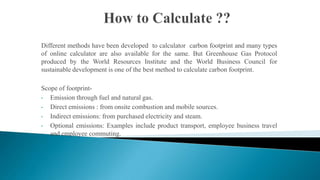
Different methods have been developed to calculator carbon footprint and many types
of online calculator are also available for the same. But Greenhouse Gas Protocol
produced by the World Resources Institute and the World Business Council for
sustainable development is one of the best method to calculate carbon footprint.
Scope of footprint•
Emission through fuel and natural gas.
•
Direct emissions : from onsite combustion and mobile sources.
•
Indirect emissions: from purchased electricity and steam.
•
Optional emissions: Examples include product transport, employee business travel
and employee commuting.
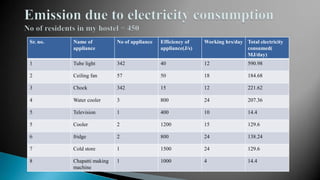
Sr. no.

Name of
appliance

No of appliance

Efficiency of
appliance(J/s)

Working hrs/day Total electricity
consumed(
MJ/day)

1

Tube light

342

40

12

590.98

2

Ceiling fan

57

50

18

184.68

3

Chock

342

15

12

221.62

4

Water cooler

3

800

24

207.36

5

Television

1

400

10

14.4

5

Cooler

2

1200

15

129.6

6

fridge

2

800

24

138.24

7

Cold store

1

1500

24

129.6

8

Chapatti making
machine

1

1000

4

14.4
9

Exhaust fan

6

250

3

16.2

10

Washing
machine

8

260

2

14.98

11

geyser

32

2000

2

460.8

Total

2122.86

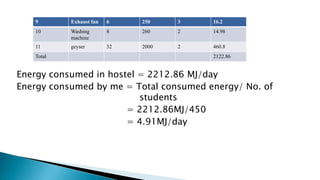
Energy consumed in hostel = 2212.86 MJ/day
Energy consumed by me = Total consumed energy/ No. of
students
= 2212.86MJ/450
= 4.91MJ/day
Sr. no.

Name of
appliance

No. of appliance

Power(watt)

Working hrs./day Energy
consumed(MJ/
day)

1

Tube light

1

40

10

1.44

2

Good night

1

5.3

10

.18

3

Mobile charger

1

5

0.5

0.01

4

Chock

1

15

10

0.54

5

Ceiling fan

1

75

16

4.32

6

Laptop charger

1

75

3

0.81

Total

7.30
Sr.
No.

Lecture
Shared
theatre/
by no.
laboratory of
students

No. of
tube
lights +
chock

No. of
fans

No. of
projector
s

Working
hrs/day

Lecture/
week

Energy
consumed by
tube lights +
chock (kJ/day)

Energy
consumed by
fans (kJ/day)

Energy
consumed
by projector
(MJ/day)

1

IILT11

75

10

8

1

1

3

11.31

8.23

4.11

2

IVLT1

102

15

10

0

1

3

12.48

7.56

0

3

IILT3

67

10

8

1

1

2

8.43

6.14

4.11

4

Structure
lab

22

10

8

1

2

1

25.71

18.70

4.11

5

MS702

150

18

18

2

1.5

2

10.18

9.26

4.11

6

IIILT1

120

15

10

1

1

3

10.61

6.43

4.11

7

VILT2

105

30

4AC

2

1

3

24.24

129.31

8.22

8

IVLT1

22

15

10

0

2

1

38.57

23.38

0

9

VILT1

35

25

4ACs

0

1

1

20.2

129.31

0

161.73

338.32

28.77

Total
Item

Power (watt)

Ceiling fan

75

Tube light + chock

55

2 ton AC

2200

projector

200
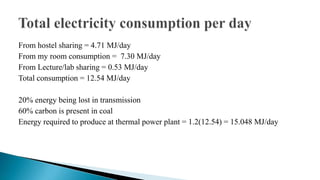
From hostel sharing = 4.71 MJ/day
From my room consumption = 7.30 MJ/day
From Lecture/lab sharing = 0.53 MJ/day
Total consumption = 12.54 MJ/day

20% energy being lost in transmission
60% carbon is present in coal
Energy required to produce at thermal power plant = 1.2(12.54) = 15.048 MJ/day
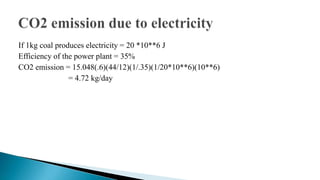
If 1kg coal produces electricity = 20 *10**6 J
Efficiency of the power plant = 35%
CO2 emission = 15.048(.6)(44/12)(1/.35)(1/20*10**6)(10**6)
= 4.72 kg/day
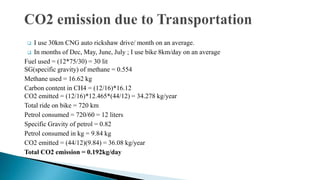
I use 30km CNG auto rickshaw drive/ month on an average.
 In months of Dec, May, June, July ; I use bike 8km/day on an average
Fuel used = (12*75/30) = 30 lit
SG(specific gravity) of methane = 0.554
Methane used = 16.62 kg
Carbon content in CH4 = (12/16)*16.12
CO2 emitted = (12/16)*12.465*(44/12) = 34.278 kg/year
Total ride on bike = 720 km
Petrol consumed = 720/60 = 12 liters
Specific Gravity of petrol = 0.82
Petrol consumed in kg = 9.84 kg
CO2 emitted = (44/12)(9.84) = 36.08 kg/year
Total CO2 emission = 0.192kg/day

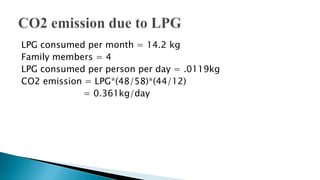
LPG consumed per month = 14.2 kg
Family members = 4
LPG consumed per person per day = .0119kg
CO2 emission = LPG*(48/58)*(44/12)
= 0.361kg/day
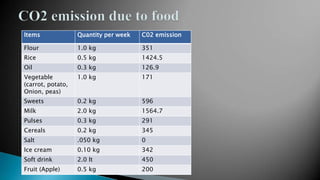
Items

Quantity per week

C02 emission

Flour

1.0 kg

351

Rice

0.5 kg

1424.5

Oil

0.3 kg

126.9

Vegetable
(carrot, potato,
Onion, peas)

1.0 kg

171

Sweets

0.2 kg

596

Milk

2.0 kg

1564.7

Pulses

0.3 kg

291

Cereals

0.2 kg

345

Salt

.050 kg

0

Ice cream

0.10 kg

342

Soft drink

2.0 lt

450

Fruit (Apple)

0.5 kg

200
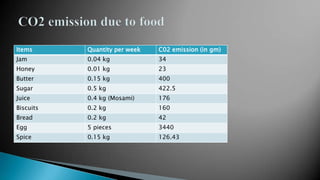
Items

Quantity per week

C02 emission (in gm)

Jam

0.04 kg

34

Honey

0.01 kg

23

Butter

0.15 kg

400

Sugar

0.5 kg

422.5

Juice

0.4 kg (Mosami)

176

Biscuits

0.2 kg

160

Bread

0.2 kg

42

Egg

5 pieces

3440

Spice

0.15 kg

126.43
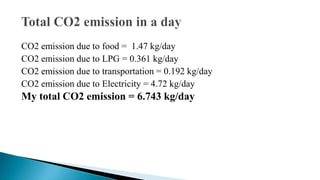
CO2 emission due to food = 1.47 kg/day
CO2 emission due to LPG = 0.361 kg/day
CO2 emission due to transportation = 0.192 kg/day
CO2 emission due to Electricity = 4.72 kg/day

My total CO2 emission = 6.743 kg/day
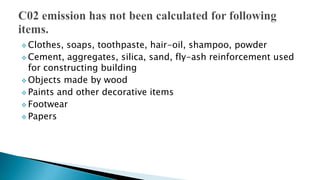
 Clothes,

soaps, toothpaste, hair-oil, shampoo, powder
 Cement, aggregates, silica, sand, fly-ash reinforcement used
for constructing building
 Objects made by wood
 Paints and other decorative items
 Footwear
 Papers






http://www.sciencedirect.com/science/article/pii/S01678809
10001738
http://en.wikipedia.org/wiki/Carbon_footprint
American council for energy efficiency.
Self estimation on the basis of daily used.
Thank you

Esl 330 presentation

  • 2.
     • • A Carbon Footprintmeasures the total greenhouse gas emissions caused directly and indirectly by a person, organization, event or product. So every individual has a different value of carbon footprint. Carbon Footprint quantification analysis and reduction are key to preventing this change by, for example, enhancing energy efficiency, mitigating carbon emissions by means of green energy and then compensating for remaining GHG emissions by investing in carbon offsets, with a final goal of being carbon neutral.
  • 3.
    • • • • • To estimate thecarbon di-oxide emission in the atmosphere. Carbon footprint is a focal indicator of environmental responsibility. It helps to identify climate impacts and lower them cost-effectively and sensibly. The calculation results can be used in strategic and operative planning, constructing a climate policy, environmental reporting and planning of cost savings. Carbon footprint promotes positive, environmentally conscious company image and can boost the marketing of an organization and its products. Calculating carbon footprint is an effective way of managing energy and environmental issues. For this purpose it likely to be adequate to understand and quantify the key emission sources through a basic process, typically including fuel, electricity and transport.
  • 4.
    Different methods havebeen developed to calculator carbon footprint and many types of online calculator are also available for the same. But Greenhouse Gas Protocol produced by the World Resources Institute and the World Business Council for sustainable development is one of the best method to calculate carbon footprint. Scope of footprint• Emission through fuel and natural gas. • Direct emissions : from onsite combustion and mobile sources. • Indirect emissions: from purchased electricity and steam. • Optional emissions: Examples include product transport, employee business travel and employee commuting.
  • 5.
    Sr. no. Name of appliance Noof appliance Efficiency of appliance(J/s) Working hrs/day Total electricity consumed( MJ/day) 1 Tube light 342 40 12 590.98 2 Ceiling fan 57 50 18 184.68 3 Chock 342 15 12 221.62 4 Water cooler 3 800 24 207.36 5 Television 1 400 10 14.4 5 Cooler 2 1200 15 129.6 6 fridge 2 800 24 138.24 7 Cold store 1 1500 24 129.6 8 Chapatti making machine 1 1000 4 14.4
  • 6.
    9 Exhaust fan 6 250 3 16.2 10 Washing machine 8 260 2 14.98 11 geyser 32 2000 2 460.8 Total 2122.86 Energy consumedin hostel = 2212.86 MJ/day Energy consumed by me = Total consumed energy/ No. of students = 2212.86MJ/450 = 4.91MJ/day
  • 7.
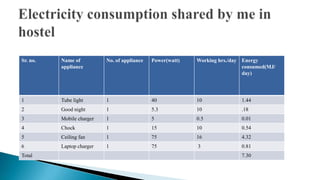
    Sr. no. Name of appliance No.of appliance Power(watt) Working hrs./day Energy consumed(MJ/ day) 1 Tube light 1 40 10 1.44 2 Good night 1 5.3 10 .18 3 Mobile charger 1 5 0.5 0.01 4 Chock 1 15 10 0.54 5 Ceiling fan 1 75 16 4.32 6 Laptop charger 1 75 3 0.81 Total 7.30
  • 8.
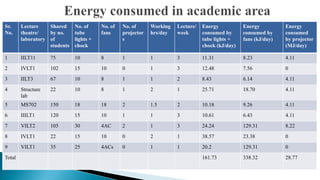
    Sr. No. Lecture Shared theatre/ by no. laboratory of students No.of tube lights + chock No. of fans No. of projector s Working hrs/day Lecture/ week Energy consumed by tube lights + chock (kJ/day) Energy consumed by fans (kJ/day) Energy consumed by projector (MJ/day) 1 IILT11 75 10 8 1 1 3 11.31 8.23 4.11 2 IVLT1 102 15 10 0 1 3 12.48 7.56 0 3 IILT3 67 10 8 1 1 2 8.43 6.14 4.11 4 Structure lab 22 10 8 1 2 1 25.71 18.70 4.11 5 MS702 150 18 18 2 1.5 2 10.18 9.26 4.11 6 IIILT1 120 15 10 1 1 3 10.61 6.43 4.11 7 VILT2 105 30 4AC 2 1 3 24.24 129.31 8.22 8 IVLT1 22 15 10 0 2 1 38.57 23.38 0 9 VILT1 35 25 4ACs 0 1 1 20.2 129.31 0 161.73 338.32 28.77 Total
  • 9.
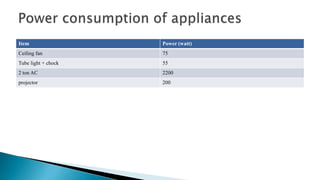
    Item Power (watt) Ceiling fan 75 Tubelight + chock 55 2 ton AC 2200 projector 200
  • 10.
    From hostel sharing= 4.71 MJ/day From my room consumption = 7.30 MJ/day From Lecture/lab sharing = 0.53 MJ/day Total consumption = 12.54 MJ/day 20% energy being lost in transmission 60% carbon is present in coal Energy required to produce at thermal power plant = 1.2(12.54) = 15.048 MJ/day
  • 11.
    If 1kg coalproduces electricity = 20 *10**6 J Efficiency of the power plant = 35% CO2 emission = 15.048(.6)(44/12)(1/.35)(1/20*10**6)(10**6) = 4.72 kg/day
  • 12.
    I use 30kmCNG auto rickshaw drive/ month on an average.  In months of Dec, May, June, July ; I use bike 8km/day on an average Fuel used = (12*75/30) = 30 lit SG(specific gravity) of methane = 0.554 Methane used = 16.62 kg Carbon content in CH4 = (12/16)*16.12 CO2 emitted = (12/16)*12.465*(44/12) = 34.278 kg/year Total ride on bike = 720 km Petrol consumed = 720/60 = 12 liters Specific Gravity of petrol = 0.82 Petrol consumed in kg = 9.84 kg CO2 emitted = (44/12)(9.84) = 36.08 kg/year Total CO2 emission = 0.192kg/day 
  • 13.
    LPG consumed permonth = 14.2 kg Family members = 4 LPG consumed per person per day = .0119kg CO2 emission = LPG*(48/58)*(44/12) = 0.361kg/day
  • 14.
    Items Quantity per week C02emission Flour 1.0 kg 351 Rice 0.5 kg 1424.5 Oil 0.3 kg 126.9 Vegetable (carrot, potato, Onion, peas) 1.0 kg 171 Sweets 0.2 kg 596 Milk 2.0 kg 1564.7 Pulses 0.3 kg 291 Cereals 0.2 kg 345 Salt .050 kg 0 Ice cream 0.10 kg 342 Soft drink 2.0 lt 450 Fruit (Apple) 0.5 kg 200
  • 15.
    Items Quantity per week C02emission (in gm) Jam 0.04 kg 34 Honey 0.01 kg 23 Butter 0.15 kg 400 Sugar 0.5 kg 422.5 Juice 0.4 kg (Mosami) 176 Biscuits 0.2 kg 160 Bread 0.2 kg 42 Egg 5 pieces 3440 Spice 0.15 kg 126.43
  • 16.
    CO2 emission dueto food = 1.47 kg/day CO2 emission due to LPG = 0.361 kg/day CO2 emission due to transportation = 0.192 kg/day CO2 emission due to Electricity = 4.72 kg/day My total CO2 emission = 6.743 kg/day
  • 17.
     Clothes, soaps, toothpaste,hair-oil, shampoo, powder  Cement, aggregates, silica, sand, fly-ash reinforcement used for constructing building  Objects made by wood  Paints and other decorative items  Footwear  Papers
  • 18.
  • 19.