WELCOME TO
PRESENTATION
TOPIC: CYCLIC
PHOSPHORYLATION
PRESENTED TO:
SIR FAISAL IQBAL
PRESENTED BY:
FARHANA SHIEKH
(BS-BOT-F17-R03)
CONTENTS:
• Short introduction to photo
phosphorylation
• Definition of cyclic
photophosphorylation.
• Mechanism
• Steps
• Flowsheet
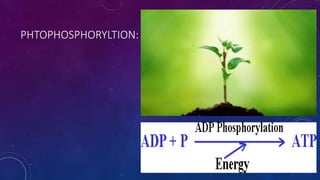
PHTOPHOSPHORYLTION:
PHOTOPHOSPHORYLATION:
 In the process of photosynthesis,
the phosphorylation of ADP to ATP
using the energy of sunlight is
called photophosphorylation.
 TYPES OF
PHOTOPHOSPHORYLATI
ON
 There are two types of
photophosphorylation
 1.Cyclic photophosphorylation
 2.Non-cyclic photophosphorylation
CYCLIC PHOTOPHOSPHORYLATION:
• “The returning back of the same excited
electron to excited chlorophyll by producing a
molecule of ATP is called cyclic
phosphorylation”.
MECHANISM:
 In bacterial photosynthesis, a single photosystem is
• involved.
 When an electron is energized by absorption of light, it is ejected from the
photosystem reaction centre.
 The electron then passes down through an electron
• transport system, and finally to the reaction centre.
 The energy released during this electron transport is used to produce ATP.
 Since the excited electron returns to the reaction centre, this mechanism
for making ATP is called cyclic photophosphorylation.
STEPS:
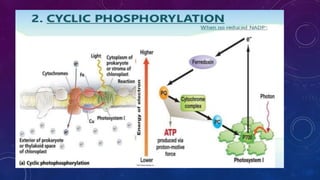
• First of all P700 of the photosystem 1 absorb light.this light drives
electron from P700 to primary electron acceptor.it produce
electron hole in the chlorophyll.
• The primary acceptor of electron of PS1 transfer electron to Fe-S
protein.
• Fe-S protein transfer electron to ferrodoxin.
• Electron transfer from ferodoxin to cytochrome complex.
CONTI………………
• Finally the cytochrome complex return theses electron to
excited chlorophyll of P700.
• A molecule of ATP is produced during this transfer of
electron through ETC by chemiosmosis.
• The NADH is not produce and oxygen is not released.
Thank you

Cyclic phosphorylation

  • 1.
  • 2.
  • 3.
    PRESENTED TO: SIR FAISALIQBAL PRESENTED BY: FARHANA SHIEKH (BS-BOT-F17-R03)
  • 4.
    CONTENTS: • Short introductionto photo phosphorylation • Definition of cyclic photophosphorylation. • Mechanism • Steps • Flowsheet
  • 5.
  • 6.
    PHOTOPHOSPHORYLATION:  In theprocess of photosynthesis, the phosphorylation of ADP to ATP using the energy of sunlight is called photophosphorylation.  TYPES OF PHOTOPHOSPHORYLATI ON  There are two types of photophosphorylation  1.Cyclic photophosphorylation  2.Non-cyclic photophosphorylation
  • 7.
    CYCLIC PHOTOPHOSPHORYLATION: • “Thereturning back of the same excited electron to excited chlorophyll by producing a molecule of ATP is called cyclic phosphorylation”.
  • 8.
    MECHANISM:  In bacterialphotosynthesis, a single photosystem is • involved.  When an electron is energized by absorption of light, it is ejected from the photosystem reaction centre.  The electron then passes down through an electron • transport system, and finally to the reaction centre.  The energy released during this electron transport is used to produce ATP.  Since the excited electron returns to the reaction centre, this mechanism for making ATP is called cyclic photophosphorylation.
  • 9.
    STEPS: • First ofall P700 of the photosystem 1 absorb light.this light drives electron from P700 to primary electron acceptor.it produce electron hole in the chlorophyll. • The primary acceptor of electron of PS1 transfer electron to Fe-S protein. • Fe-S protein transfer electron to ferrodoxin. • Electron transfer from ferodoxin to cytochrome complex.
  • 10.
    CONTI……………… • Finally thecytochrome complex return theses electron to excited chlorophyll of P700. • A molecule of ATP is produced during this transfer of electron through ETC by chemiosmosis. • The NADH is not produce and oxygen is not released.
  • 12.