Download to read offline
![Conflict
Insecurity and Instability
"water challenges - shortages, poor water quality,
floods, - will likely increase the risk of instability and
state failure, [and] exacerbate regional tensions....“
- U.S. Intelligence Council, 2012
Motivation](https://image.slidesharecdn.com/1efd1cb3-3569-475e-96c7-b7407cf4aeab-150714194013-lva1-app6891/85/Capstone-Presentation-6-320.jpg)
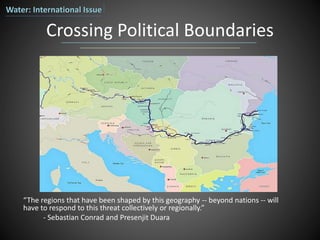
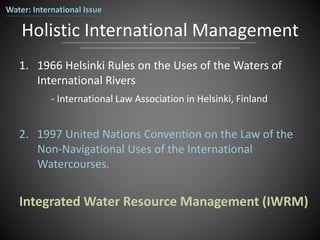
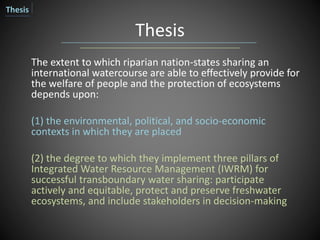
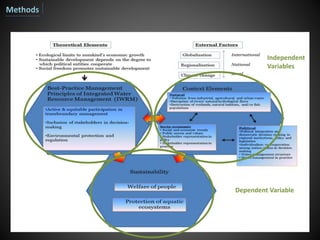
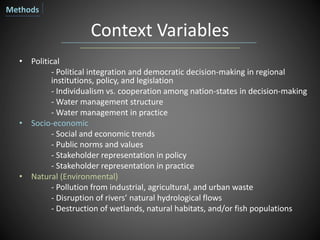
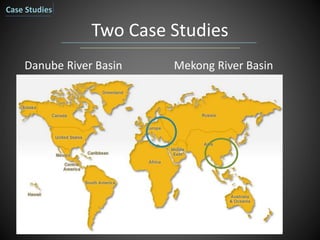
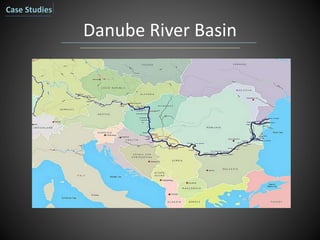
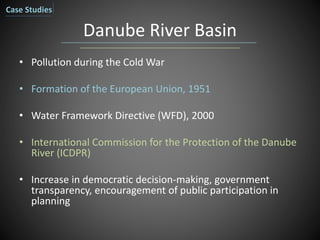
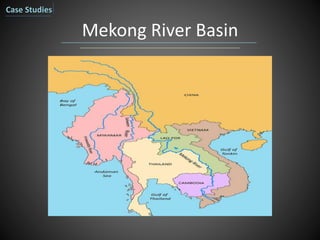
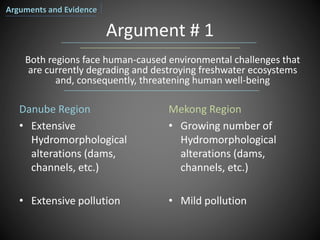
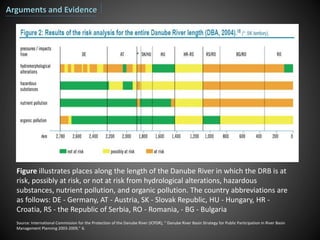
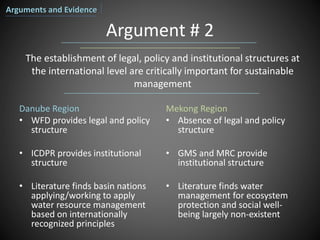
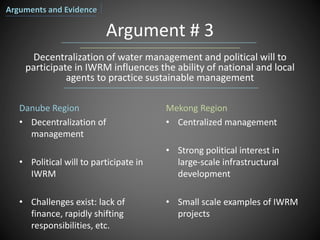
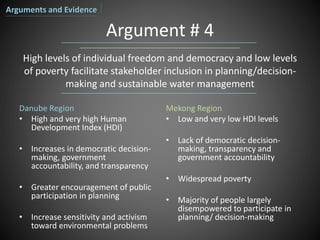
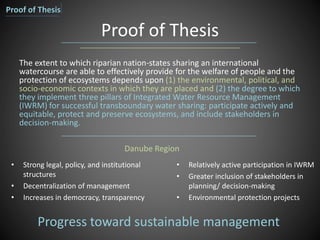
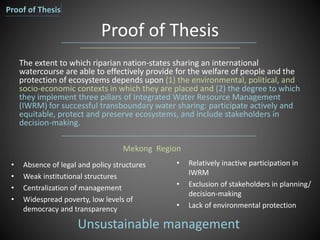



This document provides an outline for a research paper on international water management. It discusses two case studies - the Danube River Basin and the Mekong River Basin - and proposes a thesis that the ability of riparian states to effectively manage shared water resources depends on both the environmental, political and socioeconomic context, and the degree to which three pillars of integrated water resource management are implemented: equitable participation, ecosystem protection, and stakeholder inclusion in decision making. It presents four arguments comparing management approaches between the two basins and concludes the Danube region has made more progress towards sustainability.


