Álbum de fotografías
por Anabel
Future probability
Mrs. Anabel Montes - English teacher
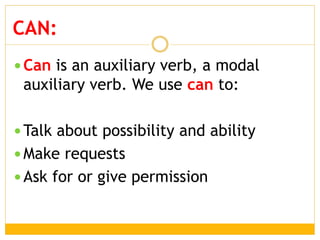
CAN:
 Can is an auxiliary verb, a modal
auxiliary verb. We use can to:
 Talk about possibility and ability
 Make requests
 Ask for or give permission
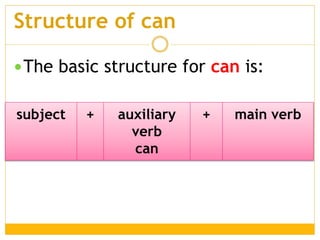
Structure of can
The basic structure for can is:
subject + auxiliary
verb
can
+ main verb
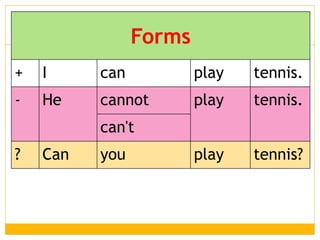
Forms
+ I can play tennis.
- He cannot play tennis.
can't
? Can you play tennis?
My brother can play the piano.
Michael Phelps can swim very well.
The girl can ride a bike.
The babies can’t read.
He can’t run 10 km.
Can dogs speak?
No, they can’t.
Can cats climb trees?
Yes, they can.
Can you speak English?
we
 Yes, you can.
I
Expressing permission
We also use can /can’t to ask for
and give permission.
Example:
Can I go to the toilet, please?
Yes, you can.
Can I speak to Homer Simpson, please?
No, you can’t. He’s sleeping at the moment.
REQUESTS
And we use “can” to ask
somebody to do something!
-Can you …….., please?
Example:
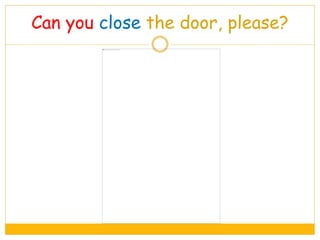
Can you close the door, please?
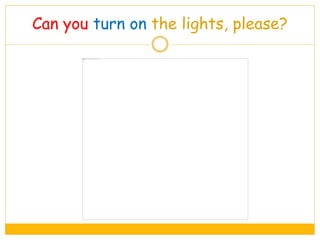
Can you turn on the lights, please?
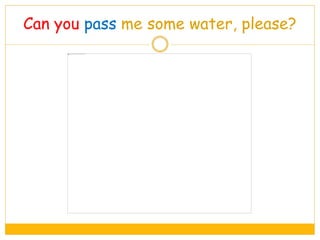
Can you pass me some water, please?
HAVE TO :
We often use have to to say that
something is obligatory, for
example:
•Children have to go to school.
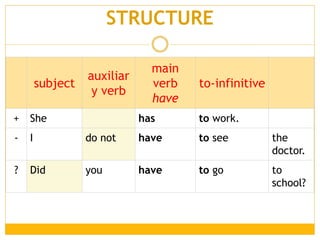
STRUCTURE
subject
auxiliar
y verb
main
verb
have
to-infinitive
+ She has to work.
- I do not have to see the
doctor.
? Did you have to go to
school?
It is NOT necessary / there is no
obligation
You don’t have to call him today. You
can do it tomorrow if you like.
DON’T HAVE TO
Is a normal present simple verb. For
questions forms , we use do/does +
subject + have to + infinitive without
to.
 Does he have to get more work early
tomorrow?
HAVE TO
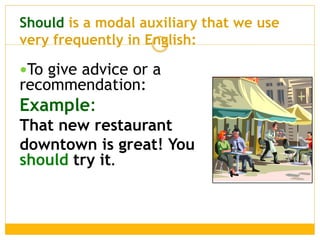
Should is a modal auxiliary that we use
very frequently in English:
To give advice or a
recommendation:
Example:
That new restaurant
downtown is great! You
should try it.
We also use should . . .
To give our opinion about
something.
To say what we think is a
good idea or the “right” thing
to, do in our opinion.
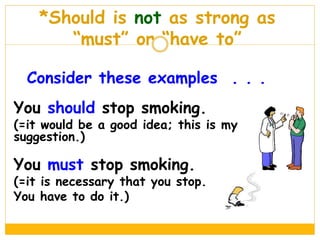
*Should is not as strong as
“must” or “have to”
Consider these examples . . .
You should stop smoking.
(=it would be a good idea; this is my
suggestion.)
You must stop smoking.
(=it is necessary that you stop.
You have to do it.)
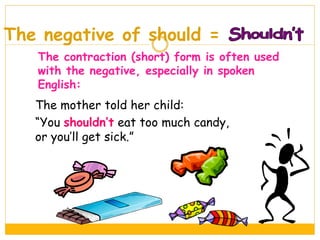
The negative of should =
The mother told her child:
“You shouldn’t eat too much candy,
or you’ll get sick.”
The contraction (short) form is often used
with the negative, especially in spoken
English:
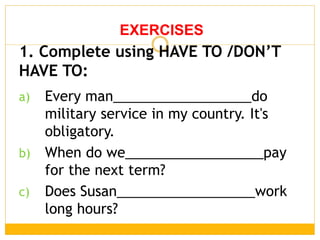
a) Every man__________________do
military service in my country. It's
obligatory.
b) When do we__________________pay
for the next term?
c) Does Susan__________________work
long hours?
EXERCISES
1. Complete using HAVE TO /DON’T
HAVE TO:
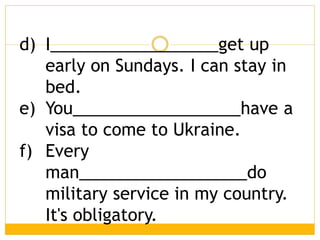
d) I__________________get up
early on Sundays. I can stay in
bed.
e) You__________________have a
visa to come to Ukraine.
f) Every
man__________________do
military service in my country.
It's obligatory.
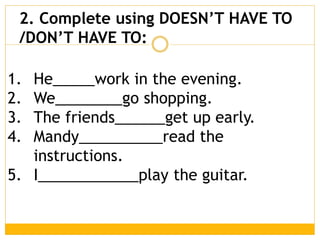
1. He_____work in the evening.
2. We________go shopping.
3. The friends______get up early.
4. Mandy__________read the
instructions.
5. I____________play the guitar.
2. Complete using DOESN’T HAVE TO
/DON’T HAVE TO:
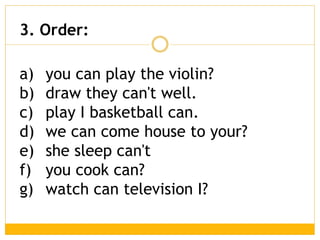
a) you can play the violin?
b) draw they can't well.
c) play I basketball can.
d) we can come house to your?
e) she sleep can't
f) you cook can?
g) watch can television I?
3. Order:
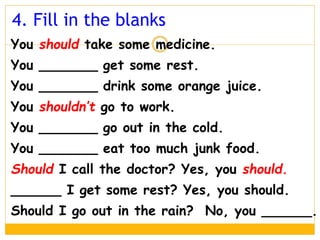
You should take some medicine.
You _______ get some rest.
You _______ drink some orange juice.
You shouldn’t go to work.
You _______ go out in the cold.
You _______ eat too much junk food.
Should I call the doctor? Yes, you should.
______ I get some rest? Yes, you should.
Should I go out in the rain? No, you ______.
4. Fill in the blanks

Can have to 2

  • 1.
    Álbum de fotografías porAnabel Future probability Mrs. Anabel Montes - English teacher
  • 2.
    CAN:  Can isan auxiliary verb, a modal auxiliary verb. We use can to:  Talk about possibility and ability  Make requests  Ask for or give permission
  • 3.
    Structure of can Thebasic structure for can is: subject + auxiliary verb can + main verb
  • 4.
    Forms + I canplay tennis. - He cannot play tennis. can't ? Can you play tennis?
  • 5.
    My brother canplay the piano.
  • 6.
    Michael Phelps canswim very well.
  • 7.
    The girl canride a bike.
  • 8.
  • 9.
  • 10.
  • 11.
    Can cats climbtrees? Yes, they can.
  • 12.
    Can you speakEnglish? we  Yes, you can. I
  • 13.
    Expressing permission We alsouse can /can’t to ask for and give permission. Example:
  • 14.
    Can I goto the toilet, please?
  • 15.
  • 16.
    Can I speakto Homer Simpson, please?
  • 17.
    No, you can’t.He’s sleeping at the moment.
  • 18.
    REQUESTS And we use“can” to ask somebody to do something! -Can you …….., please? Example:
  • 19.
    Can you closethe door, please?
  • 20.
    Can you turnon the lights, please?
  • 21.
    Can you passme some water, please?
  • 22.
    HAVE TO : Weoften use have to to say that something is obligatory, for example: •Children have to go to school.
  • 23.
    STRUCTURE subject auxiliar y verb main verb have to-infinitive + Shehas to work. - I do not have to see the doctor. ? Did you have to go to school?
  • 24.
    It is NOTnecessary / there is no obligation You don’t have to call him today. You can do it tomorrow if you like. DON’T HAVE TO
  • 25.
    Is a normalpresent simple verb. For questions forms , we use do/does + subject + have to + infinitive without to.  Does he have to get more work early tomorrow? HAVE TO
  • 26.
    Should is amodal auxiliary that we use very frequently in English: To give advice or a recommendation: Example: That new restaurant downtown is great! You should try it.
  • 27.
    We also useshould . . . To give our opinion about something. To say what we think is a good idea or the “right” thing to, do in our opinion.
  • 28.
    *Should is notas strong as “must” or “have to” Consider these examples . . . You should stop smoking. (=it would be a good idea; this is my suggestion.) You must stop smoking. (=it is necessary that you stop. You have to do it.)
  • 29.
    The negative ofshould = The mother told her child: “You shouldn’t eat too much candy, or you’ll get sick.” The contraction (short) form is often used with the negative, especially in spoken English:
  • 30.
    a) Every man__________________do militaryservice in my country. It's obligatory. b) When do we__________________pay for the next term? c) Does Susan__________________work long hours? EXERCISES 1. Complete using HAVE TO /DON’T HAVE TO:
  • 31.
    d) I__________________get up earlyon Sundays. I can stay in bed. e) You__________________have a visa to come to Ukraine. f) Every man__________________do military service in my country. It's obligatory.
  • 32.
    1. He_____work inthe evening. 2. We________go shopping. 3. The friends______get up early. 4. Mandy__________read the instructions. 5. I____________play the guitar. 2. Complete using DOESN’T HAVE TO /DON’T HAVE TO:
  • 33.
    a) you canplay the violin? b) draw they can't well. c) play I basketball can. d) we can come house to your? e) she sleep can't f) you cook can? g) watch can television I? 3. Order:
  • 34.
    You should takesome medicine. You _______ get some rest. You _______ drink some orange juice. You shouldn’t go to work. You _______ go out in the cold. You _______ eat too much junk food. Should I call the doctor? Yes, you should. ______ I get some rest? Yes, you should. Should I go out in the rain? No, you ______. 4. Fill in the blanks