MediaCamera/Angle shots...
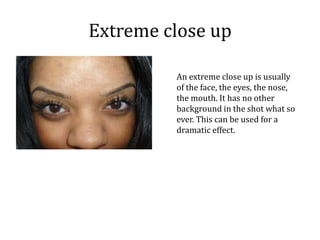
Extreme close upAn extreme close up is usually of the face, the eyes, the nose, the mouth. It has no other background in the shot what so ever. This can be used for a dramatic effect.
Close upThis shot shows very little background, it focuses on a face or a detail with mise en scene. Everything that is in the background is just a blur. The shot magnifies the object (face), it shows the importance of what is on the screen in this case a facial expression. A close up takes us into the characters minds and helps the audience to see what they are feeling.
Medium shotThis shot is usually used for a dialogue scene or to show a detail of action where the shot is from either knee or waist high. The background detail is kept to minimal as the location of the character was most probably shown in earlier scenes so now it is time for the audience to focus on the character and what they are saying.
Long shotThis is the shot that is generally based as the  ‘life size’ shot. This shot shows the full length of the human body, the head near the top of the frame and the legs at the bottom of the frame. Although the focus is on the character(s) there is still a lot of background showing.
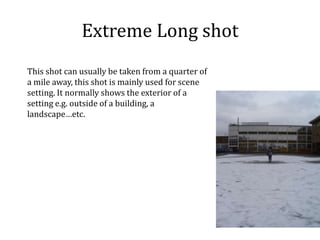
Extreme Long shotThis shot can usually be taken from a quarter of a mile away, this shot is mainly used for scene setting. It normally shows the exterior of a setting e.g. outside of a building, a landscape…etc.
Low angleLow angles are used to increase the height of something for example, an actor who is short. The background is usually just the sky or the ceiling, this makes the audience more disorientated. The added height to an object or person on film may create fear for the viewers.
High angleThe camera is elevated above the scene using a crane to give a general over view to the audience. High angles make the setting look smaller and then the object or character look smaller as they are in a wider picture.

Camera shots

  • 1.
  • 2.
    Extreme close upAnextreme close up is usually of the face, the eyes, the nose, the mouth. It has no other background in the shot what so ever. This can be used for a dramatic effect.
  • 3.
    Close upThis shotshows very little background, it focuses on a face or a detail with mise en scene. Everything that is in the background is just a blur. The shot magnifies the object (face), it shows the importance of what is on the screen in this case a facial expression. A close up takes us into the characters minds and helps the audience to see what they are feeling.
  • 4.
    Medium shotThis shotis usually used for a dialogue scene or to show a detail of action where the shot is from either knee or waist high. The background detail is kept to minimal as the location of the character was most probably shown in earlier scenes so now it is time for the audience to focus on the character and what they are saying.
  • 5.
    Long shotThis isthe shot that is generally based as the ‘life size’ shot. This shot shows the full length of the human body, the head near the top of the frame and the legs at the bottom of the frame. Although the focus is on the character(s) there is still a lot of background showing.
  • 6.
    Extreme Long shotThisshot can usually be taken from a quarter of a mile away, this shot is mainly used for scene setting. It normally shows the exterior of a setting e.g. outside of a building, a landscape…etc.
  • 7.
    Low angleLow anglesare used to increase the height of something for example, an actor who is short. The background is usually just the sky or the ceiling, this makes the audience more disorientated. The added height to an object or person on film may create fear for the viewers.
  • 8.
    High angleThe camerais elevated above the scene using a crane to give a general over view to the audience. High angles make the setting look smaller and then the object or character look smaller as they are in a wider picture.