
ABC
By Sanjaya Jayasundara
(Activity-Based Costing)
Activity based costing: defined by
CIMA as ‘cost attribution to cost units
on the basis o benefit received from
indirect activities.’
Cost drivers : activities undertaken in
each department; they are the costs o
activities that form part of the process
of making a product.
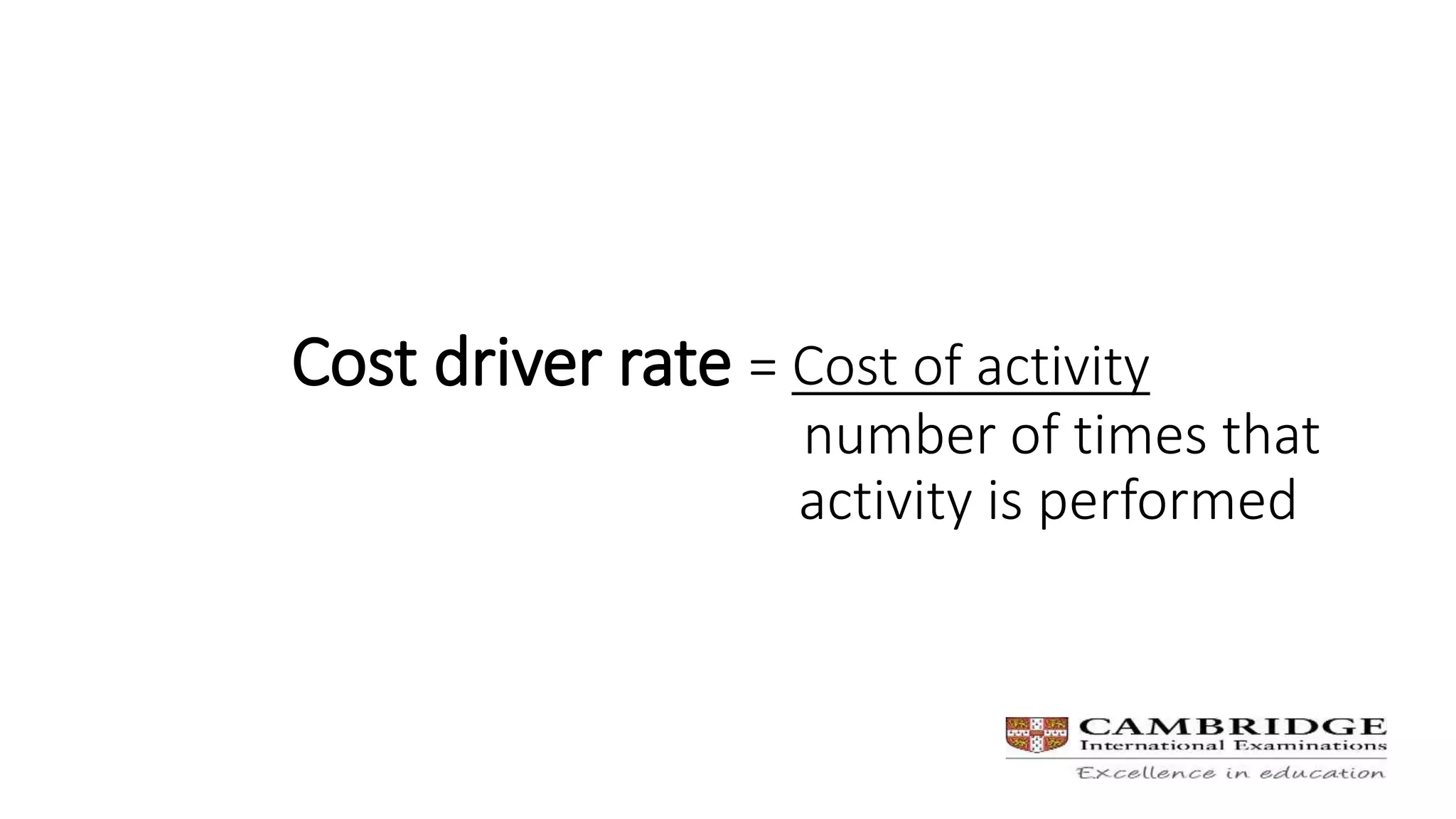
Cost driver rate = Cost of activity
number of times that
activity is performed
Cost pools: accounts that collect the costs
incurred by each activity.
Stages in using an Activity-Based Costing System
01. Record and classify all costs
02. Identify the activities producing the overhead cost
03. Identify cost drivers
04. Apportion appropriate overheads to the cost drivers.
05. Calculate the cost driver rate.
06. Absorb both indirect and direct costs into the
production or service.
Advantages of Activity-Based Costing System
01. ABC provides more reliable information for
product costing since it is based on activity cost driver.
02. ABC facilitates pricing decisions.
03. Set benchmarks for planning and control purposes.
04. Identify individual products or services that are
unprofitable and overpriced
Dis-advantages of Activity-Based Costing System
01. It is time consuming to implement ABC.
02. Determining the cost driver may be difficult.
03. Measuring the quantity of each cost driver
consumed may be difficult.
04. It is costly because it may be necessary to employ
a specialist to implement the ABC system
All the best children..!
Sanjaya Jayasundara

Cambridge a level - A2 Management Accounting ABC

  • 1.
  • 2.
    Activity based costing:defined by CIMA as ‘cost attribution to cost units on the basis o benefit received from indirect activities.’
  • 3.
    Cost drivers :activities undertaken in each department; they are the costs o activities that form part of the process of making a product.
  • 4.
    Cost driver rate= Cost of activity number of times that activity is performed
  • 5.
    Cost pools: accountsthat collect the costs incurred by each activity.
  • 6.
    Stages in usingan Activity-Based Costing System 01. Record and classify all costs 02. Identify the activities producing the overhead cost 03. Identify cost drivers 04. Apportion appropriate overheads to the cost drivers. 05. Calculate the cost driver rate. 06. Absorb both indirect and direct costs into the production or service.
  • 7.
    Advantages of Activity-BasedCosting System 01. ABC provides more reliable information for product costing since it is based on activity cost driver. 02. ABC facilitates pricing decisions. 03. Set benchmarks for planning and control purposes. 04. Identify individual products or services that are unprofitable and overpriced
  • 8.
    Dis-advantages of Activity-BasedCosting System 01. It is time consuming to implement ABC. 02. Determining the cost driver may be difficult. 03. Measuring the quantity of each cost driver consumed may be difficult. 04. It is costly because it may be necessary to employ a specialist to implement the ABC system
  • 9.
    All the bestchildren..! Sanjaya Jayasundara