Measuring Progress
Over Time
The Sustainability
Cultural Indicators
Program (SCIP)
WSSD-2016
John Callewaert & Robert Marans
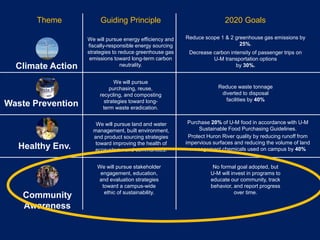
Theme Guiding Principle 2020 Goals
Climate Action
Community
Awareness
Healthy Env.
Waste Prevention
We will pursue energy efficiency and
fiscally-responsible energy sourcing
strategies to reduce greenhouse gas
emissions toward long-term carbon
neutrality.
We will pursue
purchasing, reuse,
recycling, and composting
strategies toward long-
term waste eradication.
We will pursue stakeholder
engagement, education,
and evaluation strategies
toward a campus-wide
ethic of sustainability.
We will pursue land and water
management, built environment,
and product sourcing strategies
toward improving the health of
ecosystems and communities.
Reduce scope 1 & 2 greenhouse gas emissions by
25%.
Decrease carbon intensity of passenger trips on
U-M transportation options
by 30%.
Purchase 20% of U-M food in accordance with U-M
Sustainable Food Purchasing Guidelines.
Protect Huron River quality by reducing runoff from
impervious surfaces and reducing the volume of land
management chemicals used on campus by 40%
Reduce waste tonnage
diverted to disposal
facilities by 40%
No formal goal adopted, but
U-M will invest in programs to
educate our community, track
behavior, and report progress
over time.
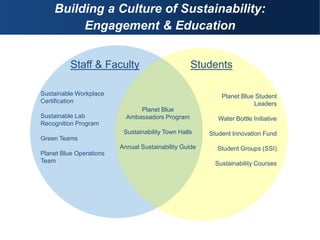
Building a Culture of Sustainability:
Engagement & Education
Staff & Faculty Students
Sustainable Workplace
Certification
Sustainable Lab
Recognition Program
Green Teams
Planet Blue Operations
Team
Planet Blue
Ambassadors Program
Sustainability Town Halls
Annual Sustainability Guide
Planet Blue Student
Leaders
Water Bottle Initiative
Student Innovation Fund
Student Groups (SSI)
Sustainability Courses
SCIP
The Big Picture
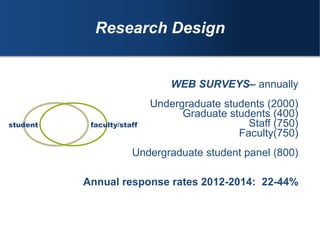
Research Design
student faculty/staff
WEB SURVEYS– annually
Undergraduate students (2000)
Graduate students (400)
Staff (750)
Faculty(750)
Undergraduate student panel (800)
Annual response rates 2012-2014: 22-44%
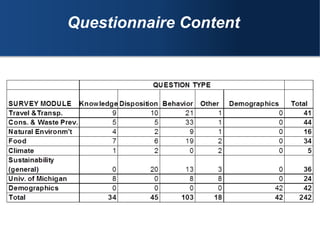
Questionnaire Content
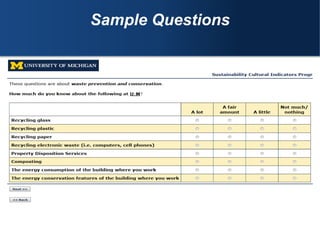
Sample Questions
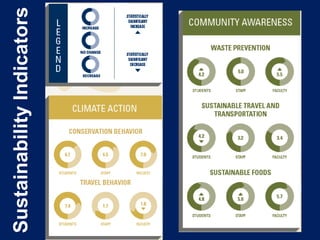
SustainabilityIndicators
2012 2013 2014 2012 2013 2014
10
9
8
7
6
5
4
3
2
1
0
STUDENTS STUDENT PANEL
Travel &
Transportation
Waste Prevention
Sustainable Foods
U-M Sustainability
Initiatives
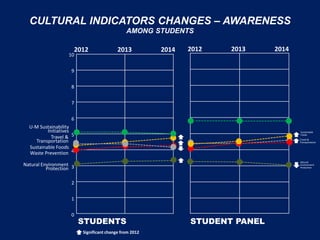
CULTURAL INDICATORS CHANGES – AWARENESS
AMONG STUDENTS
Natural Environment
Protection
Significant change from 2012
Sustainable
Foods
Travel &
Transportation
Natural
Environment
Protection
2012 2013 2014 2012 2013 2014
10
9
8
7
6
5
4
3
2
1
0
STUDENTS
Conservation
Behavior
Travel Behavior
Waste Prevention
Behavior
Sustainable Food
Purchases
U-M Sustainability
Engagement
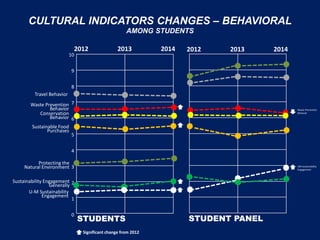
CULTURAL INDICATORS CHANGES – BEHAVIORAL
AMONG STUDENTS
Protecting the
Natural Environment
Sustainability Engagement
Generally
Significant change from 2012
STUDENT PANEL
Waste Prevention
Behavior
UM Sustainability
Engagement
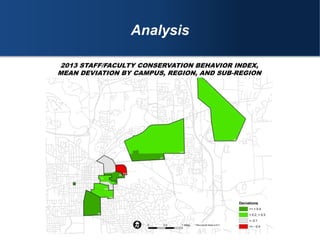
Analysis
• Detailed information to guide and inform
programs based on annual data
• The ability to focus on particular campus
regions, develop program, and test
impacts
Most Significant SCIP Attributes:
Thank You
John Callewaert
jcallew@umich.edu
http://graham.umich.edu/campus/scip

Callewaert, John, Track 2

  • 1.
    Measuring Progress Over Time TheSustainability Cultural Indicators Program (SCIP) WSSD-2016 John Callewaert & Robert Marans
  • 2.
    Theme Guiding Principle2020 Goals Climate Action Community Awareness Healthy Env. Waste Prevention We will pursue energy efficiency and fiscally-responsible energy sourcing strategies to reduce greenhouse gas emissions toward long-term carbon neutrality. We will pursue purchasing, reuse, recycling, and composting strategies toward long- term waste eradication. We will pursue stakeholder engagement, education, and evaluation strategies toward a campus-wide ethic of sustainability. We will pursue land and water management, built environment, and product sourcing strategies toward improving the health of ecosystems and communities. Reduce scope 1 & 2 greenhouse gas emissions by 25%. Decrease carbon intensity of passenger trips on U-M transportation options by 30%. Purchase 20% of U-M food in accordance with U-M Sustainable Food Purchasing Guidelines. Protect Huron River quality by reducing runoff from impervious surfaces and reducing the volume of land management chemicals used on campus by 40% Reduce waste tonnage diverted to disposal facilities by 40% No formal goal adopted, but U-M will invest in programs to educate our community, track behavior, and report progress over time.
  • 3.
    Building a Cultureof Sustainability: Engagement & Education Staff & Faculty Students Sustainable Workplace Certification Sustainable Lab Recognition Program Green Teams Planet Blue Operations Team Planet Blue Ambassadors Program Sustainability Town Halls Annual Sustainability Guide Planet Blue Student Leaders Water Bottle Initiative Student Innovation Fund Student Groups (SSI) Sustainability Courses
  • 4.
  • 5.
    Research Design student faculty/staff WEBSURVEYS– annually Undergraduate students (2000) Graduate students (400) Staff (750) Faculty(750) Undergraduate student panel (800) Annual response rates 2012-2014: 22-44%
  • 6.
  • 7.
  • 8.
  • 9.
    2012 2013 20142012 2013 2014 10 9 8 7 6 5 4 3 2 1 0 STUDENTS STUDENT PANEL Travel & Transportation Waste Prevention Sustainable Foods U-M Sustainability Initiatives CULTURAL INDICATORS CHANGES – AWARENESS AMONG STUDENTS Natural Environment Protection Significant change from 2012 Sustainable Foods Travel & Transportation Natural Environment Protection
  • 10.
    2012 2013 20142012 2013 2014 10 9 8 7 6 5 4 3 2 1 0 STUDENTS Conservation Behavior Travel Behavior Waste Prevention Behavior Sustainable Food Purchases U-M Sustainability Engagement CULTURAL INDICATORS CHANGES – BEHAVIORAL AMONG STUDENTS Protecting the Natural Environment Sustainability Engagement Generally Significant change from 2012 STUDENT PANEL Waste Prevention Behavior UM Sustainability Engagement
  • 12.
  • 13.
    • Detailed informationto guide and inform programs based on annual data • The ability to focus on particular campus regions, develop program, and test impacts Most Significant SCIP Attributes:
  • 14.

Editor's Notes

  • #3  >3,000 acres: >450 bldgs >40,000 students; >33,000 faculty & staff
  • #4 For nearly a decade, numerous activities have been initiated on campus in efforts to become a more sustainable U and build a culture of sustainability.
  • #5 http://graham.umich.edu/campus/scip
  • #14 Note PBA and Sustainable Workplace significance